VSMPO Capacity Collapse: Tracking Aerospace Titanium De-Russification from 32k to 17k Tonnes
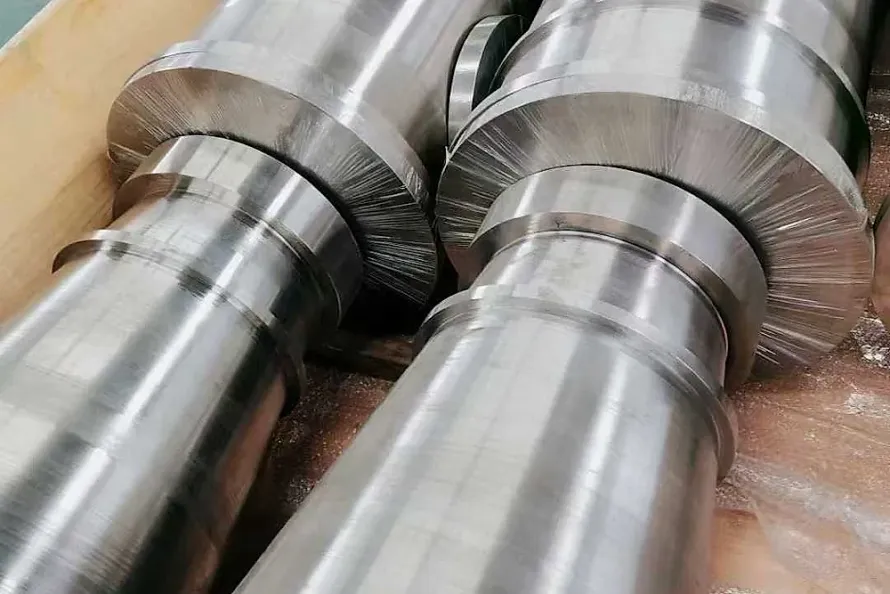
VSMPO-Avisma was added to the U.S. Entity List on September 27, 2025. Six months on, the production numbers out of Russia tell their own story: annual sponge output has fallen from a pre-war 32,000 tonnes to roughly 17,000 tonnes — close to a 50% cut. Over the same window, Airbus has trimmed its Russian titanium share from 60% down to 20%. This is no longer a tariff countdown. It's a capacity reshuffle that has already happened. The Production Numbers, Six Months InVSMPO has long been the world's largest aerospace titanium supplier, feeding Boeing, Airbus, Rolls-Royce, and Raytheon, with global market share that once cleared 30%. Pre-sanctions sponge output sat around 32,000 tpa, and peak years ran higher. Industry reporting this month puts current effective output at roughly 17,000 tpa. The shortfall stacks across three layers. Feedstock: titanium concentrate flow has tightened as ruble payment channels seize up. Process equipment: vacuum electrodes, magnesium reduction retorts, and other Western-sourced spares are no longer available. Demand: order losses have dropped utilization, and several melt lines now run at half load for extended stretches. The numbers are worth more than the sanctions notice itself. 32k tpa was the theoretical ceiling — Russia willing to ship at full tilt, the West willing to accept it all. 17k tpa is the actual intersection after both sides walked away. The 15,000-tonne gap in between can no longer be re-routed by Russian intermediaries, nor absorbed by Western inventory drawdowns. It's being picked up, in real time, by sponge producers elsewhere. How Airbus Walked from 60% to 20% Around 2014, Airbus sourced roughly 60% of its titanium from VSMPO — making it one of the most Russia-dependent aerospace primes in the West. By early 2026, that share is below 20%. Where did the 40 vacated points go? Three lanes opened in parallel. Lane one is Japan. Toho Titanium and Osaka Titanium Technologies together run 30,000–40,000 tpa of capacity and remain the high-end import source most relied on by U.S. and European aerospace. Both are adding roughly 3,000 tpa of aerospace-grade sponge in stages between 2026 and 2029. That increment is smaller than the Russian gap — but supply stability and a long track record inside aerospace qualification systems are why Japanese producers keep getting the call. Lane two is China. Pangang, Shuangrui, and Baoti each run single-plant capacity from 10,000 tpa into the tens of thousands. Chinese sponge output for January 2026 came in at 23,800 tonnes, up 0.42% month-on-month. The bottleneck for Chinese sponge entering Western aerospace is not capacity — it's the time required to clear NADCAP and AS9100 special-process audits at customer sites. De-Russification pressure is shortening that runway. Lane three is U.S. domestic. IperionX commissioned its Virginia plant with a target of 1,400 tpa by mid-2027 and has pulled in cumulative DoD funding of $47.1 million — a first restart of U.S. sponge capacity. What that volume actually means deserves its own arithmetic, which we cover in our breakdown of the IperionX 1,400 tpa math. The Real Supply Curve Behind the Replacement Story Here's a common misread. Add up the headline capacity numbers from every replacement source, and on paper VSMPO's gap looks coverable. Convert "capacity" into "aerospace-qualified deliverable ingot," and the curve gets a lot steeper. Aerospace-grade Ti-6Al-4V forged billet and bar must clear double or triple VAR (vacuum arc remelting) to hit the oxygen, nitrogen, and macrosegregation specs called out in AMS 4928 and ASTM B348. Global VAR capacity is far smaller than global sponge capacity. One of VSMPO's structural advantages at peak was furnace count and per-furnace tonnage — neither of which can be cloned in the short term. The result: deliverable flight-critical titanium forgings remain in structural shortage through 2026. Programs like the 787, A350, and F-35 demand tight grade consistency, heat-number traceability, and full MTC documentation on Grade 5 plate, bar, and ring forgings. "Switching the source" is a heavier lift than "switching the part number." Port-Level Signals from the Titanium ValleyInside our stock system in Baoji — China's Titanium Valley — peak April 2026 ready-stock for aerospace Ti-6Al-4V forged billet and bar hit 50 tonnes. The number itself is modest, but it captures a quiet shift at the buying end. Over the past six months, more inquiries have stopped opening with "what's your MOQ" or "what's your floor price." Instead, they ask: "Can ready-stock release inside four weeks?" and "Will the MTC trace back to a specific melt heat number?" That is the de-Russification compliance pressure from front-end OEMs feeding into Tier 2 forge shops and machining houses, who are now treating ready-stock not as a cost burden but as delivery insurance. The same signal is visible across our inquiry flow on titanium rod sourcing and Ti-6Al-4V forged billet: order sizes are smaller, frequency is up, and rush-delivery share has climbed from under 15% a year ago to north of 30%. Line up macro and micro: 32k → 17k is the macro collapse; 50 tonnes of ready-stock plus a surge in rush inquiries is the micro echo. The capacity reshuffle in between is far from finished. A Procurement Checklist If you're sketching titanium procurement for H2 2026 through H1 2027, three moves are worth making now. First, lead every RFQ template with "double-VAR melted with heat-number traceability" before you ask about price. In a de-Russification context, price moves within a fairly tight band — but compliant deliverability is the actual binding constraint. Second, drive single-source share from above 80% down below 60%. Bring at least one qualified supplier online from each of Japan, China, and the U.S. domestic side. Audits take time, but a qualification effort that begins under stockout pressure is the hardest one to run. Third, put ready-stock back into the procurement P&L instead of treating it as a payment-terms question. On our titanium plate and bar lines, customers holding ready-stock cleared Q1 2026 project deliveries roughly 18% better than peers who relied on long-lead orders. The aerospace titanium question over the next 12 months is not "will it tighten?" — it's "how tight before the OEMs trigger re-qualification?" That 15,000-tonne VSMPO gap is being absorbed, but the absorption itself keeps lifting lead times and pricing on Grade 5 large-section forgings. Related Products & ServicesService → Stocking Programs for Aerospace-Grade Titanium — putting ready-stock back into the procurement P&L Product → Ti-6Al-4V Titanium Bar and Forged Billet — aerospace Grade 5 bar and billet, double-VAR melted, heat-number traceable Product → Special Titanium Alloys — qualification path for VSMPO special-grade replacementsAbout: Titanium Seller is a supply chain platform based in Baoji, China's Titanium Valley.