Type something to search...
ASTM International
SAE International
DIN
AS9100D ISO 9001
CE
ISO 13458
PED

Precision Titanium Processing & Material Supply

Service We Provide

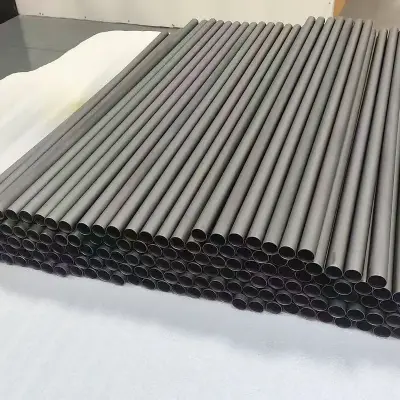
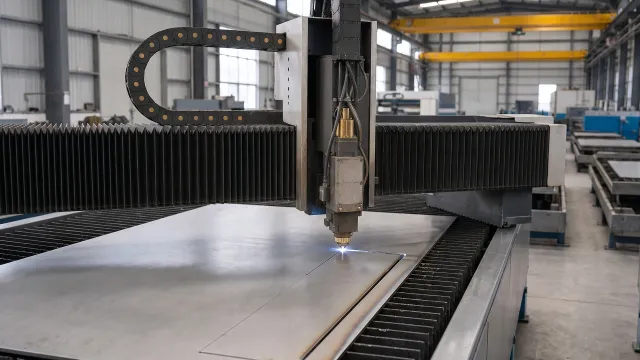
Band Saw Cutting Services

Band Saw Cutting Services for Titanium Alloys Band Saw Cutting is a highly efficient and precise method used for cutting titanium and titanium alloys. It is particularly useful for cutting titanium bars, tubes, sheets, and plates to specific lengths or shapes. This process is known for its ability to produce smooth, clean cuts with minimal material waste, which is crucial when working with valuable materials like titanium. At Titanium Seller, we offer expert Band Saw Cutting Services to meet the requirements of industries such as aerospace, automotive, medical, and more. Whether you need large batches or custom sizes, we can provide the precision and quality that your titanium components require. What is Band Saw Cutting? Band saw cutting involves a continuous band of toothed metal that moves around two or more wheels, using a sawing motion to cut through materials. The process is known for its ability to handle a wide range of material thicknesses and is ideal for cutting metals like titanium, which require specialized equipment due to their hardness and resistance to wear. The band saw cutting machine operates by guiding the titanium through the blade, producing a consistent, high-quality cut. It is especially effective for making straight cuts or specific profiles with high precision. Band saw cutting is often used when precision is essential, and when the material’s integrity must be preserved. Band Saw Cutting Services We Offer At Titanium Seller, we provide customized band saw cutting services for titanium and other materials. We work with a wide range of titanium alloys, including Grade 2 (CP Titanium), Grade 5 (Ti-6Al-4V), and others, and our cutting services are tailored to meet your specific needs. Our Band Saw Cutting Services Include:Precision Cutting: We offer precise cuts to your specified lengths and shapes, ensuring tight tolerances and a smooth, burr-free finish. Custom Sizes: Whether you need standard or custom-sized titanium parts, our band saw cutting services can accommodate a wide range of dimensions. High-Volume Cutting: We are equipped to handle both small and large orders, offering flexibility to meet your production schedules. Titanium Alloys Cutting: We specialize in cutting a variety of titanium grades and alloys to meet specific application requirements. Quick Turnaround Times: Our efficient band saw cutting process allows us to deliver your parts quickly without compromising on quality.Why Choose Band Saw Cutting for Titanium?Versatility: Band saw cutting is ideal for cutting titanium into different shapes, including bars, tubes, plates, and sheets. It allows for both straight and intricate cuts. Clean Cuts: The continuous band saw blade ensures smooth cuts with minimal rough edges, reducing the need for additional finishing or deburring. Cost-Effective: Band saw cutting minimizes material waste, making it an economical choice for high-value materials like titanium. Fast and Efficient: The process is efficient, allowing for fast cutting speeds and quick turnaround times, especially for large quantities of parts.Applications of Band Saw Cutting Our band saw cutting services are widely used in industries where high precision and performance are essential. Some of the common applications include:Aerospace: Cutting titanium bars, plates, and sheets into precise sizes for turbine blades, airframes, and other critical components. Medical: Cutting titanium rods, bars, and sheets used for implants, surgical instruments, and prosthetics. Automotive: Cutting titanium parts for high-performance vehicles, such as exhaust systems and engine components. Marine: Titanium’s corrosion resistance makes it perfect for marine applications, and band saw cutting ensures the parts are sized correctly for use in marine environments. Industrial Equipment: Cutting titanium for valves, pumps, and other machinery components that need high strength and durability.Advantages of Band Saw CuttingAccuracy: Achieve high precision and tight tolerances with minimal deviation. Smooth Finish: Band saw cutting produces a clean, smooth edge, which is often ready for further processing. Minimal Waste: This cutting method minimizes material loss, ensuring that you get the most out of your titanium materials. Versatile: Suitable for a wide range of material thicknesses and sizes, making it adaptable to your specific requirements. Cost-Effective: With its efficient material usage and quick cutting times, band saw cutting is an economical choice.Why Choose Titanium Seller for Band Saw Cutting? At Titanium Seller, we offer high-quality band saw cutting services that are tailored to meet your exact needs. Here’s why you should choose us:Experienced Technicians: Our team of experts is highly skilled in cutting titanium and other alloys, ensuring precise and reliable results. State-of-the-Art Equipment: We use advanced band saw cutting machines that allow for high-precision cuts with minimal waste. Custom Solutions: We can handle both small and large orders, providing custom cutting sizes and dimensions as per your specifications. Quick Turnaround: We provide fast processing and efficient service, ensuring that you receive your parts on time. Competitive Pricing: Our band saw cutting services are designed to provide you with high-quality parts at a competitive price.Industries We Serve Our band saw cutting services are suitable for various industries that require high-quality titanium components:Aerospace: Aircraft parts, turbine components, and airframe structures. Medical: Implants, surgical instruments, and prosthetics. Automotive: Exhaust systems, engine components, and high-performance parts. Marine: Boat fittings, hull components, and saltwater-resistant parts. Industrial: Valves, pumps, and other high-performance equipment.Conclusion Band saw cutting is an essential service for producing high-precision titanium parts with minimal material waste and smooth finishes. Whether you need titanium bars, plates, or custom shapes, Titanium Seller offers the expertise, equipment, and flexibility to meet your needs. For more information or to discuss your cutting requirements, Contact Us or Request a Quote today!

Read More about Band Saw Cutting Services

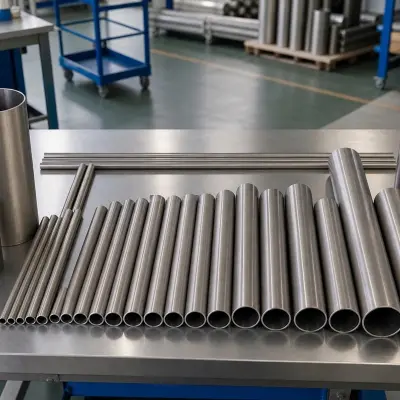
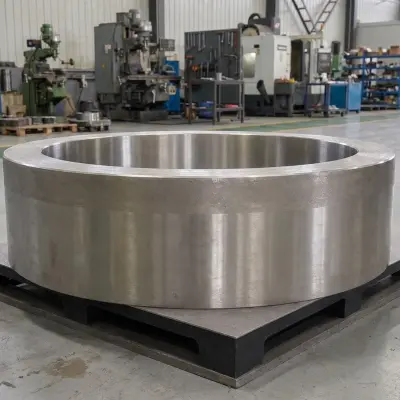
Cut to Length

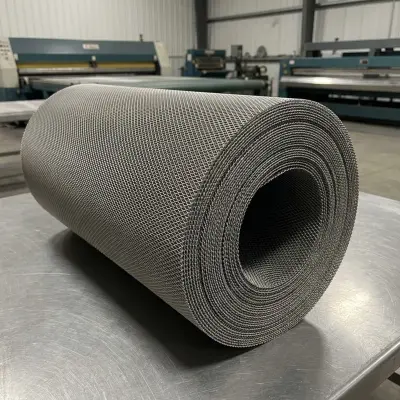
Precision Cut-to-Length Service for Titanium At Titanium Seller, we offer a Cut-to-Length service that allows you to order titanium materials in the exact length you need. Whether you’re working on small-scale prototypes, engineering projects, or industrial applications, our cutting service ensures you get titanium material cut to your exact specifications, with no waste or excess material. Our Cut-to-Length service is ideal for projects requiring specific lengths of titanium sheet, plate, or strip. We deliver precise, clean cuts that help streamline your production process and minimize material costs.How Our Cut-to-Length Service Works 1. Custom Lengths to Meet Your Specifications We offer custom lengths for titanium sheets, plates, and strips, ensuring that the material you receive is exactly what you need, saving you time and money on unnecessary processing. 2. High Precision Cutting Our state-of-the-art cutting equipment ensures high precision in every cut. Whether you're looking for smooth edges or tight tolerances, we meet your requirements with exceptional accuracy. 3. Fast and Reliable Delivery No matter the size of your order, we guarantee fast and reliable delivery. You can rely on us to provide titanium materials on time, without delays, so your project stays on track. 4. No Minimum Order Requirement There’s no minimum order quantity for our Cut-to-Length service. Whether you need a small batch for a prototype or a larger quantity for mass production, we provide flexible ordering options.Related Services We Offer In addition to Cut-to-Length, we offer several complementary services to ensure your titanium materials meet your specific project requirements: Custom Titanium Fabrication If your project requires more than just length, we also offer custom fabrication services. Our experienced technicians can machine, shape, and form titanium components to your exact design specifications. Titanium Material Supply We provide a wide range of titanium alloys, including Grade 2 (CP Titanium), Grade 5 (Ti-6Al-4V), and other specialty alloys. Choose the right material for your application, and we’ll supply it in the exact quantity you need. Cutting Services for Various Forms Besides sheets, plates, and strips, we also offer cutting services for bars, rods, and tubing. Whatever form your titanium material comes in, we can customize it to your desired length. Fast Shipping Our fast shipping options ensure your material reaches you on time, minimizing project downtime and ensuring that your operations proceed smoothly. We offer global shipping, making our services accessible wherever you are.Why Choose Titanium Seller for Cut-to-Length Services?Precision Cutting: We provide accurate and clean cuts for titanium materials, ensuring that your project is completed with the highest quality. Flexible Ordering: No minimum order quantity. Whether you need a few pieces or bulk, we accommodate your needs. Custom Solutions: Tailored solutions for unique project requirements, including custom shapes, sizes, and materials. Quick Delivery: Get your titanium materials quickly, no matter the size or complexity of your order. Expertise: With years of experience in titanium, we provide expert guidance on material selection and cutting techniques.Conclusion At Titanium Seller, our Cut-to-Length service is designed to meet the needs of customers who require precision cutting and flexible material handling. Whether you’re working with sheets, plates, or strips, we provide custom lengths to fit your exact specifications, ensuring minimal waste and maximum efficiency. We pride ourselves on delivering high-quality titanium materials in the right size for your project. For more information or to get started, Contact Us today, or Request a Quote for your next project.

Read More about Cut to Length

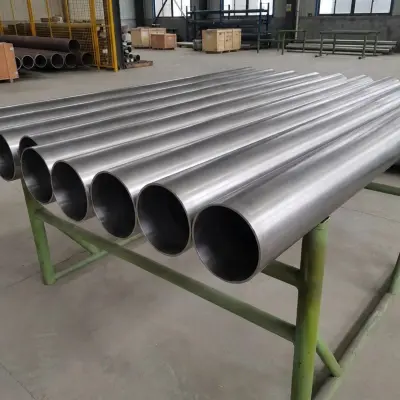
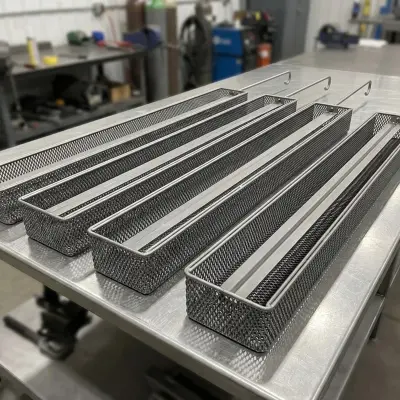
Fabrication

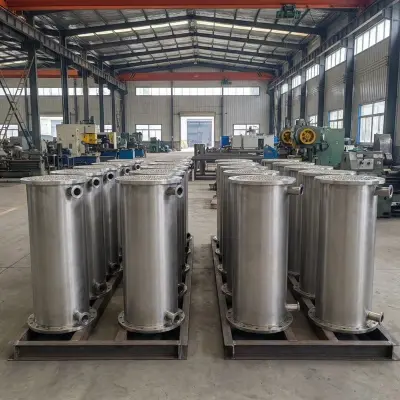
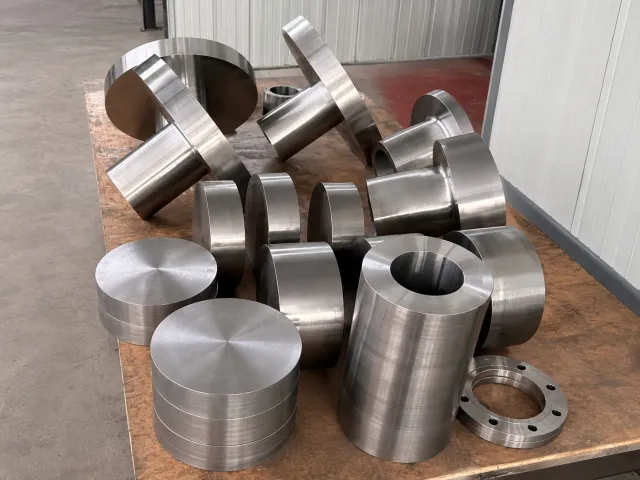
Titanium Fabrication Services At Titanium Seller, we offer high-quality titanium fabrication services tailored to meet the specific needs of your projects. Whether you're in aerospace, automotive, medical, or industrial applications, our expertise in working with titanium ensures that your components are fabricated to the highest standards of quality and precision. From custom machining and welding to bending and forming, our fabrication services cover a broad spectrum of capabilities. We work closely with our clients to deliver the exact specifications they require, ensuring the final product performs reliably under demanding conditions.Our Titanium Fabrication Capabilities 1. Custom Machining We specialize in precision machining of titanium alloys, including turning, milling, drilling, and grinding. Whether you need titanium parts for a small prototype or large-scale production, we provide highly accurate and repeatable results. Our skilled technicians use state-of-the-art machinery to achieve tight tolerances and superior finishes. 2. Titanium Welding Our titanium welding services include TIG welding (Tungsten Inert Gas) and MIG welding (Metal Inert Gas). These methods allow us to join titanium components with precision and strength. We follow strict industry standards to ensure that all welds are free from contamination and provide the highest level of structural integrity. 3. Titanium Forming and Bending Whether you require titanium tubes, plates, or strips to be bent, rolled, or formed into specific shapes, we have the capabilities to handle all types of titanium forming. Our advanced forming techniques ensure that titanium maintains its strength, integrity, and properties throughout the process. 4. Cutting and Shaping We offer custom cutting services for titanium materials, including laser cutting, waterjet cutting, and plasma cutting. Our precision cutting methods allow us to shape titanium components into any size or configuration required, with minimal waste and maximum accuracy. 5. Surface Treatment and Coating We provide surface treatment and coating services to enhance the durability, corrosion resistance, and appearance of titanium parts. Services include anodizing, chemical film coatings, and paint applications, which are especially useful for improving the performance of titanium components in harsh environments.Why Choose Our Titanium Fabrication Services? Precision and Quality We use the latest technology and high-precision equipment to ensure that every fabricated titanium part meets your exact specifications. Our fabrication processes are designed to produce durable and high-quality products, whether you need a single prototype or a large production run. Experience and Expertise With years of experience working with titanium alloys, our team has the knowledge and expertise to handle even the most complex fabrication projects. From aerospace components to medical implants, we understand the unique challenges titanium presents and know how to optimize it for various applications. Custom Solutions We offer custom fabrication solutions tailored to your unique needs. Whether you need specific dimensions, tolerances, or specialized finishes, we can accommodate all requests and provide the best solution for your project. Fast Turnaround Times We understand the importance of timely delivery. Our efficient fabrication processes ensure that we meet deadlines and provide you with the highest quality products on time. Our team works closely with clients to plan and manage projects for timely delivery.Related Services In addition to our fabrication services, we offer a wide range of complementary services to ensure your project is a success: Material Supply We provide a variety of titanium alloys and grades, including Grade 2 (CP Titanium), Grade 5 (Ti-6Al-4V), and custom alloys. We ensure that you receive the right material for your specific application. Cut-to-Length We offer a cut-to-length service for titanium materials, providing you with titanium sheets, plates, or strips in the exact length required for your project. Assembly Services We also provide assembly services, ensuring that your fabricated components are assembled into the final product, ready for installation or use. Prototyping We offer rapid prototyping for titanium components. Whether you need a prototype to test a design or develop a new product, we can provide you with the exact specifications and high-quality materials to bring your project to life.Industries We Serve Our titanium fabrication services are utilized across a variety of industries, including:Aerospace: Custom components, structural parts, and fasteners. Medical: Implants, surgical instruments, and prosthetics. Automotive: High-performance parts and exhaust systems. Industrial: Custom machinery components, valves, and fittings. Marine: Corrosion-resistant components for maritime applications.Conclusion At Titanium Seller, we offer top-tier titanium fabrication services that meet the highest standards of quality, precision, and performance. Whether you need custom machining, titanium welding, bending, or forming, our team is dedicated to delivering results that exceed your expectations. For more information on our fabrication services or to get started on your next project, please Contact Us or Request a Quote today!

Read More about Fabrication
About Image

About Us

Precision Titanium Solutions for Critical Industries

Established in 2004, Shaanxi Yuelu Technology Co., Ltd. is a leading supplier of high-performance titanium materials, serving industries such as aerospace, medical devices, and marine engineering. We offer a comprehensive range of titanium plates, sheets, bars, billets, and custom-engineered components, ensuring solutions that meet the highest standards of strength, durability, and precision for complex industry requirements.

Learn About Titanium Seller

Latest News

Learn From Us

More News
Engineering
From Ore to Precision: How Titanium Parts Are Engineered for Excellence
By William Jacob/ On 10 May, 2025

From Ore to Precision: How Titanium Parts Are Engineered for Excellence

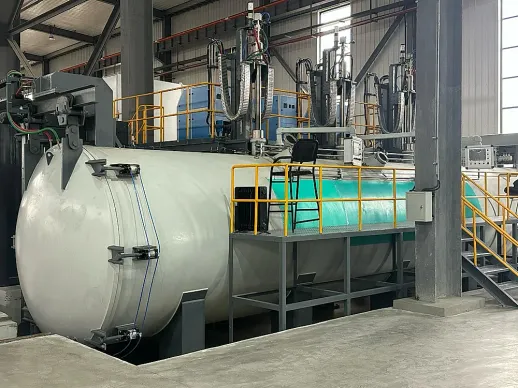
Titanium parts used in aerospace, medical, and industrial systems don’t just start on a CNC lathe—they begin as minerals deep in the Earth. The journey from raw titanium ore to a precision-engineered component involves an intricate chain of metallurgy, chemistry, and machining expertise. This article breaks down each step in the process: from extraction and refining to alloying, forming, and final finishing. Whether it’s a jet turbine blade or a spinal implant, the excellence of titanium parts lies in the science of their transformation.Step 1: Extracting the Raw Material Titanium is primarily extracted from ilmenite (FeTiO₃) and rutile (TiO₂) ores. Mining locations: Australia, South Africa, and Canada lead in titanium ore production. Once mined, the ore undergoes chlorination to produce titanium tetrachloride (TiCl₄), a volatile compound essential for purification.Step 2: Refining via the Kroll Process The Kroll Process remains the primary method for refining titanium: TiCl₄ is reduced using magnesium (Mg) in a high-temperature reactor. The result is a porous, sponge-like raw titanium—often called titanium sponge. This sponge is melted in a vacuum arc remelting furnace to produce ingots.Though energy-intensive, the Kroll process produces high-purity titanium suitable for aerospace and medical applications.Step 3: Alloying and Ingot Formation Titanium is rarely used in pure form. It’s alloyed with elements like: Aluminum (Al) and Vanadium (V) for aerospace-grade materials (e.g., Ti-6Al-4V). Molybdenum (Mo) and Iron (Fe) for enhanced machinability and corrosion resistance.These ingots are then forged or rolled into billets, slabs, or bars depending on their intended application.Step 4: Forming and Machining Precision forming techniques shape titanium into usable formats: Hot forging and extrusion shape structural parts. CNC machining refines parts down to micron-level tolerances. EDM (Electrical Discharge Machining) is used for complex geometries.Because titanium has low thermal conductivity and high hardness, cutting requires slow speeds, rigid setups, and titanium-grade tool coatings.Step 5: Surface Finishing and Inspection Final steps involve enhancing performance and ensuring integrity: Anodizing or passivation creates a corrosion-resistant surface. Ultrasonic testing, X-ray diffraction, and dye penetrant inspection detect internal and surface defects. For medical and aerospace components, each part must pass strict ISO and ASTM standards.Applications of Precision Titanium ComponentsJet turbine blades: High strength and heat resistance Dental and orthopedic implants: Bio-compatibility and non-reactivity Chemical valves and seals: Resistance to acid and salt corrosion Motorsport parts: Weight savings without compromising strengthIndustry Outlook With advancements in 3D printing, powder metallurgy, and AI-driven quality control, the engineering of titanium parts is becoming faster, cleaner, and more precise. As manufacturing pushes for lighter, stronger, and more sustainable materials, titanium’s role will only grow.

Aerospace
Aerospace Titanium Supply Chain Is Being Reshaped by 3D Printing and Domestic Production
By William Jacob/ On 04 Apr, 2026

Aerospace Titanium Supply Chain Is Being Reshaped by 3D Printing and Domestic Production

The aerospace titanium supply chain is undergoing its most significant transformation in decades. Three forces are converging at once: additive manufacturing is reaching industrial scale, Western nations are racing to build domestic titanium capacity, and China's dominance over global production continues to grow. For procurement teams and engineers sourcing titanium for flight-critical applications, understanding these shifts is no longer optional — it is essential. As a supply chain platform rooted in Baoji, China's "Titanium Valley" and the epicenter of the nation's titanium production, Titanium Seller has a front-row seat to these changes. Here is what we see happening — and what it means for buyers worldwide. The Geopolitical Backdrop: Who Controls Aerospace Titanium? The numbers tell a stark story. China's share of global titanium metal production has surged from approximately 40% in 2019 to over 75% in 2025, according to Project Blue and multiple industry analysts. Meanwhile, the United States has been entirely import-dependent for titanium sponge — the foundational raw material — since 2020, when the last major US production facility in Henderson, Nevada, shut down. This concentration of supply has become a strategic concern. Project Blue projects that Western aerospace manufacturers will need more than 1.6 million tonnes of titanium by 2044 to build roughly 46,000 new commercial aircraft. The aerospace titanium market alone is expected to grow from USD 3.4 billion in 2026 to USD 7.2 billion by 2035, at a CAGR of 8.6%. Russia, historically a primary supplier of aerospace-grade titanium to Western OEMs, remains constrained by ongoing sanctions and geopolitical tensions. This leaves China as the dominant force in global titanium production — a reality that is driving urgent action in Europe and North America. Airbus Breaks New Ground: 7-Meter Titanium Parts via 3D Printing Perhaps the most exciting development in aerospace titanium this year is Airbus's industrial deployment of wire-Directed Energy Deposition (w-DED) technology. Using a multi-axis robotic arm armed with a spool of titanium wire, Airbus can now 3D-print structural titanium components up to seven meters long for the A350 program. Why does this matter? Traditional titanium forging is notoriously wasteful. The industry's "buy-to-fly ratio" — the amount of raw titanium purchased versus what actually ends up in the finished part — typically means 80–95% of material is machined away and recycled. W-DED creates near-net-shape parts, dramatically reducing waste at the source. The production speed is also transformative. W-DED systems produce several kilograms of deposited titanium per hour, compared to hundreds of grams per hour for conventional powder-bed fusion systems. Tooling design timelines have shrunk from two years with traditional forging to just a few weeks through computer programming. Airbus has already moved this technology into serial production for A350 Cargo Door Surround components, with plans to expand to wings and landing gear. This signals a fundamental shift: additive manufacturing is no longer a prototyping curiosity — it is becoming a production workhorse for large, structural titanium aerospace parts. The Multi-Laser Revolution: LPBF Scales Up Beyond w-DED, powder-bed fusion technology is also reaching new scales. Modern Multi-Laser Powder Bed Fusion (LPBF) systems now operate with up to 12 simultaneous lasers, reducing build times by more than 60% and lowering per-unit costs through economies of scale. Manufacturers can now mass-produce turbine blades, engine brackets, and complex internal geometries using Grade 5 Ti-6Al-4V — the workhorse alloy for aerospace applications. The aero-engine segment alone accounted for 48.6% of the aerospace titanium market in 2025, driven by titanium's critical role in compressor blades, fan cases, and turbine disks. For the additive manufacturing supply chain, this creates surging demand for high-quality titanium powder and wire feedstock — areas where Baoji's integrated production ecosystem offers distinct advantages. America's Reshoring Race: Billions at Stake The US government is responding to the supply chain vulnerability with significant investment. American Titanium Metal LLC announced an $868 million investment to build a new 500,000-square-foot facility in North Carolina for melting, rolling, and finishing aerospace-grade titanium, potentially operational by 2027. Simultaneously, the Department of Defense awarded IperionX a contract worth up to $47.1 million, including the transfer of roughly 290 metric tons of high-quality titanium scrap — about 1.5 years of feedstock at IperionX's current 200-tonne annual capacity. This contract supports IperionX's innovative approach to producing aerospace-grade titanium from recycled scrap using patented hydrogen-assisted metallurgy. These investments are substantial, but they will take years to reach meaningful production scale. In the interim, the global aerospace industry remains heavily dependent on established supply chains — particularly those running through China's Titanium Valley in Baoji. China's Titanium Valley: Capacity, Challenges, and Opportunity China's titanium sponge production capacity is forecast to reach approximately 441,000 tonnes per year in 2026, up from 341,000 tonnes in 2025. January 2026 output alone was approximately 23,800 tonnes of sponge titanium. However, this rapid capacity expansion brings its own challenges. The market faces pricing and margin pressure from overcapacity, weaker chemical-sector demand, and tightening export controls on certain titanium mill products. Export controls that took effect on July 1, 2024, have been further tightened in 2026, creating a complex regulatory landscape for international buyers. For Titanium Seller, operating at the heart of this ecosystem provides unique advantages. Our direct relationships with over 50 mills and foundries in Baoji allow us to offer:Grade 5 Ti-6Al-4V sheets, plates, rods, and wire meeting AMS 4911, AMS 4928, and ASTM B265 specifications Titanium wire feedstock for additive manufacturing systems, available in Grade 2 CP and Grade 5 alloys Centralized quality control with full material traceability, mill test reports, and third-party certificationUnlike trading intermediaries, we work directly within the factory cluster, enabling direct factory pricing without sacrificing quality assurance. What This Means for Titanium Buyers The reshaping of the aerospace titanium supply chain creates both risks and opportunities for procurement professionals: 1. Diversify your supply base now. With US domestic capacity still years away from scale, buyers who establish reliable Asian supply partnerships today will have more leverage and options tomorrow. 2. Evaluate additive manufacturing feedstock needs early. As OEMs like Airbus scale up titanium 3D printing, demand for certified wire and powder will grow rapidly. Securing supply agreements for AM-grade titanium feedstock is a smart strategic move. 3. Understand export control implications. China's evolving export regulations on titanium mill products require buyers to work with knowledgeable supply chain partners who can navigate compliance requirements efficiently. 4. Demand full traceability. Whether sourcing forged billets or AM wire, aerospace-grade titanium requires complete material traceability from sponge to finished product. Insist on partners who provide mill test reports, chemical analysis certificates, and third-party inspection documentation. Conclusion The aerospace titanium supply chain is being rebuilt in real time — through additive manufacturing breakthroughs, government-backed reshoring programs, and the continuing evolution of China's production ecosystem. These changes will define how the industry sources, processes, and uses titanium for the next decade. At Titanium Seller, we bridge the world's largest titanium production cluster in Baoji with global aerospace buyers who need reliable, certified, and competitively priced material. Whether you are sourcing Ti-6Al-4V plate for traditional machining or titanium wire for your next additive manufacturing project, contact us to discuss how our one-stop supply chain can support your program requirements.Related Articles:Why Special Titanium Alloys Are Essential for Aerospace Applications From Sponge to Spool: The Manufacturing Journey of Titanium Wire Why Titanium Is Taking Over Modern Manufacturing

Medical
Smart Titanium Implants: Antibacterial Surfaces and 3D Printed Medical Devices
By Sam Wilson/ On 04 Apr, 2026

Smart Titanium Implants: Antibacterial Surfaces and 3D Printed Medical Devices

Titanium has been the gold standard for orthopedic and dental implants for decades, but 2026 is proving to be a landmark year for the metal's medical applications. Researchers at the University of Hong Kong have unveiled a smart titanium surface that kills 99.94% of bacterial biofilms without antibiotics, while multiple FDA clearances for 3D-printed titanium spinal implants are accelerating the shift toward patient-specific devices. These developments are not just scientific milestones — they are reshaping demand for medical-grade titanium across the entire supply chain. As a comprehensive titanium supply platform based in Baoji, China's Titanium Valley, Titanium Seller works with mills that produce ASTM F136 and ISO 5832-3 certified medical-grade alloys. Here is our perspective on what these breakthroughs mean for the industry — and for buyers sourcing titanium for medical applications. Breakthrough: A Titanium Surface That Fights Infection on Its Own Periprosthetic joint infection (PJI) remains one of the most feared complications in orthopedic surgery. When bacteria colonize an implant surface and form biofilms, they become extremely resistant to antibiotics — often requiring painful revision surgery and prolonged treatment. A team led by Professor Kelvin Yeung Wai-kwok at the University of Hong Kong's Department of Orthopedics and Traumatology has developed an elegant solution. Their approach modifies the titanium implant surface itself, creating nano-honeycomb structures with engineered oxygen vacancies through a hydrogenation process. When activated by near-infrared (NIR) light — delivered through a brief 15-minute external irradiation session — these modified surfaces generate reactive oxygen species and a mild local photothermal effect that disrupts bacterial biofilms from the inside out. The results, published as a cover story in Cell Biomaterials, are striking:In vitro: 99.94% elimination of Staphylococcus aureus biofilms after 15 minutes of NIR irradiation In vivo (rat model): 91.58% biofilm removal No antibiotics required — the mechanism is purely physical and photochemicalBeyond bacterial elimination, the surface modification shifts macrophage behavior toward tissue remodeling, actively promoting bone-implant integration. This dual functionality — fighting infection while accelerating healing — addresses two of the biggest challenges in implant surgery simultaneously. The technology is applicable across a wide range of titanium implants: joint replacements, fracture fixation devices, spinal fusion cages, dental implants, and craniofacial reconstruction hardware. FDA Clearances Accelerate 3D-Printed Titanium Implants While the HKU research represents the cutting edge of surface science, the commercial side of medical titanium is advancing just as rapidly. In January 2026, Spine Innovation received FDA 510(k) clearance for the LOGIC™ Titanium Expandable Interbody System. The device incorporates OsteoSync™ Ti, a patented pure titanium lattice structure that has been implanted in more than 250,000 patients since 2014. The expandable design allows surgeons to adjust implant height in situ, reducing the need for multiple implant sizes in the operating room. Meanwhile, IMPLANET secured FDA clearance for its Swingo anterior cervical cage range — a fully 3D-printed titanium implant designed for cervical spine fusion procedures. The 3D-printed lattice architecture enables precise control over porosity and mechanical properties, promoting better interbody fusion outcomes. These clearances reflect a broader trend: 3D-printed titanium implants are moving from niche applications to mainstream surgical practice. The ability to create patient-specific geometries, optimized porous structures for bone ingrowth, and complex internal architectures that are impossible with traditional machining gives additive manufacturing a compelling advantage in the medical device space. Why Ti-6Al-4V ELI Remains the Medical Gold Standard The alloy behind most of these innovations is Ti-6Al-4V ELI (Extra Low Interstitials) — designated as Grade 23 titanium and specified under ASTM F136 and ISO 5832-3. This alloy offers a carefully balanced combination of properties that make it uniquely suited for implant applications:Property Value Why It MattersElastic modulus ~110 GPa Closer to bone (30 GPa) than steel (200 GPa), reducing stress shieldingTensile strength 860–965 MPa Strong enough for load-bearing implantsFatigue endurance Excellent Withstands millions of loading cycles in jointsBiocompatibility Non-cytotoxic No adverse immune response; promotes osseointegrationCorrosion resistance Passive TiO₂ layer Stable in body fluids indefinitelyThe "ELI" designation means reduced oxygen, nitrogen, carbon, and iron content compared to standard Grade 5 Ti-6Al-4V. These lower interstitial levels improve fracture toughness and fatigue life — critical properties for implants that must perform reliably inside the human body for 20 years or more. For 3D printing applications, the powder and wire feedstock must meet even tighter specifications. Powder sphericity, particle size distribution, and oxygen pickup during atomization all directly affect the mechanical properties of the final printed implant. This is why medical device manufacturers demand rigorous material certification from their titanium suppliers. The Supply Chain Implications These medical breakthroughs are driving measurable shifts in titanium demand: Growing volume requirements. The global medical titanium implant market continues to outpace overall titanium market growth, driven by aging populations in developed economies and expanding access to orthopedic and dental care in emerging markets. The overall titanium market is projected to grow from 225.68 kilotons in 2025 to 238.8 kilotons in 2026, with medical applications growing even faster. Tighter quality specifications. As implant designs become more sophisticated — with nano-structured surfaces, 3D-printed lattices, and patient-specific geometries — the quality requirements for incoming titanium material intensify. Medical device manufacturers need suppliers who can consistently deliver material that meets ASTM F136, with full chemical analysis, mechanical testing, and microstructure documentation. Demand for AM-grade feedstock. The shift toward 3D-printed implants creates specific demand for titanium powder (15–45 μm for LPBF) and wire feedstock with controlled chemistry and minimal contamination. This is a growing segment that requires specialized production capabilities. How Titanium Seller Supports Medical-Grade Supply Operating from within Baoji's integrated titanium production cluster gives Titanium Seller direct access to mills that specialize in medical-grade material. Our approach to serving the medical device sector includes:ASTM F136 / ISO 5832-3 certified Ti-6Al-4V ELI in sheet, plate, rod, wire, and tube forms Grade 2 and Grade 4 commercially pure titanium for applications requiring maximum corrosion resistance and formability Full material traceability from sponge titanium through final mill product, with mill test reports and independent third-party inspection Centralized quality control that audits and verifies each supplier's production processes, heat treatment records, and testing protocolsOur one-stop supply model means medical device manufacturers can source multiple titanium product forms — plates for machined components, wire for additive manufacturing, tubes for instrumentation — from a single qualified platform, simplifying supplier management and ensuring consistent material quality. What Medical Titanium Buyers Should Watch 1. Surface modification technologies will drive material specifications. As technologies like HKU's antibacterial surface move toward commercialization, expect new requirements for surface finish, grain structure, and oxide layer characteristics in procurement specifications. 2. 3D printing adoption will accelerate. With multiple FDA clearances in hand and clinical data accumulating, 3D-printed titanium implants will capture an increasing share of the spinal, orthopedic, and dental markets. Buyers should establish AM feedstock supply chains now. 3. Regulatory scrutiny will increase. As more 3D-printed titanium devices enter the market, regulatory bodies will tighten requirements for material characterization, process validation, and post-market surveillance. Full traceability from raw material to finished device will become non-negotiable. 4. China's role in medical titanium will grow. Despite export controls on certain titanium mill products, China's medical-grade titanium production capabilities continue to expand. Buyers who build relationships with reliable Chinese supply chain partners gain access to competitive pricing without compromising quality — provided they work with platforms that enforce rigorous QC standards. Conclusion From smart antibacterial surfaces to FDA-cleared 3D-printed spinal cages, 2026 is proving that titanium's role in medicine is only growing. These innovations demand higher-quality raw materials, tighter process controls, and more sophisticated supply chain partnerships. At Titanium Seller, we combine Baoji's unmatched production scale with the quality assurance systems that medical device manufacturers require. Whether you need ASTM F136 bar stock for CNC-machined implant components or certified titanium powder for your additive manufacturing line, reach out to our team to explore how we can support your next medical titanium project.Related Articles:The Healing Framework: How Titanium Mesh Revolutionizes Medical Implants Comparing Popular Special Titanium Alloys for Industrial Use From Ore to Precision: How Titanium Parts Are Engineered for Excellence