Type something to search...

Aerospace

others
EU's 20th Sanctions Package Skips Titanium Again: The Airbus-Bureaucracy Double Lock
By Jason/ On 29 Apr, 2026

EU's 20th Sanctions Package Skips Titanium Again: The Airbus-Bureaucracy Double Lock

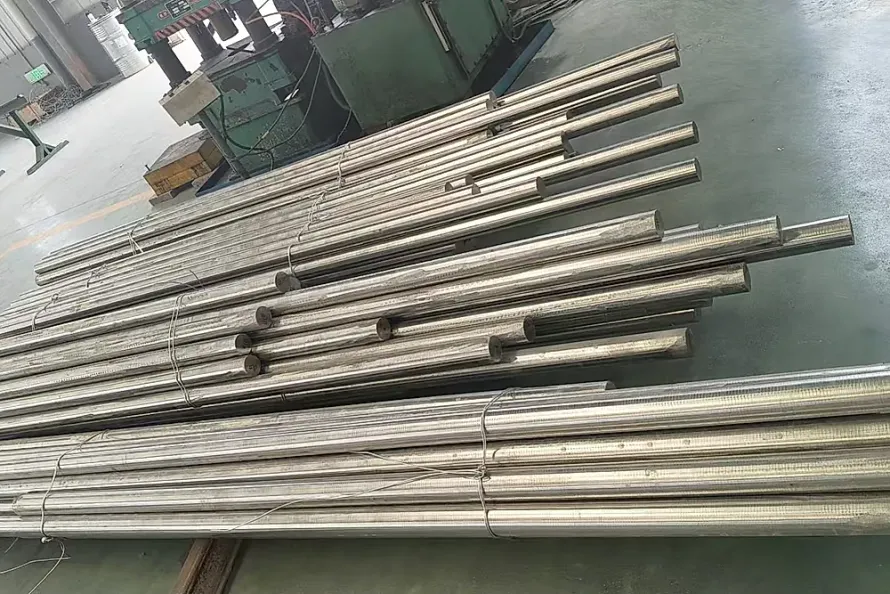
The EU adopted its 20th Russia sanctions package on April 23. Nickel, iron ore, unrefined and refined copper, and aluminum scrap — together more than €530M of trade — were folded into the prohibition list. Titanium was excluded again. The €213.5M annual flow of Russian titanium into the EU remains untouched. That makes four consecutive packages in which titanium has been quietly sidestepped. Pull the "why" apart and what you find is not a technical oversight — it is a double lock built from Airbus dependency and bureaucratic inertia. What four sanctions rounds of titanium evasion really tell usStart with the numbers. The EU currently imports roughly €213.5M of titanium per year from Russia, which translates at 2025 physical volumes into something on the order of 8,000-10,000 tonnes of sponge plus ingot. That is not a marginal stream — it is one of the core sources of flight-critical large-format Ti-6Al-4V forging stock feeding the Airbus airframe supply chain. VSMPO-Avisma's capability in oversized Gr.5 forgings is something no Western mill has fully replicated in the past 30 years. The 17th package (April 2025) was the round where titanium came closest to inclusion. Titanium sat in the working draft until the late stages, then was pulled with the rationale "insufficient short-term substitute supply." The 18th and 19th packages, passed in July and November 2025, both excluded titanium as well. The 20th — the package that just cleared on April 23 — sidestepped it once more. One detail worth noting: every metal that has been added to the list is one Europe can already self-supply through domestic or allied capacity. Nickel comes from Canada and Indonesia, iron ore from Brazil and Australia, copper from Chile and Peru, aluminum scrap circulates inside the EU. Titanium is not on that curve. EU-domestic primary sponge capacity is essentially zero. The largest non-Russian alternative is Japan — Toho Titanium and Osaka Titanium Technologies — but their combined annual capacity of 30,000-40,000 tonnes is already split to its limit between aerospace and semiconductor demand. There is no slack to absorb the 8,000-10,000 tonnes Russia would vacate. That is the structure of the lock: as long as Airbus treats large-format Ti-6Al-4V forgings as a platform-critical input, and as long as the Japanese mills have no near-term path to expand, the EU cannot politically absorb the airframe-line shutdown risk that cutting Russian titanium would create. The other half: bureaucratic inertia The second lock is procedural. The EU sanctions mechanism runs on unanimous member-state consent shaped by reverse industry lobbying — meaning every line item passes first through the internal modeling of national OEMs. For Germany, France, and the UK (BAE remains plugged into the European aerospace system), an Airbus production cut triggered by titanium starvation would propagate down through every Tier 2 and Tier 3 link: Rolls-Royce engine lines in the UK, Safran landing gear lines in France, Premium Aerotec airframe forging lines in Germany. All of them depend on a stable Gr.5 ingot rhythm. This is the "we know it doesn't add up but we can't unwind it short-term" deadlock. EU Commission officials have stated openly in recent months that "the titanium exemption no longer reflects market reality" — but those statements live at the rhetorical layer. Translating that consensus into actual sanctions text requires 18-24 months of stress-testing non-Russian alternatives. No European titanium producer is currently positioned to enter that pre-qualification list. Worth contrasting: the United States went the other way. The Section 232 sponge tariff exemption proposal — the "Securing America's Titanium Manufacturing Act" — is moving through Congress, propping up domestic supply through tax measures and DPA funding rather than direct prohibition of Russian material. Two paths reflect two institutional logics: the US pushes endogenous supply through industrial policy, the EU preserves the status quo through member-state bargaining. The window for Chinese, Japanese, and other Asian millsWhat does the 20th package's titanium carve-out mean for Asian mills? Short term, European Tier 1 and Tier 2 buyers have no immediate trigger to switch sources. Medium term, ESG and compliance pressure is moving down the chain quietly — many European OEMs' internal audit functions are already requiring Tier 2 forge shops to provide "non-Russian titanium" provenance documentation, even where external sanctions haven't yet bitten. What we are seeing on the ground in Baoji (China's Titanium Valley) is concrete: the mills we partner with already hold EN9100 / AS9100 aerospace quality system certifications. Direct export workflows into Europe are still being built out, but cargo flow into European end-users via Hong Kong / Singapore freight forwarder channels has been climbing steadily over the past six months. That is a more reliable progressive signal than any political statement — customers vote with their feet, ahead of the sanctions text. The qualification bottleneck is not product capability, it is EASA Form 1 and EN9100 documentary traceability. When European aerospace OEMs accept titanium they are not only checking ASTM B348 / AMS 4928 chemistry — they require an unbroken OEM-qualified audit chain at every heat number. Building that compliance vocabulary properly takes 12-18 months of system alignment. Mills that get this in place early will hold first-mover position when the EU's 21st or 22nd package finally folds titanium into the prohibition list — and that window will arrive — sometime in 2027. We currently hold roughly 50 tonnes of aerospace Ti-6Al-4V Gr.5 titanium rod and forging stock, in diameters Φ20-200 mm. Inquiry frequency from European-direction buyers (including indirect channels via intermediaries) has visibly stepped up this week. That curve doesn't need a formal EU sanctions trigger to start. It already has. Checklist for buyers and compliance officers If you are planning aerospace titanium procurement for 2026-2027, three things to do right now: First, lock "non-Russian titanium + complete heat-number traceability + EN9100/AS9100 qualification" into your RFQ template as a hard requirement. This is the compliance trajectory the EU will move from voluntary to mandatory over the next 12-24 months. Second, push your single-source share below 50%. Today, Russian + Japanese titanium combined still represents 70%+ of supply at most European Tier 2 forge shops. That is structurally fragile. Onboarding one qualified mill from each of Japan, China, and North America gives you redundancy when 2027 sanctions actually trigger — without an airframe line stoppage. Third, treat physical inventory availability as a qualification advantage. The real signal from the 20th package's titanium carve-out is "no near-term enforcement," but compliance audits will move first. Suppliers who can deliver titanium forgings from stock with full MTC documentation will clear the 2026-2027 qualification race three to six months ahead of futures-dependent suppliers. The variable worth tracking over the next 12 months is not whether the 21st sanctions package will fold titanium in. It is whether Japanese mill capacity expansions can keep pace with the rate at which European aerospace OEMs qualify non-Russian alternative sources. Where those two curves intersect is the moment the EU titanium exemption truly fails. The 20th package's "skipped again" outcome is just one tick on that countdown. Related Products & ServicesService → Stocking Programs for Aerospace-Grade Titanium — the physical-inventory route for staying ahead of European compliance timing Product → Ti-6Al-4V Titanium Rods and Forging Stock — Gr.5 aerospace bar and billet, multi-heat traceability Product → Special Titanium Alloys — backup grade options outside the Airbus-dominated specification setAbout: Titanium Seller is a supply chain platform based in Baoji, China's Titanium Valley.

Aerospace
Aerospace Titanium Supply Chain Is Being Reshaped by 3D Printing and Domestic Production
By William Jacob/ On 04 Apr, 2026

Aerospace Titanium Supply Chain Is Being Reshaped by 3D Printing and Domestic Production

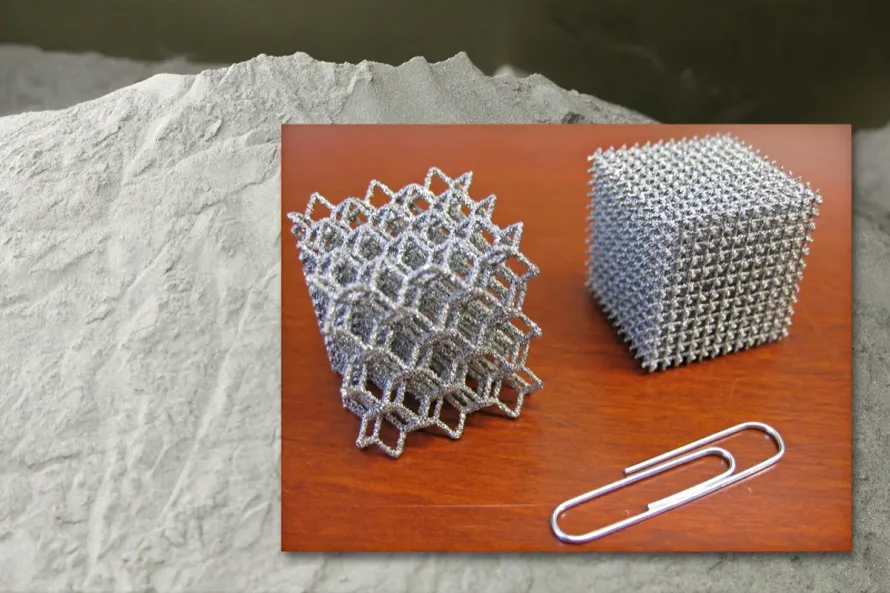
The aerospace titanium supply chain is undergoing its most significant transformation in decades. Three forces are converging at once: additive manufacturing is reaching industrial scale, Western nations are racing to build domestic titanium capacity, and China's dominance over global production continues to grow. For procurement teams and engineers sourcing titanium for flight-critical applications, understanding these shifts is no longer optional — it is essential. As a supply chain platform rooted in Baoji, China's "Titanium Valley" and the epicenter of the nation's titanium production, Titanium Seller has a front-row seat to these changes. Here is what we see happening — and what it means for buyers worldwide. The Geopolitical Backdrop: Who Controls Aerospace Titanium? The numbers tell a stark story. China's share of global titanium metal production has surged from approximately 40% in 2019 to over 75% in 2025, according to Project Blue and multiple industry analysts. Meanwhile, the United States has been entirely import-dependent for titanium sponge — the foundational raw material — since 2020, when the last major US production facility in Henderson, Nevada, shut down. This concentration of supply has become a strategic concern. Project Blue projects that Western aerospace manufacturers will need more than 1.6 million tonnes of titanium by 2044 to build roughly 46,000 new commercial aircraft. The aerospace titanium market alone is expected to grow from USD 3.4 billion in 2026 to USD 7.2 billion by 2035, at a CAGR of 8.6%. Russia, historically a primary supplier of aerospace-grade titanium to Western OEMs, remains constrained by ongoing sanctions and geopolitical tensions. This leaves China as the dominant force in global titanium production — a reality that is driving urgent action in Europe and North America. Airbus Breaks New Ground: 7-Meter Titanium Parts via 3D Printing Perhaps the most exciting development in aerospace titanium this year is Airbus's industrial deployment of wire-Directed Energy Deposition (w-DED) technology. Using a multi-axis robotic arm armed with a spool of titanium wire, Airbus can now 3D-print structural titanium components up to seven meters long for the A350 program. Why does this matter? Traditional titanium forging is notoriously wasteful. The industry's "buy-to-fly ratio" — the amount of raw titanium purchased versus what actually ends up in the finished part — typically means 80–95% of material is machined away and recycled. W-DED creates near-net-shape parts, dramatically reducing waste at the source. The production speed is also transformative. W-DED systems produce several kilograms of deposited titanium per hour, compared to hundreds of grams per hour for conventional powder-bed fusion systems. Tooling design timelines have shrunk from two years with traditional forging to just a few weeks through computer programming. Airbus has already moved this technology into serial production for A350 Cargo Door Surround components, with plans to expand to wings and landing gear. This signals a fundamental shift: additive manufacturing is no longer a prototyping curiosity — it is becoming a production workhorse for large, structural titanium aerospace parts. The Multi-Laser Revolution: LPBF Scales Up Beyond w-DED, powder-bed fusion technology is also reaching new scales. Modern Multi-Laser Powder Bed Fusion (LPBF) systems now operate with up to 12 simultaneous lasers, reducing build times by more than 60% and lowering per-unit costs through economies of scale. Manufacturers can now mass-produce turbine blades, engine brackets, and complex internal geometries using Grade 5 Ti-6Al-4V — the workhorse alloy for aerospace applications. The aero-engine segment alone accounted for 48.6% of the aerospace titanium market in 2025, driven by titanium's critical role in compressor blades, fan cases, and turbine disks. For the additive manufacturing supply chain, this creates surging demand for high-quality titanium powder and wire feedstock — areas where Baoji's integrated production ecosystem offers distinct advantages. America's Reshoring Race: Billions at Stake The US government is responding to the supply chain vulnerability with significant investment. American Titanium Metal LLC announced an $868 million investment to build a new 500,000-square-foot facility in North Carolina for melting, rolling, and finishing aerospace-grade titanium, potentially operational by 2027. Simultaneously, the Department of Defense awarded IperionX a contract worth up to $47.1 million, including the transfer of roughly 290 metric tons of high-quality titanium scrap — about 1.5 years of feedstock at IperionX's current 200-tonne annual capacity. This contract supports IperionX's innovative approach to producing aerospace-grade titanium from recycled scrap using patented hydrogen-assisted metallurgy. These investments are substantial, but they will take years to reach meaningful production scale. In the interim, the global aerospace industry remains heavily dependent on established supply chains — particularly those running through China's Titanium Valley in Baoji. China's Titanium Valley: Capacity, Challenges, and Opportunity China's titanium sponge production capacity is forecast to reach approximately 441,000 tonnes per year in 2026, up from 341,000 tonnes in 2025. January 2026 output alone was approximately 23,800 tonnes of sponge titanium. However, this rapid capacity expansion brings its own challenges. The market faces pricing and margin pressure from overcapacity, weaker chemical-sector demand, and tightening export controls on certain titanium mill products. Export controls that took effect on July 1, 2024, have been further tightened in 2026, creating a complex regulatory landscape for international buyers. For Titanium Seller, operating at the heart of this ecosystem provides unique advantages. Our direct relationships with over 50 mills and foundries in Baoji allow us to offer:Grade 5 Ti-6Al-4V sheets, plates, rods, and wire meeting AMS 4911, AMS 4928, and ASTM B265 specifications Titanium wire feedstock for additive manufacturing systems, available in Grade 2 CP and Grade 5 alloys Centralized quality control with full material traceability, mill test reports, and third-party certificationUnlike trading intermediaries, we work directly within the factory cluster, enabling direct factory pricing without sacrificing quality assurance. What This Means for Titanium Buyers The reshaping of the aerospace titanium supply chain creates both risks and opportunities for procurement professionals: 1. Diversify your supply base now. With US domestic capacity still years away from scale, buyers who establish reliable Asian supply partnerships today will have more leverage and options tomorrow. 2. Evaluate additive manufacturing feedstock needs early. As OEMs like Airbus scale up titanium 3D printing, demand for certified wire and powder will grow rapidly. Securing supply agreements for AM-grade titanium feedstock is a smart strategic move. 3. Understand export control implications. China's evolving export regulations on titanium mill products require buyers to work with knowledgeable supply chain partners who can navigate compliance requirements efficiently. 4. Demand full traceability. Whether sourcing forged billets or AM wire, aerospace-grade titanium requires complete material traceability from sponge to finished product. Insist on partners who provide mill test reports, chemical analysis certificates, and third-party inspection documentation. Conclusion The aerospace titanium supply chain is being rebuilt in real time — through additive manufacturing breakthroughs, government-backed reshoring programs, and the continuing evolution of China's production ecosystem. These changes will define how the industry sources, processes, and uses titanium for the next decade. At Titanium Seller, we bridge the world's largest titanium production cluster in Baoji with global aerospace buyers who need reliable, certified, and competitively priced material. Whether you are sourcing Ti-6Al-4V plate for traditional machining or titanium wire for your next additive manufacturing project, contact us to discuss how our one-stop supply chain can support your program requirements.Related Articles:Why Special Titanium Alloys Are Essential for Aerospace Applications From Sponge to Spool: The Manufacturing Journey of Titanium Wire Why Titanium Is Taking Over Modern Manufacturing

Ready to Start Your Project?

Get factory-direct pricing on titanium products. No minimum order.

Get a Free Quote
Quick Inquiry