Type something to search...

Astm defense am guide

Aerospace and Defense
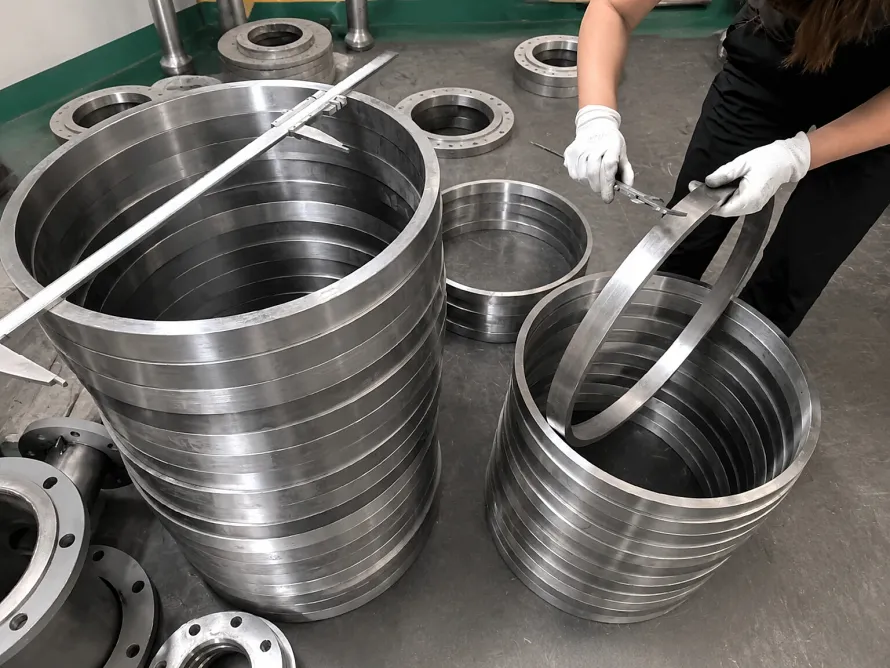
Worker checking machined titanium-like rings with calipers, illustrating that critical parts need dimensional, process and release evidence before shipment.
By Jason/ On 14 Jul, 2026

Defense AM Guide and Titanium Criticality Release Evidence

On 2026-07-09, Metal AM reported that ASTM International's Additive Manufacturing Center of Excellence had published the Strategic Guide to Certification of Additively Manufactured Parts in Defence Applications. ASTM AM CoE's own publications page says the guide was developed in support of the UK Ministry of Defence and Project TAMPA, and describes it as a practical, criticality-based framework for understanding certification evidence expected for AM parts. The news is broader than titanium. It is written to be technology- and nation-agnostic, and it applies across air, land and maritime applications rather than to one alloy or one machine platform. That is exactly why titanium product buyers should pay attention. A titanium component does not become acceptable because it is printed, machined, HIP-treated or inspected in a modern route. It becomes acceptable when the required evidence matches the consequence of that part failing in service. For procurement teams, the useful takeaway is a criticality-to-release file. Instead of asking whether a supplier "can print titanium," buyers should ask how the part is classified, who owns the design authority, which qualification path is being used, and what evidence travels with the released lot, assembly or spare. Criticality Comes Before Capability Metal AM summarized the guide as a signposting resource rather than a standard or regulation. It also reported that the guide includes Classes A-D, two certification pathways, and evidence areas such as feedstock control, machine and process qualification, product verification and non-destructive evaluation. 3D Printing Industry separately noted the same basic structure: evidence scales with part criticality, and suppliers may rely on either process qualification or finished-part testing depending on the route. That distinction matters for titanium. The material often enters applications where weight, corrosion resistance, fatigue behavior, temperature exposure or biocompatibility are part of the value case. Yet those advantages do not remove the need to decide what type of proof is proportionate to the part. A non-critical bracket, a marine replacement part, a pressure-boundary component, an aerospace fitting and a medical implant cannot all be released with the same evidence packet just because the alloy family is familiar. Criticality also changes how a buyer should read supplier claims. A powder lot, LPBF build, HIP preform, DED repair, machined ring or finished flange may all be technically impressive. But the release question is narrower: does the evidence prove this item, made by this route, under this authority, is acceptable for this function? The Criticality-to-Release FileA practical titanium RFQ can turn the guide's logic into a criticality-to-release file. The file does not replace the design authority or customer specification. It organizes the questions that keep AM capability, titanium material identity and final release from drifting apart.Evidence layer Buyer question Why it matters for titanium productsPart criticality What happens if the part fails, and is it treated as Class A-D or another customer-defined category? Evidence should scale with consequence, not with supplier confidence alone.Design authority Who approves the part, drawing, allowable route, deviation and repair decision? A supplier cannot release beyond the authority assigned by the customer, prime or regulator.Material boundary Which alloy, feedstock form, powder or wire lot, bar stock or preform is in scope? Titanium identity has to stay connected to chemistry, source, heat or lot records.Qualification path Is release based on process qualification, finished-part testing, or a combination? The path controls how much repeat evidence is needed on future lots.Machine and process window Which machine, build parameters, atmosphere, HIP cycle, heat treatment, machining and surface condition are locked? Titanium outcomes can change when oxygen pickup, thermal history or machining allowance changes.Verification route Which dimensional checks, mechanical tests, chemistry checks, NDT/NDI, CT or other inspection methods are required? High-criticality titanium parts often need more than a final visual or generic certificate.Release packet What CoA, MTR/MTC, concession status, traceability map and change-control language ship with the part? The buyer needs a document that says what is actually released, not only what was possible in development.This is not paperwork for its own sake. It is the bridge between a promising manufacturing route and a buyer-ready titanium product. If the part is low consequence, the file may be compact. If the part is safety-critical, the file should show why the selected proof is enough and who accepted it. The same evidence discipline runs through benchmark-to-release evidence for titanium powder, heat-treatment release evidence for titanium parts, audit-scope evidence for titanium AM suppliers and AM data-package evidence for titanium parts. What Buyers Should Not Overread The public sources do not say that ASTM has certified any specific titanium part. They do not make the guide a titanium specification. They also do not show that a supplier can use the guide alone to override a customer's drawing, material standard, source-control list, quality clause or release authority. That boundary is important. The guide is valuable because it pushes the conversation toward shared evidence expectations. It does not make every AM titanium route interchangeable, and it does not turn a process demonstration into approved production supply. For titanium buyers, the next RFQ should therefore be more precise. Ask for the criticality class or equivalent category. Ask which path is being used: process qualification, part testing or both. Ask what happens if the supplier changes powder source, wire heat, machine, HIP vendor, heat-treatment cycle, machining site or inspection method. Ask whether the release packet will include CoA, MTR/MTC, NDT/NDI results, retained-sample policy and change notification. For titanium suppliers, the commercial lesson is just as direct. Do not sell AM capability as if it were release authority. Sell the ability to connect material input, process control, verification and documentation to the part's criticality. In defense, aerospace, medical, energy and chemical-processing work, that connection is where buyer confidence is built. The restrained conclusion is the useful one. ASTM AM CoE's defense AM guide does not approve titanium products by itself. It gives the supply chain a clearer way to ask how much evidence is enough. For titanium bars, plates, tubes, forgings, AM preforms and machined components, that turns the buying question from "Can you make it?" into "Can you release it at the criticality this part actually carries?"

Ready to Start Your Project?

Get factory-direct pricing on titanium products. No minimum order.

Get a Free Quote
Quick Inquiry