Type something to search...

Defence additive manufacturing

Aerospace and Defense
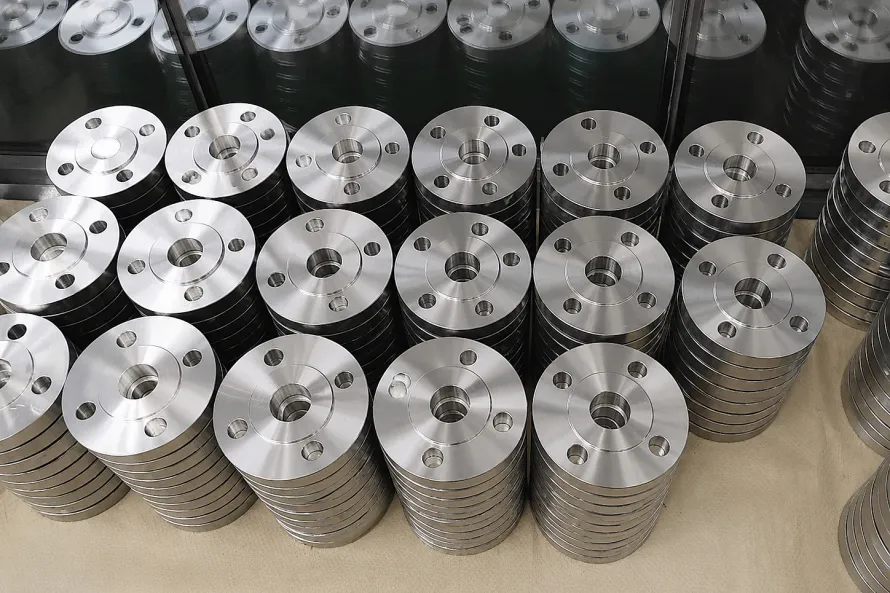
Machined titanium parts and stock material arranged for buyer release planning, illustrating why digital spare-part files still need material and inspection evidence.
By Jason/ On 30 Jun, 2026

Defence AM Turns Titanium Spares Into a Digital-Inventory-to-Release Question

The latest defence additive-manufacturing signal is not only about whether more parts can be printed. It is about who can turn an obsolete or hard-to-source part into a release-ready item when the old supplier, drawing trail or physical stock route is no longer enough. That distinction matters for titanium buyers. Titanium bar, plate, tube, forged and machined parts are often purchased for applications where alloy identity, heat history, inspection evidence and design authority matter as much as availability. A digital file may shorten the search for a spare-part route, but it does not answer whether the delivered titanium part is acceptable for the specific platform, load case, environment and maintenance boundary. 3D Printing Industry reported on June 29 that the UK Ministry of Defence has spent GBP 6.25 million on Project Tampa, including up to GBP 5 million with industry, as part of a four-spiral defence additive-manufacturing programme aimed at obsolescence and parts shortages across ageing platforms. The report says the programme has produced safety-critical components across land and air domains and sits alongside the MOD's first Defence Advanced Manufacturing Strategy (3D Printing Industry). The public sources do not say that Project Tampa has approved a specific titanium part. That limit is important. For a titanium supplier or buyer, the useful lesson is not "defence AM equals titanium approval." The useful lesson is that digital manufacturing is changing where the release burden sits. The bottleneck moves from finding stock to proving the chain from design data to material route, process control, inspection and sign-off. Digital Inventory Is Not the Same as Released Supply GOV.UK has also described additive manufacturing in submarine maintenance as a way to improve availability, reduce reliance on traditional supply chains and build industrial capability for submarine programmes (GOV.UK). The same page explains additive manufacturing as building components layer by layer from a digital file. For routine, low-risk items, that digital-file logic can be a practical supply-chain tool. For titanium components used in aerospace, defence, marine, chemical or high-fatigue service, it is only the beginning of the file. The titanium buyer still needs to know whether the replacement route is equivalent, substituted or newly qualified. A machined titanium spare cut from certified bar is a different evidence problem from a laser powder bed fusion part, a wire-fed deposited preform, a powder-metallurgy compact, or a reverse-engineered obsolete bracket. Each route can produce a useful part. None should be accepted on route label alone. That is why the next procurement question should be: what exactly travels with the digital inventory record? The Titanium File Needs Five Gates A useful digital-inventory-to-release file for titanium parts should separate five gates.Gate Buyer question Evidence that should travel with the partDesign authority Who owns the approved geometry and change boundary? Drawing revision, scan-to-CAD controls, deviation approval, design-owner sign-offMaterial identity What titanium grade and source route are being used? Heat or lot identity, material certificate, chemistry and mechanical records, permitted substitute rulesProcess route How is the part made this time? Machining, forging, AM, powder metallurgy or hybrid route record, frozen parameters, heat treatment and post-processing evidenceInspection logic How are hidden and service-critical risks checked? Dimensional report, NDT, surface condition, build monitoring, CT or targeted inspection where requiredRelease language What does the certificate actually allow the buyer to do? Final QA sign-off, application boundary, serial or lot link, nonconformance closure, customer approval and change-notice ruleThe framework applies whether the supplier ships a titanium flange, bracket, tube assembly, forged ring, machined housing or AM preform. The file does not need to be identical for every product. It does need to explain why the selected route is acceptable for the specific part family.Inspection Data Is Becoming Part of the Product The quality burden is also shifting inside the build or process route. On June 27, 3D Printing Industry reported that Phase3D closed a $2.9 million funding round for metal AM inspection. The report describes Fringe Inspection as structured-light heightmap sensing for metal powder bed fusion, capturing layer-level data such as powder-bed consistency, spatter, recoater streaks and internal feature geometry (3D Printing Industry). That does not make any one technology a universal release answer. It does show where the buyer discussion is going. When a titanium part has fatigue exposure, internal channels, thin walls, pressure-retention duty, marine service or aerospace interface risk, downstream paperwork alone may not explain the process history well enough. Build or process data can become part of the evidence needed to interpret the final inspection result. For powder bed fusion titanium, that could mean linking powder lot, build plate location, layer monitoring, heat treatment, surface finishing, internal inspection and final certificate. For wire-fed titanium deposition, it could mean wire chemistry, shielding records, thermal history, interpass control, post-build machining and NDT. For a machined replacement part, it may mean bar or billet identity, split history, machining route, dimensional records, cleaning, packaging and final release. The commercial risk is similar across routes: the buyer may receive a part that looks available before the evidence package is ready. What Buyers Should Ask Before Accepting a Replacement Route The current defence AM push should make titanium buyers more precise, not more suspicious by default. Additive manufacturing, reverse engineering and digital inventory can reduce downtime, keep older platforms supportable and create shorter routes for low-volume spares. The mistake is to treat those benefits as automatic release evidence. For titanium orders, buyers should ask four practical questions before accepting a digital or substitute route. First, is the route a like-for-like production method, or is it a material-process substitution? A machined part from certified titanium bar may be easier to document than an AM replacement, but it still needs drawing, material, dimensional and release continuity. Second, what is the application boundary? A non-critical cover, fixture or bracket does not carry the same evidence burden as a pressure part, fatigue-loaded structure, seawater-exposed assembly, implant-adjacent component or flight hardware. Third, what inspection evidence explains the risk? General certificates are not enough when the real risk sits in internal geometry, surface condition, weld or deposition quality, heat treatment, residual stress, or product-form mismatch. Fourth, who has release authority after a change? Digital files can move faster than approval systems. The buyer should know whether the OEM, platform owner, maintenance authority, design holder, supplier quality team or customer engineer controls final acceptance. The Real Signal for Titanium Supply Project Tampa and the MOD's advanced-manufacturing strategy point toward a broader industrial change: critical spares are becoming partly digital assets. That can be good news for titanium supply chains because many titanium parts are expensive to stock, slow to qualify and difficult to source once a platform ages. But the titanium opportunity is not simply that more parts can be printed or scanned. The opportunity is to build release-ready evidence around whichever route is chosen. A supplier that can connect material certificates, route records, inspection data, nonconformance handling and final release language will be more useful than one that only says a part can be made. For buyers, the safest conclusion is narrow and practical. Digital inventory can shorten the path to a replacement titanium part, but it does not remove the need for a product-specific release file. In high-value titanium procurement, the part is not truly available when the file exists. It is available when the file, the material, the route and the release record describe the same item.

Ready to Start Your Project?

Get factory-direct pricing on titanium products. No minimum order.

Get a Free Quote
Quick Inquiry