Type something to search...

Titanium composition to release file

Manufacturing and Technology
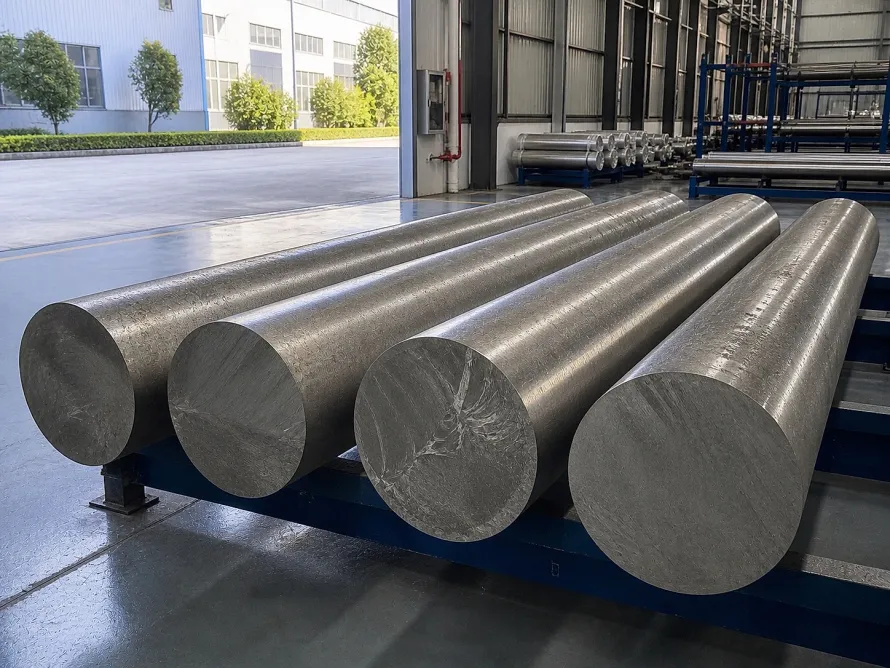
Titanium round bar stock in a warehouse, showing why future alloy-on-demand routes still need a fixed material identity before buyer release.
By Jason/ On 21 Jun, 2026

NIST's Laser-Stirring Breakthrough Makes Titanium Buyers Ask a Composition-to-Release Question

NIST's latest additive manufacturing research is not a commercial titanium supply announcement. That is exactly why it matters. It points to a future in which a titanium alloy buyer may not only ask what powder, wire, billet or bar was purchased, but how the alloy composition was created, mixed, measured and released.On June 4, 2026, the U.S. National Institute of Standards and Technology reported a laser-stirring approach for metal additive manufacturing that actively mixes molten metal during printing (NIST). The associated paper, "Laser stirring with elliptical scanning enables on-demand alloying in additive manufacturing," was published online on Jan. 30, 2026 in Additive Manufacturing (DOI). The method is technically important because the researchers are not merely changing the shape of a part. They are changing the way metals can be mixed inside the melt pool. NIST said the team demonstrated the approach by combining RHEA-19, a refractory high-entropy alloy, with a lightweight titanium alloy, then used high-speed X-ray diffraction at Argonne National Laboratory's Advanced Photon Source and electron microscopy to check how the metal mixed and solidified. For titanium product buyers, the useful conclusion is not that custom alloy printing is now order-ready. The source does not say that. The stronger point is that future alloy flexibility will move more evidence into the manufacturing route. If composition can be created during the build, then composition is no longer only a feedstock certificate. It becomes a process record. Why Alloy Flexibility Changes the Evidence Boundary Most titanium procurement still begins with a named product form: Ti-6Al-4V bar, Grade 2 sheet, titanium tube, forging, powder, wire or machined component. Even when the route is advanced, the buyer usually expects the material identity to be settled before the forming or machining step begins. A powder lot has a chemistry. A billet has a heat number. A tube or bar carries a certificate that links the product back to a known route. Alloy-on-demand AM challenges that sequence. NIST's release explains that current metal AM often depends on a separate powder for each alloy. If a printer can combine elemental or simpler alloy powders during the build, the inventory model could become more flexible. A future system might not need a dedicated pre-alloyed powder for every composition. That flexibility is attractive, especially for aerospace, nuclear, defense and high-temperature applications where high-entropy alloys and graded materials are being explored. But it also adds a release problem. The buyer must know not only what went into the machine, but how the machine created the material that came out. Metal AM reported on June 9 that the NIST-led work used looping laser trajectories to stir the molten pool and promote more uniform mixing, and that the approach may be implemented through software on existing PBF-LB machines rather than by adding major hardware (Metal AM). That software point matters. If the scan strategy becomes part of alloy formation, the scan file, parameter limits and machine execution record become part of material control.The Buyer Risk Is Not Novelty. It Is Traceability. Titanium buyers are already familiar with route discipline. A mill product buyer wants heat identity, chemistry, mechanical properties, heat treatment, surface condition and inspection records. A machined component buyer wants parent-material traceability, drawing revision, dimensional reports and nonconformance history. An AM buyer wants feedstock identity, build parameters, post-processing, coupon evidence, inspection and change control. Alloy-on-demand routes do not replace those needs. They add a new layer between feedstock and finished geometry. The key question becomes: where is the alloy actually made? If the answer is "inside the build," then the buyer's evidence boundary must include powder or wire identity, feed ratio or layer strategy, scan path, melt-pool behavior, mixing validation, heat history, post-build treatment and final inspection. A certificate that only names the starting powders would be too thin. A certificate that only reports final chemistry would also be incomplete if the process route cannot be repeated. That is the site-original procurement point. The more flexible the alloy route becomes, the more disciplined the release file must be. The Composition-to-Release File For titanium suppliers, AM job shops, powder buyers and engineering teams watching this research, a practical composition-to-release file should separate research excitement from buyer acceptance.Evidence layer What buyers should verify Why it mattersStarting materials Powder, wire or elemental feedstock identity, chemistry, lot records and storage condition Alloy flexibility still begins with traceable inputsComposition target Intended alloy, gradient, mixing zone or local property target A buyer cannot qualify a material if the intended composition is vagueScan and mixing route Laser path, elliptical or looping strategy, power, speed, layer sequence and software control If the scan path creates the alloy, the scan path becomes part of material identityIn-situ or process evidence Melt-pool monitoring, X-ray or other validation method, parameter logs and machine execution record The buyer needs proof that mixing happened inside the required windowPost-build route Heat treatment, HIP, machining allowance, surface finishing and stress relief Final properties depend on what happens after the alloy is mixedProperty and structure proof Chemistry map, microstructure, mechanical tests, density, defects and representative coupons A mixed region must be validated, not only describedProduct release Drawing, serial or lot link, MTR or MTC language, inspection report and change-control trigger The finished product must remain connected to the composition routeThis framework is deliberately more demanding than a headline about flexible alloy printing. It does not reject the technology. It explains what the technology would need before a serious buyer treats it as supply. What This Means for Titanium Product Suppliers For conventional titanium bar, plate, tube, forging and machined-component suppliers, the NIST work is not an immediate displacement story. A lab demonstration that mixes RHEA-19 with a titanium alloy does not replace released mill products, qualified forgings or approved machined parts. The more useful reading is competitive discipline. If AM routes become more capable of creating special alloys or graded material zones, conventional suppliers will need to show why their route remains the lower-risk choice for a given application. That evidence may include heat-to-heat consistency, established standards, known machining behavior, proven fatigue or corrosion performance, inspection access, shorter qualification burden or certificate clarity. For AM suppliers, the same research raises the documentation bar. A buyer will not accept "software-controlled alloying" as a magic phrase. The supplier will need to show who controls the scan strategy, how changes are approved, whether the process is locked, how mixing is verified, how local chemistry is mapped, how coupons represent the product and what happens when the route changes. For powder and wire suppliers, alloy-on-demand could eventually change the product conversation. Instead of selling only pre-alloyed feedstock, some suppliers may need to support elemental or simpler alloy input streams, tighter contamination control, particle-size consistency, packaging traceability and process-specific handling rules. But that future only helps buyers if the route from input to final material remains auditable. The Practical Read The NIST research is a strong technology signal because it attacks a real barrier in metal AM: how to mix difficult alloy systems more uniformly during printing. It is also useful because NIST did not present it as a finished procurement solution. The validation used advanced measurement methods, and the public evidence still sits at the research and process-demonstration level. Titanium buyers should read the news with both interest and restraint. If alloy-on-demand AM matures, it may expand design choices, reduce dependence on one powder for every alloy and open routes for graded or high-performance material systems. But it will also make the evidence chain more complex. The material will not be defined only by its feedstock. It will be defined by feedstock, software, scan path, melt-pool control, validation, post-processing and inspection. The procurement takeaway is simple: do not ask only whether a new titanium alloy route is possible. Ask whether the supplier can connect composition to release. Until that file exists, alloy flexibility is research progress, not buyer-ready product evidence.

Ready to Start Your Project?

Get factory-direct pricing on titanium products. No minimum order.

Get a Free Quote
Quick Inquiry