Type something to search...

Titanium hdh processing

Manufacturing and Technology
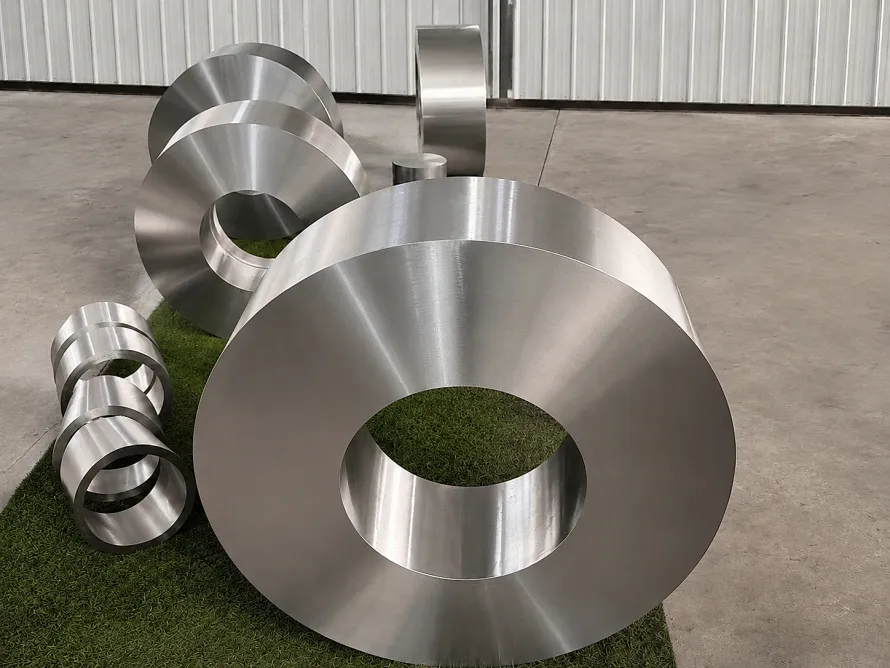
Clean titanium ring forgings in a workshop, showing product geometry that still needs route, heat-treatment and release evidence.
By Jason/ On 10 Jul, 2026

Titanium Heat-Treatment Release Evidence for Buyers

AGF DEFCOM's latest furnace addition looks, at first glance, like a straightforward capacity story. On 2026-06-23, the U.S. metal additive manufacturing supplier announced a second Solar Atmospheres Mentor Pro furnace, saying the added heat-treating capacity would reduce scheduling bottlenecks and improve workflow. A few weeks earlier, on 2026-05-14, the company said it had added two EOS M-400 systems, bringing its listed metal AM platform to 4 EOS M-400 printers, 15 EOS M-300 systems and an EOS M-290. For titanium buyers, the useful reading is narrower and more practical. More printing or furnace capacity does not by itself create releasable Ti-6Al-4V parts, machined titanium components or certified product lots. It changes where the evidence question sits. If more builds can be printed, more parts still have to pass through stress relief, annealing, aging, machining, inspection and final release without losing material identity or route control. That is why the current signal matters beyond one supplier announcement. AGF's public service page lists heat treatment, post-machining, material testing and Ti-6Al-4V among its relevant capabilities and materials. Separately, Solar Atmospheres said on 2026-06-01 that its Eastern Pennsylvania facility had commissioned a 12-foot horizontal vacuum furnace designed primarily for titanium HDH processing and also usable for standard vacuum heat-treatment work. Solar listed a 54 in x 54 in x 144 in working zone, a 15,000-pound load car, a 300HP external forced-cooling system and dual mechanical pumping systems. Those details point to the same industrial mechanism: titanium supply does not become buyer-ready at the moment a machine is installed. In titanium AM, forging, HDH powder routes, machined components, rectangular bar stock and ring products, the thermal step can be the bridge between a promising intermediate and a product that quality teams can release. Capacity Is Not the Same as ReleaseHeat treatment is not a decorative finishing step for titanium. Solar's additive manufacturing heat-treatment guidance explains that metal AM builds can carry internal stresses from repeated heating and cooling, and that heat treatment can alter microstructure and improve mechanical properties such as strength, hardness and fatigue resistance. Its titanium heat-treatment page also identifies stress relieving, annealing, solution treating and aging as process families used to tailor titanium alloy performance. That technical context changes how a buyer should read furnace-capacity news. A second furnace may reduce queue time. It may help a supplier run more jobs in parallel. It may make scheduling more reliable. But it does not answer the release question unless the order file shows which material entered the furnace, what condition it was in, which cycle was run, what atmosphere or vacuum control was used, how post-processing changed the geometry, and what inspection record closed the lot. The same distinction applies to HDH capacity. Hydriding and dehydriding can support titanium powder or feedstock processing, but a larger furnace does not automatically mean a powder lot, forged preform, rectangular bar, machined ring or AM part is approved for a buyer's application. The route must still be connected to chemistry, batch history, contamination control, particle or product condition, heat-treatment history, inspection and final certificate wording. This is the same logic behind an exposure-to-release evidence file for titanium powder. This is especially important when titanium buyers compare conventional and additive routes. AM suppliers often discuss material savings, near-net-shape production and faster throughput. Those advantages are real only when the post-build route is controlled. A Ti-6Al-4V part that leaves the printer is not the same evidence object as a Ti-6Al-4V part that has passed stress relief, machining, dimensional verification, NDT where required, and a release packet tied to the purchase order. The Heat-Treatment-to-Release File A practical buyer framework is to ask for a heat-treatment-to-release file. It should not be a generic certificate bundle. It should connect the product form, the thermal route and the final acceptance decision.Evidence layer Buyer question Why it mattersMaterial entry Which alloy, lot, build, forging, bar, plate or tube entered the thermal route? Prevents the furnace record from floating away from the physical product.Pre-heat-treatment condition Was the part printed, forged, machined, welded, HDH processed or stress-loaded before treatment? The starting condition affects the purpose of the cycle and the inspection risk.Furnace and scope Which furnace, qualified range and process family were used? Capacity only helps when the furnace is suitable for the order's material and specification boundary.Cycle and atmosphere record What time, temperature, loading, vacuum or atmosphere controls were recorded? Titanium is sensitive to route control, contamination and mechanical-property drift.Post-process route What machining, straightening, cleaning, surface work or handling followed the cycle? Later steps can change dimensions, surface condition and release status.Inspection and testing Which dimensional, mechanical, surface, FPI, NDT or customer-specific checks closed the route? Inspection converts a completed process into evidence a quality team can review.Release and change control What certificate language, lot boundary and change trigger travel with the shipment? This prevents a capacity claim from being mistaken for repeatable release authority.This framework is useful because it separates three things that are often blurred in supplier news. Installed equipment is capacity. Process capability is route confidence. Lot release is evidence for a specific buyer order. A newsroom article can responsibly discuss the first two from public sources, but buyers should reserve acceptance decisions for the third. What Buyers Should Not Overread The public sources do not show that AGF's new furnace qualifies any specific titanium part, customer program or specification. They do not publish furnace-cycle records, customer approvals, MTR/MTC packets or lot-level release evidence. The Solar furnace source gives strong capacity and equipment detail, but it also does not prove released product supply for any buyer's titanium order. That limitation is not a weakness in the story. It is the story. Titanium procurement risk often appears when teams treat capacity language as a substitute for release language. The safer interpretation is that furnace and AM additions can shorten a constrained route only when documentation moves at the same speed as production. The same discipline applies to distributed production, where point-of-need titanium release evidence has to stay attached to the part. For a buyer of titanium forgings, machined rings, rectangular bars, AM Ti-6Al-4V components or HDH-linked powder-route products, the next RFQ should therefore ask fewer generic capacity questions and more release questions: What thermal route is quoted? Which records will be shipped? How is the lot boundary preserved after machining? Which changes require requalification? Which inspection results close the order? The clearest conclusion is restrained but useful. Vacuum furnace additions are a positive capacity signal for titanium manufacturing. They become a procurement advantage only when the supplier can attach that capacity to a heat-treatment-to-release file for the exact product form being bought.

Ready to Start Your Project?

Get factory-direct pricing on titanium products. No minimum order.

Get a Free Quote
Quick Inquiry