Type something to search...

Titanium lattice qualification

Aerospace and Defense
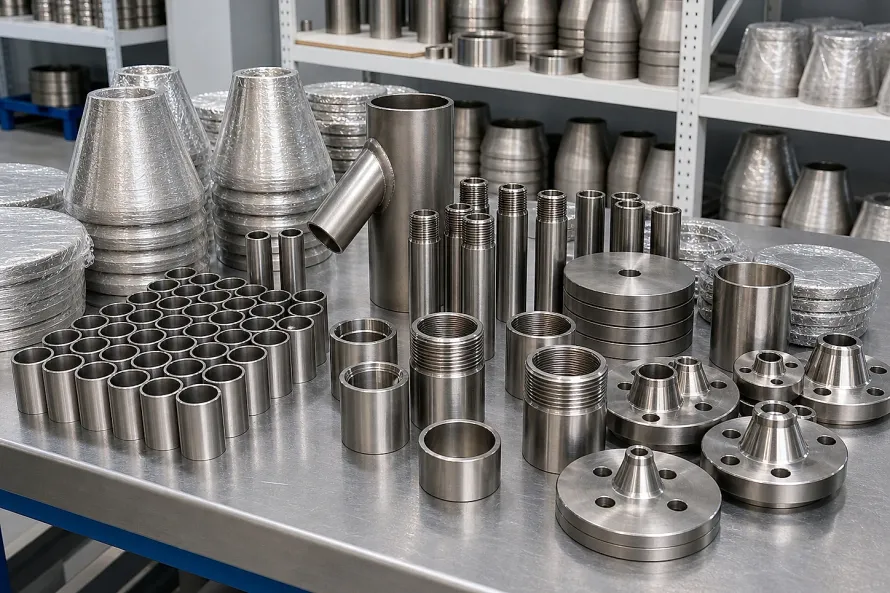
Machined titanium parts displayed on an inspection table, showing why complex titanium geometries need functional release evidence beyond alloy grade
By Jason/ On 02 Jul, 2026

NASA JPL's Titanium Lattice Signal Turns AM Buying Into a Load-Curve Release Question

The useful signal in NASA JPL's titanium lattice work is not simply that additive manufacturing can make shapes that conventional machining cannot. Titanium buyers have already heard that argument. The sharper procurement question is whether a function-critical lattice can be released with evidence that its load curve, relative density, internal quality, surface condition and final qualification boundary match the application. 3D Printing Industry reported on 2026-06-30 that Ryan Watkins of NASA Jet Propulsion Laboratory detailed how 3D printed titanium lattice structures are being used in the baseline design for Mars Sample Return impact protection. The article describes the structures as force-limiting crushables intended to protect Martian sample tubes during a hard-impact Earth landing without parachutes or powered descent. That is a very different buyer signal from a generic "lightweighting" story. A titanium lattice for impact protection is not valuable because it looks complex. It is valuable only if it collapses in a controlled way, absorbs energy across the intended stroke and avoids passing a damaging force into the item it is meant to protect. The public sources used here do not release a specific commercial titanium order, and the 3D Printing Industry article is a professional report on a NASA JPL presentation, not a NASA procurement instruction. The useful lesson is narrower and more practical: when titanium AM geometry becomes part of the function, buyers need a load-curve release file, not only an alloy certificate. Controlled Collapse Is the Product Function The Mars Sample Return example makes the mechanism unusually clear. The report says the sample container's worst-case design load is around 50 m/s, or about 110 mph. The baseline design uses a 3D printed titanium crushable structure inside the Earth Entry System to attenuate impact energy and limit force transmitted to the sample tubes. In that type of part, the important property is not maximum strength in isolation. A crushable lattice first responds linearly, then buckles or plastically collapses into a stress plateau. During that plateau, the structure keeps compressing while holding a relatively stable load. The area under the load-displacement curve represents energy absorbed. If densification arrives too early, the void space is gone, the structure stiffens and the force-limiting function can fail. For titanium buyers, that changes the evidence conversation. The release question is no longer only "What grade is the titanium?" or "Which AM machine printed it?" The release question becomes: did this lattice show the required load-displacement behavior in a representative test condition, and does the production route protect that behavior from lot to lot? Why This Is a Procurement Signal NASA's own standards context reinforces why this kind of AM part cannot be treated as a decorative geometry. The NASA Technical Standards System lists NASA-STD-6030 as an active standard with document date 2021-04-21 for additive manufacturing requirements for spaceflight systems. A NASA NESC article on AM standards explains that NASA-STD-6030 begins with an AM Control Plan and QMS, then separates foundational process control from part production control (NASA). That standards language matters even for buyers outside spacecraft programs. A titanium lattice, porous implant feature, energy absorber, vibration isolator or lightweight support is not just a material. It is a material-process-geometry system. If one part of that system changes, the function may change. This is why a supplier's brochure phrase such as "Ti-6Al-4V lattice" is not enough. Ti-6Al-4V identifies the alloy family, but it does not prove the unit-cell design, relative density, strut quality, heat treatment, surface condition, test setup or acceptance threshold. For critical orders, those details are not academic. They are the difference between a printed shape and a released component. The Load-Curve Release File A practical load-curve release file should connect application demand to the exact titanium item being shipped. The file will differ by sector, but the buyer logic is consistent (see our earlier reads on the titanium AM data-package release file and data-to-allowables evidence for titanium AM).Release layer Buyer question Evidence to requestApplication load case What impact, compression, vibration or crush event is the lattice meant to control? Load case, service boundary, allowable transmitted force, required energy absorptionFunctional target What should the load-displacement curve look like? Target plateau load, acceptable stroke, densification limit, failure mode notesGeometry basis Why was this unit cell and relative density selected? Unit-cell record, CAD model, relative-density target, design revision and simulation summaryMaterial and process Which titanium route creates the lattice? Ti-6Al-4V or other grade, powder or wire lot, LPBF or other process record, machine and parameter setInternal quality How are voids, lack of fusion and premature fracture risks controlled? Build record, witness coupons, CT or NDT plan, defect acceptance criteriaSurface condition How is roughness controlled inside complex cells? As-built surface data, chemical etching or finishing record, cleanliness and residue checksFunctional proof Does the part family show the required crush behavior? Compression test, load-displacement curve, plateau stability, densification point and sample planFinal qualification What is actually approved for use? Qualification report, drawing revision, route freeze, certificate language and change-control ruleThis structure prevents a common mistake: treating the lattice as a beautiful geometry while leaving the function unsupported. If the buyer cannot see the load curve, the plateau and the qualification boundary, the buyer cannot know whether the ordered part is a force limiter or only a printed structure.Geometry Becomes a Material Condition One of the strongest details in the report is that lattice manufacturing operates near the practical limits of metal AM. It says that in JPL's LPBF process, printable ligament thicknesses are around 1 mm while the overall print volume is on the order of 200 mm. That scale mismatch matters because a lattice can fail through local defects long before the larger component looks wrong. The article also describes a design workflow where unit-cell selection is not chosen because a shape is popular in AM research. JPL used tool-assisted screening to narrow more than thirty unit-cell types to two candidates, then printed test structures around 3% relative density and selected a diamond unit cell for a target crush strength in the 2-3 MPa range. The reported manufacturable relative-density range was around 2% to 4%. For buyers, that means geometry is not a drawing detail left to the engineering file. It is a release condition. A change from one unit cell to another can change stiffness, buckling behavior, stress propagation and densification. A small change in relative density can change the load plateau. A different build orientation or support strategy can shift surface quality and defect distribution. So the buyer should ask whether the drawing, CAD model, simulation assumptions, process route and test samples all describe the same geometry. If the quoted part is "equivalent" but uses a different unit cell, different strut thickness or different post-processing route, equivalence should be proven, not assumed. Post-Processing Is Part of the Function The report is also useful because it does not hide the manufacturing compromise. It says surface roughness and internal defects can both matter, but process tuning that improves one may compromise the other. JPL's approach, as described in the article, prioritized internal quality during printing and then used post-processing to improve the lattice surface. Chemical etching was highlighted because it can reach complex internal geometry. In one aluminum honeycomb example, the report says etching reduced surface roughness by 50% and relative density by 75%, bringing the structure to about 8% relative density. The same article says beam-based lattices can reach around 2% relative density in materials including Ti-6Al-4V. For titanium procurement, the lesson is not that every lattice needs the same etching route. The lesson is that finishing changes function. If post-processing removes material, changes surface roughness, opens internal passages, changes relative density or affects fatigue-sensitive features, it belongs in the release file. That matters for aerospace impact structures, medical porous features, energy absorbers, lightweight fixtures and severe-service components. A post-processed titanium lattice cannot be released by the as-built record alone. The buyer needs the before-and-after boundary: what changed, why it changed, how it was measured and whether the final curve still meets the application target. What Titanium Buyers Should Ask Before treating a titanium lattice or porous AM component as buyer-ready, procurement and engineering teams should ask five direct questions. First, what is the function of the lattice? If the answer is energy absorption, vibration control, bone ingrowth, fluid flow or lightweight support, the evidence must match that function. Second, what curve or test proves the function? For a crushable lattice, a load-displacement curve and densification boundary are more useful than a generic tensile value. Third, what geometry is frozen? Unit cell, relative density, strut thickness, build orientation and support strategy should be controlled as release variables, not decorative choices. Fourth, what internal and surface defects are acceptable? A visual check will not explain whether voids, roughness, trapped powder or etched surfaces affect the functional response. Fifth, what is the qualification boundary? The public report says the Mars Sample Return lattice structures are part of the baseline design and that remaining work is focused on final qualification. That distinction is exactly what buyers should preserve: promising baseline design is not the same as unrestricted production release. From AM Showcase to Buyer Evidence The best titanium AM stories are becoming less about whether a machine can print a difficult shape and more about whether a supplier can prove a difficult function, a shift we also traced in our read on audit-scope-to-order release evidence. The NASA JPL lattice signal is important because it shows that geometry, material and process are merging into one release problem. For titanium product buyers, the practical takeaway is simple. Do not accept a lattice component on grade, process route or visual complexity alone. Ask for the load curve, the plateau target, the relative-density basis, the surface and internal-quality controls, the post-processing record and the final qualification language. When those pieces connect, a titanium lattice can become a controlled functional component. When they do not, it remains a printed promise with an attractive shape.

Ready to Start Your Project?

Get factory-direct pricing on titanium products. No minimum order.

Get a Free Quote
Quick Inquiry