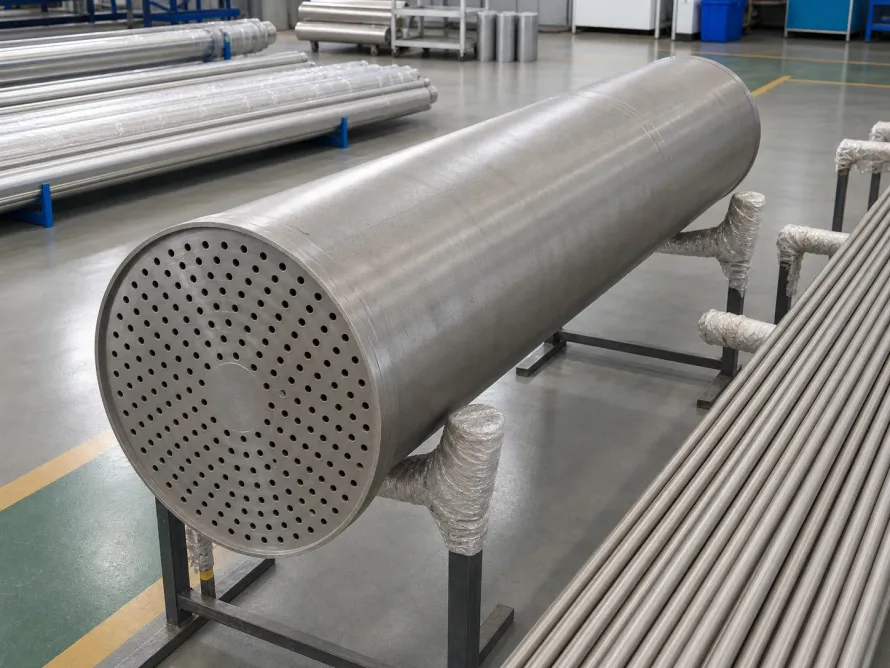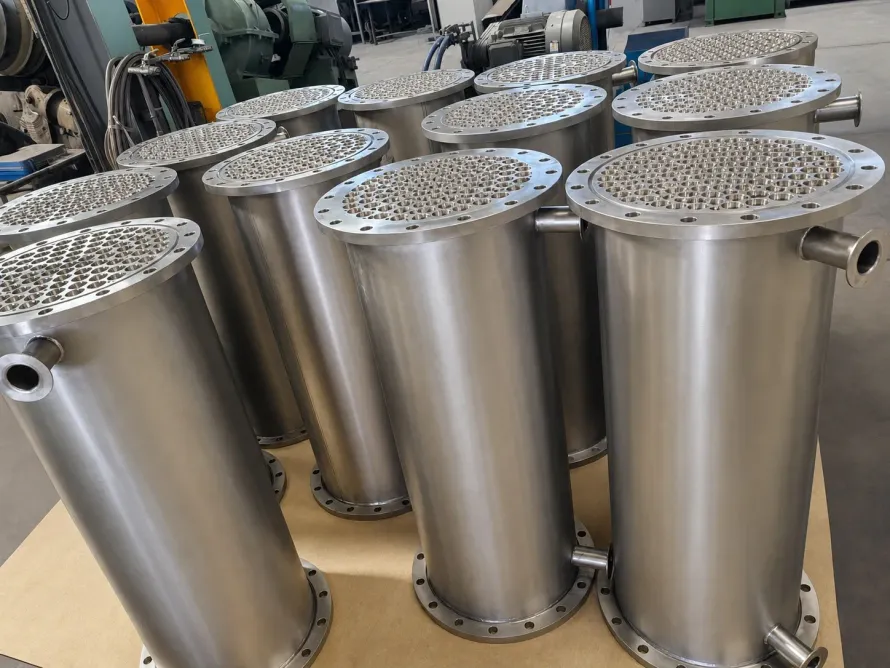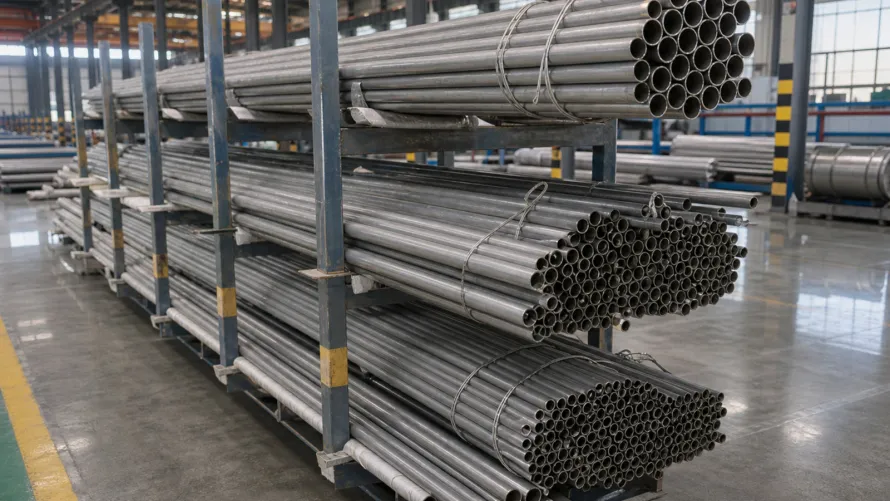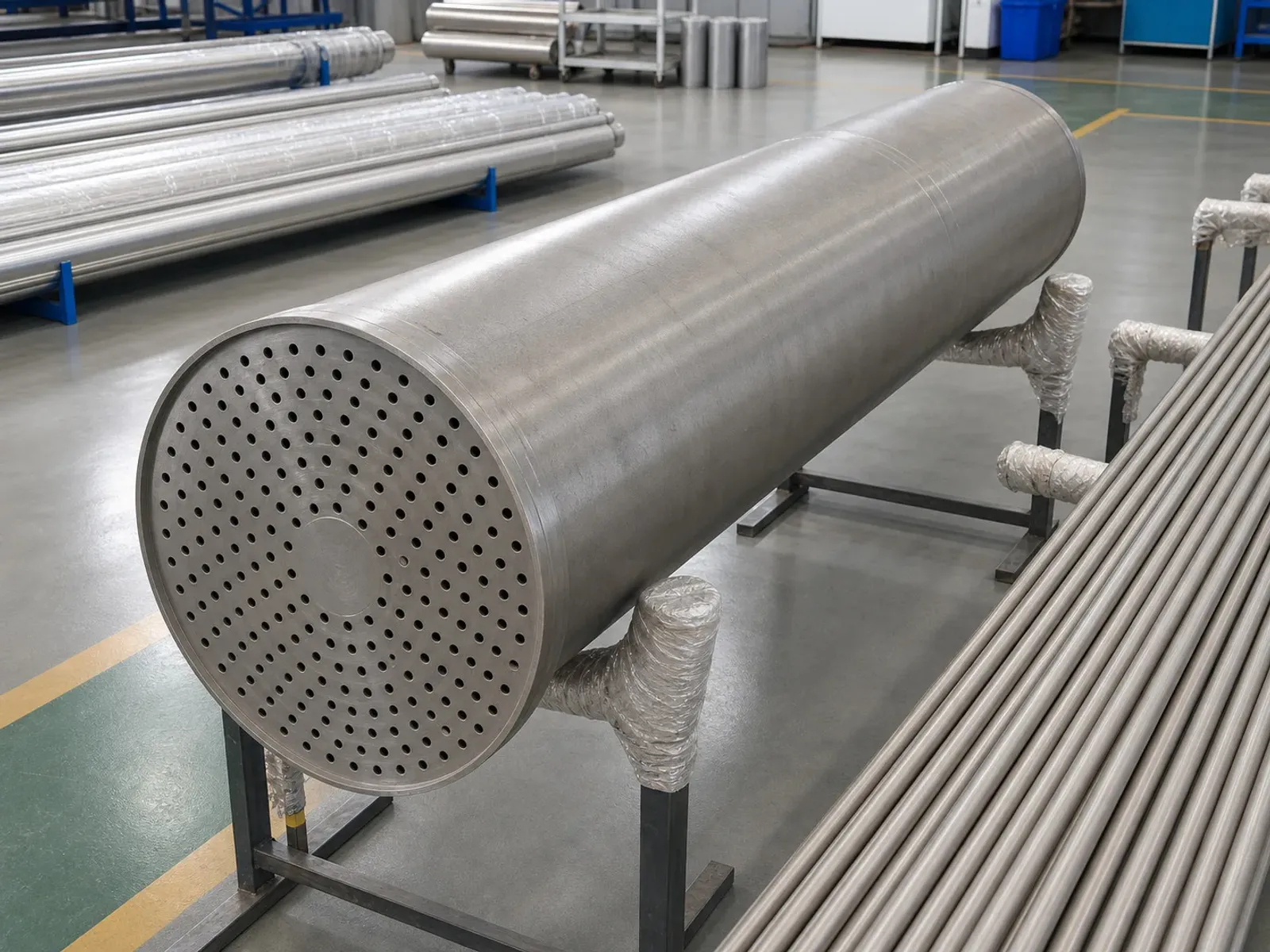
Generic titanium tube-based equipment context; the image does not identify Grade 7 or a process duty.
Grade 7 titanium is justified when a defined chemical service needs the corrosion behaviour associated with palladium-bearing commercially pure titanium and the proposed tube is supported for that service. The 0.12–0.25% palladium range in Alleima’s current seamless-tube datasheet is an alloy identifier, not a blanket approval. Before release, the buyer still has to fix the medium, concentration, temperature, pH, oxidizers or contaminants, aeration, heat-transfer and deposit conditions, crevice geometry, galvanic contacts, product form and acceptance evidence.
That distinction matters because Grade 7 is often described in a few words—“Grade 2 plus palladium”—while corrosion decisions are controlled by the full environment. Palladium can extend the useful range of commercially pure titanium in some reducing media; it cannot make every acid, fluoride-bearing solution or poorly defined process safe.
What the palladium addition changes
Alleima identifies its seamless Grade 7 tube as unalloyed titanium with palladium, UNS R52400, and lists palladium at 0.12–0.25%. The page characterizes the material as resistant in reducing and oxidizing environments and says it is typically used in chemical industries.
TIMET’s historical corrosion guide explains the mechanism more broadly: small nickel and palladium additions help maintain a stable protective oxide film in more severe reducing conditions. Its comparative table presents Grade 7 as commercially pure titanium with a palladium addition and places it in the same nominal-strength family as commercially pure Grade 2.
The practical implication is narrow. Grade 7 can be a better candidate where reducing-acid exposure challenges unalloyed titanium, but the alloy label does not define the process. The current Alleima page itself says suitability can be confirmed only when the actual service conditions are known, and it limits the datasheet to Alleima material.
Actual service conditions decide the answer
TIMET warns that laboratory corrosion data can change in plant service because of impurities, heat transfer, deposits and other operating differences. It says in-plant tests may be required for a final material choice. Those are not generic cautions; each can change the local electrochemistry or create a hotter, less-aerated or more concentrated surface condition than the bulk process description suggests.
For an RFQ, “hydrochloric acid service” is therefore incomplete. At minimum, state acid concentration and normal and upset temperatures. Then identify oxidizers, inhibitors, metal-ion contamination, aeration, flow, heat flux, deposits, crevices, cleaning chemistry and any galvanic or cathodic-protection connection. A corrosion result for a clean, aerated coupon at room temperature does not automatically cover a heated tubesheet crevice or a deposit-covered exchanger surface.
Read old acid charts as conditional evidence
TIMET’s guide shows why palladium-bearing titanium attracted chemical-service use. Its historical hydrochloric-acid chart gives Grade 7 a wider concentration-temperature field than unalloyed titanium under the plotted conditions. That is useful screening evidence, but it is not a current universal limit, a design allowable or a supplier warranty. Concentration, temperature and solution chemistry must match before the chart can support a decision.
The same guide also defines an important exception: titanium is rapidly attacked by even dilute hydrofluoric acid and is generally not recommended for fluoride solutions below pH 7. Palladium does not turn Grade 7 into a fluoride-proof material. If fluoride can enter through feedstock, cleaning agents or contamination, it belongs in the service definition rather than in an after-order review.
The responsible hierarchy is therefore: use current product data to identify the offered material, use historical charts to frame questions and potential test conditions, and use current service-specific evidence to approve the actual equipment duty.
Product form still belongs in the order
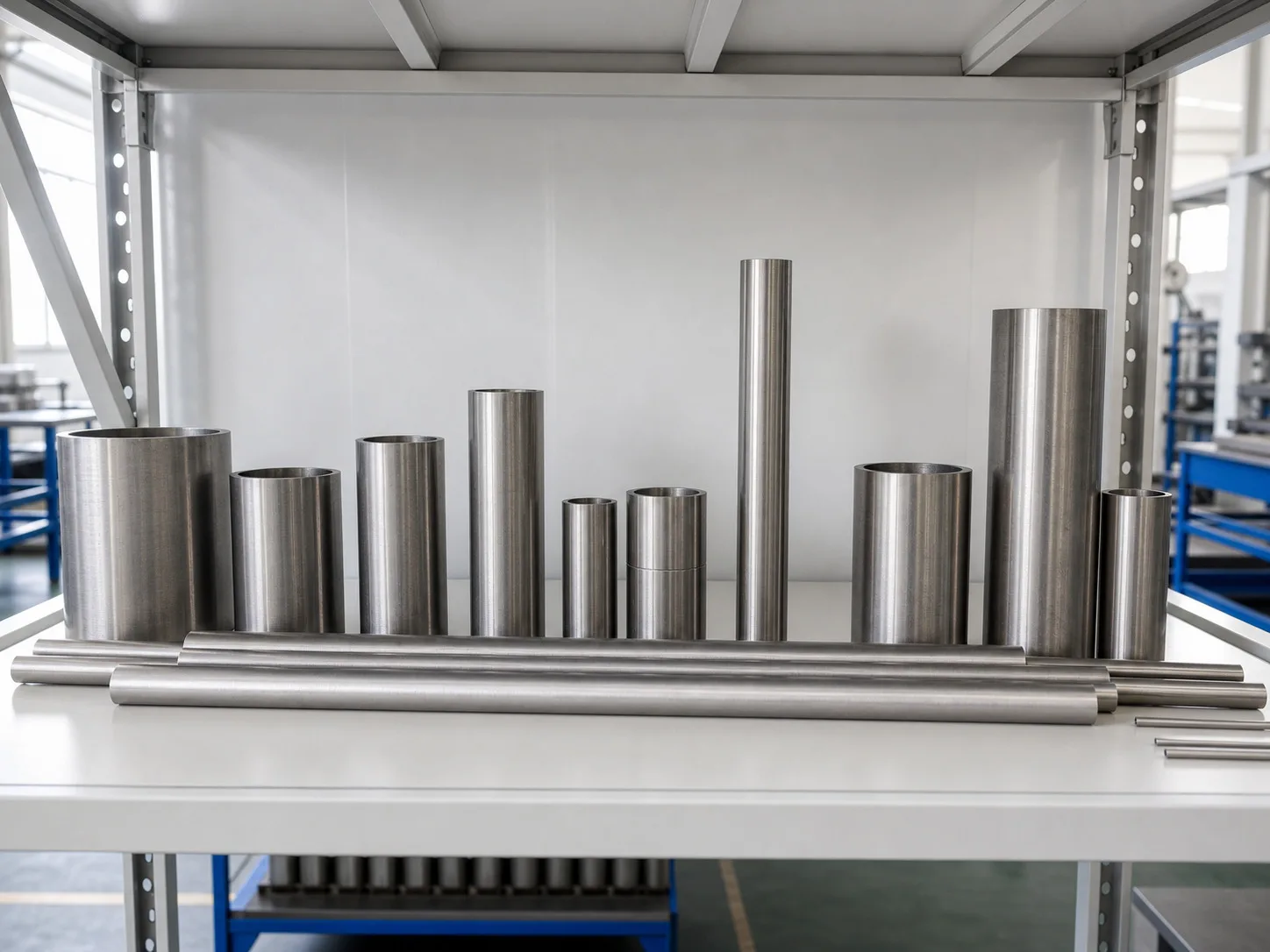
Titanium tube product forms; alloy grade, dimensions and certification are not identified by the image.
The current anchor page covers seamless tube and pipe. It does not qualify plate, bar, welded tube, a weld procedure, a fabricated heat exchanger or another producer’s product. Those forms may be suitable, but they require their own governing specification, manufacturing route and acceptance evidence.
A useful purchase description should therefore name Grade 7 and the applicable material specification, product form, outside diameter and wall, condition and surface, dimensional tolerance, nondestructive examination, certificate content and any supplementary corrosion or fabrication qualification. The drawing and purchase order should also identify which party owns final service-suitability approval.
This prevents two common category errors: treating the palladium percentage as a complete corrosion qualification, and treating a seamless-tube datasheet as evidence for every Grade 7 product. Both shortcuts erase variables that determine whether the chosen material will perform in the component actually being bought.
A practical release sequence
First, define the full service envelope, including normal, cleaning, startup and credible upset conditions. Second, confirm that the evidence matches the chemistry, temperature, mass-transfer and crevice conditions that control the component. Third, fix the exact product form and order requirements. Finally, close any gap with a corrosion specialist review, supplier evidence or a representative test before fabrication locks in the material.
The defensible conclusion is not that Grade 7 is automatically suitable whenever an acid is present. It is that Grade 7 becomes a justified specification when its palladium-assisted corrosion behaviour answers a defined service problem and the remaining service, form and release evidence is explicit.
Sources
- Alleima, Alleima Ti Grade 7 — Tube and pipe, seamless, datasheet updated 9 May 2025; accessed 8 October 2026.
- TIMET, Corrosion Resistance of Titanium, historical technical guide; accessed 8 October 2026.