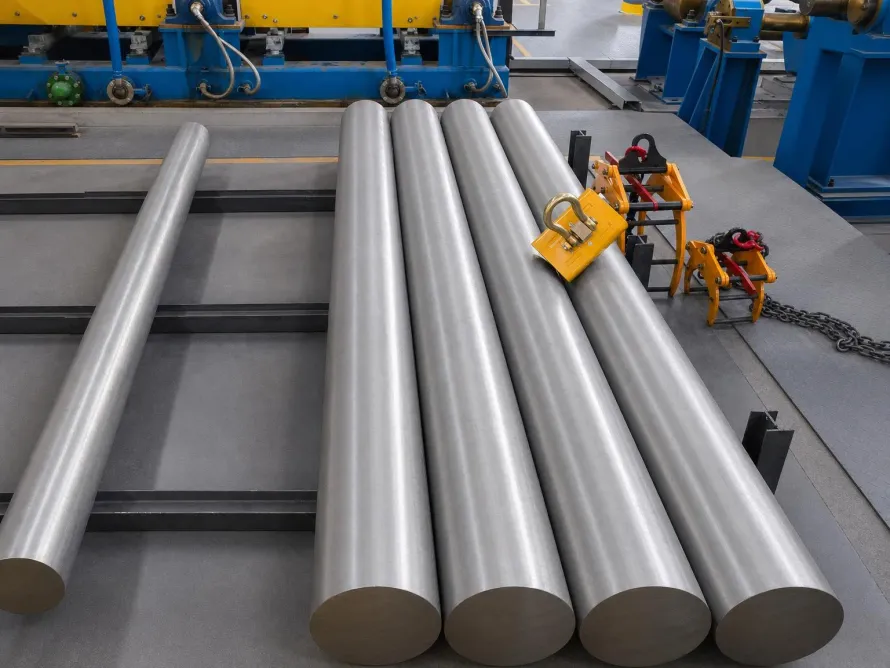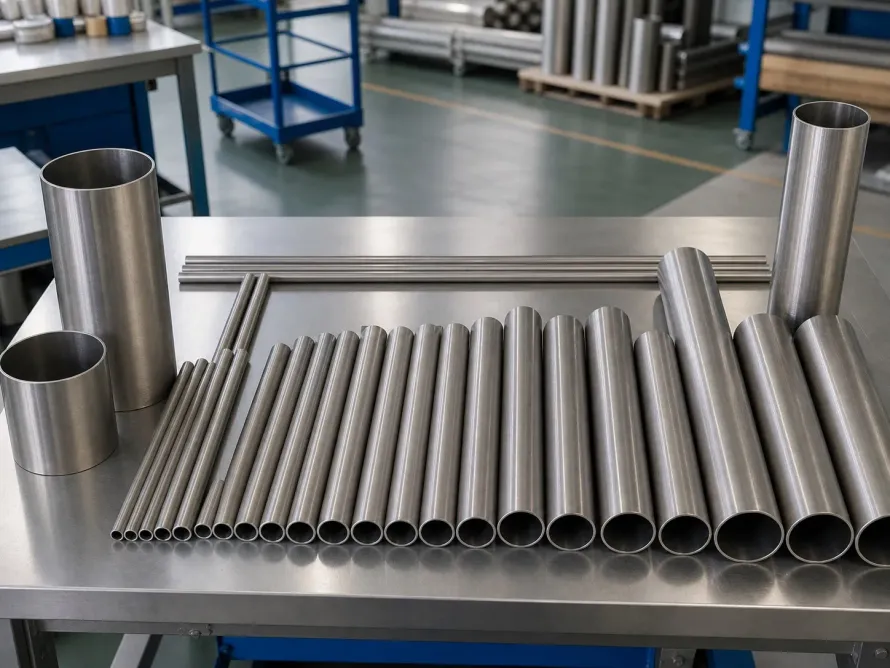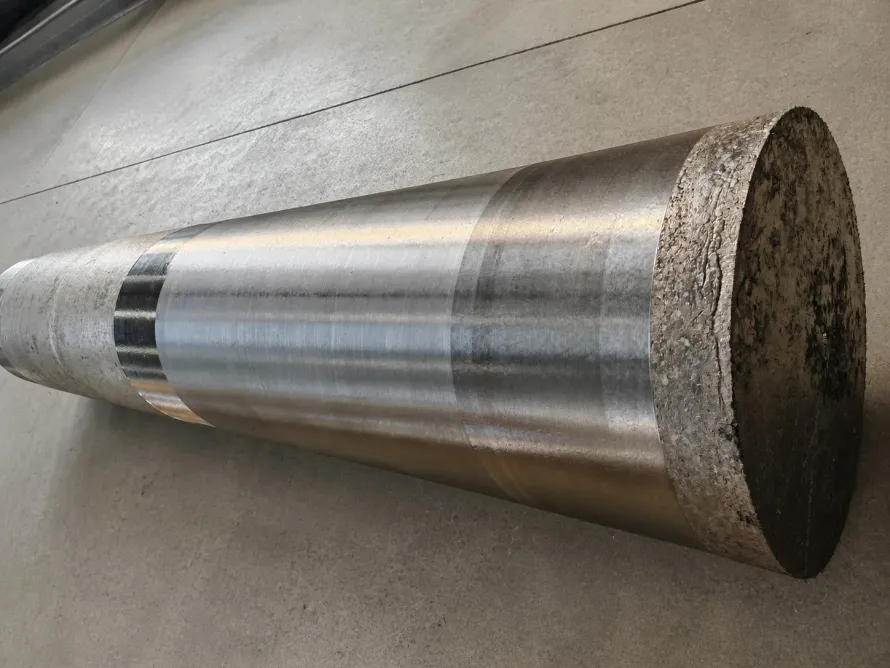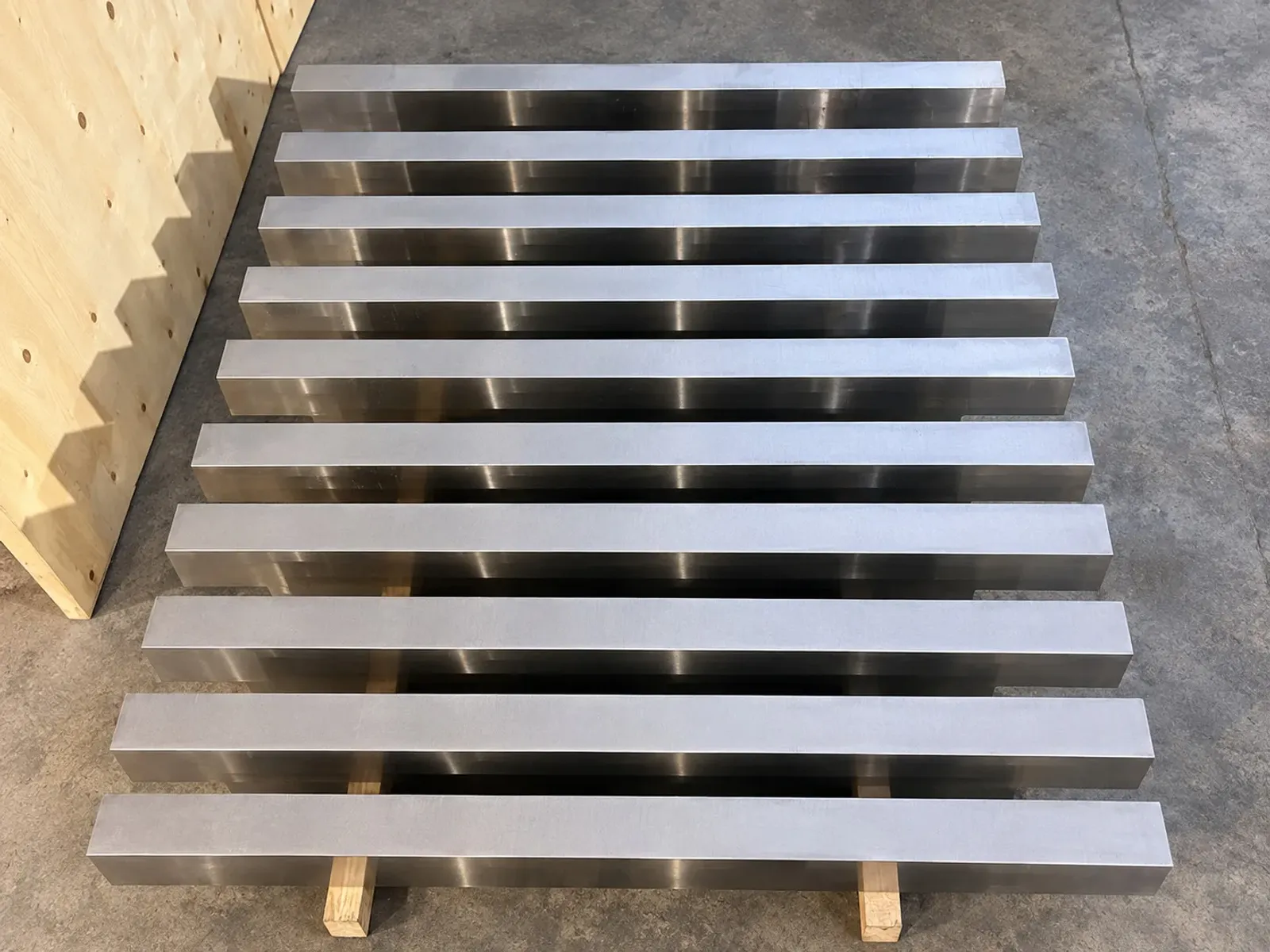
Rectangular bar-stock context; the image does not establish alloy, grade, dimensions, certification or availability.
ASTM B348/B348M Grade 5 bar and ASTM B381 Grade F-5 forging can share the same UNS R56400 alloy identity, but they are not the same purchase specification. B348/B348M-25 covers annealed titanium bars and billets. B381-26 covers annealed titanium forgings. If a drawing or purchase order requires a forging, a bar certificate does not prove the required product route merely because the chemistry and grade family match.
That distinction matters when a supplier offers a cheaper or faster bar-machining route for a part originally described as a forging. The substitution may be technically acceptable, but it requires explicit authorization under the governing drawing, contract and application rules; the required approvers depend on those documents. It cannot be inferred from the words “Grade 5” or “Ti-6Al-4V.”
Product form chooses the standards route
ASTM’s current public page identifies B348/B348M-25 as the specification for titanium and titanium alloy bars and billets. Its scope lists Grade 5 as UNS R56400, Ti-6Al-4V. The public abstract also describes chemistry, tensile testing and possible supplied surface conditions for annealed bar and billet products.
ASTM’s current B381-26 page identifies a different covered form: titanium and titanium alloy forgings. Its scope uses forging notation—Grade F-5—while listing the same UNS R56400 and nominal 6% aluminum, 4% vanadium composition.
The shared UNS number answers the alloy-identity question. It does not answer the product-form question. Bar or billet is a product form supplied under the B348/B348M route; a forging is supplied under B381. The relevant certificate, test basis and acceptance language must follow the form actually ordered.
A machined bar is not automatically a forging
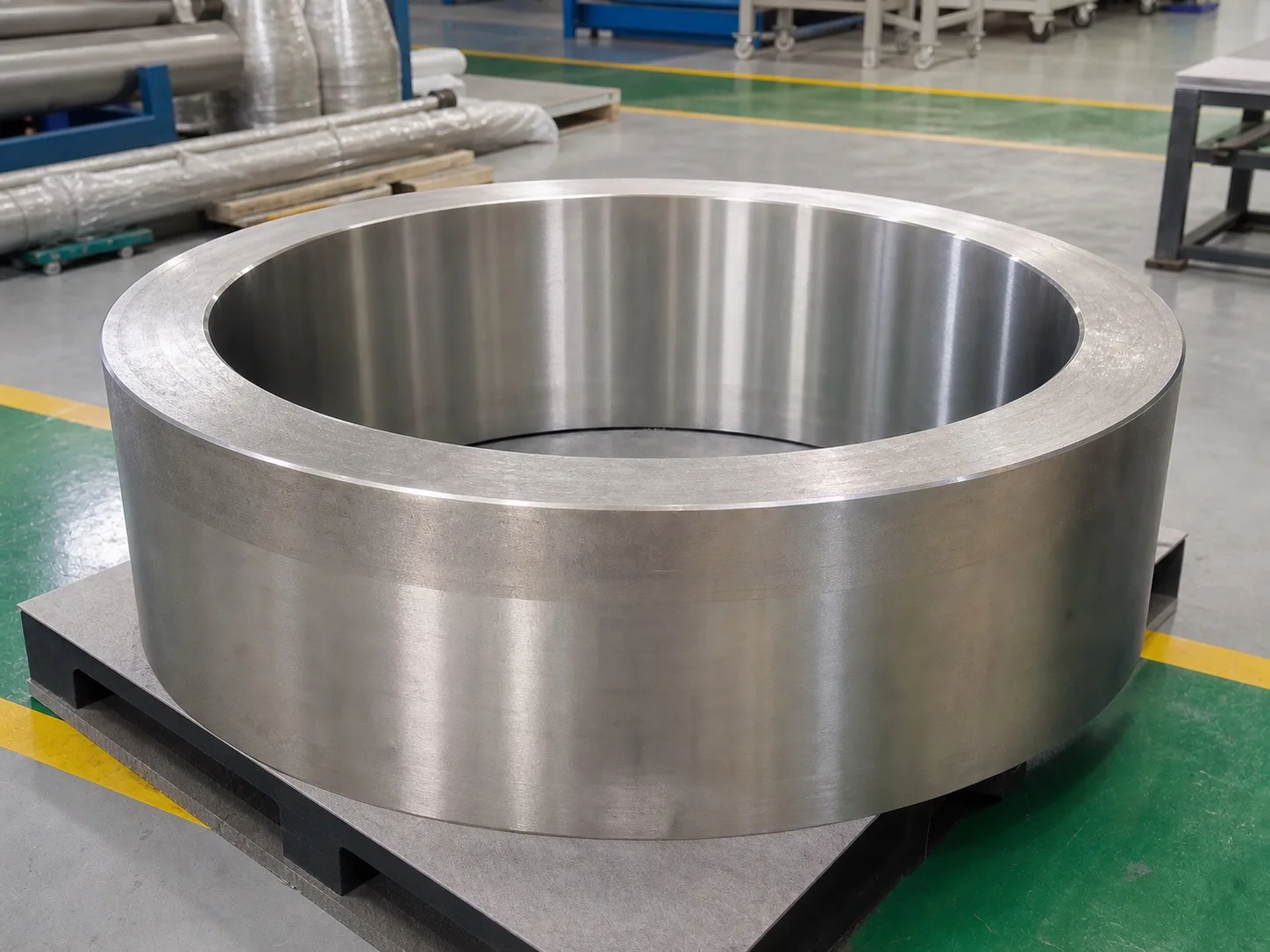
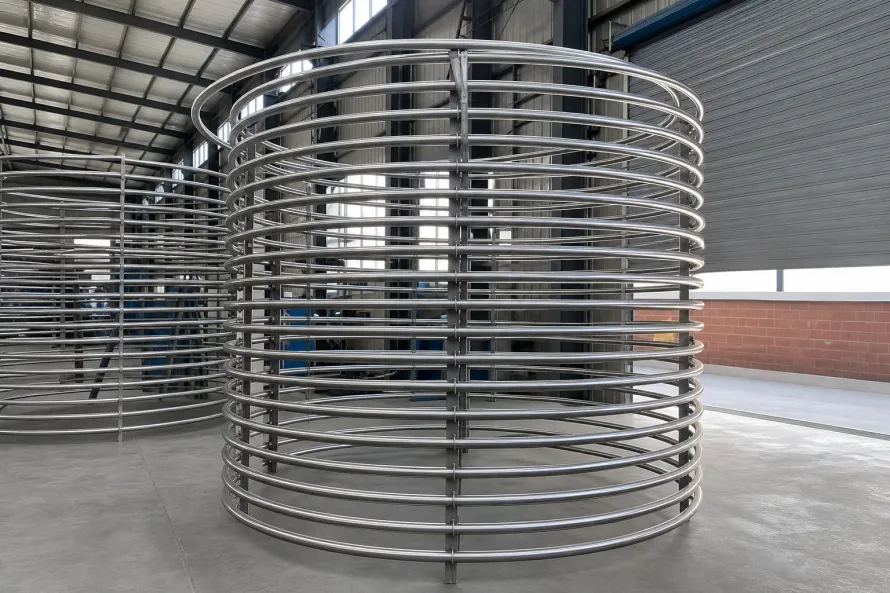
A generic titanium forging-ring form; the image does not establish Grade F-5, dimensions, certification or a customer project.
A finished shape can sometimes be machined from bar, billet or a forged blank. Those routes may produce similar geometry, but geometry is not evidence of processing history. Machining removes material; it does not establish that the starting stock was forged or that a B381 order was met.
If the design permits either route, the drawing or approval record should say so. If the drawing cites B381 or calls for a forging, the buyer should treat a bar-based proposal as a route change. The review may consider section size, mechanical-property basis, heat treatment, inspection access, machining allowance and application-specific qualification. The public ASTM pages do not decide that approval; they show why the forms must not be collapsed into one line item.
Inspection must be stated, not assumed
The B381-26 public abstract says forgings must meet applicable mechanical-property requirements and adds that ultrasonic, X-ray or surface-inspection requirements are to be specified by the purchaser if required. That wording has an immediate purchasing consequence: writing only “ASTM B381 Grade F-5” may not communicate the full inspection package expected by the project.
An RFQ should therefore identify any required nondestructive examination, acceptance class or customer-specific method in the governing documents. The same discipline applies to certificates, dimensions, condition and supplementary requirements. Do not infer a complete inspection plan from the standard designation alone, and do not invent clause details from a public summary.
What a clear order should separate
A useful order description separates six decisions:
- Product form: bar, billet, forging or finished machined component.
- Standard and revision: for example, B348/B348M-25 or B381-26, subject to the governing contract.
- Grade notation: Grade 5 for the bar/billet route or Grade F-5 for the forging route.
- Dimensions and condition: stock size, finished dimensions, surface or machining allowance, and heat-treatment condition.
- Inspection and records: mechanical testing, any required NDT, certificate content and traceability.
- Route approval: whether machining from bar, forging, or another approved starting form is permitted for the application.
This structure prevents a common mismatch: the supplier quotes the right alloy but the wrong product route. It also lets procurement compare offers on the same basis instead of treating bar and forging lead time or cost as directly interchangeable.
Use public scope pages as a routing check
ASTM’s public pages are sufficient to establish the current designation, public scope and the Grade 5/F-5 naming difference used here. They are not substitutes for the complete purchased standards, a customer specification, drawing or regulatory approval.
The defensible conclusion is simple: UNS R56400 identifies the alloy family, while B348/B348M and B381 identify different product-form routes. Select the route first, then bind the exact grade, revision, dimensions, condition, inspection and approval evidence to the order.
Sources
- ASTM International, ASTM B348/B348M-25: Standard Specification for Titanium and Titanium Alloy Bars and Billets; accessed 9 October 2026.
- ASTM International, ASTM B381-26: Standard Specification for Titanium and Titanium Alloy Forgings, last updated 13 July 2026; accessed 9 October 2026.