Technical Explainer
Titanium Condenser Tubes: When Cathodic Protection Changes Hydride Risk
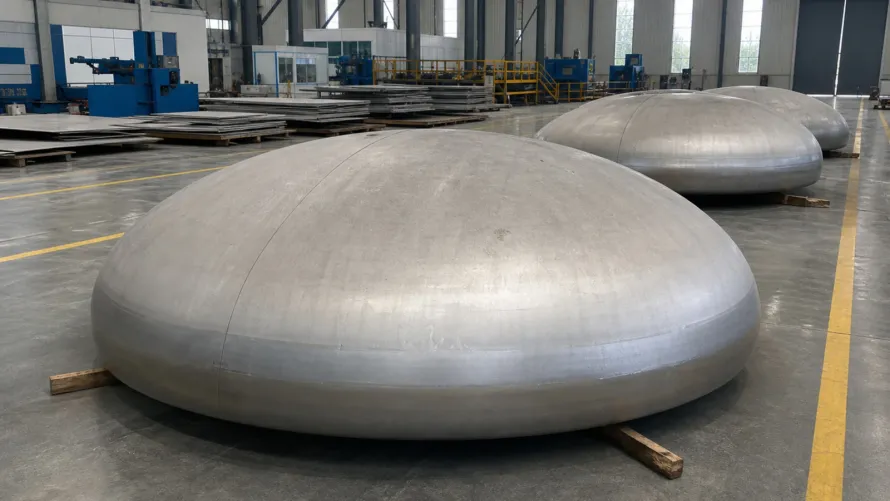
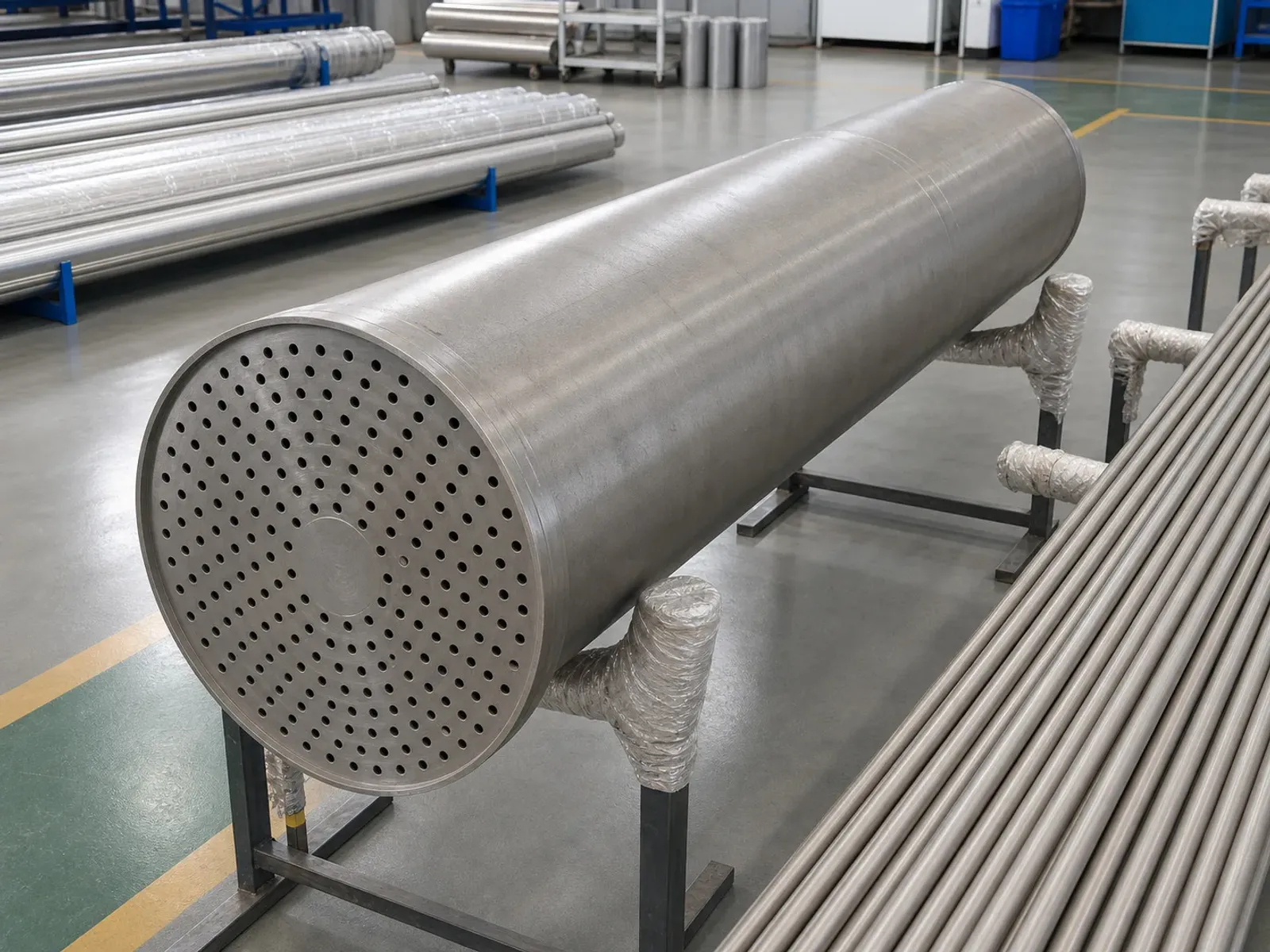
Tube sheet and shell illustrate an equipment interface.
A titanium tube can meet its purchase specification while the installed condenser still needs a separate hydrogen-risk review. TIMET’s corrosion guide describes an important distinction: cathodic protection or a galvanic couple can generate atomic hydrogen at the titanium surface, and the resulting absorption depends on the actual electrical, chemical, temperature and surface conditions. For an unalloyed titanium tube in a protected waterbox, the buyer and equipment engineer should connect the tube grade to the installed protection system before treating the material certificate as a service-compatibility decision.
Three conditions are a screening framework, not a universal limit
TIMET reports that three groups of conditions usually coincide when unalloyed titanium hydriding occurs. First, the environment or surface must favor entry: its examples are solution pH below 3 or above 12, abrasion damage, or an impressed potential more negative than −0.70 V. Second, the temperature is generally above 77 °C (170 °F), where hydrogen can penetrate beyond a surface film more readily. Third, a mechanism must actually produce hydrogen at the metal surface, such as an impressed-current protection system, a galvanic couple, corrosion or severe abrasion.
The alternatives within the first group matter. An ordinary pH reading does not rule out an electrical or damaged-surface route. Nor is the three-group description a necessary-and-sufficient design equation: TIMET calls it a pattern from laboratory work and service experience. The guide does not state a reference electrode for its −0.70 V figure. It should therefore not be copied as a cathodic-protection set point or compared directly with a field reading reported against SCE, Ag/AgCl or another reference.
Why a cool seawater loop still needs the electrical context
TIMET says hydriding below 77 °C is usually slow and service failures are rare, while noting that severe tensile stress may promote diffusion at lower temperatures. It also reports a specific exception: accelerated hydrogen absorption in ambient-temperature seawater at very high cathodic current densities, with potentials more negative than −1.0 V versus SCE. That SCE designation belongs to this exception; the guide does not attach it to the separate −0.70 V statement.
This changes what an engineer needs from an installed system. The measured potential must include its reference electrode and location; current density, protection method, coupling to other metals, water chemistry, temperature excursions and damaged areas all affect whether the guide’s mechanism resembles the equipment. A generic statement that the cooling water is below 77 °C misses the documented high-current exception. Conversely, a high-temperature value alone does not establish hydrogen entry without a generating mechanism.
Keep tube acceptance and system compatibility separate
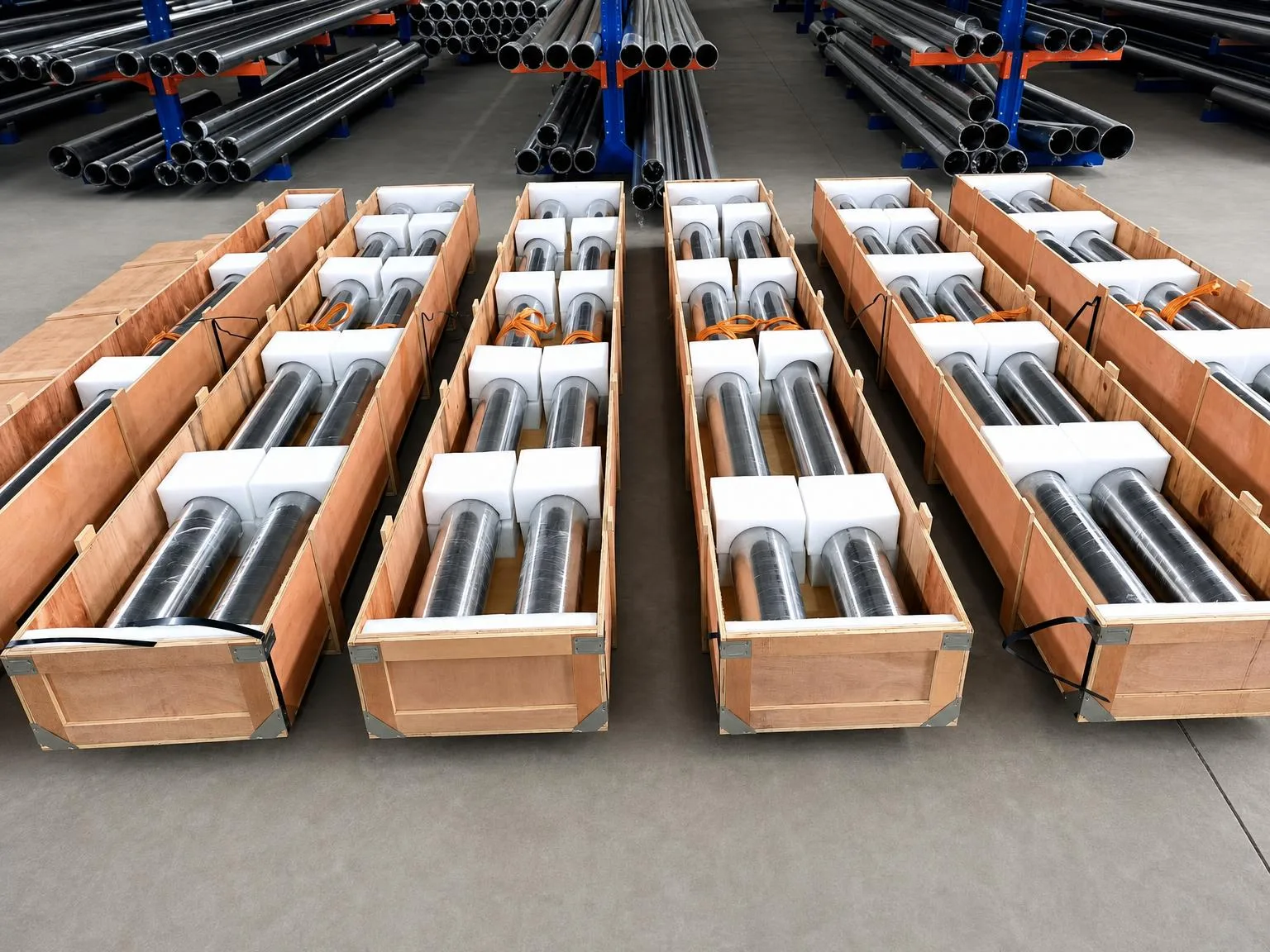
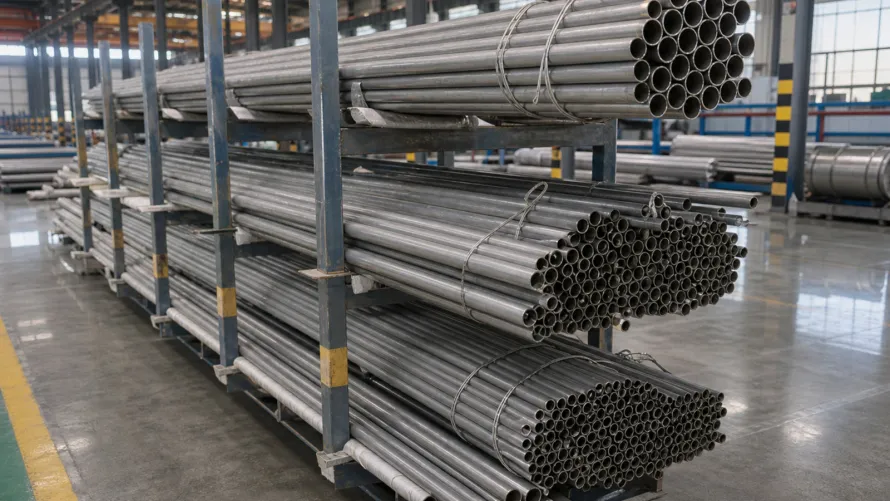
Crated metal tubes illustrate the supply-stage product form.
ASTM lists B338-17(2026) as the specification for seamless and welded titanium and titanium-alloy tubes for condensers and heat exchangers. That is a relevant procurement reference for the tube being delivered. TIMET’s guide addresses a different decision: whether a particular installed environment can drive hydrogen into the surface. Neither the standard’s product title nor a grade label supplies the actual waterbox potential, local chemistry, contact materials or operating history.
For a replacement or new bundle, a focused handoff is more useful than a broad checklist. The tube supplier can identify the ordered grade, route, heat and applicable product evidence. The equipment or corrosion engineer should supply the protection design, the reference and location of measured potentials, credible temperature excursions, pH and cleaning conditions, galvanic contacts, and any abrasion or oxide-film damage. Where these conditions approach the guide’s concern, the project owner can decide what representative exposure, hydrogen or microstructural evidence is needed. Those are engineering recommendations drawn from the mechanism, not additional requirements claimed to be in ASTM B338.
TIMET itself cautions that its brochure is a guide and that actual service conditions can differ from laboratory conditions. Its older published document is useful for identifying the failure mechanism; it is not a current project design code or a universal acceptance limit. The immediate buyer question is whether the proposed tube and the installed protection system have been assessed together.
Sources
- TIMET, Corrosion Resistance of Titanium, “Hydrogen Embrittlement”, p. 28 (manufacturer technical guide, accessed 20 September 2026).
- ASTM International, nonferrous metal standards listing, listing B338-17(2026) (accessed 20 September 2026).
FAQ
# Does a B338 titanium tube certificate cover cathodic-protection hydrogen risk?
# Can −0.70 V be used as a universal titanium CP set point?
# Is a titanium condenser tube safe from hydriding below 77 °C?
Need this material? Get a factory-direct quote.