When sourcing Grade 5 (Ti-6Al-4V) or Grade 23 (Ti-6Al-4V ELI) titanium bars and billets, procurement teams routinely encounter a stark pricing divide. A quote for standard industrial bar certified to ASTM B348 (Double VAR Melted) may sit around $$22 \sim $26\text{ USD/kg}$, while a seemingly identical diameter bar certified to AMS 4928 / AMS 4965 or aerospace PREP/EIGA powder feedstock standards (Triple VAR Melted) commands a $$3.00 \text{ to } $5.50\text{ USD/kg}$ premium.
Unscrupulous traders often tell buyers that “the chemical composition on the test report is identical, so two melts and three melts perform the same.” In high-cycle fatigue environments, aerospace turbine rotors, and 3D-printed medical implants, believing that claim can lead to catastrophic in-service fracture.
Drawing from furnace operational data across our Melting and heavy forging units, this guide explains the metallurgical physics inside a Vacuum Arc Remelting (VAR) crucible and shows you how to verify authentic triple-melted titanium.
1. Inside the Crucible: What Happens During Melt 1, Melt 2, and Melt 3?
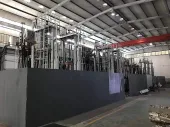
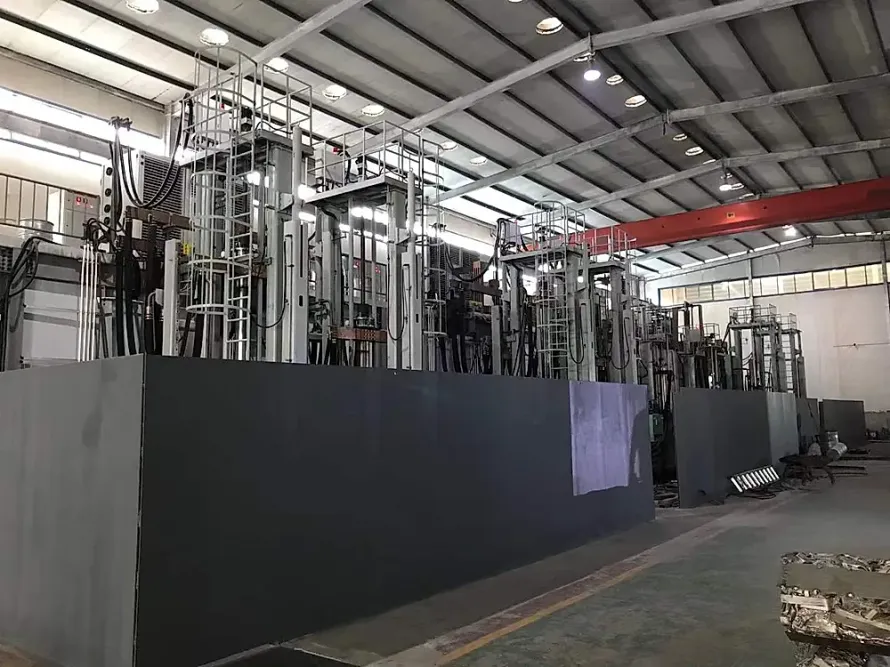
Unlike steel or aluminum, titanium cannot be melted in open air or refractory-lined induction furnaces; molten titanium reacts violently with oxygen, nitrogen, and ceramic refractories. All high-performance titanium ingots (ranging from 3 to 15 metric tons) must be produced in water-cooled copper crucibles under deep vacuum via Vacuum Arc Remelting (VAR).
[Stage 0: Electrode Compaction]
Grade 0 Virgin Sponge + 65-AlV Master Alloy Pressed into Blocks & Plasma-Welded
                 │
                 ▼
[Melt 1: Primary VAR (Consolidation)]
• Melts sponge blocks into a solid primary ingot
• High local segregation of Al/V; volatile chlorides (MgCl2) evaporate
                 │
                 ▼
[Melt 2: Secondary VAR (Industrial Standard - ASTM B348 / B381)]
• Primary ingot inverted & remelted as electrode
• Achieves macro chemical uniformity for chemical/marine/static equipment
• LIMITATION: Sub-millimeter Hard Alpha (LDI) particles may survive brief pool residence
                 │
                 ▼
[Melt 3: Triple VAR (Aerospace Rotating & AM Feedstock - AMS 4928 / AMS 4965)]
• Extended molten pool residence time + controlled Electromagnetic Stirring (EMS)
• Complete dissolution of refractory Hard Alpha (TiN/TiO) inclusions
• Ingot top-to-bottom compositional variance locked within ±0.01%
Why Two Melts Are Not Enough for Critical Applications
During Melt 1 and Melt 2, the electric arc creates a relatively shallow molten pool at the top of the solidifying ingot. While two melts achieve macro-level chemical compliance, two microscopic killers can survive the process:
- Low-Density Inclusions (LDI) — The “Hard Alpha” Nightmare: If a tiny particle of sponge titanium was exposed to atmospheric nitrogen during electrode welding or sponge crushing, it forms an interstitial nitrogen-stabilized alpha phase ($\text{TiN}_x\text{O}_y$). While standard Ti-6Al-4V melts at $\sim 1660^\circ\text{C}$, nitrogen-rich Hard Alpha has a melting point exceeding $1900^\circ\text{C}$. In a double-VAR process, this hard, brittle particle can pass through the liquid pool without fully dissolving, remaining embedded in the final bar like a hidden glass shard. Under cyclic engine vibration, a fatigue crack initiates immediately at this inclusion.
- Macro-Segregation and Beta-Transus Drift: Iron ($\text{Fe}$) and Oxygen ($\text{O}$) partition differently between the liquid and solid phases as a 6-ton ingot cools over 24 hours. In double-melted ingots, the Beta-transus temperature ($\text{T}_\beta$) between the ingot top and bottom can vary by $8^\circ\text{C} \text{ to } 12^\circ\text{C}$. When closed-die forging aerospace blades near the Beta transus, a $10^\circ\text{C}$ shift ruins the targeted bimodal microstructure.
2. What the Extra $3.00–$5.50/kg Buys in Triple VAR Melting
Executing a third VAR cycle is not simply pushing a button; it fundamentally alters the thermodynamics and yield economics of the ingot:
- Complete Dissolution of Hard Alpha via Residence Time: By remelting a dense, homogeneous secondary ingot under a precisely regulated drip-short arc gap and an alternating Electromagnetic Stirring (EMS) field, the molten pool residence time is maximized. Any residual nitrogen-rich alpha zones are diffused into the matrix.
- Ultra-Low Interstitial Gas Control ($\text{O} \le 0.05% \sim 0.12%$): Triple vacuum exposure under $< 0.08\text{ Pa}$ strips out dissolved hydrogen ($\text{H} \le 0.003%$) and volatile trace tramp elements. For our AM spherical powder feedstock bars, triple VAR keeps oxygen below $500\text{ ppm}$ ($\le 0.05%$) so atomization plants still meet Grade 23 ELI limits after powder processing pickup.
- Twice the Peeling and Cropping Loss: After every VAR melt, the ingot’s rough outer skin (splash zone containing condensed volatiles) must be turned off on a heavy lathe, and the shrinkage pipe at the top crown must be sawed off. A third melt adds an extra 4% to 6% physical metal loss, plus 24 hours of vacuum furnace power and crucible wear.
3. Engineering & Procurement Comparison: Double VAR vs. Triple VAR
| Metallurgical Parameter | Double VAR Melting (2x Melt) | Triple VAR Melting (3x Melt) | Engineering Impact |
|---|---|---|---|
| Applicable Standards | ASTM B348, ASTM B381, ASME SB348 | AMS 4928, AMS 4965, AMS 4911, ISO 5832-3 | Mandatory compliance for aerospace & medical OEMs |
| Hard Alpha (LDI) Risk | Low, but statistically present ($10^{-4}$) | Virtually eliminated ($< 10^{-7}$ probability) | Prevents uncontained rotor or implant fatigue failure |
| Top-to-Bottom Alloy Variance | $\text{Al/V}$ variation up to $\pm 0.15%$ | Locked within $\pm 0.01% \sim 0.03%$ | Uniform mechanical response across entire 6-ton lot |
| Beta-Transus ($\text{T}_\beta$) Window | $\pm 8^\circ\text{C} \sim 12^\circ\text{C}$ across ingot length | $\pm 2^\circ\text{C} \sim 3^\circ\text{C}$ ultra-tight window | Prevents localized grain coarsening during die forging |
| Ultrasonic Testing (UT) Grade | ASTM A388 / AMS 2631 Class B or A | AMS 2631 Class AA (FBH $\Phi 0.8\text{ mm}$ / #2 Flat Bottom Hole) | Detects sub-millimeter internal voids before CNC machining |
| Primary Target Applications | Chemical reactors, marine shafts, industrial fasteners, anodes | Aerospace forgings, turbine discs, surgical implants, PREP/EIGA AM bars | Matches metallurgical cost to failure consequence |
4. How Buyers Can Audit and Verify Authentic Triple-VAR Supply
Because a double-melted bar looks identical to a triple-melted bar on the outside, auditing the paper trail and physical microstructure is essential. Under the Titanium Seller Supply Chain Verification Charter, we enforce three mandatory checks before releasing any aerospace or AM-grade shipment:
- Demand the 3-Stage Heat Number Genealogy: Every VAR furnace melt generates a sequential sub-lot identifier (for example: Primary electrode
2608-091A$\rightarrow$ Secondary ingot2608-091B$\rightarrow$ Triple final ingot2608-091C). If a supplier’s MTC only lists a single static heat number without melt-stage traceability, request the underlying furnace melt cards. - Audit the VAR Furnace Vacuum & Amperage Strip Charts: Modern automated VAR furnaces record continuous digital logs of arc voltage, drip-short frequency, cooling water $\Delta T$, and vacuum pressure from start to hot-topping. A genuine triple-melt batch has three distinct furnace timestamped logs.
- Verify Top / Middle / Bottom Ingot Chemistry & $\text{T}_\beta$ Certificates: For triple-VAR aerospace heats, chemical analysis (ONH gas analyzer + ICP-OES) is sampled from both the top and bottom of the final ingot after cropping. Ensure the certificate reports the exact Beta-transus temperature measured via metallographic quench testing or differential thermal analysis.
Need certified triple-VAR titanium forgings, aerospace bar stock, or low-oxygen AM feedstock with full 3-melt furnace logs? Contact our metallurgical engineering team to review our active triple-melted ingot inventory and material test certificate inspection dossiers.