AMS6910E Published: “Forgings” No Longer Listed in SAE’s Public Scope
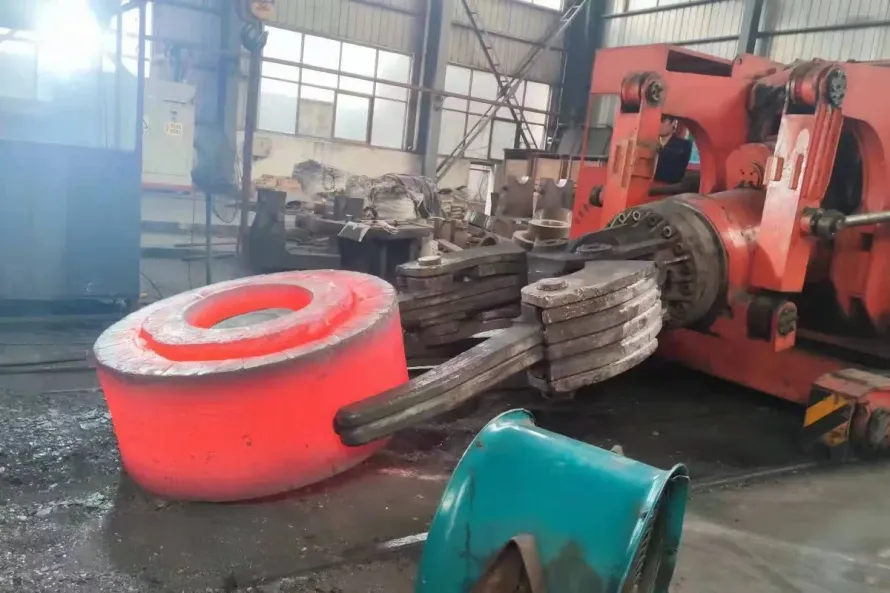
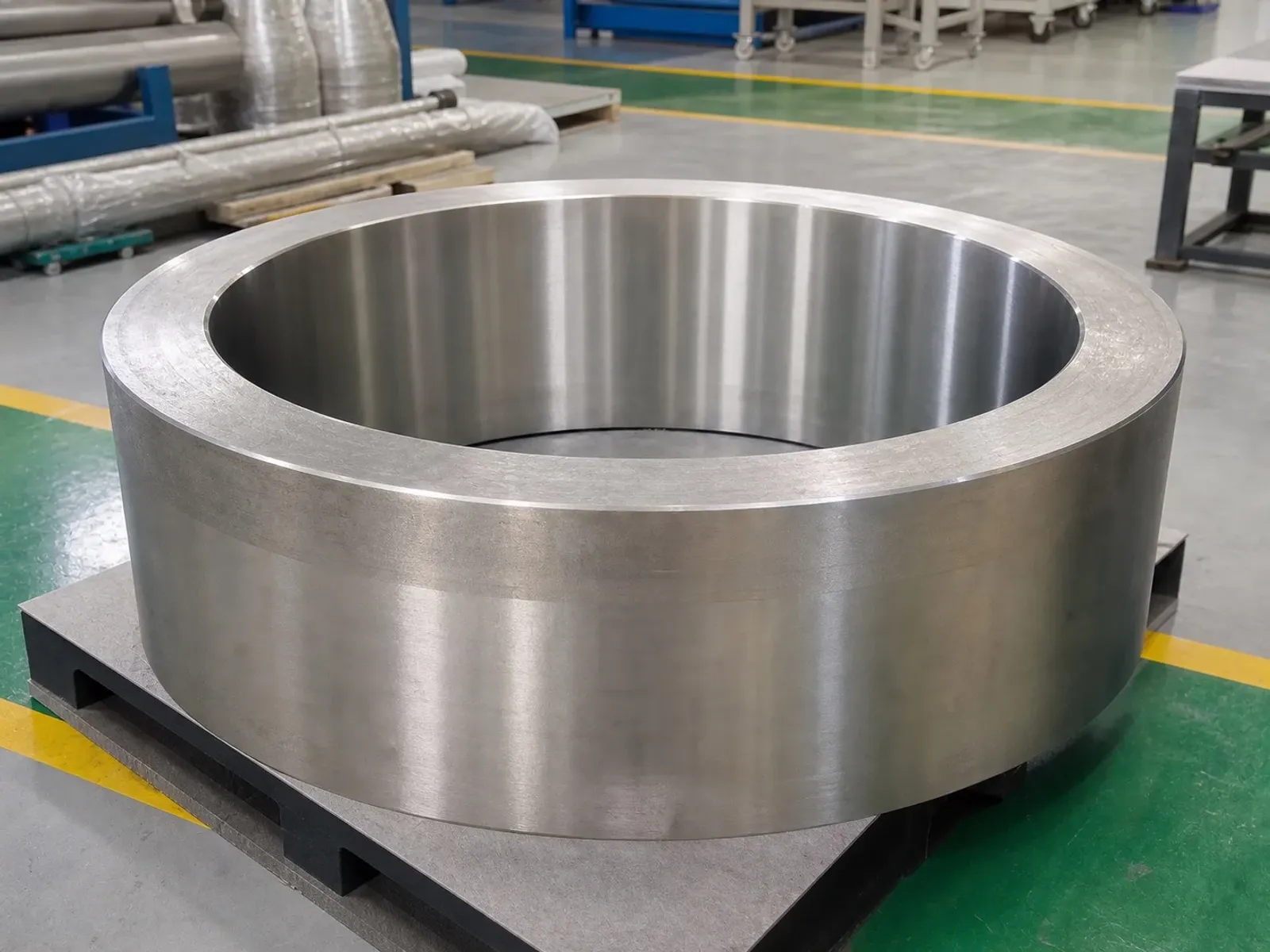
Product-form example: a machined metal ring.
SAE International revised AMS6910 to revision E on September 10, 2026. The clearest change on its public page is the product-form wording: forgings are no longer listed, while bars and stock for forging remain. The specification names the titanium alloy 8Al-1Mo-1V in the duplex-annealed condition.
- Buying a shaped part? Distinguish a forging from material supplied for subsequent forging; the two are separate categories in the D listing.
- Already ordering to D? Check the specified revision and any customer transition instructions before changing the order reference.
What the public D and E pages show
| Public-page item | AMS6910D | AMS6910E |
|---|---|---|
| Revision date | August 19, 2022 | September 10, 2026 |
| Alloy and condition in the title | 8Al-1Mo-1V, duplex annealed | Same designation |
| Bars | Up to 4.000 in (101.60 mm), inclusive | Same stated limit |
| Forgings | Listed, with thickness up to 4.000 in (101.60 mm), inclusive | Not separately listed |
| Stock for forging | Any size | Any size |
For bars, the size limit refers to nominal diameter or the least distance between parallel sides—not length. The “any size” wording belongs to forging stock, so it should not be read as removing the bar limit. SAE’s D page and E page support this comparison.
This is a public-scope comparison, not a review of the full standards. Technical changes and the treatment of a particular order still need to be checked against the full text and its governing documents.
Forgings and forging stock are different supply stages
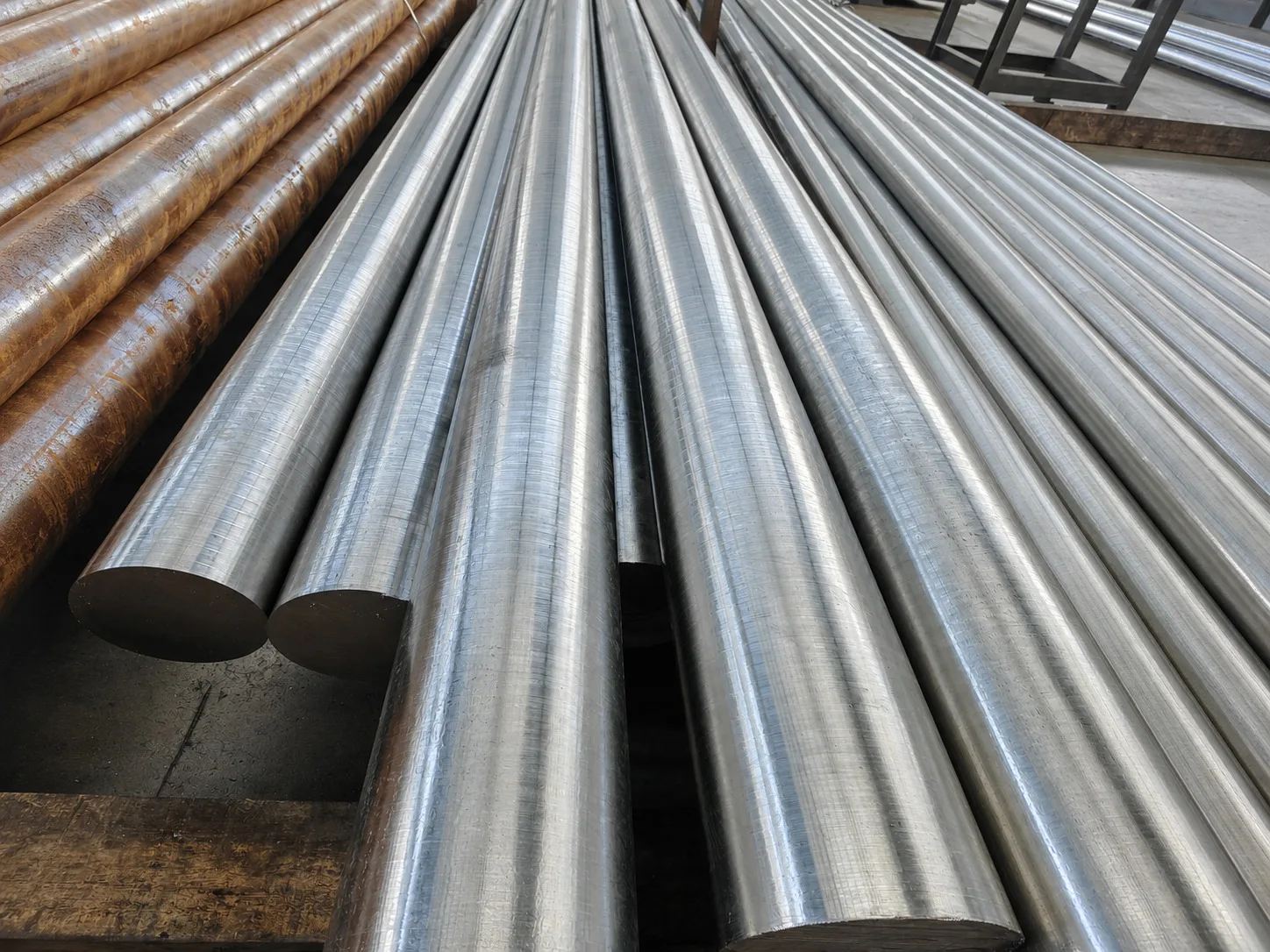
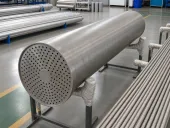
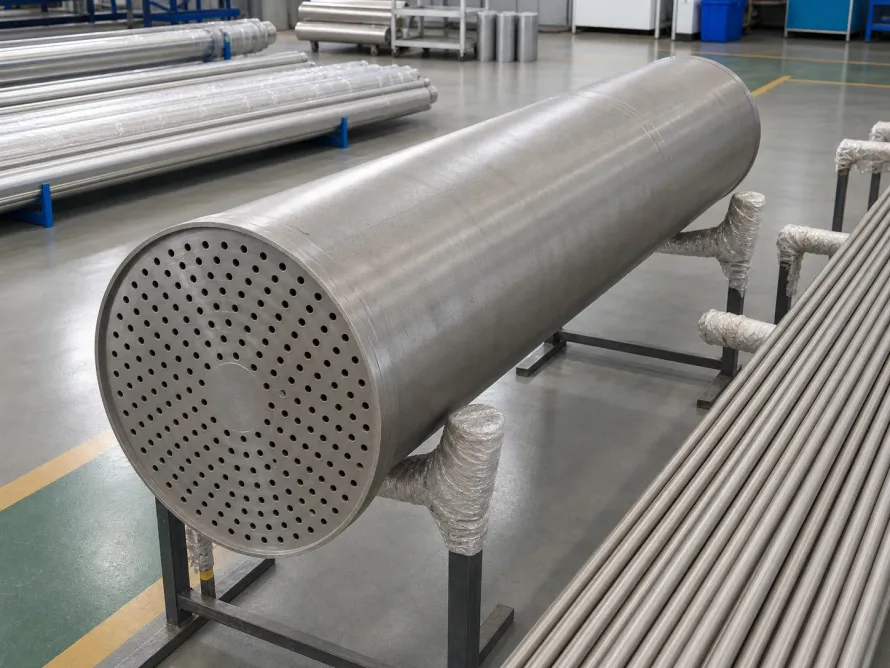
Illustration: cylindrical stock, contrasted with a shaped workpiece.
Forging shapes metal under pressure into a part. A forging is the resulting workpiece; it may still require machining before reaching its final dimensions. Forging stock is material—such as wrought rod or bar—supplied as input for a later forging operation. These distinctions follow the Forging Industry Association’s process explanation and QC Forge’s terminology.
That makes the purchase description important. A shaped workpiece and the stock from which one will be forged can share an alloy designation without being the same deliverable. Calling both “titanium material” loses precisely the distinction visible in the D/E comparison.
Two hypothetical purchasing situations
An existing D-revision order for a forging. A buyer has ordered a shaped workpiece with AMS6910D explicitly specified. The useful first question is whether the order remains tied to D or whether the customer has issued a transition instruction. Substituting “E” automatically would skip that decision.
A new E-revision inquiry for forging stock. A buyer needs bar-shaped feedstock for a subsequent forging operation. Forging stock remains named in the E public scope. The inquiry should identify that intended supply form, dimensions and required revision, then ask the supplier to confirm the applicable full-standard requirements and its ability to meet them. A bar-shaped appearance alone does not resolve the procurement category.
Start with the business actually affected
First check whether the work concerns this alloy, AMS6910 and a relevant product form. If it does, identify the affected quotations or orders and resolve their revision requirements; extend the review to linked qualification records only where those records actually depend on the requirement being examined. This is a proportionate purchasing recommendation, not an additional obligation stated by SAE’s public pages.
For an inquiry, provide the alloy, product form, dimensions and specified standard revision. Those details give a supplier a concrete basis for confirming applicability and supply capability.
Sources
- SAE International: AMS6910E public record and AMS6910D public record.
- Forging Industry Association: What Is Forging?.
- QC Forge: Forging glossary.
Public sources checked September 11, 2026.
FAQ
# What if an order cites AMS6910 without a revision letter?
# What should a technical D-to-E comparison focus on?
Need this material? Get a factory-direct quote.