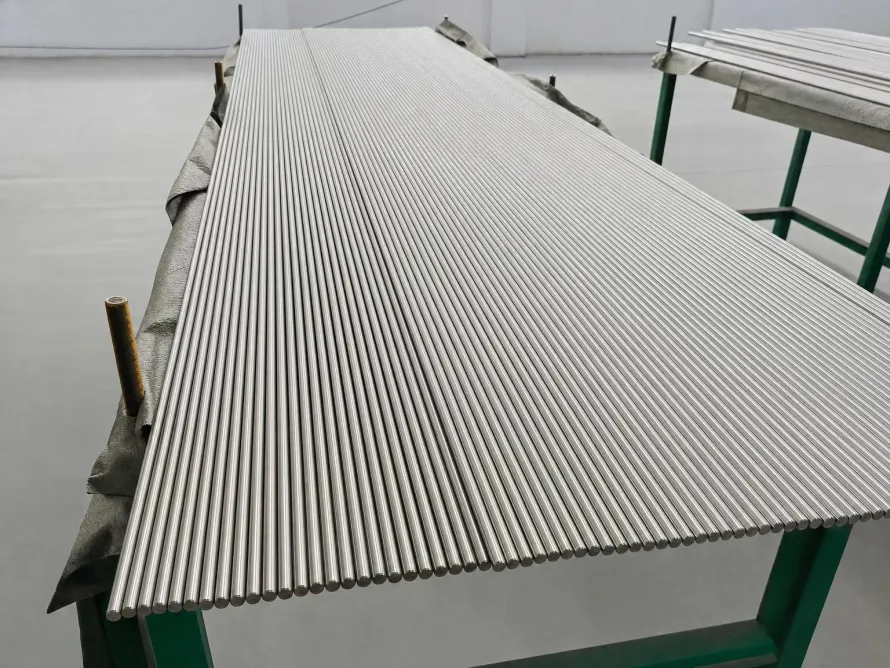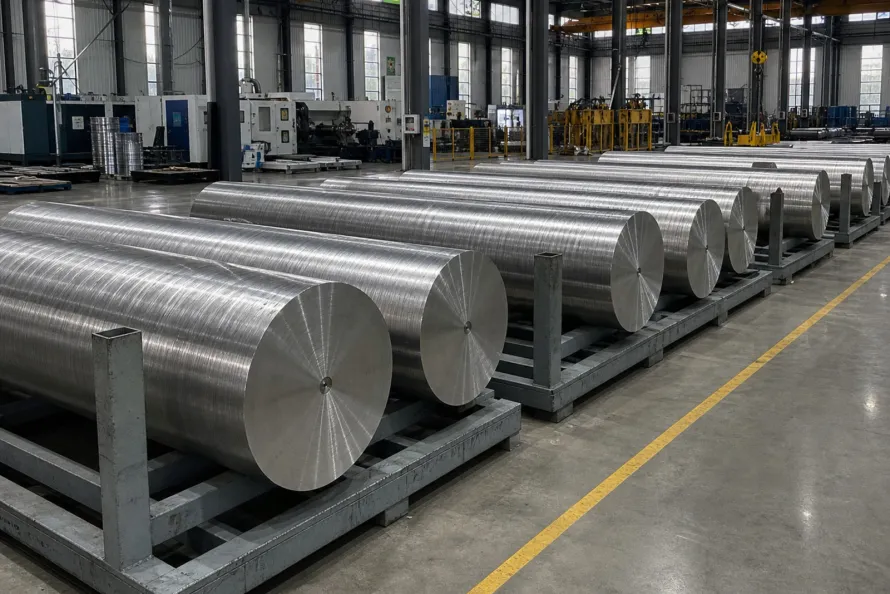
Across aerospace structural parts and metal additive manufacturing supply chains, procurement teams regularly encounter two starkly divergent quotes for peeled Grade 5 (Ti-6Al-4V) round bar. Price variations are huge. Standard commercial lots under ASTM B348 are readily available from warehouse stock at competitive prices, while flight-certified or atomization electrode lots carry steep premiums and tight traceability.
The price gap stems from melting.
The technical divide centers on how many times the ingot passed through a Vacuum Arc Remelting (VAR) furnace. Process gaps are pronounced. Standard industrial bars undergo single or double VAR melting (1-2x VAR), whereas rotating engine disks, flight fasteners, and gas-atomization feedstock rods must undergo triple VAR melting (3x VAR). What metallurgical transformations happen during that third melt? How must engineers specify it?
partner facility Titanium Melting Practice and the Physics of VAR
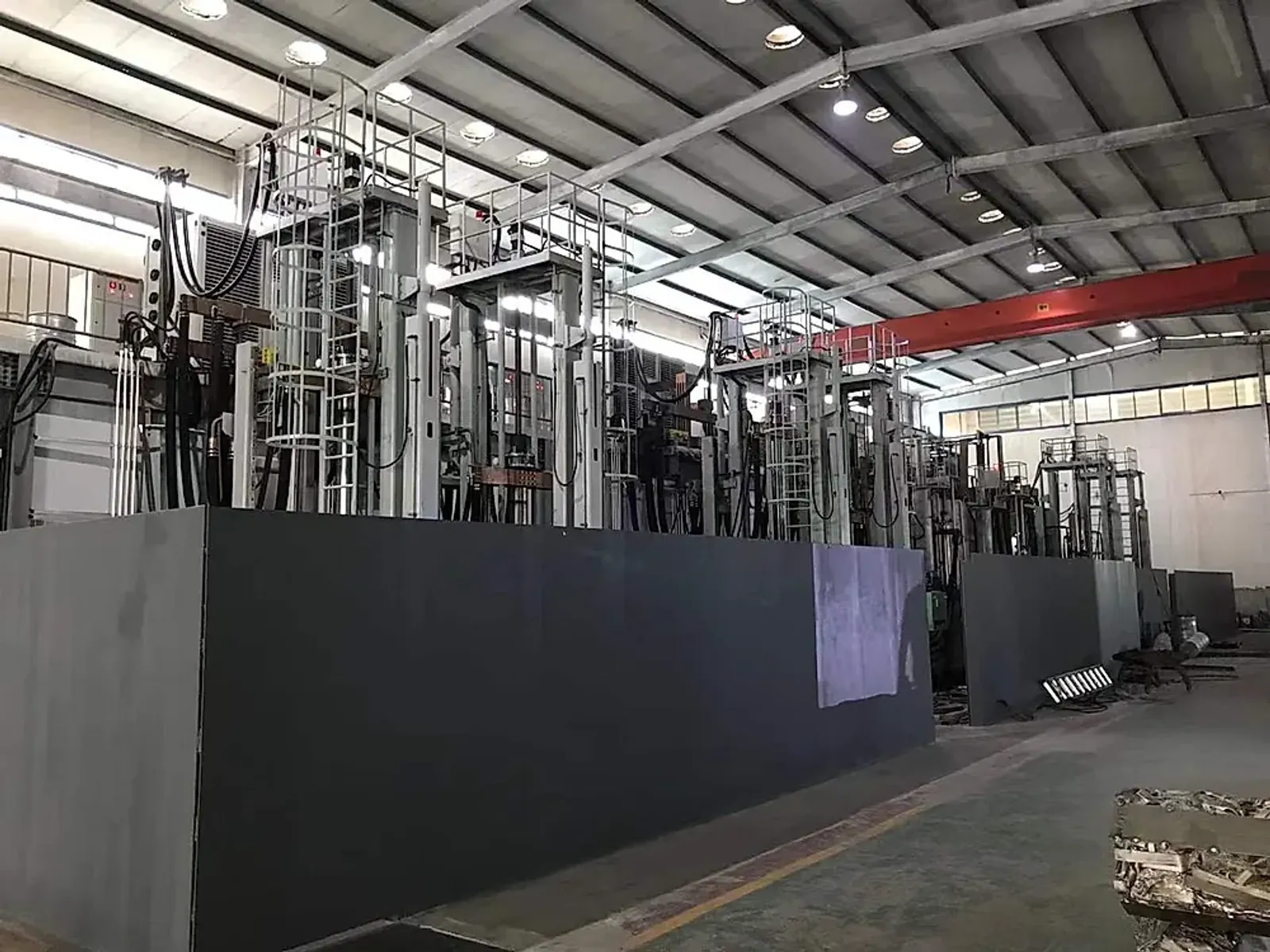
Evaluating melt cycles requires grounding in melt-shop equipment reality. Equipment dictates material quality. Across primary titanium melting centers at certified partner facilities, Vacuum Arc Remelting (VAR) serves as the predominant production route, while Electron Beam (EB) cold-hearth melting remains comparatively limited.
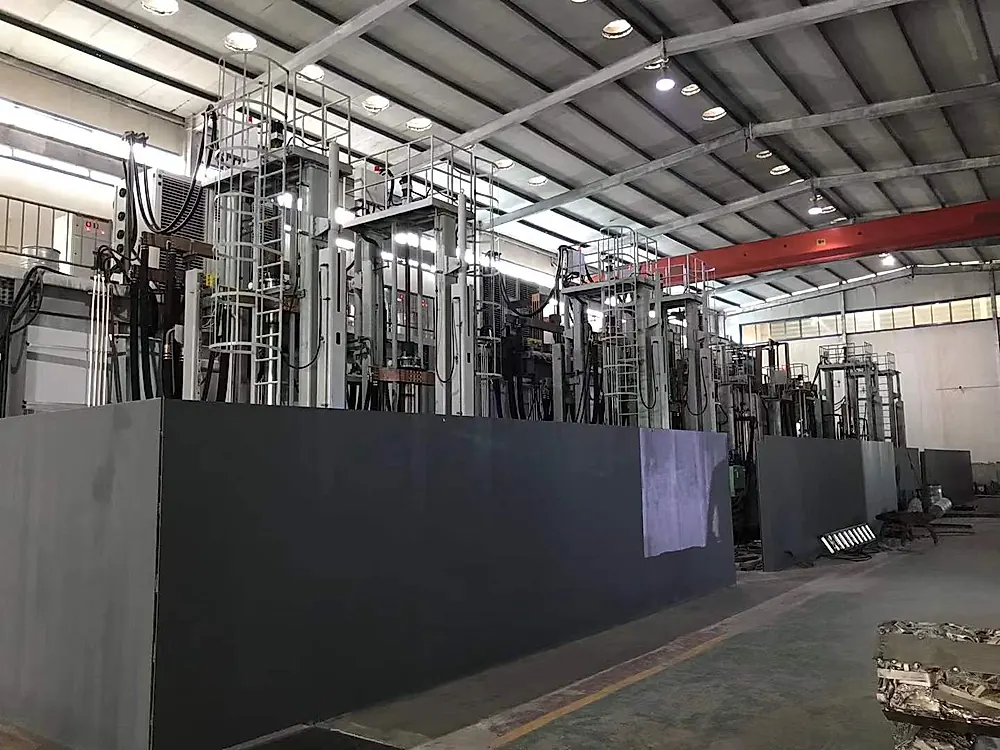
In the VAR process, compacts of high-purity titanium sponge, aluminum-vanadium master alloy (Al-V master alloy), and certified reverts are welded into a consumable electrode. Struck by an electric arc under high vacuum, droplets melt into a water-cooled copper crucible to freeze into an ingot:
- Commercial Industrial Grades (1-2x VAR): Manufactured under ASTM B348 or GB/T 2965, utilizing one primary consolidation melt and one refining melt. Pool depth is constrained. This state reliably satisfies chemical processing valves, agitator shafts, and general marine hardware.
- Aerospace and Premium AM Grades (3x VAR): Governed by AMS 4928, MIL-T-9047, or ASTM F136. The secondary ingot is fully peeled to eliminate surface scale, top shrinkage cavities are cropped, and the body is welded into the vacuum chamber for a third melt under high vacuum ($< 10^{-2}\text{ Pa}$). This extra cycle adds an incremental melt fee of roughly USD 0.70–2.10/kg.
Eliminating Fatal Inclusions: High-Density and Low-Density Defects
Flight safety permits zero compromise. Aerospace and additive manufacturing buyers pay melt premiums specifically to eliminate two microscopic internal flaws: High-Density Inclusions (HDI) and Low-Density Inclusions (LDI).
- Eradicating High-Density Inclusions (HDI): HDIs originate from fragments of high-melting-point elements (such as tungsten carbide WC tool chips, molybdenum Mo, or tantalum Ta) introduced during sponge preparation. These refractory metals melt far above the $1668^\circ\text{C}$ melting point of titanium. In the relatively shallow molten pool of 1x or 2x VAR heats, heavy particles can settle unmelted toward the crucible bottom; in contrast, the extended molten pool residence time and electromagnetic stirring of a third VAR melt dissolve heavy particles into solid solution, preventing ultrasonic fracture triggers.
- Dissolving Low-Density Inclusions (LDI): Commonly known as nitrogen-rich hard alpha defects. Such defects are dangerous. When localized sponge particles react with atmospheric nitrogen at elevated temperatures, ultra-hard, brittle titanium nitride clusters form. Under high-speed CNC turning or cyclic fatigue, LDIs act as stress risers that nucleate micro-cracks. The intense vacuum degassing and repeated liquid metal refining of 3x VAR force nitrogen atoms to diffuse homogeneously, eliminating brittle alpha clusters.
In Electrode Induction-melting Gas Atomization (EIGA) or Plasma Rotating Electrode Process (PREP) atomization, unrefined HDIs or LDIs pass directly into powders. Defects cannot be tolerated. They manifest as unbonded inclusions or micro-pores inside critical 3D-printed turbine blades.
Controlling Ultra-Low Oxygen: The $O \le 0.05%$ Feedstock Imperative
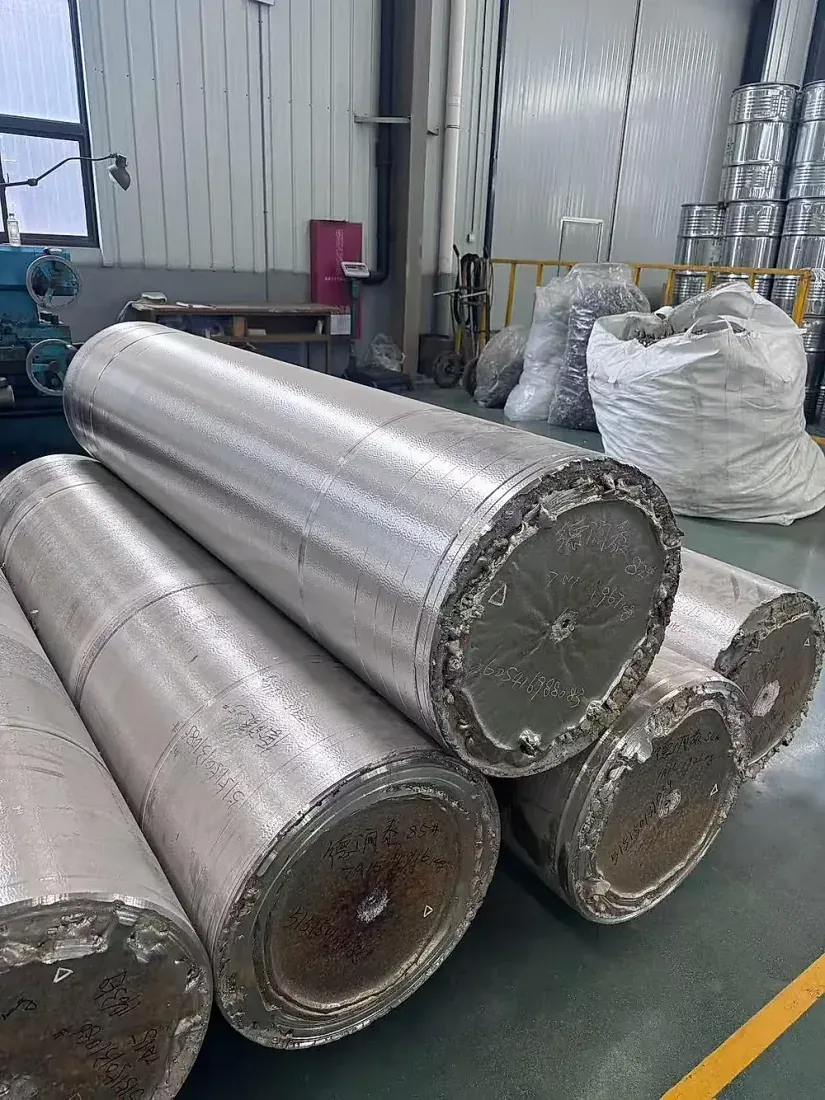
Additive manufacturing imposes strict physical limits on interstitial gas chemistry. Interstitial elements prove lethal. Production lines supplying titanium for aerospace fasteners and 3D-printing powder atomization utilize premium Grade 0 sponge and triple VAR melting to compress ingot and finished bar oxygen content to $O \le 0.05%$ (500 ppm).
Oxygen control is paramount.
The lifecycle of atomized titanium powder clarifies why raw feedstock requires ultra-low initial oxygen: Purity governs final performance.
- Multi-Stage Oxygen Uptake During Atomization: During EIGA or PREP processing, molten droplets encounter inert gas streams where extreme surface-to-volume ratios cause an unavoidable oxygen pickup of 100 ppm to 200 ppm.
- Cyclic Powder Recycling in Print Beds: Selective Laser Melting (SLM) operates in inert chambers, yet each powder sieving and reuse cycle marginally increases oxygen levels through moisture absorption.
- Tensile Elongation and Impact Toughness Thresholds: Standards like ASTM F3001 establish maximum oxygen limits (typically $0.13%$ to $0.20%$) for as-printed components. If starting bar stock carries $0.18%$ oxygen, atomized powder will exceed ductility limits, triggering premature brittle fracture.
Comparative Metallurgy: 1x, 2x, and 3x VAR Performance
Data comparisons clarify differences. To help engineering managers and procurement leads assess trade-offs, the following matrix compares metallurgical integrity, ultrasonic inspection yields, and cost structures:
| Technical Parameter | 1x VAR (Primary Ingot) | 2x VAR (Standard Commercial) | 3x VAR (Aerospace & AM Feedstock) |
|---|---|---|---|
| Reference Specifications | GB/T 3620 primary ingots | ASTM B348 / GB/T 2965 | AMS 4928 / ASTM F136 / MIL-T-9047 |
| Target Application Scope | Remelt electrodes and forging billets | Pressure vessels, pump shafts, marine hardware | Flight fasteners, rotating disks, 3D printing feedstock |
| Al / V Chemical Spread | Severe segregation ($0.6% - 1.0%$) | Controlled spread ($0.3% - 0.5%$) | Ultra-narrow band ($\le 0.15%$ homogeneity) |
| Interstitial Oxygen Level ($O$) | Typical baseline $0.16% - 0.20%$ | Standard range $0.12% - 0.18%$ | Ultra-low control at $O \le 0.05%$ (500 ppm) |
| Inclusion Risk (HDI / LDI) | High risk of unmelted inclusions | Low risk; occasional micro-segregation | Zero tolerance; HDIs and LDIs eliminated |
| Immersion Ultrasonic Rating | Inadequate for ultrasonic grading | Meets standard Flat-Bottom Hole (Class A) | 100% compliant with AMS 2631 Class AA |
| Microstructural Grain Size | Coarse grain boundary structure | Equiaxed structure (A3 to A4 rating) | Fine uniform equiaxed grains (A1 to A2 rating) |
| Melt Fee Cost Benchmark | Baseline sponge consolidation cost | Adds USD 0.40–0.60/kg over crude ingot | Adds USD 0.70–2.10/kg premium over double VAR |
Triple VAR is not marketing rhetoric. It represents a strict physical requirement for fracture-critical parts. Physics governs metallurgical performance.
Procurement Quality Protocols and MTC Verification
Contract terms require precision. To prevent suppliers from delivering double-melted commercial bars against triple-melted aerospace purchase orders, procurement teams must enforce three contractual controls:
1. Mandatory Melting Process Callouts
Purchase order line items must explicitly specify: “Raw material ingots shall be melted by minimum triple vacuum arc remelting (3x VAR)”. Vague phrases like “vacuum melted” must be rejected. The accompanying material test certificate (MTC) inspection certificate must document all three unique heat serial numbers and list intermediate vacuum levels.
2. Specifying Chemical Interstitials and Ultrasonic Limits
For 3D printing powder electrode stock, state interstitial limits: oxygen $O \le 0.05%$, nitrogen $N \le 0.01%$, and hydrogen $H \le 0.005%$. Non-destructive testing must specify AMS 2631 Class AA immersion ultrasonic inspection using a $\Phi 0.8\text{ mm}$ flat-bottom hole calibration block. Buyers can inspect melt units and testing facilities on our partner facility manufacturing and inspection page.
3. Dimensional Straightness for Swiss-Type CNC Turning
Both PREP atomization feed rods and aerospace fastener blanks feed through Swiss-type CNC lathes. Bar straightness is critical. In addition to microstructure and interstitial chemistry, bars must maintain centerless ground surface roughness of $Ra \le 0.8\mu m$, straightness within $\le 0.5\text{ mm/m}$, and a clean $45^\circ$ end chamfer to prevent automatic feeder jams.
Related Products & Services
Matching procurement specifications to component operating stress protects project capital and operating safety. Rigorous sourcing pays dividends. Review our technical resources for further guidance:
- Mill product dimensions: Explore warehouse inventories on our precision titanium rods and forged round bar catalog;
- Atomization feedstock specifications: Review certified electrode sizes on the AM spherical powder feedstock titanium bars and wires page;
- Alloy comparison: Compare high-strength structural specifications on the Grade 5 (Ti-6Al-4V) alloy page and the Grade 23 (Ti-6Al-4V ELI) low-interstitial page;
- Request mill test certificates: Submit your technical sourcing specification via our quote and technical review desk to receive 3.1 MTC verification and engineering consultation within 2 hours.