Type something to search...

Titanium traceability

Aerospace and Defense
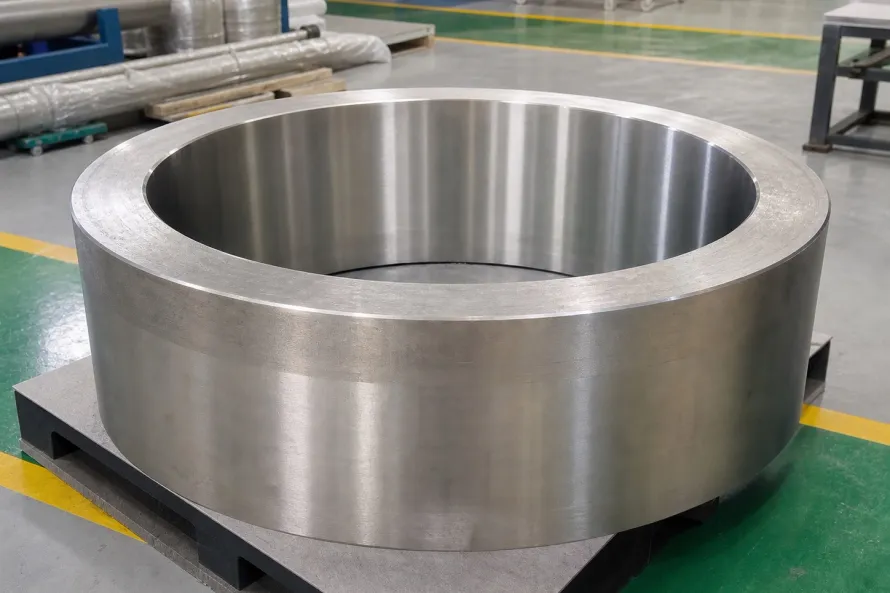
Large titanium forging ring on a clean factory pallet, showing why high-value titanium parts need item-level identity from parent material through release.
By Jason/ On 11 Jun, 2026

Theseus Shows Why Titanium Buyers Need a Material-to-Part Identity File

DUST Identity's 2026 launch of the Theseus aerospace authentication platform is not only a counterfeiting story. For titanium buyers, it is a clear signal that the industry is moving beyond paper-only traceability toward evidence that binds the physical material, the processing record and the release document to the same part identity.AIN reported that Theseus was introduced at Titanium Europe 2026 in Toulouse and combines physical diamond-particle markers with AI-assisted verification of airworthiness documents. The reported pilot tracked titanium bar stock from French specialty metals mill Aubert & Duval through distribution and machining to delivery at Airbus, with certificates of conformity and test data attached to the same digital record. That matters because titanium supply risk is no longer only about whether the alloy is available. The harder question is whether the same piece of material can be followed through cutting, machining, inspection, subcontract processing, document handoff and receiving inspection without the record becoming detached from the metal. Why Paper Alone Is No Longer Enough Titanium already carries a document burden. A buyer may request a mill test report, certificate of conformity, heat number, purchase order, packing list, inspection report and customer-specific release document. In aerospace and high-value industrial work, the packet may also include FAA 8130-3, EASA Form 1, first-article records, nonconformance closure and repair history. The weakness is not that documents are useless. The weakness is that documents can be separated from the product they describe. The 2024 FAA investigation into titanium parts with falsified quality documentation on Boeing and Airbus aircraft showed the commercial problem plainly: even when testing later indicated that the alloy itself was correct, the missing trust in the paperwork forced quarantine, removals, airworthiness review and costly supplier investigation. Theseus does not solve every case. AIN noted that the platform can authenticate enrolled parts, not components that were never marked and registered. But the direction is important. The industry's trust model is shifting from "the paper says this part is traceable" to "the part itself can prove which record belongs to it." The Titanium Mechanism Behind The News Titanium products are exposed to identity drift because one starting form can become many downstream items. A bar may be cut into blanks. A billet may be machined into rings, bushings or fastener bodies. Plate may become cut blocks, brackets, fixtures or pressure-boundary parts. Tube may be cut, bent, welded or assembled into a heat-exchanger or chemical-service component.At each split, the buyer needs more than a copied certificate. The identity chain should show which heat or lot entered the route, which piece was created, what processing occurred, which inspection records belong to that piece and what final release document follows it into the next organization. This is where Theseus is commercially useful even for buyers that do not adopt that specific platform. It names the missing layer: physical product identity must survive the handoff from raw stock to finished part. For titanium exporters, processors and distributors, that makes traceability a product feature, not an administrative afterthought. The Material-to-Part Identity File A practical buyer response is a material-to-part identity file. It is not a replacement for an MTR or a certificate of conformity. It is the bridge that proves the MTR, traveler, inspection record and shipment document still describe the exact item being released.Evidence layer Buyer question Titanium records to requestMaterial entry Which heat, lot, grade and product form started the route? MTR, heat number, alloy grade, product form, dimensions and incoming inspection statusPhysical identity How is the material or part identified after receipt? Permanent mark, tag, barcode, photo record, sealed package ID or digital identity referenceSplit record What happens when bar, billet, plate or tube is cut into multiple items? Cut plan, traveler, piece count, remnant control, new IDs and link back to the parent heatProcess route Which operations changed the material state? Machining, heat treatment, forming, welding, NDT, surface treatment and subcontractor recordsDocument link Which documents belong to this exact item? MTR, certificate of conformity, inspection report, FAA 8130-3, EASA Form 1 or customer release packet when applicableReceiving check Can the buyer verify the identity at the dock? Packing list match, label check, visual record, dimensional spot check and document cross-checkException control What happens when a mark, tag or document does not match? Quarantine rule, nonconformance report, deviation approval, replacement record and customer noticeThe file should follow the product, not only the supplier. A supplier name can stay the same while a lot changes, a subcontractor changes, a drawing revision changes or a shipment is split. The buyer's risk sits at the item level. What Buyers Should Ask Now For titanium bar, billet and forging buyers, the first question is how parent material becomes piece-level identity. If one lot becomes twenty blanks, each blank needs a visible link back to the parent material and to its own processing record. For plate, sheet and tube buyers, the risk is often in cutting, packing and document handoff. A clean package should show which sheet, cut block or tube bundle belongs to which certificate and whether any remnant or substitute material entered the shipment.For machined titanium component buyers, the strongest request is a route-level packet: material identity, drawing revision, machining traveler, special-process records, inspection evidence, release status and packaging record. If the part is aerospace, medical, pressure-service or semiconductor-related, the purchase order should state which release documents must be available before shipment. For distributors, the file is a way to avoid becoming the weak link. When material moves through storage, cutting, repacking and export documentation, the distributor should preserve the link between the physical item and the original certificate instead of relying on a generic stock label. What Not To Overread Theseus is a technology signal, not a universal mandate. Many industrial titanium orders will not need diamond-particle markers, AI document review or aerospace-grade digital thread systems. A chemical plant buyer ordering Grade 2 plate for non-flight use may need disciplined lot traceability, but not the same authentication stack as an MRO receiving flight-critical parts. The lesson is more durable than the tool. Titanium buyers should define where identity can break: at receipt, at cutting, at subcontract processing, at inspection, at packing or at final certificate issue. Then they should decide how much proof the application requires. That keeps the article away from hype. The right question is not whether every titanium part needs a new tag. The right question is whether the buyer can prove, at release time, that the part in the crate is the part described by the records. Buyer Takeaway Theseus matters because it makes a hidden titanium procurement problem visible. The alloy grade can be right while the identity system is weak. A certificate can be real while it is attached to the wrong item. A supplier can be approved while a split lot, outsourced step or repacked shipment creates a new traceability gap. For titanium product buyers, the next level of due diligence is a material-to-part identity file. It should connect material entry, physical identity, split history, process route, document link, receiving check and exception control before the product leaves the supplier. In high-value titanium work, trust is no longer only written on paper. It has to stay attached to the part.
Chemical and Energy
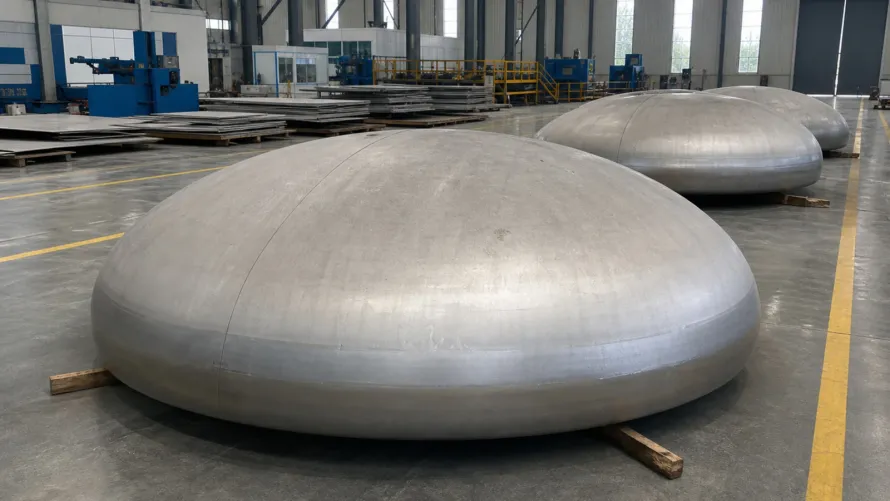
Titanium dished heads staged in a factory, illustrating why pressure-boundary parts need material, forming and pressure-retention evidence.
By Jason/ On 09 Jun, 2026

Momentus' On-Orbit Titanium Tank: Why Pressure Parts Need a Retention Evidence File

Momentus' latest mission update is not a titanium supply announcement. It is not a price signal, and it does not prove that every additively manufactured pressure tank is ready for every buyer. But it does make one point useful for titanium product procurement: pressure-boundary parts should not be judged only by alloy name, drawing shape or manufacturing route. They need a pressure-retention evidence file. On June 8, 2026, Momentus said its Vigoride 7 Orbital Service Vehicle had transitioned into hosted payload mission operations after launching on SpaceX Transporter-16. In the same update, the company said a titanium pressure tank designed by Momentus and manufactured using Velo3D's advanced 3D metal printing technology was meeting current mission objectives and demonstrating stable pressure retention throughout on-orbit operations. Momentus also said the tank is designed to carry propellant for satellite propulsion systems. An earlier Momentus release on January 5, 2026 said the tank was scheduled for flight testing aboard the Vigoride-7 mission and was produced in collaboration with Velo3D.For titanium buyers, the important word is not "space." It is "retention." A tank, tube assembly, welded shell, forged ring, flange, fitting or custom pressure component can look correct and still fail the buyer's real requirement if the pressure boundary, inspection route and release record are incomplete. The harder the application, the less useful a generic material statement becomes. A pressure part is not just a shape Titanium pressure parts carry several identities at the same time. They are material objects, usually defined by grade, chemistry, heat, batch and certificate. They are also formed or machined objects, defined by wall thickness, radius, weld edge, port geometry, surface finish and tolerance. Finally, they are service objects, defined by medium, pressure cycle, cleanliness, leakage limit, temperature, installation load and inspection acceptance. The Momentus update matters because it points to the third identity. The company did not merely say a titanium tank existed. It said the pressure tank was demonstrating stable pressure retention during on-orbit operations. That shifts the buyer question from "what is the alloy?" to "what evidence proves the pressure boundary will hold under the intended use?" That question applies well beyond spacecraft. Chemical processing vessels, heat-exchanger headers, marine systems, energy equipment, vacuum chambers, titanium pipe spools and specialty cylinders all create the same evidence problem. A buyer may order a product form, but the application buys a retained boundary.What a pressure-retention evidence file should include The useful file is not a marketing brochure and not a pile of unrelated certificates. It is a compact record that ties the part's material route to its pressure boundary and release condition.Evidence item What the buyer is trying to verifyMaterial identity Grade, heat number, chemistry, mechanical properties and certificate traceability match the order.Pressure-boundary definition Drawing, wall thickness, radius, ports, weld edges, sealing faces and allowed deviations are clear.Manufacturing route The file states whether the part is formed, welded, machined, forged, additively manufactured or built through a mixed route.Heat treatment or post-processing Stress relief, HIP, annealing, machining allowance, surface finishing or cleaning steps are recorded when relevant.Dimensional inspection Critical geometry that affects sealing, fit-up, wall margin or assembly load is measured and documented.NDE and leak evidence Ultrasonic, radiographic, dye penetrant, pressure, helium leak or other acceptance tests are aligned with the real service risk.Cleanliness and surface condition The surface and internal cleanliness are suitable for the medium, welding, assembly and downstream use.Interface control Flanges, fittings, threads, ports, gaskets, weld necks and mating parts are tied to the actual assembly boundary.Release and change control The supplier defines what changes require re-approval, including route, material source, heat treatment, pressure test or inspection plan.The key is connection. A certificate without geometry is incomplete. A pressure test without material traceability is incomplete. A drawing without inspection evidence is incomplete. For titanium pressure parts, the file should show how the material became the pressure boundary and how that boundary was released.Route claims need release evidence The Momentus example is also a useful reminder about manufacturing-route language. Buyers often hear route claims such as "printed," "forged," "welded," "seamless," "machined from billet" or "formed from plate." Those words matter, but none of them replaces release evidence. An additively manufactured tank may need build record, powder or wire traceability, post-processing, HIP status, surface controls, dimensional inspection and pressure testing. A formed titanium head may need plate heat traceability, forming route, thinning check, heat treatment and dimensional review. A welded shell may need weld procedure, welder qualification, weld map, NDE and pressure-test record. A machined fitting may need thread or sealing-face inspection and material certificate linkage. In other words, the buyer should not treat one route as automatically superior. The buyer should ask whether the chosen route has enough evidence for the actual service boundary. A simple, low-risk industrial cover does not need the same file as a flight pressure tank. But the file still needs to match the risk. What buyers should not overread There are limits to the Momentus signal. The update is a company statement about a specific hosted payload on a specific mission. It is not a general approval of all titanium 3D-printed tanks, not a standard for pressure vessels, and not a recommendation for any particular supplier. It also does not replace the buyer's own engineering review, pressure-code obligations, qualification plan or acceptance criteria. The practical lesson is narrower. When a current aerospace mission update highlights stable pressure retention, titanium buyers should translate that phrase into their own procurement checklist. What is the pressure boundary? What evidence proves it? Which route changes would reopen approval? Which inspection records must travel with the shipment? For suppliers of titanium heads, shells, tubes, fittings, flanges and custom pressure components, that is also a content opportunity. A buyer-friendly website should explain quote inputs, pressure-boundary documentation, certificate traceability, inspection options and release records before the RFQ becomes a guessing exercise. The supplier that makes the evidence easy to inspect will look more credible than the supplier that only says "Grade 2" or "Ti 6-4" and waits for the buyer to ask the hard questions. Public sources checked: Momentus June 8, 2026 mission update; Momentus January 5, 2026 Vigoride-7 tank release

Medical and Dental
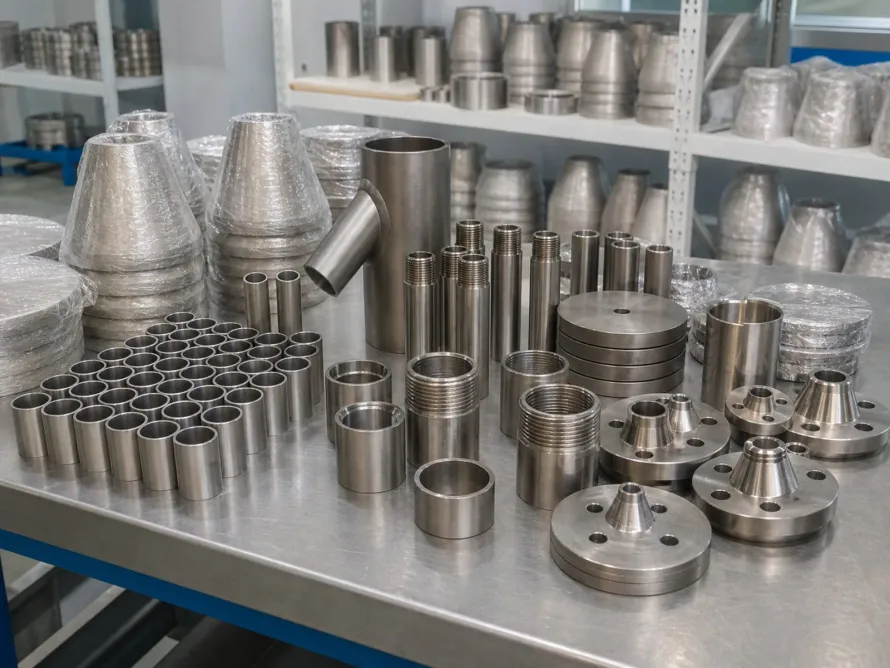
Precision machined titanium fittings, sleeves, and flanges on a clean factory bench, showing the kind of controlled components that need interface and release evidence.
By Jason/ On 05 Jun, 2026

ROE's Passivity Plus: Why Dental Titanium Buyers Need a Passive-Fit Evidence File

ROE Dental Laboratory's May 2026 launch of Passivity Plus is easy to read as a dental product announcement. For titanium buyers, the more useful signal is narrower and more durable: a Grade 5 titanium certificate does not, by itself, prove that a small medical or dental component will fit, release, and remain traceable inside a full-arch workflow.ROE's May 20 announcement describes Passivity Plus as an FDA 510(k)-cleared, self-adjusting titanium coping for full-arch implant restorations. The company says the device is manufactured from Grade 5 Titanium, Ti-6Al-4V-ELI, and is intended to address subtle fit discrepancies across digital and analog restorative workflows. The same announcement also names connection details such as a 25 N cm torque value and a 5-degree-per-side body taper. That is not a story about bulk titanium demand. It is a reminder that medical and dental titanium procurement often fails at the interface between material identity, machining control, dimensional evidence, and regulatory documentation. The News Is About Fit, Not Only Alloy Titanium suppliers are used to treating alloy identity as the first serious gate. That is still true. A buyer asking for medical or dental titanium parts should not accept vague "titanium alloy" language when the finished component depends on a specific grade, heat, chemistry, mechanical property record, and quality system boundary. But the passive-fit problem is a different layer of risk. A coping, abutment, framework, screw-retained bridge, or custom machined interface is not accepted only because the alloy is appropriate. It must connect to a known system, follow a controlled geometry, hold tolerances after machining or post-processing, and release through evidence that is specific to the intended workflow. The distinction matters for export suppliers of titanium bars, precision blanks, and machined titanium components. A round bar or billet may be the correct input. A material test report may be authentic. Yet the buyer still has to know whether the downstream component route can preserve the interface that makes the finished case usable.Passive Fit Turns Microns Into Buyer Risk Implant prosthesis literature treats passive fit as a practical engineering issue, not a marketing phrase. A 2026 study in the International Journal of Implant Dentistry notes that implant superstructures and implant bodies or abutments must be connected in a passive fit state, without tension on retaining screws. The same paper explains that misfit can create continuous stress and that researchers have tried to evaluate passive fit with more objective torque-based methods. That context does not validate any one commercial product. It does explain why a titanium component buyer should not stop at alloy grade. Full-arch dental components can move through scanning, CAD design, milling, sintering, model work, finishing, cleaning, and final seating. Each step may be accurate on its own while still contributing to an accumulated interface problem. For a titanium processor, this is the key mechanism: small medical and dental parts turn ordinary production records into fit evidence. The buyer is no longer asking only, "Is this Ti-6Al-4V-ELI?" The better question is, "Can this lot, drawing, interface, process route, inspection method, and release record prove that the part still matches the system it is supposed to join?" A Passive-Fit Evidence File The reusable file is not a single certificate. It is a compact chain of evidence that keeps material, process, and interface responsibility together.Evidence layer What the buyer should verifyMaterial identity Alloy grade, heat number, chemistry, mechanical properties, material test report, and any claimed ASTM or ISO material basis.Interface definition Implant or abutment compatibility boundary, drawing revision, CAD library version, screw channel, seating surface, and any torque or connection requirement supplied by the device owner.Machining route CNC program control, fixture method, tool-wear limits, burr control, post-machining cleaning, surface finish, and segregation between prototype and production runs.Dimensional verification CMM, optical scan, gauge, microscope, or fit-check record tied to the exact drawing and lot. The method should match the risk of the interface, not only the convenience of the shop.Release documentation Certificate of conformity, inspection report, nonconformance closure, subcontractor records, packaging label, and traceability from raw stock to finished component.Change control Material source change, machine change, CAD revision, surface process change, cleaning change, packaging change, or subcontractor change notice.This framework is useful even when the buyer is not purchasing a finished dental device. If a supplier sells titanium bar stock for medical machining, the file helps define which material facts must survive into the customer's device record. If the supplier machines titanium components, the same file helps separate commodity production from regulated-interface production. Where Titanium Suppliers Enter The Chain The strongest role for a titanium mill-product or machining supplier is not to claim that every Grade 5 part is device-ready. That would overstate the evidence. The stronger role is to make the upstream record easy for the medical or dental customer to carry forward. For titanium bars, that means clean heat traceability, consistent diameter and straightness control, documented mechanical properties, surface condition clarity, and packaging that protects the material before machining. For machined titanium blanks or components, it means drawing control, dimensional inspection, burr and contamination control, and lot-level records that do not break when a part is moved to polishing, cleaning, assembly, or packaging.The ROE announcement also shows why compatibility language has to be handled carefully. A supplier should not casually say a part is compatible with "major systems" unless the exact interface, authorized design source, test method, and customer responsibility are known. In medical and dental work, broad compatibility claims can create more risk than value if they are not backed by a documented boundary. What Buyers Should Not Overread ROE's release and knowledge-base pages describe Passivity Plus as FDA-cleared. FDA's general 510(k) materials explain that the process allows the agency to determine whether a device is equivalent to a device already placed into a classification category, and that significant changes in design, material, chemical composition, manufacturing process, or intended use can require review. For titanium buyers, that means two things. First, a 510(k) statement belongs to the device and its cleared scope, not automatically to every titanium input, blank, coping, or similar-looking component. Second, if a buyer changes material source, machining route, interface geometry, surface process, cleaning route, or use case, the evidence file has to be reviewed before the part is treated as equivalent in practice. That is why regulatory wording should stay precise. A titanium supplier can provide material and process evidence. The device owner or regulated manufacturer determines how that evidence fits into the device record, labeling, clearance, validation, or customer release process. The Practical Test The practical test for dental and medical titanium procurement is simple: could a quality reviewer reconstruct the finished component's responsibility without calling five people? If the answer is no, the buyer does not yet have a passive-fit evidence file. It may have a material certificate. It may have a drawing. It may have an inspection sheet. It may even have a device claim from another party. But the buyer still lacks the connected record that explains how the titanium material became a controlled interface. That is the broader lesson from the Passivity Plus launch. In precision medical and dental workflows, titanium value is not only corrosion resistance, strength, or biocompatibility. It is the supplier's ability to keep alloy identity, machining discipline, fit verification, release records, and change control aligned until the part reaches the workflow where microns matter.

Ready to Start Your Project?

Get factory-direct pricing on titanium products. No minimum order.

Get a Free Quote
Quick Inquiry