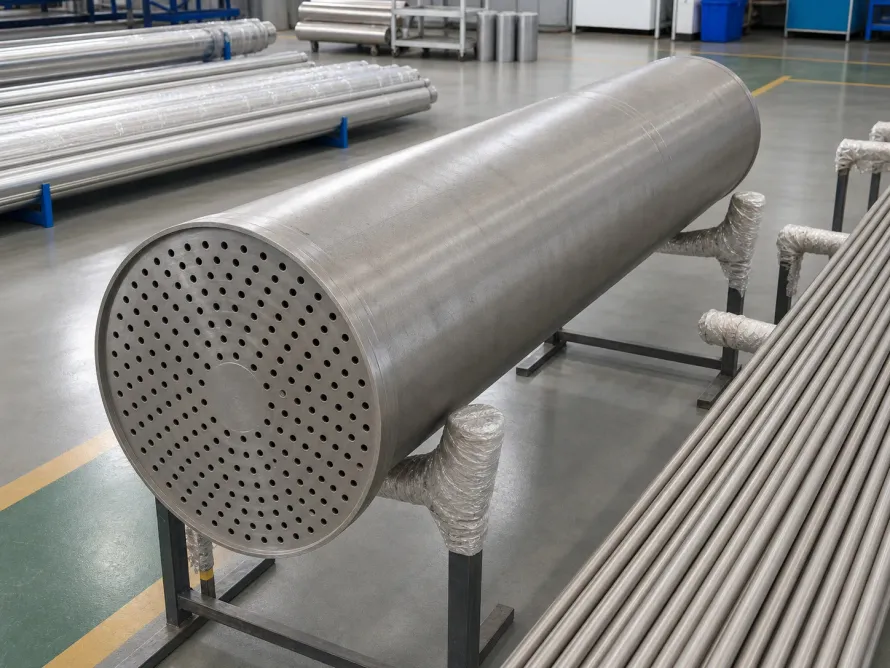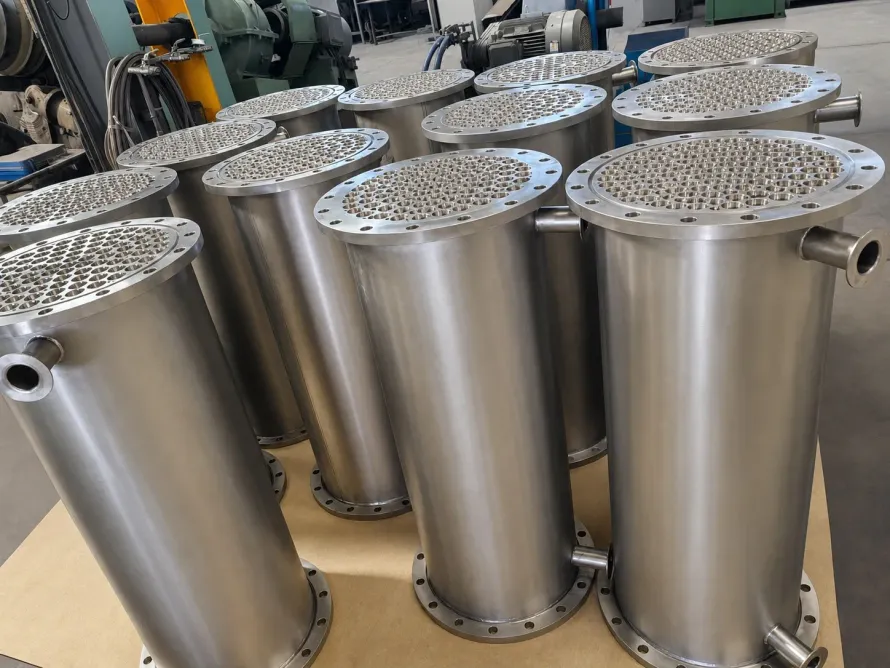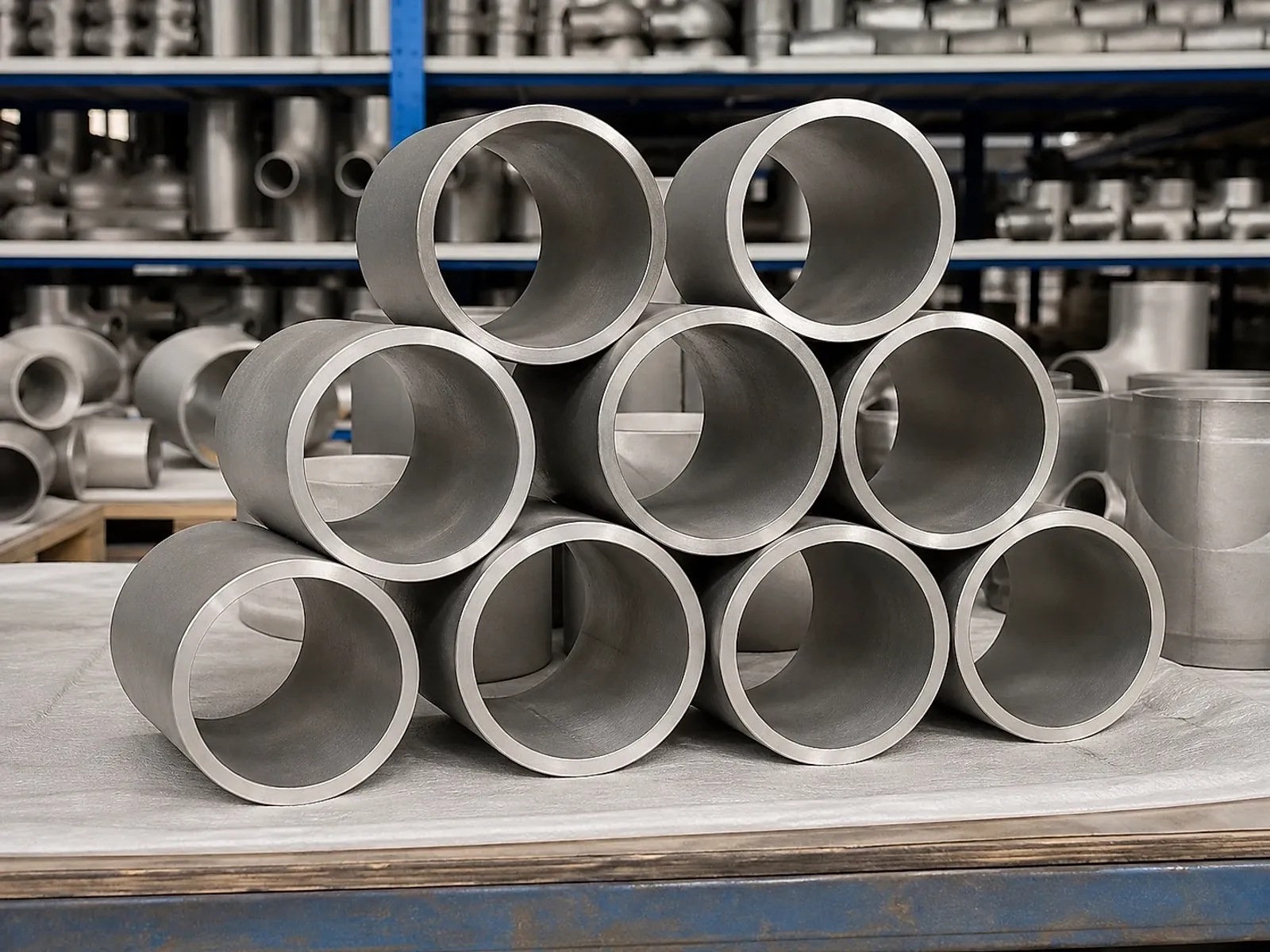
In aggressive process pipelines handling wet chlorine, purified terephthalic acid, acetic acid, and seawater desalination, titanium pressure piping serves as the primary corrosion barrier. Piping components face severe duty. Pipe fittings represent the most critical links where wall thinning, weld defects, or stress-corrosion cracking can jeopardize pressure integrity. Route selection matters.
When piping engineering teams formulate requests for quotation (RFQs) under ASTM B363 (Standard Specification for Seamless and Welded Unalloyed Titanium and Titanium Alloy Welding Fittings), they confront a fundamental manufacturing crossroads. Should the design specify seamless fittings (designated WPT) or welded plate-formed fittings (designated WPT-W)? How do manufacturing routes, cost structures, and inspection requirements diverge across nominal diameters? Diameter drives the process.
1. Routing Boundaries: Sizing Demarcation Across DN15 to DN1200
ASTM B363 establishes clear designators based on starting raw material and joining methods: WPT (seamless fittings) and WPT-W (welded fittings with mandatory radiography). Physics dictates manufacturing feasibility. Many project specifications assume seamless fittings are universally available across all diameters, but raw material metallurgy and tooling limits establish clear sizing boundaries:
-
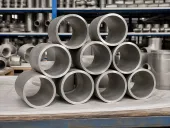
Small to Medium Diameters (DN15 to DN150 / NPS 1/2” to 6”): Seamless Hot Pushing and Hydraulic Extrusion (WPT)
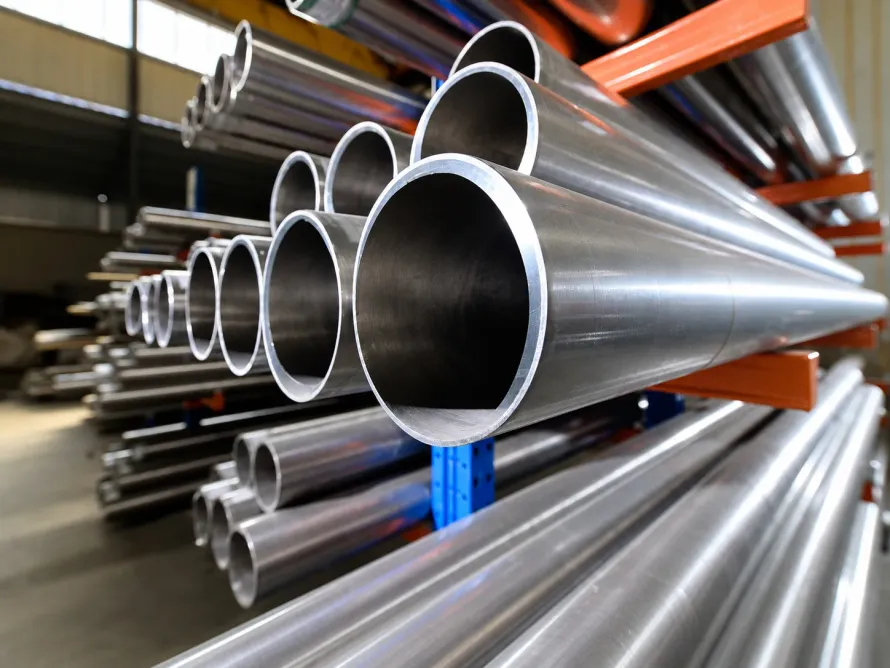
- Feedstock Pipe: Fabricated from certified seamless pipe compliant with ASTM B861 or ASTM B338. Material selection is vital. Engineering specifications for starting pipe can be cross-checked on our dedicated titanium tubes page and titanium pipes overview.
- Forming Method: 90° and 45° elbows are produced via induction-heated mandrel pushing. Equal and reducing tees are cold-drawn in precision hydraulic dies.
- Performance Edge: The finished fitting contains no longitudinal weld seam, presenting a smooth bore that resists impingement and turbulent erosion in high-velocity multi-phase slurries. Seamless flow excels.
-
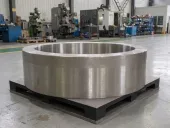
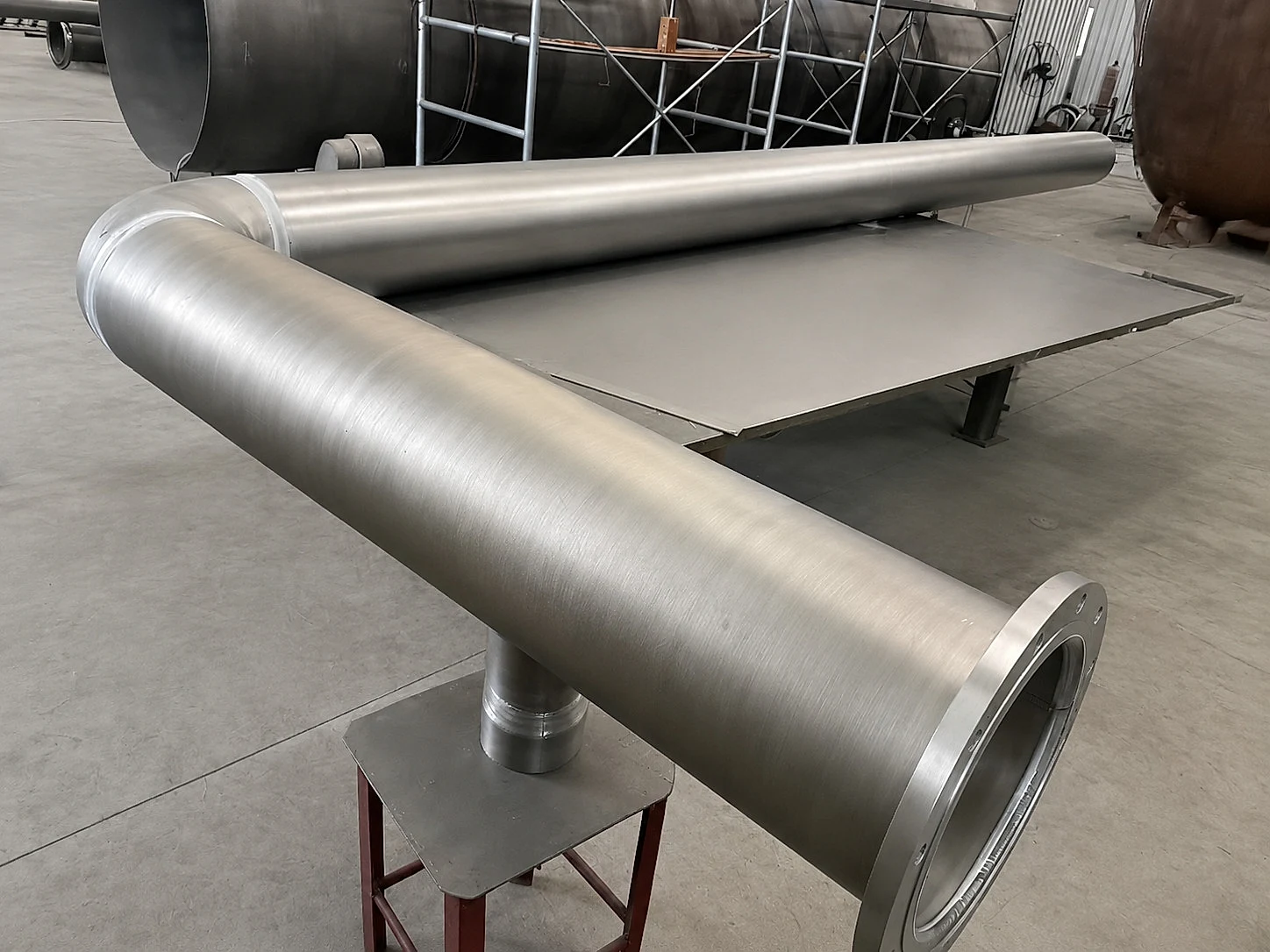
Large Diameters (DN200 to DN1200 / NPS 8” to 48”): Matched-Heat Plate Press Forming and Welding (WPT-W)
- Material Availability: Industrial seamless titanium pipe exceeding 400 mm is virtually nonexistent in commercial warehouse inventories. Piercing and extruding large hollow billets increases unit costs tenfold. Large diameters require welding.
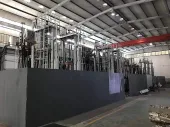
- Forming Sequence: Formed from matched-heat cold-rolled or hot-rolled annealed plate. Plates are pressed into dual clam-shell segments on CNC double-curvature hydraulic presses, then welded via automated gas tungsten arc welding (GTAW) or plasma arc welding (PAW) under trailing argon shields.
- Inspection Rule: ASTM B363 mandates that all WPT-W fittings undergo 100% radiographic examination (RT) along all welded joints, verifying complete volumetric fusion free from porosity, tungsten inclusions, or lack of penetration. Quality requires verification.
2. Engineering Comparison: ASTM B363 WPT vs. WPT-W Specifications
Technical criteria guide selection. The following matrix details core metallurgical, non-destructive examination (NDE), and commercial distinctions between seamless and welded titanium pipe fittings:
| Evaluation Parameter | ASTM B363 WPT (Seamless Route) | ASTM B363 WPT-W (Welded Plate Route) |
|---|---|---|
| Standard Nominal Size | DN15 to DN150 (NPS 1/2” to 6”); custom up to DN200 | DN200 to DN1200 (NPS 8” to 48”); standard for large headers |
| Feedstock Standard | ASTM B861 or ASTM B338 seamless titanium pipe | ASTM B265 plate or ASTM B862 welded titanium pipe |
| Forming Technique | Induction horn-mandrel hot pushing / cold hydraulic extrusion | CNC double-curvature press brake forming into matched shells |
| Weld Seams & NDT | No longitudinal weld seams; 100% liquid penetrant (PT) inspected | 1 or 2 longitudinal seams; mandatory 100% radiographic testing (RT) |
| Wall Thickness Control | Extrusion back-arc thins by 5% to 12%; requires heavier starting pipe | Locked by precision cold-rolled plate gauge; uniform cross-section |
| Heat Treatment | Full-body vacuum stress-relief annealing post-forming | Full-body vacuum annealing post-welding to eliminate weld residual stress |
| Lead Time & Economy | High ex-stock availability in standard schedules; large seamless costly | Flexible tooling, rapid plate turnaround, cost-effective for large sizes |
3. Workshop Engineering Controls: Preventing Alpha-Case and Micro-Tears
Execution requires discipline. Certified partner facilities follow rigorous process protocols during cold forming, hot pushing, and thermal treatment to protect titanium metallurgy:
1. Extrusion Back-Arc Thinning Compensation
During hot mandrel pushing of 90° elbows, tensile hoop stress naturally thins the extrados wall by 8% to 12%. Wall thinning is inevitable. If the fabricator starts with nominal wall pipe matching the finished schedule, the finished extrados will breach the minimum allowable wall threshold (87.5% of nominal) governed by ASTM B16.9 / ASME B16.9 and ASME B36.19M. Qualified production lines utilize heavy-wall starting tube one schedule thicker, ensuring finished components retain required corrosion and pressure design allowances. Margins must be protected.
2. High-Vacuum Annealing and Surface Contamination Criteria
Severe plastic forming and high-heat welding induce substantial microstructural stress. Heat relief prevents failure. If left untreated, residual stress accelerates stress-corrosion cracking in hot chloride environments.
- Furnace Integrity: Stress-relief annealing must take place in high-vacuum furnaces operating at pressures lower than $5 \times 10^{-3}\text{ Pa}$, holding at $650^\circ\text{C} \pm 15^\circ\text{C}$.
- Surface Inspection: Vacuum-annealed titanium emerges with a clean metallic silver or light straw hue. Color reveals surface chemistry. A dull white, dark blue, or purple oxide tint signals air leakage and the formation of a brittle, oxygen-rich alpha-case layer. Such contamination cannot be pickled away and causes catastrophic bending cracks. Surface defects cannot remain.
3. Non-Destructive Testing of Stub End Transition Radii
Lap joint stub ends paired with loose backing flanges are common in chemical piping. Flaring requires careful control. The flaring sequence subjects pipe ends to extreme localized deformation. If the starting tube exhibits grain size coarser than ASTM 5, micro-fissures propagate around the inside fillet radius. Certified production mandates 100% liquid penetrant testing (PT) across the entire sealing gasket face and back knuckle radius. For severe crevice-corrosion service, engineers can evaluate Grade 2 unalloyed titanium or palladium-enhanced Grade 12 titanium alloy. Chemistry dictates longevity.
4. Precision Mechanical End Beveling
Titanium field piping relies heavily on manual GTAW root passes with trailing gas shields. Weld bevels determine fit-up. End bevel geometry dictates field weld pass rates:
- Bevel angles must be precisely machined to $37.5^\circ \pm 2.5^\circ$ with a root face of $1.6\text{ mm} \pm 0.8\text{ mm}$;
- Edge preparation must employ cold mechanical turning or milling. Carbon steel abrasive grinding wheels and plasma cutting are prohibited to prevent iron embedment and heat-affected zone hardening. Contamination must be eliminated.
4. Buyer Procurement Checklist: MTC and Inspection Verification
Documentation requires thorough review. When receiving ASTM B363 titanium elbows, tees, reducers, and caps, procurement managers and third-party inspectors should audit four documentation pillars:
- Continuous Heat Number Traceability: Each fitting must carry indelible laser marking or low-stress vibro-etching showing specification, schedule, size, and original melting heat number. Markings must mirror the MTC documentation exactly. Traceability is paramount.
- Mechanical and Chemical Test Reports: Verify that tensile strength, yield strength, elongation, and interstitial elements remain strictly within specification ($\text{O} \le 0.25%$, $\text{Fe} \le 0.30%$, $\text{C} \le 0.08%$, $\text{N} \le 0.03%$, $\text{H} \le 0.015%$). Limits are non-negotiable.
- WPT-W Radiographic Examination (RT) Dockets: Welded fittings must be accompanied by certified RT evaluation reports signed by an ASNT Level II or Level III NDT examiner in compliance with ASME Section V Article 2. Radiographs must be archived.
- End Protection and Packaging: Fittings must be sealed with heavy-duty polyethylene end caps. Large-diameter reducers and thin-wall tees require internal cross-bracing to prevent ovalization during export transport. Protection ensures site fit.
Before placing commercial orders for complex piping packages or heavy-wall configurations, submit your piping isometrics and bill of materials to our technical specialists for a complimentary pre-RFQ drawing and specification audit. Working through certified partner facilities equipped with automated vacuum heat treatment and full NDT suites, we deliver high-integrity titanium piping components with complete heat-lot traceability. Integrity guarantees reliability.
Related Products & Services
- Seamless & Welded Titanium Pipes — ASTM B861 and B862 process piping for demanding chemical and marine applications
- High-Efficiency Heat Exchanger Tubing — ASTM B338 surface condenser and evaporator tubing solutions
- Grade 2 Commercially Pure Titanium — The industrial workhorse for severe oxidizing and chloride environments
- Grade 12 Titanium-Molybdenum-Nickel Alloy — Engineered specifically for elevated-temperature crevice corrosion resistance
- Pre-RFQ Drawing & Specification Audit — Submit piping specifications and drawings for technical review and quotation