At Formnext 2026 in Frankfurt, Germany (November 17 to 20, 2026), two industrial-scale metal atomization announcements underscored a structural split shaping global titanium powder supply chains heading into 2027. Industrial powder scale hit multi-tonne territory. U.S. producer Continuum Powders introduced its industrial Argos™ Melt-to-Powder (M2P) atomization platform, pairing a cold-hearth plasma torch exceeding 0.5 MW (500 kW) with Max DP atomization dies and computational fluid dynamics (CFD) anti-satellite controls to push single-unit throughput past 4 tonnes per day (> 4 tonnes/day) alongside its Greyhound™ fleet for aerospace, defense, and industrial titanium and superalloy long-term supply agreements; during the same Frankfurt exhibition, Avimetal showcased an annual capacity of 1,800 tonnes for 100% recycled Ti-6Al-4V (Grade 5) powder, reclaiming coarse powder and titanium machining scrap via oxygen control and Electrode Induction Melting Gas Atomization (EIGA) into 0–20 μm and 15–53 μm fractions for PBF-LB and MIM consumer electronics and industrial parts.
As cold-hearth bulk melting and closed-loop scrap regeneration scale up simultaneously, powder atomizers and additive OEMs locking 2027 contracts face a critical metallurgical boundary: multi-tonne machine throughput never erases the interstitial chemistry gap between consumer MIM hardware and fracture-critical aerospace or implant parts. Feedstock pedigree sets part ceilings.
As an integrated titanium supply-chain platform working with certified partner facilities for global powder atomizers and high-reliability manufacturers, we examine downstream oxygen budgets, the cost structure gap between virgin-sponge and revert-scrap melts, and 3x VAR centerless-ground bar rules governing qualified powder production. Upstream oxygen discipline protects qualification.
Cold-Hearth Plasma M2P vs. Crucible-Free EIGA and PREP: Physical Feedstock Boundaries
Why is the additive market expanding > 4 tonnes/day cold-hearth plasma M2P systems while simultaneously tightening bar-stock specifications on EIGA and Plasma Rotating Electrode Process (PREP) towers? Melting physics dictate feedstock geometry. The two atomization architectures manage melt containment and inclusion risk through fundamentally different mechanisms:
- Cold-Hearth Plasma Melt-to-Powder (M2P) — Engineered for Bulk Revert and Heavy Inclusion Trapping: Heating water-cooled copper hearths with an over 0.5 MW (500 kW) plasma torch contains liquid alloy inside a solidified titanium skull, allowing high-density refractory inclusions (such as broken tungsten-carbide tool fragments) to sink and lock into the hearth skull. Skull hearths trap heavy particles. However, open melt pools still demand strict residence-time calibration to prevent volatile aluminum (Al) evaporation and tight blending discipline to manage baseline oxygen across mixed revert charges.
- Crucible-Free Induction (EIGA) and Rotating Electrode (PREP) — Mainstay for Ultra-Low-Oxygen Aerospace and Implant Powder: For surgical implant and flight-critical rotating titanium powders, atomizers rely predominantly on crucible-free EIGA (contactless induction coil melting the conical tip of a rotating bar) and PREP (centrifugal plasma-arc melting of a high-RPM bar face). Crucible-free melting prevents refractory pickup. Because neither atomizer chamber removes slag or reduces dissolved oxygen, finished spherical powder purity depends 100% on the metallurgy and surface cleanliness of the incoming additive manufacturing spherical powder feedstock titanium bar.
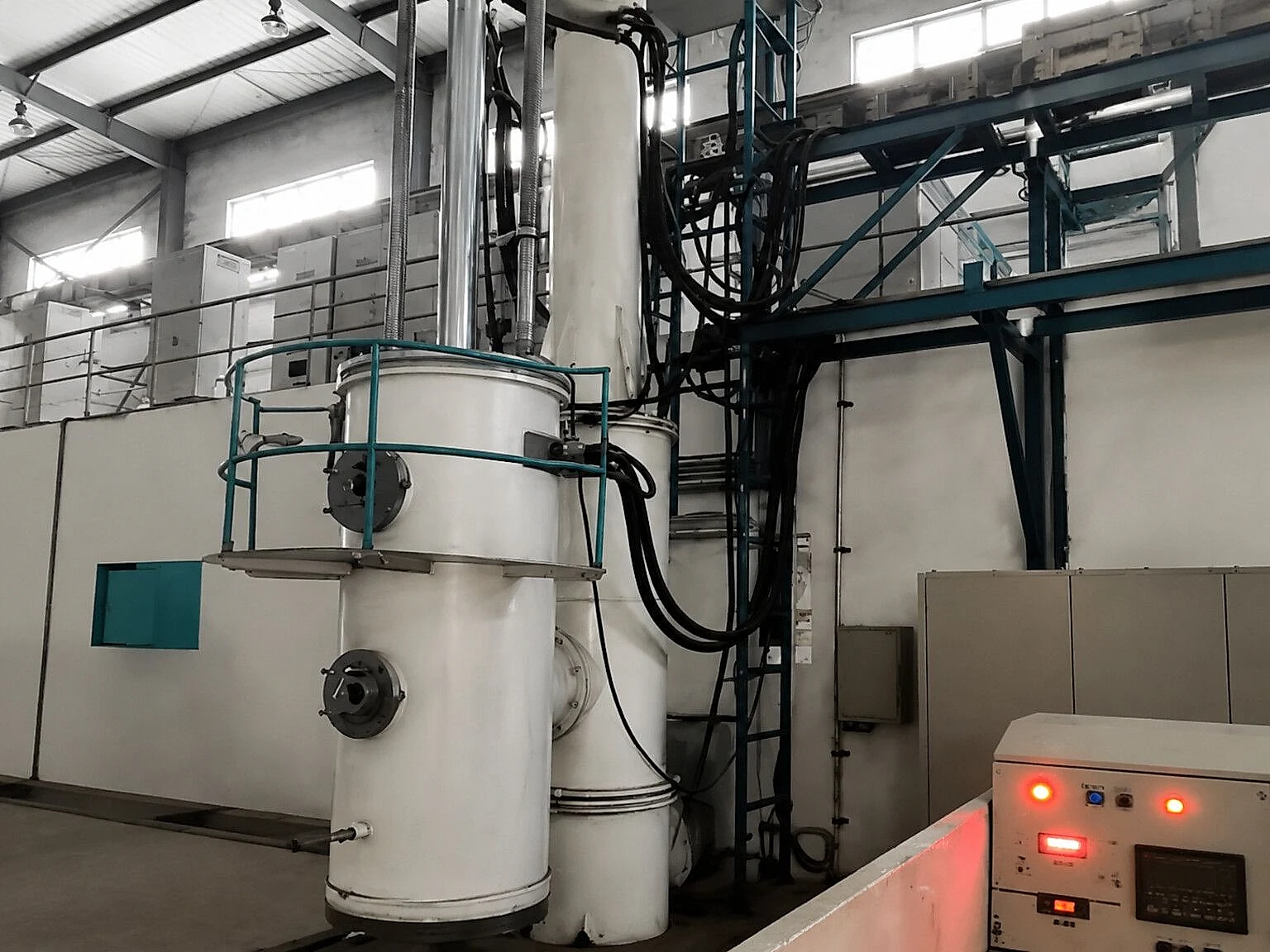 Figure 1: Vertical Vacuum Arc Remelting (VAR) furnace chamber and digital arc-voltage and vacuum monitoring console at a certified partner facility. Stable vacuum arcs protect melt purity. Aerospace and powder-feedstock buyers can request archived primary VAR current and vacuum curves under contract.
Where 100% Recycled Powder Stops: Why Critical Feedstock Bars Mandate O ≤ 0.05% and 3x VAR
The 1,800-tonne annual 100% recycled Ti-6Al-4V capacity highlighted at Formnext 2026—supplying 0–20 μm cuts for MIM smartphone hinge components and 15–53 μm cuts for industrial laser powder bed fusion—offers a practical cost and ESG pathway for consumer hardware. Consumer housings tolerate moderate oxygen. Once parts transition into primary airframe brackets, turbine hardware, or spinal and orthopedic implants, however, remelting revert machining turnings triggers an unforgiving interstitial oxygen cascade:
First, gas atomization and laser powder-bed recycling add irreversible cumulative oxygen. Even inside high-purity argon towers, shattering molten titanium into high-surface-area micron droplets adds roughly 0.03% to 0.06% (300 to 600 ppm) of surface oxide pickup; subsequent multi-build sieving and powder reuse inside PBF-LB chambers pushes oxygen higher with every cycle. Atomization and reuse compound oxygen. When producing fracture-critical Grade 23 (Ti-6Al-4V ELI) medical and cryogenic titanium—where finished parts must never exceed O ≤ 0.13%—feeding an atomizer with ordinary commercial bar carrying 0.12%–0.16% oxygen dooms the virgin powder batch before the first laser strike.
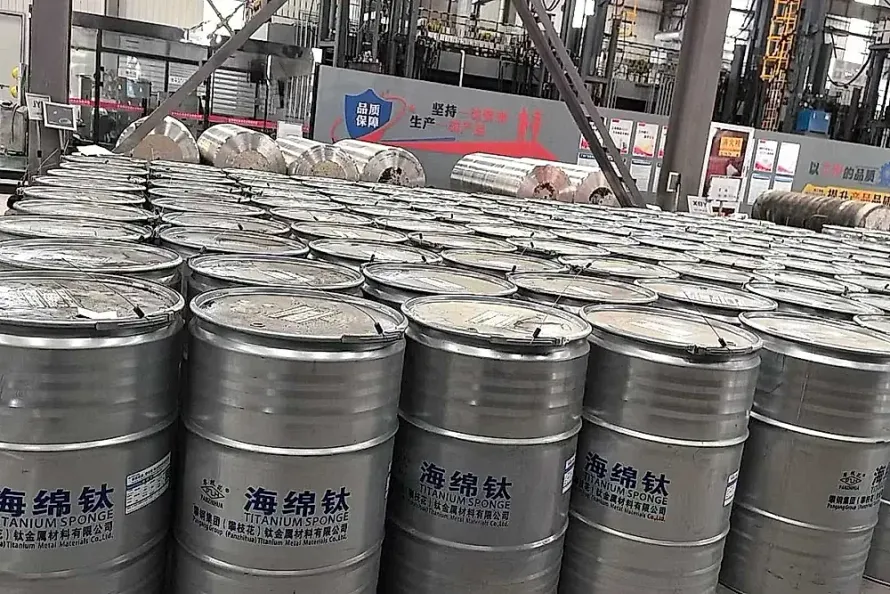
Second, 3x VAR ultra-low-oxygen melting (O ≤ 0.05%) explains wide commercial quote spreads. Melt-shop quality ledgers across certified partner facilities enforce a hard rule: EIGA and PREP atomization electrode bars start from 100% Grade 0 or Grade 1 virgin titanium sponge and undergo triple Vacuum Arc Remelting (3x VAR) to hold finished bar oxygen down to O ≤ 0.05% (500 ppm) while dissolving both high-density (HDI) and nitrogen-stabilized low-density (LDI) hard-alpha inclusions. Virgin sponge secures low baseline oxygen. While standard commercial ASTM B348 titanium alloy bars (controlled within O ≤ 0.20%, N ≤ 0.05%, H ≤ 0.015%) often show noticeable quote spreads driven by revert-scrap blending and reduced NDT scope, upgrading to verified 3x VAR adds a modest incremental melt premium (quoted per order) relative to the cost of rejecting an entire downstream spherical powder batch.
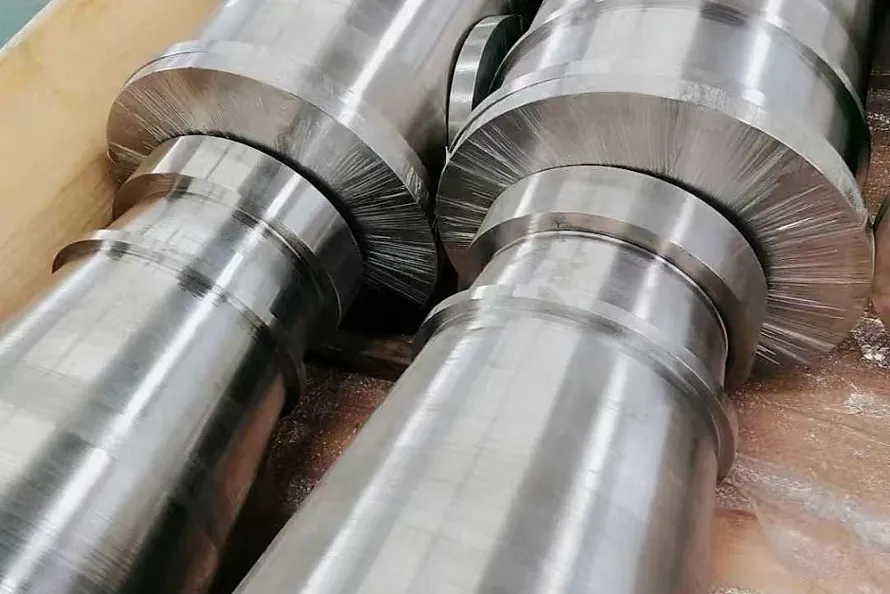
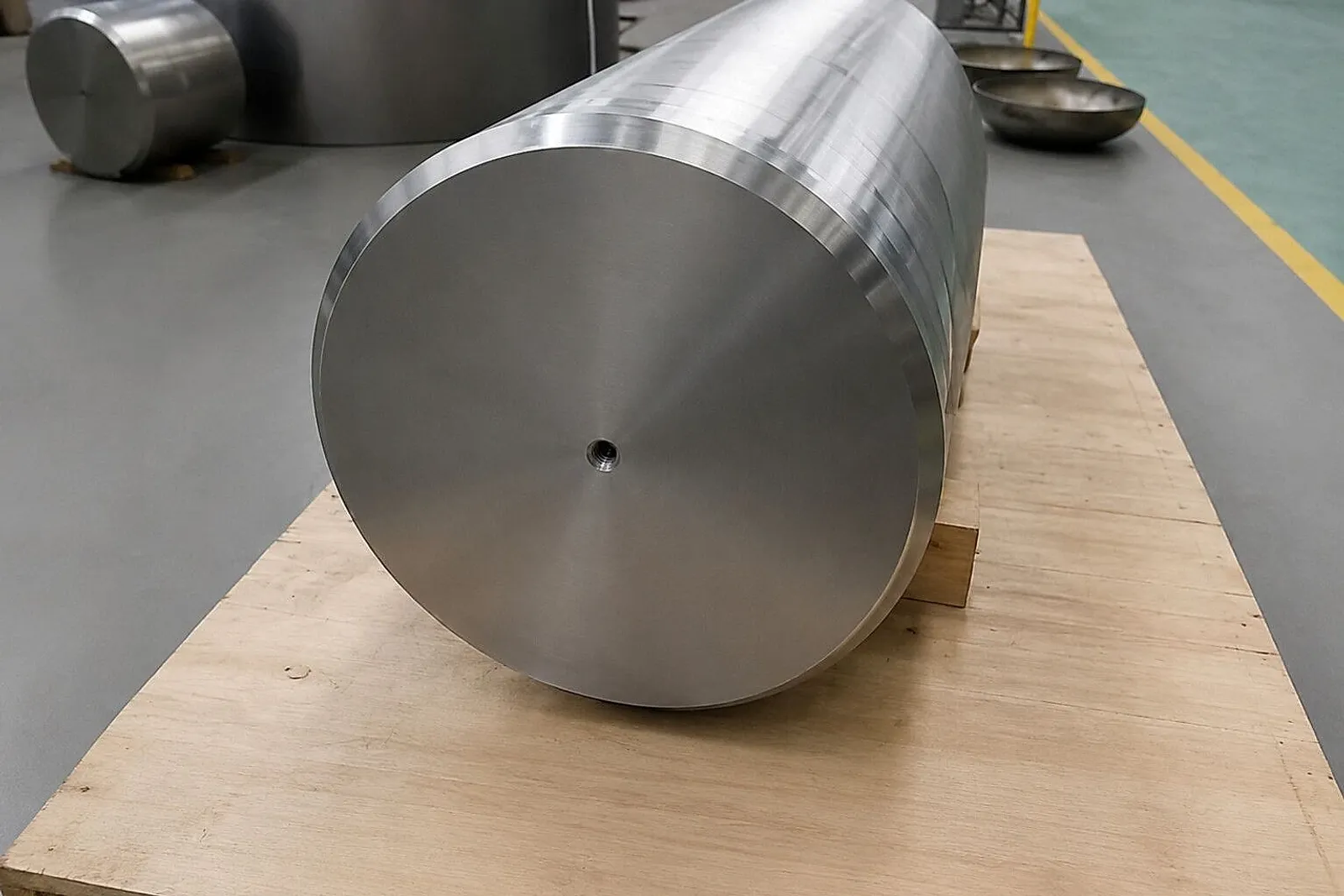
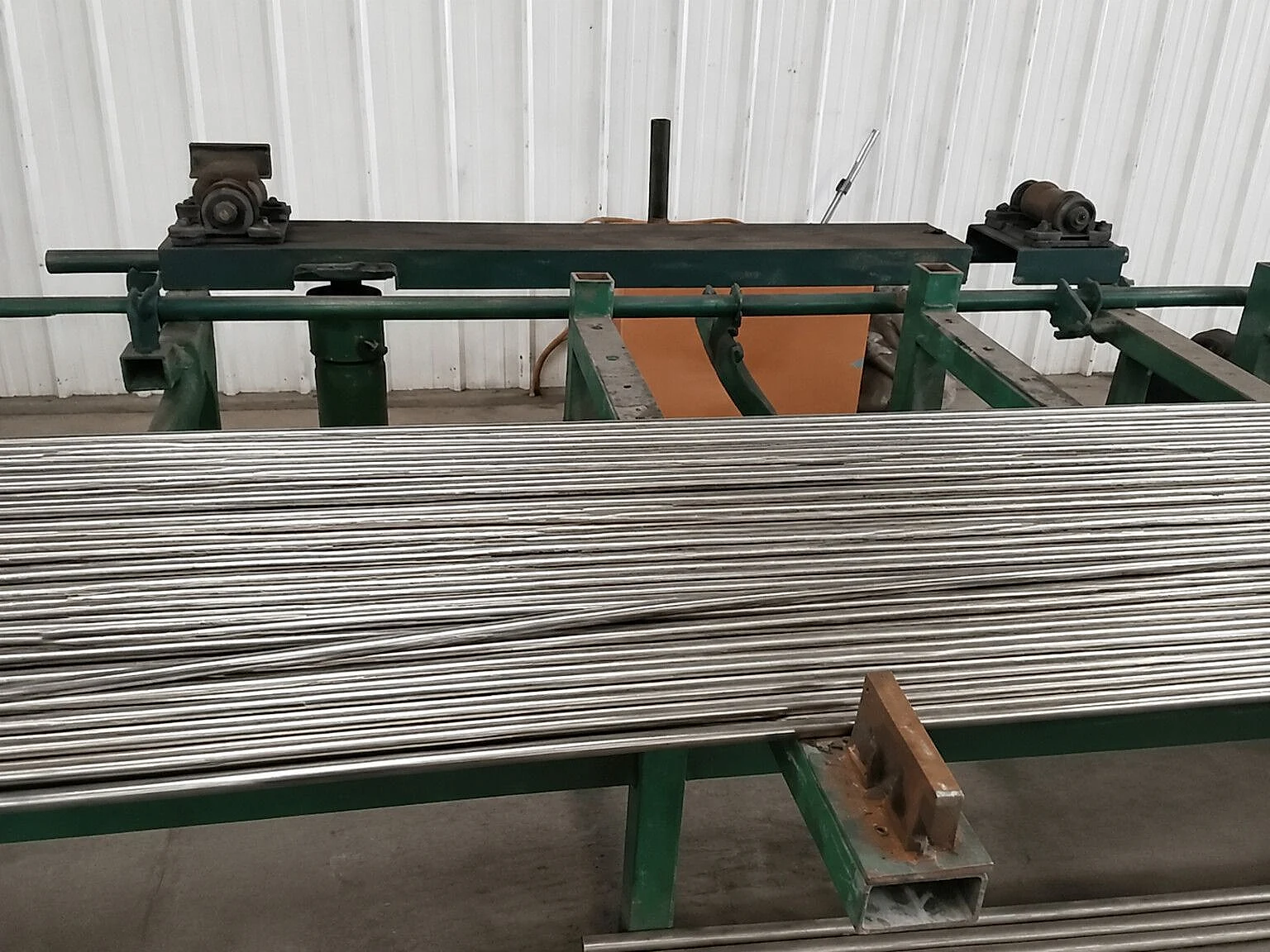 Figure 2: Lathe-peeled, multi-pass centerless-ground (h6/h7 tolerance), and ultrasonically cleaned titanium atomization electrode bars on an inspection rack at a certified partner facility. Tight straightness (≤ 0.3 mm/m) eliminates high-RPM spindle whip.
| Evaluation Criterion | 100% Recycled Scrap Powder Route | Standard Commercial 1x/2x VAR Bar | Aerospace & AM Feedstock 3x VAR Bar | Buyer Qualification Boundary & QA Gate |
|---|---|---|---|---|
| Typical Melting & Forming Route | Scrap/coarse powder O-control + EIGA → MIM / industrial PBF-LB | Commercial sponge + revert blend 1x/2x VAR → CNC parts | 100% Grade 0/1 virgin sponge + 3x VAR → EIGA / PREP | Prohibit unsegregated turnings on flight-critical & implant heats |
| Feedstock Oxygen Ceiling | Varies by recycle generation; sits near upper Grade 5 band | Commercial mill baseline O ≤ 0.20%, N ≤ 0.05% | Locked ultra-low baseline O ≤ 0.05% (500 ppm) | Reserve ≥ 600 ppm oxygen headroom for atomization & PBF reuse |
| Inclusion Cleanliness | Relies on magnetic separation & sieving; residual inclusion risk | Standard industrial immersion ultrasonic bar baseline | 3x VAR eliminates high-density (HDI) & low-density (LDI) defects | Audit A1/AAA high-sensitivity immersion ultrasonic pass logs |
| Diameter Tolerance & Straightness | Rough-turned remelt billets sized to furnace chuck | Hot-rolled black or rough-turned (± 0.1 – 0.5 mm) | Multi-pass centerless-ground h6/h7 (± 0.005 – 0.015 mm), ≤ 0.3 mm/m | Verify total indicator runout & oil-free ultrasonic cleaning for PREP |
| Cost Delta & Target Market | Cuts powder cost & carbon footprint for 3C hinges & MIM | High-revert quotes undercut virgin heats (varies by scrap blend & NDT scope) | Incremental 3x VAR melt premium quoted per spec & inspection scope | Never risk high-value spherical powder lots to chase minor feedstock bar savings |
Four Upstream Feedstock Verification Clauses for Atomizers and Additive Buyers
Locking feedstock specs prevents batch rejection. Whether your team operates internal EIGA/PREP atomization towers or qualifies external powder suppliers for 2027 production programs, embedding four explicit upstream clauses into purchase contracts closes metallurgical blind spots:
- Segregate “Recycled Cost-Down Pools” from “100% Virgin-Sponge Ultra-Low-Oxygen Pools” by Part Class: Qualify closed-loop recycled powders for consumer electronics housings and industrial MIM brackets, while mandating 100% Grade 0/Grade 1 virgin titanium sponge plus 3x VAR melting in writing for fatigue-rated aerospace structures, surgical implants, and thin-wall pressure vessels. Clear pool segregation prevents alloy mix-ups.
- Compress Bar Oxygen Caps from Default 0.20% Down to Measured O ≤ 0.05%–0.08%: Never rely on a bare “ASTM B348 Grade 5” callout for atomization electrodes; specify supplemental inert-gas fusion limits (O ≤ 0.05%, N ≤ 0.05%, H ≤ 0.015%) alongside top-to-bottom ingot compositional uniformity (Al spread ≤ 0.35%, O spread ≤ 0.015%). Low bar oxygen protects powder reuse life.
- Mandate h6/h7 Centerless Grinding and Oil-Free Ultrasonic Cleaning: Atomization electrodes cannot carry trace cutting emulsions or hydrocarbon films into induction coils; require full lathe peeling, multi-pass centerless grinding (h6/h7 diameter tolerance, straightness ≤ 0.3 mm/m), deionized ultrasonic cleaning, individual EPE sleeves, and ISPM 15 reinforced crates shipped FOB China main port. Precision grinding stabilizes high-RPM rotation.
- Cross-Check Material Test Certificates (MTC) Against Archived VAR Melt Traces: Require a complete Material Test Certificate (MTC) with 100% heat/lot number traceability matching stamped bar-end codes to original melt heats; on first-article or critical lots, audit archived primary VAR voltage/current traces and furnace vacuum curves or arrange independent third-party O/N/H re-testing. Full melt logs verify triple-VAR execution.
If your additive manufacturing or powder atomization team is sourcing O ≤ 0.05% ultra-low-oxygen 3x VAR centerless-ground titanium electrode bars (machined to custom EIGA or PREP collet geometries) or oil-free enclosed-drawn titanium printing wire, submit your diameter tolerance, straightness, and interstitial limits through our online RFQ and AM feedstock specification pre-audit portal to review rolling schedules and sample MTC packages. Clean electrode stock builds reliable powder.