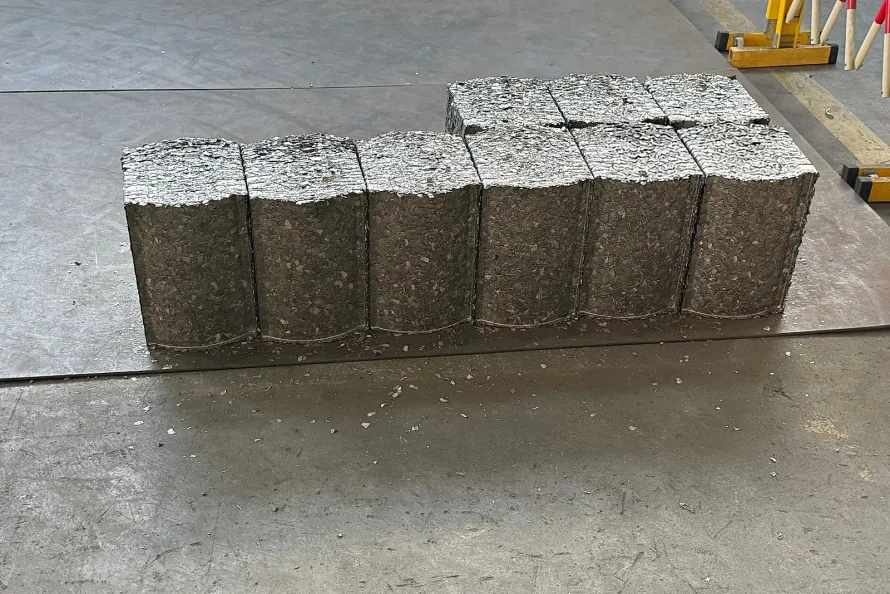
On November 19, 2026, U.S.-listed titanium producer IperionX Limited filed Form 6-K with the U.S. Securities and Exchange Commission (SEC), publishing its fifth annual sustainability disclosure (2026 Sustainability Report, covering the fiscal year from July 1, 2025 through June 30, 2026). Circular titanium hit commercial cadence. The report confirmed that its Virginia Titanium Manufacturing Campus now runs 24/7 continuous commercial operations, converting UL 2702 verified 100% recycled titanium scrap via proprietary HAMR™ and HSPT™ solid-state processing into angular and spherical titanium powders and near-net components; 100% of Virginia operational electricity was matched with Renewable Energy Certificates (RECs)—reaching 94% across primary company sites—holding tracked market-based Scope 2 emissions below 40 t CO₂e (< 40 metric tons CO₂e), alongside advancing the Tennessee Titan project and logging over 3,100 hours of workforce and board safety, cybersecurity, and governance training.
As European Carbon Border Adjustment Mechanism (CBAM) reporting tightens and Western OEMs launch 2027 Scope 3 supplier decarbonization audits, IperionX’s Virginia metrics establish a clear low-carbon benchmark for powder metallurgy. Decarbonization pressure is rising fast. Yet when industrial purchasing directors try to copy a “100% recycled scrap” mandate directly into heavy wrought titanium bar, pressure-vessel plate, and seamless pipe contracts, fundamental high-temperature melt thermodynamics intervene.
As an integrated titanium supply-chain platform working with certified partner facilities for global aerospace, chemical, medical, and energy manufacturers, we examine the physical divide between solid-state powder deoxygenation and Kroll-sponge VAR ingot metallurgy—and show how hidden revert-scrap blending drives 10% to 20% commercial quote gaps. Melt physics govern part safety.
Solid-State Powder Deoxygenation vs. Primary VAR Ingot Melting: Where “100% Scrap” Hits a Wall
Why can a solid-state powder campus run 100% recycled titanium turnings under UL 2702 validation while heavy structural wrought mill products strictly police scrap revert percentages? Deoxygenation chemistry draws the boundary. The two manufacturing routes handle interstitial oxygen through completely different mechanisms:
- Solid-State Thermochemical Reduction (HAMR / HSPT) Strips Surface Oxygen for Powder & Small Parts: Machining swarf and thin stamping skeleton scrap carry heavy surface oxide films. Solid-state reduction strips oxygen chemically. By reacting oxidized titanium scrap in controlled solid-state steps, the HAMR pathway lowers dissolved oxygen to produce spherical and angular powders for laser powder bed fusion, MIM, and compact fasteners—pairing low-temperature processing with 100% RECs to hold site market-based Scope 2 emissions below 40 t CO₂e.
- Multi-Tonne Wrought Bars, Plates & Forgings Depend on Kroll Sponge + VAR, Which Cannot Remove Oxygen: For multi-tonne ASTM B348 wrought titanium and alloy bars and wide ASTM B265 heavy reactor plates and cold-rolled sheets, global heavy metallurgy relies on Kroll-process virgin titanium sponge consolidated via multiple VAR (Vacuum Arc Remelting) cycles. Vacuum arcs never strip oxygen. Because titanium’s thermodynamic affinity for oxygen exceeds vacuum dissociation pressures, VAR removes hydrogen and volatile chlorides—but every gram of oxidized revert scrap charged into the consumable electrode permanently raises final ingot oxygen.
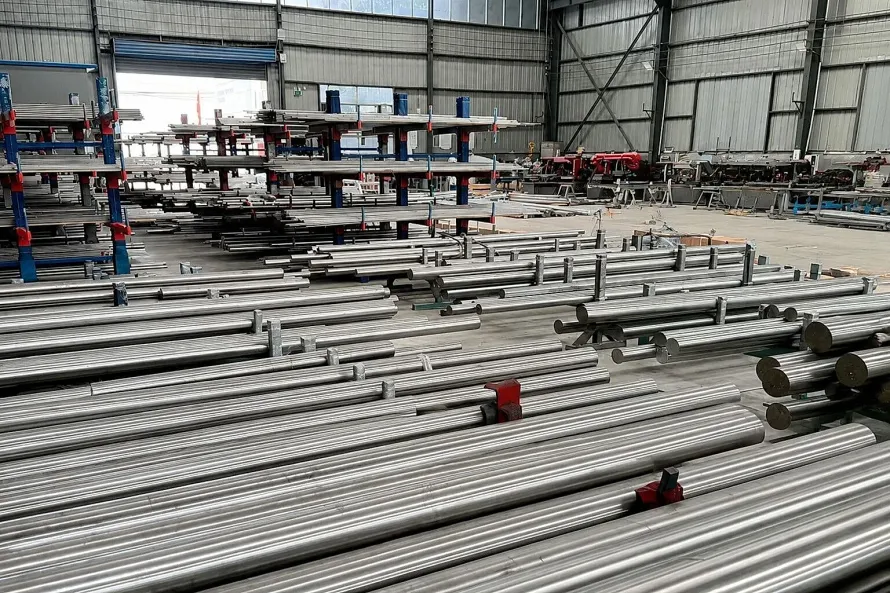
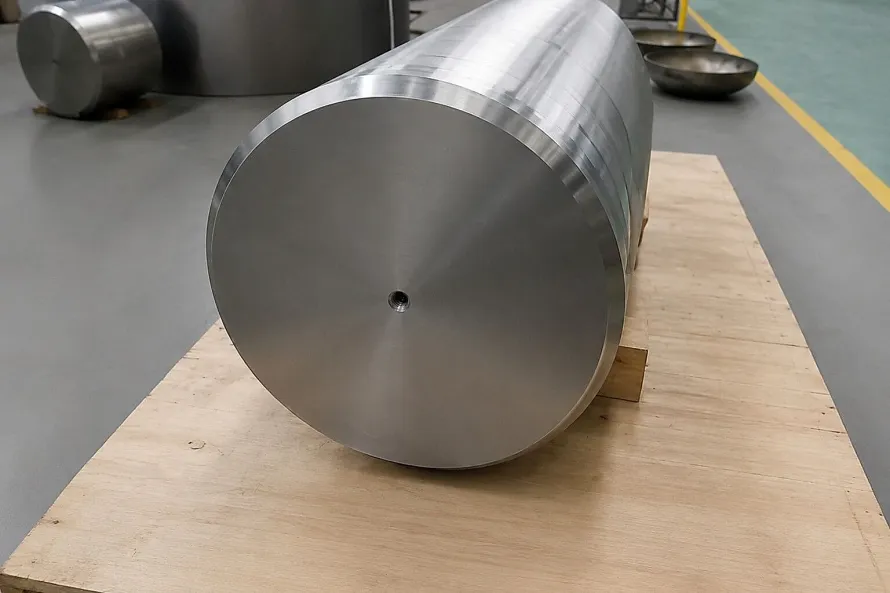
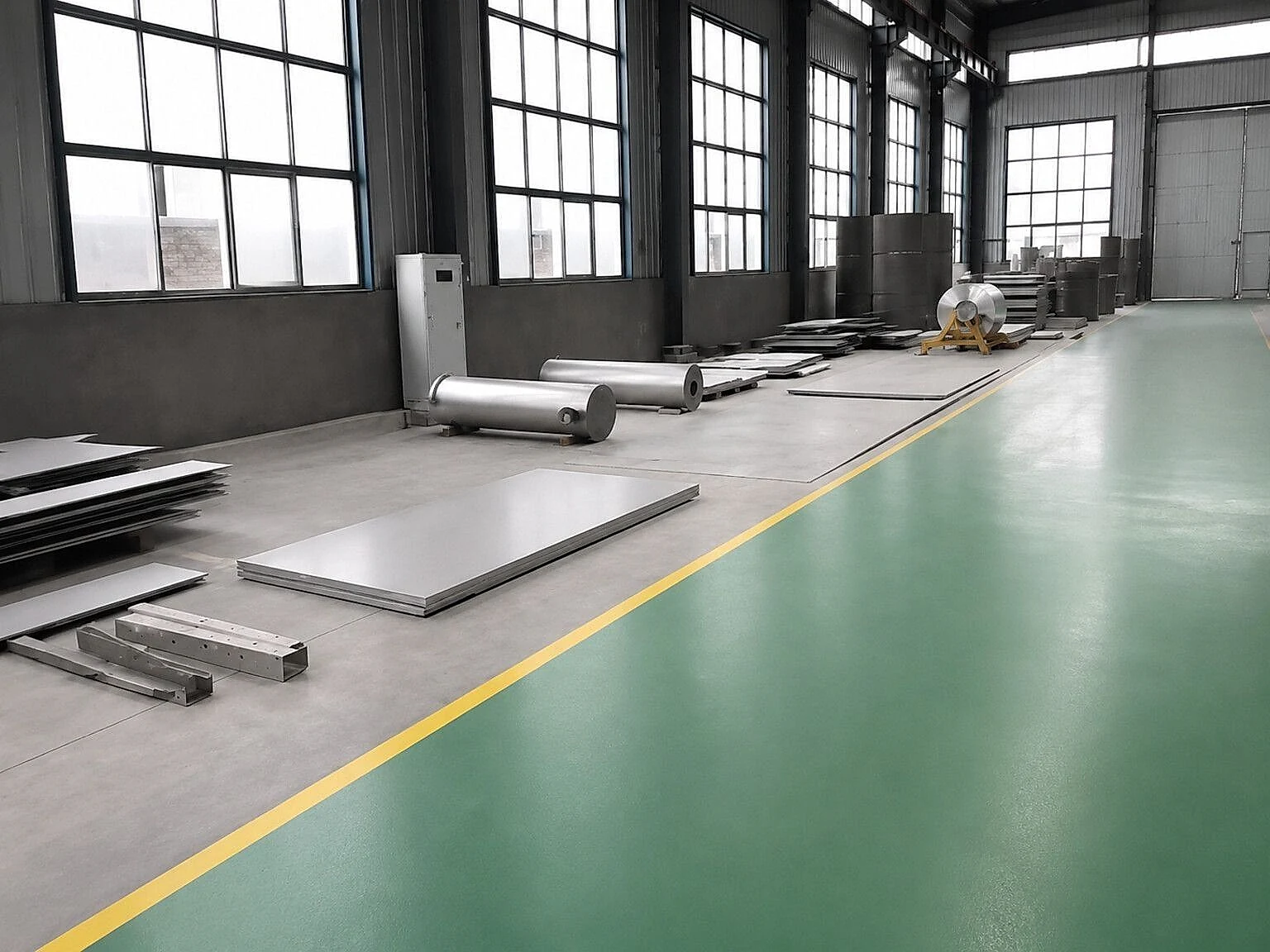 Figure 1: Pickled ASTM B265 heavy titanium plates and lathe-peeled cylindrical VAR titanium billets staged at a certified partner facility. Because VAR melt pools cannot strip dissolved oxygen, buyers must lock virgin-sponge charge rules and oxygen ceilings in the purchase contract.
Decoding the 10%–20% Commercial Quote Spread: Revert Scrap Ratios & Oxygen Caps (O ≤ 0.20% vs. O ≤ 0.13%)
During multi-bid RFQ evaluations, sourcing managers routinely ask why two suppliers quoting identical ASTM B348 or ASTM B265 callouts sit 10% to 20% apart in unit price. Charge blend drives price gaps. Melt-shop quality audits across certified partner facilities pinpoint two decisive metallurgical factors behind those discounted quotes:
First, undisclosed high-revert scrap blends push interstitial oxygen toward upper limits and shrink forming margins. While commercial industrial heats permit controlled additions of clean, segregated revert solids, aggressive low-bid suppliers blend high ratios of oxidized turnings—sometimes marketing unverified scrap content as an informal “recycled” feature. Excess oxygen embrittles wrought titanium. Even if ladle oxygen barely squeaks under the O ≤ 0.20% ceiling of commercial Grade 5 (Ti-6Al-4V) titanium alloy (partner commercial melt baselines hold O ≤ 0.20%, N ≤ 0.05%, H ≤ 0.015%), elevated oxygen narrows cold-bend ductility and accelerates fatigue crack initiation.
Second, medical implants and cryogenic hardware (Grade 23 ELI, O ≤ 0.13%) mandate virgin titanium sponge. Once parts serve as ASTM F136 spinal and orthopedic implants or cryogenic pressure components specifying Grade 23 (Ti-6Al-4V ELI), maximum permissible oxygen drops to O ≤ 0.13%. Ultra-low interstitials forbid scrap shortcuts. Holding 0.13% finished oxygen after multi-step forging and rolling demands high-purity virgin sponge charges; meanwhile, the remaining portion of that 10% to 20% commercial quote spread reflects 100% full-length ultrasonic testing versus skip-lot sampling and accredited third-party gas verification.
| Sourcing Audit Dimension | Solid-State 100% Recycled Powder Route (e.g., IperionX Virginia Campus) | High-Revert Commercial Melt Stock (Discounted Low-Bid Shortcut) | Controlled Virgin-Sponge VAR Wrought Stock (Certified Partner Route) | 2027 Buyer ESG & Metallurgical Gate |
|---|---|---|---|---|
| Feedstock & Process Route | 100% recycled scrap (UL 2702) + HAMR/HSPT powder route | High unsegregated revert scrap + basic melt; 10% – 20% cheaper | Graded virgin titanium sponge + multi-melt VAR + wrought forging/rolling | Segregate powder near-net parts from heavy wrought load-bearing stock |
| Interstitial O/N/H Control | Active thermochemical deoxygenation tailored to AM/MIM powder | Erratic oxygen clustering near 0.20% cap; local hard spots | Commercial O ≤ 0.20%, N ≤ 0.05%, H ≤ 0.015%; Grade 23 ELI O ≤ 0.13% | Reject pass/fail certificates that omit measured O/N/H weight percentages |
| Power & Carbon Accounting | 100% Virginia RECs (94% group), market Scope 2 < 40 t CO₂e | Unaudited energy claims; informal scrap talk masks off-grade chemistry | Transparent melt boundary + near-net cut sizing to slash machining swarf | Audit market-based RECs separately from physical ingot charge purity |
| Target Component Envelope | PBF/MIM powders, fasteners, small near-net-shape hardware | Non-structural static fixtures with zero bending or weld fatigue | Large-diameter aerospace/marine shafts, reactor plates, seamless tubing | Cap or ban revert turnings in writing on fatigue, deep-draw & implant POs |
| Testing & Traceability Lead | Powder PSD, sphericity & lot chemistry release package | Frequent skip-lot NDT, mixed heats, or recycled template paperwork | Full MTC issued 2 – 5 days post-test; 100% tag-to-stamp traceability | Cross-check stamped/inkjet heat codes against accredited third-party O/N/H |
Four Procurement Controls Aligning 2027 Carbon Audits with Zero Metallurgical Failures
Balancing 2027 corporate sustainability questionnaires against fracture-critical reliability does not require gambling on unverified scrap melts. Tiered specifications protect both goals. Industrial titanium buyers can enforce four verifiable controls across annual supply agreements:
- Qualify Recycled Powder Pools Separately from Virgin-Sponge Wrought Pools: Approve UL 2702 certified chemically deoxygenated powders where PBF-LB or MIM geometries fit, while contractually mandating virgin sponge charges and explicit oxygen ceilings (O ≤ 0.13% on ASTM F136 Grade 23 ELI; tight O ≤ 0.20% max on commercial wrought grades) for plates, bars, and pressure forgings. Separate material pools prevent mix-ups.
- Challenge Quotes Sitting 15%+ Below Market Benchmark on Scrap Blend and NDT Scope: Whenever a mill or trader quote undercuts mainstream benchmarks by 15% or spans the 10%–20% discount band, require written disclosure of virgin-sponge ratio, 100% immersion/contact ultrasonic testing compliance, and buyer-selected third-party laboratory O/N/H re-testing rights. Transparent clauses deter hidden shortcuts.
- Budget 2 to 5 Days for Genuine Post-Test MTC Issuance and Audit Physical Heat Markings: Compiling an authentic Material Test Certificate (MTC) after specimen machining, tensile pulling, and inert-gas fusion O/N/H testing requires 2 to 5 days. Instant certificates warrant extra scrutiny. At incoming inspection, verify 100% heat/lot number traceability from primary VAR ingot records and shop travel tags to physical bar/plate end markings inside ISPM 15 crates (FOB China main port).
- Cut Scope 3 Embodied Carbon by Ordering Near-Net Stock Instead of Hogging Out Oversized Billets: In conventional wrought titanium machining, milling 70% or more of an oversized solid billet into swarf wastes far more embodied sponge energy than melt-furnace power differences alone; ordering custom near-net forged rings, waterjet-nested plates, and even-gauge stock cuts both embodied CO₂e and spindle hours. Less machining swarf cuts carbon.
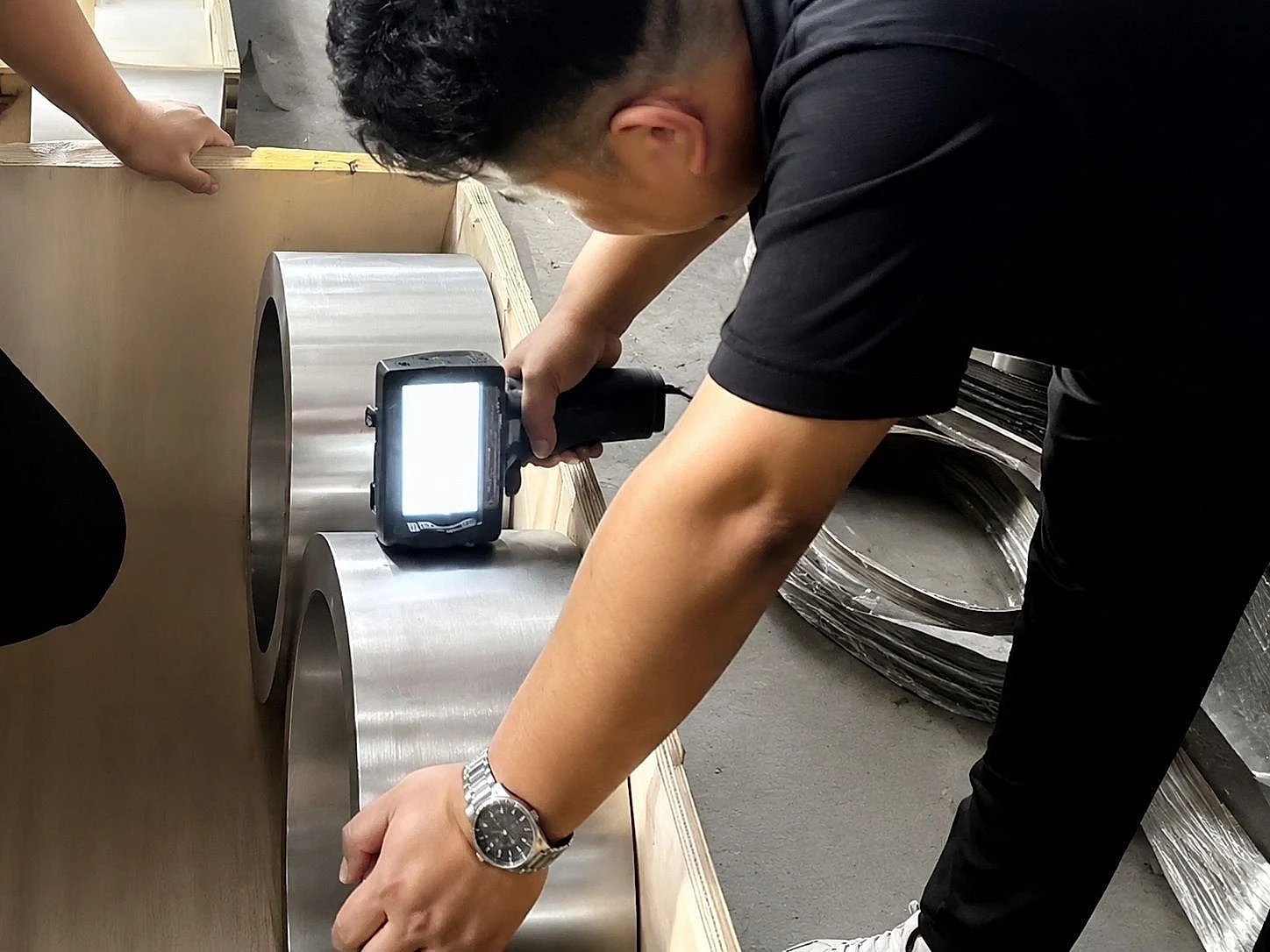 Figure 2: Pre-shipment handheld inkjet heat and lot traceability marking on machined titanium ring forgings inside an export crate at a certified partner facility. Direct physical part-to-MTC mapping prevents unverified scrap-heat substitution.
If your sourcing and quality teams are finalizing 2027 titanium bar, plate, or ring-forging contracts and need clear interstitial O/N/H caps alongside near-net stock sizing to minimize machining waste, submit your drawings and specification list through our online RFQ and melt-traceability pre-audit portal to review charge controls and redacted sample MTC packages. Verified melt pedigree secures performance.