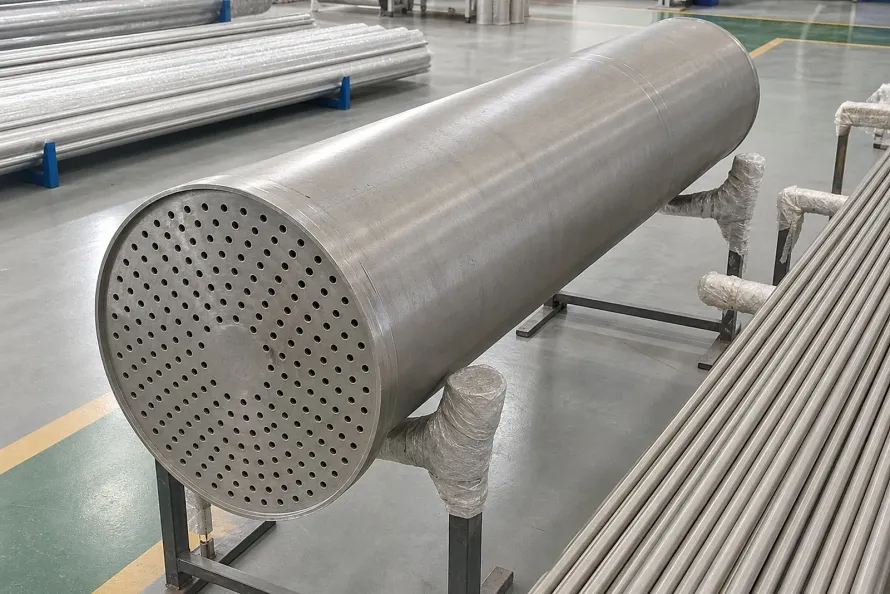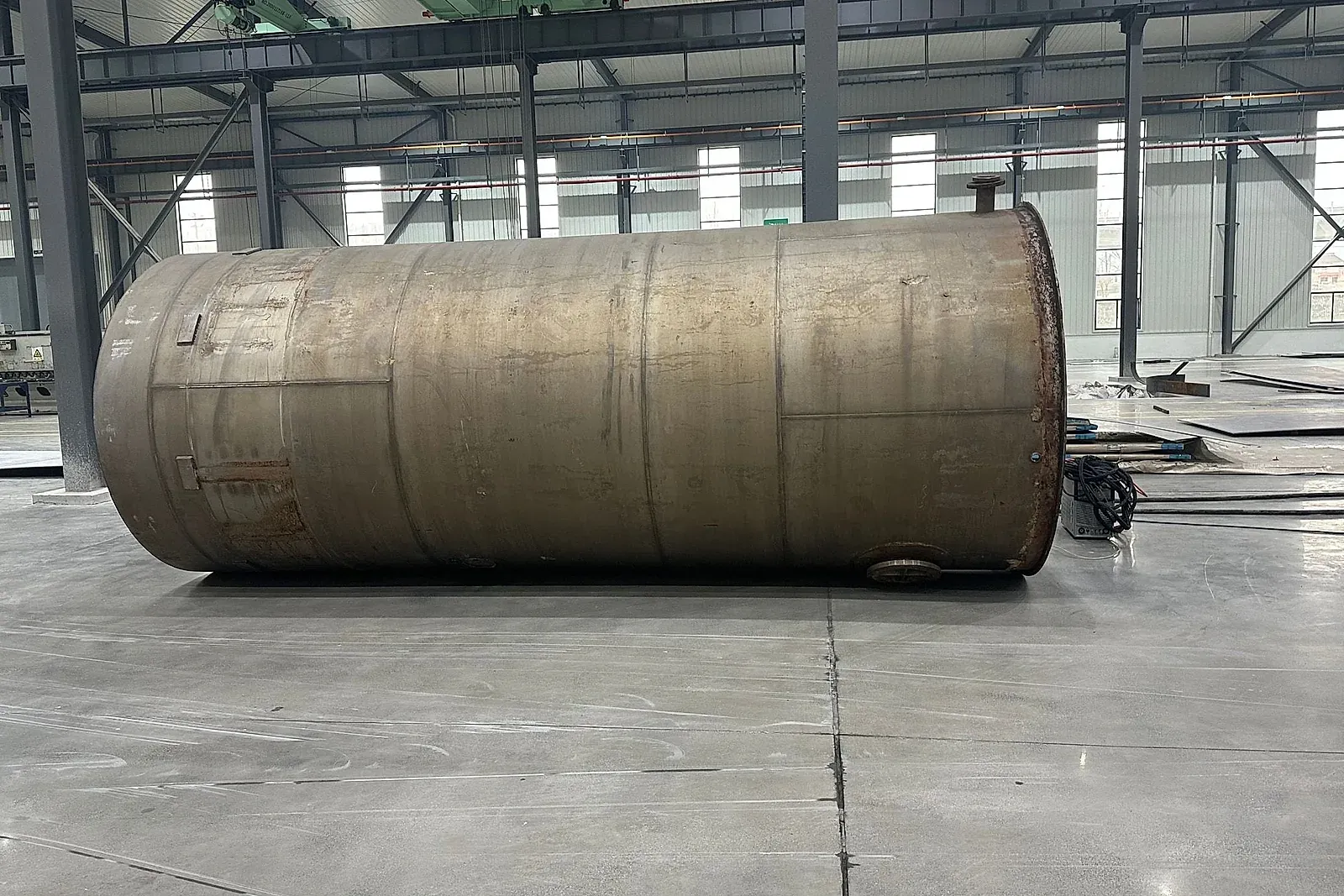
In purified terephthalic acid (PTA) oxidation reactors, high-pressure acid leach (HPAL) hydrometallurgical autoclaves, and chlorinated organic columns, crossing 4–10 MPa design pressure at shell thicknesses above 30 mm drives solid titanium vessel costs upward steeply. Thick solid titanium strains project budgets. Bonding a 2–12 mm corrosion-resistant titanium flyer plate onto a 20–150 mm pressure-vessel carbon or low-alloy steel backing plate (such as ASME SA-516 Gr.70) via solid-state ASTM B898 explosion cladding trims total metal expenditure by 40%–65% while preserving full structural containment.
Yet the costliest failures on clad reactor projects rarely wait for years of corrosive service—they erupt right on the fabrication floor during cylinder rolling, hot ellipsoidal head pressing, or initial hydrotesting, when disbonded cladding blisters or splits open. Interface disbonding scraps entire reactor shells. In nearly every post-mortem audit, the purchase order simply specified “titanium-steel clad plate” without capping flyer-plate yield strength, locking ≥ 30% elongation, or mandating 100% ultrasonic bond mapping.
As an integrated titanium supply-chain platform working with certified partner facilities for chemical equipment fabricators, hydrometallurgical operators, and pressure-vessel EPC contractors worldwide—spanning custom titanium and clad reactors up to 800 m²—we translate detonation metallurgy into enforceable procurement specifications. Upfront spec discipline prevents disbonding.
Flyer-Plate Metallurgy: Locking Grade 1 or Grade 11 Yield Caps and ≥ 30% Elongation
Engineers accustomed to specifying static shell plates frequently copy standard Grade 2 plate callouts onto explosion-clad requisitions, overlooking the microsecond shock physics of high-velocity impact bonding. Hard flyer plates crack under detonation. Across certified partner sheet-rolling and explosion-bonding lines, three metallurgical controls govern flyer-plate preparation:
- Selecting Low-Interstitial Grade 1 or Palladium-Bearing Grade 11 (Ti-0.15Pd): As detonation fronts sweep across the assembly at 2,000–2,800 m/s, the titanium flyer collides obliquely against the steel substrate, expelling surface oxides via a metallic jet and locking into a microscopic sinusoidal wave profile; when sourcing ASTM B265 pressure-vessel titanium flyer sheets and wide plates, partner lines specify high-ductility Grade 1 for oxidizing chlorides or low-interstitial Grade 11 (0.12%–0.25% Pd) for hot crevice zones, holding elongation ≥ 30% with a capped upper yield strength to prevent adiabatic shear cracking. High elongation absorbs shock energy.
- Deploying Grade 7 or Grade 12 with 100% PMI Verification for Reducing Acid Zones: Where boiling dilute hydrochloric acid, bromides, or under-deposit salt crevices threaten localized attack, nozzle necks and lower vessel courses can step up to crevice-corrosion-resistant Grade 7 (Ti-0.15Pd) or Grade 12 (Ti-0.3Mo-0.8Ni) using tailored standoff and explosive charge densities, backed by 100% handheld XRF Positive Material Identification (PMI) verifying Pd, Mo, and Ni content prior to dispatch. Full PMI screening eliminates alloy mix-ups.
- Holding HNO₃:HF ≥ 7:1 Pickling Ratios to Keep Hydrogen Pickup Below 10 ppm: Improper post-bond descaling rapidly charges thin titanium cladding with brittle hydrides; partner finishing baths maintain a strict nitric-to-hydrofluoric acid ratio of HNO₃:HF ≥ 7:1 followed by high-pressure deionized rinsing, delivering a clean matte-silver finish while holding hydrogen pickup < 10 ppm (total H ≤ 0.015%). Balanced acid ratios block hydrides.
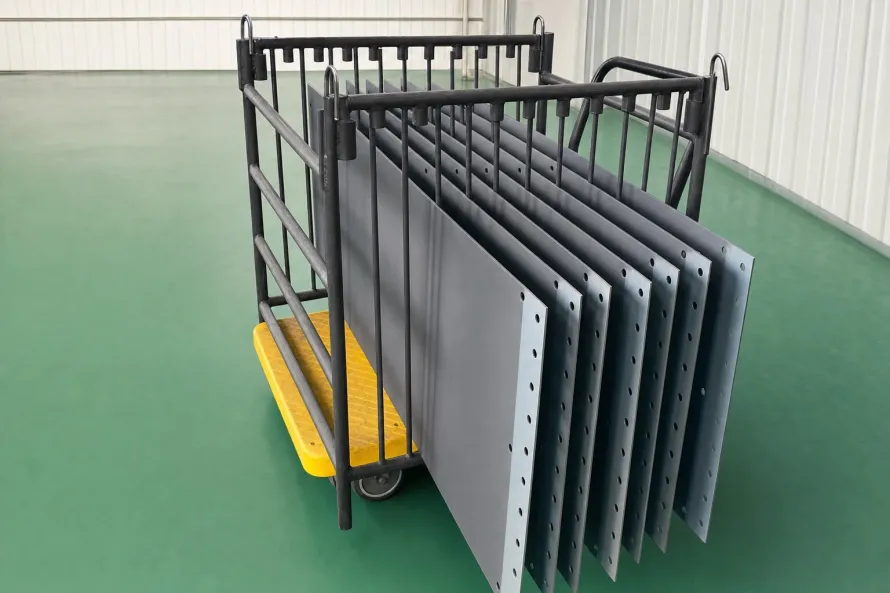
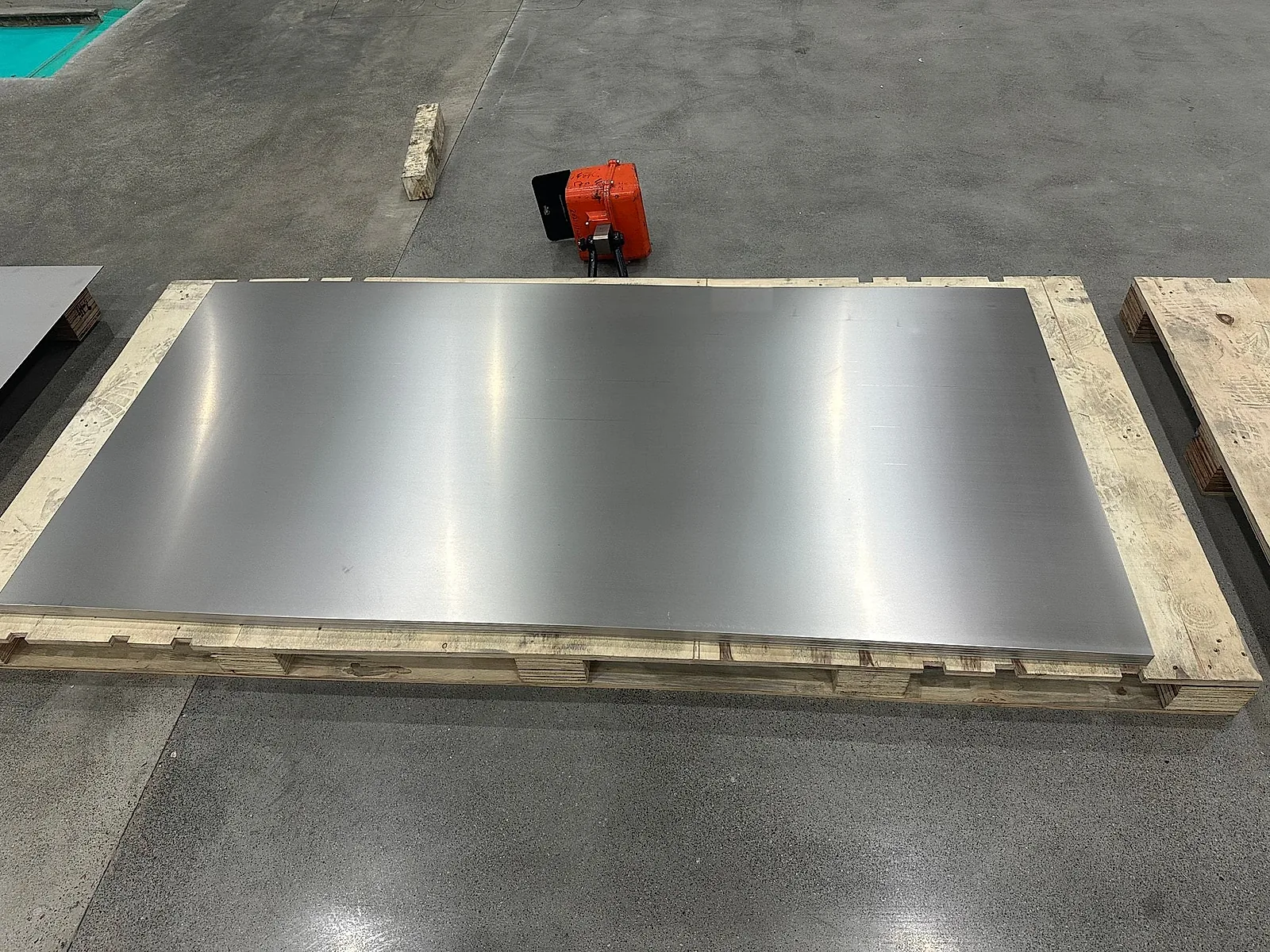 Figure 1: Annealed, matte-pickled high-ductility titanium flyer plates staged flat on timber skids at a certified partner facility. Enforcing ≥ 30% elongation and tight flatness before detonation ensures uniform sinusoidal wave interlocking across large reactor plates. Soft flat flyers bond cleanly.
Interfacial Shear Strength & Stress-Relief Ceilings: Stopping Brittle TiFe / TiFe₂ Growth
Why do some titanium-steel clad plates pass initial ultrasonic checks at the cladding range, only to drop below the ASTM B898 140 MPa minimum shear threshold after stress-relief annealing or hot head forming? Overheating ruins clad bond interfaces. Solid-state iron-titanium interdiffusion imposes strict thermal ceilings on every downstream shop operation:
First, cap post-bond stress-relief and hot-forming furnace temperatures strictly below 520°C–550°C. Across a properly tuned explosion-bonded wavy interface, localized melt pockets stay confined to a few micrometers and deliver 180–240 MPa measured shear strength (well above the 140 MPa ASTM B898 floor); however, letting furnace temperatures drift past 600°C–650°C drives rapid iron-titanium diffusion that nucleates continuous, glass-brittle TiFe and TiFe₂ intermetallic layers—causing instant delamination during shell cold-rolling or 180° bend testing. Thermal discipline preserves bond shear.
Second, mandate Class 1 100% ultrasonic bond scanning and zero-defect nozzle/tubesheet zones. Under ASTM B898 and ASTM A578 pulse-echo ultrasonic rules, coarse 100–200 mm spot-grid checks acceptable on atmospheric storage tanks leave dangerous blind spots under vacuum, thermal cycling, or agitator vibration; for custom titanium chemical reactors, evaporators, and shell-and-tube heat exchangers up to 800 m², partner lines enforce Class 1 100% full-area scanning (≥ 98% bond integrity, single unbonded area ≤ 650 mm²) plus 100% zero-disbond bands across 50 mm weld-prep perimeters and tubesheet drilling fields. Perimeter bond integrity protects welds.
| Engineering & QA Parameter | Reactor-Grade Clad Specification (Recommended PO Baseline) | Common Low-Bid Shortcut & Failure Mechanism | Incoming Inspection (IQC) & Witness Action |
|---|---|---|---|
| Flyer-Plate Grade & Ductility | Grade 1 or Grade 11 (Ti-0.15Pd); elongation ≥ 30% | Hard, scrap-blended high-oxygen sheet developing adiabatic shear microcracks | Audit flyer MTC upper yield cap, elongation & O ≤ 0.20% |
| Interfacial Shear Strength | ASTM B898 ≥ 140 MPa (180–240 MPa partner shop range) | Uneven standoff or annealing above 600°C forming brittle TiFe / TiFe₂ | Test coupon shear lug + tension/compression 180° guided bends per plate |
| Ultrasonic Bond Coverage | Class 1 100% scan: ≥ 98% overall; 100% at tubesheets | Sparse 100–200 mm grid checks missing edge delaminations | Review serialized UT bond maps; run dye-penetrant (PT) on cut bevels |
| Hydrogen Control & Traceability | HNO₃:HF ≥ 7:1 pickling (< 10 ppm H pickup); MTC in 2–5 days | Excess HF causing hydride embrittlement; unlinked steel/Ti heat codes | Verify dual-metal 100% heat/lot traceable MTC & PMI alloy logs |
Four RFQ Clauses for Ordering Titanium-Clad Reactor Plates and Pressed Heads
Whether procuring flat explosion-clad plates for your own vessel shop or ordering pre-formed clad shell courses and dished heads, engineering buyers should lock four contractual clauses before drawing freeze:
- Specify Flyer Chemistry and Normalized Steel Backing Temper Separately: Call out ASTM B265 Grade 1 / Grade 11 (≥ 30% elongation, O ≤ 0.20%, N ≤ 0.05%, H ≤ 0.015%) alongside pre-normalized ASME SA-516 Gr.70 or SA-387 backing steel—because backing plates can never undergo 900°C normalizing after titanium cladding is bonded. Pre-normalized steel avoids thermal traps.
- Require Secondary 100% Ultrasonic Re-Scanning After Ellipsoidal Head Pressing: Deep-drawing flat clad blanks into ellipsoidal or hemispherical heads subjects knuckle radii and straight flanges to severe compressive strain followed by 520°C stress relief; mandate a second 100% ultrasonic bond scan plus liquid penetrant (PT) inspection after head forming completes. Post-form UT catches knuckle disbonding.
- Audit Batten-Strip Weld Procedures (WPS) and Tell-Tale Helium Leak Ports: On fabricated clad shells or turnkey vessels (where medium-scale exchangers and reactors run 30–45 days lead time under strict customer drawing NDAs and 1–3 years operating-condition workmanship warranties), verify 99.999% argon trailing-shield purge controls and helium mass-spectrometry leak testing across batten-strip tell-tale holes. Helium leak checks secure seams.
- Enforce Dual Heat-Number Stamping and ISPM 15 Protected Ocean Crating: Formal Material Test Certificates (MTC) issue within 2–5 days post-testing, linking both primary VAR titanium ingot heats and steel mill heats with 100% heat/lot number traceability (independent SGS / TÜV witness testing available on request), packed with protective surface film and ISPM 15 timber skids shipped FOB China main port. Dual heat stamps preserve pedigree.
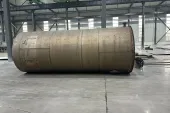
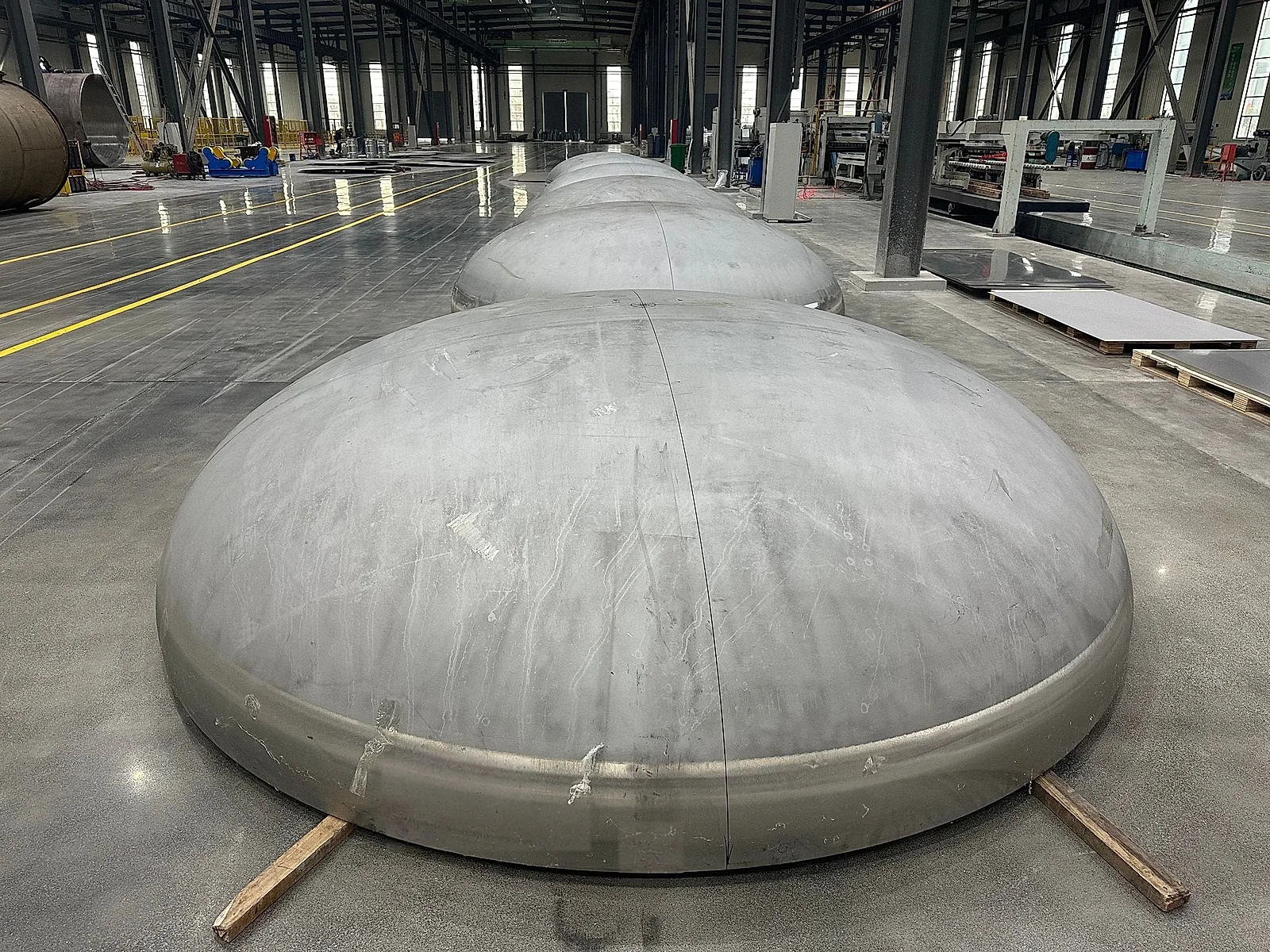 Figure 2: Warm-pressed titanium-clad ellipsoidal reactor dished heads staged after bevel machining at a certified partner heavy fabrication bay. Secondary 100% ultrasonic scanning across high-strain knuckle transitions verifies zero interfacial separation before vessel assembly. Secondary UT locks head reliability.
If your engineering team is specifying ASTM B898 titanium-steel explosion-clad reactor plates, tubesheets, or pressed dished heads, submit your vessel pressure/temperature envelope and cladding thickness via our online RFQ and complimentary pressure-vessel specification audit portal to review redacted MTC shear records and ultrasonic bond-mapping templates. Pre-RFQ engineering checks protect schedules.