According to official press releases issued via PR Newswire from Leetsdale, Pennsylvania, and Redditch, England, on November 23, 2026, VSMPO-Tirus US and VSMPO Tirus UK Ltd have formally completed their ownership transfers as part of the broader divestiture of VSMPO-AVISMA’s international distribution businesses, transitioning to a Hong Kong-based holding company backed by an independent international group headquartered in Oman. International distribution hubs changed hands. Both service centers stated that immediate operations focus on maintaining order fulfillment and commercial continuity for aerospace, medical device, and industrial buyers, ahead of an upcoming corporate rebranding and long-term expansion across titanium, aluminum, and composite materials.
Keeping those announcements strictly within their published scope, this cross-border divestiture marks a structural milestone in the post-2022 reorganization of global titanium channels: Western downstream service centers are legally decoupling from legacy upstream melt parents. Equity divestiture is not melt qualification. For aerospace machine shops, orthopedic implant OEMs, and chemical equipment fabricators locking 2027 purchasing schedules, one metallurgical rule remains absolute—changing a distributor’s corporate parent or trade name neither alters the melt origin of legacy inventory on warehouse racks nor exempts newly sourced replacement mills from full lot-release qualification.
As an integrated titanium supply-chain platform working with certified partner facilities for precision machining, medical, chemical, and energy buyers worldwide, we outline the three incoming-inspection and traceability gates procurement teams must enforce during distributor ownership transitions. Strict melt audits prevent compliance gaps.
Gate One: Separating Service-Center Equity from “Country of Melt and Pour” Pedigree
During periods when a distribution warehouse undergoes equity restructuring, corporate rebranding, and multi-mill restocking, the costliest compliance mistake is treating the seller’s invoice letterhead as proof of metallurgical origin. Invoice headers never prove melt origin. Under AS9100D aerospace quality governance and ISO 13485 medical raw-material controls, incoming inspection teams must verify two upstream anchors:
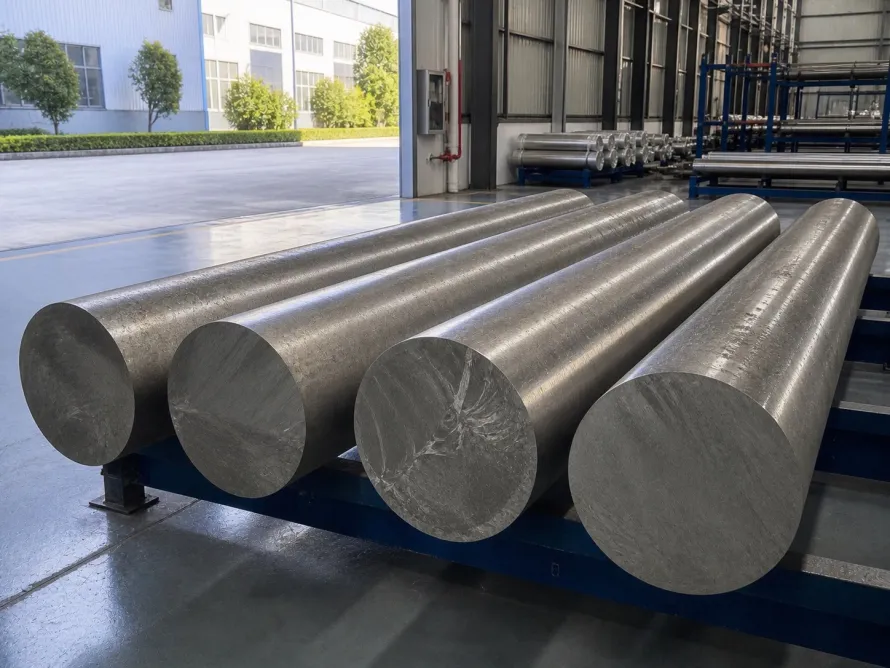
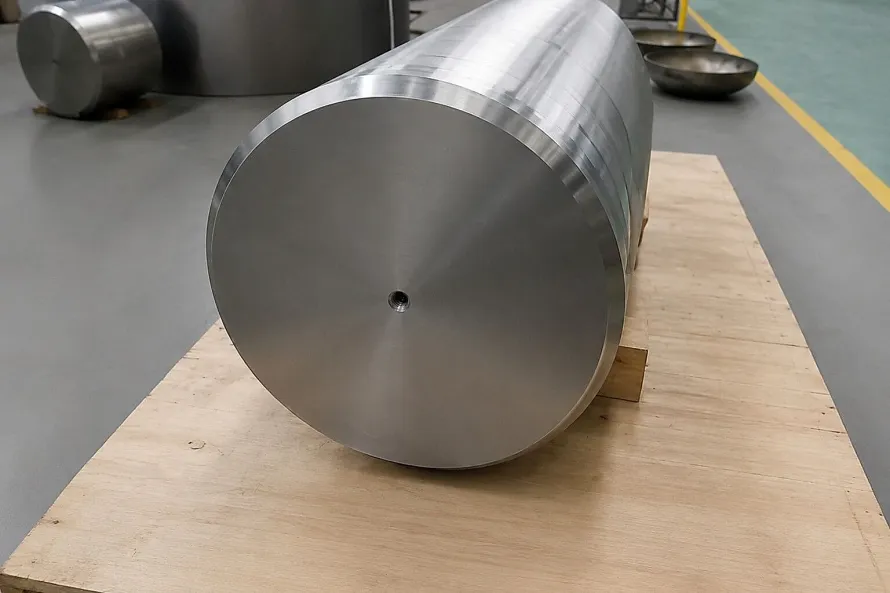
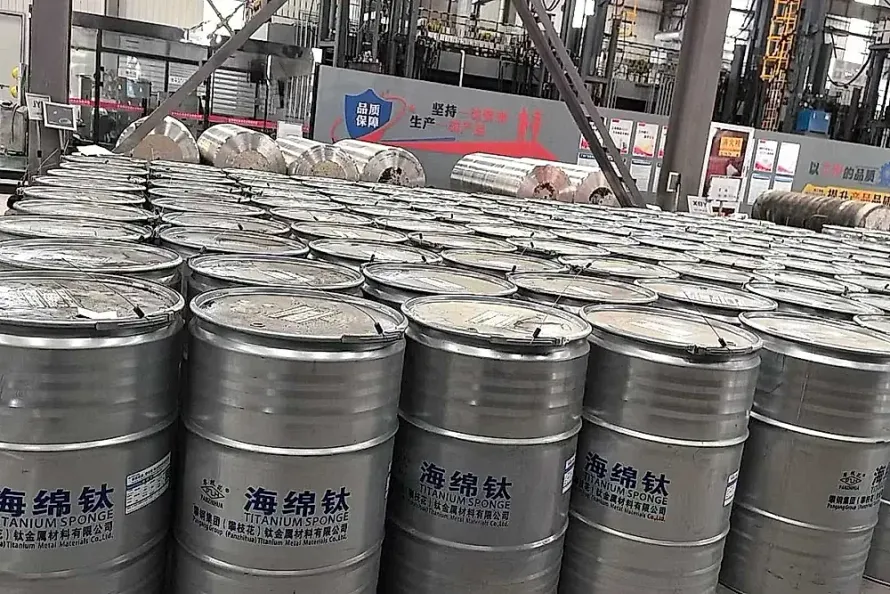
- Auditing Primary Titanium Sponge Grade and VAR Ingot Melt Location: Whether procuring heavy ASTM B348 / AMS 4928 forged and rolled titanium round bars or machining billets, trade-compliance auditors and OEM release engineers track primary titanium sponge origin and Vacuum Arc Remelting (VAR) furnace location; as divested Western service centers draw down legacy stock and onboard external global mills, every new upstream source represents a formal Change of Manufacturing Source requiring verified Grade 0 and Grade 1 virgin sponge records (holding O ≤ 0.20%, N ≤ 0.05%, and H ≤ 0.015% while blocking unverified revert-scrap dilution). New mill sources require re-qualification.
- Banning Warehouse Re-Numbering That Masks Original Mill Heat Numbers: Across multi-tier distribution, traceability breaks whenever a service center saws long bars into cut-to-length blanks and replaces original mill heat codes with internal ERP stock tickets; across certified partner production lines, heat and lot numbers travel via melt logs and physical tags from 3-tonne to 15-tonne VAR ingots straight to finished stock, preserving 100% heat/lot number traceability on saw-cut bar ends alongside original Material Test Certificates (MTC) issued 2 to 5 days after mechanical and chemical testing. Stamped bar ends preserve pedigree.
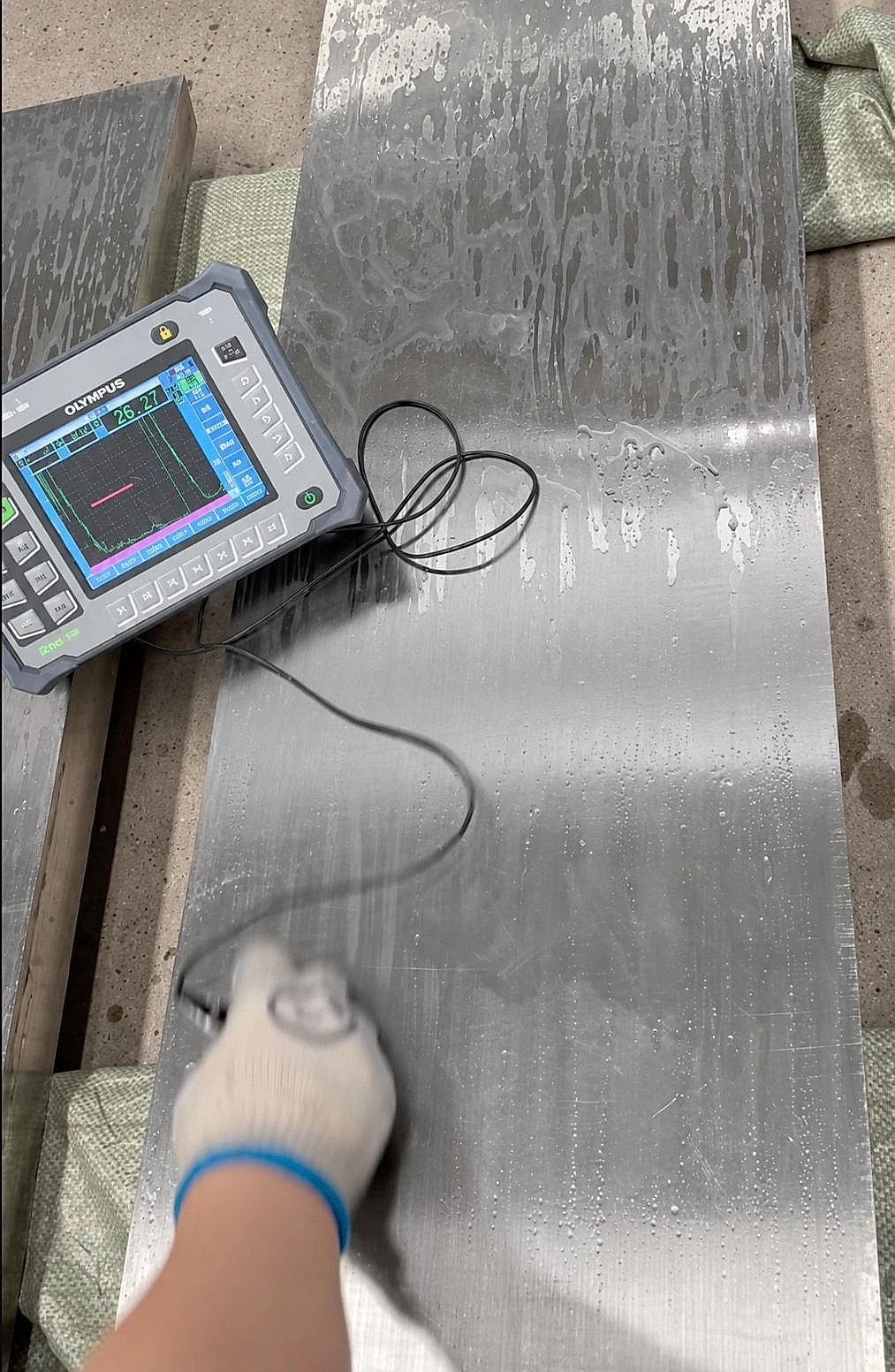 Figure 1: Independent quality engineer conducting 100% digital ultrasonic non-destructive testing (Olympus A-scan echo verification) on titanium plate stock prior to lot release at a certified partner facility. Tying serialized UT scan logs directly to original VAR heat numbers prevents mixed-origin warehouse substitutions. Direct UT logs lock lot identity.
Gate Two: Reading Real Mill Stock Curves to Avoid Phantom Inventory and Odd-Gauge Delays
As Western buyers pair local service centers with compliant Asian supply-chain platforms to build dual-source 2027 buffer stock, how can sourcing managers distinguish genuine revolving inventory from brokers quoting phantom stock and scrambling for unvetted workshop metal after order award? Real stock follows rolling physics. Shop-floor warehouse and scheduling metrics across certified partner lines give buyers three practical benchmarks:
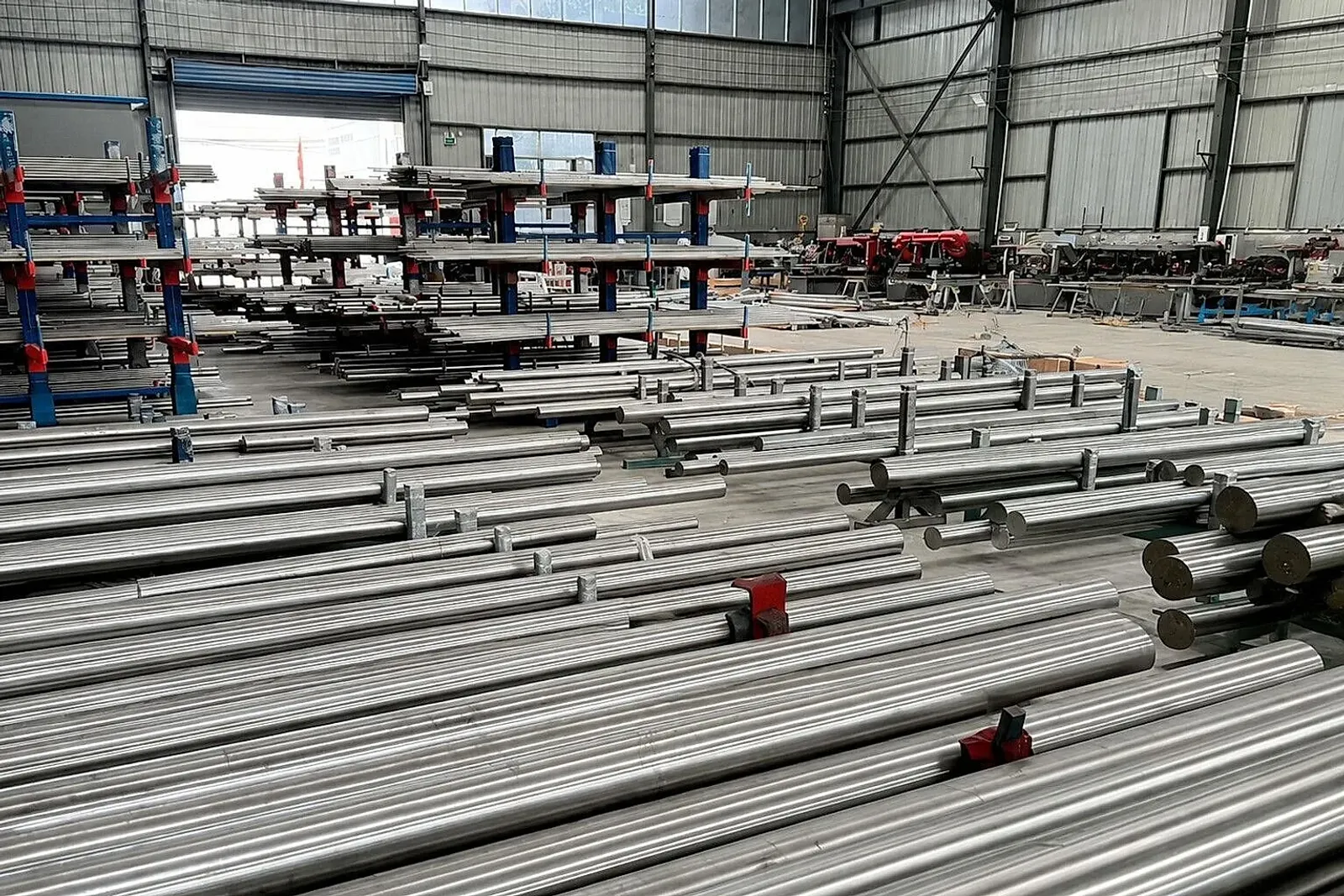
First, align urgent RFQs with high-turnover bar/tube diameters and even-numbered plate thicknesses. A disciplined mid-sized partner finished-goods warehouse carries roughly 50 tonnes of revolving inventory spanning ~120 active sizes—led by fast-moving 25 mm to 108 mm OD titanium round bars and ASTM B338 / ASTM B861 seamless heat-exchanger and process titanium tubes, alongside stocked 2.5 mm and 3.2 mm small rod and wire diameters; conversely, when ordering ASTM B265 industrial and pressure-vessel titanium sheets and plates, odd intermediate thicknesses of 7 mm, 9 mm, 11 mm, and 13 mm are never held as standard stock, so selecting adjacent 6 mm, 8 mm, 10 mm, 12 mm, or 14 mm even gauges cuts 3 to 5 weeks of custom slab rolling down to multi-day shear dispatch. Even plate gauges eliminate rolling delays.
Second, track the 1-to-3-week sponge price lag and enforce independent pre-shipment gas/PMI checks. Upstream virgin sponge price movements take 1 to 3 weeks to pass through into billet and finished mill quotes; quotes undercutting prevailing market baselines by 15% to 20% during sponge upticks almost always signal scrap-doped melts or uninspected tube hollows. Unrealistic discounts signal hidden scrap. By routing each product form to specialized partner plants (high-speed bar mills, 20-high foil mills, multi-stand cold-pilger tube mills) backed by independent pre-shipment O/N/H gas re-testing, Positive Material Identification (PMI), and dimensional gauging, our quality gates intercept surface and tolerance non-conformances below 0.3% before crating.
| Supply-Chain Transition Scenario | Blind Spot in Distributor Paperwork | Penetrating Metallurgical & MTC Audit Standard | Buyer IQC & Contract Release Action |
|---|---|---|---|
| Distributor Equity Sale or Rebrand (e.g., US/UK service-center ownership transition) | Checking only updated invoice letterheads while ignoring legacy stock origin | Verify Country of Melt & Pour, primary sponge origin & VAR ingot heat ID | Require mill-of-origin codes and ingot-to-product conversion paths on every pack |
| Cut-to-Length Bar / Plate Orders (Saw-cut slugs, waterjet-cut blanks) | Service-center ERP ticket overwrites original mill heat number, severing chain | Melt log + physical tag + stamped cut ends locking 100% heat/lot continuity | Match physical bar-end heat stamps 1:1 against original MTC (2–5 days post-test) |
| Onboarding Compliant Dual-Source Supply (Securing 2027 non-Russian backup capacity) | Believing “all sizes in stock” claims and hitting odd-plate rolling delays | Target 25–108 mm bar/tube stock pools & 6/8/10/12/14 mm even plates | Mandate Grade 0/1 virgin sponge declarations & optional third-party lab witness |
| Ocean-Freight Buffer Restocking (Full-crate or LCL FOB China main port) | Loose bundling or damp pallets causing transit gouges on ground bars/tubes | Individual EPE foam sleeves + barrier bags + steel-strapped ISPM 15 crates | Specify crating grade, PVC tube support mandrels & waterproof heat-tag pouches |
Four Procurement Actions for Governing Dual-Source Titanium Supply in 2027
Following the November 23, 2026 ownership completion at VSMPO-Tirus US and VSMPO Tirus UK, industrial and aerospace sourcing teams are shifting from emergency spot buying to structured dual-source governance. Dual-source governance protects schedules. Procurement directors and quality leads can de-risk 2027 supply agreements through four concrete steps:
- Separate “Distributor Warehouse Approval” from “Primary Melt-Shop Qualification” on AVL Audits: Whether buying from a local service center or an international supply-chain platform, require explicit disclosure of 2× VAR versus 3× VAR melt count, 100% Grade 0 / Grade 1 virgin sponge usage, and archived furnace melt logs on critical lots. Split approvals close origin loopholes.
- Enforce 1:1 Physical Bar-End Heat Stamp vs. Original MTC Chemistry/Tensile Audits: Incoming inspection should verify measured Fe, C, N, H, and O weight percentages alongside room-temperature tensile, yield, and elongation figures on the original MTC (issued 2 to 5 days after lab testing completes), rejecting unlabeled saw-cut pieces; high-consequence pressure or medical lots can add independent third-party re-testing (SGS / TÜV). End-stamp checks stop mixed heats.
- Align Small-Batch & Prototype Orders with Revolving Standard Stock Dimensions: Pull urgent R&D and maintenance quantities from stocked 25 mm to 108 mm OD bars/tubes, 2.5 mm and 3.2 mm rod/wire, and even-gauge plates for rapid dispatch, while scheduling custom diameters around furnace and roll-change windows (standard mill production runs 5 to 30 days). Stock alignment compresses lead times.
- Lock Transit Integrity with EPE-Sleeved ISPM 15 Export Crating: Require all peeled bars, centerless-ground rods, and cold-rolled sheets shipped FOB China main port to pack inside individual white EPE foam sleeves, moisture-barrier film, and steel-strapped ISPM 15 plywood crates, with internal PVC mandrels supporting long thin-wall tubes. Proper crating prevents ocean damage.
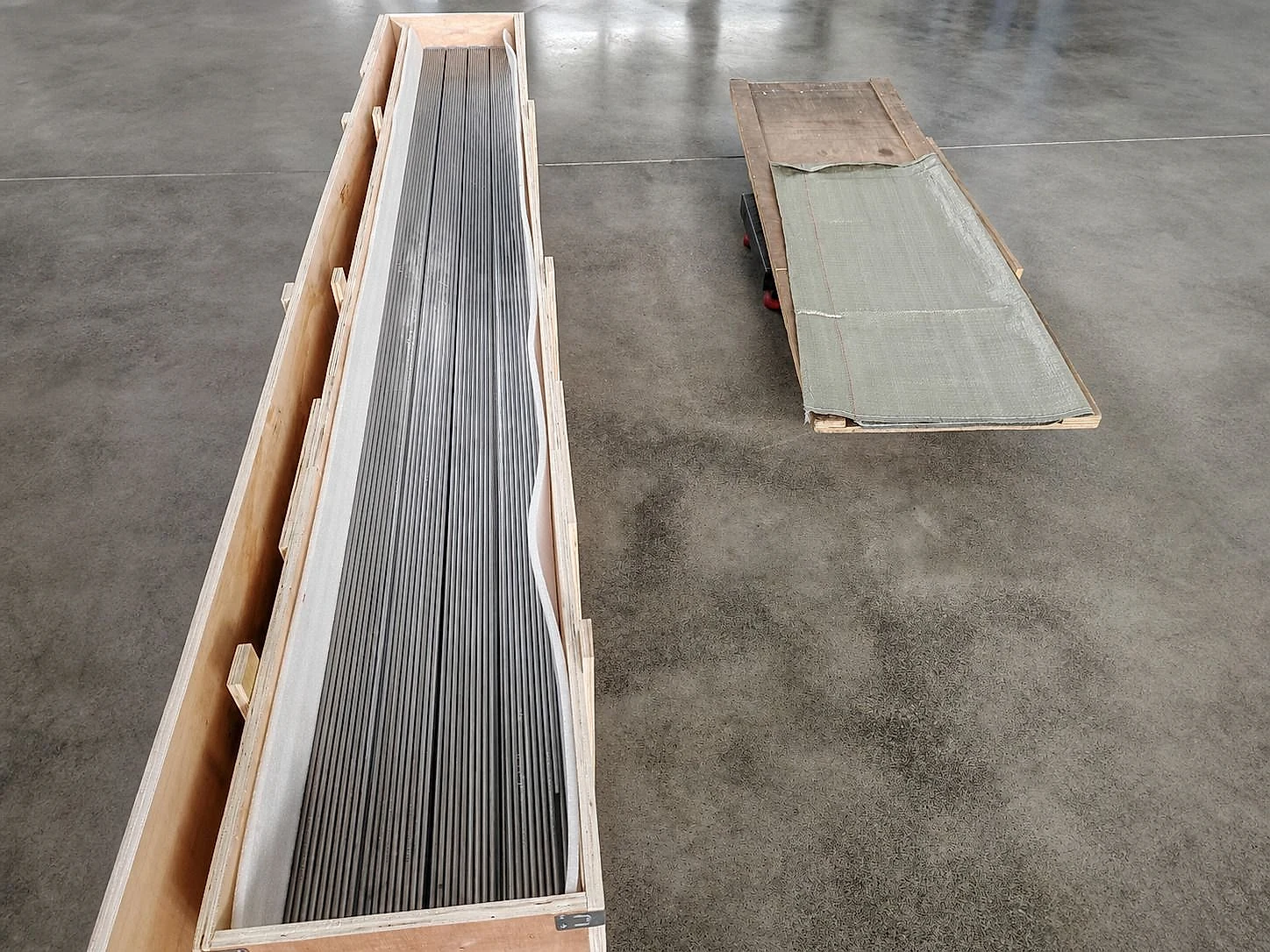 Figure 2: Dimensionally gauged, heat-lot-verified titanium round bars nested inside a white EPE foam-lined ISPM 15 plywood export crate prior to dispatch at a certified partner facility. Segregated lot crating protects precision surfaces and preserves physical heat-tag continuity through ocean transit. Clean crating ensures smooth IQC.
If your sourcing or quality team is qualifying compliant backup supply for ASTM B348 / AMS 4928 titanium bars, ASTM B265 plates, or ASTM B338 seamless tubes ahead of 2027 production schedules, submit your alloy specs and annual volume targets through our online RFQ and complimentary MTC traceability audit portal to review live stock availability and redacted MTC packages. Verified melt chains secure long-term supply.