Type something to search...

Titanium forgings

Aerospace and Defense
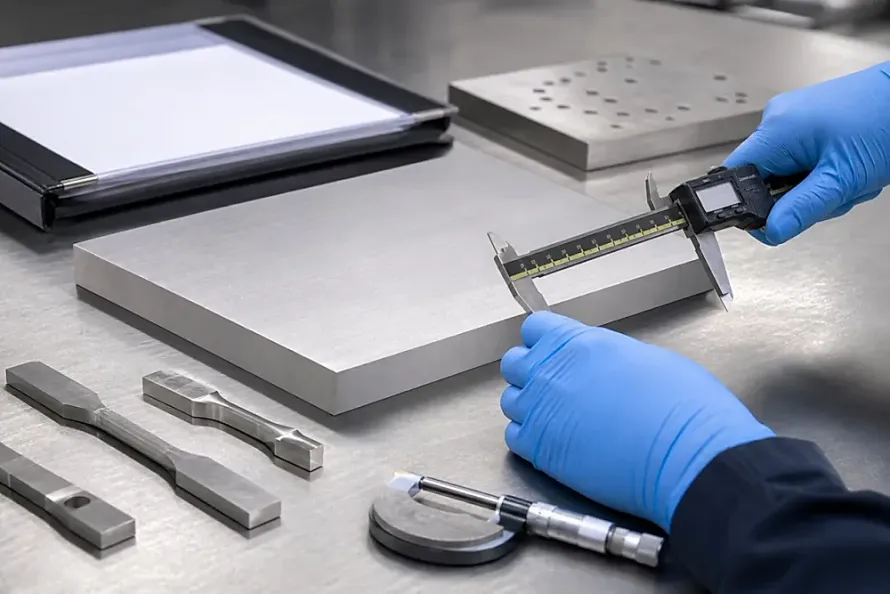
A titanium quality-control bench with plates, machined coupons, calipers and gloved inspection hands, showing how aerospace procurement depends on traceable evidence
By Jason/ On 06 May, 2026

Aerospace Orders Are Turning Titanium Procurement Into a Qualification Chain

voestalpine's new aerospace order book is not only a contract story. It is a signal about how aircraft supply chains are valuing titanium products in 2026: not as isolated bars, sheets, tubes or forgings, but as qualified material packages tied to processing, inspection evidence, certification readiness and delivery control. The Austrian steel and technology group said on April 8 that its High Performance Metals Division had secured aerospace orders worth around EUR 1 billion over five years. The agreement includes Airbus-related business and covers high-performance materials, complex forged parts and global logistics. The company said its aerospace portfolio includes bars, sections, sheets, plates and special forged parts, with titanium alloy forgings produced at Kapfenberg and high-tech titanium sheets produced at Muerzzuschlag. It also described heat treatment, surface treatment, additive manufacturing processes and a global service network as part of the division's capability set (voestalpine).For titanium processors and export buyers, the important point is not that one European supplier won a large order. The more useful signal is that aerospace customers are buying a chain of assurance. A titanium plate, bar or forged billet has limited value in aircraft programs if it is separated from the route that proves chemistry, mechanical performance, heat history, inspection status, traceability and delivery reliability. Why the Order Matters Beyond One Supplier Aerospace demand remains strong enough to keep pressure on qualified material channels. Airbus reported 9,037 commercial aircraft in its order backlog at the end of March 2026, even as Q1 deliveries fell to 114 aircraft from 136 a year earlier. The company said it was continuing its ramp-up while navigating Pratt & Whitney engine shortages (Airbus). That pattern matters for titanium because aircraft production is constrained by qualified components and inputs, not only by final assembly demand. Reuters reported in February that aviation supply constraints had become a durable operating condition, with some component and material orders stretching toward a year. In the same report, a Future Metals executive said titanium and nickel tubing lead times were still 50 to 60 weeks, far above the pre-pandemic norm of about 20 weeks (Reuters via Investing.com). Even if some lead times have improved from 2025 extremes, the procurement lesson remains: qualified titanium availability is still a planning variable, especially for tubing, forgings and precision material forms that must enter certified assemblies. The raw-material side adds another layer. The U.S. Geological Survey's 2026 titanium summary said the United States did not produce titanium sponge metal in 2025 and estimated net import reliance for sponge at 100%. It also reported estimated 2025 sponge imports of 44,000 metric tons and noted that most titanium metal use was in aerospace applications, with the rest spread across armor, chemical processing, marine hardware, medical implants, power generation and other uses (USGS). That does not mean every titanium buyer faces an immediate shortage. It does mean downstream buyers should distinguish between feedstock exposure, mill product availability and qualified component readiness. These are related, but they are not the same risk. The New Buyer Framework: Five Gates, Not One Price For titanium bars, tubes, plates, sheets and forgings, aerospace procurement increasingly works through five gates:Gate What buyers need to verify Why it mattersMaterial form Bar, tube, plate, sheet, forging, billet, wire or powder route The form determines downstream machining, forming, inspection and qualification workProcess route Melting, rolling, forging, heat treatment, machining or additive manufacturing path Process history affects mechanical properties and repeatabilityInspection evidence Chemical tests, mechanical tests, ultrasonic or other non-destructive inspection, dimensional records Aerospace programs need proof, not only supplier claimsCertification package Standards, mill test certificates, traceability, conformity documents and customer-specific approvals Documentation failure can stop an otherwise usable materialDelivery resilience Lead time, logistics, inventory discipline and alternate qualified routes Aircraft programs need predictable flow, not spot availabilityThis framework is more practical than asking whether titanium prices are rising or falling. A lower raw-material price does not solve a missing NDI record. Available plate stock does not solve a forgings bottleneck. A fast quote does not replace customer-approved process history.Additive Manufacturing Reinforces the Same Lesson The same evidence-chain logic is visible in titanium additive manufacturing. On April 13, GKN Aerospace announced an $8.4 million TITAN-AM program with the U.S. Air Force Research Laboratory to industrialize Laser Metal Deposition with Wire for large titanium aerostructures. The program is not framed only around printing parts. It focuses on process industrialization, titanium material datasets, simulation, non-destructive inspection techniques and component demonstration (GKN Aerospace; see our earlier read on TITAN-AM and the aerospace titanium qualification picture). That detail is important for traditional titanium product suppliers. Wire-fed additive manufacturing does not simply replace forged or machined products overnight. It adds another qualified route that still depends on material data, inspection methods and customer confidence. For some structural components, additive routes may reduce waste or shorten specific process chains. For many other applications, forged billet, rolled plate, tube or machined bar stock will remain the practical route. In both cases, buyers are rewarding suppliers that can explain the process route and prove repeatability. What Export Titanium Suppliers Should Take From This For export suppliers of titanium bars, tubes, plates, sheets and forgings, the commercial opportunity is not to imitate the scale of voestalpine's aerospace business. Most suppliers will not compete directly for integrated aircraft-program packages. The useful takeaway is narrower and more actionable: serious buyers are screening for evidence maturity. A supplier that sells titanium tubes into heat exchangers, plates into chemical equipment, bars into machined parts or forgings into aerospace-adjacent applications can strengthen its position by making the evidence chain easier to inspect. That means clearer grade control across Gr.1/Gr.2/Gr.5/Gr.7/Gr.12 and Gr.23 grades, more disciplined heat and batch traceability, test records that match the buyer's standard, transparent processing limits, and realistic lead-time communication. The same applies outside aerospace. Medical, chemical processing and energy buyers may not have the same program structure as Airbus suppliers, but they often care about the same titanium properties: corrosion resistance, strength-to-weight ratio, fatigue behavior, cleanliness, dimensional stability and documented compliance. When raw material supply is globally concentrated and qualified processing capacity is uneven, documentation becomes part of the product. The defensible conclusion is simple: aerospace orders are not just pulling more titanium through the system. They are pulling titanium through a more demanding qualification chain. Suppliers that can connect product form, process route, inspection evidence, certification and delivery discipline will be easier for buyers to evaluate. Suppliers that only describe titanium as available stock will look less prepared for the procurement reality now shaping high-value titanium demand.Related Products & ServicesTitanium forgings — Gr.1/Gr.2/Gr.5/Gr.7/Gr.12, AMS 4928 / ASTM B381 channels Titanium tubes — heat exchanger and aerospace-adjacent tubing with traceable mill certs Titanium sheets & plates — chemical, marine and structural plate stock Titanium bar / rod — ASTM B348 / B381 with batch traceability Titanium wire — feedstock-grade wire for AM and welding routes Special titanium alloys (Gr.5 / Gr.23 / Ti-6Al-4V ELI) — aerospace and medical-grade reference Contract machining services — finish machining, dimensional verification and inspection-friendly delivery Titanium industry news — ongoing tracking of aerospace titanium qualification, procurement and supply-chain shifts

Aerospace and Defense
Safran's April Double Move: Non-Russian Titanium Transition Done + €150M Gennevilliers Forging Expansion — Western Titanium Forging Supply Tightens Structurally
By Jason/ On 04 May, 2026

Safran's April Double Move: Non-Russian Titanium Transition Done + €150M Gennevilliers Forging Expansion — Western Titanium Forging Supply Tightens Structurally

On April 21, Safran Moved "Non-Russian Titanium" From Strategy to Past Tense On 21 April 2026, French engine manufacturer Safran announced that its non-Russian titanium transition for forging procurement is complete. Billet and landing-gear forgings — the entire volume — has shifted from VSMPO-AVISMA to a Western and Japanese partner network. The gap with market expectations is the tense. Safran did not say "transitioning"; it said "transitioned." Airbus, in the same window, still discloses Russian titanium at roughly 20% of its supply and is compressing it gradually. Safran walked the same road and finished it. Safran's replacement plan is two-tiered:Military primary supplier: Ecotitanium — Aubert & Duval's titanium recycling subsidiary, full ramp by 2028 Civil: a three-way balance across Ecotitanium, Japanese partners, and US partners by 2030The announcement did not name the Japanese or US partners, but the industry consensus points to Toho Titanium / Osaka Titanium in Japan and TIMET / ATI in the US — currently the only Western-aligned mills with stable, qualified capacity for aerospace-grade Ti-6Al-4V billet. Ecotitanium's Critical Element Is Not Capacity — It's the Route A recycled-route ingot means two things to a buyer. First, the feedstock chain shortens: instead of titanium ore → sponge → tetrachloride → magnesium reduction, the input is aerospace titanium scrap (turnings, cropped offcuts, scrapped forgings) remelted into ingot. No magnesium reduction means no exposure to the cadence of Chinese magnesium exports (China holds 90%+ of global magnesium and from 6 January 2026 has applied dual-use export controls toward Japan). This is the underlying reason Safran chose Ecotitanium rather than building greenfield primary titanium capacity. Second, on the compliance side, Ecotitanium runs dual remelting — VAR plus EBCHM — and aerospace titanium revert, after two vacuum remelts, has a microstructure (α-β phase distribution) equivalent to primary ingot. It qualifies across AMS 4928 forgings, AMS 4911 sheet, Ti-6Al-4V ELI medical-grade, and the rest of the standard envelope. Ecotitanium is not a downgrade — it is a compliant equivalent. But full ramp lands in 2028, and that date defines the asymmetry. Safran's transition being complete does not mean supply is comfortable. 2026-2027 is Ecotitanium's ramp window, and actual supply still depends on Japanese and US partners filling the bins.Gennevilliers €150M: Safran Takes Forging Capacity Onshore Eight days earlier, on 13 April 2026, Safran Aircraft Engines announced a €150M investment at its Gennevilliers site north of Paris: a 30,000-ton-class hydraulic forging press, online by 2029, full annual output of 14,000 large forgings, and 130 new jobs. Read the two announcements together and the logic snaps into focus:21 April = solving the feedstock and billet sourcing problem 13 April = solving the in-house large-part forging problemA 30,000-ton press is sized for next-generation civil engine large parts — titanium compressor cases, fan disk hubs, low-pressure turbine disks for long-cycle programs like CFM RISE / Open Fan — not in-service LEAP-1A/-1B production parts. Put differently, Safran is locking forging capacity 5-7 years ahead of the 2030s engine programs. That is the standard cadence for Western civil aviation forging expansions (compare with RTX's three-year forging build-out and Aubert & Duval's repeated forging investments). The Three-Year Bottleneck Window in Western Titanium Forgings For 2026-2029, Western titanium forging buyers face a cold fact pattern:Ecotitanium full ramp in 2028 — capacity short in 2026-2027 Safran Gennevilliers online in 2029 — large parts on subcontract through 2026-2028 VSMPO channel closed (for Safran) — the back door is bricked up by Safran's own decisionThat means through 2026-2028 Safran's civil large-part forging stays on subcontract with Aubert & Duval, TIMET, ATI and the Japanese mills. Forging lead times that ran 12-18 months are likely to stretch to 18-30 months. Tier 2/3 civil aviation parts makers (Mecachrome and Lisi Aerospace in France, GKN in the UK and others) that have not booked their 2027-2028 forging slots by 2026 will be staring at a supply-demand mismatch in 2027.Indirect Effect on Non-Aerospace Buyers: Capacity Crowd-Out Aerospace Tier 1 forging capacity is not a parallel universe. Chemical, marine and medical titanium forgings have always shared the same heavy hydraulic press lines as aerospace. Safran's expansion effectively assigns a swathe of qualified forging capacity in northern Paris and central France to civil large parts, and non-aerospace titanium forging demand either queues longer or spills over to Chinese Tier 2 mills and qualified shops in India and Türkiye. Gr.2 commercially pure titanium forgings and Gr.5 (Ti-6Al-4V) titanium forgings from Chinese mills like Baoti Group and Western Superconducting already have stable Western downstream channels in chemical reactors, desalination heat exchangers, and medical implants (ISO 13485 route). The Safran event does not change those channels' compliance bar, but it does raise utilization of the China channel as a procurement category for non-aerospace titanium forgings. Bottom Line: This Is Not a Single Event — It's a Procurement Map Redrawn The substance of Safran's April double move is folding two long-cycle links — feedstock and forging — into a Western/US-Japan closed loop simultaneously, redrawing the procurement map. Short term (2026-2028), Western titanium forging supply tightens. Medium term (2028-2030), once Ecotitanium and Gennevilliers both come online, supply normalizes — but the pricing center moves up: Ecotitanium recycled-route titanium ingot combined with Western heavy-tonnage forging carries a systemic premium over VSMPO long-contract pricing, and the aerospace-grade premium over commercial-grade titanium continues to widen (industry consensus). For a Chinese B2B titanium supplier like Titanium Seller, this is a window of "aerospace compliance channels keep tightening + non-aerospace channels expand." Three things worth tracking next:Ecotitanium's 2026-2028 ramp data — determines whether Safran's short-term decoupling from VSMPO is real Toho Titanium / Osaka Titanium actual tonnage to Safran — public language is "partner" only; no contract tonnage disclosed Baoti / Western Superconducting compliance progress in European aerospace Tier 2 — AS9100 + NADCAP runs an 18-36 month review windowRelated Products & ServicesTitanium Forgings (Gr.1/Gr.2/Gr.5/Gr.7/Gr.12) — chemical, marine and medical compliance routes Titanium Bar, Plate and Tube — full ASTM B265/B348/B348M coverage Contract Forging and Machining Services — Tier 2/3 non-aerospace fast-slot booking Titanium Industry News — continuous tracking of structural shifts in the Western titanium supply chain

Manufacturing and Technology
Titanium Forging & Ring Rolling in Action — Daily Production Update
By Jason/ On 07 Apr, 2026

Titanium Forging & Ring Rolling in Action — Daily Production Update

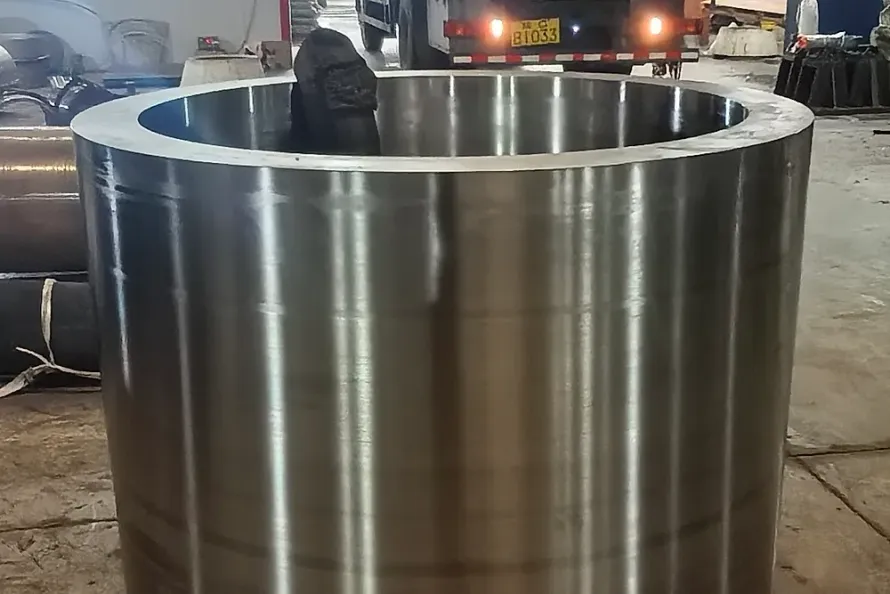
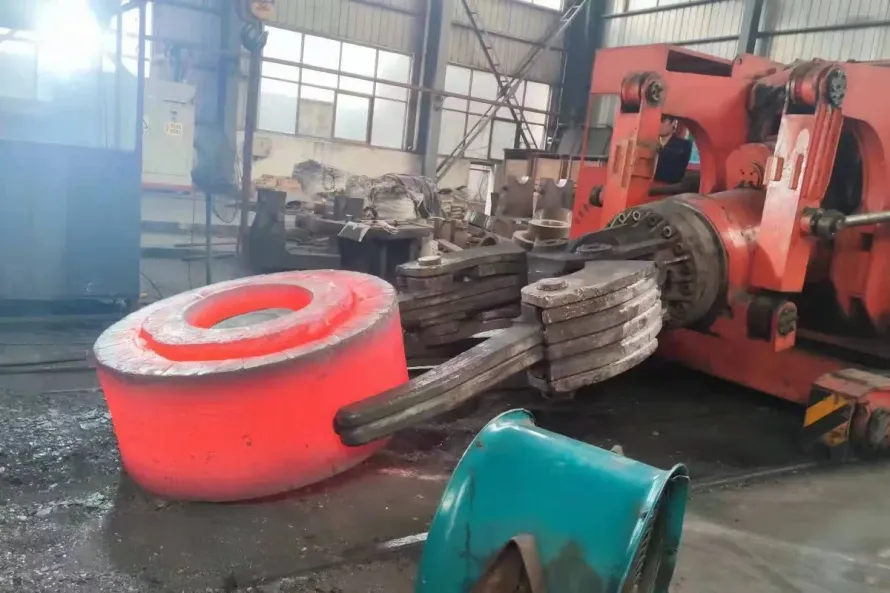
Another day on the forging floor. Here is a look at today's production run — titanium ring forgings going from raw billet to finished product, right here in our Baoji workshop. From Billet to Red-Hot Ring The process starts with titanium billets and hollow blanks, cut to weight and preheated in our gas-fired furnace. Once the material reaches forging temperature (typically 900–950°C for Ti-6Al-4V), it moves to the ring rolling mill.Ring Rolling in Progress The glowing titanium blank is placed on the ring rolling machine, where it is expanded into the target diameter through continuous rotational compression. The entire rolling cycle takes just minutes, but the temperature window is critical — too cold and the material cracks, too hot and grain growth reduces mechanical properties. Finished & Ready to Ship After rolling, the rings are heat-treated, ultrasonically inspected, and machined to final dimensions. Today's batch includes DN100 flanges destined for chemical processing equipment.This is what daily production looks like at Titanium Seller — no stock photos, just real metal moving through real machines. Need custom titanium forgings? Get in touch and we will quote your next order.Related Articles:Titanium Forgings — From Billet to Precision Shape Why Titanium Is Taking Over Modern Manufacturing

Ready to Start Your Project?

Get factory-direct pricing on titanium products. No minimum order.

Get a Free Quote
Quick Inquiry