Safran's April Double Move: Non-Russian Titanium Transition Done + €150M Gennevilliers Forging Expansion — Western Titanium Forging Supply Tightens Structurally
On April 21, Safran Moved “Non-Russian Titanium” From Strategy to Past Tense
On 21 April 2026, French engine manufacturer Safran announced that its non-Russian titanium transition for forging procurement is complete. Billet and landing-gear forgings — the entire volume — has shifted from VSMPO-AVISMA to a Western and Japanese partner network.
The gap with market expectations is the tense. Safran did not say “transitioning”; it said “transitioned.” Airbus, in the same window, still discloses Russian titanium at roughly 20% of its supply and is compressing it gradually. Safran walked the same road and finished it.
Safran’s replacement plan is two-tiered:
- Military primary supplier: Ecotitanium — Aubert & Duval’s titanium recycling subsidiary, full ramp by 2028
- Civil: a three-way balance across Ecotitanium, Japanese partners, and US partners by 2030
The announcement did not name the Japanese or US partners, but the industry consensus points to Toho Titanium / Osaka Titanium in Japan and TIMET / ATI in the US — currently the only Western-aligned mills with stable, qualified capacity for aerospace-grade Ti-6Al-4V billet.
Ecotitanium’s Critical Element Is Not Capacity — It’s the Route
A recycled-route ingot means two things to a buyer. First, the feedstock chain shortens: instead of titanium ore → sponge → tetrachloride → magnesium reduction, the input is aerospace titanium scrap (turnings, cropped offcuts, scrapped forgings) remelted into ingot. No magnesium reduction means no exposure to the cadence of Chinese magnesium exports (China holds 90%+ of global magnesium and from 6 January 2026 has applied dual-use export controls toward Japan). This is the underlying reason Safran chose Ecotitanium rather than building greenfield primary titanium capacity.
Second, on the compliance side, Ecotitanium runs dual remelting — VAR plus EBCHM — and aerospace titanium revert, after two vacuum remelts, has a microstructure (α-β phase distribution) equivalent to primary ingot. It qualifies across AMS 4928 forgings, AMS 4911 sheet, Ti-6Al-4V ELI medical-grade, and the rest of the standard envelope. Ecotitanium is not a downgrade — it is a compliant equivalent.
But full ramp lands in 2028, and that date defines the asymmetry. Safran’s transition being complete does not mean supply is comfortable. 2026-2027 is Ecotitanium’s ramp window, and actual supply still depends on Japanese and US partners filling the bins.
Gennevilliers €150M: Safran Takes Forging Capacity Onshore
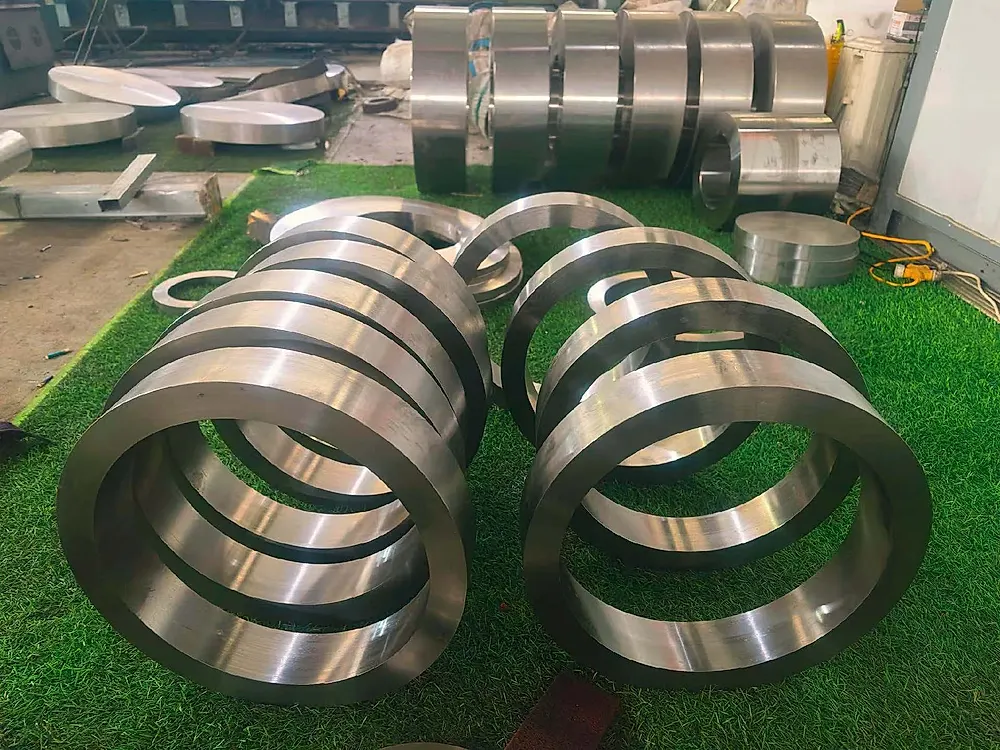
Eight days earlier, on 13 April 2026, Safran Aircraft Engines announced a €150M investment at its Gennevilliers site north of Paris: a 30,000-ton-class hydraulic forging press, online by 2029, full annual output of 14,000 large forgings, and 130 new jobs.
Read the two announcements together and the logic snaps into focus:
- 21 April = solving the feedstock and billet sourcing problem
- 13 April = solving the in-house large-part forging problem
A 30,000-ton press is sized for next-generation civil engine large parts — titanium compressor cases, fan disk hubs, low-pressure turbine disks for long-cycle programs like CFM RISE / Open Fan — not in-service LEAP-1A/-1B production parts. Put differently, Safran is locking forging capacity 5-7 years ahead of the 2030s engine programs. That is the standard cadence for Western civil aviation forging expansions (compare with RTX’s three-year forging build-out and Aubert & Duval’s repeated forging investments).
The Three-Year Bottleneck Window in Western Titanium Forgings
For 2026-2029, Western titanium forging buyers face a cold fact pattern:
- Ecotitanium full ramp in 2028 — capacity short in 2026-2027
- Safran Gennevilliers online in 2029 — large parts on subcontract through 2026-2028
- VSMPO channel closed (for Safran) — the back door is bricked up by Safran’s own decision
That means through 2026-2028 Safran’s civil large-part forging stays on subcontract with Aubert & Duval, TIMET, ATI and the Japanese mills. Forging lead times that ran 12-18 months are likely to stretch to 18-30 months. Tier 2/3 civil aviation parts makers (Mecachrome and Lisi Aerospace in France, GKN in the UK and others) that have not booked their 2027-2028 forging slots by 2026 will be staring at a supply-demand mismatch in 2027.
Indirect Effect on Non-Aerospace Buyers: Capacity Crowd-Out
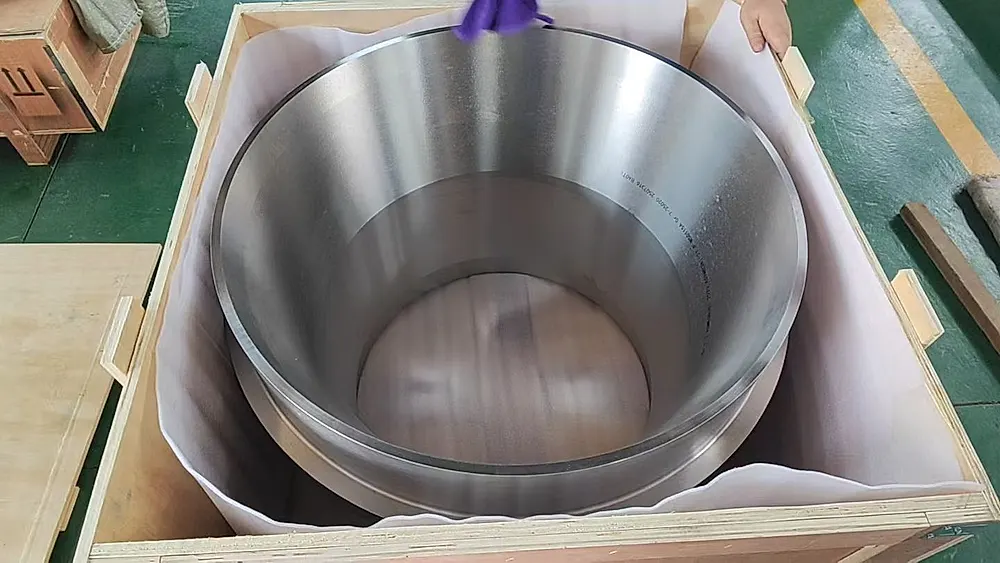
Aerospace Tier 1 forging capacity is not a parallel universe. Chemical, marine and medical titanium forgings have always shared the same heavy hydraulic press lines as aerospace. Safran’s expansion effectively assigns a swathe of qualified forging capacity in northern Paris and central France to civil large parts, and non-aerospace titanium forging demand either queues longer or spills over to Chinese Tier 2 mills and qualified shops in India and Türkiye.
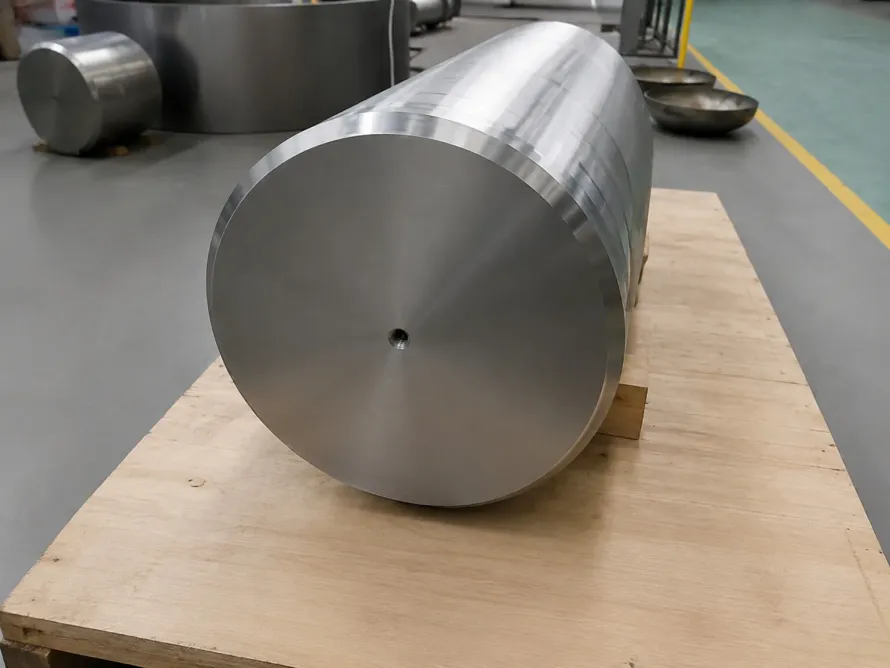
Gr.2 commercially pure titanium forgings and Gr.5 (Ti-6Al-4V) titanium forgings from Chinese mills like Baoti Group and Western Superconducting already have stable Western downstream channels in chemical reactors, desalination heat exchangers, and medical implants (ISO 13485 route). The Safran event does not change those channels’ compliance bar, but it does raise utilization of the China channel as a procurement category for non-aerospace titanium forgings.
Bottom Line: This Is Not a Single Event — It’s a Procurement Map Redrawn
The substance of Safran’s April double move is folding two long-cycle links — feedstock and forging — into a Western/US-Japan closed loop simultaneously, redrawing the procurement map. Short term (2026-2028), Western titanium forging supply tightens. Medium term (2028-2030), once Ecotitanium and Gennevilliers both come online, supply normalizes — but the pricing center moves up: Ecotitanium recycled-route titanium ingot combined with Western heavy-tonnage forging carries a systemic premium over VSMPO long-contract pricing, and the aerospace-grade premium over commercial-grade titanium continues to widen (industry consensus).
For a Chinese B2B titanium supplier like Titanium Seller, this is a window of “aerospace compliance channels keep tightening + non-aerospace channels expand.” Three things worth tracking next:
- Ecotitanium’s 2026-2028 ramp data — determines whether Safran’s short-term decoupling from VSMPO is real
- Toho Titanium / Osaka Titanium actual tonnage to Safran — public language is “partner” only; no contract tonnage disclosed
- Baoti / Western Superconducting compliance progress in European aerospace Tier 2 — AS9100 + NADCAP runs an 18-36 month review window
Related Products & Services
- Titanium Forgings (Gr.1/Gr.2/Gr.5/Gr.7/Gr.12) — chemical, marine and medical compliance routes
- Titanium Bar, Plate and Tube — full ASTM B265/B348/B348M coverage
- Contract Forging and Machining Services — Tier 2/3 non-aerospace fast-slot booking
- Titanium Industry News — continuous tracking of structural shifts in the Western titanium supply chain
FAQ
# What type of titanium products did Safran complete the transition for?
# What is Ecotitanium's process route, and is its capacity enough for Safran's combined civil and military demand?
# The 30,000-ton Gennevilliers press only comes online in 2029. How does Safran bridge the three-year gap?
# What does this mean for Chinese titanium forging exports?
# Where does VSMPO-AVISMA's freed-up volume go after losing Safran?
# What practical advice for buyers?
Need this material? Get a factory-direct quote.