Type something to search...
Amaero TN Plant's May Triple-Incident Shutdown: What a Real Q3 Cut to US-Domestic AM Titanium Powder Actually Means
  • By Jason/ On 28 May, 2026

Amaero TN Plant's May Triple-Incident Shutdown: What a Real Q3 Cut to US-Domestic AM Titanium Powder Actually Means

May 13 → 16 → 26: Three Events at Amaero’s Tennessee Plant

In May 2026, Amaero’s Cleveland TN titanium and refractory powder plant logged three back-to-back incidents. May 13: a small deflagration, two employees with burn injuries, no equipment damage. May 16: a small fire alarm. May 26: during scheduled dust-hazard remediation, a small controlled fire in a PVC exhaust duct, no injuries and no equipment loss.

On May 27, an Amaero investor notice made it explicit: the plant is paused and undergoing a third-party safety review, with the company stating customer-side inventory should absorb the in-quarter revenue impact.

A single event can be written off as bad luck. Three events plus a voluntary stand-down plus third-party intervention is a different animal. This isn’t the “plant can restart soon” story that followed May 13 — this is the “plant has called itself down” story.

For B2B titanium powder buyers, the real question isn’t what Amaero’s safety review concludes. It’s that the Q3 gap in US-domestic AM titanium powder supply is real, immediate, and calculable.

The Q3 Gap: It’s Not Tonnage, It’s Requalification

On the AM powder side, Amaero is one of the handful of US-based atomization and commercial powder sources, alongside Carpenter Powder Products, Praxair Surface Technologies and AP&C (a GE subsidiary). The mainstream product is Gr.5 and Gr.23 ELI spherical powder, 15–45 μm cut, serving LPBF (laser powder bed fusion) and DED (directed energy deposition) customers.

Amaero hasn’t disclosed annual capacity figures. Even at an industry-estimate range of 200–500 tpa, that’s under 10–15% of US-domestic supply. The question isn’t where the other 85–90% comes from — it’s how long the customer-side switch takes.

New-supplier lot qualification carries different requirements across AS9100, IATF 16949 and ISO 13485, typically 6–12 weeks. An LPBF service bureau running aerospace plus medical plus defense work has to run each line through each new powder source separately. The three audits can move in parallel, but first-article inspection, build-to-build comparison (same machine, same parameters, same build envelope, different powder source) and final part-performance testing cannot be skipped.

The conclusion is clean. The Q3 bottleneck isn’t Amaero’s tonnage — it’s the AS9100 requalification cycle stacking customers into a queue.
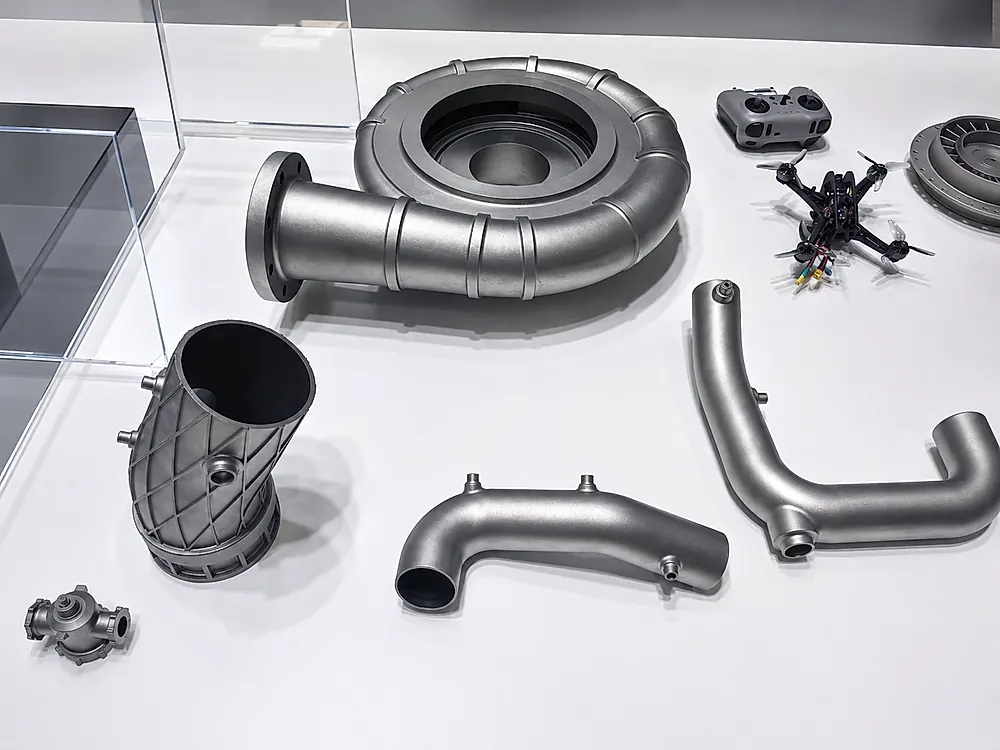
Metal AM LPBF titanium parts: aerospace turbine housings, fuel manifolds, lightweight Ti-6Al-4V printed components

Four Customer-Side Problem Buckets

1. Open PO, no delivery. Customers need a non-impact statement from Amaero defining the affected lot boundary, while simultaneously kicking off backup-source onboarding. Many supply contracts carry force-majeure clauses, but downstream delivery commitments don’t move with them.

2. Q3 prototype or FAI programs. First-article inspection has to be rerun. An LPBF FAI typically covers X-Y-Z tensile coupons, microstructure, porosity by CT, plus O/N/H chemistry retesting. A complete FAI runs 4–6 weeks; including queue, an 8–12 week slip on Q3 programs is normal.

3. Serial-production customers. A short-term bridge supplier is required, but bridge powder versus original powder demands build-to-build comparison. Variables include sphericity, particle size distribution (PSD), flowability (Hall flow, Carney flow), apparent density, tap density, and oxygen/nitrogen/hydrogen content. Any variable drifting more than ±10% from the original powder can trigger as-built part-performance validation. This is the customer type least able to absorb the cost.

4. Defense, ITAR, DPAS customers. Tougher. The non-Amaero alternative still has to satisfy DFARS 252.225-7008 (specialty metals sourcing) and DPAS priority requirements. The candidate pool shrinks further to ATI Powder Metals, AP&C, Carpenter and a handful of others. Defense ITAR programs cannot route through the China compliance channel in Q3.

View from Titanium Valley: Where the Asia-Compliant Channel Actually Stands

Worth saying plainly: over the past 90 days, the Asia-compliant China channel has logged zero Western AM customer inquiries for non-US-domestic titanium powder.

Not because the channel is closed. AS9100, ISO 13485 and ASTM F3001 (LPBF Ti-6Al-4V ELI standard) are all in place at certified plants in Baoji. Gr.23 ELI spherical powder (15–45 μm, O ≤ 1300 ppm) and Gr.5 AM powder via both PREP and EIGA routes are running. The behavioral reality is the constraint: over the past 12 months, Western AM inquiry flow has stayed concentrated in the AP&C / Carpenter / Praxair / Amaero / Tekna (Canada) North American and Canadian footprint.

The Amaero TN shutdown is the possible starting point for that pattern to break. The next 60–90 days are the observation window:

  • Whether non-ITAR commercial aerospace Tier-2, commercial AM service bureaus or medical implant OEMs initiate “Asia-compliant channel qualification audits”
  • Whether inquiry volume stays at sample scale (<10 kg) or jumps to prototype scale (50–100 kg)
  • Whether “permanent backup source” terms appear (dual-supplier strategy written into the PO)

Current Gr.23 ELI / Gr.5 AM spherical powder spot inventory totals roughly 10 tonnes. That maps to roughly: 1–2 LPBF service bureaus’ steady-state consumption for 3–6 months, or 5–10 medical OEM prototype programs’ small-batch slices. Enough to bridge, not enough to anchor.

Powder vs Bar: The Other Upstream Route

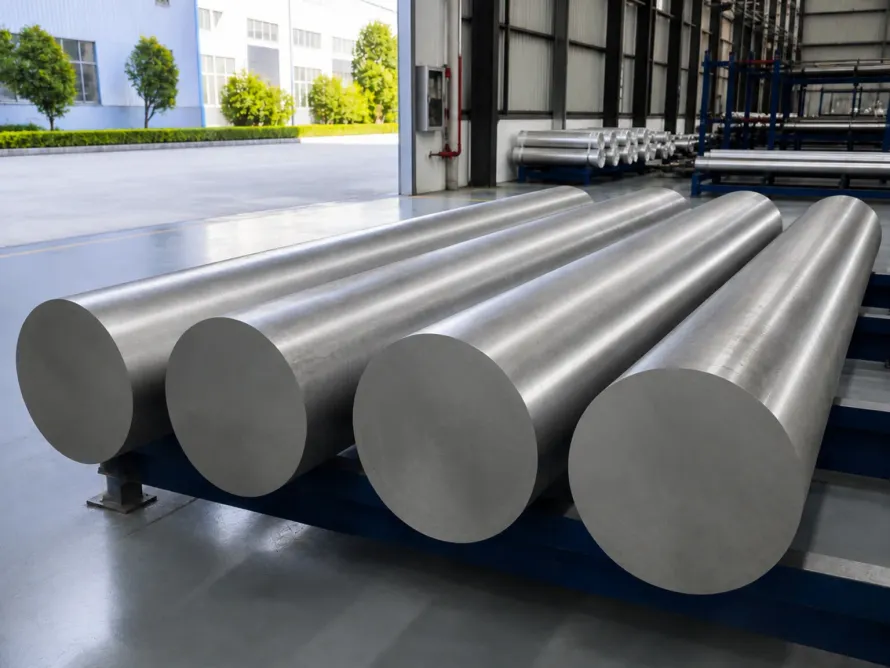
Worth flagging that the AM powder bottleneck doesn’t sit only at finished powder. Many atomization plants (PREP, EIGA, plasma atomization) rely on Ti-6Al-4V bar stock as feedstock (diameter ≤ 70 mm, VAR (vacuum arc remelt) grade, O ≤ 1500 ppm for ELI powder feed).

During the Amaero TN shutdown, even if other North American atomization plants want to ramp, bar-side lead time is 12–16 weeks of queue (VAR furnace and downstream hot-working capacity is constrained). Chinese Gr.5 ELI bar has a compliance lane on the atomization upstream side: Gr.5 titanium bar spot inventory is roughly 5 tonnes, available as emergency upstream feed for non-ITAR atomization plants.

Who the China Compliance Channel Fits, Who It Doesn’t

Fits (qualification can launch in the 60–90 day window):

  • Commercial aerospace Tier-2 LPBF service bureaus (not direct Boeing / Airbus LTAs)
  • Medical implant OEMs at R&D and prototype stages
  • Industrial AM applications (chemical valve components, heat-exchanger prototypes, marine parts)
  • University and research-institute AM labs

Doesn’t fit (cannot be solved inside Q3):

  • ITAR / DFARS 252.225-7008 defense programs
  • Tier-1 primary structure serial production
  • Boeing / Airbus direct purchase lines already on five-year LTA (long-term agreement) contracts

Buyer Playbook

Customer TypeQ3 ActionTimeline
Current Amaero customers (non-ITAR)Request switchover schedule; launch 1–2 backup-source audits in parallel4–6 weeks to onboard
Q3 FAI / prototype programsBackup-source qualification; accept 8–12 week FAI slip8–12 weeks
Serial productionBridge supplier + build-to-build comparison6–10 weeks
ITAR / DFARS programsWait for Amaero restart; strengthen AP&C / Carpenter ties12–16 weeks
R&D / small-volume medicalLaunch Asia-compliant channel audit; Chinese AM powder small-sample build6–10 weeks

Conclusion: Three Signals Stacked > Any Single Event

Taken alone, none of the May 13, 16 or 26 events is a heavyweight on its own. But back-to-back occurrence + voluntary shutdown + third-party intervention stacked together shift the “stable assumption” underneath the Western AM titanium powder supply chain.

For B2B buyers, Q3 isn’t about waiting for the Amaero restart announcement. Q3 is the window to move “dual-supplier strategy” off the slide deck and into the PO. The Asia-compliant channel is one of the optional paths — not the only one, and it won’t solve ITAR — but for non-ITAR commercial AM, medical, and industrial R&D and prototype work, this is the first real demand opening in the past 12 months.


About: Titanium Seller is a supply chain platform based in Baoji, China’s Titanium Valley, serving aerospace, chemical, marine, medical and hydrogen-energy buyers worldwide.

FAQ

# What exactly were the three Amaero TN events?
Per the company's public disclosures: a small deflagration on May 13 that left two employees with burn injuries treated medically and no equipment damage; a small fire alarm on May 16 (details not previously released); and on May 26, during planned dust-hazard remediation work, a small controlled fire in a PVC exhaust duct, no injuries and no equipment loss. Three events in a single month, however, triggered Amaero to pause the titanium powder line and submit to a third-party safety review. The company also stated inventory should absorb the in-quarter revenue impact. The signal here is different from a single event — it's the stacking of three: back-to-back occurrence, voluntary shutdown, and third-party intervention.
# How big is the real Q3 gap in US AM titanium powder?
Amaero hasn't disclosed annual capacity numbers publicly, but the Cleveland TN plant is one of the few US-based atomization plus AM powder sources (Gr.5 and Gr.23 ELI spherical powder, 15–45 μm mainstream cut), sitting alongside Carpenter Powder Products, Praxair Surface Technologies and AP&C (GE). During the shutdown, customers must redirect to IperionX (HAMR powder still ramping, 200 tpa target by end-2026, limited Q3 volume), AP&C and Carpenter — every move requires lot requalification under AS9100 or IATF 16949, meaning first-article inspection plus process-equivalency validation. The real bottleneck isn't tonnage, it's the requalification cycle — a new lot at an AS9100 customer typically takes 6–12 weeks, and only a fraction of customers can close that inside Q3.
# What specific operating problems do AM customers actually face?
Four buckets: (1) Open POs with no delivery — the supplier must issue a non-impact statement and an inventory-switchover schedule. (2) Q3 prototype or FAI programs — first-article qualification must be repeated, typically pushing programs out 8–12 weeks. (3) Customers running serial production — they need a short-term bridge supplier, but bridge powder versus original powder requires build-to-build comparison (sphericity, PSD, O/N content, flowability); without it the risk lands on as-built part performance. (4) Defense and ITAR customers — far more complex; the alternative source must still meet DPAS and FAR, which narrows the candidate pool further.
# Can the Asia-compliant China channel cut into this window?
Technically yes, procedurally slow. China's Baoti, Western Titanium and GRINM-Advanced Materials already operate AS9100 plus ISO 13485 certified plants producing Gr.5 and Gr.23 ELI spherical titanium powder (PREP or EIGA route), 15–45 μm mainstream cut, with O content steady at ≤ 1300 ppm. ITAR and DPAS programs remain closed; what's open is commercial aerospace Tier-2, commercial AM service bureaus, medical implant OEMs and similar non-ITAR work. Even then, the customer-side lot qualification on first powder typically runs 6–10 weeks. Plainly stated: in the past 90 days, our Asia-compliant channel has not received Western AM customer inquiries for non-US-domestic titanium powder — but the window opened by the Amaero TN shutdown is the most-worth-watching lane for the next 60–90 days.
# What's the practical playbook for buyers?
(1) Current Amaero customers: immediately request the inventory-switchover schedule and start alternate-source onboarding. (2) AM service bureaus or medical OEMs with Q3 FAI or prototype work: kick off backup-source qualification in parallel — don't wait for restart. (3) Serial-production customers: request a short-term bridge supplier plus build-to-build comparison. (4) Non-ITAR commercial customers: an Asia-compliant China channel qualification audit can be initiated. Titanium Seller currently holds roughly 10 tonnes of combined Gr.23 ELI / Gr.5 AM spherical titanium powder spot inventory, and can pair it with titanium CNC machining services and no-MOQ low-volume sample orders, plus titanium bar feedstock for upstream atomization.

Need this material? Get a factory-direct quote.
Request a Quote
Tags

Related Posts

Industry News
Aerospace Orders Are Turning Titanium Procurement Into a Qualification Chain
By Jason/ On 06 May, 2026

Aerospace Orders Are Turning Titanium Procurement Into a Qualification Chain

voestalpine's new aerospace order book is not only a contract story. It is a signal about how aircraft supply chains are valuing titanium products in 2026: not as isolated bars, sheets, tubes or forgings, but as qualified material packages tied to processing, inspection evidence, certification readiness and delivery control. The Austrian steel and technology group said on April 8 that its High Performance Metals Division had secured aerospace orders worth around EUR 1 billion over five years. The agreement includes Airbus-related business and covers high-performance materials, complex forged parts and global logistics. The company said its aerospace portfolio includes bars, sections, sheets, plates and special forged parts, with titanium alloy forgings produced at Kapfenberg and high-tech titanium sheets produced at Muerzzuschlag. It also described heat treatment, surface treatment, additive manufacturing processes and a global service network as part of the division's capability set (voestalpine).For titanium processors and export buyers, the important point is not that one European supplier won a large order. The more useful signal is that aerospace customers are buying a chain of assurance. A titanium plate, bar or forged billet has limited value in aircraft programs if it is separated from the route that proves chemistry, mechanical performance, heat history, inspection status, traceability and delivery reliability. Why the Order Matters Beyond One Supplier Aerospace demand remains strong enough to keep pressure on qualified material channels. Airbus reported 9,037 commercial aircraft in its order backlog at the end of March 2026, even as Q1 deliveries fell to 114 aircraft from 136 a year earlier. The company said it was continuing its ramp-up while navigating Pratt & Whitney engine shortages (Airbus). That pattern matters for titanium because aircraft production is constrained by qualified components and inputs, not only by final assembly demand. Reuters reported in February that aviation supply constraints had become a durable operating condition, with some component and material orders stretching toward a year. In the same report, a Future Metals executive said titanium and nickel tubing lead times were still 50 to 60 weeks, far above the pre-pandemic norm of about 20 weeks (Reuters via Investing.com). Even if some lead times have improved from 2025 extremes, the procurement lesson remains: qualified titanium availability is still a planning variable, especially for tubing, forgings and precision material forms that must enter certified assemblies. The raw-material side adds another layer. The U.S. Geological Survey's 2026 titanium summary said the United States did not produce titanium sponge metal in 2025 and estimated net import reliance for sponge at 100%. It also reported estimated 2025 sponge imports of 44,000 metric tons and noted that most titanium metal use was in aerospace applications, with the rest spread across armor, chemical processing, marine hardware, medical implants, power generation and other uses (USGS). That does not mean every titanium buyer faces an immediate shortage. It does mean downstream buyers should distinguish between feedstock exposure, mill product availability and qualified component readiness. These are related, but they are not the same risk. The New Buyer Framework: Five Gates, Not One Price For titanium bars, tubes, plates, sheets and forgings, aerospace procurement increasingly works through five gates:Gate What buyers need to verify Why it mattersMaterial form Bar, tube, plate, sheet, forging, billet, wire or powder route The form determines downstream machining, forming, inspection and qualification workProcess route Melting, rolling, forging, heat treatment, machining or additive manufacturing path Process history affects mechanical properties and repeatabilityInspection evidence Chemical tests, mechanical tests, ultrasonic or other non-destructive inspection, dimensional records Aerospace programs need proof, not only supplier claimsCertification package Standards, mill test certificates, traceability, conformity documents and customer-specific approvals Documentation failure can stop an otherwise usable materialDelivery resilience Lead time, logistics, inventory discipline and alternate qualified routes Aircraft programs need predictable flow, not spot availabilityThis framework is more practical than asking whether titanium prices are rising or falling. A lower raw-material price does not solve a missing NDI record. Available plate stock does not solve a forgings bottleneck. A fast quote does not replace customer-approved process history.Additive Manufacturing Reinforces the Same Lesson The same evidence-chain logic is visible in titanium additive manufacturing. On April 13, GKN Aerospace announced an $8.4 million TITAN-AM program with the U.S. Air Force Research Laboratory to industrialize Laser Metal Deposition with Wire for large titanium aerostructures. The program is not framed only around printing parts. It focuses on process industrialization, titanium material datasets, simulation, non-destructive inspection techniques and component demonstration (GKN Aerospace; see our earlier read on TITAN-AM and the aerospace titanium qualification picture). That detail is important for traditional titanium product suppliers. Wire-fed additive manufacturing does not simply replace forged or machined products overnight. It adds another qualified route that still depends on material data, inspection methods and customer confidence. For some structural components, additive routes may reduce waste or shorten specific process chains. For many other applications, forged billet, rolled plate, tube or machined bar stock will remain the practical route. In both cases, buyers are rewarding suppliers that can explain the process route and prove repeatability. What Export Titanium Suppliers Should Take From This For export suppliers of titanium bars, tubes, plates, sheets and forgings, the commercial opportunity is not to imitate the scale of voestalpine's aerospace business. Most suppliers will not compete directly for integrated aircraft-program packages. The useful takeaway is narrower and more actionable: serious buyers are screening for evidence maturity. A supplier that sells titanium tubes into heat exchangers, plates into chemical equipment, bars into machined parts or forgings into aerospace-adjacent applications can strengthen its position by making the evidence chain easier to inspect. That means clearer grade control across Gr.1/Gr.2/Gr.5/Gr.7/Gr.12 and Gr.23 grades, more disciplined heat and batch traceability, test records that match the buyer's standard, transparent processing limits, and realistic lead-time communication. The same applies outside aerospace. Medical, chemical processing and energy buyers may not have the same program structure as Airbus suppliers, but they often care about the same titanium properties: corrosion resistance, strength-to-weight ratio, fatigue behavior, cleanliness, dimensional stability and documented compliance. When raw material supply is globally concentrated and qualified processing capacity is uneven, documentation becomes part of the product. The defensible conclusion is simple: aerospace orders are not just pulling more titanium through the system. They are pulling titanium through a more demanding qualification chain. Suppliers that can connect product form, process route, inspection evidence, certification and delivery discipline will be easier for buyers to evaluate. Suppliers that only describe titanium as available stock will look less prepared for the procurement reality now shaping high-value titanium demand.Related Products & ServicesTitanium forgings — Gr.1/Gr.2/Gr.5/Gr.7/Gr.12, AMS 4928 / ASTM B381 channels Titanium tubes — heat exchanger and aerospace-adjacent tubing with traceable mill certs Titanium sheets & plates — chemical, marine and structural plate stock Titanium bar / rod — ASTM B348 / B381 with batch traceability Titanium wire — feedstock-grade wire for AM and welding routes Special titanium alloys (Gr.5 / Gr.23 / Ti-6Al-4V ELI) — aerospace and medical-grade reference Contract machining services — finish machining, dimensional verification and inspection-friendly delivery Titanium industry news — ongoing tracking of aerospace titanium qualification, procurement and supply-chain shifts

Industry News
ATI's South Carolina Mill Goes Live as Airbus Doubles Its Contract: Phase Two of Western Titanium De-Russification
By Jason/ On 26 May, 2026

ATI's South Carolina Mill Goes Live as Airbus Doubles Its Contract: Phase Two of Western Titanium De-Russification

ATI's South Carolina Mill Starts Up in May, Airbus Doubles the LTA — Phase Two of Western Titanium De-Russification Is On In May 2026, Allegheny Technologies Inc. (ATI) brought its new specialty titanium sheet mill in South Carolina into production. In the same week, Airbus disclosed that it had doubled its long-term agreement (LTA) volume with ATI, weighted toward Ti-6Al-4V aerospace sheet. This is not a coincidence. It is Phase Two of the Western titanium sheet supply chain's de-Russification. Phase One was the European procurement clear-out. On April 21, Safran announced it had completed its non-Russian titanium transition for forgings, moving billet and landing-gear forgings entirely from VSMPO-AVISMA to Ecotitanium plus its Japanese and US partners. Phase Two is the US capacity side filling in: ATI brings new aerospace sheet capacity online, and Airbus pins down the matching LTA share. Capacity-side moves are slow. Safran's transition was contract reshuffling and could close overnight. ATI's mill is a greenfield ramp — 18 to 24 months minimum. The interval between start-up and full rate is the tightest window the market will see. The US Capacity-Side Fill Is an 18-24-Month Ramp Curve The South Carolina mill is positioned for specialty titanium sheet — AMS 4911 (Gr.5 annealed sheet), AMS 4901 (Gr.2 CP sheet), AMS 4915 (Gr.5 STA sheet) and similar mainline aerospace grades. End uses are fuselage skin, firewalls, engine nacelles and center-wing-box skin parts. Aerospace sheet mill ramps have a rhythm. Year one runs small batches through first-article inspection (FAI) and customer system audits; year two is when steady tonnage starts. Boeing and Airbus supplier qualification runs through NADCAP AC7110/2 (chemical processing) plus AC7114 (NDT) plus AS9100D system audits, and every material grade has to run its own PPAP. The conclusion is clean. Through all of 2026 and the first half of 2027, Western sheet supply additions are limited. Real easing waits until 2028, when the new mill reaches steady tonnage, paired with Safran's €150M Gennevilliers press starting up in 2029. The two capacity curves only arrive together at that point.What Doubling ATI Really Means for Airbus: a Key Step in Replacing VSMPO Airbus did not disclose the doubled tonnage. The trade reading is that the new volume sits in the annual LTA framework for Ti-6Al-4V aerospace sheet and bar. Airbus has admitted in recent disclosures that Russian titanium still accounts for roughly 20% of its supply and is being drawn down. This is a different curve from Boeing's, which closed out Russian titanium back in 2022. Airbus's slower path comes down to one structural fact: Europe has no aerospace-grade titanium smelter of its own. Aubert & Duval's Ecotitanium handles titanium scrap recycling, but that is it. In the near term Airbus has to push VSMPO's vacated share onto the US (ATI/TIMET) and Japan (Toho Titanium, Osaka Titanium). Doubling the ATI book is the key step in that transfer. For Airbus, de-Russification isn't a PR exercise — it's capacity reservation. LTAs are multi-year contracts, and doubling them means Airbus has effectively locked in the matching ATI sheet tonnage for the 2027-2030 cycle. The takeaway for everyone else: through 2026-2028, Airbus sheet purchasing sits ahead of every non-aerospace buyer in the queue. ATI and TIMET spot allocations will not loosen. The Transition Window: Tier-2 and MRO Channels Open Up Primary-structure demand is locked into LTAs, but the wider market still has gaps. They sit with Tier-2/3 sub-contractors and MRO. Fuselage sub-assemblers, nacelle shops and auxiliary-system shops (APUs, hydraulic plumbing, firewall assemblies) form the Tier-2 layer. Line maintenance, module overhaul and modification-life extension (MLE) make up MRO. Both buy on spot orders and short-term contracts, not LTAs. When ATI and TIMET shift their sheet mix toward Boeing and Airbus LTAs, Tier-2 and MRO will see real spot shortages in Gr.5 titanium sheet, Gr.5 titanium bar and titanium forgings. Categories that compliant Chinese channels can carry through 2026-2028:Chemical and marine adjacencies (ASTM B265 Gr.2/Gr.7, B338 Gr.2 welded titanium tube): non-aerospace but consuming the same sheet and tube downstream. Medical implant adjacencies (ASTM F136 Gr.23 ELI): a separate certification path — Baoji and Western Titanium already hold ISO 13485. Tier-2 non-critical parts (engine bay interior trim, APU covers, outer firewall skins): secondary parts within an AS9100D system, with shorter audit cycles than primary structure. MRO overhaul parts (Gr.2 CP titanium and Gr.5 repair plate for line work): MRO shops typically self-qualify suppliers and accept mill cert plus lot traceability.View from Titanium Valley: Drawing-Based Forging RFQs from Europe Are Real Over the last 90 days, one new pattern has shown up in our Baoji inquiry queue: European buyers walking in with titanium forging drawings and asking about drawing-based custom forging. Nothing has closed yet — these are still in discussion. But the inquiry itself is the signal. Twelve months ago these RFQs did not exist. European Tier-2 buyers were still moving through VSMPO plus Aubert & Duval, asking supplier qualification questions, not channel questions. Now they ask "can the China channel make this forging to my drawing, and what's your lead time?" — a direct behavioral mapping of Phase Two de-Russification. On the supply side, the numbers are tightening too. Current AMS 4911 / 4928 / 4965 stock totals roughly 5 tonnes — enough for one or two MRO medium-batch orders. If the Airbus-doubles-ATI signal propagates through Tier-2, the next 60 days of Gr.5 titanium sheet spot may tighten further. Sponge Cost-Side Reference Asian mill spot prices on titanium sponge (current band):Grade Mainline mill-delivered range NotesGrade 0 $7.4 – 7.6 / kg Aerospace and high-end medicalGrade 1 $7.1 – 7.4 / kg Premium chemical and medicalGrade 2 $6.7 – 6.9 / kg Industrial and general chemicalThese are Asian mill-delivered prices, not Western landed. Their reference value: Asian-side raw-material cost is relatively stable. What's actually tight on the Western side is bottleneck capacity across melting, rolling and forging — not sponge feedstock. That means the 2026-2027 spread on Gr.5 titanium sheet and Gr.5 titanium forgings is set by Western midstream capacity, not by sponge volatility. What Buyers Should Actually Do Tier-1 and engine OEMs: lock in 2026-2027 annual LTAs. Do not bet on a price retreat. The ATI ramp plus the Airbus doubling will squeeze existing capacity at the same time. Western spot will not loosen. Tier-2/3 sub-contractors: bring compliant Chinese channels into the mix. Aerospace secondary parts go through compliant Chinese mills inside the AS9100D framework; chemical and marine adjacencies go via ASTM B265 / B348. Priority categories are Gr.5 titanium sheet and titanium bar. MRO: build overhaul-part inventory to 12 months. The MRO pain point is one delayed batch derailing an entire line-maintenance schedule. Through the transition window, 1.5x to 2x safety stock is cheaper than spot negotiation. Chemical, marine and medical buyers: this window is good news for you. With aerospace tightening Gr.5, Gr.2 / Gr.7 / Gr.23 ELI supply has actually loosened and bargaining position has improved. Consolidate R&D and small-batch orders through titanium CNC machining and the no-minimum-order-quantity channel. Conclusion: The Real Cadence of Phase Two De-Russification ATI starting up in May plus Airbus doubling its LTA equals Phase Two of Western titanium sheet de-Russification — under way now. But the 18-24-month ramp means the 2026-2027 transition window will stay tight. Real easing waits for ATI's full ramp in 2028, paired with Safran's Gennevilliers press in 2029. The opportunities inside that window belong to Tier-2/3 and MRO buyers — and to any supplier who can provide a compliant China channel to share the load. Related Products & ServicesService → Titanium CNC Machining — drawing-based forging inquiries from Europe are now arriving; 5-axis CNC and prototype-from-drawing in 4-6 weeks. Product → Gr.5 Titanium Sheet (AMS 4911 etc.) — roughly 5 tonnes in stock, covering Tier-2 and MRO short-term demand. Product → Gr.5 Titanium Bar (AMS 4928 etc.) — standard sizes for Tier-2 sub-contractors and MRO repair work, small-lot splits available.Related ArticlesSafran Completes Non-Russian Titanium Transition in April (De-Russification Phase One) F-35 Dual Contract Awards in April 2026 — Structural Upshift in US Military Titanium Forging Demand VSMPO Capacity Collapse from 32k to 17k Tonnes — Global Aerospace De-Russification RebalanceAbout: Titanium Seller is a supply chain platform based in Baoji, China's Titanium Valley, serving aerospace, chemical, marine and medical buyers worldwide.

Industry News
PEM Titanium Bipolar Plate Coating Wars: Why Brush-Sinter Hasn't Been Killed by PVD
By Jason/ On 03 May, 2026

PEM Titanium Bipolar Plate Coating Wars: Why Brush-Sinter Hasn't Been Killed by PVD

The coating side of the PEM (proton exchange membrane) titanium bipolar plate threw off a couple of "advanced tech crushes legacy process" signals this spring. Umicore × Ionbond rolled out the VICA900 double-sided PVD platinum production platform at H2 & FC EXPO Tokyo, rated 10 million plates per year, with nanoscale platinum film (10–50 nm) replacing full-thickness Pt (~1 μm) and an estimated 70–90% cut in platinum loading. Around the same time, BIS Research projected the PEM iridium catalyst market growing from USD 26.5 million in 2024 to USD 198 million by 2034 — a 32.5% CAGR. Read straight, the story says PVD takes everything and brush coating + sintering gets retired. But the actual downstream qualification database in spring 2026 shows both routes expanding their customer base — they're just covering completely different customer types. That's the fork the market-report headlines paper over. What Brush-Sinter Actually Is, and Where the Cost SitsThe process: a paste or ink loaded with precious metal (Pt / Ir / Au) is brushed, screen-printed or sprayed onto the titanium substrate, then sintered at high temperature (typically 400–800 °C) into a dense conductive coating. The cost structure is nothing like PVD:CapEx: brush / screen-print equipment plus sintering furnace — line-level investment in the low millions of RMB PVD CapEx: vacuum chamber, plasma source, multi-target modules — line-level investment in the tens of millions of RMB Platinum loading (thick-film route): 1–3 μm, high per-plate Pt cost PVD platinum loading (thin-film route): 10–50 nm, low per-plate Pt cost Throughput: brush-sinter line — 5,000–20,000 plates per day; PVD line — 30,000–100,000 plates per daySpread the numbers flat and PVD's per-plate cost advantage at high volume is real and decisive — that's the logic behind Umicore × Ionbond's 10-million-plate-per-year line. But the market isn't only high-volume:100 MW+ orders (Plug Sines, ITM Lingen Phase 2) → PVD wins on economics 1–10 MW mid-size orders (Nel containerized, Chinese mid-tier electrolyzer OEMs) → brush-sinter has a faster payback < 1 MW samples / R&D / lab orders → brush-sinter is essentially the only viable routeThat's why "PVD line goes live" and "brush-sinter customer base expands" both happen in 2026. The two routes serve different slices of the PEM market, not the same one. The Five Variables Behind Coating Choice Picking a coating route looks like an engineering decision. It's actually driven by five variables at once: Variable 1: order size per batch. Under 10,000 plates per batch favors brush-sinter; over 100,000 plates favors PVD. The middle band can go either way depending on capacity match. Variable 2: precious-metal price direction. When platinum spikes, PVD's thin-film route (an order of magnitude less Pt) is the hedge. When platinum is stable, brush-sinter's CapEx-depreciation advantage shows through. Variable 3: customer tolerance for coating uniformity. PVD coatings hold within ±5%; brush-sinter is typically ±10–15%. Customers needing ±5% go PVD; customers tolerating ±15% go brush-sinter. The uniformity gap drives a stack-life gap, but the price gap is bigger — the customer is choosing between life and price. Variable 4: precious-metal switching flexibility. A brush-sinter line can switch between Pt paste, Ir paste and Au paste on the same equipment. PVD requires changing targets and re-tuning parameters to switch coating metals. When iridium supply tightens, brush-sinter's flexibility becomes the advantage — quick pivot to gold coating or Pt-Au mixed coating. Variable 5: regional compliance preference. European and US customers lean toward PVD, treating it as "advanced process." Asian customers lean toward brush-sinter, treating it as "mature process." A real cultural-layer constraint, not a technical one. Cross these five variables and you can see why both routes expanded simultaneously in spring 2026: PVD is grabbing the European/US 100 MW+ end, brush-sinter is grabbing the Asian 1–10 MW mid-size end plus the global R&D sample end. Neither side disappears. Where Titanium Substrate Mills Sit in This Back to the substrate view. Whether a titanium foil or plate mill gets into the PEM bipolar-plate supply chain isn't only about substrate spec — it's about whether the mill can pair with at least two different coating routes. A mill paired only with PVD: serves the European/US 100 MW+ end. Customer qualification cycles run 18–24 months and order flow is volatile. A mill paired only with brush-sinter: serves Asian mid-size customers and global R&D samples. Tickets are smaller, but order frequency is denser. A mill paired across 4–6 coating routes: covers four to six times the surface area of a single-route mill. That is the real fork in titanium supply chain segmentation through 2026–2027. Coating-process portfolio is itself a supply-side moat — not a technology barrier, but a diversity-of-customer-qualification-database barrier. Matching Signals from BaojiOur PEM titanium bipolar plate snapshot from Baoji (China's Titanium Valley), measured early May 2026:Substrate on the shelf: Gr.1 / Gr.2 industrial pure titanium foil, 0.02–0.3 mm thick × max width 600 mm+, roughly 2 tons movable from stock through our port Coating partners: 2 plants, process portfolio covering 6 routes — PVD Pt, electroplated Pt-Au, paste coating (brush-sinter), electroplated Pt, gold coating, PVD TiN Electrolyzer RFQs this month: 2, in sample / small-batch stage. One running PVD Pt, the other running brush-sinter Pt-Au mixed coating — exactly mapping to the five-variable customer split aboveHonest read: 2 coating partners is not a big number, but the route coverage (6 processes) is unusual. For hydrogen customers running qualification, "how many coating routes can the substrate mill pair with" is a scarcer metric than "what's the mill's annual capacity." A Checklist for Electrolyzer OEMs and Materials Engineers If you're picking the coating route for 2026–2028 PEM bipolar plates, three moves are worth making now: First, replace single-coating-route lock-in with parallel evaluation of two routes. Pt PVD is the cost play for high-volume production; brush-sinter is the elasticity play for mid-size batches and precious-metal switching. Customers qualified on both routes don't get pinned when iridium or platinum prices move in 2027. Second, treat "how many coating routes the substrate mill covers" as a scoring bonus on supplier qualification. A mill covering more than four routes can hand you multiple proposed coating designs and multiple sample versions during the spec-discussion phase — compressing the total spec-plus-qualification window by 30–50%. Use the titanium foil product page spec match as a baseline filter. Third, re-price the small-batch flexibility of brush-sinter. The market keeps treating brush-sinter as "old low-end process." On 1–10 MW mid-size orders and on R&D samples, its payback is dramatically faster than PVD. Pair that with a no-MOQ sample channel and customers who keep brush-sinter on the AVL get noticeably more supply-chain negotiating room through 2026–2027. The question worth tracking over the next 12 months isn't "will PVD replace brush-sinter" — the answer there is "yes at high volume, no at mid-low volume." The question is how the share of brush-sinter in the AVL of major PEM OEMs shifts. That curve decides the real share of mid-size order titanium mills through 2027–2030. Related Products & ServicesService → No Minimum Order Quantity Sourcing — early-stage PEM 50–200 kg brush-sinter sample qualification channel, single-batch Product → Titanium Foils — Gr.1 / Gr.2 industrial pure titanium foil 0.02–0.3 mm × 600 mm+ wide coil from stock Product → Titanium Sheets and Plates — Gr.1 thick-plate spec for PEM bipolar platesAbout: Titanium Seller is a supply chain platform based in Baoji, China's Titanium Valley.

Industry News
CATL Debuts Titanium Alloy Battery Case: Mass-Market EVs Hit a Titanium Inflection Point
By Jason/ On 28 Apr, 2026

CATL Debuts Titanium Alloy Battery Case: Mass-Market EVs Hit a Titanium Inflection Point

At its April 22 launch event, CATL rolled out six battery technologies. One sat quietly under the headline noise: an aerospace-grade titanium alloy battery case. The official numbers: wall thickness reduced 60%, weight down 30%, strength tripled, pack-level energy density lifted by 20 Wh/kg. Paired with the Qilin Condensed 350 Wh/kg cell, total vehicle range hits 1,500 km. This is the first time titanium has appeared on the load-bearing parts list of a million-unit EV platform. The same week, Samsung Galaxy S26 Ultra and iPhone 17 Pro both walked away from titanium mid-frames and went back to Armor Aluminum. Two stories in opposite directions, in the same news cycle — that contrast deserves to be unpacked carefully. What it actually takes to put titanium into a battery caseCATL did not start from a Ti-6Al-4V forged billet. It started from commercially pure titanium (Gr.1/Gr.2) cold-rolled sheet, 0.3–0.8 mm thick, ≥1,000 mm wide. For the past decade, the titanium mill industry has filed that spec under "edge demand" — the volume customers were chemical processing, medical, and seawater desalination plate heat exchangers. Aerospace plate has always meant Ti-6Al-4V forged stock at ≥3 mm. Battery-grade thin sheet was a market too small to schedule a dedicated mill run. CATL's announcement just dragged that "edge demand" into the middle of the production curve. Three reasons. First, content per vehicle. A mid-size EV battery case rebuilt in 0.5 mm titanium sheet consumes 8–12 kg of titanium per car. Run that against China's 2025 EV output of roughly 12 million units — a 10% penetration rate equals 14,400 tonnes/year of titanium sheet demand. That single number is larger than China's entire titanium plate-and-strip export volume for last year, combined. Second, process constraints. EV-volume cadence requires the cold-rolled-and-annealed sheet to hold oxygen content below 0.18%, surface roughness Ra ≤0.4 μm, and yield ≥95% on wide coil (>1,200 mm). Public records suggest fewer than 10 mill lines worldwide can deliver this spec consistently. China runs 4–5 of them, concentrated in Baoji and Zunyi. Third, materials logic. CATL did not specify titanium for the optics. It specified titanium because it had to clear ballistic impact and nail penetration safety tests at the same time. A conventional aluminum case needs a 1.2 mm wall to pass the GB nail test; Gr.2 titanium clears it at 0.5 mm. Every cubic millimeter saved goes back to the cell stack. That is real energy-density arbitrage, not a press-release figure. Phones dropping titanium the same week — same logic, opposite sign The S26 Ultra and iPhone 17 Pro de-titaniumization looks like a contradiction. The logic underneath is identical. Phones optimize for thinness. Flagships are pushing from 8.2 mm down toward 7.5 mm. Titanium (4.51 g/cm³) becomes a liability versus aluminum (2.70 g/cm³) at that wall thickness — a 0.6 mm titanium frame is 67% heavier than aluminum, and the user feedback loop on hand-feel is measured in weeks. Armor Aluminum closes most of the bend-strength gap at roughly half the mass. EV battery cases optimize against a different test matrix: nail penetration, fire, crush, salt spray, 25-year service life. Across those, titanium's corrosion potential, strength-to-density ratio, and high-temperature creep resistance sit a full order of magnitude above aluminum. The intersection of specs is what decides which material wins. The phone intersection points to "light + thin." The EV intersection points to "safe + long-life." That distinction matters more than the recurring debate over whether titanium prices are up or down. The phone titanium market is a marginal market — small total volume, price-sensitive, frequent material swaps. The EV battery case is a structural market — once it locks into a vehicle platform, it stays for 3–5 years, and over time it migrates from flagship trims down into the mid-tier. Supply-side picture for CP titanium thin sheetIn our Baoji (China's Titanium Valley) spot inventory system, April 2026 stock of Gr.1/Gr.2 commercially pure titanium sheet (0.3–1.0 mm thick, ≥1,000 mm wide) sits at 30 tonnes. That number is not large by traditional market standards, but against an EV battery case demand curve, it means we can release a sample-batch run within two weeks. Over the past six months, RFQ frequency from power battery and ESS customers has stepped up noticeably. The RFQ profile is different from aerospace Tier 2 work — order sizes are modest (typically 200–2,000 kg), but once qualification clears, they convert into stable monthly repeat purchases. The pattern almost mirrors the evolution of copper foil and aluminum foil into the lithium-ion supply chain — heavy iteration up front, then the order book locks into a long-term industrial baseline. Another supply-side fact: fewer than 10 lines globally can produce 1.2–1.5 m wide Gr.2 coil. That capacity curve scales slowly because cold-mill roll width and annealing-furnace atmosphere control are 6–8 year capital-equipment cycles. CATL just handed every titanium sheet-and-strip producer a 3–5 year demand certainty signal. A checklist for buyers and materials engineers If you are scoping titanium procurement for H2 2026 through H1 2027, three actions belong at the top of the list. First, put Gr.1/Gr.2 titanium sheet on the battery case alternate-material list — even if your current production line is still running aluminum. Qualification cycles run 12–18 months ahead of the production decision. By the time the program manager decides to switch, sourcing the spec is already a bottleneck. Second, write "coil width ≥1,200 mm + oxygen content ≤0.18% + surface roughness Ra ≤0.4 μm" into the RFQ template as hard requirements. Asking generically for "Gr.2 titanium plate price" gets you a commodity quote. Asking for the spec set above is what gets you into the battery case supply chain. Third, treat spot availability as a decision-line item, not an afterthought. On our titanium sheet and plate and titanium foil lines, customers with spot access are submitting samples 3–4 weeks ahead of those waiting on futures runs. In a qualification race, that gap is first-mover advantage. The signal worth tracking over the next 12 months is not "which EVs put titanium in." It is "which 1.2 m wide cold-mill lines start booking battery-industry contracts." That data point will reflect titanium's true penetration into the EV stack earlier than any price index. Related Products & ServicesService → No Minimum Order Quantity Sourcing — sample/trial channel for early-stage battery case qualification work Product → Titanium Sheets and Plates — Gr.1/Gr.2 commercially pure cold-rolled sheet, ≥1,000 mm wide, in stock Product → Special Titanium Alloys — qualification path for the special grades EV safety testing demandsAbout: Titanium Seller is a supply chain platform based in Baoji, China's Titanium Valley.

Industry News
EU's 20th Sanctions Package Skips Titanium Again: The Airbus-Bureaucracy Double Lock
By Jason/ On 29 Apr, 2026

EU's 20th Sanctions Package Skips Titanium Again: The Airbus-Bureaucracy Double Lock

The EU adopted its 20th Russia sanctions package on April 23. Nickel, iron ore, unrefined and refined copper, and aluminum scrap — together more than €530M of trade — were folded into the prohibition list. Titanium was excluded again. The €213.5M annual flow of Russian titanium into the EU remains untouched. That makes four consecutive packages in which titanium has been quietly sidestepped. Pull the "why" apart and what you find is not a technical oversight — it is a double lock built from Airbus dependency and bureaucratic inertia. What four sanctions rounds of titanium evasion really tell usStart with the numbers. The EU currently imports roughly €213.5M of titanium per year from Russia, which translates at 2025 physical volumes into something on the order of 8,000-10,000 tonnes of sponge plus ingot. That is not a marginal stream — it is one of the core sources of flight-critical large-format Ti-6Al-4V forging stock feeding the Airbus airframe supply chain. VSMPO-Avisma's capability in oversized Gr.5 forgings is something no Western mill has fully replicated in the past 30 years. The 17th package (April 2025) was the round where titanium came closest to inclusion. Titanium sat in the working draft until the late stages, then was pulled with the rationale "insufficient short-term substitute supply." The 18th and 19th packages, passed in July and November 2025, both excluded titanium as well. The 20th — the package that just cleared on April 23 — sidestepped it once more. One detail worth noting: every metal that has been added to the list is one Europe can already self-supply through domestic or allied capacity. Nickel comes from Canada and Indonesia, iron ore from Brazil and Australia, copper from Chile and Peru, aluminum scrap circulates inside the EU. Titanium is not on that curve. EU-domestic primary sponge capacity is essentially zero. The largest non-Russian alternative is Japan — Toho Titanium and Osaka Titanium Technologies — but their combined annual capacity of 30,000-40,000 tonnes is already split to its limit between aerospace and semiconductor demand. There is no slack to absorb the 8,000-10,000 tonnes Russia would vacate. That is the structure of the lock: as long as Airbus treats large-format Ti-6Al-4V forgings as a platform-critical input, and as long as the Japanese mills have no near-term path to expand, the EU cannot politically absorb the airframe-line shutdown risk that cutting Russian titanium would create. The other half: bureaucratic inertia The second lock is procedural. The EU sanctions mechanism runs on unanimous member-state consent shaped by reverse industry lobbying — meaning every line item passes first through the internal modeling of national OEMs. For Germany, France, and the UK (BAE remains plugged into the European aerospace system), an Airbus production cut triggered by titanium starvation would propagate down through every Tier 2 and Tier 3 link: Rolls-Royce engine lines in the UK, Safran landing gear lines in France, Premium Aerotec airframe forging lines in Germany. All of them depend on a stable Gr.5 ingot rhythm. This is the "we know it doesn't add up but we can't unwind it short-term" deadlock. EU Commission officials have stated openly in recent months that "the titanium exemption no longer reflects market reality" — but those statements live at the rhetorical layer. Translating that consensus into actual sanctions text requires 18-24 months of stress-testing non-Russian alternatives. No European titanium producer is currently positioned to enter that pre-qualification list. Worth contrasting: the United States went the other way. The Section 232 sponge tariff exemption proposal — the "Securing America's Titanium Manufacturing Act" — is moving through Congress, propping up domestic supply through tax measures and DPA funding rather than direct prohibition of Russian material. Two paths reflect two institutional logics: the US pushes endogenous supply through industrial policy, the EU preserves the status quo through member-state bargaining. The window for Chinese, Japanese, and other Asian millsWhat does the 20th package's titanium carve-out mean for Asian mills? Short term, European Tier 1 and Tier 2 buyers have no immediate trigger to switch sources. Medium term, ESG and compliance pressure is moving down the chain quietly — many European OEMs' internal audit functions are already requiring Tier 2 forge shops to provide "non-Russian titanium" provenance documentation, even where external sanctions haven't yet bitten. What we are seeing on the ground in Baoji (China's Titanium Valley) is concrete: the mills we partner with already hold EN9100 / AS9100 aerospace quality system certifications. Direct export workflows into Europe are still being built out, but cargo flow into European end-users via Hong Kong / Singapore freight forwarder channels has been climbing steadily over the past six months. That is a more reliable progressive signal than any political statement — customers vote with their feet, ahead of the sanctions text. The qualification bottleneck is not product capability, it is EASA Form 1 and EN9100 documentary traceability. When European aerospace OEMs accept titanium they are not only checking ASTM B348 / AMS 4928 chemistry — they require an unbroken OEM-qualified audit chain at every heat number. Building that compliance vocabulary properly takes 12-18 months of system alignment. Mills that get this in place early will hold first-mover position when the EU's 21st or 22nd package finally folds titanium into the prohibition list — and that window will arrive — sometime in 2027. We currently hold roughly 50 tonnes of aerospace Ti-6Al-4V Gr.5 titanium rod and forging stock, in diameters Φ20-200 mm. Inquiry frequency from European-direction buyers (including indirect channels via intermediaries) has visibly stepped up this week. That curve doesn't need a formal EU sanctions trigger to start. It already has. Checklist for buyers and compliance officers If you are planning aerospace titanium procurement for 2026-2027, three things to do right now: First, lock "non-Russian titanium + complete heat-number traceability + EN9100/AS9100 qualification" into your RFQ template as a hard requirement. This is the compliance trajectory the EU will move from voluntary to mandatory over the next 12-24 months. Second, push your single-source share below 50%. Today, Russian + Japanese titanium combined still represents 70%+ of supply at most European Tier 2 forge shops. That is structurally fragile. Onboarding one qualified mill from each of Japan, China, and North America gives you redundancy when 2027 sanctions actually trigger — without an airframe line stoppage. Third, treat physical inventory availability as a qualification advantage. The real signal from the 20th package's titanium carve-out is "no near-term enforcement," but compliance audits will move first. Suppliers who can deliver titanium forgings from stock with full MTC documentation will clear the 2026-2027 qualification race three to six months ahead of futures-dependent suppliers. The variable worth tracking over the next 12 months is not whether the 21st sanctions package will fold titanium in. It is whether Japanese mill capacity expansions can keep pace with the rate at which European aerospace OEMs qualify non-Russian alternative sources. Where those two curves intersect is the moment the EU titanium exemption truly fails. The 20th package's "skipped again" outcome is just one tick on that countdown. Related Products & ServicesService → Stocking Programs for Aerospace-Grade Titanium — the physical-inventory route for staying ahead of European compliance timing Product → Ti-6Al-4V Titanium Rods and Forging Stock — Gr.5 aerospace bar and billet, multi-heat traceability Product → Special Titanium Alloys — backup grade options outside the Airbus-dominated specification setAbout: Titanium Seller is a supply chain platform based in Baoji, China's Titanium Valley.

Industry News
F-35 April 2026 Three Actions: FY27 Budget for 85 Jets + $177M Test-Aircraft Contract + Israel Order → US Military Titanium Forging Demand Stretches, Hitting the 2028-2029 Domestic Forging Capacity Window
By Jason/ On 04 May, 2026

F-35 April 2026 Three Actions: FY27 Budget for 85 Jets + $177M Test-Aircraft Contract + Israel Order → US Military Titanium Forging Demand Stretches, Hitting the 2028-2029 Domestic Forging Capacity Window

Three F-35 Actions in April 2026 In April 2026 the US Department of Defense and its allies moved heavily on the F-35 program:April 6 — Pentagon submits its FY27 defense budget request, seeking 85 F-35s: 38 F-35A (Air Force), 10 F-35B (Marine Corps), and 37 F-35C (Navy) April 23 — Pentagon and Lockheed Martin sign a $177M contract modification for three F-35 flight-science test aircraft, covering all three variants F-35A/B/C, completion April 2031 April 29 — The Israeli cabinet approves a multi-billion-dollar acquisition deal covering new F-35s and F-15IsComputing buy-weight 15-20 mt × forging fraction 30-50% per aircraft: the 85-jet FY27 budget request pulls a theoretical 380-850 mt of titanium forgings (multi-year delivery, annualized roughly 80-280 mt/year over 3-5 years); the 3 test aircraft add another 15-30 mt of direct forging demand. Allied orders contribute volume on the single-digit hundreds of metric tons order of magnitude. Single Contracts Look Modest — Cadence Is the Story US annual military titanium forging demand sits at roughly 2,000-2,500 tons; the F-35 program runs about 35-40% of that (per-airframe titanium forging content roughly 2.7-3.6 tons, current build rate about 150-180 airframes/year). The signal in three contracts within one week isn't the size of any single block, it's:NGAD / B-21 / F-47 mainline programs are not yet in batch production F-35 remains the workhorse of US military titanium forging demand through 2026-2028 Allied procurement (Israel, Singapore and others) is accelerating, keeping the F-35 line at sustained high tempoThis holds the US military titanium forging demand curve on its high plateau through 2026-2028, instead of dipping under the early "NGAD picks up where F-35 leaves off" assumption.What It Hits: The US Domestic Forging Commissioning Window US military titanium large-part forging capacity concentrates at three mills: TIMET (PCC), ATI Specialty Alloys, and Howmet Aerospace. Combined: 5-7 heavy hydraulic presses at 35,000 tons or larger, carrying the bulk of military titanium primary structure forgings. Expansion and upgrade announcements rolling out across 2024-2026 (including the RTX-led forging expansion deal and Howmet's repeated capacity announcements) commission almost entirely in 2028-2029. That timing is not an accident — heavy presses at 35,000 tons or above run 36-48 months from order to commissioning, with forging dies, supporting vacuum furnaces and alloy machining lines on a parallel 24-36 month build. So 2026-2028 is the US military titanium forging capacity gap window: new capacity not online, existing capacity already loaded up by in-service programs. What the Window Looks Like in Practice: Three Transmission Chains First, military lead times stretch. End-to-end forging-to-delivery on F-35 critical large parts (integral center bulkhead, landing-gear fittings) ran roughly 14-18 months in 2024 and is expected to run 18-24 months from 2026 onward. Lockheed Martin and Pratt & Whitney have flagged the corresponding risk in annual reports. Second, commercial aerospace Tier 2/3 titanium forging spillover. With domestic heavy press capacity prioritizing military programs, subcontracted titanium structural parts on Boeing 787 / 777X and Airbus A350 / A321XLR (especially secondary primary structure, fuselage doublers, flap linkages) shift more volume to European mills (Aubert & Duval), Japan (Kobe Steel forgings, Toho Titanium-affiliated forging) and qualified third parties. Third, chemical / marine / medical titanium forging prices face upward pressure. This is the second-order effect of commercial Tier 2/3 spillover — as Tier-1 certified shops are blocked by aerospace, non-aerospace high-compliance demand (chemical reactor titanium forgings, desalination heat-exchanger titanium tube-sheet forgings, large medical-implant titanium forgings) competes for residual capacity, with price elasticity moving up. Specific magnitudes vary by region, specification, and customer type — worth tracking actual Q2-Q3 shipment-end quotes.The Window for Chinese and Asian Titanium Forging Suppliers The military mainline aerospace channel is closed to China — no point romanticizing it. But the chemical, marine, medical, and commercial aerospace non-critical windows are opening:Chemical reactors and desalination heat-exchanger titanium tubing / tube-sheet procurement in the West sees upward order elasticity for qualified Chinese mills through 2026-2027 Medical implants on the ASTM F136 / ISO 13485 route are stable. The F-35 event doesn't directly touch them, but capacity crowd-out pushes some Western medical OEMs to look harder for supplemental supply Tier 2/3 commercial aerospace non-critical parts can flow to Chinese mills with AS9100 in hand — Baoti, Western Superconducting, Xiangtou Goldsky, Beijing Non-Ferrous and othersTitanium Seller offers Gr.5 (Ti-6Al-4V) titanium bar and forging billet, Gr.2 commercially pure titanium, titanium tube and plate, and contract machining services, covering ASTM B265/B348/B381/F136 across the certification map. The focus is chemical, marine, medical and commercial aerospace Tier 2/3 — no military involvement. Three Signals to Watch Worth tracking on the procurement, trade, and production sides:Howmet / TIMET / ATI 2026 Q2 reports — titanium business backlog year-on-year growth, the cleanest read on whether military pull-through is being booked DPA Title III 2026-2027 funding cadence for forging expansions — the Defense Production Act is the primary federal funding channel for US military titanium capacity build-out, and the disbursement timing decides whether 2028-2029 commissioning lands on schedule US sponge titanium import data (USGS / customs monthly) — if Japan-to-US sponge exports run +15% year-on-year or higher in 1H 2026, military titanium shortage is propagating upstream into spongeRelated Products & ServicesGr.5 (Ti-6Al-4V) Titanium Bar and Forging Billet — full ASTM B348 / B381 coverage Gr.23 (Ti-6Al-4V ELI) Medical Titanium — ASTM F136 / ISO 13485 route Titanium Tube, Plate and Tube-Sheet — chemical, marine, heat exchangers Contract Forging and Machining Services — Tier 2/3 non-military fast-slot booking Titanium Industry News — continuous tracking of US military titanium forging supply-demand dynamics

Industry News
Gulf Desalination's Titanium Tube Exposure: The Equipment Bill Behind 60 M m³/Day of Drinking Water
By Jason/ On 30 Apr, 2026

Gulf Desalination's Titanium Tube Exposure: The Equipment Bill Behind 60 M m³/Day of Drinking Water

Turn the camera 90 degrees away from aerospace titanium and another demand curve comes into view — one whose scale has been chronically underestimated: the desalination infrastructure of the Gulf Cooperation Council. Saudi Arabia produces 17 M m³/day, the UAE another 11 M, and once Qatar, Kuwait, Bahrain and Oman are added, the GCC runs 45 M m³/day of installed capacity today, with roughly 60 M planned by 2027. This is not a fringe segment. It is the drinking-water backbone of an entire region. Geopolitics has pulled the curve back into focus. Since the Iran–Israel/US war broke out in late February 2026, the security of large desalination plants such as Saudi Arabia's Ras Al Khair has become an industry preoccupation. But the more interesting story at Ras Al Khair is not "will it be hit." It is the fact that its multi-stage flash (MSF) evaporator tubing is 100% titanium and has run 40 years without a tube swap. That single data point reopens the entire economic case for titanium tubing across the Gulf's coming expansion. Why titanium is non-negotiable for Gulf desalinationGulf seawater carries 30% more salt than the average Atlantic — Persian Gulf salinity averages 40 g/L versus 35 g/L globally. It is a fact the industry rarely says out loud: the toughest seawater on the planet is the seawater the Gulf has to process. High salinity, high temperature (surface water reaches 35°C in summer), heavy suspended solids, and uneven sulfur/nitrate distribution. Under those conditions, classical copper-nickel heat exchanger tubing (90/10, 70/30 Cu-Ni) tends to fail in two ways: crevice corrosion under tubesheet welds, and ammonia attack at the top of MSF evaporators that produces measurable wall thinning within 5 to 8 years. Either failure mode means a forced re-tube within the asset's lifetime — and re-tubing a 1 M m³/day MSF plant means 6 to 8 months of lost production. This is exactly where Gr.2 earns its keep. Commercially pure Gr.2 titanium corrodes at less than 0.001 mm/year in chlorinated seawater, giving a theoretical service life north of 30 years with no maintenance. Ras Al Khair is the industrial-scale proof: the MSF section commissioned in 2009 (capacity in the 1 M m³/day class) was built entirely with Gr.2 welded titanium tubing, and as of 2026 it is still running on its original tubes after 17 years of service. SWCC's published data shows zero perforation events on the titanium portion. Run the lifecycle math and the picture flattens. Titanium tubing costs 2.5 to 3 times more upfront than Cu-Ni, but skipping the 12-to-15-year re-tube pulls LCC below the Cu-Ni route. In a major MSF plant generating roughly USD 600,000/day in output, avoiding one mid-life shutdown is worth USD 100 to 150 million. Backing out titanium tube demand from the 60 M m³/day buildout Flatten the GCC expansion plan into tube tonnage and the figure runs well past the "small market" label. Going from 45 M m³/day today to 60 M by 2027 means adding 15 M m³/day of new capacity. MSF accounts for roughly 30% of that mix (older Saudi and UAE plants lean MSF; greenfield projects favor SWRO reverse osmosis), or 4.5 M m³/day of new MSF. Industry rules of thumb put MSF at roughly 18 to 22 tonnes of Gr.2 welded titanium tubing per 10,000 m³/day of capacity (covering main evaporator, heat reject and condenser sections). That gives 8,000 to 10,000 tonnes of welded titanium tubing demand spread across the 2026–2030 EPC window — annualized, 2,000 to 2,500 tonnes a year. That is not a huge number against global titanium tube capacity, but it carries three peculiarities. First, the spec range is unusually narrow (OD 19.05 mm or 25.4 mm, wall thickness 0.5 to 1.0 mm welded). Second, the qualification bar is high (NACE MR0175 + DNV-RP-O501 + owner-specific vendor lists). Third, single-order sizes run 500 to 2,000 tonnes — one MSF project alone can absorb half a year of output from a mid-sized titanium tube mill. The wider angle: SWRO does not need MSF-scale titanium tubing, but its energy recovery devices (ERDs), pipe flanges, and seawater pretreatment sections drive hard demand for Gr.7 / Gr.12 crevice-corrosion-resistant grades. That product line maps directly onto the same supply-side picture we wrote up on April 28 in Hunting Guyana's Subsea Stress Joint Titanium. Supply chain reassessment under the shadow of warGeopolitical pressure has Gulf buyers doing something they have not seriously done in 20 years: a multi-source stress test of the titanium tube supply chain. The supply side has historically been concentrated — global Gr.2 desalination-grade titanium tubing comes mainly from Japan (Sumitomo Metal, Kobe Steel), Europe (VDM, Sumitomo Europe) and the United States (Plymouth Tube). Together those three origins cover north of 80% of Gulf deliveries. What the war has triggered is compliance auditing, not physical disruption. The question Gulf buyers want answered is sharper: if Western supply tightens for 6 to 12 months due to extended sanctions or logistics shocks (Red Sea, Strait of Hormuz), can a second source hold the project schedule together? That is the real opening for Chinese and Indian titanium tube mills. But making the qualified vendor list for a major Gulf MSF project means hitting at least:Full multi-heat-number traceability Dual compliance with NACE MR0175 (chlorinated environment) and ASME B31.3 Third-party mill audits passed (SGS / DNV / TÜV) At least three reference projects with established ownersThat bar is not a product-capability bar. It is a project qualification and customer-service-system bar. What we are seeing from the Titanium Valley side In our Gr.2 seawater-grade welded titanium tube inventory in Baoji (China's Titanium Valley), end-of-April 2026 stock sits at 5 to 15 tonnes, concentrated on OD 19.05 mm and 25.4 mm in 0.5 / 0.7 / 1.0 mm wall. The stock profile is small by design — it tracks "small qualification lots plus repeat-customer hold" logic. We do supply into the Middle East, but the channels and end customers are commercially sensitive and not for public disclosure. The other piece worth saying honestly: inquiry volume from the Middle East was slightly soft this week. That is neither good news nor bad news — it just confirms that near-term project pacing has not suddenly accelerated, and that major Gulf projects are still moving through their existing vendor lists. The real opening will surface in the next EPC tender cycle (typically a 9-to-12-month rhythm). A checklist for buyers and EPC contractors If you are scoping titanium tube procurement for a 2026–2028 Gulf or APAC desalination project, three items deserve attention now: One — write "Gr.2 welded tube + multi-heat traceability + NACE MR0175 + reference projects ≥ 3" into the RFQ as a hard filter. The supplier who is 5% cheaper short-term does not matter. The supplier who can clear the vendor list does. Two — push single-source share below 40%, down from 60%-plus. That is exactly what Gulf buyers are doing now. One qualified mill each from China, Japan and Europe is the steady-state structure for the 2027 MSF tender wave. Three — score stock availability as a standalone evaluation axis. Gulf MSF project windows typically run 14 to 18 weeks; suppliers with titanium pipe ex-stock can move 4 to 6 weeks faster on bid pacing than futures-dependent mills — and that gap is the bid-to-award margin in the back half of the cycle. The thing worth tracking over the next 12 to 18 months is not "will the Iran war spread." It is "the next vendor list update from Saudi SWCC and UAE EWEC for their MSF tenders." That list, refreshed once, will set titanium tube market structure from 2026 to 2030. The Gulf is not a fringe market. It is a structural market — and a structural market only hands an entry pass to suppliers who started positioning 18 months in advance. Related Products & ServicesService → Stocking Programs for Titanium Tube — ex-stock cover for marine and desalination projects under tight engineering windows Product → Titanium Pipes — Gr.2 seawater-grade welded tube, OD 19.05 / 25.4 mm in stock Product → Titanium Tubes — Gr.7 / Gr.12 crevice-corrosion-resistant tubing for marine serviceAbout: Titanium Seller is a supply chain platform based in Baoji, China's Titanium Valley.

Industry News
Guyana Subsea Titanium Order: How $63.5M Reprices 25-Year Service Life
By Jason/ On 28 Apr, 2026

Guyana Subsea Titanium Order: How $63.5M Reprices 25-Year Service Life

On April 7, Hunting PLC announced a $63.5 million titanium stress joint order tied to ExxonMobil's FPSO program in the Guyana basin. The titanium alloy stress joints will sit at the top of a steel catenary riser (SCR) system. It is the largest single subsea titanium order booked so far in 2026. The order itself is not revolutionary — but it pulls a question that has been parked for eight years back onto the table: does subsea titanium's 25-year life-cycle economics actually pencil out at $60 oil? Why this order is worth unpackingSet the background first. An FPSO (Floating Production Storage and Offloading) riser system is the umbilical that ferries production from a deepwater wellhead up to the floating platform. At 2,000+ m water depth, the riser carries three load sets: gravity-driven self-weight, vortex-induced vibration (VIV) from current, and bending fatigue induced by platform drift. The fatigue-life bottleneck sits at the stress joint where the riser meets the floating platform. Conventional steel stress joints in that position are designed for 12–15 years of service. FPSO programs themselves are routinely designed for 25. That gap is exactly what titanium alloy stress joints solve. Titanium (4.51 g/cm³) is 42% lighter than steel (7.85 g/cm³), with higher specific strength and far better seawater corrosion resistance. It pushes bending fatigue life out to 25–30 years, with no mid-life replacement. On a life-cycle cost basis, the titanium joint is 5–8 times the upfront cost of steel — but it eliminates a mid-life intervention. In deepwater, a mid-life intervention means partial FPSO shut-in plus heavy-vessel mobilization, and the unit cost runs into the tens of millions per event. What does Hunting's $63.5M order actually contain? Reverse-engineered against an industry average of $350–500/kg, the order represents 130–180 tonnes of titanium thick-wall pipe and forged stock — concentrated in Ti-6Al-4V Gr.5 or Pd-microalloyed Gr.7. The Guyana basin is ExxonMobil's flagship deepwater play and the fastest-growing deepwater basin in the world. Production passed 650,000 bbl/day in 2025, with 1.3 million bbl/day planned for 2027. Every FPSO in that ramp needs a titanium riser package on the same scale. This is the start of an order curve, not the peak. The arithmetic of 25-year life Lay the 25-year economics out in full and titanium stops looking like a luxury material. It reads as the NPV-optimal answer. Steel SCR route: $8M upfront capex + $45M mid-life replacement campaign at year 12–15 (downtime + heavy-lift vessel + redeployment) + decommissioning at year 25. Total life-cycle cost: ~$53M, with a non-trivial mid-life production-loss exposure layered on top. Titanium stress joint route: $55M upfront capex + decommissioning at year 25. Total life-cycle cost: $55M, no mid-life downtime exposure, and the FPSO runs at full availability across the entire 25-year window. Both totals land in the same range. But the risk shape is different — the titanium joint converts an uncertain mid-life intervention cost (plus a time-risk premium) into a fixed upfront capex line. At $60 oil, with deepwater production cadences tight, that is the trade an ExxonMobil-class operator wants to make. The relevant context: subsea titanium risers were largely shelved over the past eight years because $30–50 oil broke the project NPV — the titanium upfront premium ate the internal rate of return. Since 2025, with the price deck back to $60–70 and deepwater production re-entering an expansion cycle, the math has flipped positive again. The Hunting order is the first industrial-scale evidence that the new math holds. Gr.7 micro-alloyed supply: a very short list Titanium stress joints are not built from off-the-shelf Gr.5 forgings. Subsea risers in long-term seawater contact demand exceptional resistance to crevice corrosion and stress corrosion cracking (SCC). The standard answer is Pd-micro-alloyed Gr.7 or Gr.12 — adding 0.12–0.25% Pd, or 0.3% Mo+Ni, shifts the corrosion potential toward the noble end of the seawater curve. Global supply on these grades is narrow. Fewer than 15 mills worldwide can deliver Gr.7 thick-wall welded pipe and large-section forgings. Far fewer hold the offshore certifications — DNV, ABS, API 17R — required to put the part on a real FPSO. Inside China, the count of mills with stable Gr.7/Gr.12 offshore-grade supply is in the single digits, and NORSOK/DNV qualification audits commonly take 18 months. Our Baoji spot inventory system shows 20 tonnes of Gr.7/Gr.12 titanium pipe and forged stock in April 2026. The size envelope covers OD 89–219 mm thick-wall welded pipe (8–25 mm wall) and 200–500 kg forging classes. Over the past three months, RFQ frequency from offshore and seawater-contact chemical buyers has lifted noticeably. The Hunting Guyana order is the visible tip — in the same window, Petrobras (Brazil), Equinor (Norway), and PETRONAS (Malaysia) all have deepwater expansion programs with titanium stress joint options on the table. A checklist for offshore buyersIf you are scoping titanium riser procurement for 2026–2028 deepwater programs, three actions belong at the top. First, lock the grade route early. Gr.7 fits long-term seawater service joints and flanges. Gr.12 fits higher-temperature mixed seawater + chemical duty. Gr.5 does not belong on long-life seawater parts. The cost of getting this wrong is enormous — switching grade after the part is on the line triggers a full re-review of the FPSO design package. Second, write "NORSOK M-630 + DNV-RP-O501 dual qualification + Pd micro-alloy traceability to melt heat number" into the qualification gate as a hard requirement. Subsea titanium failures are rarely material failures. They are lot-to-lot variance failures that surface as localized corrosion. Traceability matters more than unit price. Third, count spot inventory as a line item in the bid model. Engineering windows on deepwater programs are tightening. In Q1 2026, suppliers with spot-deliverable titanium pipes and titanium tubes closed bids at roughly 22% higher win rates than those quoting from futures runs. Once an order is awarded, the fabrication window is often 14–20 weeks. No spot, no seat at the table. Two curves are about to lift together over the next 12–18 months. One is total order volume returning toward the 2014–2016 peak. The other is Gr.7/Gr.12 availability staying tight. Where those curves cross is the moment titanium risers become the standard option in deepwater oil and gas — not the exotic one. Hunting's $63.5M is the starting point of that curve, not the destination. Related Products & ServicesService → Stocking Programs for Aerospace and Subsea Titanium — spot-backed delivery for offshore programs running on tight engineering windows Product → Titanium Pipes — Gr.7/Gr.12 thick-wall offshore welded pipe, seawater-corrosion grades in stock Product → Titanium Equipment — custom forging capability for subsea stress joints, flanges, and fittingsAbout: Titanium Seller is a supply chain platform based in Baoji, China's Titanium Valley.

Industry News
FDA Clearances Show Medical Titanium Is Becoming a Regulatory Evidence Chain
By Jason/ On 07 May, 2026

FDA Clearances Show Medical Titanium Is Becoming a Regulatory Evidence Chain

Two recent FDA 510(k) clearances point to a practical shift for medical titanium suppliers: the market is not only asking whether titanium can be made into an implant. It is asking whether the titanium route can be documented through design control, manufacturing validation, inspection, sterilization and regulatory clearance.The first signal is CG Bio's EASYMADE-TI. FDA's 510(k) database lists the device as a preformed, non-alterable cranioplasty plate under K252251, with a substantially equivalent decision dated April 9, 2026 and a page update on May 4 (FDA). CGBIO said the patient-specific titanium implant is designed from individual CT data for cranial and non-load-bearing craniofacial reconstruction, manufactured from medical-grade titanium alloy by Laser Powder Bed Fusion, and delivered to U.S. hospitals after design work in Korea (CGBIO via PR Newswire). The second signal is Chest Wall Innovations' PC Fix System. FDA lists K260411 as a bone fixation plate from Chest Wall Innovations with a substantially equivalent decision dated April 24, 2026 (FDA). The company said the rib fixation system offers both PEEK and titanium implants and supports intrathoracic and extrathoracic surgical approaches (Chest Wall Innovations via PR Newswire). Neither clearance should be read as a broad forecast for titanium demand. Device clearances are product-specific, and company releases do not reveal material specifications, volumes or supplier chains. The useful industry lesson is narrower but stronger: medical titanium is being evaluated as part of a regulated evidence chain, not as a generic metal category. The same pattern is visible in adjacent segments — see our reads on the aerospace titanium qualification chain and the TITAN-AM additive-manufacturing evidence frame. Why 510(k) Clearance Matters to Material Suppliers FDA's 510(k) overview says manufacturers must submit a premarket notification before introducing certain devices into commercial distribution, and before making significant changes that can affect safety or effectiveness. FDA explicitly includes changes related to design, material, chemical composition, manufacturing process and indications for use in that discussion (FDA). That wording is important for titanium processors. A supplier may think in terms of grade, shape and price: bar, plate, sheet, machined blank, implant plate, powder or finished component. A device company thinks in terms of whether that material can be defended inside a regulated product file. The same alloy label can carry very different risk depending on powder history, melt route, oxygen control, machining contamination, surface condition, inspection record, cleaning process and packaging workflow. For conventional medical titanium, the evidence chain usually starts with chemical composition and mechanical properties. For additively manufactured titanium, it expands into powder quality, reuse controls, build parameters, post-processing, dimensional inspection, surface characteristics and validation records. For patient-specific implants, it also includes design data and case-specific workflow. A material that looks acceptable in inventory can still be unsuitable if the records cannot follow it into the device history. The New Medical Titanium Evidence Chain The clearest framework for buyers is:Evidence gate What must be traceable Why it mattersMaterial specification Alloy, grade, chemistry, mechanical data and batch identity The device file needs more than a commercial material labelManufacturing route Bar, plate, machining, LPBF, porous structure, heat treatment or finishing path The route affects repeatability, surface condition and validation burdenDesign-control record Patient-specific model, implant geometry, indication and predicate logic Device clearance depends on intended use and design comparisonInspection and validation Dimensional checks, mechanical testing, process validation and nonconformance control Medical buyers need records that can withstand audit and reviewSterilization or hospital-use workflow Cleanliness, packaging, sterilization responsibility and delivery timing A finished implant is not usable until the clinical workflow can accept itRegulatory fit 510(k), predicate device, product code and indications for use Regulatory clearance is tied to the specific device and use caseThis does not mean every titanium mill product supplier must become a finished-device manufacturer. It does mean suppliers serving medical customers should understand where their material evidence enters the customer's file. A titanium bar for machining spinal or trauma components, a plate blank for cranial reconstruction, and Ti-6Al-4V ELI powder for LPBF implants all face different documentation questions. LPBF Changes the Supplier Conversation EASYMADE-TI is especially useful because it shows how additive manufacturing changes the buyer conversation. The company describes a process in which patient CT data leads to a customized design, LPBF produces the titanium implant, and the product is delivered for hospital sterilization and use. In that workflow, the titanium supplier is no longer selling only a material input. The material route touches design, geometry, process repeatability, cleaning, inspection and logistics. For titanium powder suppliers, this raises the evidence bar. Buyers may ask about particle-size distribution, chemistry, flowability, oxygen pickup, powder handling and reuse policy. For machining suppliers, the equivalent questions may involve lot traceability, coolant control, burr removal, surface finish and inspection records. For plate or bar suppliers, the focus may be grade conformity, ultrasonic inspection, mechanical tests and clean packaging. The common thread is that medical titanium must be document-ready before it is product-ready. Titanium Also Competes by Use Case The PC Fix clearance adds a second lesson: titanium is not always the only material story. Chest Wall Innovations highlights a system that includes both PEEK and titanium implants. That matters because medical-device material choice is often a trade-off between strength, stiffness, imaging behavior, surgical approach and clinical use case. For titanium suppliers, the conclusion should not be that titanium automatically wins. The better conclusion is that titanium must be supported by the right evidence for the right indication. When rigid fixation, durability or established orthopedic use matters, Gr.5 / Gr.23 Ti-6Al-4V ELI can be attractive. When imaging visibility or elasticity is a stronger design requirement, alternative materials may be considered. The supplier that can explain titanium's role within the device's use case will be more credible than the supplier that treats biocompatibility as a complete sales argument. What Export Titanium Suppliers Should Prepare Export suppliers serving medical customers should build documentation around the customer's regulated workflow, not around a generic product catalog. The useful question is not "Do we have medical-grade titanium?" It is "Can our titanium record be inserted into a device manufacturer's design, validation and regulatory system without creating gaps?" That means clear batch traceability, stable material specifications, test reports that match the requested standard, documented processing history, controlled finishing via contract machining, inspection records, contamination controls and realistic lead times. For LPBF-related supply, powder handling evidence becomes central. For machined or plate-based implants, surface condition, dimensional control and cleaning routes matter more. The recent FDA clearances do not prove a sudden boom in every medical titanium product. They do show why the high-value part of the market is moving toward evidence-rich supply. In medical devices, titanium is not just a metal that performs well in the body. It is a material that must remain traceable through design, manufacturing, validation and regulatory review. Suppliers that can support that chain will be easier for serious medical-device buyers to qualify.Related Products & ServicesSpecial titanium alloys (Gr.5 / Gr.23 / Ti-6Al-4V ELI) — ASTM F136 / ISO 5832-3 medical-grade reference Titanium bar / rod — machining stock for spinal, trauma and cranial components, ASTM B348 traceability Titanium sheet & plate — plate blanks for cranioplasty and bone fixation Titanium forgings — near-net forge stock for orthopedic and trauma applications Titanium wire — feedstock for AM and surgical-wire applications Contract machining services — finish machining, dimensional verification, controlled-finish delivery for implant blanks Titanium industry news — ongoing tracking of medical, aerospace and chemical titanium qualification chains

Industry News
Osaka Titanium Raises Amagasaki Expansion to ¥39B: The 2026-2027 Sponge Tightness Window Is Now Nailed Down
By Jason/ On 26 May, 2026

Osaka Titanium Raises Amagasaki Expansion to ¥39B: The 2026-2027 Sponge Tightness Window Is Now Nailed Down

Osaka Titanium Adds Another ¥6B to Its Expansion in May — 2028 Is the Year Western Sponge Actually Loosens In May 2026, Osaka Titanium Technologies (one of Japan's four titanium sponge producers) lifted its Amagasaki expansion budget from the original ¥33B to ¥39B — an 18% increase. The target hasn't changed: by 2028, lift titanium sponge capacity from 40,000 t/year to 50,000 t/year. On the numbers, it looks like a routine expansion. Read against the timeline, it's a schedule confirmation: the 2026-2027 Western titanium sponge transition window is now nailed down, and real new tonnage only arrives in 2028. The point isn't capacity insufficiency. It's cadence insufficiency. Osaka Titanium holds half of Japan's 80 kt sponge capacity, and pushing this decision out to 2028 effectively tells the market not to expect Western downstream sheet, bar or forging prices to loosen in 2026-2027. Why a +18% Capex Increase: the Kroll Process Cost Structure Is Shifting Kroll-process titanium sponge cost is dominated by electricity plus magnesium (Mg) recycling — together 55-65% of total. Both have moved up sharply over the last three years. Japanese industrial electricity has stepped higher in stages since the 2022 energy crisis; the 2025-2026 industrial rate is roughly 1.6x the 2020 baseline. Magnesium ingot has moved from $2.5/kg to $3.2-3.5/kg as electrolytic Mg power draw and carbon constraints tightened. The net result is that building the same 50 kt sponge plant in 2026 carries 30-40% higher capex intensity than in 2020. Osaka Titanium raised its budget specifically to hold Mg recycling efficiency and power utilization above the 2028 break-even line. Put plainly: the additional spend isn't to scale up — it's to avoid losing money. The signal to the market is that the cost center for sponge has shifted higher. New capacity won't release via price competition; it will release via long-term contracts locked to aerospace Tier-1. Boeing / Airbus / Safran / Lockheed LTA slots opening in 2028 will be filled first.Three-Segment Slice of Global Sponge Balance: Why 2026-2027 Is Locked Tight Lay out the global sponge capacity map and the picture is clean:Source 2025 capacity 2028 expected NotesChina (Baoji / Chaoyang / Shuangrui etc.) ~240 kt ~441 kt (by 2026) Domestically oversupplied, exports license-controlledJapan (Osaka / Toho / etc.) ~80 kt ~90 kt Osaka +10 kt; primarily supplies Western aerospaceKazakhstan (UKTMP) ~26 kt ~26 kt Geopolitical constraintsRussia (VSMPO) ~17 kt (post-collapse) uncertain Under US/EU sanctionsUS (IperionX HAMR) <5 kt ~200 t to 1,400 tpa Order-of-magnitude too small; meaningful supply post-2027Saudi Arabia (Toho JV) start-up start-up Post-2027Compliant Western sourcing comes primarily from Japan + Kazakhstan, total ~100 kt. That's the ceiling, and the most it can add before 2028 is 10 kt — exactly this Osaka expansion. Demand side: Boeing / Airbus civil aircraft production recovery + F-35 production acceleration + European next-gen engines + Middle East desalination + medical 3D printing. Aerospace, defense and industrial demand combined runs an estimated 5-7% CAGR through 2026-2028. The supply-demand gap cannot be closed by any 2026-2027 capacity addition. The conclusion is clean: this is structural tightness, not cyclical tightness. Why China's 441 kt Can't Close the Gap China's titanium sponge capacity is expected to reach 441 kt by 2026, severely oversupplied domestically — some Chinese sponge plants are running below break-even. But Western downstream mills can't access it. The bottleneck isn't capacity; it's license. Since 2024, China has tightened dual-use export licenses and end-user certificate requirements for aerospace-grade titanium sponge. Single-batch approvals take 3-6 months; with FX and freight layered in, compliant Chinese sponge landed at Western downstream mills runs 15-25% above US and Japanese sponge. Asian mill-delivered titanium sponge prices (mainline reference band):Grade 0 sponge: $7.4 – 7.6 / kg (aerospace and high-end medical, third-party chemistry re-test required) Grade 1 sponge: $7.1 – 7.4 / kg (premium chemical and medical) Grade 2 sponge: $6.7 – 6.9 / kg (industrial and general chemical)This is the Asian-delivered reference, not the Western landed price. The actual compliant Chinese sponge volume flowing to Western downstream mills in 2026 will not exceed 20-30 kt — 5-7% of total Chinese capacity. The remaining 410+ kt is absorbed domestically, with a smaller flow into Southeast Asia, India and Middle East industrial-grade downstream. That's why Osaka Titanium's +10 kt expansion looks small on paper but is actually 10/100 = 10% marginal supply on the compliant Western side. In a small compliant pool, that's real leverage. The catch: it only arrives in 2028. The Schedule Nailed Down: Capacity Curves All Aligned to 2028-2029 Stack the 2026 confirmed capacity moves on one timeline:May 2026: ATI South Carolina sheet mill starts up — but 18-24-month ramp, 2026 is small-batch FAI only. May 2026: Osaka Titanium raises Amagasaki expansion budget — but start-up is in 2028. 2026-2027: Airbus doubles ATI LTA — absorbs ATI's new capacity, Tier-1 locks position. Mid-2027: IperionX Virginia 1,400 tpa titanium sponge begins trial production — still small. 2028: Osaka Titanium Amagasaki +10 kt starts up, ATI South Carolina at full ramp. 2029: Safran Gennevilliers 30,000-tonne hydraulic press starts up.No segment of capacity actually loosens in 2026-2027. From sponge feedstock to ingot melting to plate rolling to large forgings, everything is queued into the same 2028-2029 window. This is what an industrial capital cycle and downstream order cycle look like when they're "dual-misaligned." View from Titanium Valley: Asian Feedstock Is Stable, the Bottleneck Is Western Midstream Looking out from Baoji, the Asian sponge feedstock side has stayed steady since spring 2026. Asian mill spot Grade 1-2 titanium sponge sits in the $6.7-7.4/kg band with no notable monthly swings. The 441 kt Chinese capacity overhang gives prices no upward pressure. But Western buyers can't get this price. What they see is ATI / TIMET sheet LTAs lifted from $35-42/kg to $45-52/kg, and forging lead times of 18-24 weeks pushed out to Q2 2027 and beyond. The problem isn't Asian feedstock — it's the Western midstream. Ingot melting, hot-rolled plate and large forgings: none of the three has spare capacity to add. Over the last 90 days another recurring inquiry pattern has shown up in Baoji — European Tier-2 buyers sending forging drawings over for drawing-based custom work. Safran and Airbus have absorbed ATI's and Ecotitanium's capacity; Tier-2 sub-contractors need a new channel. Compliant Chinese channels for chemical / marine / medical adjacencies and Tier-2 non-critical parts are being opened up by default as the market clears around them. Three Procurement Plays Inside the Transition Window 1. Western aerospace Tier-1 and engine OEMs: lock 2026-2028 LTAs. Sponge does not add before 2028 and price won't soften. Negotiate annual tonnage with ATI, TIMET and Howmet — and add 12 months on top. 2. Chemical, marine and medical buyers: this is your window. With aerospace tightening high-end sponge (Gr.0 / Gr.1), industrial-grade (Gr.2) supply has actually loosened. Spread spot purchasing across Gr.2/Gr.7 titanium plate, Gr.7/Gr.12 titanium pipe and Gr.5/Gr.23 titanium bar — bargaining position has shifted in your favor. 3. Tier-2 / MRO and R&D small-batch buyers: bring compliant Chinese channels into the mix. Finished parts inside the ASTM B265 / B348 / F136 framework flow through titanium CNC machining and the no-minimum-order-quantity channel. Consolidate prototypes, trial runs and small-batch orders into a single shipment and lock 2026-2027 pricing. Conclusion: Don't Bet on a Price Drop Before 2028 The real signal from this Osaka Titanium expansion isn't "+10 kt of capacity." It's the 2028 date being nailed down. Before 2028, no segment of Western sponge supply or rolling/forging capacity loosens. Buyers aren't facing cyclical volatility. They're facing a structural schedule. The two tools inside the transition window are long-term contract slots and compliant pooled channels — nothing else. Related Products & ServicesService → Titanium CNC Machining (Drawing-Based Prototypes + Small Batch) — the window tool for locking in 2026-2027 prices; 5-axis CNC, 4-6 week delivery. Product → Gr.5 Titanium Bar (AMS 4928) — standard aerospace and medical sizes, roughly 5 tonnes in stock. Product → Gr.2/Gr.7 Titanium Plate — steady supply for chemical and marine adjacencies, improved bargaining position.Related ArticlesATI South Carolina Mill + Airbus Contract Doubled — De-Russification Phase Two (US Capacity Side) Safran Completes Non-Russian Titanium Transition in April — De-Russification Phase One (EU Procurement Side) China's 440,000-Tonne Titanium Sponge Structural Oversupply — In-Depth AnalysisAbout: Titanium Seller is a supply chain platform based in Baoji, China's Titanium Valley, serving aerospace, chemical, marine and medical buyers worldwide.

Industry News
IperionX Hits 4.2 Tonnes in March on 24/7 Operations: From 1,400 tpa Math to Production Cadence
By Jason/ On 29 Apr, 2026

IperionX Hits 4.2 Tonnes in March on 24/7 Operations: From 1,400 tpa Math to Production Cadence

IperionX released its March 2026 quarterly on April 27. Buried under the headline volume figure is a number worth pulling apart: in March the Virginia plant produced 4.2 tonnes of HAMR (Hydrogen Assisted Metallothermic Reduction) titanium powder, putting annualized run-rate around 50 tpa, with a CY2026 year-end target of 200 tpa. The site has now shifted to 24/7 operation. Four days ago we worked through the math showing IperionX's 1,400 tpa would cover only 3.5% of the 40,000-tonne US shortfall — a long-run "patch, not foundation" verdict. Today's news cuts at the same company from the other side: whether the long-run math holds is one question; whether short-run execution cadence is on track is another. The 4.2 tonne figure tells us the second one is happening. What 4.2 tonnes per month actually meansSpread 4.2 tonnes across a month and you get 135 kg/day. For a titanium powder plant that is not a big number — Toho and Osaka push out sponge by the hundred tonnes per day, and the major Baoji powder lines run at tens of tonnes per month. But on the curve of US-domestic titanium powder going from zero to live, this is the first piece of physical evidence that line cadence has stabilized. Pulling out the specific numbers from the quarterly:Cash + committed funding: $48.2M cash + $42.1M of committed reimbursable government funding, plus the $47.1M IBAS award now landed Feedstock locked: 290 tonnes of free DoD scrap titanium transferred — at 200 tpa run-rate that is roughly 1.5 years of feedstock cover Equipment in place: 100-tonne single-axis press optimization complete, 300-tonne SACMI six-axis press installed, and the large-format cold isostatic press (CIP) is in operation Downstream orders: defense fastener line ramping; American Rheinmetall prototype order signed Optional funding path: the SBIR Phase III IDIQ channel runs up to $99MTake those five variables together and IperionX is in possession of the physical conditions to execute on plan through the second half of 2026 and into the first half of 2027. That doesn't contradict our four-day-old "1,400 tpa only covers 3.5%" line — execution-on-plan is line cadence, coverage gap is market structure. Both are true descriptions of the same project at different time horizons. HAMR and traditional Kroll: the product-line split is still clean What deserves spelling out is that IperionX's 4.2 tonnes of titanium powder is not aimed at displacing traditional VAR (Vacuum Arc Remelting) ingot. The HAMR process produces titanium powder or semi-finished alloy directly, and the downstream falls into three buckets: First, additive manufacturing — US defense fasteners, satellite structures, medical AM components. Second, powder metallurgy press parts — mid-size components where isotropy matters. Third, scrap closed-loop recycling — converting the 50,000-tonne stock of US titanium scrap back into usable feedstock. Aerospace large forgings — Boeing 787 spars, F-35 primary structure, Airbus A350 landing gear — still go through the traditional Kroll-route path: Kroll sponge → VAR double or triple melt → large ingot → forge. US-domestic capacity on that route is essentially zero, and supply still leans on Japan (Toho, Osaka), China (Baoti, Pangang, Western Superconducting), and the partly-functional VSMPO output that the EU sanctions keep waving past. In other words, what IperionX solves in 2026-2027 is the localization of the US AM titanium powder supply chain. It does not solve the localization of aerospace large forgings. That product-line distinction is the single thing buyers most often miss when reading IperionX coverage — HAMR is a complement to Kroll, not a replacement. What we see at the Titanium Valley endIn our Baoji (China's Titanium Valley) physical inventory system as of late April 2026:Titanium powder: spherical Ti-6Al-4V (TC4) / Gr.23 ELI in the 15-53 μm size band, roughly 800 kg in stock. Specification matches direct LPBF (Laser Powder Bed Fusion) / SLM print requirements Titanium wire: Φ1.0 / Φ1.2 / Φ1.6 / Φ2.0 / Φ2.4 mm, five diameters, roughly 1 tonne combined in stock. Matches the dominant feed-wire diameters for WAAM (Wire Arc Additive Manufacturing)That stock picture isn't large in absolute terms, but it is interesting against IperionX's 4.2-tonne/month reference. The US HAMR route is biased toward "non-spherical / direct-alloy" output, and spherical LPBF powder still depends on offshore supply. AM customers running qualification on spherical powder care about oxygen content (<0.13%), satellite particle ratio, and flowability — none of which has a fully equivalent US-domestic substitute through 2026-2027. Inquiry frequency from US and European AM customers has clearly increased this week. The inquiry profile has a common thread: small order, tight qualification. Typical sample batches run 200-500 kg, but each batch demands the full ICP chemistry report + particle size distribution (PSD) + Hall flow stack. That profile maps almost exactly onto IperionX's own early-customer profile, which suggests the same demand category is being served on both sides — only the geography differs. Checklist for buyers and materials engineers If you are planning titanium powder and wire procurement for late-2026 through mid-2027, three things to do right now: First, build separate qualified vendor lists for the HAMR route and the Kroll route. For the former, US-domestic supply via IperionX is the lead choice (US compliance priority); for the latter, you still need a stable feed from offshore Tier 1 mills. Run them as two separate tracks — don't conflate them. Second, lock "spherical powder PSD ≤53 μm + oxygen ≤0.13% + satellite particles ≤2%" into your RFQ template as a hard requirement. That is the entry threshold for direct LPBF/SLM print. The HAMR process route doesn't cover that sub-specification near-term. Third, settle stock vs futures separately. What we see across our titanium wire and powder lines is that customers who can pull physical sample material clear AM project qualification four to six weeks ahead of customers depending purely on futures supply. In the window before IperionX hits volume production, that is a real first-mover advantage. The variable worth tracking over the next 12 months is not whether IperionX hits its 200 tpa target — most likely it does — but how many Chinese and Japanese mills make it onto the US AM titanium powder qualified vendor lists. That curve determines what real share Asian powder mills hold in the US market post-2027. Related Products & ServicesService → No Minimum Order Quantity Sourcing — the 200-500 kg single-batch qualification channel for early-stage AM projects Product → Titanium Wires — Φ1.0-2.4 mm WAAM-grade titanium wire from stock, multi-grade Product → Special Titanium Alloys — Ti-6Al-4V / Gr.23 ELI spherical powder and matched AM grade stockAbout: Titanium Seller is a supply chain platform based in Baoji, China's Titanium Valley.

Industry News
IperionX 1,400 tpa Covers 3.5% of the U.S. 40,000-Tonne Titanium Gap
By Jason/ On 25 Apr, 2026

IperionX 1,400 tpa Covers 3.5% of the U.S. 40,000-Tonne Titanium Gap

On April 26, IperionX announced commercial titanium production at its Virginia plant, with a Definitive Feasibility Study (DFS) due in Q2 2026 and a target run-rate of 1,400 tpa by mid-2027. BTIG put a Buy rating on the stock at a $40 price target; cumulative DoD support to IperionX now stands at $47.1 million; American Rheinmetall has placed prototype orders. The market narrative is "U.S. titanium sponge supply chain reshored." Run the capacity math, and the picture is more measured. This is a starting line, not an answer. Sizing the U.S. Titanium GapAfter Timet's Henderson, Nevada plant — the last U.S. primary sponge producer — went dark, domestic primary titanium sponge capacity fell to zero. Aerospace and defense net annual demand sits conservatively at 30,000–40,000 tpa, accounting for nearly 75% of total U.S. titanium consumption. That means the United States imports roughly 40,000 tpa of aerospace-grade sponge every year, primarily from Japan (Toho and Osaka), with a Russian (VSMPO) share that's been compressed below 20%. The shortfall has two layers. First, the volume gap: 40,000 tpa. Second, the process gap: large-diameter ingots for flight-critical parts can today only be produced through the conventional Kroll-sponge plus VAR-remelt route, and that capacity is still offshore. Any honest "U.S. titanium independence" conversation has to answer both layers separately. Where 1,400 tpa Actually Lands Drop 1,400 tpa back into the global picture. Total worldwide sponge capacity runs roughly 250,000–300,000 tpa today, putting IperionX at 0.4%–0.5%. Score it against the 40,000-tpa U.S. gap and the headline number is 3.5% coverage at full run-rate. That's a "pilot-to-commercial boutique" tier — set against VSMPO at 30,000–40,000+ tpa, Toho and Osaka at roughly 30,000–40,000 tpa each, and single-plant Chinese producers like Pangang, Shuangrui, and Baoti running anywhere from 10,000 tpa to several tens of thousands. 1,400 tpa is an incremental patch in that league, not the baseline. There's a process detail that matters. IperionX runs HAMR (Hydrogen Assisted Metallothermic Reduction), a route designed to bypass the energy intensity and environmental footprint of the Kroll process. HAMR yields titanium powder or semi-finished alloy directly — well-suited to additive manufacturing, powder metallurgy, and closed-loop scrap recovery. It is not the route you'd choose to melt several-tonne ingots for rolling into aerospace heavy plate. Put another way: 1,400 tpa is a patch in volume terms and a niche in process terms. It localizes powder, AM, and specialty parts. It does not localize aerospace heavy forgings. The Hard Constraint: Buy-to-Fly Ratio Push the math one layer deeper and the "3.5% coverage" headline overstates IperionX's contribution to the aerospace mainline. The reason is the inescapable constraint in aerospace manufacturing: the buy-to-fly ratio. Conventional forge-and-machine titanium parts run buy-to-fly from 8:1 to 10:1. Buy 10 tonnes of titanium and only 1 tonne actually flies — the other 9 tonnes leave the shop as chips and offcuts. Take the Boeing 787. Airframe titanium content is around 15% of structural weight, and combined with engine content, roughly 15–20 tonnes of titanium per aircraft actually goes airborne. Back-solving at 8:1 buy-to-fly, the front-end supply chain has to deliver 120–150 tonnes per ship. Which means IperionX at 1,400 tpa, on a conventional process route, supports front-end feedstock for roughly 10 Boeing 787s per year. Boeing, Lockheed (F-35 build rates run several hundred a year at peak), and the U.S. side of Airbus together run titanium throughput well above that figure. Additive manufacturing can take buy-to-fly down to 2:1 or even 1.5:1, and that is the genuine value of the IperionX process route. But AM share on flight-critical structures — wing spars, primary landing gear — is still under 5%. Buy-to-fly improvement is a long-cycle variable. In the 3–5 year window, 1,400 tpa serves non-primary structure and specialty parts, not the mainline. The View from the Titanium Valley: 1,400 tpa Doesn't Reset Procurement PlansWhat we see from Baoji — China's Titanium Valley — runs cooler than the market narrative. Over the past six months, inquiry frequency from U.S. aerospace Tier 2 forge shops and machining houses has not pulled back on the IperionX commissioning news. If anything, the inquiry mix has shifted as the VSMPO collapse and de-Russification compliance pressure compound. Ready-stock RFQs on Grade 5 bar and Ti-6Al-4V forged billet are gaining share, and rush-delivery (under four weeks to release) has climbed from under 15% a year ago to north of 30%. Our April peak ready-stock on aerospace Ti-6Al-4V billet and bar was 50 tonnes. That port-level signal says one thing clearly. Inside the procurement plans of industrial buyers, 1,400 tpa is not a "U.S. problem solved" signal. It's a "one of the long-term lanes has gone live" signal. Buyers are not pausing existing qualified-supplier expansion — they're accelerating multi-sourcing. A Talking-Points Toolkit for U.S. Buyers If you have to explain to a customer, board, or earnings audience why IperionX cannot carry the full U.S. aerospace ask, three data pairings do most of the work. Macro pairing: 1,400 tpa versus 30,000–40,000 tpa of annual U.S. aerospace and defense net demand — full-rate coverage 3.5%–4.7%. Micro pairing: 1,400 tpa versus 120–150 tonnes of front-end feedstock per Boeing 787 — roughly 10 ships at standard buy-to-fly. Process pairing: HAMR powder and AM parts versus VAR-melted heavy ingot — the former is the right route for powder metallurgy, the latter is the working path for flight-critical forgings. Together, those three pairings tell a more accurate story than the reshoring headline. IperionX is a meaningful add to U.S. titanium supply diversification, not a substitute. U.S. buyers procuring aerospace titanium between 2026 and 2030 will still walk on three legs: Japan as primary, China as growth, and U.S. domestic (IperionX and other powder lines) as specialty. Availability of large-section forgings on titanium bar and titanium plate still hinges on conventional VAR melt capacity. What This Means For procurement directors: treat IperionX as the AM-parts reshoring lane, not the heavy-forgings off-shore-exit lane. Run qualification on separate tracks. For shop-floor operations: HAMR diffusion will pull titanium powder demand into a new structural tier, but it does not replace conventional Kroll aerospace sponge demand. The two lines will run in parallel for a long time. See our read on the titanium powder market in 2026 for the full picture. For project finance: write the 3.5% number into the 2027–2030 supply chain risk matrix. It captures how slowly the reshoring story actually moves compared to the press releases. Related Products & ServicesService → No Minimum Order Quantity Sourcing — sample and trial-batch qualification channel for early-stage multi-sourcing Product → Ti-6Al-4V Titanium Bar — aerospace Grade 5 bar and forged billet, VAR melted, heat-number traceable Product → Titanium Sheets and Plates — large-format Ti-6Al-4V plate, feedstock for flight-critical forgingsAbout: Titanium Seller is a supply chain platform based in Baoji, China's Titanium Valley.

Industry News
IperionX's 24/7 Powder Ramp Shows Why Recycled Titanium Still Needs a Qualification Chain
By Jason/ On 08 May, 2026

IperionX's 24/7 Powder Ramp Shows Why Recycled Titanium Still Needs a Qualification Chain

IperionX's move to continuous titanium powder production is a real supply-chain signal, but not because output tonnage alone changes the market. For buyers of titanium powder, fasteners, brackets, plates, bars or custom components, the bigger question is whether a recycled titanium route can carry enough evidence from scrap feedstock to approved product form.Metal AM reported on May 6 that IperionX's Virginia Titanium Manufacturing Campus had moved to 24/7 production during the quarter ended March 31, 2026, with all HAMR powder production systems commissioned and in ramp-up. IperionX's March 2026 quarterly report said powder output reached about 4.2 metric tons in March, equal to roughly 50 tpa annualized at an early-stage ramp rate, and that the company was targeting about 200 tpa of titanium powder run-rate capacity by the end of 2026. The same report matters because it links powder to downstream products. IperionX said powder metallurgy scale-up continued during the quarter, including a 100-ton uniaxial press, a cold isostatic press for larger-format titanium components, a six-axis 300-ton SACMI powder metallurgy press, additional sintering furnaces and binder-jet additive manufacturing capability. The company framed these systems as part of the path from powder output toward higher-volume titanium powder-to-part manufacturing and customer qualification. That is where the industrial story sits. A powder plant can run around the clock and still be early in commercial qualification. Buyers do not only buy powder. They buy a route that must survive material review, process validation, inspection and application approval. Why Scrap-to-Powder Is a Supply-Chain Question The U.S. Geological Survey's 2026 titanium summary said the United States did not produce titanium sponge metal in 2025 and estimated net import reliance for titanium sponge at 100%. USGS also reported estimated 2025 sponge imports of 44,000 tons and noted that U.S. producers of ingot and downstream products remained reliant on imported sponge and scrap. In that context, a recycled titanium powder route is strategically interesting. It offers a way to convert scrap into powder and then into manufactured products without treating imported sponge as the only starting point. IperionX said in January that the U.S. Government had transferred about 290 metric tons of high-quality Ti64 scrap to the company and obligated the final US$4.6 million under a US$47.1 million award supporting titanium supply-chain scale-up. But scrap-to-powder is not automatically scrap-to-approved-part. The value is created only if the feedstock record, powder properties, forming route and final inspection package remain connected. The Buyer Framework: From Scrap to Approved Part For buyers evaluating recycled titanium powder or powder-derived products, the practical framework is:Evidence gate What buyers should verify Why it mattersFeedstock provenance Scrap source, alloy identity, contamination controls and segregation Recycled titanium only works when the starting material is traceablePowder specification Chemistry, oxygen level, particle size, morphology, flowability and lot consistency Powder behavior affects pressing, sintering, AM and final propertiesProcess route HAMR, powder metallurgy, press-sinter-forge, binder jet or other consolidation path Different routes produce different density, microstructure and geometry limitsDownstream capacity Presses, sintering furnaces, finishing, machining and inspection availability Powder output is not the same as finished-product readinessInspection evidence Mechanical testing, dimensional checks, density, surface condition and nonconformance records Customers qualify evidence, not production claimsCustomer approval path Prototype, low-rate production, market entry timing and application-specific validation Qualification cycles differ by aerospace, medical, automotive, consumer and industrial marketsThis framework is more useful than asking whether a powder plant has reached a headline capacity number. Capacity matters, but qualification determines whether the material can enter a buyer's real supply chain. The same buyer logic appears in our parallel reads — the aerospace titanium procurement chain (five gates) and the medical titanium regulatory chain (six gates around FDA 510(k) and design control). Recycled-powder buyers face the same template, with feedstock-provenance and oxygen-control as the front-loaded risks. What This Means for Titanium Product Buyers For powder buyers, the first issue is repeatability. A recycled route must prove that powder chemistry, oxygen control and lot-to-lot consistency can stay inside the buyer's window. For powder metallurgy and sintered products, the next issue is consolidation. Density, dimensional control, surface condition and downstream machining can decide whether a part is commercially usable. For mill-product and engineered-product buyers, the question is slightly different. IperionX's own investor materials describe a range of possible outputs from powder into mill products, engineered products, fasteners, enclosures, brackets, impellers, actuators, gears, plates, bars, sheets and wire. That breadth is valuable only if each product form has its own qualification logic. A fastener buyer will not approve a route the same way an aerospace mill-product buyer approves plate or bar. An automotive bracket program will not move at the same pace as a consumer-electronics enclosure. The company's quarterly report makes the timing issue visible. It says production remains in ramp-up, downstream capacity is being installed and customer qualification timelines are expected to accelerate as bottlenecks are removed. That language should be read carefully. It is positive for supply-chain development, but it is not the same as broad commercial approval across all titanium product categories. The same caution applies to the TITAN-AM aerospace additive evidence chain — programme announcements move faster than qualified-supply approvals. What Suppliers Should Learn Suppliers working with titanium powder, recycled feedstock or powder-derived components should prepare to sell evidence before volume. A useful buyer package may include feedstock traceability, powder lot data, oxygen and chemistry records, powder handling controls, process-route descriptions, sintering or forging parameters, mechanical test results, inspection records and application-specific validation notes. The same lesson applies to export suppliers outside the powder business. If recycled or powder-derived titanium becomes more common, buyers of bars, plates, tubes, forgings and machined parts will ask where the material came from and how the route was controlled. A lower-cost or lower-carbon titanium story will not be enough if the customer cannot qualify the part. The defensible conclusion is that IperionX's 24/7 ramp is not just a production milestone. It is a test of whether recycled titanium can move from strategic supply-chain promise into qualification-ready products. The winners in that shift will not be the suppliers that only report tonnage. They will be the suppliers that make the route auditable from scrap to powder to approved part.Related Products & ServicesTitanium forgings — Gr.1/Gr.2/Gr.5/Gr.7/Gr.12, AMS 4928 / ASTM B381 channels Titanium bar / rod — ASTM B348 machining stock with batch traceability Titanium sheet & plate — ASTM B265 plate stock for chemical, marine and structural blanks Titanium wire — feedstock-grade wire for AM and welding routes Special titanium alloys — Gr.5 / Ti-6Al-4V and Gr.23 / Ti-6Al-4V ELI reference Titanium nuts & bolts / fasteners — for engineered and bracket applications Contract machining services — finish machining, dimensional verification, inspection-ready delivery Titanium industry news — ongoing tracking of qualification chains across aerospace, medical, chemical and powder routes

Industry News
Safran's April Double Move: Non-Russian Titanium Transition Done + €150M Gennevilliers Forging Expansion — Western Titanium Forging Supply Tightens Structurally
By Jason/ On 04 May, 2026

Safran's April Double Move: Non-Russian Titanium Transition Done + €150M Gennevilliers Forging Expansion — Western Titanium Forging Supply Tightens Structurally

On April 21, Safran Moved "Non-Russian Titanium" From Strategy to Past Tense On 21 April 2026, French engine manufacturer Safran announced that its non-Russian titanium transition for forging procurement is complete. Billet and landing-gear forgings — the entire volume — has shifted from VSMPO-AVISMA to a Western and Japanese partner network. The gap with market expectations is the tense. Safran did not say "transitioning"; it said "transitioned." Airbus, in the same window, still discloses Russian titanium at roughly 20% of its supply and is compressing it gradually. Safran walked the same road and finished it. Safran's replacement plan is two-tiered:Military primary supplier: Ecotitanium — Aubert & Duval's titanium recycling subsidiary, full ramp by 2028 Civil: a three-way balance across Ecotitanium, Japanese partners, and US partners by 2030The announcement did not name the Japanese or US partners, but the industry consensus points to Toho Titanium / Osaka Titanium in Japan and TIMET / ATI in the US — currently the only Western-aligned mills with stable, qualified capacity for aerospace-grade Ti-6Al-4V billet. Ecotitanium's Critical Element Is Not Capacity — It's the Route A recycled-route ingot means two things to a buyer. First, the feedstock chain shortens: instead of titanium ore → sponge → tetrachloride → magnesium reduction, the input is aerospace titanium scrap (turnings, cropped offcuts, scrapped forgings) remelted into ingot. No magnesium reduction means no exposure to the cadence of Chinese magnesium exports (China holds 90%+ of global magnesium and from 6 January 2026 has applied dual-use export controls toward Japan). This is the underlying reason Safran chose Ecotitanium rather than building greenfield primary titanium capacity. Second, on the compliance side, Ecotitanium runs dual remelting — VAR plus EBCHM — and aerospace titanium revert, after two vacuum remelts, has a microstructure (α-β phase distribution) equivalent to primary ingot. It qualifies across AMS 4928 forgings, AMS 4911 sheet, Ti-6Al-4V ELI medical-grade, and the rest of the standard envelope. Ecotitanium is not a downgrade — it is a compliant equivalent. But full ramp lands in 2028, and that date defines the asymmetry. Safran's transition being complete does not mean supply is comfortable. 2026-2027 is Ecotitanium's ramp window, and actual supply still depends on Japanese and US partners filling the bins.Gennevilliers €150M: Safran Takes Forging Capacity Onshore Eight days earlier, on 13 April 2026, Safran Aircraft Engines announced a €150M investment at its Gennevilliers site north of Paris: a 30,000-ton-class hydraulic forging press, online by 2029, full annual output of 14,000 large forgings, and 130 new jobs. Read the two announcements together and the logic snaps into focus:21 April = solving the feedstock and billet sourcing problem 13 April = solving the in-house large-part forging problemA 30,000-ton press is sized for next-generation civil engine large parts — titanium compressor cases, fan disk hubs, low-pressure turbine disks for long-cycle programs like CFM RISE / Open Fan — not in-service LEAP-1A/-1B production parts. Put differently, Safran is locking forging capacity 5-7 years ahead of the 2030s engine programs. That is the standard cadence for Western civil aviation forging expansions (compare with RTX's three-year forging build-out and Aubert & Duval's repeated forging investments). The Three-Year Bottleneck Window in Western Titanium Forgings For 2026-2029, Western titanium forging buyers face a cold fact pattern:Ecotitanium full ramp in 2028 — capacity short in 2026-2027 Safran Gennevilliers online in 2029 — large parts on subcontract through 2026-2028 VSMPO channel closed (for Safran) — the back door is bricked up by Safran's own decisionThat means through 2026-2028 Safran's civil large-part forging stays on subcontract with Aubert & Duval, TIMET, ATI and the Japanese mills. Forging lead times that ran 12-18 months are likely to stretch to 18-30 months. Tier 2/3 civil aviation parts makers (Mecachrome and Lisi Aerospace in France, GKN in the UK and others) that have not booked their 2027-2028 forging slots by 2026 will be staring at a supply-demand mismatch in 2027.Indirect Effect on Non-Aerospace Buyers: Capacity Crowd-Out Aerospace Tier 1 forging capacity is not a parallel universe. Chemical, marine and medical titanium forgings have always shared the same heavy hydraulic press lines as aerospace. Safran's expansion effectively assigns a swathe of qualified forging capacity in northern Paris and central France to civil large parts, and non-aerospace titanium forging demand either queues longer or spills over to Chinese Tier 2 mills and qualified shops in India and Türkiye. Gr.2 commercially pure titanium forgings and Gr.5 (Ti-6Al-4V) titanium forgings from Chinese mills like Baoti Group and Western Superconducting already have stable Western downstream channels in chemical reactors, desalination heat exchangers, and medical implants (ISO 13485 route). The Safran event does not change those channels' compliance bar, but it does raise utilization of the China channel as a procurement category for non-aerospace titanium forgings. Bottom Line: This Is Not a Single Event — It's a Procurement Map Redrawn The substance of Safran's April double move is folding two long-cycle links — feedstock and forging — into a Western/US-Japan closed loop simultaneously, redrawing the procurement map. Short term (2026-2028), Western titanium forging supply tightens. Medium term (2028-2030), once Ecotitanium and Gennevilliers both come online, supply normalizes — but the pricing center moves up: Ecotitanium recycled-route titanium ingot combined with Western heavy-tonnage forging carries a systemic premium over VSMPO long-contract pricing, and the aerospace-grade premium over commercial-grade titanium continues to widen (industry consensus). For a Chinese B2B titanium supplier like Titanium Seller, this is a window of "aerospace compliance channels keep tightening + non-aerospace channels expand." Three things worth tracking next:Ecotitanium's 2026-2028 ramp data — determines whether Safran's short-term decoupling from VSMPO is real Toho Titanium / Osaka Titanium actual tonnage to Safran — public language is "partner" only; no contract tonnage disclosed Baoti / Western Superconducting compliance progress in European aerospace Tier 2 — AS9100 + NADCAP runs an 18-36 month review windowRelated Products & ServicesTitanium Forgings (Gr.1/Gr.2/Gr.5/Gr.7/Gr.12) — chemical, marine and medical compliance routes Titanium Bar, Plate and Tube — full ASTM B265/B348/B348M coverage Contract Forging and Machining Services — Tier 2/3 non-aerospace fast-slot booking Titanium Industry News — continuous tracking of structural shifts in the Western titanium supply chain

Industry News
New Stainless Steel Challenges PEM Titanium Bipolar Plates? The Real Moat on the Titanium Foil Side: 0.005–1.0 mm × 350–680 mm Full Spec Plus Coating Ecosystem
By Jason/ On 28 May, 2026

New Stainless Steel Challenges PEM Titanium Bipolar Plates? The Real Moat on the Titanium Foil Side: 0.005–1.0 mm × 350–680 mm Full Spec Plus Coating Ecosystem

May ScienceDaily Paper: New Stainless Closes In on Titanium's Corrosion Performance On May 10, 2026, ScienceDaily picked up a research paper reporting that a new super-stainless steel (full alloy composition not fully disclosed; core formulation high Cr-Ni-Mo with micro-N strengthening) approaches titanium's corrosion performance under seawater electrolysis conditions. The structural cost comparison cited in the paper: for a 10 MW PEM stack at the current titanium route, this new stainless route comes in at roughly 53% of full-stack material cost. Discussion inside the hydrogen investment community and at PEM stack OEMs has already kicked off. The question is: is this a real threat to the titanium bipolar plate and titanium foil market? The answer comes in layers. Short term, no. Medium term, stay alert. Long term, suppliers need a clear defensive playbook. Lab to Production: A Real 5–7 Year Cycle From a materials paper to PEM stack commercialization, the typical cycle is 5–7 years. The pipeline runs through: (1) 1000-hour plus accelerated corrosion validation on the same alloy; (2) ASTM B117 salt spray plus actual-current-density durability for coating-substrate adhesion; (3) production-process freeze (cold-roll limits, annealing, surface treatment); (4) compatibility certification with the MEA; (5) PEM stack OEM design freeze rework (under the IEC 62282 fuel cell standard framework). The earliest commercial PEM stacks running the new stainless bipolar plate land in 2031–2033. Until then, every "replace titanium with stainless" project is at R&D and pilot-build stage. But timing isn't the whole story. The research conclusion's spread moves the negotiating position first. PEM stack OEM procurement will take this paper to titanium suppliers asking for price cuts, even when the OEM itself knows they won't actually switch in 2026–2027. That's market psychology, not technical substitution. Three Real Moats on the Titanium Side Defense doesn't run on slogans. It runs on spec sheets, process databases, and supply-chain structure. 1. Spec Depth: 0.005–1.0 mm × 350–680 mm Active PEM stack bipolar plate design is trending thinner and wider.Thinner: 1 MW single-stack mainstream at 0.1 mm → 5 MW designs evolving toward 0.05 mm → experimental 100 mW units pushing to 0.02 mm Wider: larger active area means more MEAs per plate and higher stack power densityStainless cold rolling is constrained by work hardening and precipitation on anneal, so yield drops noticeably below 0.08 mm. On the titanium side, the 750 mm twenty-high precision rolling mill is already stable at 0.02 mm, and the ultra-thin end reaches 0.005 mm × 320 mm wide-format. Our 2026 line project, total investment $30.5M USD, is built around this spec depth:Product Family Thickness Range Width RangePure titanium strip and foil (Gr.1 / Gr.2) 0.02 – 1.0 mm 350 – 680 mmTitanium alloy strip and foil (Gr.5 / Gr.23 etc.) 0.03 – 1.0 mm 350 – 680 mmZirconium strip and foil (R60702 etc.) 0.02 – 0.8 mm 350 – 680 mmNickel strip and foil (N02201 etc.) 0.03 – 0.8 mm 350 – 680 mmUltra-thin series (all metals) 0.005 – 0.03 mm ≤ 320 mmEquipment list: 750 mm twenty-high precision rolling mill + ultrasonic cleaning line + continuous annealing line + vacuum furnace + leveling line + slitting line + grinding line. This isn't single-spec capability — it's the capability to cover the entire design sheet.2. Coating Ecosystem: 15–20 Year Database For PEM bipolar plates, final performance has coating weight ≥ substrate weight. Pt / Au / PVD / sprayed (brush-sinter) processes carry 15–20 years of field data on titanium substrates:Shear strength of coating adhesion Coating spallation rate under repeated hydrogen sorption-desorption cycling Contact resistance evolution at the coating-substrate interface (the critical curve — it sets stack efficiency decay) Pitting and intergranular corrosion under long-running (>20,000 hours) operationThe coating database for a new stainless substrate sits at near-zero. Even if the new stainless body meets corrosion targets, the coating-and-interface layer needs another 3–5 years of accumulation before a PEM OEM dares to use it. Our network into Pt / Au / PVD coating partners means customers can receive substrate + coating combined pricing rather than buying in two segments and integrating themselves. 3. Compliance System: 18–36 Month Migration Cycle Active PEM stack OEMs' QA systems are built around Ti substrates: GB 5085 equivalent / ISO 11114-4 / six classes of electrochemical testing / IEC 62282 fuel cell standard. Every production line's control plan, PFMEA and SPC monitoring points map to the Ti substrate property window. Switching to stainless requires rebuilding that entire system. Typical migration cycle 18–36 months, and it must move in lockstep with the PEM OEM's customers (downstream stack integrators) — whoever moves first absorbs the risk. That inertia is something nobody is willing to break before 2027. The "Multi-Metal Co-Line" Economics of the Titanium Foil Market Looked at standalone, the PEM titanium foil market faces pressure — global PEM installation CAGR 2025–2030 runs around 25–30%, but titanium bipolar plate thickness moving from 0.1 → 0.05 mm cancels out half of the tonnage growth. The unlock is multi-metal co-line production. Our 750 mm twenty-high precision rolling line runs Ti / Zr / Ni / titanium alloy across four metal families simultaneously:Ti strip and foil: PEM bipolar plate + chemical heat exchanger + medical Zr strip and foil: nuclear fuel cladding + heavy-corrosion chemical service (hydrochloric / concentrated sulfuric) Ni strip and foil: battery tabs + electrochemical electrodes + superalloy precursors Ultra-thin series (0.005 mm): semiconductor sputter targets + vacuum electronics + high-end medicalOne line serving four high-end downstream markets — demand swings in any single market won't blow through line-level EBITDA. That's a fundamentally different risk posture than a single-product line (PEM titanium bipolar plate only). Five Defensive Plays for the Supplier Side 1. Push upstream into ultra-thin — drive 0.02 mm down to the 0.01–0.005 mm extreme band. Stainless cold rolling won't catch up inside 5 years. 2. Integrate downstream into coating — substrate + coating combined pricing. Customer switching cost moves from "change a mill" up to "change the full supply chain" — a wider defensive perimeter. 3. Multi-metal co-line — Ti / Zr / Ni on the same equipment and process. The customer closes a multi-metal BOM with one mill, cutting supplier integration cost. 4. Spec depth product map — upgrade the spec sheet from "quote document" to "design reference handbook". Lock the Ti route at the PEM stack designer's design stage rather than the procurement stage. 5. Powder to strip to part — link to titanium CNC machining services, offering Ti foil + bipolar plate stamping + welded assembly as second-tier products. Moving from raw-material mill up to component supplier raises substitution resistance. Three-Phase Balancing Playbook for Buyers Short term (2026–2027) — titanium is the only proven PEM bipolar plate route. Coating database, long-term corrosion data, and compliance system are all mature. Do not adjust running projects based on a lab paper. Medium term (2028–2030) — launch a stainless route R&D parallel validation as a hedge. Watch the coating corrosion database and long-term conductivity decay curve. R&D cost ≤ 5% of total PEM program budget. Long term (2031+) — dual route in parallel. High power density plus high-end medical and semiconductor PEM stays with titanium foil; bulk industrial-grade PEM can migrate toward stainless. View from Titanium Valley: Why the Stainless Threat Wins the News Cycle but Loses on the Production Line The news cycle and the production cycle are out of phase. Within a week of a research paper hitting the wire, the hydrogen investment community recirculates it heavily and buyer-side price-negotiation calls land immediately. But a PEM stack OEM's design freeze cycle is 18–24 months, and every freeze locks the supply chain for the next 5+ years. Lab papers don't enter design freeze. Commercial data does. The real risk on the titanium side isn't that stainless catches up — it's that titanium suppliers get distracted by negotiating-position pressure in the news cycle and stop pushing process forward into ultra-thin, multi-metal, and coating integration. If titanium suppliers sit on 0.1 mm mainstream spec, single-metal lines, and no coating integration, then yes, stainless will take the bulk industrial-grade PEM market after 2031. If titanium suppliers keep moving into ultra-thin, multi-metal and coating ecosystem, then after 2031 titanium's position in high-end PEM and multi-metal high-end thin-strip markets gets stronger, not weaker. Current Gr.1 / Gr.2 titanium foil combined spot inventory is roughly 8 tonnes, covering R&D validation, first-article inspection, and small-batch prototype across all three phases. The 750 mm twenty-high precision rolling line can support PEM stack OEMs running multi-spec parallel sourcing. Conclusion: The Threat Is Real, but the Clock Is in Titanium Suppliers' Hands Stainless steel challenging PEM titanium bipolar plates is a news story before 2027 and a market reality after 2031. The 5 years in between — titanium suppliers' fate hinges on a single thing: whether spec depth, coating ecosystem and multi-metal co-line all get built out. PEM customer-side buyers shouldn't get pulled off-line by the news cycle either — running projects stay on titanium, new projects can launch parallel R&D validation, and the main line doesn't need to move before 2028. Related Products & ServicesService → Titanium CNC machining + drawing-based sample parts — PEM bipolar plate stamping / welded assembly second-tier products, 5-axis CNC 4–6 week delivery Product → Gr.1 / Gr.2 ultra-thin titanium foil (0.02–1.0 mm × 350–680 mm) — 750 mm twenty-high precision rolling, combined spot inventory ~8 tonnes Product → Titanium CNC machining — no MOQ — R&D and first-article small batch, samples from one pieceRelated ArticlesPEM titanium bipolar plate brush-sinter vs PVD coating route split Fraunhofer FEP composite bipolar plate × titanium coating — 2026 spring route war Osaka Titanium Amagasaki expansion — titanium sponge tightness transition windowAbout: Titanium Seller is a supply chain platform based in Baoji, China's Titanium Valley, serving aerospace, chemical, marine, medical and hydrogen-energy buyers worldwide.

Industry News
TITAN-AM Shows Why Aerospace Titanium Supply Is Becoming an Evidence Chain
By Jason/ On 05 May, 2026

TITAN-AM Shows Why Aerospace Titanium Supply Is Becoming an Evidence Chain

TITAN-AM Is Not Just Another 3D Printing Announcement GKN Aerospace's new TITAN-AM programme with the U.S. Air Force Research Laboratory, announced April 13, 2026, is a useful signal for titanium suppliers because it puts the emphasis on the hard part of aerospace manufacturing: proving that a process can make structural parts with repeatable material behavior, inspectable geometry, and a qualification path that buyers can trust. For titanium producers and processors, the message is direct. Aerospace buyers will not evaluate future wire-fed titanium routes by alloy name alone. They will ask whether the feedstock, process window, material data, inspection method, and finish-machining route can be tied together into one evidence chain.Why This Is More Than a 3D Printing Story The GKN/AFRL programme is built around five workstreams: large-scale titanium aerostructure components, robust titanium material datasets, simulation, nondestructive inspection techniques tailored to additive manufacturing, and demonstrations on selected aerospace structural components. Those are not marketing details. They describe the barriers that separate an impressive deposited shape from a flight-relevant structural part. Wire-fed directed energy deposition matters because it attacks a known weakness in conventional titanium manufacturing. Large aerospace parts are often forged or machined from heavy input stock, and the amount of metal bought can be far larger than the metal that finally flies. Airbus made the same point in its January 2026 explanation of titanium wire-DED, noting that the process can grow near-net-shape structural parts from titanium wire and reduce the waste associated with machining from plate or forgings. That does not mean plate, forgings, and machining suddenly become obsolete. It means their role becomes more selective. A deposited blank still needs finishing, datum control, surface verification, and inspection access. For critical components, buyers will also need comparison evidence against conventional routes, not just a cost-saving claim. The Demand Context Is Real, but Qualification Is the Bottleneck The aerospace market gives this development commercial weight. Airbus reported 114 commercial aircraft deliveries in Q1 2026 and kept guidance for around 870 deliveries for the full year. Boeing reported 143 commercial airplane deliveries for the same quarter and listed a total company backlog of $694.7 billion. These numbers do not prove a titanium shortage by themselves, but they explain why OEMs and tier suppliers keep looking for qualified ways to reduce lead time, material waste, and special-process bottlenecks. For titanium suppliers, that distinction matters. Demand pressure helps only when a supplier can enter a qualified production route. In aerospace, the limiting factor is often not whether titanium exists somewhere in the market; it is whether the specific grade, form, process record, inspection result, and certification package can survive an engineering and quality review. What Changes for Titanium Wire and Semi-Finished Product Suppliers LMD-w gives titanium wire a more strategic role, but not every wire product can serve that role. Aerospace deposition routes place pressure on chemistry consistency, diameter control, surface cleanliness, lot traceability, oxygen and hydrogen control, packaging, and documented process response. Wire becomes a manufacturing input whose behavior must be understood inside the melt pool, not just a material sold by nominal grade. The same shift affects producers of titanium plate, bar, forgings, and machined parts. Near-net additive routes may reduce bulk material removal, but they increase the need for controlled finishing and verification. Machining shops may be asked to finish deposited blanks with less excess material, more complex geometry, and tighter links between inspection results and final dimensional acceptance. That is why the buyer conversation should move from "Can you supply Ti-6Al-4V?" to "Can you support the evidence path for this process and application?"A Practical Qualification Chain for Buyers For aerospace-grade titanium additive manufacturing, a useful supplier review can be organized around seven links:Evidence link What buyers should ask Why it mattersFeedstock control How are chemistry, diameter, surface condition, cleanliness, and lot identity controlled? Wire behavior affects deposition stability and final material consistency.Process window What parameter ranges have been validated for the alloy, geometry, and equipment? Repeatability depends on more than the alloy designation.Material dataset What tensile, fatigue, fracture, microstructure, and heat-treatment evidence exists? Structural buyers need data that fits the application, not generic AM claims.NDI method Which inspection methods can detect relevant defects in deposited geometry? Additive parts may require inspection logic different from forged or machined stock.Machining allowance How much finish machining stock is needed, and where are datums created? Near-net parts still need a reliable path to final dimensions and surfaces.Certification evidence What records connect feedstock, build, inspection, machining, and final acceptance? Aerospace quality teams review the chain, not isolated certificates.Supplier capability Can the supplier repeat the route across batches and scale without losing control? Industrialisation fails if evidence collapses outside a demonstration run.This framework is useful because it keeps the discussion grounded. It avoids treating additive manufacturing as either a miracle replacement for forging or a laboratory novelty with no production relevance. The real question is narrower and more important: where can a wire-fed titanium route make a qualified part faster, with less waste, while preserving the evidence discipline aerospace buyers require? The Near-Term Impact Is Selective The TITAN-AM announcement should not be read as proof that large titanium aerostructures are about to shift wholesale into LMD-w production. The programme is explicitly about industrialisation and readiness. GKN's announcement points to material datasets, simulation, tailored NDI, and demonstrations precisely because those areas still need to be matured for broader structural use. Airbus' own w-DED activity shows the same step-by-step logic. Its January article described serial integration of large w-DED parts into the A350 cargo door surround area, with printing, ultrasonic inspection, machining, and installation all part of the route. That is a disciplined industrial pathway, not a blanket replacement of traditional titanium supply. For titanium processors, the opportunity is therefore not to claim that every buyer should switch forms. It is to understand which part families are most exposed to buy-to-fly waste, long tooling lead times, complex geometry, or supply-chain pressure, and then prepare evidence for the routes that can credibly help. What Titanium Suppliers Should Learn from TITAN-AM The most durable lesson is that aerospace titanium competition is moving toward documented process capability. Product form still matters: wire, plate, bar, tube, forgings, and machined components each serve different engineering needs. But the higher-value question is how each form enters a qualified manufacturing chain. Suppliers that can discuss titanium only as a grade list will struggle to participate in these conversations. Suppliers that can explain feedstock controls, machining allowances, NDI compatibility, traceability, and application-specific evidence will be more relevant as aerospace buyers test new routes. TITAN-AM is not a final verdict on LMD-w titanium aerostructures. It is a signpost. The next stage of aerospace titanium supply will be won less by broad claims about lightweight metal and more by the ability to connect material, process, inspection, machining, and certification into one defensible record.Related Products & ServicesTitanium wire (Gr.1/Gr.2/Gr.5) — chemistry, diameter, and surface controls relevant to wire-fed deposition feedstock Titanium forgings — large-section near-net stock for hybrid forge-plus-machine routes Titanium bar / rod — billet stock with ASTM B348 / B381 traceability Titanium sheet & plate — heavy-input stock for conventional machining baselines Special titanium alloys (Gr.5 / Gr.23 / Ti-6Al-4V ELI) — aerospace and medical grade reference Contract machining services — finish machining, datum control, dimensional verification for near-net blanks Titanium industry news — ongoing tracking of aerospace titanium qualification, AM, and supply-chain shifts

Industry News
Titanium Foil vs Composite Bipolar Plate: The 2026 Spring Route War and Why 0.02 mm Wide Coil Is the Real Moat
By Jason/ On 03 May, 2026

Titanium Foil vs Composite Bipolar Plate: The 2026 Spring Route War and Why 0.02 mm Wide Coil Is the Real Moat

Three things landed on the PEM (proton exchange membrane) electrolyzer bipolar-plate supply side this spring that, on first read, all look like bad news for titanium. On April 1, Fraunhofer FEP unveiled a vacuum-deposition process that lays down a dense titanium film on polymer substrates without crossing the polymer's critical temperature. The same month, Germany's TiCoB project disclosed that its titanium composite bipolar plate had moved into customer trials, positioned as an "economical alternative to solid titanium plate." And at H2 & FC EXPO Tokyo, the Umicore × Ionbond platform showed off VICA900, a double-sided PVD platinum coating line rated at 10 million plates per year. Stack the three together and the clickbait headline writes itself: "the titanium bipolar plate era is over." Walk through the actual engineering boundaries and you arrive at the opposite conclusion. What these three events open isn't a window for replacing titanium — it's a window for ultra-thin wide-coil titanium foil. And the supply side for that material is narrower than for solid titanium plate, not wider. What Fraunhofer, TiCoB and Umicore Are Actually SolvingPEM bipolar plates have always lived inside the same cost triangle: titanium substrate + precious-metal coating (Pt/Au/Ir) + machining. Industry rule of thumb puts the substrate at roughly 30–40% of total cost, the coating at 20–30%, with the rest going to stamping, flow-field forming and sealing. Of those three, the substrate is the easiest target — composites are lower density, more formable, and unit price drops sharply. Fraunhofer FEP's vacuum titanium deposition is built to solve the conductivity-plus-corrosion problem inherent to composites. Polymer doesn't conduct and doesn't survive PEM acid; you have to put a metal skin on it. The legacy answer was a solid titanium plate as the entire conductive layer. The new answer is a polymer body with a few microns of dense titanium on the outside (typically 1–10 μm). Titanium content drops by an order of magnitude per plate. TiCoB takes a different route: a titanium composite plate, where titanium foil (10–50 μm) is laminated onto a polymer or graphite core to form a sandwich. The titanium is still there, but one to two orders of magnitude thinner than legacy solid plate (500–2000 μm). The team's April note about "strong customer-trial demand" tells you this route is about to enter small-batch pilot through 2026–2027. Umicore × Ionbond's double-sided PVD platinum drops platinum loading from full-film (~1 μm) down to nanoscale (10–50 nm), cutting platinum usage by an estimated 70–90%. But this route demands extreme uniformity, controlled roughness (Ra 0.2–0.8 μm) and tight oxide control on the substrate underneath. The substrate's process window narrows, not widens. Read the three together and the real direction is this: PEM bipolar plates use less titanium, but demand more from titanium's form factor. Thick plate (millimeter) → thin plate (hundreds of microns) → foil (tens of microns) → vacuum-deposited film (microns). At every step down, the number of mills that can deliver consistently roughly halves. The Real Bar for Wide × Ultra-Thin Foil Back to supply-side mapping. Standard industrial titanium plate (0.5–3.0 mm) has maybe 50 reliable global suppliers. Push down to PEM-grade thin plate (0.1–0.3 mm) and the count drops below 20. Push further to the foil that TiCoB and Fraunhofer routes need (0.02–0.1 mm) at coil widths of 600 mm or more, and the count globally is under ten. That is the verifiable window inside the industry today. Why does width plus thinness compound? Rolling mechanics. When titanium is cold-rolled below 0.1 mm, work hardening becomes severe, and uneven stress across the width produces edge cracking, waviness and out-of-tolerance gauge. Going from 300 mm to 600 mm wide forces simultaneous upgrades to backup-roll stiffness, tension control and annealing-furnace width. You don't fix this by buying a wider mill. Then there's PEM customer qualification. The typical clock from sample to PO runs:Sample stage: 50–200 kg, electrochemical and durability testing — 3 to 6 months Small batch: 500–2000 kg, stack-level validation — 6 to 12 months Production qualification: entry into the customer's Approved Vendor List (AVL) — 12 to 18 monthsThat 18–24 month qualification cycle maps cleanly back to the supply side: the foil mills holding sample orders today are the ones who become 2027–2028 production suppliers. Mills that can't ship wide × ultra-thin foil today won't suddenly be able to next year. The Coating Side Forks Even Harder Coating is even narrower than substrate. There are six mainstream PEM bipolar-plate coating routes:PVD platinum — Umicore / Ionbond's lead route, nanoscale Pt film Electroplated Pt-Au or pure Pt — traditional wet-chemistry path, controllable thickness but uniformity is hard Gold coating — cheaper, but durability is contested Coating processes (paste sintering) — precious-metal pastes sintered onto the substrate PVD titanium nitride (TiN) — precious-metal-free, relies on TiN itself for conduction and corrosion resistance Composite stacks — Pt + TiN, Pt + carbon-basedEach route runs different equipment, qualification databases, and IP. A substrate mill that's tied to one coating partner serves only the customers on that one route. A mill that can pair with four to six routes covers four to six times the customer base. What We See from BaojiOur hydrogen-titanium snapshot from Baoji (China's Titanium Valley):Foil on the shelf: Gr.1 / Gr.2 industrial pure titanium foil, 0.02–0.3 mm thick, max width 600 mm+, roughly 2 tons movable from stock through our port. The 0.02 mm × 600 mm+ spec is rare in the industry — a window that standard foil mills cannot hit. Coating partners: 2 plants, covering 6 processes — PVD Pt, electroplated Pt-Au, paste coating, electroplated Pt, gold coating, PVD TiN. Customer mix: 2 electrolyzer-direction RFQs this month, in sample / small-batch stage.Honest read: 2 RFQs is not a flood — hydrogen foil qualification cycles make RFQ flow quarterly rather than monthly. What both RFQs share is that they specifically called out wide × ultra-thin spec — which is exactly the demand vector the Fraunhofer / TiCoB routes pull supply toward. A Checklist for Electrolyzer OEMs and Materials Engineers If you're planning titanium procurement for 2026–2028 PEM electrolyzer bipolar plates, three moves are worth making now: First, lock "width ≥600 mm × thickness ≤0.05 mm titanium foil" into your AVL as a hard requirement. Standard 0.3 mm titanium plate has plenty of supply. The moment you move onto a TiCoB or Fraunhofer route, the 0.02–0.05 mm sub-segment has only about ten qualified mills globally. Locking the narrow window early means 2027 production ramp doesn't get bottlenecked. Second, replace single-coating-route lock-in with multi-route evaluation. Pt PVD, electroplated Pt and TiN PVD represent three different cost-versus-life trade-offs. Customers with two routes qualified can pivot in 2027 as iridium and platinum prices move; customers locked to one are hostage to those prices. Use the titanium foil product page spec range as a starter RFQ template. Third, treat "can the substrate mill bring its own coating" as a separate scoring axis. A mill that ships you bare foil only forces you to find a coater and run a second qualification round — adding 6 to 12 months. A supplier that delivers bare foil and coated samples in one pass compresses the total qualification window by 30–50%. Pair that with a stocking program and the speed advantage during the 2026–2027 PEM ramp gets meaningfully larger. The question worth tracking over the next 12 months isn't "will composite bipolar plate replace solid titanium plate" — the answer there is "yes for thick plate, no for foil." The question is how fast the wide × ultra-thin foil AVL list updates at the major PEM OEMs. That curve sets the structure of the titanium market through the 2027–2030 production ramp. Related Products & ServicesService → No Minimum Order Quantity Sourcing — early-stage PEM 50–200 kg sample qualification channel, single-batch Product → Titanium Foils — Gr.1 / Gr.2 industrial pure titanium foil, 0.02–0.3 mm × 600 mm+ wide coil from stock Product → Titanium Sheets and Plates — Gr.1 thick-plate spec for PEM bipolar platesAbout: Titanium Seller is a supply chain platform based in Baoji, China's Titanium Valley.

Industry News
Titanium Medical Implants, Spring 2026: Two FDA Clearances, a $7.72B Market, and the Real ISO 13485 Bottleneck
By Jason/ On 30 Apr, 2026

Titanium Medical Implants, Spring 2026: Two FDA Clearances, a $7.72B Market, and the Real ISO 13485 Bottleneck

January 26, 2026: Spine Innovation's LOGIC expandable titanium interbody fusion cage clears FDA 510(k). March 18: Spinal Elements' Ventana A titanium ALIF clears FDA 510(k) and completes its first procedures in Texas. Two 3D-printed titanium spinal implants through the FDA back-to-back inside two months. Pull alongside the same window's market data: the titanium dental implant market is $7.72B in 2026, with titanium taking 90.99% of dental implant share globally (93% in the US), and the spinal plus orthopedic markets together consume more titanium than dental. Lay all of that on the table and one read becomes hard to avoid: the medical titanium market is not growing slowly, it is accelerating into spring. But acceleration is not unambiguously good news on the supply side. It widens the gap between mills that can "make medical titanium" and mills that can "make compliant medical titanium." Why spring 2026 marks the inflection point for Ti medical implantsOpen up the two spring 2026 510(k) filings and the same technology path runs through both: 3D-printed (laser powder bed fusion, LPBF) porous titanium lattice structures. Spinal Elements' Ventana A is a hinged titanium ALIF with a porous zone for bone ingrowth; Spine Innovation's LOGIC uses an OsteoSync Ti pure-titanium lattice with 250,000+ patients implanted since 2014. That technology path moved from "exploration" to "mainstream" over the last five years. The US logged 650,000 cumulative spinal fusions through 2025, with 3D-printed titanium implant penetration climbing from 12% in 2020 to 38% in 2025 — and projected to hit 60% by 2028. The spring's two clearances are not isolated events. They are the cadenced output of a supply side rolling new product through a path that has already stabilized. The dental angle is even steeper. Titanium runs at 90.99% of North American dental implant share (with most of the rest being yttria-stabilized zirconia), and global aging plus expanding private dental insurance lock the market into 4–5% annual growth. The absolute size is large: $7.72B in 2026 climbing to a projected $11.03B in 2035. Third-party data shows Japan and South Korea as net importers of medical AM titanium powder — with import volumes rising every year since 2024. That is the real market picture: porous-titanium 3D printing on the spinal end + premium dental implant abutments + trauma and joint orthopedics — three tracks placing long, stable orders against medical-grade titanium powder, wire and bar simultaneously. The real supply-side bar: ISO 13485 plus Gr.23 ELI spherical powder The supply side of this curve is far narrower than the demand picture suggests. Feeding raw titanium into FDA-cleared medical devices means clearing at least three layers of qualification: Layer one is materials. Ti-6Al-4V ELI (Extra Low Interstitial) to ASTM F136 / ISO 5832-3, with oxygen ≤0.13%, iron ≤0.25%, nitrogen ≤0.05% — already a tighter spec than aerospace Ti-6Al-4V Gr.5. Gr.23 ELI powder destined for LPBF then layers on more constraints: 15–53 μm particle size, sphericity ≥98%, Hall flow ≤30 s/50g, satellite particle fraction ≤2%. Layer two is the management system. ISO 13485 medical device QMS certification — an 18-to-24-month audit cycle, annual surveillance, full lot retention and traceability. Globally, no more than 25 mills can reliably supply medical-grade Ti-6Al-4V ELI bar, and no more than 15 can reliably supply Gr.23 ELI spherical powder — the single tightest bottleneck in the chain. Layer three is documentation. FDA 21 CFR Part 820 (QSR) plus the full DMR/DHR traceability package. If the customer also files for EU registration, the EU MDR compliance chain stacks on top. None of this is a product-capability question. It is a system maturity question. Moving a titanium mill from industrial-grade to medical-compliant typically takes 36 to 48 months of system buildout. Stack the three layers and the conclusion is clean: the dividend from medical titanium expansion will not be evenly shared across all mills. It will concentrate among the few suppliers already past the bar, and pricing power for those suppliers will continue to strengthen from 2026 through 2030. What the medical supply picture looks like from Titanium ValleyOur medical titanium supply picture out of Baoji (China's Titanium Valley):ISO 13485 partner mills: 2. Both have cleared SGS third-party audit and run a full annual surveillance cycle inside our cooperative quality system Medical feedstock coverage: Ti-6Al-4V ELI (Gr.23) bar and wire, CP Ti (Gr.4) orthodontic wire, and Gr.23 ELI spherical powder Stable customer pattern: a Korean medical device customer takes monthly dental-grade titanium feedstock — a steady monthly repeat order produced by a working system, not a one-off transactionIn honest disclosure on this week's port data: medical device inquiry frequency was slightly soft. The reason is not that the market cooled — it is that medical buyers' qualification cycles do not move month-to-month, they move on a 6-to-9-month rhythm. The real inquiry wave from spring's two FDA 510(k) clearances should surface in Q3–Q4 2026. Once that rhythm is internalized, a counterintuitive reality emerges: medical titanium is a steadily growing but rarely bursty market — a customer that lands signs a 3-to-5-year contract, but the windows to land them are scarce. Mills already on the qualified supplier list compound the benefit. Mills not on the list have a hard time breaking in on short notice. A checklist for medical device buyers If you are scoping medical device feedstock procurement for 2026–2028, three items belong at the top of the list: One — make "ISO 13485 + ASTM F136 / ISO 5832-3 + complete DMR documentation chain" the hard floor of qualified-supplier status. Cost reduction has no business coming out of medical compliance. This is the kind of risk that can send an entire 510(k) submission back through the loop. Two — write Gr.23 ELI spherical powder PSD, flowability and satellite-particle fraction into the RFQ as entry-level spec. Standard Gr.5 powder is not compliant for medical LPBF — but spec-vague quotes show up in the market all the time. Putting those three numbers into the inquiry template will filter out 60% of unqualified suppliers. Three — push single-source share below 50%. Medical device supply chain instability rarely comes from materials. It comes from a single supplier losing system certification. Bringing in one qualified mill each from Japan, China and Europe is standard practice under ISO 13485. Stock availability of titanium wire (medical wire) and titanium rod (Ti-6Al-4V ELI bar) belongs in the scoring as a tiebreaker. What deserves tracking over the next 12 months is not "how many more titanium implants the FDA cleared." It is "the cadence at which 510(k) holders update their qualified powder and bar suppliers." That curve decides which titanium mills hold the entry tickets to long-term medical contracts in 2027–2030. Spring's two FDA 510(k) clearances were the signal. The list updates have already started. Related Products & ServicesService → No Minimum Order Quantity Sourcing — qualification-lot channel for medical device samples in the 200–500 kg range Product → Titanium Wires — Gr.23 ELI / Gr.4 medical-grade titanium wire for orthodontics and surgical instruments Product → Titanium Rods — Ti-6Al-4V ELI medical-grade bar to ASTM F136 / ISO 5832-3About: Titanium Seller is a supply chain platform based in Baoji, China's Titanium Valley.

Industry News
Avantium's Titanium Weld Repairs Show Why Chemical Plants Need a Fabrication Evidence Chain
By Jason/ On 07 May, 2026

Avantium's Titanium Weld Repairs Show Why Chemical Plants Need a Fabrication Evidence Chain

Avantium's update on titanium weld repairs at its FDCA Flagship Plant is a useful reminder for chemical process buyers: titanium's value does not end at corrosion resistance. In real plant equipment, titanium must also pass through fabrication, welding, inspection, repair documentation and commissioning checks before it becomes a reliable production asset.On April 30, Avantium said repair work on titanium weld issues at its FDCA Flagship Plant had been successfully completed. The company said final testing and safety checks were underway before commissioning could resume, and that it would provide a further update once those checks were completed (Avantium). Trade coverage described the repair completion as an important step toward bringing the plant closer to start-up after construction-related titanium weld issues delayed commissioning (ChemAnalyst). The public information does not identify the exact weld defect, the titanium grade, the affected equipment or the inspection method. That limitation matters. A serious article should not turn a short company update into a diagnosis. The stronger industry lesson is about buyer evidence: when titanium is used in chemical processing, the material certificate is only one part of the risk file. Why Titanium Welding Changes The Buyer Question Titanium is attractive in chemical service because it can resist aggressive corrosion environments that would quickly challenge many common alloys. That is why titanium tubes, plates, welded assemblies and heat-exchanger components appear in chemical, polymer, desalination, chlor-alkali and other process applications. ASTM's product category for seamless and welded titanium and titanium alloy tubes covers condensers and heat exchangers, showing how closely titanium tube supply is tied to process-equipment duty (ASTM B338) — see also our dedicated B338 spec page. But titanium's corrosion performance is not a free pass through fabrication. TWI's guidance on titanium and titanium alloy weldability emphasizes that titanium welds must be protected from atmospheric contamination, with shielding and cleanliness playing a central role in weld quality (TWI). For buyers, that turns a purchase order into more than a grade-and-size discussion. A titanium tube or plate — typically Gr.2 for general chemical service or Gr.7 (Ti-Pd) for hot reducing acids — can meet the requested chemistry and still create commissioning risk if the weld procedure, shielding practice, cleaning route or inspection record is weak. Conversely, a supplier that can document fabrication controls makes the material easier to trust in a process line where downtime, leakage, rework or delayed start-up can be expensive. The Evidence Chain Chemical Buyers Should Request The practical framework is simple:Evidence gate What buyers should verify Why it mattersService duty Process media, temperature, pressure, cleaning chemistry and corrosion assumptions Titanium grade selection depends on the actual operating environmentMaterial form and grade Tube, plate, sheet, fitting, spool, vessel part, grade and heat identity The form determines weld access, inspection method and mechanical riskWeld procedure and shielding Qualified procedure, filler route, shielding gas coverage and purge control Titanium weld quality is sensitive to contamination and heat-affected conditionsCleanliness control Surface preparation, handling, tool segregation and post-weld cleaning Contamination can undermine corrosion or weld performanceNDT and pressure testing Visual inspection, dye penetrant, radiography, ultrasonic checks, leak testing or hydrostatic testing when applicable Inspection evidence turns fabrication claims into auditable recordsRepair dossier and handoff Nonconformance record, repair method, retest results and commissioning acceptance Repairs must close the loop before equipment enters productionThis framework is not only for large chemical developers. It applies to export buyers sourcing titanium tube bundles, heat-exchanger tubes, welded pipe spools, reaction-vessel internals, pump components or machined corrosion-service parts. The more severe the service, the less useful it is to ask only whether the material is titanium. What The Avantium Case Does And Does Not Prove The Avantium update does not prove that titanium is unreliable in chemical plants. It also does not prove that a particular supplier, welder or material route failed. The source language is narrower: a construction-related titanium weld issue was repaired, and final testing and safety checks were needed before commissioning could resume. That is still enough to matter. Commissioning is where paperwork, fabrication and operating reality meet. A weld that requires repair may already have passed through procurement, workshop production and installation planning. When an issue is discovered late, the commercial problem is no longer only the cost of the weld. It can become schedule risk, retesting workload, safety review, documentation revision and trust in the handoff package. For titanium suppliers, the opportunity is to reduce that late-stage uncertainty. A supplier of titanium plate, tube or fabricated assemblies should be able to explain how material traceability flows into weld maps, procedure qualifications, inspection reports, repair controls and final acceptance records. That evidence will not make every project simple, but it gives the buyer a clearer way to separate a capable fabrication partner from a material-only seller. What Export Suppliers Should Prepare Export titanium suppliers serving chemical process equipment buyers should build documentation around fabrication risk, not only around inventory. A useful shipment package may include mill test certificates, heat and lot traceability, dimensional records, surface-condition notes, weld procedure references, inspection reports, repair history if any, pressure or leak-test evidence, and clear marking that links parts back to records — all aligned to the relevant ASTM specs (e.g. B338 for tube, B265 for plate, B348 for bar). For welded products, the documentation should also make responsibilities clear. Who controls purge shielding? Who verifies cleanliness before welding? Which NDT method is used, and at what acceptance level? Who signs off a repaired weld before commissioning? These questions may sound procedural, but they are exactly the questions that protect titanium's material value in a chemical plant. The defensible conclusion is that titanium process equipment is becoming an evidence business. Corrosion resistance may win the material selection, but fabrication evidence wins the commissioning argument. Buyers that ask for that evidence early will have fewer surprises later. Suppliers that can provide it will look more useful than suppliers that only sell titanium by grade, diameter and thickness. Related Products & ServicesTitanium Tubes — seamless and welded, certified to ASTM B338 Titanium Sheets & Plates — Gr.2/Gr.7 chemical-service forms to ASTM B265 Titanium Pipes — large-diameter pipe spools for process duty Titanium Fabrication — qualified weld procedures + NDT Titanium CNC Machining — corrosion-service machined components Titanium Standards & Specifications — full B265/B338/B348 documentation

Industry News
VSMPO Capacity Collapse: Tracking Aerospace Titanium De-Russification from 32k to 17k Tonnes
By Jason/ On 25 Apr, 2026

VSMPO Capacity Collapse: Tracking Aerospace Titanium De-Russification from 32k to 17k Tonnes

VSMPO-Avisma was added to the U.S. Entity List on September 27, 2025. Six months on, the production numbers out of Russia tell their own story: annual sponge output has fallen from a pre-war 32,000 tonnes to roughly 17,000 tonnes — close to a 50% cut. Over the same window, Airbus has trimmed its Russian titanium share from 60% down to 20%. This is no longer a tariff countdown. It's a capacity reshuffle that has already happened. The Production Numbers, Six Months InVSMPO has long been the world's largest aerospace titanium supplier, feeding Boeing, Airbus, Rolls-Royce, and Raytheon, with global market share that once cleared 30%. Pre-sanctions sponge output sat around 32,000 tpa, and peak years ran higher. Industry reporting this month puts current effective output at roughly 17,000 tpa. The shortfall stacks across three layers. Feedstock: titanium concentrate flow has tightened as ruble payment channels seize up. Process equipment: vacuum electrodes, magnesium reduction retorts, and other Western-sourced spares are no longer available. Demand: order losses have dropped utilization, and several melt lines now run at half load for extended stretches. The numbers are worth more than the sanctions notice itself. 32k tpa was the theoretical ceiling — Russia willing to ship at full tilt, the West willing to accept it all. 17k tpa is the actual intersection after both sides walked away. The 15,000-tonne gap in between can no longer be re-routed by Russian intermediaries, nor absorbed by Western inventory drawdowns. It's being picked up, in real time, by sponge producers elsewhere. How Airbus Walked from 60% to 20% Around 2014, Airbus sourced roughly 60% of its titanium from VSMPO — making it one of the most Russia-dependent aerospace primes in the West. By early 2026, that share is below 20%. Where did the 40 vacated points go? Three lanes opened in parallel. Lane one is Japan. Toho Titanium and Osaka Titanium Technologies together run 30,000–40,000 tpa of capacity and remain the high-end import source most relied on by U.S. and European aerospace. Both are adding roughly 3,000 tpa of aerospace-grade sponge in stages between 2026 and 2029. That increment is smaller than the Russian gap — but supply stability and a long track record inside aerospace qualification systems are why Japanese producers keep getting the call. Lane two is China. Pangang, Shuangrui, and Baoti each run single-plant capacity from 10,000 tpa into the tens of thousands. Chinese sponge output for January 2026 came in at 23,800 tonnes, up 0.42% month-on-month. The bottleneck for Chinese sponge entering Western aerospace is not capacity — it's the time required to clear NADCAP and AS9100 special-process audits at customer sites. De-Russification pressure is shortening that runway. Lane three is U.S. domestic. IperionX commissioned its Virginia plant with a target of 1,400 tpa by mid-2027 and has pulled in cumulative DoD funding of $47.1 million — a first restart of U.S. sponge capacity. What that volume actually means deserves its own arithmetic, which we cover in our breakdown of the IperionX 1,400 tpa math. The Real Supply Curve Behind the Replacement Story Here's a common misread. Add up the headline capacity numbers from every replacement source, and on paper VSMPO's gap looks coverable. Convert "capacity" into "aerospace-qualified deliverable ingot," and the curve gets a lot steeper. Aerospace-grade Ti-6Al-4V forged billet and bar must clear double or triple VAR (vacuum arc remelting) to hit the oxygen, nitrogen, and macrosegregation specs called out in AMS 4928 and ASTM B348. Global VAR capacity is far smaller than global sponge capacity. One of VSMPO's structural advantages at peak was furnace count and per-furnace tonnage — neither of which can be cloned in the short term. The result: deliverable flight-critical titanium forgings remain in structural shortage through 2026. Programs like the 787, A350, and F-35 demand tight grade consistency, heat-number traceability, and full MTC documentation on Grade 5 plate, bar, and ring forgings. "Switching the source" is a heavier lift than "switching the part number." Port-Level Signals from the Titanium ValleyInside our stock system in Baoji — China's Titanium Valley — peak April 2026 ready-stock for aerospace Ti-6Al-4V forged billet and bar hit 50 tonnes. The number itself is modest, but it captures a quiet shift at the buying end. Over the past six months, more inquiries have stopped opening with "what's your MOQ" or "what's your floor price." Instead, they ask: "Can ready-stock release inside four weeks?" and "Will the MTC trace back to a specific melt heat number?" That is the de-Russification compliance pressure from front-end OEMs feeding into Tier 2 forge shops and machining houses, who are now treating ready-stock not as a cost burden but as delivery insurance. The same signal is visible across our inquiry flow on titanium rod sourcing and Ti-6Al-4V forged billet: order sizes are smaller, frequency is up, and rush-delivery share has climbed from under 15% a year ago to north of 30%. Line up macro and micro: 32k → 17k is the macro collapse; 50 tonnes of ready-stock plus a surge in rush inquiries is the micro echo. The capacity reshuffle in between is far from finished. A Procurement Checklist If you're sketching titanium procurement for H2 2026 through H1 2027, three moves are worth making now. First, lead every RFQ template with "double-VAR melted with heat-number traceability" before you ask about price. In a de-Russification context, price moves within a fairly tight band — but compliant deliverability is the actual binding constraint. Second, drive single-source share from above 80% down below 60%. Bring at least one qualified supplier online from each of Japan, China, and the U.S. domestic side. Audits take time, but a qualification effort that begins under stockout pressure is the hardest one to run. Third, put ready-stock back into the procurement P&L instead of treating it as a payment-terms question. On our titanium plate and bar lines, customers holding ready-stock cleared Q1 2026 project deliveries roughly 18% better than peers who relied on long-lead orders. The aerospace titanium question over the next 12 months is not "will it tighten?" — it's "how tight before the OEMs trigger re-qualification?" That 15,000-tonne VSMPO gap is being absorbed, but the absorption itself keeps lifting lead times and pricing on Grade 5 large-section forgings. Related Products & ServicesService → Stocking Programs for Aerospace-Grade Titanium — putting ready-stock back into the procurement P&L Product → Ti-6Al-4V Titanium Bar and Forged Billet — aerospace Grade 5 bar and billet, double-VAR melted, heat-number traceable Product → Special Titanium Alloys — qualification path for VSMPO special-grade replacementsAbout: Titanium Seller is a supply chain platform based in Baoji, China's Titanium Valley.

Ready to Start Your Project?

Get factory-direct pricing on titanium products. No minimum order.

Get a Free Quote
Quick Inquiry