Type something to search...

Market analysis

Market Analysis
Titanium Powder 2026: Three Routes in an $800M Race
By Jason/ On 24 Apr, 2026

Titanium Powder 2026: Three Routes in an $800M Race

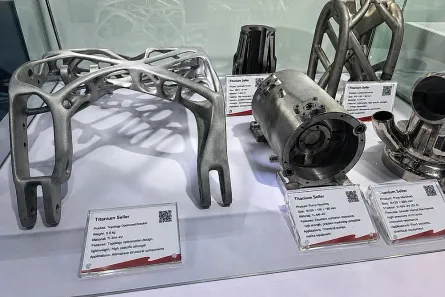
Three major moves landed in the titanium powder market inside a single week. On April 17, EOS acquired powder specialist Metalpine. On April 22, Amaero announced that its advanced gas atomization line had entered commercial production. Running on the same timeline, IperionX secured a $99 million DoD contract to produce titanium powder from domestic scrap through a hydrogen-based recycling process. Three routes. Three distinct business models. One prize — a market projected at $799 million in 2026, growing at an 8.71% CAGR through 2032. Three Technical Routes: Who Is Doing WhatRoute 1: EOS + Metalpine — equipment maker integrates backward into feedstock. EOS is the world's largest metal additive manufacturing (AM) equipment vendor. Acquiring Metalpine means EOS no longer only sells printers — it now captures margin at the powder feedstock level as well. Metalpine's core capability is plasma atomization, a process that produces spherical powder with superior flowability and tap density compared to conventional EIGA. That makes it the preferred feedstock for aerospace-grade AM. The strategic intent is straightforward: whoever controls powder supply controls AM pricing power. Route 2: Amaero — an independent powder maker in a capacity race. Amaero operates purely as a powder manufacturer, with no equipment business. The line commissioned on April 22 is a complete gas atomization system, with powder yield rates described as industry-leading. Amaero's positioning is as an independent, third-party powder supplier to aerospace and defense customers — not tied to any equipment brand. That independence is the value proposition. Aerospace customers are wary of sourcing powder from equipment vendors who have an incentive to bundle powder pricing with machine contracts. Route 3: IperionX — scrap recycling as an alternative to the conventional feedstock chain. IperionX does not start from titanium sponge. It processes Ti-6Al-4V scrap through a hydrogenation-dehydrogenation (HDH) process to produce titanium powder directly. The DoD contract provides $99 million plus 290 tonnes of government-stockpiled scrap, with a stated target of 1,400 tonnes per year from a Virginia facility. The logic is structurally different from the other two routes: bypass sponge, bypass China, bypass Russia, and produce American powder from American scrap. Cost structure and supply-chain security both improve at once. What This Means for Downstream Buyers: Powder Pricing Outlook Three routes expanding capacity simultaneously — does that mean powder prices will fall? Not necessarily. Aerospace and defense account for 45–50% of titanium powder demand. This segment is price-insensitive but extremely sensitive to certification status and traceability. New capacity typically requires 12–18 months to pass customer qualification before it can function as effective supply. Short-term, the supply balance for qualified powder remains tight. The segment most likely to see price pressure is non-aerospace-grade powder — industrial 3D printing, powder metallurgy, and thermal spray applications. Chinese suppliers (including AVIC Maite and Baoti Powder) already hold a strong price position in these segments. As EOS/Amaero capacity enters the market, the price spread in mid-market powder grades may compress further."The titanium powder market is shifting from 'powder scarcity constraining AM capacity' to 'powder quality segmentation driving AM market stratification.' The premium on aerospace-grade spherical powder — 15–45 μm particle size, oxygen content below 0.10%, sphericity above 95% — will keep widening. Industrial-grade powder faces a price war." — Sales Director LiuTwo practical recommendations for procurement teams: 1. If you use powder for aerospace AM parts: Track the certification progress at EOS-Metalpine and Amaero. Once they clear AS9100D audits, they will become credible alternatives to incumbent suppliers such as AP&C and Carpenter. Do not switch before certification is complete — a supplier change in aerospace powder requires a full process re-qualification. 2. If you use powder for industrial-grade parts or thermal spray: Now is a favorable window for negotiating supply terms. Multiple capacity additions mean industrial-grade titanium powder supply will ease noticeably in the second half of 2026. Locking in 6–12 month supply agreements will yield better pricing than spot purchasing. Where Chinese Titanium Powder Stands: Competitive but Facing ExclusionOne structural backdrop cannot be ignored. China is the world's largest producer of titanium powder. The combined output of AVIC Maite, Baoti Powder, and the Northwest Institute for Nonferrous Metal Research exceeds 40% of global production. Pricing runs 30–50% below European and American peers. However, the Section 232 critical minerals investigation combined with Buy American Act requirements is progressively removing Chinese titanium powder from US defense supply chains. IperionX's entire business model is built around "American titanium powder with no Chinese input." EOS's decision to acquire a European operation — Metalpine — rather than a Chinese powder producer follows the same logic. For Chinese titanium powder exporters, European commercial markets and Asia-Pacific markets remain accessible. But the US aerospace and defense market is closing structurally, not cyclically. For international buyers currently sourcing titanium powder from China — if your end customers sit within the US defense supply chain, begin evaluating alternative sources now. Waiting until Section 232 measures take effect before finding substitutes will passively extend your lead times by 6–12 months. Our rod and forging product lines are not affected by powder market fluctuations (different feedstock routes), but if you need supplier referrals or market intelligence on titanium powder, contact our team.Titanium Seller is a titanium supply-chain platform headquartered in Baoji Titanium Valley, China.Related Products & ServicesService → Titanium CNC Machining — Post-process finish machining for AM parts Product → Titanium Forgings — Conventional forging route, complementary to AM powder Product → Titanium Wires — Wire feedstock for WAAM additive manufacturingRelated Articles:Titanium Wire Is the Quiet Winner in Additive Manufacturing Titanium Scrap Prices 2026: Who's Buying Titanium Price 2026: Why Regional Gaps Keep Widening

Market Analysis
Titanium Scrap Prices 2026: Who's Buying and Where Rates Head
By Jason/ On 23 Apr, 2026

Titanium Scrap Prices 2026: Who's Buying and Where Rates Head

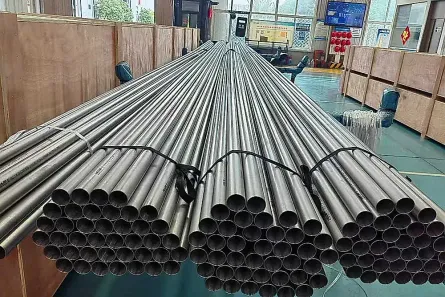
Titanium scrap is not a side business. It has become a battleground for pricing power. In 2026, the three largest US titanium producers — ATI, Perryman, and Timet — are adding a combined 30,000 tonnes per year of ingot capacity. The feedstock for that capacity is not sponge. It is scrap. Industry scrap utilization is forecast to climb 22%. More melting capacity chasing the same pool of scrap. The result is already written into prices: CP scrap is currently quoted at $3.4–4.8/kg, Ti-6Al-4V alloy scrap at $8.6–12.5/kg, and high-grade TC4 scrap has already reached $5.2/lb at auction. When scrap rises, finished products follow. That transmission chain is already working. Scrap Market Structure: Who Produces It, Who Buys ItTitanium scrap comes from three sources. 1. Aerospace MRO (maintenance, repair, and overhaul). Airframe and engine component retirement cycles run 15–25 years. This output is fixed — there is no way to accelerate aircraft retirement just because scrap prices are high. Recoverable aerospace-grade titanium scrap in 2026 is estimated at 35,000–40,000 tonnes per year. 2. Machine shop turnings and offcuts. The buy-to-fly ratio in titanium forging can reach 8:1 to 12:1 — meaning that buying 10 kg of bar stock yields roughly 1 kg of finished part and 9 kg of chips and offcuts. This portion of the scrap stream moves with manufacturing order volume. 3. Industrial equipment retirement. Gr.2 titanium from chemical heat exchangers, electrolysis anodes, and desalination units has a service life of 20–30 years. This scrap is high in purity but limited in volume. Who are the buyers? Primarily three groups:US titanium producers (ATI, Perryman, Timet) — the most aggressive buyers after their capacity expansions Japanese sponge producers (Toho, Osaka Titanium) — supplementing ingot feed with scrap Chinese recyclers — but their bidding power is weakening due to the removal of export VAT rebates and rising freight costsThe Price Transmission Chain: Scrap → Ingot → Finished Product Scrap prices do not exist in isolation. Understanding the transmission path matters. Level 1: Scrap → ingot cost. Scrap typically accounts for 30–60% of the melt charge. Assuming a 40% scrap ratio, a $1/kg rise in scrap translates to roughly $0.40/kg added to ingot cost. Level 2: Ingot → semi-finished product. Ingot passes through forging, rolling, or drawing to become rod, plate, or tube. Processing yield loss runs 15–30%. A $0.40/kg ingot increase adds $0.50–0.55/kg to semi-finished product cost. Level 3: Semi-finished → end component. A buy-to-fly ratio of 8:1 means a $0.50/kg increase in bar stock is amplified eight times at the finished part level — a $4/kg cost increment. This is why scrap price moves that look modest at the raw material stage have an outsized impact downstream. TC4 alloy scrap moving from $7/kg to $12.5/kg is a $5.5/kg shift. Transmitted through the supply chain, that translates to a $15–25/kg cost increase at the aerospace forging level. "We track scrap prices not because we trade scrap, but because scrap is the leading indicator for forging and rod costs. Scrap typically leads finished product price moves by six to eight weeks. When scrap prices start moving, it is time to lock in finished product orders." — Sales Director Liu 2026 Scrap Price OutlookThree assessments based on supply-demand analysis: Assessment 1: CP scrap prices stabilize. The supply base for commercial-purity scrap is relatively steady — chemical equipment retirement follows predictable cycles, and there is no large-scale demand expansion on the horizon. The $3.4–4.8/kg band will likely hold for the full year. Assessment 2: TC4 alloy scrap keeps climbing. Aerospace MRO output is constrained while demand from the three US expansions is surging. The supply gap is widening. $12.5/kg may not be the ceiling; a move to $14–15/kg in the second half is plausible. Assessment 3: Quality premiums widen sharply. The spread between high-grade scrap (known chemistry, traceable origin, low oxygen) and mixed scrap has widened from $1–2/kg historically to $3–4/kg now. The procurement implication: confirm what quality of scrap your supplier is using to melt your rods and plate. Action Items for Buyers 1. Monitor scrap prices as a leading signal for finished product pricing. If TC4 scrap breaks through $13/kg, expect to see finished product price increases in six to eight weeks. Locking in orders ahead of the move is better than reacting after. 2. Ask suppliers about their feedstock composition. Are the forgings you are buying melted from virgin sponge and new material, or from a scrap-blended charge? Higher scrap ratios offer a cost advantage but demand tighter control over oxygen content and trace elements. Verify that your supplier's MTC carries complete heat numbers and charge traceability. 3. Consider raw material escalation clauses in long-term contracts. If your annual purchase volume exceeds 5 tonnes, build a scrap-price linkage clause into long-term agreements — defining a baseline scrap price and an adjustment mechanism for finished product pricing. Under current market conditions, this is fairer than a fixed-price contract.Titanium Seller is a titanium supply chain platform headquartered in Baoji, China's titanium valley.Related Products & ServicesService → Stocking Programs — Price-lock inventory programs to hedge against scrap-driven cost transmission Product → Titanium Forgings — Forging costs are directly affected by TC4 scrap prices Product → Titanium Rods — Scrap content in melt charge directly influences rod pricingRelated Articles:Titanium Price 2026: Why Regional Gaps Keep Widening China's Titanium Sponge Hits 440,000 t/y — Who Survives? Section 232 Titanium Tariffs: 85 Days Left
Market Analysis
Section 232 Titanium Tariffs: 85 Days Left
By Jason/ On 19 Apr, 2026

Section 232 Titanium Tariffs: 85 Days Left

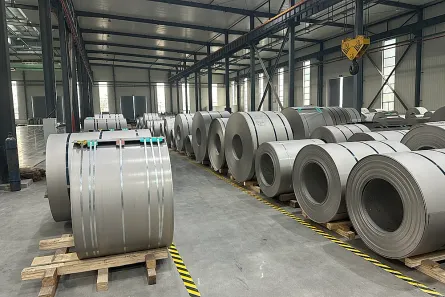
On January 14, 2026, President Trump signed a presidential proclamation on critical minerals, placing titanium among 50 designated materials. No tariffs took effect immediately. Instead, the order opened a 180-day negotiation window. Deadline: July 13. That's 85 days from now. Running on the same timeline is a second variable. Putin is reportedly studying export restrictions on titanium and nickel as a countermeasure against Western sanctions. Both lines converge at Q3 2026. The question is straightforward: what happens to your procurement costs? Section 232: Mechanism, Direction, TimelineStart with the mechanism. Section 232 is not a standard tariff instrument. It is a national security–based trade investigation tool that gives the president unilateral authority to impose duties — no congressional approval required. The 2018 steel and aluminum tariffs were enacted through this same authority. The current critical minerals investigation covers 50 materials. Titanium is on the list. The status right now is "negotiation phase" — the U.S. is in bilateral talks with major supplier countries over trade terms. China, the world's largest exporter of titanium mill products, is among the negotiating parties. Policy recommendations from the Titanium Sponge Working Group already point in a clear direction:Reduce import duties on titanium sponge — to offset domestic raw material capacity that has effectively hit zero Raise tariffs on finished titanium products from "adversarial producers" — targeting Chinese rods, plates, and forgingsIf this framework lands after July 13, the impact splits two ways. Finished titanium goods imported from China face a cost increase of 10–25% (consistent with the 2018 Section 232 rates on steel and aluminum). Titanium sponge import costs may actually fall, benefiting U.S.-based processors. For Chinese suppliers, the structure creates a scissor effect: cheaper inputs, more expensive outputs. The Russia Variable: 15,000 Tonnes of Aerospace-Grade Sponge Section 232 is a predictable policy risk. Russia is not. VSMPO-AVISMA is the world's largest producer of aerospace-grade titanium. Before the war, annual sponge output ran at 32,000 tonnes. That figure has since dropped to roughly 17,000 tonnes, with more production redirected to domestic consumption. Airbus has cut its Russian titanium share from 65% to around 20%. But even 20% means approximately 3,400 tonnes of aerospace-grade titanium still flowing into European supply chains each year. If Putin enforces an export ban, that supply disappears entirely. Add the 15,000 tonnes already lost, and Western aerospace supply chains face a cumulative shortfall approaching 18,000 tonnes per year. To put that in context: global titanium production in 2026 is projected at 238,800 tonnes. Aerospace accounts for 51.6% of demand. Those 18,000 tonnes represent roughly 14.6% of the aerospace segment alone. New capacity cannot close that gap in time. The two U.S. rebuilding projects — IperionX ($99M DoD contract, target capacity 1,400 tonnes/year) and American Titanium Metal ($868M greenfield plant in North Carolina) — will not produce material before 2027 at the earliest. The EU Critical Raw Materials Act lists titanium as a strategic material, but EU officials have openly stated the bloc "can never be self-sufficient." The conclusion is plain. There is no Plan B in 2026. Signals from the Field: U.S. Inquiry Volume Is Already ShiftingThe policy has not been finalized. The market has already moved. Since the January Section 232 proclamation, inquiries from U.S.-based customers have grown roughly 15%. The increase is not spread evenly — it concentrates in two product lines: Gr.5 forgings and Gr.2 sheet and plate. The nature of the inquiries has changed, too. Three months ago, a typical U.S. inquiry asked for price and lead time. Now the questions are different: "If tariffs hit in July, can you ship by end of June?" "Can we include a tariff adjustment clause in the contract?" "Do you have a Japanese-origin alternative?""In March, we received an urgent order from a U.S. aerospace customer requiring shipment of Φ200mm Ti-6Al-4V forged bar stock before end of June. The customer was explicit — they needed to clear customs before Section 232 potentially takes effect. Policy-driven orders like this used to come once or twice a year. We've had three in Q1 alone." — Sales Director LiuTitanium exporters around Baoji are reading the same rhythm. Export orders in March and April show a front-loading effect — customers are pulling forward deliveries originally scheduled for Q3 into Q2. Short-term small-batch urgent orders have surged, and logistics slots are tight. The 85-Day Decision Tree With Section 232 and the Russia variable running in parallel, three decisions need to be made before the window closes. Decision 1: Lock Q3 orders now or wait? Lock now. July 13 is a hard deadline. Even if negotiations extend — which is unlikely — market expectations are already lifting near-term demand. Booking in Q2 locks in current costs and guarantees pre-July customs clearance. Wait until July, and lead times stretch 4–6 weeks regardless of whether tariffs actually land, simply because buyers flood the market at the same time. Decision 2: Add a tariff clause to contracts? Yes. Any long-cycle contract covering Q4 and beyond should include a tariff adjustment clause specifying how Section 232 duties would be split between buyer and seller. Without that clause, the full tariff burden lands on one side — which turns a trade policy event into a contract dispute. Decision 3: Build a multi-origin supply chain? If your titanium sourcing is 100% China today, Section 232 is a direct exposure. China plus Japan is currently the most cost-efficient risk hedge available. Japanese sponge producers — Toho Titanium, Osaka Titanium — are not on any adversarial-nation list, so finished products derived from Japanese sponge avoid the Section 232 finished-goods exposure. Japanese capacity is limited, though. The window is open now. By Q3, production slots may be gone. Start evaluating a multi-origin stocking plan now. In 85 days, early movers will have options. Late movers will have prices.Titanium Seller is a titanium supply chain platform headquartered in Baoji, China — the center of global titanium production.Related Products & ServicesService → Stocking Programs — Multi-origin inventory lock-in to hedge Section 232 tariff uncertainty Product → Titanium Forgings — Ti-6Al-4V forgings, the fastest-growing U.S. inquiry category Product → Titanium Sheets & Plates — Gr.2 plate, high demand amid export front-loadingRelated Articles:Titanium Price 2026: Why Regional Gaps Keep Widening US Titanium Act: What It Means for Global Buyers Grade 5 Titanium Forgings 2026: Why Lead Times Won't Shrink
Market Analysis
Titanium Price 2026: Why Regional Gaps Keep Widening
By Jason/ On 18 Apr, 2026

Titanium Price 2026: Why Regional Gaps Keep Widening

North American titanium spot prices came in at $6.71/kg in March — down 3.5% from February's $6.92. China's 99.6% titanium sponge (titanium sponge) averaged ¥45.50/kg over the same period. India? Somewhere between $12.50 and $15.00/kg — nearly double what buyers pay in the US. Three numbers. One metal. Three completely different pricing realities in 2026. Price gaps aren't new. What is new is the structure behind them. China's capacity surplus is suppressing raw material costs even as Beijing pulled export VAT rebates on 249 product lines effective April 1. The US Section 232 critical minerals negotiation window closes July 13 — 180 days after the January executive order. India continues to absorb the world's highest per-kilogram prices due to a structural supply deficit with no near-term fix. Three separate policy forces converging in the same quarter. The compounding effect on cross-border procurement decisions is real. The Structural Drivers: Capacity, Policy, and Raw Material CostsStart with supply. The numbers are clear. China's titanium sponge capacity has reached roughly 220,000 tonnes per year — 58–66% of global output. The Baoji cluster alone accounts for more than 600 titanium enterprises producing 65% of national volume. That much capacity means sustained downward pressure on domestic sponge prices. The ¥45.50/kg average has held for months, and there is little upward momentum. The US picture is the opposite. Henderson, Nevada — the country's last aerospace-grade sponge facility — closed in 2020. The US now imports 100% of its titanium sponge. DoD is working to rebuild domestic supply through IperionX (a combined $47.1M in awards plus 290 tonnes of government scrap inventory) and American Titanium Metal ($868M greenfield plant in North Carolina), but neither delivers product before 2027 at the earliest. The 2026 supply gap has no domestic solution. India is more extreme still. Domestic sponge capacity is essentially zero. Near-total import dependence, stacked with tariffs and freight, pushes end-market prices to $12.50–15.00/kg. A recently signed EU–India critical minerals MOU lists titanium among 30 priority materials, but operationalizing that will take years. These three data points point to one conclusion: titanium prices in 2026 are not simply rising or falling — they are stratifying by geopolitical structure. How the VAT Reversal and Section 232 Hit Your BOM China's removal of export VAT rebates on 249 lines took effect April 1. Not all titanium products are directly affected, but the adjustments across chemicals and materials categories have already worked through the supply chain. Our direct observation: Ti-6Al-4V forging FOB prices are up roughly 7%. Seven percent sounds modest. For a mid-size aerospace Tier-2 buying 20 tonnes per year, that's an extra $9,000–$12,000 in annual BOM cost. Add a potential Section 232 tariff triggered by failed negotiations in July, and the cost impact doubles. The Section 232 timeline deserves attention. On January 14, 2026, the executive order on critical minerals named titanium among 50 designated materials. No tariffs were imposed immediately — instead, a 180-day window opened for negotiations, with China as the primary counterpart (the world's largest titanium exporter by a wide margin). The titanium sponge working group's reported position: lower import duties on raw sponge (to supplement feedstock supply) while increasing tariffs on finished titanium products from "adversarial-nation producers." If that direction holds, the effect chain looks like this:Import costs for semi-finished products like rods and plates from China increase Raw sponge imports could actually get cheaper, helping US domestic processors Distributors with multi-origin supply chains gain pricing flexibilityPractical implication for buyers: orders locked before Q3 are unaffected. Long-cycle orders delivering in Q4 need a 5–10% tariff buffer built into quotes now. Ground-Level Signals from the Titanium ValleyBased in Baoji, we see things that outside analysts don't. Over the past 30 days, RFQ volume for Gr.5 forgings destined for North America rose roughly 25% month-over-month. This is not a demand surge — it's customers pulling forward orders ahead of the Section 232 window. The language of inquiries has changed too. It used to be "please quote." Now it's "can you hold pricing for 90 days." "From mid-March, the push for price locks picked up noticeably. One German aerospace Tier-2 asked us to fix the entire Q3 Ti-6Al-4V plate volume at current sponge-based cost. That kind of request was rare before." — Sales Director Liu Meanwhile, utilization rates among smaller Baoji-area sponge producers diverged in March. Operations above 5,000 tonnes/year capacity are running at full tilt. Two to three smaller facilities under 3,000 tonnes/year have gone offline for maintenance — spot prices fell below their cost floors. Capacity consolidation signals are there, but the pace is slower than expected. One more downstream effect from the VAT reversal: a concentrated rush to ship in the last two weeks of March tightened trucking schedules between Baoji and Tianjin port. By early April that pressure had eased — and short-lead-time small-lot orders are actually better positioned now. The bulk cargo cleared out. The spot freight lanes opened up. Procurement Recommendations Three actionable steps based on the above: 1. Lock Q3 pricing now, structure Q4 with a tariff clause. Locking Q3 delivery today gives maximum cost certainty. For Q4 and beyond, write a tariff adjustment clause (tariff adjustment clause) into your contracts — agree in advance on how Section 232 cost increases get shared if and when they land. 2. Watch sponge prices, not finished product prices. Finished goods prices lag sponge by four to six weeks. If Chinese sponge breaks below ¥42/kg, capacity consolidation is underperforming and finished prices have room to drop. If sponge climbs back above ¥50, smaller facilities have shut, and the window to build inventory is closing. 3. Build a second-source option. If you are currently 100% single-origin, Section 232 uncertainty alone justifies a Plan B. China plus Japan dual-sourcing remains the most cost-efficient combination available today.Titanium Seller is a titanium supply chain platform headquartered in Baoji, China's titanium valley, covering the full product range from sponge to finished mill products.Related Products & ServicesService → Stocking Programs — Price-lock inventory programs to hedge against market volatility Product → Titanium Forgings — Ti-6Al-4V forgings with FOB pricing directly affected by export policy changes Product → Titanium Sheets & Plates — Plate and sheet: among the most price-sensitive product lines across supply regionsRelated Articles:China's Titanium Sponge Hits 440,000 t/y — Who Survives? US Titanium Act: What It Means for Global Buyers Five Titanium Alloys, Three Mills, One Shipment

Market Analysis
China's Titanium Sponge Hits 440,000 t/y — Who Survives?
By Jason/ On 15 Apr, 2026

China's Titanium Sponge Hits 440,000 t/y — Who Survives?

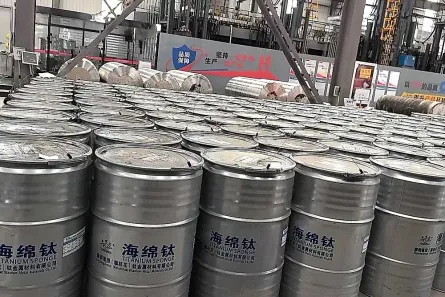
By the end of Q1 2026, China's annual titanium sponge capacity punched through 440,000 metric tons. A year ago it was 340,000. That 100,000-ton jump did not arrive gradually — it concentrated in three provinces, five companies, and one shared bet. This is not a simple overcapacity story. Behind the surplus is a calculated wager: that aerospace will recover, that clean energy infrastructure will scale, and that tightening export controls will hand domestic producers pricing power. The question is whether the bet pays off. Where the 100,000 Tons Came From The numbers are straightforward. China's monthly titanium sponge output in January 2026 was 23,800 tons, up 0.42% month-on-month. But capacity and output are two different things. New capacity falls into three tiers: Tier 1: TiO2 producers moving upstream. Tianyuan Haifeng added 100,000 t/y of chloride-process TiO2 capacity in Yibin, doubling its total to 200,000 tons. TiO2 producers already control titanium tetrachloride (TiCl4) feedstock, so extending into sponge production carries minimal marginal cost. Tier 2: State-owned sponge producers expanding. Baoti and Pangang are scaling up under Beijing's "critical minerals self-sufficiency" policy. This capacity targets military and aerospace-grade demand, with a high share of Grade 0 sponge. Tier 3: Small private mills chasing the cycle. These operators entered after seeing strong sponge prices in 2024. Equipment is mostly Kroll process, product is typically Grade 1 or Grade 2 sponge, and the primary market is chemical processing and general industrial use. The strategies differ sharply. Tier 1 is pursuing economies of scale. Tier 2 is defending high-end barriers to entry. Tier 3 is gambling on price.Where Prices Are Heading Average sponge pricing sits at $6,080/ton (99.6% purity), up 10.5% year-on-year. That seems counterintuitive. Why would prices rise during a capacity glut? Three reasons:The aerospace-chemical price gap is widening. Grade 0 sponge (oxygen content 0.04% max) remains tight and prices hold firm. Grade 1 (0.06% max) is abundantly available and under pressure. The "overcapacity" is structural — low-end surplus, high-end shortage.Export scrutiny is increasing. China has not formally placed titanium on an export license list, but critical metals export reviews have tightened steadily through 2025-2026. Uncertainty among overseas buyers is pushing spot premiums higher.Chemical-sector demand is lagging. Industry analysis from SMM indicates price pressure across the full value chain. The 2026 outlook depends on aerospace recovery and renewable energy infrastructure spending actually materializing. Chemical-grade sponge consumption has underperformed expectations.The effect on Grade 5 (Ti-6Al-4V) pricing is particularly nuanced. Alloying elements — aluminum and vanadium — have remained stable in price, but sponge cost as the base feedstock transmits directly into forging and bar stock pricing. GR5 bar ex-works prices dropped roughly 5% year-on-year What Export Controls Actually Mean in Practice On paper, titanium did not make China's 2026 export license blacklist. In practice, however:Customs review timelines have stretched from 3 days to 7-10 days Bulk shipments (single batches above 5 tons) now require additional end-user certificates Dual-use grades (TA15, TC4/Grade 5 aerospace specification) face the strictest scrutinyThe impact hits small and mid-size trading companies hardest — they lack established overseas customer relationships needed to produce end-user documentation. For supply chain platforms with long-term contract relationships and stocking programs, the impact is manageable but compliance costs have risen. Signals from the Ground in Titanium ValleyBased in Baoji, we see this playing out firsthand. Starting in March, utilization rates at smaller local mills dropped noticeably. below 85%. The reason is simple: chemical processing orders have dried up, and aerospace orders are out of reach — without NADCAP certification, these mills cannot enter Tier-1 supply chains. But the inquiry mix is shifting. In Q1 this year, inquiries from Southeast Asia and the Middle East for titanium tubes and titanium sheets and plates rose noticeably. These markets are absorbing demand that spills over from China's tightening export regime. Buyers there still want Chinese material — the process has just become more complicated, and they need suppliers who can handle the compliance paperwork. Another signal worth watching: customers have started asking about Ti-6Al-4V wire for orthodontic applications. This suggests additive manufacturing and medical end-markets are beginning to penetrate the traditional titanium mill product supply chain. "Upstream is oversupplied, but downstream demand is fragmenting in new directions. Suppliers who can deliver both conventional bar stock and emerging wire products are actually gaining ground, not losing it." — Darren, Supply Chain Director Procurement Recommendations by Buyer Profile If you are an aerospace Tier-2 quality engineer:Secure your Grade 0 sponge sources now. The surplus is in low-end material; aerospace-grade supply remains tight Require oxygen content test reports traceable to the heat number on every sponge batch your supplier providesIf you are a chemical plant engineer:This is a buying window. Grade 1 sponge is plentiful, and raw material costs for titanium heat exchanger tubes and titanium plate are at a two-year low Do not accept material without a Mill Test Certificate, regardless of how attractive the price looksIf you are a multinational procurement director:Build a dual-source strategy. Uncertainty around Chinese export controls is rising — Japanese producers (Toho, Osaka Titanium) and Kazakhstan offer viable supplementary sourcing For Chinese suppliers, prioritize platform companies with long export track records and comprehensive quality inspection systemsConclusion 440,000 tons per year is not the ceiling. If the aerospace recovery materializes in the second half of 2026, this capacity will be absorbed. If it does not, Tier 3 mills face shutdown or consolidation before year-end. Regardless of which scenario plays out, the structural shift is already underway: the price gap between high-end and low-end material is widening, compliance requirements are tightening, and end-market demand is fragmenting. The suppliers that survive this cycle will not be the ones with the most capacity — they will be the ones with the strongest quality control and compliance capabilities.Related Products & ServicesService → Stocking Programs — Lock in GR5 raw material pricing ahead of sponge cost volatility Product → Titanium Rods — GR5/GR2/TA15 grades, stock and custom lengths Product → Titanium Tubes — Chemical and aerospace grades, both drawn and weldedRelated Articles:US Titanium Act: What It Means for Global Buyers Middle East Desalination Boom: What $250B Means for Titanium Tubes Aerospace Titanium Supply Chain Is Being ReshapedAbout: Titanium Seller is a supply chain platform based in Baoji, China's Titanium Valley.

Ready to Start Your Project?

Get factory-direct pricing on titanium products. No minimum order.

Get a Free Quote
Quick Inquiry