Type something to search...
Titanium Powder 2026: Three Routes in an $800M Race
  • By Jason/ On 24 Apr, 2026

Titanium Powder 2026: Three Routes in an $800M Race

Three major moves landed in the titanium powder market inside a single week.

On April 17, EOS acquired powder specialist Metalpine. On April 22, Amaero announced that its advanced gas atomization line had entered commercial production. Running on the same timeline, IperionX secured a $99 million DoD contract to produce titanium powder from domestic scrap through a hydrogen-based recycling process.

Three routes. Three distinct business models. One prize — a market projected at $799 million in 2026, growing at an 8.71% CAGR through 2032.

Three Technical Routes: Who Is Doing What
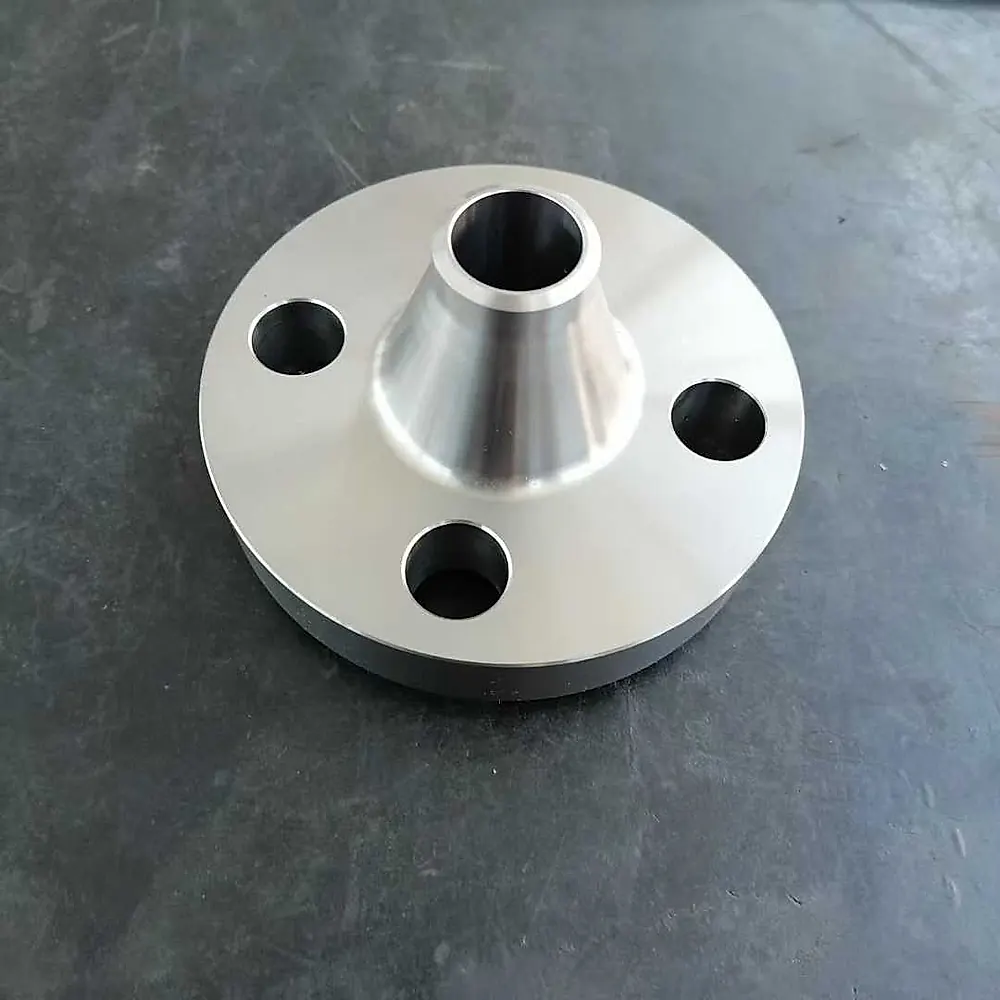
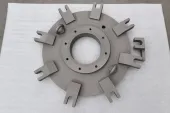
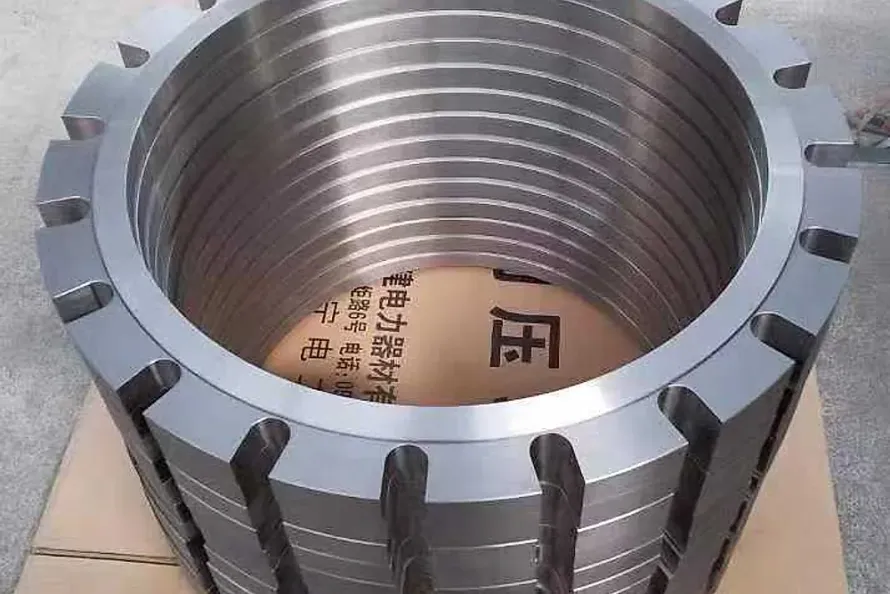
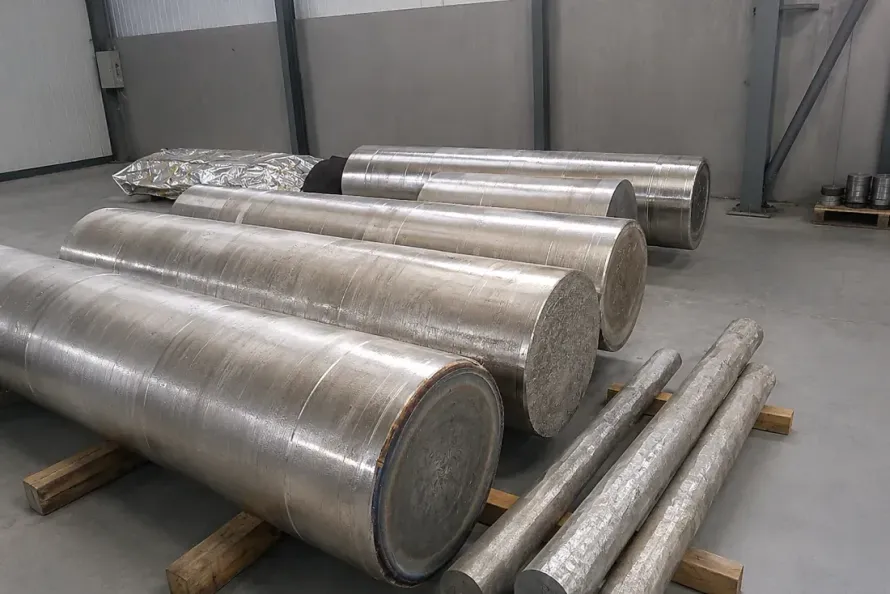
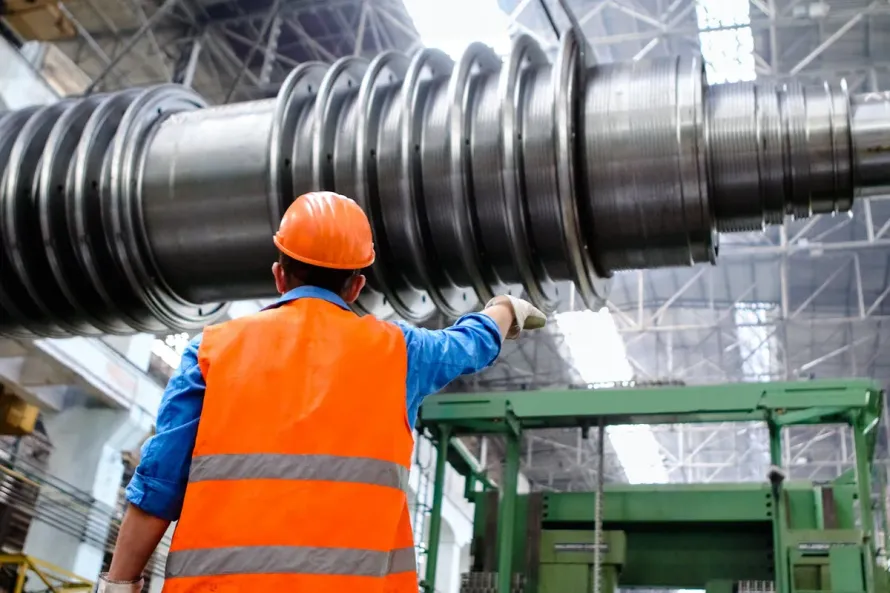
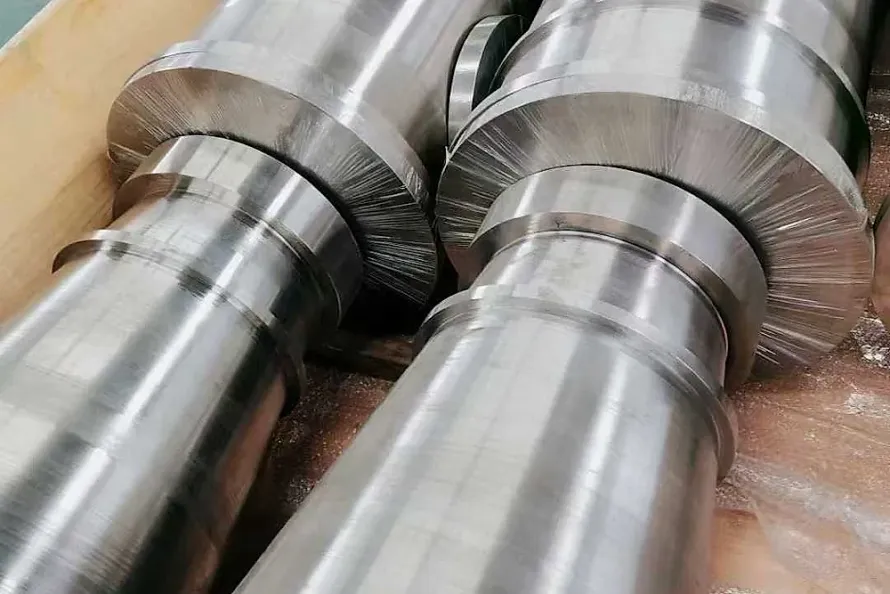
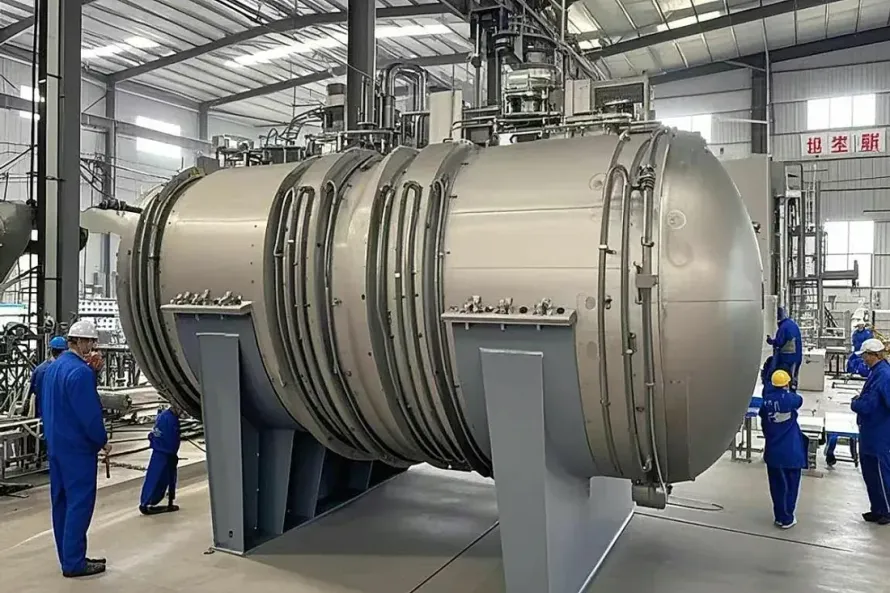
Precision-machined titanium forged flange

Route 1: EOS + Metalpine — equipment maker integrates backward into feedstock. EOS is the world’s largest metal additive manufacturing (AM) equipment vendor. Acquiring Metalpine means EOS no longer only sells printers — it now captures margin at the powder feedstock level as well. Metalpine’s core capability is plasma atomization, a process that produces spherical powder with superior flowability and tap density compared to conventional EIGA. That makes it the preferred feedstock for aerospace-grade AM.

The strategic intent is straightforward: whoever controls powder supply controls AM pricing power.

Route 2: Amaero — an independent powder maker in a capacity race. Amaero operates purely as a powder manufacturer, with no equipment business. The line commissioned on April 22 is a complete gas atomization system, with powder yield rates described as industry-leading. Amaero’s positioning is as an independent, third-party powder supplier to aerospace and defense customers — not tied to any equipment brand.

That independence is the value proposition. Aerospace customers are wary of sourcing powder from equipment vendors who have an incentive to bundle powder pricing with machine contracts.

Route 3: IperionX — scrap recycling as an alternative to the conventional feedstock chain. IperionX does not start from titanium sponge. It processes Ti-6Al-4V scrap through a hydrogenation-dehydrogenation (HDH) process to produce titanium powder directly. The DoD contract provides $99 million plus 290 tonnes of government-stockpiled scrap, with a stated target of 1,400 tonnes per year from a Virginia facility.

The logic is structurally different from the other two routes: bypass sponge, bypass China, bypass Russia, and produce American powder from American scrap. Cost structure and supply-chain security both improve at once.

What This Means for Downstream Buyers: Powder Pricing Outlook

Three routes expanding capacity simultaneously — does that mean powder prices will fall? Not necessarily.

Aerospace and defense account for 45–50% of titanium powder demand. This segment is price-insensitive but extremely sensitive to certification status and traceability. New capacity typically requires 12–18 months to pass customer qualification before it can function as effective supply. Short-term, the supply balance for qualified powder remains tight.

The segment most likely to see price pressure is non-aerospace-grade powder — industrial 3D printing, powder metallurgy, and thermal spray applications. Chinese suppliers (including AVIC Maite and Baoti Powder) already hold a strong price position in these segments. As EOS/Amaero capacity enters the market, the price spread in mid-market powder grades may compress further.

“The titanium powder market is shifting from ‘powder scarcity constraining AM capacity’ to ‘powder quality segmentation driving AM market stratification.’ The premium on aerospace-grade spherical powder — 15–45 μm particle size, oxygen content below 0.10%, sphericity above 95% — will keep widening. Industrial-grade powder faces a price war.” — Sales Director Liu

Two practical recommendations for procurement teams:

1. If you use powder for aerospace AM parts: Track the certification progress at EOS-Metalpine and Amaero. Once they clear AS9100D audits, they will become credible alternatives to incumbent suppliers such as AP&C and Carpenter. Do not switch before certification is complete — a supplier change in aerospace powder requires a full process re-qualification.

2. If you use powder for industrial-grade parts or thermal spray: Now is a favorable window for negotiating supply terms. Multiple capacity additions mean industrial-grade titanium powder supply will ease noticeably in the second half of 2026. Locking in 6–12 month supply agreements will yield better pricing than spot purchasing.

Where Chinese Titanium Powder Stands: Competitive but Facing Exclusion
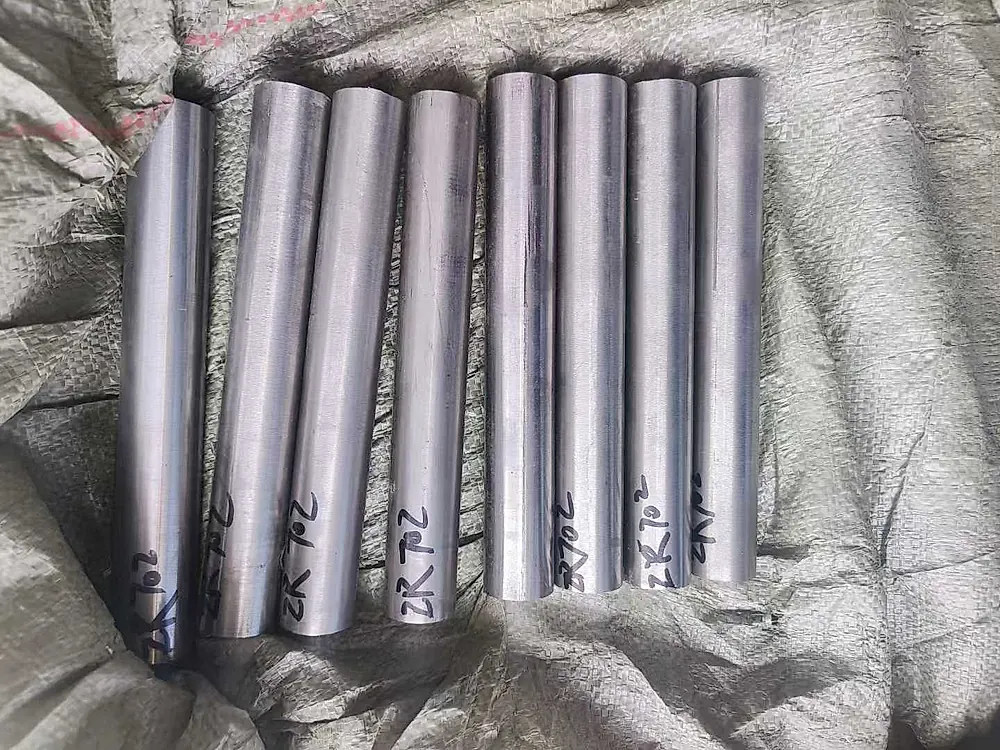
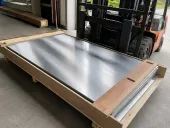
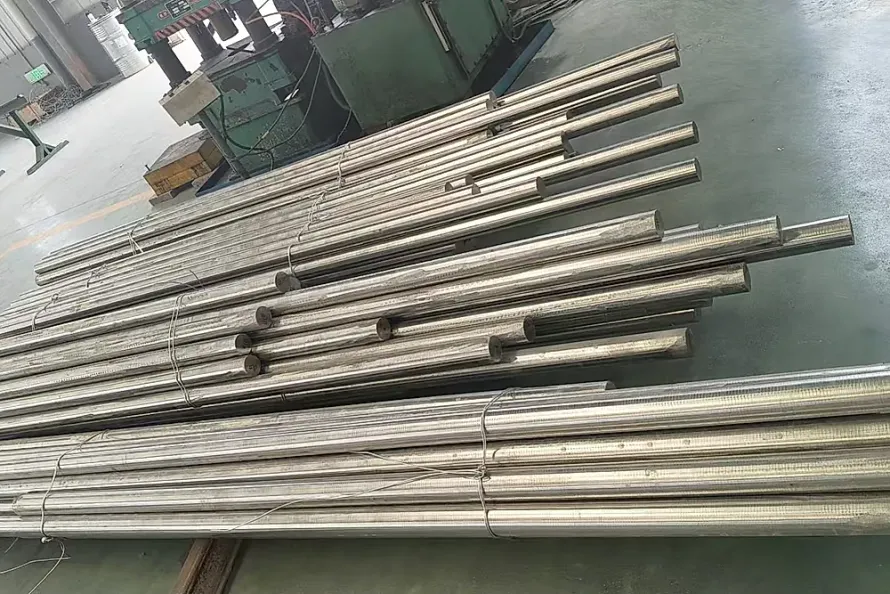
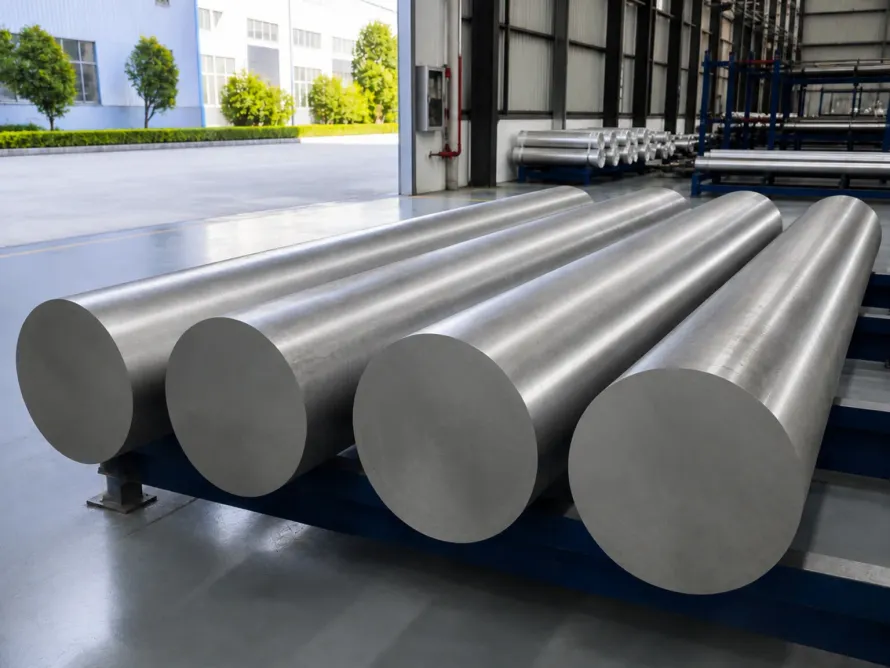
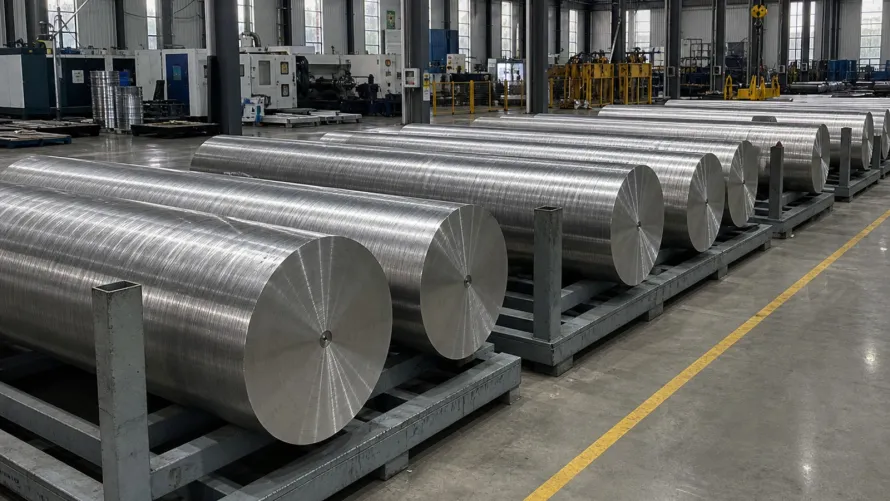
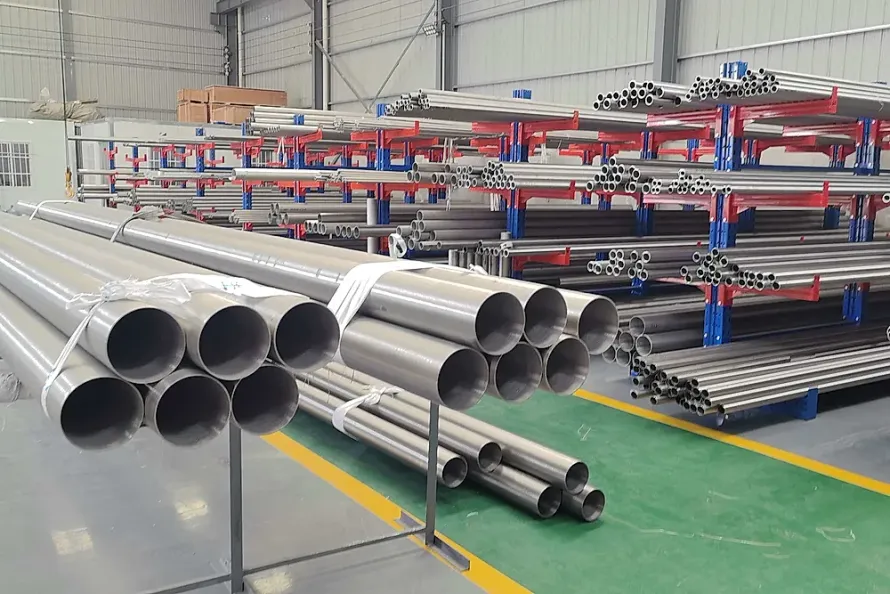
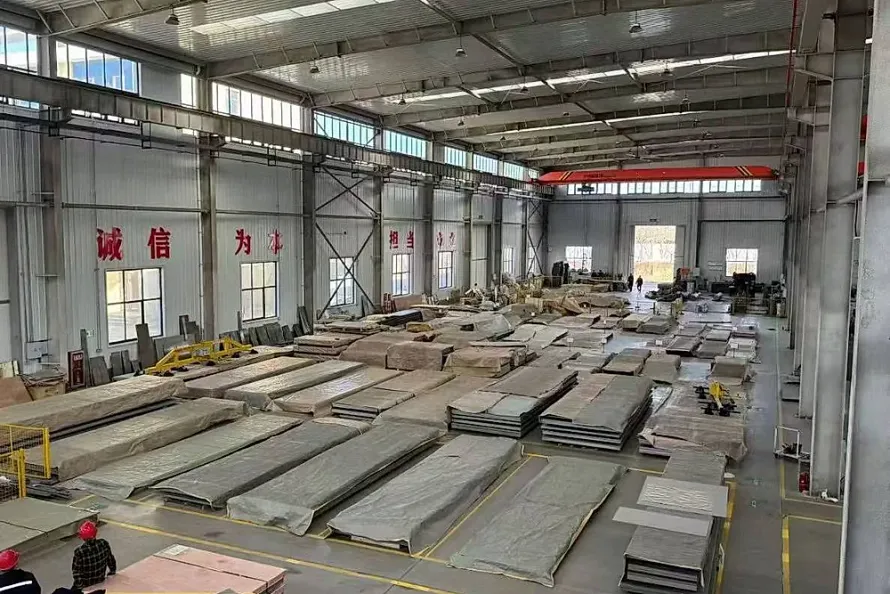
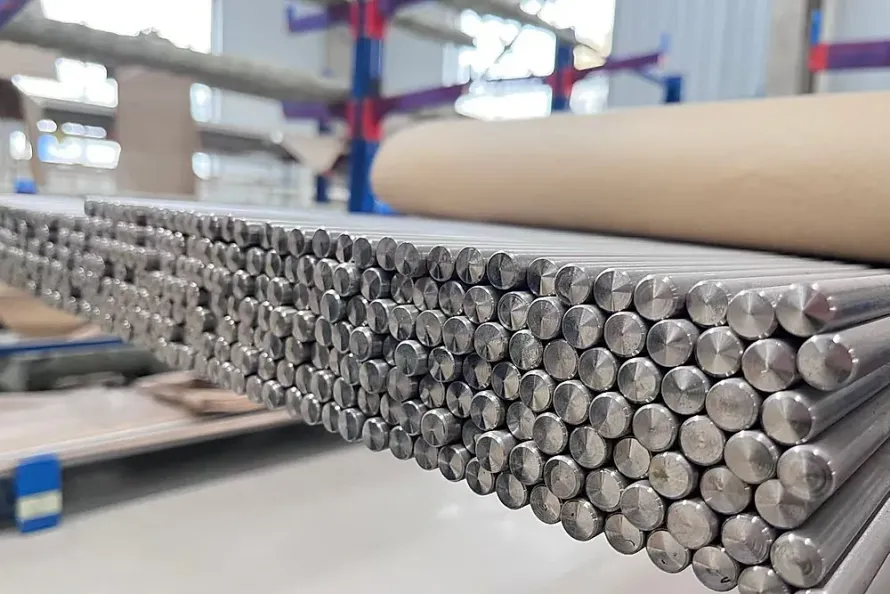
Titanium and zirconium rod stock inventory

One structural backdrop cannot be ignored.

China is the world’s largest producer of titanium powder. The combined output of AVIC Maite, Baoti Powder, and the Northwest Institute for Nonferrous Metal Research exceeds 40% of global production. Pricing runs 30–50% below European and American peers.

However, the Section 232 critical minerals investigation combined with Buy American Act requirements is progressively removing Chinese titanium powder from US defense supply chains. IperionX’s entire business model is built around “American titanium powder with no Chinese input.” EOS’s decision to acquire a European operation — Metalpine — rather than a Chinese powder producer follows the same logic.

For Chinese titanium powder exporters, European commercial markets and Asia-Pacific markets remain accessible. But the US aerospace and defense market is closing structurally, not cyclically.

For international buyers currently sourcing titanium powder from China — if your end customers sit within the US defense supply chain, begin evaluating alternative sources now. Waiting until Section 232 measures take effect before finding substitutes will passively extend your lead times by 6–12 months.

Our rod and forging product lines are not affected by powder market fluctuations (different feedstock routes), but if you need supplier referrals or market intelligence on titanium powder, contact our team.


Titanium Seller is a titanium supply-chain platform headquartered in Baoji Titanium Valley, China.


Related Articles:

Need this material? Get a factory-direct quote.
Request a Quote
Tags :
Share :

Related Posts

others
CATL Debuts Titanium Alloy Battery Case: Mass-Market EVs Hit a Titanium Inflection Point
By Jason/ On 28 Apr, 2026

CATL Debuts Titanium Alloy Battery Case: Mass-Market EVs Hit a Titanium Inflection Point

At its April 22 launch event, CATL rolled out six battery technologies. One sat quietly under the headline noise: an aerospace-grade titanium alloy battery case. The official numbers: wall thickness reduced 60%, weight down 30%, strength tripled, pack-level energy density lifted by 20 Wh/kg. Paired with the Qilin Condensed 350 Wh/kg cell, total vehicle range hits 1,500 km. This is the first time titanium has appeared on the load-bearing parts list of a million-unit EV platform. The same week, Samsung Galaxy S26 Ultra and iPhone 17 Pro both walked away from titanium mid-frames and went back to Armor Aluminum. Two stories in opposite directions, in the same news cycle — that contrast deserves to be unpacked carefully. What it actually takes to put titanium into a battery caseCATL did not start from a Ti-6Al-4V forged billet. It started from commercially pure titanium (Gr.1/Gr.2) cold-rolled sheet, 0.3–0.8 mm thick, ≥1,000 mm wide. For the past decade, the titanium mill industry has filed that spec under "edge demand" — the volume customers were chemical processing, medical, and seawater desalination plate heat exchangers. Aerospace plate has always meant Ti-6Al-4V forged stock at ≥3 mm. Battery-grade thin sheet was a market too small to schedule a dedicated mill run. CATL's announcement just dragged that "edge demand" into the middle of the production curve. Three reasons. First, content per vehicle. A mid-size EV battery case rebuilt in 0.5 mm titanium sheet consumes 8–12 kg of titanium per car. Run that against China's 2025 EV output of roughly 12 million units — a 10% penetration rate equals 14,400 tonnes/year of titanium sheet demand. That single number is larger than China's entire titanium plate-and-strip export volume for last year, combined. Second, process constraints. EV-volume cadence requires the cold-rolled-and-annealed sheet to hold oxygen content below 0.18%, surface roughness Ra ≤0.4 μm, and yield ≥95% on wide coil (>1,200 mm). Public records suggest fewer than 10 mill lines worldwide can deliver this spec consistently. China runs 4–5 of them, concentrated in Baoji and Zunyi. Third, materials logic. CATL did not specify titanium for the optics. It specified titanium because it had to clear ballistic impact and nail penetration safety tests at the same time. A conventional aluminum case needs a 1.2 mm wall to pass the GB nail test; Gr.2 titanium clears it at 0.5 mm. Every cubic millimeter saved goes back to the cell stack. That is real energy-density arbitrage, not a press-release figure. Phones dropping titanium the same week — same logic, opposite sign The S26 Ultra and iPhone 17 Pro de-titaniumization looks like a contradiction. The logic underneath is identical. Phones optimize for thinness. Flagships are pushing from 8.2 mm down toward 7.5 mm. Titanium (4.51 g/cm³) becomes a liability versus aluminum (2.70 g/cm³) at that wall thickness — a 0.6 mm titanium frame is 67% heavier than aluminum, and the user feedback loop on hand-feel is measured in weeks. Armor Aluminum closes most of the bend-strength gap at roughly half the mass. EV battery cases optimize against a different test matrix: nail penetration, fire, crush, salt spray, 25-year service life. Across those, titanium's corrosion potential, strength-to-density ratio, and high-temperature creep resistance sit a full order of magnitude above aluminum. The intersection of specs is what decides which material wins. The phone intersection points to "light + thin." The EV intersection points to "safe + long-life." That distinction matters more than the recurring debate over whether titanium prices are up or down. The phone titanium market is a marginal market — small total volume, price-sensitive, frequent material swaps. The EV battery case is a structural market — once it locks into a vehicle platform, it stays for 3–5 years, and over time it migrates from flagship trims down into the mid-tier. Supply-side picture for CP titanium thin sheetIn our Baoji (China's Titanium Valley) spot inventory system, April 2026 stock of Gr.1/Gr.2 commercially pure titanium sheet (0.3–1.0 mm thick, ≥1,000 mm wide) sits at 30 tonnes. That number is not large by traditional market standards, but against an EV battery case demand curve, it means we can release a sample-batch run within two weeks. Over the past six months, RFQ frequency from power battery and ESS customers has stepped up noticeably. The RFQ profile is different from aerospace Tier 2 work — order sizes are modest (typically 200–2,000 kg), but once qualification clears, they convert into stable monthly repeat purchases. The pattern almost mirrors the evolution of copper foil and aluminum foil into the lithium-ion supply chain — heavy iteration up front, then the order book locks into a long-term industrial baseline. Another supply-side fact: fewer than 10 lines globally can produce 1.2–1.5 m wide Gr.2 coil. That capacity curve scales slowly because cold-mill roll width and annealing-furnace atmosphere control are 6–8 year capital-equipment cycles. CATL just handed every titanium sheet-and-strip producer a 3–5 year demand certainty signal. A checklist for buyers and materials engineers If you are scoping titanium procurement for H2 2026 through H1 2027, three actions belong at the top of the list. First, put Gr.1/Gr.2 titanium sheet on the battery case alternate-material list — even if your current production line is still running aluminum. Qualification cycles run 12–18 months ahead of the production decision. By the time the program manager decides to switch, sourcing the spec is already a bottleneck. Second, write "coil width ≥1,200 mm + oxygen content ≤0.18% + surface roughness Ra ≤0.4 μm" into the RFQ template as hard requirements. Asking generically for "Gr.2 titanium plate price" gets you a commodity quote. Asking for the spec set above is what gets you into the battery case supply chain. Third, treat spot availability as a decision-line item, not an afterthought. On our titanium sheet and plate and titanium foil lines, customers with spot access are submitting samples 3–4 weeks ahead of those waiting on futures runs. In a qualification race, that gap is first-mover advantage. The signal worth tracking over the next 12 months is not "which EVs put titanium in." It is "which 1.2 m wide cold-mill lines start booking battery-industry contracts." That data point will reflect titanium's true penetration into the EV stack earlier than any price index. Related Products & ServicesService → No Minimum Order Quantity Sourcing — sample/trial channel for early-stage battery case qualification work Product → Titanium Sheets and Plates — Gr.1/Gr.2 commercially pure cold-rolled sheet, ≥1,000 mm wide, in stock Product → Special Titanium Alloys — qualification path for the special grades EV safety testing demandsAbout: Titanium Seller is a supply chain platform based in Baoji, China's Titanium Valley.
others
China's Titanium Sponge Hits 440,000 t/y — Who Survives?
By Jason/ On 15 Apr, 2026

China's Titanium Sponge Hits 440,000 t/y — Who Survives?

By the end of Q1 2026, China's annual titanium sponge capacity punched through 440,000 metric tons. A year ago it was 340,000. That 100,000-ton jump did not arrive gradually — it concentrated in three provinces, five companies, and one shared bet. This is not a simple overcapacity story. Behind the surplus is a calculated wager: that aerospace will recover, that clean energy infrastructure will scale, and that tightening export controls will hand domestic producers pricing power. The question is whether the bet pays off. Where the 100,000 Tons Came From The numbers are straightforward. China's monthly titanium sponge output in January 2026 was 23,800 tons, up 0.42% month-on-month. But capacity and output are two different things. New capacity falls into three tiers: Tier 1: TiO2 producers moving upstream. Tianyuan Haifeng added 100,000 t/y of chloride-process TiO2 capacity in Yibin, doubling its total to 200,000 tons. TiO2 producers already control titanium tetrachloride (TiCl4) feedstock, so extending into sponge production carries minimal marginal cost. Tier 2: State-owned sponge producers expanding. Baoti and Pangang are scaling up under Beijing's "critical minerals self-sufficiency" policy. This capacity targets military and aerospace-grade demand, with a high share of Grade 0 sponge. Tier 3: Small private mills chasing the cycle. These operators entered after seeing strong sponge prices in 2024. Equipment is mostly Kroll process, product is typically Grade 1 or Grade 2 sponge, and the primary market is chemical processing and general industrial use. The strategies differ sharply. Tier 1 is pursuing economies of scale. Tier 2 is defending high-end barriers to entry. Tier 3 is gambling on price.Where Prices Are Heading Average sponge pricing sits at $6,080/ton (99.6% purity), up 10.5% year-on-year. That seems counterintuitive. Why would prices rise during a capacity glut? Three reasons:The aerospace-chemical price gap is widening. Grade 0 sponge (oxygen content 0.04% max) remains tight and prices hold firm. Grade 1 (0.06% max) is abundantly available and under pressure. The "overcapacity" is structural — low-end surplus, high-end shortage.Export scrutiny is increasing. China has not formally placed titanium on an export license list, but critical metals export reviews have tightened steadily through 2025-2026. Uncertainty among overseas buyers is pushing spot premiums higher.Chemical-sector demand is lagging. Industry analysis from SMM indicates price pressure across the full value chain. The 2026 outlook depends on aerospace recovery and renewable energy infrastructure spending actually materializing. Chemical-grade sponge consumption has underperformed expectations.The effect on Grade 5 (Ti-6Al-4V) pricing is particularly nuanced. Alloying elements — aluminum and vanadium — have remained stable in price, but sponge cost as the base feedstock transmits directly into forging and bar stock pricing. GR5 bar ex-works prices dropped roughly 5% year-on-year What Export Controls Actually Mean in Practice On paper, titanium did not make China's 2026 export license blacklist. In practice, however:Customs review timelines have stretched from 3 days to 7-10 days Bulk shipments (single batches above 5 tons) now require additional end-user certificates Dual-use grades (TA15, TC4/Grade 5 aerospace specification) face the strictest scrutinyThe impact hits small and mid-size trading companies hardest — they lack established overseas customer relationships needed to produce end-user documentation. For supply chain platforms with long-term contract relationships and stocking programs, the impact is manageable but compliance costs have risen. Signals from the Ground in Titanium ValleyBased in Baoji, we see this playing out firsthand. Starting in March, utilization rates at smaller local mills dropped noticeably. below 85%. The reason is simple: chemical processing orders have dried up, and aerospace orders are out of reach — without NADCAP certification, these mills cannot enter Tier-1 supply chains. But the inquiry mix is shifting. In Q1 this year, inquiries from Southeast Asia and the Middle East for titanium tubes and titanium sheets and plates rose noticeably. These markets are absorbing demand that spills over from China's tightening export regime. Buyers there still want Chinese material — the process has just become more complicated, and they need suppliers who can handle the compliance paperwork. Another signal worth watching: customers have started asking about Ti-6Al-4V wire for orthodontic applications. This suggests additive manufacturing and medical end-markets are beginning to penetrate the traditional titanium mill product supply chain. "Upstream is oversupplied, but downstream demand is fragmenting in new directions. Suppliers who can deliver both conventional bar stock and emerging wire products are actually gaining ground, not losing it." — Darren, Supply Chain Director Procurement Recommendations by Buyer Profile If you are an aerospace Tier-2 quality engineer:Secure your Grade 0 sponge sources now. The surplus is in low-end material; aerospace-grade supply remains tight Require oxygen content test reports traceable to the heat number on every sponge batch your supplier providesIf you are a chemical plant engineer:This is a buying window. Grade 1 sponge is plentiful, and raw material costs for titanium heat exchanger tubes and titanium plate are at a two-year low Do not accept material without a Mill Test Certificate, regardless of how attractive the price looksIf you are a multinational procurement director:Build a dual-source strategy. Uncertainty around Chinese export controls is rising — Japanese producers (Toho, Osaka Titanium) and Kazakhstan offer viable supplementary sourcing For Chinese suppliers, prioritize platform companies with long export track records and comprehensive quality inspection systemsConclusion 440,000 tons per year is not the ceiling. If the aerospace recovery materializes in the second half of 2026, this capacity will be absorbed. If it does not, Tier 3 mills face shutdown or consolidation before year-end. Regardless of which scenario plays out, the structural shift is already underway: the price gap between high-end and low-end material is widening, compliance requirements are tightening, and end-market demand is fragmenting. The suppliers that survive this cycle will not be the ones with the most capacity — they will be the ones with the strongest quality control and compliance capabilities.Related Products & ServicesService → Stocking Programs — Lock in GR5 raw material pricing ahead of sponge cost volatility Product → Titanium Rods — GR5/GR2/TA15 grades, stock and custom lengths Product → Titanium Tubes — Chemical and aerospace grades, both drawn and weldedRelated Articles:US Titanium Act: What It Means for Global Buyers Middle East Desalination Boom: What $250B Means for Titanium Tubes Aerospace Titanium Supply Chain Is Being ReshapedAbout: Titanium Seller is a supply chain platform based in Baoji, China's Titanium Valley.

others
Grade 2 Titanium: Why the Chemical Industry Depends on It
By Jason/ On 22 Apr, 2026

Grade 2 Titanium: Why the Chemical Industry Depends on It

Ti-6Al-4V gets most of the attention in the titanium industry. Aerospace, medical, additive manufacturing — high-end applications belong to Gr.5. But look at actual global titanium shipment volumes, and the real workhorse is not Gr.5. It's Grade 2. In chemical processing, Gr.2 holds over 80% market share. Not because it's cheap. Because in highly corrosive environments, it outperforms Gr.5. That sounds counterintuitive. But the data doesn't lie. Corrosion Resistance: Why Pure Titanium Beats the AlloyStart with the mechanism. Keep it brief. Titanium's corrosion resistance comes from a TiO₂ passive oxide film on the surface. This film forms spontaneously at room temperature. It is only 5–10 nm thick, but exceptionally dense. In neutral and oxidizing media, the TiO₂ film is self-healing — even if mechanically damaged, it regenerates within milliseconds. Gr.2 is commercially pure (CP) titanium with a titanium content of ≥99.2%. Total impurity levels are minimal. This means the TiO₂ film has maximum uniformity — no micro-scale electrochemical potential differences from alloying elements, no preferential corrosion sites. Ti-6Al-4V (Gr.5) introduces 6% aluminum and 4% vanadium. These elements raise strength, but they also create micro-scale electrochemical heterogeneity within the α+β dual-phase microstructure. In high-Cl⁻ environments — seawater, hydrochloric acid, wet chlorine gas — phase boundaries become initiation sites for crevice corrosion. One number makes it clear: in chloride-bearing oxidizing acid at 200°C, Gr.2 corrodes at roughly 0.02 mm/year. Gr.5 can reach 0.1 mm/year — a five-fold difference. "Many buyers new to the industry see Gr.5's strength specs and assume stronger is better. But in chemical plant applications, strength is never the constraint — wall thickness design carries sufficient margins. The real make-or-break factor is corrosion service life. On that dimension, Gr.2 decisively outperforms Gr.5." — Quality Director Hu Weldability: Why Chemical Equipment Demands CP Titanium Chemical plant equipment — heat exchangers, reactors, pipe systems — relies heavily on welded construction. Weldability directly determines both manufacturability and long-term reliability. Gr.2 welds significantly better than Gr.5. Three reasons: 1. No phase transformation risk. Gr.2 is a single-phase α structure. No α→β phase transformation occurs during welding, so the weld zone microstructure remains stable and post-weld heat treatment is not required. Gr.5 is an α+β dual-phase alloy. Welding drives acicular martensite α' formation in the heat-affected zone (HAZ), sharply increasing brittleness — without post-weld annealing, the weld zone is highly susceptible to cracking in Cl⁻-containing media. 2. Greater tolerance for oxygen contamination. The biggest enemy during titanium welding is oxygen. Above 400°C, titanium is extremely sensitive to oxygen, which causes weld hardening and embrittlement. Gr.2 has an oxygen limit of 0.25% and a yield strength requirement of only 275 MPa — even if weld zone oxygen content rises slightly, the effect on mechanical properties stays within acceptable bounds. Gr.5 has a lower oxygen ceiling of 0.20% and much higher mechanical requirements, which narrows the welding process window considerably. 3. Lower filler wire cost. Gr.2 filler wire is priced at roughly 60–70% of Gr.5 wire. For a large heat exchanger where wire consumption can reach tens of kilograms, the cost difference is material. This is why ASME Boiler and Pressure Vessel Code (BPVC Section VIII) lists Gr.2 — not Gr.5 — as the preferred titanium grade for pressure vessels. Not for cost reasons. For welding reliability. Grade Selection Reference: When to Use Gr.2, When to UpgradeGr.2 is not universal. Certain extreme environments require upgrading to a higher grade. Here is a practical reference:Media Environment Temperature Recommended Grade NotesSeawater / neutral Cl⁻-bearing water ≤150°C Gr.2 Standard choiceWet chlorine gas (Cl₂) ≤100°C Gr.2 Chlor-alkali industry standardDilute H₂SO₄ ≤5% ≤60°C Gr.2 Upgrade if concentration >5%HCl ≤1% ≤35°C Gr.2 Upgrade if concentration >1%Nitric acid HNO₃ All concentrations Gr.2 Oxidizing acid; Gr.2 is highly resistantHigh-temperature Cl⁻ with crevice geometry >100°C Gr.12 (Ti-0.3Mo-0.8Ni) 10× crevice corrosion resistanceReducing acids HCl >3% Any Gr.7 (Ti-0.15Pd) Pd improves resistance to reducing acidsH₂S-bearing acidic environments Any Gr.12 or Gr.7 Common in oil and gas wellheadsHigh-temperature oxidizing service >300°C >300°C Gr.5 or Ti-6242S Strength-driven; not a corrosion scenarioCore rule: Oxidizing media — use Gr.2. Reducing acids — upgrade to Gr.7 or Gr.12. High temperature / high pressure — upgrade to Gr.5. Most chemical plant environments are oxidizing. That is why Gr.2 holds 80% share. Total Cost Advantage: More Than a Material Price Gap Gr.2 costs 40–60% less than Gr.5. But the total cost difference far exceeds the raw material spread. Raw material cost: Gr.2 is smelted from grade-0 or grade-1 sponge titanium directly, without adding expensive aluminum-vanadium master alloys. Raw material cost runs $3,000–5,000 per ton lower. Processing cost: Gr.2 is easier to cut and form than Gr.5 — lower yield strength means less tooling wear in pipe bending, plate rolling, and stamping operations, and higher throughput. Gr.5's high strength makes cold forming extremely difficult; many components must be hot-formed. Welding cost: As noted above, Gr.2 requires no post-weld heat treatment. Gr.5 does. For a large heat exchanger, furnace time alone for post-weld annealing can run $5,000–10,000. Inspection cost: Gr.2 weld seams have a higher UT acceptance rate than Gr.5 (more uniform weld microstructure), which means lower rework rates. Adding these up, the total fabrication cost of a Gr.2 titanium heat exchanger can be 50–65% lower than a Gr.5 equivalent. And in oxidizing media, service life is comparable — or longer for Gr.2. Procurement Recommendations Three actionable recommendations for anyone sourcing titanium for a chemical project: 1. Start the evaluation with Gr.2 by default. Unless the process media is a reducing acid (HCl >3%, H₂SO₄ >5%) or operating above 300°C, Gr.2 is almost always the best answer. Do not be misled by Gr.5's "premium" label. 2. Specify oxygen content, not just grade. Two Gr.2 heats with oxygen content of 0.12% and 0.22% respectively can show significant differences in weldability. When placing orders, require the actual oxygen content on the MTC, and prefer batches at ≤0.18%. 3. Confirm your supplier's fabrication capability. Titanium plate and tube for chemical equipment requires extensive welding after delivery. If your supplier only sells raw material without fabrication, you will need a separate welding contractor — adding logistics, lead time, and quality risk. Choosing a supplier that provides both raw material and value-added processing eliminates the middle step and improves both total cost and delivery. Need MTC samples for Gr.2 plate or tube? Contact us.Related Products & ServicesService → Fabrication — Titanium welding and fabrication for chemical plant piping and heat exchangers Product → Titanium Sheets & Plates — Gr.2 plate, the primary feedstock for chemical heat exchangers and reactors Product → Titanium Tubes — Gr.2 tube, the standard choice for heat exchanger tube bundlesRelated Articles:Titanium Plate Grade Selection: Gr.2 vs Gr.5 Middle East Desalination Boom: What $250B Means for Titanium Tubes TA10 / Gr.12 Titanium-Molybdenum-Nickel Alloy Bars

others
Grade 5 Titanium Forgings 2026: Why Lead Times Won't Shrink
By Jason/ On 18 Apr, 2026

Grade 5 Titanium Forgings 2026: Why Lead Times Won't Shrink

IATA projects commercial aircraft deliveries will grow 8–12% in 2026. Boeing and Airbus backlogs are finally moving. But if you are a procurement engineer at an aerospace Tier-2, here is the reality you are working in: Ti-6Al-4V (Grade 5) forging lead times are still five times what they were before 2020. Demand is climbing. Supply has not caught up. Why? The answer is not capacity shortfall. It is structural mismatch. Why a Familiar Problem Has Become a 2026 Crisis Three supply lines tightened simultaneously. First: Russian titanium continues to exit Western supply chains. Airbus has cut its Russian titanium sourcing from roughly 65% of procurement (pre-war) to approximately 20%, with further reductions planned. There are reports that the Kremlin is considering export restrictions on titanium and nickel as a counter-sanctions instrument. VSMPO-AVISMA's annual sponge output has dropped from 32,000 tonnes to around 17,000 tonnes, with more volume redirected to domestic consumption. The net effect: approximately 15,000 tonnes of aerospace-grade sponge per year have disappeared from Western supply chains. Second: US domestic sponge capacity is at zero. The Henderson, Nevada facility closed in 2020. The United States now imports every kilogram of titanium sponge it consumes. IperionX's $99M DoD contract and American Titanium Metal's $868M North Carolina greenfield are medium-term projects — neither delivers product before 2027. There is no domestic capacity to fill the gap in 2026. Third: scrap supply cannot keep pace with scrap-melting expansion. ATI, Perryman, and Timet together added close to 30,000 tonnes/year of combined new ingot capacity, with an anticipated 22% increase in scrap utilization. But the sources of that scrap — aerospace MRO shops and manufacturing floor cutoffs — generate material at a fixed rate. More melting capacity chasing the same scrap volume means higher scrap prices and upward pressure on rod and bar costs. The sum: lower sponge availability, no domestic capacity buffer, intensifying scrap competition. Grade 5 forging lead times will not compress. This is not a cyclical condition. It is structural. The Silent Crisis: UT Inspection Pass RatesLong lead times are the visible problem. Quality variance is the one that catches buyers off guard. When supply is tight, end customers are pushed toward alternative suppliers. Alternative suppliers vary widely in process consistency. Our observation across the industry: first-pass ultrasonic testing (UT inspection) pass rates for Ti-6Al-4V forgings run above 90% at top-tier producers. At a number of mid-size forging houses, that figure drops below 80%. What does a low pass rate cost you? Rejections, rework, re-scheduling. A batch that fails UT adds four to six weeks to actual delivery. The "20-week lead time" in the quote becomes a 26-week lead time after one rejection cycle. Two misconceptions drive most of the pain. Misconception one: "As long as the alloy grade is right." Grade 5 is an alloy designation, not a quality guarantee. Two Ti-6Al-4V forgings can share the same chemistry and yet behave completely differently under ultrasonic inspection — depending on sponge grade (Grade 0 vs. Grade 1), number of VAR melting passes (double VAR vs. triple VAR), and forging temperature control precision. Microstructure determines UT response. The alloy label does not. Misconception two: "A passing MTC is enough." A mill test certificate (MTC) documents chemical composition and mechanical properties. It says nothing about internal discontinuities — porosity, inclusions, piping. A clean MTC attached to a UT-failing forging is not a rare occurrence in this industry. How We Get to 92%: Process Over LuckLast month, our first-pass UT inspection rate for Ti-6Al-4V forgings was 92% — roughly 15 percentage points above industry average. That number is not random. Process control starts at the raw material stage. We specify Grade 0 sponge with oxygen content held below 0.10% — well under the 0.20% ceiling in ASTM B381. Every forging heat is fully traceable — sponge lot, heat number, melt parameters, and forging temperature are documented across the full chain, from raw feed to finished part. "UT pass rate is not something you inspect your way to — it's controlled in the melting and forging stages. Last year we made one key process change: we tightened the initial forging temperature window from ±25°C to ±15°C. That single adjustment reduced detected beta-fleck defects by 40%." — Quality Director Hu Inventory strategy is also part of lead time control. We maintain approximately 50 tonnes of Ti-6Al-4V stock covering the most common size range, Φ20–300mm. When a customer needs 10 pieces of Φ80mm × 1000mm Gr.5 bar, we do not start from sponge — we cut to length from inventory and ship. Lead time drops from 20 weeks to 3. A recent example: a European aerospace component manufacturer needed Φ150mm Ti-6Al-4V forged billet to AMS 4928 and ASTM B381 dual certification. Their regular suppliers quoted 18–22 weeks. We matched inventory to spec, supplied full heat number traceability and a third-party UT report, and delivered in 3 weeks. Your Procurement Decision Checklist Four actionable steps for buying Grade 5 forgings in 2026: 1. Ask for UT pass rate data, not just the MTC. Any supplier running below 85% first-pass UT should have four to six weeks added to their quoted lead time before you commit. 2. Verify the full heat number traceability chain. Sponge lot through finished forging — every step with heat number, melt records, and forging parameters on file. Traceability is not just a compliance checkbox. It is the leading indicator of process consistency. 3. Evaluate a small-lot inventory backup source. Large forging shops typically require a 500kg minimum run. If your project needs 50–200kg of Grade 5 forgings, qualifying a supplier with small-lot in-stock capability gives you a Plan B that can turn emergency orders in 3–4 weeks instead of 20. 4. Watch the Section 232 clock. The negotiation deadline is July 13. If tariffs on Chinese titanium finished products land, Grade 5 forging procurement costs could step up in Q4. Lock critical Q3–Q4 material in Q2. Need a sample Gr.5 forging MTC or UT report template? Contact us to request one.Related Products & ServicesService → No Minimum Order Quantity — 50kg minimum, solving the lead time problem for small aerospace Grade 5 forging orders Product → Titanium Forgings — Ti-6Al-4V forgings, Φ20–300mm in-stock Product → Titanium Rods — Gr.5 bar stock, AMS 4928 certified, cut-to-length availableRelated Articles:Aerospace Titanium Supply Chain Is Being Reshaped by 3D Printing and Domestic Production China's Titanium Sponge Hits 440,000 t/y — Who Survives? Why a 60 kg Titanium Order Is Harder Than a Six-Tonne One

others
Guyana Subsea Titanium Order: How $63.5M Reprices 25-Year Service Life
By Jason/ On 28 Apr, 2026

Guyana Subsea Titanium Order: How $63.5M Reprices 25-Year Service Life

On April 7, Hunting PLC announced a $63.5 million titanium stress joint order tied to ExxonMobil's FPSO program in the Guyana basin. The titanium alloy stress joints will sit at the top of a steel catenary riser (SCR) system. It is the largest single subsea titanium order booked so far in 2026. The order itself is not revolutionary — but it pulls a question that has been parked for eight years back onto the table: does subsea titanium's 25-year life-cycle economics actually pencil out at $60 oil? Why this order is worth unpackingSet the background first. An FPSO (Floating Production Storage and Offloading) riser system is the umbilical that ferries production from a deepwater wellhead up to the floating platform. At 2,000+ m water depth, the riser carries three load sets: gravity-driven self-weight, vortex-induced vibration (VIV) from current, and bending fatigue induced by platform drift. The fatigue-life bottleneck sits at the stress joint where the riser meets the floating platform. Conventional steel stress joints in that position are designed for 12–15 years of service. FPSO programs themselves are routinely designed for 25. That gap is exactly what titanium alloy stress joints solve. Titanium (4.51 g/cm³) is 42% lighter than steel (7.85 g/cm³), with higher specific strength and far better seawater corrosion resistance. It pushes bending fatigue life out to 25–30 years, with no mid-life replacement. On a life-cycle cost basis, the titanium joint is 5–8 times the upfront cost of steel — but it eliminates a mid-life intervention. In deepwater, a mid-life intervention means partial FPSO shut-in plus heavy-vessel mobilization, and the unit cost runs into the tens of millions per event. What does Hunting's $63.5M order actually contain? Reverse-engineered against an industry average of $350–500/kg, the order represents 130–180 tonnes of titanium thick-wall pipe and forged stock — concentrated in Ti-6Al-4V Gr.5 or Pd-microalloyed Gr.7. The Guyana basin is ExxonMobil's flagship deepwater play and the fastest-growing deepwater basin in the world. Production passed 650,000 bbl/day in 2025, with 1.3 million bbl/day planned for 2027. Every FPSO in that ramp needs a titanium riser package on the same scale. This is the start of an order curve, not the peak. The arithmetic of 25-year life Lay the 25-year economics out in full and titanium stops looking like a luxury material. It reads as the NPV-optimal answer. Steel SCR route: $8M upfront capex + $45M mid-life replacement campaign at year 12–15 (downtime + heavy-lift vessel + redeployment) + decommissioning at year 25. Total life-cycle cost: ~$53M, with a non-trivial mid-life production-loss exposure layered on top. Titanium stress joint route: $55M upfront capex + decommissioning at year 25. Total life-cycle cost: $55M, no mid-life downtime exposure, and the FPSO runs at full availability across the entire 25-year window. Both totals land in the same range. But the risk shape is different — the titanium joint converts an uncertain mid-life intervention cost (plus a time-risk premium) into a fixed upfront capex line. At $60 oil, with deepwater production cadences tight, that is the trade an ExxonMobil-class operator wants to make. The relevant context: subsea titanium risers were largely shelved over the past eight years because $30–50 oil broke the project NPV — the titanium upfront premium ate the internal rate of return. Since 2025, with the price deck back to $60–70 and deepwater production re-entering an expansion cycle, the math has flipped positive again. The Hunting order is the first industrial-scale evidence that the new math holds. Gr.7 micro-alloyed supply: a very short list Titanium stress joints are not built from off-the-shelf Gr.5 forgings. Subsea risers in long-term seawater contact demand exceptional resistance to crevice corrosion and stress corrosion cracking (SCC). The standard answer is Pd-micro-alloyed Gr.7 or Gr.12 — adding 0.12–0.25% Pd, or 0.3% Mo+Ni, shifts the corrosion potential toward the noble end of the seawater curve. Global supply on these grades is narrow. Fewer than 15 mills worldwide can deliver Gr.7 thick-wall welded pipe and large-section forgings. Far fewer hold the offshore certifications — DNV, ABS, API 17R — required to put the part on a real FPSO. Inside China, the count of mills with stable Gr.7/Gr.12 offshore-grade supply is in the single digits, and NORSOK/DNV qualification audits commonly take 18 months. Our Baoji spot inventory system shows 20 tonnes of Gr.7/Gr.12 titanium pipe and forged stock in April 2026. The size envelope covers OD 89–219 mm thick-wall welded pipe (8–25 mm wall) and 200–500 kg forging classes. Over the past three months, RFQ frequency from offshore and seawater-contact chemical buyers has lifted noticeably. The Hunting Guyana order is the visible tip — in the same window, Petrobras (Brazil), Equinor (Norway), and PETRONAS (Malaysia) all have deepwater expansion programs with titanium stress joint options on the table. A checklist for offshore buyersIf you are scoping titanium riser procurement for 2026–2028 deepwater programs, three actions belong at the top. First, lock the grade route early. Gr.7 fits long-term seawater service joints and flanges. Gr.12 fits higher-temperature mixed seawater + chemical duty. Gr.5 does not belong on long-life seawater parts. The cost of getting this wrong is enormous — switching grade after the part is on the line triggers a full re-review of the FPSO design package. Second, write "NORSOK M-630 + DNV-RP-O501 dual qualification + Pd micro-alloy traceability to melt heat number" into the qualification gate as a hard requirement. Subsea titanium failures are rarely material failures. They are lot-to-lot variance failures that surface as localized corrosion. Traceability matters more than unit price. Third, count spot inventory as a line item in the bid model. Engineering windows on deepwater programs are tightening. In Q1 2026, suppliers with spot-deliverable titanium pipes and titanium tubes closed bids at roughly 22% higher win rates than those quoting from futures runs. Once an order is awarded, the fabrication window is often 14–20 weeks. No spot, no seat at the table. Two curves are about to lift together over the next 12–18 months. One is total order volume returning toward the 2014–2016 peak. The other is Gr.7/Gr.12 availability staying tight. Where those curves cross is the moment titanium risers become the standard option in deepwater oil and gas — not the exotic one. Hunting's $63.5M is the starting point of that curve, not the destination. Related Products & ServicesService → Stocking Programs for Aerospace and Subsea Titanium — spot-backed delivery for offshore programs running on tight engineering windows Product → Titanium Pipes — Gr.7/Gr.12 thick-wall offshore welded pipe, seawater-corrosion grades in stock Product → Titanium Equipment — custom forging capability for subsea stress joints, flanges, and fittingsAbout: Titanium Seller is a supply chain platform based in Baoji, China's Titanium Valley.

others
IperionX 1,400 tpa Covers 3.5% of the U.S. 40,000-Tonne Titanium Gap
By Jason/ On 25 Apr, 2026

IperionX 1,400 tpa Covers 3.5% of the U.S. 40,000-Tonne Titanium Gap

On April 26, IperionX announced commercial titanium production at its Virginia plant, with a Definitive Feasibility Study (DFS) due in Q2 2026 and a target run-rate of 1,400 tpa by mid-2027. BTIG put a Buy rating on the stock at a $40 price target; cumulative DoD support to IperionX now stands at $47.1 million; American Rheinmetall has placed prototype orders. The market narrative is "U.S. titanium sponge supply chain reshored." Run the capacity math, and the picture is more measured. This is a starting line, not an answer. Sizing the U.S. Titanium GapAfter Timet's Henderson, Nevada plant — the last U.S. primary sponge producer — went dark, domestic primary titanium sponge capacity fell to zero. Aerospace and defense net annual demand sits conservatively at 30,000–40,000 tpa, accounting for nearly 75% of total U.S. titanium consumption. That means the United States imports roughly 40,000 tpa of aerospace-grade sponge every year, primarily from Japan (Toho and Osaka), with a Russian (VSMPO) share that's been compressed below 20%. The shortfall has two layers. First, the volume gap: 40,000 tpa. Second, the process gap: large-diameter ingots for flight-critical parts can today only be produced through the conventional Kroll-sponge plus VAR-remelt route, and that capacity is still offshore. Any honest "U.S. titanium independence" conversation has to answer both layers separately. Where 1,400 tpa Actually Lands Drop 1,400 tpa back into the global picture. Total worldwide sponge capacity runs roughly 250,000–300,000 tpa today, putting IperionX at 0.4%–0.5%. Score it against the 40,000-tpa U.S. gap and the headline number is 3.5% coverage at full run-rate. That's a "pilot-to-commercial boutique" tier — set against VSMPO at 30,000–40,000+ tpa, Toho and Osaka at roughly 30,000–40,000 tpa each, and single-plant Chinese producers like Pangang, Shuangrui, and Baoti running anywhere from 10,000 tpa to several tens of thousands. 1,400 tpa is an incremental patch in that league, not the baseline. There's a process detail that matters. IperionX runs HAMR (Hydrogen Assisted Metallothermic Reduction), a route designed to bypass the energy intensity and environmental footprint of the Kroll process. HAMR yields titanium powder or semi-finished alloy directly — well-suited to additive manufacturing, powder metallurgy, and closed-loop scrap recovery. It is not the route you'd choose to melt several-tonne ingots for rolling into aerospace heavy plate. Put another way: 1,400 tpa is a patch in volume terms and a niche in process terms. It localizes powder, AM, and specialty parts. It does not localize aerospace heavy forgings. The Hard Constraint: Buy-to-Fly Ratio Push the math one layer deeper and the "3.5% coverage" headline overstates IperionX's contribution to the aerospace mainline. The reason is the inescapable constraint in aerospace manufacturing: the buy-to-fly ratio. Conventional forge-and-machine titanium parts run buy-to-fly from 8:1 to 10:1. Buy 10 tonnes of titanium and only 1 tonne actually flies — the other 9 tonnes leave the shop as chips and offcuts. Take the Boeing 787. Airframe titanium content is around 15% of structural weight, and combined with engine content, roughly 15–20 tonnes of titanium per aircraft actually goes airborne. Back-solving at 8:1 buy-to-fly, the front-end supply chain has to deliver 120–150 tonnes per ship. Which means IperionX at 1,400 tpa, on a conventional process route, supports front-end feedstock for roughly 10 Boeing 787s per year. Boeing, Lockheed (F-35 build rates run several hundred a year at peak), and the U.S. side of Airbus together run titanium throughput well above that figure. Additive manufacturing can take buy-to-fly down to 2:1 or even 1.5:1, and that is the genuine value of the IperionX process route. But AM share on flight-critical structures — wing spars, primary landing gear — is still under 5%. Buy-to-fly improvement is a long-cycle variable. In the 3–5 year window, 1,400 tpa serves non-primary structure and specialty parts, not the mainline. The View from the Titanium Valley: 1,400 tpa Doesn't Reset Procurement PlansWhat we see from Baoji — China's Titanium Valley — runs cooler than the market narrative. Over the past six months, inquiry frequency from U.S. aerospace Tier 2 forge shops and machining houses has not pulled back on the IperionX commissioning news. If anything, the inquiry mix has shifted as the VSMPO collapse and de-Russification compliance pressure compound. Ready-stock RFQs on Grade 5 bar and Ti-6Al-4V forged billet are gaining share, and rush-delivery (under four weeks to release) has climbed from under 15% a year ago to north of 30%. Our April peak ready-stock on aerospace Ti-6Al-4V billet and bar was 50 tonnes. That port-level signal says one thing clearly. Inside the procurement plans of industrial buyers, 1,400 tpa is not a "U.S. problem solved" signal. It's a "one of the long-term lanes has gone live" signal. Buyers are not pausing existing qualified-supplier expansion — they're accelerating multi-sourcing. A Talking-Points Toolkit for U.S. Buyers If you have to explain to a customer, board, or earnings audience why IperionX cannot carry the full U.S. aerospace ask, three data pairings do most of the work. Macro pairing: 1,400 tpa versus 30,000–40,000 tpa of annual U.S. aerospace and defense net demand — full-rate coverage 3.5%–4.7%. Micro pairing: 1,400 tpa versus 120–150 tonnes of front-end feedstock per Boeing 787 — roughly 10 ships at standard buy-to-fly. Process pairing: HAMR powder and AM parts versus VAR-melted heavy ingot — the former is the right route for powder metallurgy, the latter is the working path for flight-critical forgings. Together, those three pairings tell a more accurate story than the reshoring headline. IperionX is a meaningful add to U.S. titanium supply diversification, not a substitute. U.S. buyers procuring aerospace titanium between 2026 and 2030 will still walk on three legs: Japan as primary, China as growth, and U.S. domestic (IperionX and other powder lines) as specialty. Availability of large-section forgings on titanium bar and titanium plate still hinges on conventional VAR melt capacity. What This Means For procurement directors: treat IperionX as the AM-parts reshoring lane, not the heavy-forgings off-shore-exit lane. Run qualification on separate tracks. For shop-floor operations: HAMR diffusion will pull titanium powder demand into a new structural tier, but it does not replace conventional Kroll aerospace sponge demand. The two lines will run in parallel for a long time. See our read on the titanium powder market in 2026 for the full picture. For project finance: write the 3.5% number into the 2027–2030 supply chain risk matrix. It captures how slowly the reshoring story actually moves compared to the press releases. Related Products & ServicesService → No Minimum Order Quantity Sourcing — sample and trial-batch qualification channel for early-stage multi-sourcing Product → Ti-6Al-4V Titanium Bar — aerospace Grade 5 bar and forged billet, VAR melted, heat-number traceable Product → Titanium Sheets and Plates — large-format Ti-6Al-4V plate, feedstock for flight-critical forgingsAbout: Titanium Seller is a supply chain platform based in Baoji, China's Titanium Valley.

others
Five Titanium Alloys, Three Mills, One Shipment — How We Delivered Large-Diameter Seamless Pipe No Single Supplier Could
By Jason/ On 09 Apr, 2026

Five Titanium Alloys, Three Mills, One Shipment — How We Delivered Large-Diameter Seamless Pipe No Single Supplier Could

Five alloys. Three mills. One bill of lading.An offshore engineering contractor spent three weeks collecting quotes for large-diameter seamless titanium pipe — TC4, TA15, TA24, TA1, TA2, all ASTM B861, all in one shipment. Four suppliers responded. One quoted welded pipe and called it "equivalent." In comparable service conditions, weld seam fatigue life runs 30–40% below parent metal under cyclic pressure. Equivalent is not the word. What the Market Actually Offers Large-diameter titanium seamless pipe is not a catalog item. Each alloy has its own hot-working personality. TA1 and TA2 are forgiving — wide temperature windows, predictable grain behavior. TC4 is α+β. Pierce it more than 30–50°C above the β transus and grain structure coarsens. Mechanical properties collapse. TA15 and TA24 are near-α. A 20°C overshoot during extrusion scraps the entire billet. No single mill in Baoji runs all five grades on large-diameter seamless. The equipment overlap doesn't exist. So most traders do what they always do: take the deposit, subcontract to three or four mills, hope the timelines align, and let the buyer sort out the paperwork. Some don't even bother matching heat numbers between the MTC and the actual pipe — if the buyer skips PMI verification, nobody's the wiser. This buyer had already learned that lesson. Four suppliers. Four delivery windows. Four incompatible documentation sets. They didn't just need pipes. They needed one entity to take absolute metallurgical and logistical liability.How We Ran It We pulled from three partner facilities across Baoji's titanium cluster. Each selected for a specific capability. TA1/TA2 went to a mill running a 3,000-ton class hot extrusion press. Wall thickness tolerance on commercial pure titanium: ±0.5mm. No drama. TC4 went to a facility with deep α+β alloy piercing experience. Temperature control precision: ±10°C. Three pipes from the first batch drifted toward the upper wall thickness limit. We rejected them on-site before they left the shop floor and had the mill re-size. TA15 and TA24 required a specialist — a facility with 20 years in titanium manufacturing and a decade of dedicated large-diameter tube experience — one of Baoji's first enterprises to specialize in this segment. They maintain a proprietary heating schedule database for uncommon grades. Institutional knowledge that doesn't appear in any catalog. Our QC team didn't sit in a meeting room waiting for final paperwork. They verified heat numbers before billets entered the furnace. They ran parallel PMI checks at each facility. They flagged dimensional drift before it became a reject. When the crates were ready, they scanned one last time before the lids were nailed shut. Three facilities. Same inspection protocol. Zero exceptions. The Delivery LogGrade Lead Time Process NoteTA1 / TA2 25 days Standard hot extrusionTC4 35 days Including on-site re-sizing of 3 pipesTA15 / TA24 30 days Specialized near-α thermal scheduleTotal volume: ~8 tonnes Logistics: 1 bill of lading. 1 consolidated MTC package. 0 drama. "Anybody can sell you a TA1 tube. But when a project demands five alloys, three extrusion methods, and synchronized delivery — you don't need a broker. You need a project manager wearing steel-toed boots on the factory floor." — Supply Chain Director JasonRelated Articles:Titanium Forging & Ring Rolling in Action Aerospace Titanium Supply Chain Is Being Reshaped Titanium Tubes & PipesAbout: Titanium Seller — a supply chain platform based in Baoji, China's Titanium Valley, coordinating 600+ titanium enterprises.

others
Machining Titanium: 5 Common Mistakes That Kill Your Tools
By Jason/ On 21 Apr, 2026

Machining Titanium: 5 Common Mistakes That Kill Your Tools

Ti-6Al-4V gives you roughly one-quarter to one-third the tool life of 304 stainless. Cutting speeds drop by half. Metal removal rates fall by more than 50%. Every shop supervisor who has run titanium knows these numbers. But short tool life isn't titanium's fault. Most of the time it's a process problem. Our CNC shop machines more than five tonnes of titanium alloy parts every month. The five mistakes below are ones we've made ourselves and seen repeatedly on parts customers send back for rework. Each one comes with concrete parameters—not vague advice like "watch your cutting speed," but numbers you can enter directly into the machine. Mistake 1: Copying Stainless Steel Cutting ParametersThis is the most common mistake newcomers make, and the cause is straightforward. The recommended cutting speed (Vc) for 304 stainless is 80–150 m/min. For Ti-6Al-4V it's 40–60 m/min—half as fast. Yet many shops run their first titanium job with the same parameters they use for stainless, simply out of habit. The result: tip temperature spikes past 600°C almost immediately. Titanium's thermal conductivity is only about one-sixth that of steel, so heat concentrates at the cutting edge rather than dissipating through the workpiece. Carbide coatings burn off within three to five minutes. The insert is done. Worse, the high temperatures trigger surface hardening (alpha case) on the workpiece, making every subsequent operation even harder. Corrective parameters:Vc: 40–60 m/min (use the lower end for finishing) Feed per tooth fz: 0.08–0.15 mm/tooth Axial depth ap: 2–4 mm roughing, 0.3–0.8 mm finishing Tooling: coated carbide (TiAlN or AlCrN), edge angle ≤45°Mistake 2: Insufficient Coolant Flow or Wrong Nozzle Direction Titanium machining depends on coolant far more than most other materials—this is not an exaggeration. Stainless can be run with minimum quantity lubrication (MQL) or even dry. Titanium cannot. Because of titanium's low thermal conductivity, if coolant does not precisely reach the cutting zone, local tip temperature can climb from 200°C to 800°C in seconds. The coating peels. The edge chips. The typical failure is not "coolant turned off." It's insufficient flow, or a nozzle aimed at the chips rather than the tool-workpiece contact zone. Coolant hitting the side of the cut only cools the chips—it does nothing for the edge. Corrective approach:Flow rate: ≥20 L/min (high-pressure coolant at 70–100 bar is optimal) Nozzle direction: aimed directly at the tool-workpiece contact zone, not at the chips Coolant concentration: 8–12% (higher than the 5–8% typical for stainless) Use through-spindle coolant if the machine supports it—tool life improves 30–50%Mistake 3: Letting the Tool Dwell on the Workpiece Titanium has an underappreciated characteristic: a low elastic modulus. Specifically, around 114 GPa—compared to 193 GPa for stainless steel and 69 GPa for aluminum. Titanium sits between the two. This means titanium springs back under cutting pressure. When the tool pauses or decelerates at a position—direction reversals, program block transitions, any dwell—the workpiece rebounds against the cutting edge. The result is edge chipping or chatter marks on the machined surface. In our shop, this issue is most pronounced when machining thin-wall titanium tubes and titanium flanges. On parts with wall thickness below 3 mm, springback can reach 0.05–0.1 mm—enough to push dimensions out of tolerance. Corrective approach:Program continuous feed throughout the cut—no dwell while the tool is engaged Use arc lead-in/lead-out on thin-wall parts; avoid straight plunge entry Use climb milling for finishing, not conventional milling—climb entry angles are shallower and springback is reduced Add auxiliary fixtures or supports to minimize thin-wall deflectionMistake 4: Ignoring Chip MorphologyChips tell you what's happening at the cut. That's not a figure of speech. The ideal chip from titanium machining is a short, curled "C" or "6" shape. If you're seeing long stringy ribbons wrapping around the tool, your parameters are off—usually feed is too low or depth of cut is too shallow. Ribbon chips do more damage than just tangling. They re-enter the cut zone and generate secondary heat through friction, accelerating tool wear. The less obvious problem: ribbon chips score the finished surface, pushing surface roughness above spec. For precision machined parts requiring Ra ≤0.8, that's a rejection criterion. "We have a standing rule: if a chip exceeds 30 mm in length, stop and check the parameters. The right titanium chip is 5–15 mm long, curled, and breaking freely without wrapping the tool. When you see long chips, the first response isn't more coolant—it's more feed." — Shop Supervisor Liu Corrective approach:Keep feed per tooth at ≥0.06 mm/tooth—anything lower produces rubbing rather than cutting Use chip-breaker geometry inserts If chips remain long, try increasing depth of cut—deeper cuts produce thicker chips that break more readilyMistake 5: Skipping Stress Relief After Machining Titanium alloys work-harden more severely than most people expect. During CNC machining, cutting forces and heat build residual stress in the workpiece surface layer. On simple geometries machined from bar stock, residual stress may not matter. But on thin-wall parts, complex structural components, or aerospace parts with strict fatigue life requirements, residual stress is a delayed failure mechanism. A typical case we've seen: a batch of Ti-6Al-4V aerospace brackets passed all dimensional checks after machining, only to be returned by the customer after assembly—residual stress from machining released under thermal cycling and caused 0.1–0.2 mm warp across the part. The entire batch came back. Corrective approach:Perform stress relief annealing after finish machining: 480–650°C, 1–4 hours, under vacuum or inert gas Add an intermediate anneal between roughing and finishing to release roughing stresses before the final pass—dimensional stability improves noticeably For parts with fatigue requirements (aerospace), AMS 2801 specifies the conditions under which stress relief is mandatoryAll five mistakes are avoidable through parameter discipline. Titanium machining does not require special talent—it requires respect for the material's properties. Our machining services team can provide full process recommendations based on your part drawings, from tooling selection through heat treatment. Send us your prints.Related Products & ServicesService → Titanium CNC Machining — Precision machining services for titanium alloys, from bar stock to finished parts Product → Titanium Rods — Gr.2/Gr.5 bar stock, the starting material for CNC machining Product → Titanium Sheets & Plates — Plate and sheet feedstock for machined componentsRelated Articles:Titanium Plate Grade Selection: Gr.2 vs Gr.5 Grade 5 Titanium Forgings 2026: Why Lead Times Won't Shrink Titanium Forging & Ring Rolling in Action

others
Section 232 Titanium Tariffs: 85 Days Left
By Jason/ On 19 Apr, 2026

Section 232 Titanium Tariffs: 85 Days Left

On January 14, 2026, President Trump signed a presidential proclamation on critical minerals, placing titanium among 50 designated materials. No tariffs took effect immediately. Instead, the order opened a 180-day negotiation window. Deadline: July 13. That's 85 days from now. Running on the same timeline is a second variable. Putin is reportedly studying export restrictions on titanium and nickel as a countermeasure against Western sanctions. Both lines converge at Q3 2026. The question is straightforward: what happens to your procurement costs? Section 232: Mechanism, Direction, TimelineStart with the mechanism. Section 232 is not a standard tariff instrument. It is a national security–based trade investigation tool that gives the president unilateral authority to impose duties — no congressional approval required. The 2018 steel and aluminum tariffs were enacted through this same authority. The current critical minerals investigation covers 50 materials. Titanium is on the list. The status right now is "negotiation phase" — the U.S. is in bilateral talks with major supplier countries over trade terms. China, the world's largest exporter of titanium mill products, is among the negotiating parties. Policy recommendations from the Titanium Sponge Working Group already point in a clear direction:Reduce import duties on titanium sponge — to offset domestic raw material capacity that has effectively hit zero Raise tariffs on finished titanium products from "adversarial producers" — targeting Chinese rods, plates, and forgingsIf this framework lands after July 13, the impact splits two ways. Finished titanium goods imported from China face a cost increase of 10–25% (consistent with the 2018 Section 232 rates on steel and aluminum). Titanium sponge import costs may actually fall, benefiting U.S.-based processors. For Chinese suppliers, the structure creates a scissor effect: cheaper inputs, more expensive outputs. The Russia Variable: 15,000 Tonnes of Aerospace-Grade Sponge Section 232 is a predictable policy risk. Russia is not. VSMPO-AVISMA is the world's largest producer of aerospace-grade titanium. Before the war, annual sponge output ran at 32,000 tonnes. That figure has since dropped to roughly 17,000 tonnes, with more production redirected to domestic consumption. Airbus has cut its Russian titanium share from 65% to around 20%. But even 20% means approximately 3,400 tonnes of aerospace-grade titanium still flowing into European supply chains each year. If Putin enforces an export ban, that supply disappears entirely. Add the 15,000 tonnes already lost, and Western aerospace supply chains face a cumulative shortfall approaching 18,000 tonnes per year. To put that in context: global titanium production in 2026 is projected at 238,800 tonnes. Aerospace accounts for 51.6% of demand. Those 18,000 tonnes represent roughly 14.6% of the aerospace segment alone. New capacity cannot close that gap in time. The two U.S. rebuilding projects — IperionX ($99M DoD contract, target capacity 1,400 tonnes/year) and American Titanium Metal ($868M greenfield plant in North Carolina) — will not produce material before 2027 at the earliest. The EU Critical Raw Materials Act lists titanium as a strategic material, but EU officials have openly stated the bloc "can never be self-sufficient." The conclusion is plain. There is no Plan B in 2026. Signals from the Field: U.S. Inquiry Volume Is Already ShiftingThe policy has not been finalized. The market has already moved. Since the January Section 232 proclamation, inquiries from U.S.-based customers have grown roughly 15%. The increase is not spread evenly — it concentrates in two product lines: Gr.5 forgings and Gr.2 sheet and plate. The nature of the inquiries has changed, too. Three months ago, a typical U.S. inquiry asked for price and lead time. Now the questions are different: "If tariffs hit in July, can you ship by end of June?" "Can we include a tariff adjustment clause in the contract?" "Do you have a Japanese-origin alternative?""In March, we received an urgent order from a U.S. aerospace customer requiring shipment of Φ200mm Ti-6Al-4V forged bar stock before end of June. The customer was explicit — they needed to clear customs before Section 232 potentially takes effect. Policy-driven orders like this used to come once or twice a year. We've had three in Q1 alone." — Sales Director LiuTitanium exporters around Baoji are reading the same rhythm. Export orders in March and April show a front-loading effect — customers are pulling forward deliveries originally scheduled for Q3 into Q2. Short-term small-batch urgent orders have surged, and logistics slots are tight. The 85-Day Decision Tree With Section 232 and the Russia variable running in parallel, three decisions need to be made before the window closes. Decision 1: Lock Q3 orders now or wait? Lock now. July 13 is a hard deadline. Even if negotiations extend — which is unlikely — market expectations are already lifting near-term demand. Booking in Q2 locks in current costs and guarantees pre-July customs clearance. Wait until July, and lead times stretch 4–6 weeks regardless of whether tariffs actually land, simply because buyers flood the market at the same time. Decision 2: Add a tariff clause to contracts? Yes. Any long-cycle contract covering Q4 and beyond should include a tariff adjustment clause specifying how Section 232 duties would be split between buyer and seller. Without that clause, the full tariff burden lands on one side — which turns a trade policy event into a contract dispute. Decision 3: Build a multi-origin supply chain? If your titanium sourcing is 100% China today, Section 232 is a direct exposure. China plus Japan is currently the most cost-efficient risk hedge available. Japanese sponge producers — Toho Titanium, Osaka Titanium — are not on any adversarial-nation list, so finished products derived from Japanese sponge avoid the Section 232 finished-goods exposure. Japanese capacity is limited, though. The window is open now. By Q3, production slots may be gone. Start evaluating a multi-origin stocking plan now. In 85 days, early movers will have options. Late movers will have prices.Titanium Seller is a titanium supply chain platform headquartered in Baoji, China — the center of global titanium production.Related Products & ServicesService → Stocking Programs — Multi-origin inventory lock-in to hedge Section 232 tariff uncertainty Product → Titanium Forgings — Ti-6Al-4V forgings, the fastest-growing U.S. inquiry category Product → Titanium Sheets & Plates — Gr.2 plate, high demand amid export front-loadingRelated Articles:Titanium Price 2026: Why Regional Gaps Keep Widening US Titanium Act: What It Means for Global Buyers Grade 5 Titanium Forgings 2026: Why Lead Times Won't Shrink

others
Middle East Desalination Boom: What $250B Means for Titanium Tubes
By Jason/ On 12 Apr, 2026

Middle East Desalination Boom: What $250B Means for Titanium Tubes

The numbers landed this week, and they demand attention. MIT Technology Review published back-to-back features on April 7 and April 9 detailing the Middle East's accelerating push to secure freshwater through desalination — a program now valued at more than $250 billion in committed and planned investment through 2032. Buried inside those reports is a figure that matters enormously to anyone in the titanium desalination tube supply chain: global demand for titanium tubing in desalination applications is projected to rise 16% over the next five years. Multiple analysts now describe this as the largest structural growth driver for titanium mill products since the aerospace build cycle of the early 2010s. For a Grade 2 titanium condenser tube manufacturer based in Baoji — the heart of China's titanium production ecosystem — these are not abstract projections. They are already showing up in our order books. Here is what the data tells us, and what it means for engineers and procurement teams sourcing heat exchanger tubing for desalination projects. The $250 Billion Wave The scale of investment is difficult to overstate. Saudi Arabia alone accounts for roughly $80 billion of the total, anchored by expansions at existing mega-facilities and greenfield projects along the Red Sea and Arabian Gulf coasts. The Kingdom's National Water Strategy targets 11.4 million cubic meters per day of desalinated capacity by 2030, up from approximately 7.3 million in 2024. But Saudi Arabia is not acting alone. Iraq has committed over $30 billion to address chronic water shortages in its southern provinces, with at least six large-scale reverse osmosis and multi-stage flash (MSF) plants in various stages of procurement. Egypt's New Administrative Capital and its expanding Red Sea resort corridor are driving an additional $25 billion in desalination investment. The United Arab Emirates, Kuwait, Oman, and Bahrain collectively account for another $50 billion-plus in planned capacity. Why does this matter for titanium? The answer is longevity and total cost of ownership. In seawater service, copper-nickel alloy tubes — once the default choice for heat exchangers in thermal desalination — typically last 8 to 12 years before pitting corrosion and biofouling degradation force replacement. Titanium tubes last 30 years or more. That is not marketing language. It is field data from plants like Saudi Arabia's Ras Al Khair, where the MSF sections have operated with 100% titanium tube bundles since commissioning. Maintenance costs run approximately 35% lower over the asset lifecycle compared to copper-nickel alternatives, primarily because titanium's corrosion resistance in chloride-rich environments eliminates the scheduled re-tubing cycles that plague conventional materials. The math is straightforward. When a plant is designed to run for 30 to 40 years, installing tubes that match the facility's design life eliminates an entire category of operational risk.Which Grades, Which Forms Not all titanium tubes are equal in desalination service, and specifying the right grade for the right section of a plant is critical. Grade 2 commercially pure titanium is the workhorse. It accounts for the majority of condenser and heat exchanger tubing specified under ASTM B338, the governing standard for seamless and welded titanium tubes in condenser and heat exchanger applications. Grade 2 offers an excellent combination of formability, weldability, and resistance to general corrosion in seawater at temperatures up to approximately 80°C. For standard MSF brine heater and condenser sections, it is the default specification. Grade 12 — Ti-0.3Mo-0.8Ni — enters the picture when conditions get more aggressive. In sections exposed to hot acidic condensate, higher-temperature brine, or geometries prone to crevice corrosion (tube-to-tubesheet joints, for example), Grade 12 provides measurably better resistance than commercially pure grades. Its higher strength also allows thinner wall sections in some designs, which can offset its modest cost premium. We see Grade 12 specified increasingly in hybrid plants that combine MSF with reverse osmosis, where the thermal sections operate at elevated temperatures. Grade 7, titanium with 0.12–0.25% palladium, occupies the top tier. It is the most expensive of the three but is the only reliable choice in reducing acid environments and severe crevice conditions. Large-scale MSF plants occasionally specify Grade 7 for the hottest brine heater stages, where chloride concentrations and temperatures combine to push even Grade 12 toward its limits. The cost premium is significant — typically 40–60% over Grade 2 — but for critical sections in a billion-dollar facility, that premium is a rounding error against the cost of unplanned shutdown. Across all three grades, the dominant tube dimensions in desalination service fall within a consistent range: outer diameters of 19 mm to 38 mm, wall thicknesses of 0.7 mm to 1.2 mm, and lengths of 6 meters to 12 meters. The Ras Al Khair facility, one of the world's largest hybrid desalination plants at 1.025 million cubic meters per day, uses Grade 2 ASTM B338 tubes with 25.4 mm OD and 0.7 mm wall thickness across its MSF condenser banks — a specification that has since become a de facto reference for similar projects in the region. Supply Chain Pressure Points The 42% figure from MIT Technology Review's analysis deserves closer examination. It refers to the share of global desalination systems — by installed capacity, not by unit count — that now incorporate titanium heat exchangers in some form. That translates into enormous volumes of thin-wall, long-length tubing that must meet tight dimensional tolerances and rigorous non-destructive testing requirements. Global production capacity for ASTM B338-compliant titanium tubing is concentrated in two geographies: China and Japan. Chinese mills — overwhelmingly based in and around Baoji, Shaanxi Province — account for the majority of global welded titanium tube output. Japanese producers lead in seamless tube for the most demanding specifications. South Korea and the United States contribute smaller volumes. This concentration creates vulnerability. China's export controls on certain titanium mill products, tightened in mid-2024 and further refined in 2026, add regulatory complexity for international buyers. The practical impact is already visible: lead times for standard Grade 2 welded condenser tubing have stretched from a historical norm of roughly 6 weeks to 10–12 weeks for new orders placed in Q1 2026. For large-diameter seamless tubes in Grade 12 or Grade 7, lead times can extend further. The bottleneck is not raw material — China's titanium sponge production capacity is robust at over 440,000 tonnes annually. The constraint sits downstream, at the tube mill level. Desalination-grade tubing demands dedicated production lines with precision welding (for welded tubes), multi-pass pilgering or cold drawing (for seamless tubes), continuous bright annealing, and 100% eddy current or ultrasonic inspection. Not every mill that produces titanium tube can produce desalination-grade titanium tube. The distinction matters.View from Titanium Valley From Baoji, the signals are unambiguous. Middle East desalination tube inquiries rose sharply in Q1 2026 compared to the same period last year. The pattern is consistent: EPC contractors and their designated procurement agents are moving earlier in the project cycle to secure tube supply, often 12 to 18 months before scheduled installation. We observe a clear trend in grade selection. ASTM B338 Grade 2 welded tube remains the volume leader, accounting for the large majority of desalination tube orders passing through Baoji. However, we are seeing a measurable uptick in Grade 12 seamless tube inquiries, driven by the hybrid MSF-RO plant designs gaining favor in Saudi Arabia and the UAE. The seamless-versus-welded decision often comes down to project specification rather than technical necessity — both forms perform well in service — but projects referencing Saudi Aramco or SWCC standards tend to specify seamless for the highest-pressure sections. One pattern stands out. Large desalination projects increasingly favor single-source, full-quantity procurement for their titanium tube requirements. Rather than splitting orders across multiple suppliers and delivery windows, EPC contractors are locking in the entire tube package with one qualified manufacturer at a fixed price. The logic is defensive: with lead times lengthening and prices trending upward on the back of strong demand, securing the full volume early eliminates both supply risk and cost escalation risk. This approach places a premium on suppliers who can demonstrate both production capacity and quality system maturity. A mill that can deliver 200 tonnes of Grade 2 welded tube to ASTM B338 with full EN 10204 3.2 certification, 100% eddy current testing, and on-time shipment is worth more to a project than two mills that can each deliver 100 tonnes but introduce coordination risk. What This Means for You If you are an equipment engineer designing heat exchangers for a Middle East desalination project, or a procurement manager responsible for sourcing the tube package, the current market environment calls for early engagement and clear specification. Specify early, specify precisely. Define your grade, dimensional tolerances, NDE requirements, and certification level before going to market. Ambiguous specifications invite re-quoting, delays, and mismatched expectations. Reference ASTM B338 explicitly, and state whether welded or seamless is required — or acceptable — for each heat exchanger section. Engage suppliers before the EPC award. The projects currently in FEED and early detailed engineering will hit the tube procurement phase in late 2026 and 2027. Suppliers with confirmed production slots will have leverage. Waiting until the purchase order is imminent reduces your options. Evaluate total cost of ownership, not unit price. Grade 2 titanium tube costs more per meter than copper-nickel at the point of purchase. Over a 30-year plant life, it costs dramatically less. The maintenance cost differential alone — 35% lower for titanium — justifies the material selection in virtually every thermal desalination application. Present the lifecycle analysis to your project economists. Understand the supply geography. The majority of your tube options will originate from Chinese mills. That is not a risk factor — it is a logistical reality that requires a knowledgeable supply chain partner with direct mill relationships, quality oversight capability, and fluency in export compliance. Working through intermediaries without production-side visibility adds cost and uncertainty. The desalination sector's pivot toward titanium is not a trend. It is an engineering conclusion, validated by decades of field performance and now accelerated by the largest infrastructure investment program the Middle East has ever undertaken. The $250 billion question is not whether titanium tubes will be needed. It is whether the supply chain can deliver them fast enough.Related Products & Services:Titanium Tubes — Seamless & Welded for Heat Exchangers Grade 2 Commercially Pure Titanium Titanium Pipe Fittings & FlangesRelated Articles:From Ore to Precision: How Titanium Parts Are Engineered for Excellence Large-Diameter Titanium Seamless Pipe: Five Grades, One Shipment Why Titanium Is Taking Over Modern ManufacturingJason is the founder of Titanium Seller, based in Baoji, China — the country's largest titanium production cluster. With over a decade of experience supplying titanium mill products to industrial, marine, and energy sector clients worldwide, he writes on market trends, material selection, and supply chain strategy for titanium buyers.

others
6 Industries Where Titanium Mesh Is Irreplaceable
By Jason/ On 24 Apr, 2026

6 Industries Where Titanium Mesh Is Irreplaceable

Titanium mesh is not a headline product. It lacks the visibility of aerospace forgings or the press attention of medical implants. But its range of applications is almost certainly wider than you expect. From electrolytic cells in chlor-alkali plants to cranial repair plates on neurosurgical tables, from pre-filtration systems in desalination facilities to anode baskets in electroplating lines — titanium mesh fills an indispensable role across six industries. Each one demands a different combination of mesh aperture, wire diameter, grade, and surface condition. 1. Chemical Filtration: The Only Material That SurvivesThe chemical industry is the largest end market for titanium mesh. In sulfuric acid, hydrochloric acid, and wet chlorine environments, stainless steel mesh typically lasts 3–6 months. Titanium mesh lasts 5–10 years. Unit cost is roughly three times higher; service life is more than ten times longer. Life-cycle cost comparison is decisive. Typical applications:Anode substrates in chlor-alkali electrolytic cells — titanium mesh as the base, coated with RuO₂-IrO₂ or IrO₂-Ta₂O₅ catalyst layers Liquid/gas filtration elements in chemical reactors Filter cartridge frames in concentrated acid serviceSelection criteria: Grade 1 or Grade 2 (commercially pure titanium, best corrosion resistance). Aperture matched to filtration duty — 2–5 mm for coarse duty, 0.1–0.5 mm for fine filtration. Wire diameter 0.5–2.0 mm. Surface condition: acid-pickled and clean to ensure coating adhesion. 2. Medical Implants: The Highest-Value Segment Medical titanium mesh commands a unit price 5–10 times that of industrial-grade mesh. The reason is straightforward: biocompatibility requirements and the cost of regulatory certification. Typical applications:Cranial mesh plates — covering bone defects following neurosurgery Maxillofacial repair mesh — mandible reconstruction, orbital floor repair Pelvic reconstruction mesh Guided bone regeneration (GBR) barrier membranes in dental implantologyTitanium mesh holds its position in medical use because of three properties: mechanical behavior closer to bone than any alternative (elastic modulus ~114 GPa, versus ~20 GPa for bone and 193 GPa for stainless steel), complete biocompatibility with no immune rejection, and clean imaging under both CT and MRI without artifact generation. Selection criteria: Grade 1 CP titanium or Grade 5 ELI (ASTM F136/F67). Wire diameter is extremely fine: 0.1–0.5 mm. Aperture 0.3–1.5 mm. Processing must include ultrasonic cleaning, vacuum annealing, and sterile packaging. Every batch requires a complete biocompatibility test report."Medical-grade mesh carries the best margins, but also the highest barriers to entry. Qualifying a new supplier through FDA 510(k) or EU CE MDR certification typically takes 18–24 months. That's why medical customers rarely change suppliers once they've validated a source." — Technical Engineer Hu3. Desalination and Water Treatment: The Filtration Layer in a $250B Build-Out Middle East desalination investment is projected to exceed $250 billion. Every reverse osmosis (RO) system requires titanium mesh in its front-end pre-filtration stage — removing coarse particulates from seawater before they reach the expensive RO membranes. Typical applications:Primary and fine-filtration screens in seawater desalination units Electrolytic electrode substrates in wastewater treatment (coated titanium anodes) Pre-filter elements in reverse osmosis systemsSelection criteria: Grade 2 titanium mesh, aperture 0.5–3 mm. Seawater carries approximately 19,000 ppm Cl⁻; the self-repairing TiO₂ passive film on Grade 2 performs exceptionally well in this environment. Where crevice structures exist, upgrade to Grade 12 (Ti-0.3Mo-0.8Ni). Tube and mesh materials are often procured together — tubes for heat exchangers, mesh for filtration units. 4. Electroplating and Hydrometallurgy: The Standard Anode Basket MaterialThe electroplating industry is a sizeable and often overlooked titanium mesh market. Every plating bath requires anode baskets to contain the anode material — nickel balls, copper balls, and similar — and the basket must resist dissolution in an energized electrolyte. Titanium is the only cost-effective material that meets this requirement. Typical applications:Plating bath anode baskets loaded with nickel, copper, or tin ball anodes Electrode mesh plates for electrolytic copper, nickel, and zinc refining Titanium mesh substrate plus Ru-Ir or Ir-Ta coating = coated titanium anodeSelection criteria: Grade 1 titanium mesh, wire diameter 1.0–3.0 mm, aperture 3–10 mm (allowing free electrolyte circulation). Anode baskets are fabricated by welding — titanium welding must be performed under argon shielding, otherwise weld oxidation causes embrittlement. 5. Aerospace: Precision Filtration in Hydraulic Systems Aerospace hydraulic systems require exceptionally clean fluid (NAS 1638 Class 5–7). Titanium mesh filter elements weigh roughly 60% of equivalent stainless steel parts and resist the trace-moisture corrosion present in hydraulic oil. Typical applications:Hydraulic system filter assemblies in aircraft Precision fuel system filtration screens in turbine engines Lightweight shielding and structural mesh in spacecraftSelection criteria: Grade 5 titanium mesh (strength requirement), wire diameter 0.05–0.2 mm (extremely fine), aperture 5–40 μm (precision filtration). AMS standards apply. Each batch requires a particle-count test report. 6. Marine Engineering: Ballast Water Treatment and Corrosion Protection The IMO Ballast Water Management Convention requires all vessels to install ballast water treatment systems. Titanium mesh is the core component in electrolytic disinfection units — serving as the anode that generates sodium hypochlorite to eliminate marine organisms. Typical applications:Electrolytic anodes in shipboard ballast water treatment systems Pre-filtration screens for seawater intake piping on offshore platforms Titanium mesh linings in corrosion-protection assembliesSelection criteria: Grade 2 titanium mesh with coating treatment. Marine environments present high Cl⁻ concentration and significant temperature cycling — coating adhesion and substrate corrosion resistance are equally critical.Six markets, six distinct sets of technical requirements. If you are evaluating titanium mesh for any of the applications above, start by fixing three parameters: grade (Gr.1 / Gr.2 / Gr.5), aperture size, and wire diameter. Bring those three parameters and a description of your operating conditions to us — we can provide a selection recommendation and quotation within 24 hours.Related Products & ServicesProduct → Titanium Mesh — Full specification range, Gr.1/Gr.2/Gr.5, apertures from 0.05 to 10 mm Product → Titanium Anodes & Electrodes — Coated titanium anodes for electrolytic and electroplating applications Service → Fabrication — Titanium mesh welding and custom anode basket manufacturingRelated Articles:Grade 2 Titanium: Why the Chemical Industry Depends on It Middle East Desalination Boom: What $250B Means for Titanium Tubes Titanium Plate Grade Selection: Gr.2 vs Gr.5

others
Titanium in Smartphones: The Split Between Retreat and Advance
By Jason/ On 12 Apr, 2026

Titanium in Smartphones: The Split Between Retreat and Advance

Two headlines landed in the same week. Apple confirmed the iPhone 17 Pro will drop its titanium frame and return to aluminum. Samsung leaked identical plans for the Galaxy S26 Ultra. Then, on the other side of the Pacific, OPPO unveiled the Find N6 — featuring a 3D-printed titanium hinge manufactured by BLT (Bright Laser Technologies) that consolidates 92 discrete parts into just 4. Titanium in consumer electronics is not retreating. It is splitting. The divergence signals a structural shift in how the smartphone industry values titanium — and it carries direct implications for titanium supply chains, powder metallurgy markets, and procurement strategies worldwide. If you source titanium sheets & plates, titanium rods, or spherical titanium powder for additive manufacturing, this split matters. The Retreat: Why Flagship Phones Are Abandoning Titanium Frames Apple introduced titanium frames with the iPhone 15 Pro in September 2023. Samsung followed with the Galaxy S25 Ultra in January 2025. Both moves were marketed as premium differentiators — lighter, stronger, more corrosion-resistant than stainless steel or aluminum. The experiment lasted two product cycles. Here is why it ended. Cost pressure is relentless. Titanium frame production requires multi-step CNC machining of thin-wall Grade 5 (Ti-6Al-4V) or Grade 2 CP billets. Material removal rates are slow. Tool wear is aggressive. Apple reportedly spent 3–4× more per frame compared to equivalent aluminum parts, and the yield losses on thin-wall titanium phone shells pushed effective costs even higher. Consumer perception fell short. Internal market research at both companies — corroborated by third-party teardown analysts at iFixit and TechInsights — indicated that most buyers could not distinguish the feel of a titanium frame from anodized aluminum once a case was applied. The "titanium premium" that justified a $100+ BOM increase simply did not translate into measurable purchase intent or retention lift. Recyclability became a boardroom issue. Apple's 2025 Environmental Progress Report set aggressive closed-loop recycling targets. Aluminum is infinitely recyclable in existing streams. Titanium recycling infrastructure for consumer-scale thin-wall scrap remains fragmented and expensive. The sustainability math favored aluminum. Manufacturing complexity provided no moat. Titanium's difficulty-to-machine reputation was initially seen as a competitive barrier — a reason why only Apple and Samsung could afford to use it. In practice, the Shenzhen supply chain commoditized titanium frame machining within 18 months. Chinese CNC contract manufacturers offered titanium frame production at 60% of the cost Apple's original partners charged. The exclusivity premium evaporated faster than anyone predicted. The numbers confirm the trend. The iPhone 17 Pro line, expected in September 2026, will use a 7000-series aluminum alloy frame with a micro-arc oxidation surface treatment. Samsung's Galaxy S26 Ultra, slated for January 2027, will reportedly adopt Armor Aluminum 3.0 — a proprietary hardened alloy. Combined, these two product lines represented an estimated 120–150 million units per year of potential titanium frame demand. That demand is now gone.The Advance: OPPO's 3D-Printed Titanium Hinge Rewrites the Playbook The same week Apple confirmed its aluminum pivot, OPPO launched the Find N6 with a hinge mechanism that may be the most advanced titanium component ever mass-produced for a consumer device. The numbers are striking. BLT, one of China's largest metal additive manufacturing companies, used Laser Powder Bed Fusion (LPBF) to print the hinge assembly from Ti-6Al-4V powder. The results: 92 parts consolidated into 4. Total hinge weight dropped by 62%. Thickness shrank from 0.3 mm to 0.15 mm. Bending rigidity increased by 36%. The hinge passed TÜV Rheinland certification for 600,000 fold cycles — roughly 5 years of heavy use at 300+ folds per day. How? The answer lies in topology-optimized lattice structures that are impossible to manufacture with traditional stamping, forging, or multi-part assembly. LPBF builds the geometry layer by layer from 15–53 μm spherical titanium powder, enabling internal lattice cells that deliver stiffness where it is needed while eliminating material everywhere else. The result is a part that is simultaneously thinner, lighter, stronger, and cheaper to assemble. The feedstock matters. BLT's process uses gas-atomized spherical Ti-6Al-4V powder with strict particle size distribution (PSD) control — typically D10 of 18 μm, D50 of 35 μm, D90 of 50 μm. Powder flowability, oxygen content (< 0.13%), and recycling protocols are critical to part density and fatigue life. This is not commodity titanium. It is precision-grade AM powder produced under aerospace-adjacent quality systems. The assembly cost reduction is equally important. Traditional foldable hinges require dozens of stamped steel and MIM (metal injection molded) parts, each needing individual tolerancing, surface treatment, and mechanical fastening. OPPO's 4-part titanium hinge eliminates most of that assembly labor. Fewer parts mean fewer failure modes, tighter tolerances on the final assembly, and a shorter production line. BLT reportedly delivers the printed hinge components with post-machining tolerances under ±0.02 mm — competitive with the best MIM parts but in a material with twice the specific strength. And OPPO is not alone. Persistent supply chain leaks — most recently from analyst Ming-Chi Kuo and corroborated by Korean component suppliers — suggest Apple's foldable iPhone prototype uses a titanium-and-liquidmetal (Zr-based BMG) composite frame for the hinge section. If Apple ships a foldable device in 2027 or 2028, titanium will be back in Cupertino — not as a decorative frame, but as a load-bearing structural element in the fold mechanism. What This Means for Titanium Supply Chains The retreat and the advance pull titanium demand in opposite directions. The net effect is not simply "less titanium in phones." It is a fundamental rebalancing of volume, form factor, and value. Large-batch thin-wall titanium shell demand disappears. Apple and Samsung's titanium frames consumed Grade 2 and Grade 5 sheet and billet stock in high volumes — estimated at 800–1,200 tonnes per year combined, processed through CNC milling and multi-axis machining. That demand evaporates over the next 12 months. For titanium sponge producers, this removes a marginal demand driver that had supported pricing in 2024–2025. Expect short-term softness in CP Grade 2 sheet pricing, particularly in the 0.5–2.0 mm thickness range favored by consumer electronics. Small-batch, high-precision titanium powder demand accelerates. OPPO's hinge uses grams of titanium per unit, not the tens of grams required for a full frame. But the per-gram value is vastly higher. AM-grade spherical Ti-6Al-4V powder (15–53 μm) commands $180–$350/kg depending on purity and PSD spec, compared to $25–$45/kg for equivalent wrought mill products. If foldable phones reach 80–100 million units annually by 2028 — a figure consistent with IDC and Counterpoint projections — powder demand from this segment alone could reach 400–600 tonnes per year. The net math: volume shrinks, but value per kilogram climbs. Consumer electronics titanium demand shifts from a high-volume, low-margin milling operation to a low-volume, high-margin powder metallurgy operation. Producers positioned in wrought products face headwinds. Producers positioned in gas-atomized spherical powder face tailwinds. Quality systems tighten. Foldable hinge components are fatigue-critical. Powder suppliers must demonstrate lot-to-lot consistency in PSD, flowability (Hall flow < 25 s/50g), oxygen content, and satellite particle fraction. This favors established atomization operations with statistical process control — and creates barriers to entry for lower-tier producers. Geographic concentration intensifies. Both the wrought titanium supply chain and the AM powder supply chain run through Baoji. But the customer profiles are diverging. Wrought product buyers tend to be large-volume, price-sensitive OEM contract manufacturers. AM powder buyers tend to be smaller-volume, spec-driven technology companies willing to pay premiums for documented quality. Suppliers who can serve both profiles — offering cut-to-length mill products alongside qualified AM powder — will capture the broadest share of the consumer electronics titanium wallet.View from Titanium Valley From Baoji — the heart of China's titanium production cluster — the shift is already visible on the ground. Consumer electronics procurement inquiries have changed character over the past two quarters. Through 2024 and early 2025, buyer RFQs centered on thin-wall titanium sheet and precision-machined billets for phone frames. Since Q3 2025, the mix has rotated toward spherical Ti-6Al-4V powder in the 15–53 μm range, small-lot titanium wire for wire-DED prototyping, and micro-component fabrication for hinge sub-assemblies. This shift is expected to accelerate through 2026 as foldable designs proliferate. Powder pricing inquiries have increased notably. Multiple Baoji-based atomization facilities report growing quote requests from Shenzhen and Dongguan electronics supply chain integrators who previously had zero titanium exposure. This shift is expected to accelerate through 2026 as foldable designs proliferate. This transition mirrors what happened in aerospace 3–5 years ago, when additive manufacturing moved from R&D curiosity to serial production. The consumer electronics sector is following the same adoption curve — compressed into a shorter timeline because the parts are smaller and the iteration cycles are faster. What This Means for You The titanium-in-smartphones divergence is not an abstract industry trend. It creates concrete planning requirements depending on where you sit in the value chain. If you are a titanium mill product supplier: Rebalance your product mix expectations. The consumer electronics segment that drove incremental sheet and billet demand in 2023–2025 is contracting. Offset strategies include deepening your position in aerospace, marine, and chemical processing — sectors where demand for titanium pipes, titanium equipment, and heavy-wall forgings remains structurally strong. If you are a powder producer or atomizer: This is your growth vector. Invest in PSD control, oxygen management, and qualification documentation. Consumer electronics OEMs and their Tier 1 hinge suppliers will demand the same rigor that aerospace primes require — and they will pay for it. If you are a product designer or mechanical engineer: Evaluate whether your titanium applications are "frame-type" (decorative, substitutable) or "hinge-type" (structural, geometry-dependent, non-substitutable). Frame-type applications will face continuous cost-down pressure from aluminum and stainless alternatives. Hinge-type applications — where titanium's specific strength and fatigue life create designs that no other material can achieve — will expand. If you are a procurement manager: Map your titanium spend against this framework. Wrought titanium for consumer casings is becoming a spot-market commodity. AM-grade titanium powder for precision components is becoming a strategic material with qualified-source constraints. Plan accordingly. Use tools like our weight calculator to model material requirements across both scenarios. The smartphone industry's relationship with titanium is not ending. It is growing up. The days of using titanium as a marketing badge on a phone frame are over. The era of using titanium as an enabling material for mechanisms that would otherwise be impossible — thinner hinges, lighter folds, longer fatigue life — is just beginning. For suppliers, engineers, and procurement teams alike, the question is no longer whether titanium belongs in your phone. It is which form of titanium belongs in which part of your phone.Jason is an industry analyst and titanium supply chain specialist at Titanium Seller, based in Baoji, China's Titanium Valley.Related Products & Services:Titanium Wires — Feedstock for Additive Manufacturing & Precision Applications Titanium Sheets & Plates — Mill Products for Industrial & Consumer Applications CNC Milling Services — Precision Machining for Titanium ComponentsRelated Articles:Aerospace Titanium Supply Chain Is Being Reshaped by 3D Printing and Domestic Production US Titanium Act: What It Means for Global Buyers Why Titanium Is Taking Over Modern Manufacturing

others
Titanium Plate Grade Selection: Gr.2 vs Gr.5
By Jason/ On 20 Apr, 2026

Titanium Plate Grade Selection: Gr.2 vs Gr.5

A titanium plate sits in front of you. Same silver-gray metallic finish. Same dimensions. Price difference: 40–60%. Gr.2 or Gr.5? The wrong choice doesn't mean "slightly underperforming." It means equipment failure. Two Industry FailuresTwo real scenarios worth examining. Case 1: A chemical heat exchanger specified Gr.5 — crevice corrosion perforated it 18 months later. A chlor-alkali plant commissioned new titanium heat exchangers. The design spec called for "titanium alloy plate." Procurement followed a high-strength logic and ordered Ti-6Al-4V (Gr.5). Eighteen months into service, crevice corrosion perforated the tube-sheet joints. The cause is straightforward. Gr.5 is less corrosion-resistant than Gr.2. That sounds wrong — shouldn't an alloy outperform commercially pure titanium? Not here. The 6% aluminum and 4% vanadium in Ti-6Al-4V raise strength, but degrade resistance in high-chloride environments. Gr.2 CP titanium forms a more stable TiO₂ passive film in wet chlorine and hydrochloric acid service. High temperature, high chloride, crevice geometry — that combination is precisely where Gr.5 is weakest. Case 2: An aerospace structural part specified Gr.2 — the strength requirement wasn't close, the whole batch was scrapped. An aerospace components fabricator received customer drawings for wing rib plates machined from titanium plate material. Procurement cut costs by ordering Gr.2 sheet. Post-machining inspection recorded tensile strength at 345 MPa — far below the design requirement of 895 MPa. The entire batch was scrapped. Again, the cause is direct. Gr.2 is commercially pure titanium with a yield strength around 275 MPa. Gr.5 is an α+β dual-phase alloy with yield strength above 830 MPa. That's a 3× difference. Gr.2 physically cannot meet the load requirements of aerospace structures. Two cases. Two opposite errors. Both ended in total loss. The Core Decision: Corrosion vs Strength The selection logic isn't complicated. One question drives everything: Is your application corrosion-dominated or strength-dominated? Corrosion-dominated → Gr.2 (CP titanium):Chemical reactors, heat exchangers, pipelines Seawater desalination equipment Electrolyzer anodes Hydrometallurgy, chlor-alkali industryThese applications share one trait: aggressive media (high-concentration Cl⁻, HCl, wet Cl₂) with moderate structural loads. Gr.2's TiO₂ passive film self-repairs better in these environments. The aluminum and vanadium alloying elements in Gr.5 become corrosion-sensitive sites rather than assets. Strength-dominated → Gr.5 (Ti-6Al-4V):Aerospace structures (frames, ribs, skin panels) Aerospace fasteners High-pressure vessels Motorsport and high-performance sporting equipmentThese applications prioritize structural load-bearing, fatigue life, and strength-to-weight ratio. Corrosion is not the primary concern — aerospace service environments don't involve strong acids or alkalis. Gr.5 ranks among the highest specific strength of any metallic material. The two paths are clear. The difficulty sits in the middle. The Gray Zone: Marine, Medical, and Pressure VesselsSome applications demand both corrosion resistance and strength. Grade selection stops being a binary choice. Marine equipment: Seawater service (19,000 ppm Cl⁻) combined with pressure-bearing requirements. Pure Gr.2 handles corrosion but lacks strength. Pure Gr.5 meets strength requirements but carries crevice corrosion risk. The industry standard answer is Gr.12 (Ti-0.3Mo-0.8Ni) — trace molybdenum and nickel additions to a Gr.2 base, giving 10× better crevice corrosion resistance while retaining CP titanium-level weldability. If you're working on a marine project, Gr.12 bar stock and plate are worth evaluating first. Medical implants: The human body is corrosive (body fluids contain Cl⁻) and load-bearing. ASTM F136 mandates medical-grade titanium use Ti-6Al-4V ELI (Extra Low Interstitials) — the low-interstitial variant of Gr.5, with oxygen content capped at 0.13% instead of 0.20%. Better fatigue performance and higher biocompatibility. Standard Gr.5 is non-compliant. Pressure vessels: ASME code explicitly restricts which titanium grades are permitted in pressure vessel construction. Most cases call for Gr.2 or Gr.12, not Gr.5 — Gr.5 carries stress corrosion cracking (SCC) risk in certain temperature ranges, and ASME sets an upper temperature limit on its use. "Many customers open with 'I need titanium plate' and don't say what environment it's going into. The first thing we do is not quote — it's ask about the service conditions: what's the medium? What temperature? Any crevice geometry? What's the design pressure? Those four answers lock in the grade." — Technical Engineer Hu Grade Selection Decision Tree Based on the logic above, here is an actionable selection process: Step 1: Identify the primary failure modeCorrosion failure (medium contains Cl⁻, HCl, H₂SO₄, wet Cl₂) → go to the Corrosion Path Mechanical failure (fatigue, yielding, impact) → go to the Strength Path Both → go to the Gray ZoneStep 2: Corrosion PathStandard corrosion environments (seawater, dilute acid) → Gr.2 High-temperature severe corrosion + crevice geometry → Gr.12 Reducing acids (HCl >3%, H₂SO₄ >1%) → Gr.7 (Ti-0.15Pd) or Gr.16Step 3: Strength PathAmbient-temperature structural parts (aerospace, motorsport) → Gr.5 Medical implants → Gr.5 ELI (ASTM F136) High-temperature service 300–600°C → Gr.5 or Ti-6242S CNC machining of complex structures → Gr.5 (better machinability than CP titanium)Step 4: Gray ZoneMarine pressure-bearing → Gr.12 Chemical pressure vessels → Gr.2 (ASME code takes precedence) Contact the supplier's technical team with four parameters: medium composition, temperature, crevice geometry, design pressureNeed a grade assessment for your specific service conditions? Bring those four parameters and contact us — we'll return a grade recommendation and cutting plan within 24 hours.Related Products & ServicesService → Cut to Length — Plate cut to project dimensions, ready to ship Product → Titanium Sheets & Plates — Gr.2/Gr.5/Gr.12 plate, multiple specs in stock Product → Titanium Pipes — Gr.2/Gr.12 pipe for chemical process linesRelated Articles:Titanium Price 2026: Why Regional Gaps Keep Widening Middle East Desalination Boom: What $250B Means for Titanium Tubes TA10 / Gr.12 Titanium-Molybdenum-Nickel Alloy Bars

others
Titanium Price 2026: Why Regional Gaps Keep Widening
By Jason/ On 18 Apr, 2026

Titanium Price 2026: Why Regional Gaps Keep Widening

North American titanium spot prices came in at $6.71/kg in March — down 3.5% from February's $6.92. China's 99.6% titanium sponge (titanium sponge) averaged ¥45.50/kg over the same period. India? Somewhere between $12.50 and $15.00/kg — nearly double what buyers pay in the US. Three numbers. One metal. Three completely different pricing realities in 2026. Price gaps aren't new. What is new is the structure behind them. China's capacity surplus is suppressing raw material costs even as Beijing pulled export VAT rebates on 249 product lines effective April 1. The US Section 232 critical minerals negotiation window closes July 13 — 180 days after the January executive order. India continues to absorb the world's highest per-kilogram prices due to a structural supply deficit with no near-term fix. Three separate policy forces converging in the same quarter. The compounding effect on cross-border procurement decisions is real. The Structural Drivers: Capacity, Policy, and Raw Material CostsStart with supply. The numbers are clear. China's titanium sponge capacity has reached roughly 220,000 tonnes per year — 58–66% of global output. The Baoji cluster alone accounts for more than 600 titanium enterprises producing 65% of national volume. That much capacity means sustained downward pressure on domestic sponge prices. The ¥45.50/kg average has held for months, and there is little upward momentum. The US picture is the opposite. Henderson, Nevada — the country's last aerospace-grade sponge facility — closed in 2020. The US now imports 100% of its titanium sponge. DoD is working to rebuild domestic supply through IperionX (a combined $47.1M in awards plus 290 tonnes of government scrap inventory) and American Titanium Metal ($868M greenfield plant in North Carolina), but neither delivers product before 2027 at the earliest. The 2026 supply gap has no domestic solution. India is more extreme still. Domestic sponge capacity is essentially zero. Near-total import dependence, stacked with tariffs and freight, pushes end-market prices to $12.50–15.00/kg. A recently signed EU–India critical minerals MOU lists titanium among 30 priority materials, but operationalizing that will take years. These three data points point to one conclusion: titanium prices in 2026 are not simply rising or falling — they are stratifying by geopolitical structure. How the VAT Reversal and Section 232 Hit Your BOM China's removal of export VAT rebates on 249 lines took effect April 1. Not all titanium products are directly affected, but the adjustments across chemicals and materials categories have already worked through the supply chain. Our direct observation: Ti-6Al-4V forging FOB prices are up roughly 7%. Seven percent sounds modest. For a mid-size aerospace Tier-2 buying 20 tonnes per year, that's an extra $9,000–$12,000 in annual BOM cost. Add a potential Section 232 tariff triggered by failed negotiations in July, and the cost impact doubles. The Section 232 timeline deserves attention. On January 14, 2026, the executive order on critical minerals named titanium among 50 designated materials. No tariffs were imposed immediately — instead, a 180-day window opened for negotiations, with China as the primary counterpart (the world's largest titanium exporter by a wide margin). The titanium sponge working group's reported position: lower import duties on raw sponge (to supplement feedstock supply) while increasing tariffs on finished titanium products from "adversarial-nation producers." If that direction holds, the effect chain looks like this:Import costs for semi-finished products like rods and plates from China increase Raw sponge imports could actually get cheaper, helping US domestic processors Distributors with multi-origin supply chains gain pricing flexibilityPractical implication for buyers: orders locked before Q3 are unaffected. Long-cycle orders delivering in Q4 need a 5–10% tariff buffer built into quotes now. Ground-Level Signals from the Titanium ValleyBased in Baoji, we see things that outside analysts don't. Over the past 30 days, RFQ volume for Gr.5 forgings destined for North America rose roughly 25% month-over-month. This is not a demand surge — it's customers pulling forward orders ahead of the Section 232 window. The language of inquiries has changed too. It used to be "please quote." Now it's "can you hold pricing for 90 days." "From mid-March, the push for price locks picked up noticeably. One German aerospace Tier-2 asked us to fix the entire Q3 Ti-6Al-4V plate volume at current sponge-based cost. That kind of request was rare before." — Sales Director Liu Meanwhile, utilization rates among smaller Baoji-area sponge producers diverged in March. Operations above 5,000 tonnes/year capacity are running at full tilt. Two to three smaller facilities under 3,000 tonnes/year have gone offline for maintenance — spot prices fell below their cost floors. Capacity consolidation signals are there, but the pace is slower than expected. One more downstream effect from the VAT reversal: a concentrated rush to ship in the last two weeks of March tightened trucking schedules between Baoji and Tianjin port. By early April that pressure had eased — and short-lead-time small-lot orders are actually better positioned now. The bulk cargo cleared out. The spot freight lanes opened up. Procurement Recommendations Three actionable steps based on the above: 1. Lock Q3 pricing now, structure Q4 with a tariff clause. Locking Q3 delivery today gives maximum cost certainty. For Q4 and beyond, write a tariff adjustment clause (tariff adjustment clause) into your contracts — agree in advance on how Section 232 cost increases get shared if and when they land. 2. Watch sponge prices, not finished product prices. Finished goods prices lag sponge by four to six weeks. If Chinese sponge breaks below ¥42/kg, capacity consolidation is underperforming and finished prices have room to drop. If sponge climbs back above ¥50, smaller facilities have shut, and the window to build inventory is closing. 3. Build a second-source option. If you are currently 100% single-origin, Section 232 uncertainty alone justifies a Plan B. China plus Japan dual-sourcing remains the most cost-efficient combination available today.Titanium Seller is a titanium supply chain platform headquartered in Baoji, China's titanium valley, covering the full product range from sponge to finished mill products.Related Products & ServicesService → Stocking Programs — Price-lock inventory programs to hedge against market volatility Product → Titanium Forgings — Ti-6Al-4V forgings with FOB pricing directly affected by export policy changes Product → Titanium Sheets & Plates — Plate and sheet: among the most price-sensitive product lines across supply regionsRelated Articles:China's Titanium Sponge Hits 440,000 t/y — Who Survives? US Titanium Act: What It Means for Global Buyers Five Titanium Alloys, Three Mills, One Shipment

others
Titanium Rod Procurement: 6 Traps to Avoid
By Jason/ On 23 Apr, 2026

Titanium Rod Procurement: 6 Traps to Avoid

Titanium rod looks like the simplest titanium product — a round metal bar. It is also one of the most disputed categories in procurement. The problem is not poor quality. It is the grey area in specification language. Take a "Ø25mm Gr.5 titanium rod." Ground versus black-surface finish means a tenfold difference in dimensional tolerance, a 40% difference in unit price, and two extra machining operations before the part is ready to cut. If your purchase order does not specify surface finish and tolerance class, what you receive may be nothing like what you expected. The following six traps come up repeatedly at our Baoji facility, where we process thousands of titanium rods every month. Trap 1: Grade Without Surface FinishThis is the most common mistake. The order reads "Gr.5 Ti-6Al-4V Ø25 × 1000mm" with no surface specification. How does the supplier interpret that? Default: the cheapest option — black surface bar. Black bar is the as-hot-rolled or as-forged condition with no surface finishing, which carries the lowest unit price. If your downstream operation is CNC precision machining, black bar means: first turning pass to remove the oxide skin and scale (consuming 1–2 mm of radial stock), then grinding or finish-turning to target diameter. That adds one to two extra operations and increases machining time by 30–50%. Our shipping data shows the following breakdown for titanium rod orders:Surface type Share Tolerance class Surface roughness Ra Typical applicationGround ~55% h7–h9 (tight) <0.8 μm Direct-to-CNC, highest efficiencyTurned ~30% h11 (medium) 1.6–3.2 μm Reliable UT inspection, mid-range costBlack surface ~15% Wide Rough Lowest cost, heavy roughing stockKey lesson: State the surface finish explicitly on the purchase order. If you are unsure, describe your downstream operation — the supplier can recommend the right finish. Trap 2: Confusing Diameter Tolerance Classes For a Ø25mm titanium rod, how much does the permitted deviation differ between h7 and h11?h7: Ø25 +0/−0.021 mm h11: Ø25 +0/−0.130 mmSix times the deviation. If your part drawing calls for a Ø25 h7 fit and you ordered h11 bar, the outside diameter will likely be out of tolerance after CNC machining. That is not a material defect — it is a wrong tolerance class. A subtler trap: some suppliers quote "ASTM B348" in their documentation, but ASTM B348 only covers chemical composition and mechanical properties. It does not govern diameter tolerance. Diameter tolerance requires a separate reference to ASTM E29 or ISO 286. If your order only cites the B348 standard number, the actual tolerance is entirely up to the supplier's default — which may be h9 or h11. Key lesson: Specify the tolerance class (h7/h9/h11) or an equivalent standard directly on the order, not just the material standard. Trap 3: No Length Tolerance Defined A rod ordered as "1000mm long" might arrive anywhere from 998mm to 1010mm. Length tolerance on titanium rod depends on the cutting method: bandsaw cutting typically holds ±2–3 mm; precision saw cutting can achieve ±0.5 mm; tighter requirements call for a facing pass. The problem is that most purchase orders specify "1000mm" and nothing else. The supplier defaults to the most economical method — bandsaw, ±3 mm. If your part needs 1000 ±0.5 mm, you will be facing the end on arrival, adding an operation and wasting material. Key lesson: State both the length and the length tolerance. If precision length is required, flag it upfront — suppliers can meet ±0.5 mm with precision cutting or end facing. Trap 4: Skipping Straightness InspectionTitanium rod — especially small-diameter long bar (Ø<15mm, L>1000mm) — is prone to bow. ASTM B348 requires no more than 0.8 mm of bow per 300 mm of length. That is adequate for most applications. But for high-volume turning on CNC bar-feeding lathes, 0.8 mm/300 mm of bow can cause chuck-induced vibration that degrades dimensional accuracy and surface quality. Automatic lathe bar stock typically demands ≤0.3 mm/300 mm. Meeting that level requires an additional straightening pass. "We had a batch come back from a customer — they said the rod was running out on their automatic lathes. We measured straightness and found it fully within B348. The problem was that the customer had not specified a straightening requirement, and automatic lathes hold straightness to two to three times the standard. After that, any order for small-diameter long bar, we proactively ask whether it is going into a bar feeder." — Shop Supervisor Liu Key lesson: If the bar will be used in an automatic lathe or any precision clamping application, specify your straightness requirement separately. Trap 5: Accepting the MTC Without Checking the Physical Bar The mill test certificate (MTC) is the birth certificate for chemical composition and mechanical properties. What the MTC does not cover:Actual measured diameter (MTC only lists nominal) Surface roughness Straightness Surface defects (cracks, laps, inclusions)We have seen this scenario: a perfect MTC — chemistry in spec, tensile strength met — but the bar carries a hairline longitudinal crack. UT inspection cannot find surface cracks because the ultrasound does not pass through the defect zone. The customer discovers it only after machining. Key lesson: On receipt, do three things: 1) Measure diameter with a caliper — sample 10%, minimum three bars, three points per bar (head, middle, tail); 2) Visual inspection against a raking light — cracks and laps are most visible in oblique lighting; 3) For aerospace applications, require a dye penetrant (PT) or magnetic particle (MT) report from the supplier. Trap 6: No Heat Number Traceability Required A lot of 50 titanium rods may come from two or three different melt heats. If the order does not require single-heat supply, the supplier defaults to mixed-heat shipment — because matching a single heat number increases inventory complexity and can extend lead time. Mixed heats are fine for general industrial use. For aerospace, medical, and nuclear applications, traceability is a hard compliance requirement — every part must trace back to a specific heat number and ingot batch. Key lesson: For aerospace, medical, or nuclear applications, state "single heat supply" and "complete heat traceability documentation" on the purchase order. For general industrial use, mixed-heat supply is acceptable — it offers better lead times and pricing.None of these six traps are caused by a quality problem with the material. Every one of them traces back to ambiguous specification language on the purchase order. Writing down exactly what you need matters more than finding a good supplier. Need a titanium rod procurement specification template? Contact us to get one.Related Products & ServicesService → Cut to Length — Precision cutting service with length tolerance down to ±0.5 mm Product → Titanium Rods — Gr.2/Gr.5 rod in ground, turned, and black surface finish, off-the-shelf stock Product → Titanium Forgings — Forged billet, the starting stock for large-diameter titanium barRelated Articles:Titanium Plate Grade Selection: Gr.2 vs Gr.5 Machining Titanium: 5 Common Mistakes Grade 5 Titanium Forgings 2026: Why Lead Times Won't Shrink

others
Titanium Scrap Prices 2026: Who's Buying and Where Rates Head
By Jason/ On 23 Apr, 2026

Titanium Scrap Prices 2026: Who's Buying and Where Rates Head

Titanium scrap is not a side business. It has become a battleground for pricing power. In 2026, the three largest US titanium producers — ATI, Perryman, and Timet — are adding a combined 30,000 tonnes per year of ingot capacity. The feedstock for that capacity is not sponge. It is scrap. Industry scrap utilization is forecast to climb 22%. More melting capacity chasing the same pool of scrap. The result is already written into prices: CP scrap is currently quoted at $3.4–4.8/kg, Ti-6Al-4V alloy scrap at $8.6–12.5/kg, and high-grade TC4 scrap has already reached $5.2/lb at auction. When scrap rises, finished products follow. That transmission chain is already working. Scrap Market Structure: Who Produces It, Who Buys ItTitanium scrap comes from three sources. 1. Aerospace MRO (maintenance, repair, and overhaul). Airframe and engine component retirement cycles run 15–25 years. This output is fixed — there is no way to accelerate aircraft retirement just because scrap prices are high. Recoverable aerospace-grade titanium scrap in 2026 is estimated at 35,000–40,000 tonnes per year. 2. Machine shop turnings and offcuts. The buy-to-fly ratio in titanium forging can reach 8:1 to 12:1 — meaning that buying 10 kg of bar stock yields roughly 1 kg of finished part and 9 kg of chips and offcuts. This portion of the scrap stream moves with manufacturing order volume. 3. Industrial equipment retirement. Gr.2 titanium from chemical heat exchangers, electrolysis anodes, and desalination units has a service life of 20–30 years. This scrap is high in purity but limited in volume. Who are the buyers? Primarily three groups:US titanium producers (ATI, Perryman, Timet) — the most aggressive buyers after their capacity expansions Japanese sponge producers (Toho, Osaka Titanium) — supplementing ingot feed with scrap Chinese recyclers — but their bidding power is weakening due to the removal of export VAT rebates and rising freight costsThe Price Transmission Chain: Scrap → Ingot → Finished Product Scrap prices do not exist in isolation. Understanding the transmission path matters. Level 1: Scrap → ingot cost. Scrap typically accounts for 30–60% of the melt charge. Assuming a 40% scrap ratio, a $1/kg rise in scrap translates to roughly $0.40/kg added to ingot cost. Level 2: Ingot → semi-finished product. Ingot passes through forging, rolling, or drawing to become rod, plate, or tube. Processing yield loss runs 15–30%. A $0.40/kg ingot increase adds $0.50–0.55/kg to semi-finished product cost. Level 3: Semi-finished → end component. A buy-to-fly ratio of 8:1 means a $0.50/kg increase in bar stock is amplified eight times at the finished part level — a $4/kg cost increment. This is why scrap price moves that look modest at the raw material stage have an outsized impact downstream. TC4 alloy scrap moving from $7/kg to $12.5/kg is a $5.5/kg shift. Transmitted through the supply chain, that translates to a $15–25/kg cost increase at the aerospace forging level. "We track scrap prices not because we trade scrap, but because scrap is the leading indicator for forging and rod costs. Scrap typically leads finished product price moves by six to eight weeks. When scrap prices start moving, it is time to lock in finished product orders." — Sales Director Liu 2026 Scrap Price OutlookThree assessments based on supply-demand analysis: Assessment 1: CP scrap prices stabilize. The supply base for commercial-purity scrap is relatively steady — chemical equipment retirement follows predictable cycles, and there is no large-scale demand expansion on the horizon. The $3.4–4.8/kg band will likely hold for the full year. Assessment 2: TC4 alloy scrap keeps climbing. Aerospace MRO output is constrained while demand from the three US expansions is surging. The supply gap is widening. $12.5/kg may not be the ceiling; a move to $14–15/kg in the second half is plausible. Assessment 3: Quality premiums widen sharply. The spread between high-grade scrap (known chemistry, traceable origin, low oxygen) and mixed scrap has widened from $1–2/kg historically to $3–4/kg now. The procurement implication: confirm what quality of scrap your supplier is using to melt your rods and plate. Action Items for Buyers 1. Monitor scrap prices as a leading signal for finished product pricing. If TC4 scrap breaks through $13/kg, expect to see finished product price increases in six to eight weeks. Locking in orders ahead of the move is better than reacting after. 2. Ask suppliers about their feedstock composition. Are the forgings you are buying melted from virgin sponge and new material, or from a scrap-blended charge? Higher scrap ratios offer a cost advantage but demand tighter control over oxygen content and trace elements. Verify that your supplier's MTC carries complete heat numbers and charge traceability. 3. Consider raw material escalation clauses in long-term contracts. If your annual purchase volume exceeds 5 tonnes, build a scrap-price linkage clause into long-term agreements — defining a baseline scrap price and an adjustment mechanism for finished product pricing. Under current market conditions, this is fairer than a fixed-price contract.Titanium Seller is a titanium supply chain platform headquartered in Baoji, China's titanium valley.Related Products & ServicesService → Stocking Programs — Price-lock inventory programs to hedge against scrap-driven cost transmission Product → Titanium Forgings — Forging costs are directly affected by TC4 scrap prices Product → Titanium Rods — Scrap content in melt charge directly influences rod pricingRelated Articles:Titanium Price 2026: Why Regional Gaps Keep Widening China's Titanium Sponge Hits 440,000 t/y — Who Survives? Section 232 Titanium Tariffs: 85 Days Left

others
Titanium Wire Is the Quiet Winner in Additive Manufacturing — From Aerospace WAAM to Dental Orthodontics
By Jason/ On 15 Apr, 2026

Titanium Wire Is the Quiet Winner in Additive Manufacturing — From Aerospace WAAM to Dental Orthodontics

Last month, a buyer inquired about Ti-6Al-4V wire. Not for welding. Not for springs. For orthodontic archwires. That inquiry gave me pause — because the same week, GKN Aerospace announced an $8.4 million joint program with the U.S. Air Force Research Laboratory called TITAN-AM, focused on industrializing laser wire deposition (LMD-w). Meanwhile, Airbus is already series-producing titanium parts for A350 cargo door frame structures using plasma wire-directed energy deposition (w-DED). Aerospace giants are consuming wire feedstock. Dental orthodontics is consuming wire feedstock. The material connecting both ends is the same Ti-6Al-4V spool. The difference? Diameter tolerance, surface finish, and certification framework are worlds apart. But the upstream supply chain — titanium ingot, bar stock, wire drawing — overlaps almost entirely. Why Wire, Not Powder Titanium additive manufacturing runs on two tracks: powder bed fusion (PBF) and wire-based deposition (DED/WAAM). Powder dominated the last decade. By 2026, wire is closing the gap fast. The reasons are straightforward. Cost. Spherical, gas-atomized Ti-6Al-4V powder runs $300–500/kg. The same alloy in wire form costs $80–150/kg — a 3–5x difference. For large structural components, powder economics simply don't work. Build volume. Powder bed printers are limited by their chamber size, typically under 500 mm. WAAM with wire feedstock can deposit structures several meters long. GKN's TITAN-AM program explicitly targets "large titanium aerospace structures." Material utilization. Conventional forging carries a buy-to-fly ratio as high as 12:1 — twelve kilograms of titanium purchased for every kilogram that actually flies. WAAM wire deposition can push that down to 3:1 or lower. Powder bed sits around 5:1. The logic is clear: as additive manufacturing moves from small components to large structural parts, wire feedstock becomes the only economically viable option.What Airbus and GKN Are Actually Doing Two benchmark developments are worth tracking: Airbus A350: Titanium parts in the cargo door surround frame area are now manufactured via w-DED in series production — not prototypes, not qualification lots. Airbus has stated publicly that this process produces "significantly less material waste than conventional subtractive machining." This marks the point where additive moves from R&D into the production line. GKN TITAN-AM: An $8.4M joint program focused on LMD-w industrialization. The core question is no longer "can we deposit titanium with wire?" — it is "can we deposit it repeatably, certifiably, and at volume?" GKN's objective is a complete quality framework from wire spool to finished part, including in-situ monitoring and post-processing heat treatment specifications. WAAM (Wire Arc Additive Manufacturing) represents a third pathway. Material utilization climbs from 5–10% (traditional machining) to 15–20%, with applications in large brackets, landing gear components, and tooling. All three programs point in the same direction: structural, sustained growth in demand for aerospace-grade Ti-6Al-4V wire. Not because wire is inherently superior, but because its economics crush powder and forging on large parts. Dental Uses a Different Wire — Same Alloy Back to that orthodontic inquiry. The Ti-6Al-4V wire used in dental applications shares the same chemistry as aerospace feedstock, but the processing requirements diverge completely:Parameter Aerospace (WAAM/DED) Medical (Orthodontics)Diameter 0.8–3.2 mm 0.2–0.8 mmSurface Low roughness tolerance Bright annealed, zero burrsStandard AMS 4954 ASTM F136 / ISO 5832-3Certification NADCAP FDA 510(k) frameworkLead time tolerance 12–24 weeks acceptable 4–6 weeks mandatoryThe critical difference is lead time and lot size. Aerospace means large orders on long cycles. Medical means small lots with fast turnaround. A supplier capable of serving both ends needs: large-gauge drawing equipment (aerospace) + precision fine-wire drawing lines (medical) + dual-track quality systems. Most suppliers cannot do this. Traditional titanium wire producers either run heavy gauge only (1.0 mm and above, welding wire) or fine wire only (0.5 mm and below, medical grade). The capacity to span both ends is concentrated in a handful of facilities in Baoji. Industry Reality: Two Bottlenecks in the Wire Supply ChainBottleneck 1: Bar stock consistency. Wire is drawn from bar. Aerospace-grade wire demands feedstock bar with oxygen content at or below 0.13% (ASTM F136) and hydrogen at or below 0.012%. Most bar suppliers test at the heat level only, not bar-by-bar. But wire drawing scrap rates are acutely sensitive to feedstock uniformity. A single bar running high on oxygen can triple the breakage rate during drawing. Bottleneck 2: Annealing process control. Orthodontic wire requires vacuum bright annealing to achieve superelasticity and surface smoothness. Temperature control in this step — typically 680–720 C held for 2–4 hours — directly determines elastic modulus and corrosion resistance in the oral environment. Most welding wire producers run annealing furnaces designed for heavy gauge. Fine wire uniformity in those furnaces is poor. "We recently dialed in the annealing parameters for a 0.3 mm Ti-6Al-4V ELI wire line. Temperature variation within plus or minus 5 degrees C, surface roughness Ra of 0.4 micrometers or better. That precision is physically impossible on a welding wire furnace. It requires a dedicated fine-wire annealing system." — Mr. Zhang, Technical Engineer Your Checklist If you are an additive manufacturing director:When evaluating WAAM/DED wire, demand spool-by-spool chemistry reports — not just the heat certificate Pay close attention to diameter tolerance (typically plus or minus 0.01 mm) and surface cleanliness — both directly affect wire feeding stability and deposition qualityIf you are a medical device procurement manager:Ti-6Al-4V ELI (Grade 23) wire must comply with ASTM F136. Standard Grade 5 is not an acceptable substitute Request the supplier's annealing process records (temperature curves, vacuum levels) — not just the final inspection report Small-lot capability (50 kg or less) with fast delivery is essential — suppliers with no minimum order quantity reduce your inventory riskIf you are an aerospace Tier-2 quality engineer:AMS 4954 certification for WAAM wire is quickly becoming a barrier to entry Evaluate whether the wire supplier has vertically integrated capability from bar to finished spool — outsourcing bar stock and drawing externally lengthens the quality control chain and increases riskConclusion Titanium wire used to be welding consumable, nothing more. Today it is a primary feedstock for aerospace additive manufacturing and a foundation material for precision medical devices. These two markets appear to have zero overlap, yet they compete for the same segment of the supply chain: high-purity Ti-6Al-4V bar stock, precision drawing, and differentiated post-processing. GKN's $8.4 million investment and that single orthodontic inquiry are telling the same story: demand for titanium wire has outgrown the "welding" category. Suppliers who can respond to both aerospace heavy-gauge and medical fine-wire requirements are gaining disproportionate pricing power. Need a specific diameter of Ti-6Al-4V wire — samples or mill test certificates? Reach out to us directly.Related Products & ServicesService → No Minimum Order Quantity — Medical-grade small-lot wire, available from 50 kg Product → Titanium Wire — GR5/GR23 (ELI), full range from 0.1 to 7.0 mm Product → Titanium Rods — Wire feedstock bar, oxygen controlled to 0.13% or belowRelated Articles:Aerospace Titanium Supply Chain Is Being Reshaped by 3D Printing Smart Titanium Implants: Antibacterial Surfaces and 3D Printed Medical Devices From Ore to Precision: How Titanium Parts Are EngineeredAbout: Titanium Seller is a supply chain platform based in Baoji, China's Titanium Valley.

others
US Titanium Act: What It Means for Global Buyers
By Admin/ On 08 Apr, 2026

US Titanium Act: What It Means for Global Buyers

The United States produced zero titanium sponge in 2025. Not a single kilogram. The last domestic facility — in Henderson, Nevada — shut down in 2020. Now Congress is pushing the Securing America's Titanium Manufacturing Act, and American Titanium Metal LLC has committed $868 million to build a new aerospace-grade titanium plant in North Carolina. The plant won't be operational until 2027. That leaves an 18-month window where the global titanium supply map is being redrawn — and most procurement teams haven't updated their playbook. The Titanium Trifecta: Three Forces Reshaping Supply Three developments are converging simultaneously, and their combined effect matters more than any single headline. Force 1: US legislative push. The proposed Act would exempt titanium sponge from Section 232 tariffs for five years while channeling Defense Production Act funding into domestic capacity. The North Carolina facility alone spans 500,000 square feet. The US Department of Defense is also soliciting supply proposals for 13 critical minerals — titanium among them. IperionX has already secured up to $47.1 million in DoD contracts for its Virginia titanium manufacturing campus. Force 2: China's growing dominance. China's share of global titanium metal production jumped from roughly 40% in 2019 to over 75% in 2025. Sponge capacity is projected to reach 441,000 tonnes/year in 2026, up from 341,000 tonnes in 2025. In January 2026 alone, Chinese sponge output hit 23,800 tonnes. Meanwhile, export controls on titanium processed materials — first enacted in July 2024 — have tightened further in 2026. Force 3: Western OEMs diversify. Airbus signed a $666 million titanium raw material agreement with Saudi Arabia. ATI extended its long-term titanium supply deal with Boeing. The pattern is clear: aerospace OEMs are locking in multi-year agreements and building alternative supply corridors. Each of these events alone is significant. Together, they signal a structural shift. Titanium procurement is moving from a cost-driven commodity model to a geopolitically-weighted supply security model.What This Means If You Buy Titanium Forgings The macro picture is clear. But what does it mean on a purchase order level? Lead times are stretching. OEM long-term agreements are absorbing mill capacity that used to serve the spot market. A Tier-2 aerospace supplier sourcing Gr.5 forgings on spot terms could see lead times move from 6 weeks to 10-12 weeks over the next year. The bottleneck isn't melting capacity — it's certification pipeline. Mills prioritize long-agreement customers for AMS 4928 and AMS 4967 material. Compliance costs are rising. Buy American provisions, even if titanium sponge gets a tariff exemption, will increase documentation requirements. Buyers sourcing from China should expect more frequent audit requests — and the documentation bar is moving from basic MTCs to full heat number traceability from sponge to finished product. Regional price spreads are widening. North American titanium sits at $6.40–7.50/kg. China's domestic price holds steady around 45.50 CNY/kg (roughly $6.25/kg). India is the highest-cost region at $12.50–15.00/kg. The CIF-delivered price gap between Chinese and North American material is 15–20% — but that gap means nothing if the supplier can't deliver the compliance paperwork your customer requires. View from Titanium Valley Baoji, in China's Shaanxi province, is home to over 600 titanium enterprises producing roughly 65% of China's total titanium and titanium alloy output. We sit at the center of this cluster. Here is what we are seeing on the ground: The nature of European buyer inquiries has fundamentally shifted. Just twelve months ago, the initial conversation always centered on price. Today, compliance and documentation lead the dialogue. We've seen requests for origin certificates, full-chain heat number traceability, and third-party inspection reports triple year-over-year. Simultaneously, audit frequencies are escalating. Several of our aerospace-adjacent customers have transitioned from annual to semi-annual supplier audits. Notably, one German OEM now mandates comprehensive video walkthroughs of the melting facility before placing an initial order—a level of scrutiny that was virtually unheard of just two years ago. Order patterns are shifting. We're processing more split shipments — buyers placing the same annual volume but requesting monthly deliveries instead of quarterly batches. This is inventory risk management in real time. "The buyers who are adapting fastest are the ones treating their Chinese suppliers as strategic partners, not interchangeable vendors. They're investing in audit relationships now, before the compliance bar gets even higher." — Supply Chain Director JasonThree Moves to Make Before 2027 The North Carolina plant will start producing in 2027. Until then, the supply map stays tilted toward China. Here's how to position for both the short and long term: 1. Establish at least two geographic sources now. If 100% of your titanium comes from one country, you have a single point of failure. This doesn't mean abandoning your primary supplier — it means qualifying a backup in a different jurisdiction. Start the audit process today; qualification cycles for aerospace-grade material run 6–12 months. 2. Demand full-chain traceability documentation. A basic mill test certificate is no longer enough. Ask your supplier to provide heat number traceability from sponge source through melting, forging, and final inspection. If they can't produce this, they won't survive the next round of compliance tightening. 3. Extend your lead time buffer from 2 weeks to 6 weeks. The spot market is getting thinner as OEMs lock up capacity. Build buffer into your procurement cycle now, while material is still available. Waiting until lead times spike is the most expensive form of risk management. Looking Ahead The $868 million bet in North Carolina is just the beginning. The EU's Critical Raw Materials Act will add another layer of supply chain requirements. India is pushing its own titanium self-sufficiency program. The days of purely price-driven titanium procurement are ending. The winners in this transition will be the procurement teams that treat supply chain restructuring as a strategic investment — not just a purchasing task.Related Articles:Aerospace Titanium Supply Chain Is Being Reshaped From Ore to Precision: How Titanium Parts Are Engineered Titanium Forgings & Ring RollingAbout: This analysis is published by Titanium Seller, a supply chain platform based in Baoji, China's Titanium Valley — home to 600+ titanium enterprises producing 65% of China's titanium output.

others
VSMPO Capacity Collapse: Tracking Aerospace Titanium De-Russification from 32k to 17k Tonnes
By Jason/ On 25 Apr, 2026

VSMPO Capacity Collapse: Tracking Aerospace Titanium De-Russification from 32k to 17k Tonnes

VSMPO-Avisma was added to the U.S. Entity List on September 27, 2025. Six months on, the production numbers out of Russia tell their own story: annual sponge output has fallen from a pre-war 32,000 tonnes to roughly 17,000 tonnes — close to a 50% cut. Over the same window, Airbus has trimmed its Russian titanium share from 60% down to 20%. This is no longer a tariff countdown. It's a capacity reshuffle that has already happened. The Production Numbers, Six Months InVSMPO has long been the world's largest aerospace titanium supplier, feeding Boeing, Airbus, Rolls-Royce, and Raytheon, with global market share that once cleared 30%. Pre-sanctions sponge output sat around 32,000 tpa, and peak years ran higher. Industry reporting this month puts current effective output at roughly 17,000 tpa. The shortfall stacks across three layers. Feedstock: titanium concentrate flow has tightened as ruble payment channels seize up. Process equipment: vacuum electrodes, magnesium reduction retorts, and other Western-sourced spares are no longer available. Demand: order losses have dropped utilization, and several melt lines now run at half load for extended stretches. The numbers are worth more than the sanctions notice itself. 32k tpa was the theoretical ceiling — Russia willing to ship at full tilt, the West willing to accept it all. 17k tpa is the actual intersection after both sides walked away. The 15,000-tonne gap in between can no longer be re-routed by Russian intermediaries, nor absorbed by Western inventory drawdowns. It's being picked up, in real time, by sponge producers elsewhere. How Airbus Walked from 60% to 20% Around 2014, Airbus sourced roughly 60% of its titanium from VSMPO — making it one of the most Russia-dependent aerospace primes in the West. By early 2026, that share is below 20%. Where did the 40 vacated points go? Three lanes opened in parallel. Lane one is Japan. Toho Titanium and Osaka Titanium Technologies together run 30,000–40,000 tpa of capacity and remain the high-end import source most relied on by U.S. and European aerospace. Both are adding roughly 3,000 tpa of aerospace-grade sponge in stages between 2026 and 2029. That increment is smaller than the Russian gap — but supply stability and a long track record inside aerospace qualification systems are why Japanese producers keep getting the call. Lane two is China. Pangang, Shuangrui, and Baoti each run single-plant capacity from 10,000 tpa into the tens of thousands. Chinese sponge output for January 2026 came in at 23,800 tonnes, up 0.42% month-on-month. The bottleneck for Chinese sponge entering Western aerospace is not capacity — it's the time required to clear NADCAP and AS9100 special-process audits at customer sites. De-Russification pressure is shortening that runway. Lane three is U.S. domestic. IperionX commissioned its Virginia plant with a target of 1,400 tpa by mid-2027 and has pulled in cumulative DoD funding of $47.1 million — a first restart of U.S. sponge capacity. What that volume actually means deserves its own arithmetic, which we cover in our breakdown of the IperionX 1,400 tpa math. The Real Supply Curve Behind the Replacement Story Here's a common misread. Add up the headline capacity numbers from every replacement source, and on paper VSMPO's gap looks coverable. Convert "capacity" into "aerospace-qualified deliverable ingot," and the curve gets a lot steeper. Aerospace-grade Ti-6Al-4V forged billet and bar must clear double or triple VAR (vacuum arc remelting) to hit the oxygen, nitrogen, and macrosegregation specs called out in AMS 4928 and ASTM B348. Global VAR capacity is far smaller than global sponge capacity. One of VSMPO's structural advantages at peak was furnace count and per-furnace tonnage — neither of which can be cloned in the short term. The result: deliverable flight-critical titanium forgings remain in structural shortage through 2026. Programs like the 787, A350, and F-35 demand tight grade consistency, heat-number traceability, and full MTC documentation on Grade 5 plate, bar, and ring forgings. "Switching the source" is a heavier lift than "switching the part number." Port-Level Signals from the Titanium ValleyInside our stock system in Baoji — China's Titanium Valley — peak April 2026 ready-stock for aerospace Ti-6Al-4V forged billet and bar hit 50 tonnes. The number itself is modest, but it captures a quiet shift at the buying end. Over the past six months, more inquiries have stopped opening with "what's your MOQ" or "what's your floor price." Instead, they ask: "Can ready-stock release inside four weeks?" and "Will the MTC trace back to a specific melt heat number?" That is the de-Russification compliance pressure from front-end OEMs feeding into Tier 2 forge shops and machining houses, who are now treating ready-stock not as a cost burden but as delivery insurance. The same signal is visible across our inquiry flow on titanium rod sourcing and Ti-6Al-4V forged billet: order sizes are smaller, frequency is up, and rush-delivery share has climbed from under 15% a year ago to north of 30%. Line up macro and micro: 32k → 17k is the macro collapse; 50 tonnes of ready-stock plus a surge in rush inquiries is the micro echo. The capacity reshuffle in between is far from finished. A Procurement Checklist If you're sketching titanium procurement for H2 2026 through H1 2027, three moves are worth making now. First, lead every RFQ template with "double-VAR melted with heat-number traceability" before you ask about price. In a de-Russification context, price moves within a fairly tight band — but compliant deliverability is the actual binding constraint. Second, drive single-source share from above 80% down below 60%. Bring at least one qualified supplier online from each of Japan, China, and the U.S. domestic side. Audits take time, but a qualification effort that begins under stockout pressure is the hardest one to run. Third, put ready-stock back into the procurement P&L instead of treating it as a payment-terms question. On our titanium plate and bar lines, customers holding ready-stock cleared Q1 2026 project deliveries roughly 18% better than peers who relied on long-lead orders. The aerospace titanium question over the next 12 months is not "will it tighten?" — it's "how tight before the OEMs trigger re-qualification?" That 15,000-tonne VSMPO gap is being absorbed, but the absorption itself keeps lifting lead times and pricing on Grade 5 large-section forgings. Related Products & ServicesService → Stocking Programs for Aerospace-Grade Titanium — putting ready-stock back into the procurement P&L Product → Ti-6Al-4V Titanium Bar and Forged Billet — aerospace Grade 5 bar and billet, double-VAR melted, heat-number traceable Product → Special Titanium Alloys — qualification path for VSMPO special-grade replacementsAbout: Titanium Seller is a supply chain platform based in Baoji, China's Titanium Valley.

others
Why a 60 kg Titanium Order Is Harder Than a Six-Tonne One
By Jason/ On 11 Apr, 2026

Why a 60 kg Titanium Order Is Harder Than a Six-Tonne One

60 kilograms. One billet. Ten weeks of coordination.Hunting made the headlines this week with a $63.5 million titanium stress joint order for Guyana's Uaru FPSO, plus a $31 million subsea package for a Black Sea field. Big numbers. Clean narrative. Easy to write about. But if you actually source heavy-wall titanium billet for subsea hardware — Grade 5 (Ti-6Al-4V), tight tolerance, single-digit quantities — you know the hard part isn't landing a fat contract. The hard part is getting one 60-kilogram piece made at all. This is the story of an OD 330 mm × ID 219 mm × 600 mm heavy-wall Grade 5 (Ti-6Al-4V) titanium billet we coordinated for a deepwater subsea manifold project. Small batch. 55 mm wall thickness. Full ±2 mm OD tolerance. Ten-week lead time from melt to shipment. And three mills that almost said no. The Order Everyone Ignores Here's what nobody talks about when deepwater titanium hits the news. Prime contractors like Hunting get the multi-million-dollar press releases. But those programs sit on top of a hidden layer — prototype billets, qualification samples, single-piece replacements for damaged hardware, R&D trials for next-generation subsea connectors. Almost always small quantities. Almost always urgent. Almost always rejected by the big mills. A 3-tonne VAR furnace doesn't want to fire up for 60 kilograms of Grade 5. The charging cost alone kills the economics. Most mills set a minimum order quantity around 500 kg to 1 tonne per heat. Anything below gets a polite refusal — or a quote so inflated the buyer walks away. Traders aren't much help either. A typical titanium trader in Baoji holds relationships with two or three mills. When the inquiry hits 55 mm wall thickness on a 330 mm OD, those relationships evaporate. Thick-wall Grade 5 forging stock isn't something you pull from a shelf. It has to be forged from a solid ingot, rough-bored, and then finish-machined — a multi-step process that requires orchestration, not sourcing. So what happens to that subsea engineer who needs one billet for a prototype? He either waits six months for a trial heat to materialize, or he pays a 4x premium to a Western specialty mill and hopes the certification package comes clean. Neither option is good. Both kill project timelines.What 55 mm Wall Thickness Actually Means Let's break down the spec itself. The customer's drawing called for:Parameter Value ToleranceOuter Diameter (OD) 330 mm ± 2 mmInner Diameter (ID) 219 mm ± 2 mmLength 600 mm ± 5 mmWall Thickness 55.5 mm —Material Grade 5 (Ti-6Al-4V) —Unit Weight ~60 kg —That ±2 mm OD band is the kind of tolerance that forces you to start with a larger forging, then machine down. You can't get there straight from a rolled or extruded tube. The bore has to be drilled or trepanned on a BTA deep-hole drilling machine, then finish-bored for concentricity. Grain structure matters. At 55 mm wall thickness, if forging parameters drift, you get coarse grains in the center and fine grains on the skin. Subsea customers catch this on macro-etch and reject the entire piece. We've seen it happen to competitors. MTC looks clean. UT passes. Then the customer sections a coupon, etches it, and everything falls apart. How We Ran It We pulled from three partner facilities across Baoji's titanium cluster for this job. Each carrying one specific capability. The melt came from a partner mill with a mature VAR practice for Ti-6Al-4V. Because 60 kg doesn't justify a dedicated heat, we slotted the material into the tail of a larger aerospace-grade ingot pour already scheduled through our stocking program. Same quality. Same heat number traceability. Shared furnace economics. That's the trick most traders can't pull — you need direct relationships with melt-shop schedulers, not sales reps. From there, the ingot moved to a free-forging shop with a 1,600-ton hydraulic press. Multiple upset-and-draw passes shaped the billet to near-net. β-transus temperature control held at ±15°C across the forging window. Beyond that band, you lose α+β structure and the mechanical properties drift out of the Grade 5 envelope. Then came the machining. A BTA deep-hole drilling machine pulled the 219 mm ID through in a single setup — critical, because any re-chucking introduces concentricity errors that kill the ±2 mm tolerance. External rough turning followed, then finish turning to final OD. Our QC team didn't wait for the final MTC to hit email. They verified the heat number against the ingot stamp before the billet ever entered the forging shop. They ran PMI on the material at the mill, at the forger, and at the finishing shop — three independent readings, same result. When the billet came off the lathe, they ran 100% UT per ASTM E2375 Level 1, plus PT on all machined surfaces. The first billet failed ID concentricity by 1.3 mm — just outside tolerance. We scrapped it. Re-forged. Rebored. The second one passed clean. This is where the "supply chain platform" label starts to mean something. Not because we own the machines. Because we don't. We coordinate them. We know which forger won't cut corners on the upset passes. We know which machine shop has a deep-hole boring setup stable enough for 600 mm. We know which QC inspector will catch a 0.8 mm OD drift before the client's third-party inspector does. That knowledge doesn't come from a catalog. "In Baoji, almost anyone can sell you a standard titanium tube. The real skill is pushing Grade 5 material through a 3-tonne VAR furnace without the setup costs blowing the budget — while guaranteeing uninterrupted traceability all the way back to the sponge. That's not trading. That's precision logistics." — Lars Wang, Supply Chain DirectorThe Documentation That Actually Gets Signed Off Subsea hardware buyers don't just want metal. They want an audit trail. For this order, the final package included:EN 10204 3.1 material certificate — chemistry, mechanical properties, UT, PT, dimensional Heat number traceability — from sponge through ingot through billet Low-temperature Charpy impact data at -20°C and -40°C per subsea standard Macro-etch photo with grain size rating per ASTM E112 100% UT report per ASTM E2375 Level 1 with acceptance criteria stated PT report per ASTM E165 on all machined surfaces Dimensional inspection report with CMM data Photographic record of the billet at each process stageMost small traders can't assemble this package even if they source the metal correctly. They send the customer a stack of fragmented factory documents in three different formats. Our job is to hand the subsea engineer one PDF bundle, signed, stamped, and audit-ready. That's what separates supply chain coordination from simple trading. Your Checklist for Small-Batch Subsea Titanium If you're sourcing prototype or low-volume heavy-wall titanium for subsea applications, the below five questions will save you three months:Can your supplier slot your material into a shared heat? If they insist on a dedicated pour for 60 kg, the price will kill you. Do they have direct melt-shop access, or are they a trader with two phone numbers? Ask how many VAR furnaces they can reach by 10am on a Monday. Who does the deep-hole boring? External finish is easy. Concentric bore on a 600 mm length is the failure point. How is their QC organized — reactive or parallel? Reactive QC waits for final inspection. Parallel QC catches problems at the mill, the forger, and the machining shop. Ask for a sample documentation package before you order. If they can't send you a redacted prior example within 48 hours, walk away.Got a heavy-wall Grade 5 titanium prototype stuck in quote hell? Send us the drawing. Worst case we tell you honestly it's not something we can run. Best case we already know which furnace to slot it into.Related Products & ServicesService → No Minimum Order Quantity — Prototype and low-volume titanium billets without MOQ penalties. Product → Titanium Forgings — Free-forged and near-net-shape billets for subsea, aerospace, and chemical processing. Product → Titanium Rods & Bars — Grade 5 and Grade 9 rod stock for machining into connectors, hubs, and pressure components.Related Articles:Five Titanium Alloys, Three Mills, One Shipment US Titanium Act: What It Means for Global Buyers Titanium Forging & Ring Rolling in ActionAbout: Titanium Seller — a supply chain platform based in Baoji, China's Titanium Valley, coordinating 600+ titanium enterprises.

Ready to Start Your Project?

Get factory-direct pricing on titanium products. No minimum order.

Get a Free Quote
Quick Inquiry