Technical Explainer
Grade 5 Alone Is Not a Titanium RFQ: Add Form, Condition and Test Direction
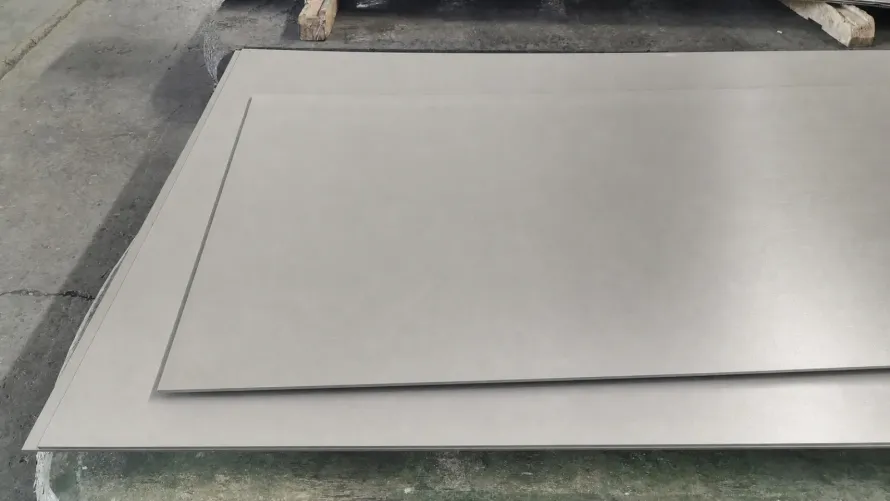
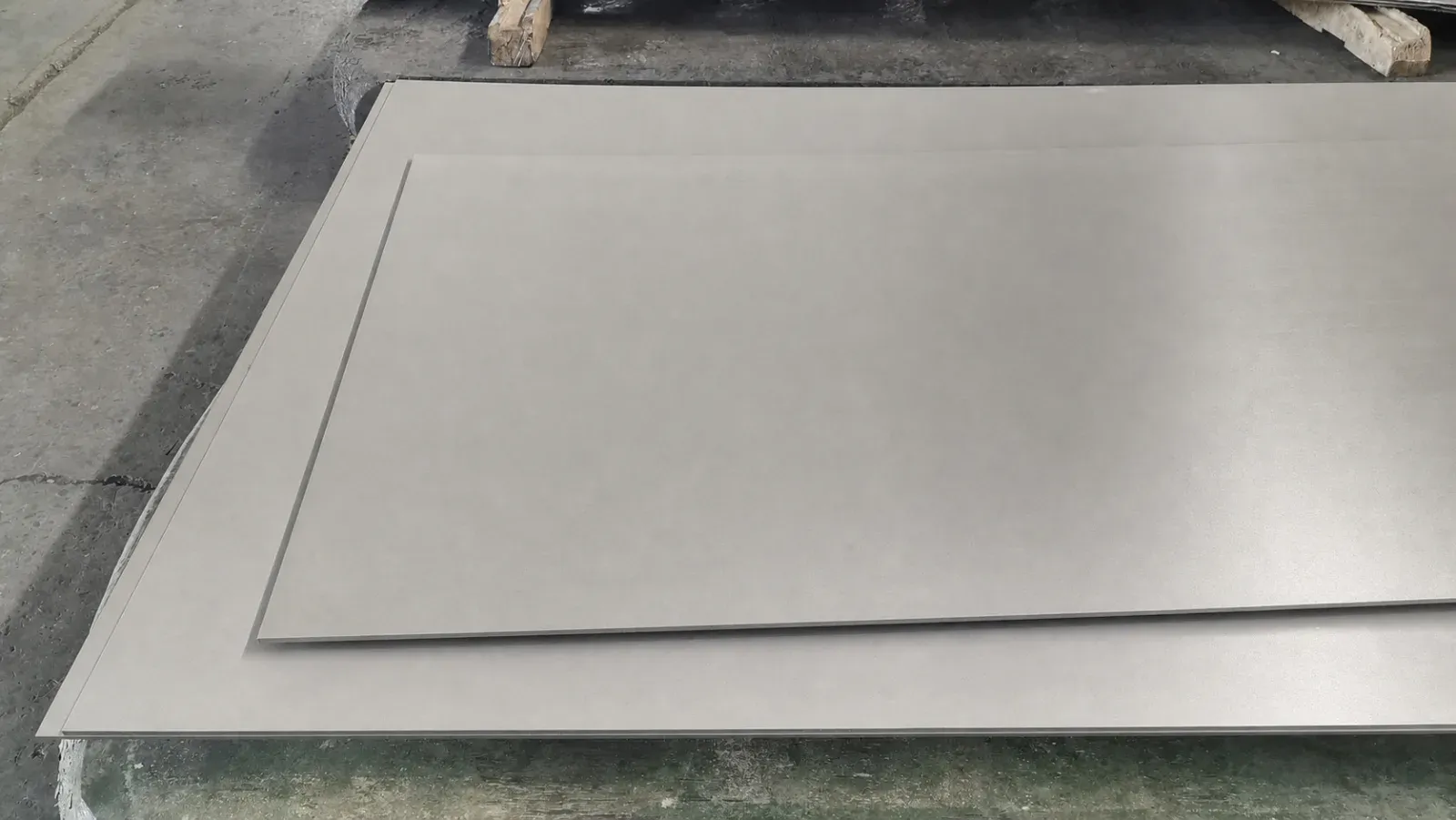
Real-product plate context: the image shows form only and does not establish Grade 5, condition, dimensions, certification, ownership or availability.
“Grade 5 titanium” identifies the Ti-6Al-4V alloy family, but it does not give a supplier enough information to quote or a buyer enough information to accept material. A workable engineering RFQ should state the applicable combination of product form, governing specification and revision, delivery condition, dimensions and tolerances, test direction, property basis, surface state, and documentation. The applicable fields are not paperwork around the grade; together they define what is being bought.
TIMET’s © 2000 Ti-6Al-4V datasheet makes the distinction visible. It mapped the base alloy to ASTM Grade 5, listed billet, bar, wire, plate and sheet, and presented minimum tensile properties by product, size, condition, specification, test direction and temperature. This historical datasheet is used here only to demonstrate that those variables are separate; it is not current standard text or evidence of current supply. The same chemical alloy name can therefore sit inside materially different purchasing envelopes. Treating those envelopes as interchangeable can produce a quote for the wrong form, a certificate against the wrong specification, or a test result taken in a direction that does not answer the drawing requirement.
Use the grade to identify the alloy, not the whole order
The grade is the first branch, not the last. TIMET separates Ti-6Al-4V Grade 5 from the extra-low-interstitial Grade 23 and the ruthenium-bearing Grade 29 variant. A buyer who writes only “Ti-6Al-4V” leaves variant identity unresolved; a buyer who writes only “Grade 5” still leaves the product form and acceptance basis unresolved.
That distinction matters before price comparison. Plate, billet, bar and wire are separate product forms in the historical TIMET table; the RFQ must select the form relevant to the drawing and contract. If one supplier prices plate and another assumes bar or billet, the quotations are not technically comparable when the form affects the requirement, even if both repeat “Grade 5.”
The practical rule is to pair the alloy identity with an explicit product noun. Write “Grade 5 titanium plate,” “Grade 5 titanium bar,” or the actual required form, then attach the specification that governs that form. Do not use a familiar standard number merely because it contains the same grade; verify that its scope matches the supplied form and condition.
Product form selects the relevant property row
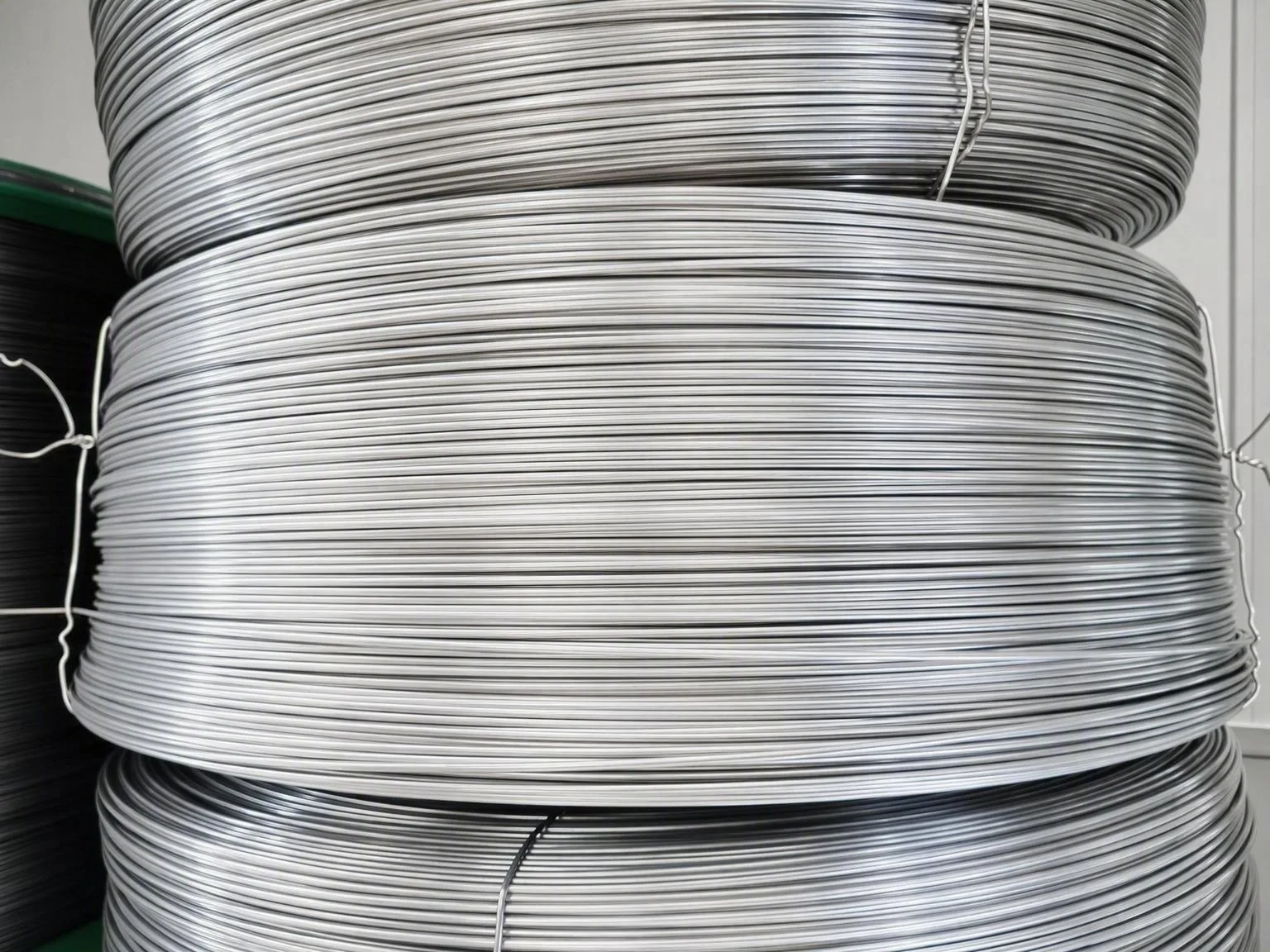
Generic wire-form illustration: product form is visible, but grade, diameter, condition, quantity, certification and availability are not.
The 2000 TIMET table does not present a single universal strength value for every piece of Ti-6Al-4V. It separates product, dimension, condition, specification, test direction and temperature. Its historical sheet-and-plate entry is annealed, refers to the then-cited ASTM B265 edition, and reports longitudinal and long-transverse directions. Other rows use different form and size boundaries. This is a useful purchasing lesson even when a project uses a different current standard: a property value belongs to a defined specimen and delivery state.
A certificate that says only “meets Grade 5” is therefore incomplete evidence for an order that depends on direction-specific or thickness-specific properties. The buyer should be able to trace each required value to the applicable product form, size range, condition, test orientation and test temperature. If the drawing needs transverse behavior but the order never states a direction, the parties may discover the gap only after material is produced.
Dimensions also affect the evidence request. TIMET notes that elongation for sheet or plate thinner than 0.025 inch must be negotiated with the manufacturer. That is not a universal limit for every specification, but it demonstrates why very thin material cannot inherit every table value without checking the footnotes and the governing document.
Condition is a material state, not a shipping adjective
The 2000 datasheet states that most Ti-6Al-4V properties are affected by microstructure, which is determined by thermomechanical history. Its physical-properties table also notes that Young’s modulus depends on texture and heat treatment. “Annealed,” “solution treated and aged,” and other conditions therefore cannot be treated as loose descriptions added after grade selection.
The RFQ should name the required delivery condition exactly as the governing specification and drawing use it. If the supplier proposes another condition, treat it as a technical deviation that follows the review path designated by the contract or drawing before award, not as a commercial synonym. The order should also define which heat-treatment record, lot identity and test report must accompany the material. A furnace-cycle record alone does not prove final properties, while a tensile result without lot and condition identity does not prove it belongs to the delivered stock.
For design calculations, keep typical datasheet values separate from guaranteed purchase requirements. A manufacturer’s typical modulus or strength curve helps screening; acceptance should use the governing specification, drawing and agreed test basis. Where the design requires a property not guaranteed by the product specification, add an explicit supplementary requirement or qualification plan rather than assuming the grade supplies it automatically.
Freeze eight fields before asking suppliers to quote
The following eight-field checklist is an author synthesis for procurement control, not a TIMET or ASTM requirement. It can expose unresolved identity and acceptance decisions before suppliers quote:
- Alloy identity: grade, UNS designation or approved equivalent, including whether ELI or another variant is required.
- Product form: sheet, plate, bar, billet, wire, tube, forging, or a defined semi-finished part.
- Governing documents: specification number, revision, drawing and any customer or program requirement.
- Delivery condition: the exact annealed, solution-treated-and-aged, stress-relieved or other approved state.
- Geometry: thickness or diameter, width, length, tolerance, machining allowance and surface requirement.
- Test basis: required mechanical properties, specimen location, orientation, temperature and any supplementary test.
- Traceability: melt, heat, lot, piece or batch identity and how that identity must appear on records and material.
- Documentation and deviations: certificate type, test reports, heat-treatment evidence, marking, and the authority to approve substitutions.
Not every order needs every possible test. The point is to make each applicable decision explicit. A catalog purchase may need a short subset; a safety-critical or customer-controlled part may require all eight plus program-specific controls. The responsible engineer and contract documents determine the depth.
Compare quotations against the same technical baseline
Before comparing unit prices, normalize each quotation against the frozen RFQ fields. Check whether each supplier priced the same form and starting size, the same delivery condition, the same specification revision, the same testing orientation and the same records. Record stock availability, minimum order, machining allowance, destructive-test coupons, special heat treatment and third-party inspection as explicit inclusions or assumptions so that every quotation is evaluated on the same stated basis.
If a supplier’s offer changes one of the eight fields, treat it as a deviation with an identified technical owner. Do not allow a shorter grade label on the quotation to silently replace the fuller requirement in the RFQ. The final purchase order should resolve each deviation and preserve the agreed technical baseline.
The conclusion is simple: Grade 5 tells you which alloy family to discuss, not the complete material configuration to buy. Form, condition, direction and evidence turn that label into an auditable order.
Sources
- TIMET, TIMETAL 6-4, 6-4 ELI & 6-4-.1Ru (PDF © 2000; historical technical reference only), accessed September 12, 2026: https://www.timet.com/assets/local/documents/datasheets/alphaandbetaalloys/6-4.pdf
FAQ
# Which fields should a Grade 5 titanium RFQ include?
# Is a certificate that says only Grade 5 enough to accept titanium?
Need this material? Get a factory-direct quote.