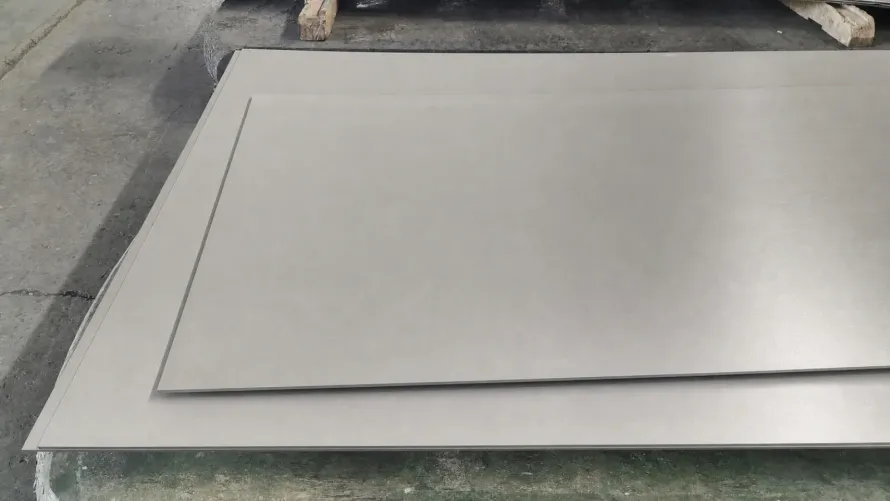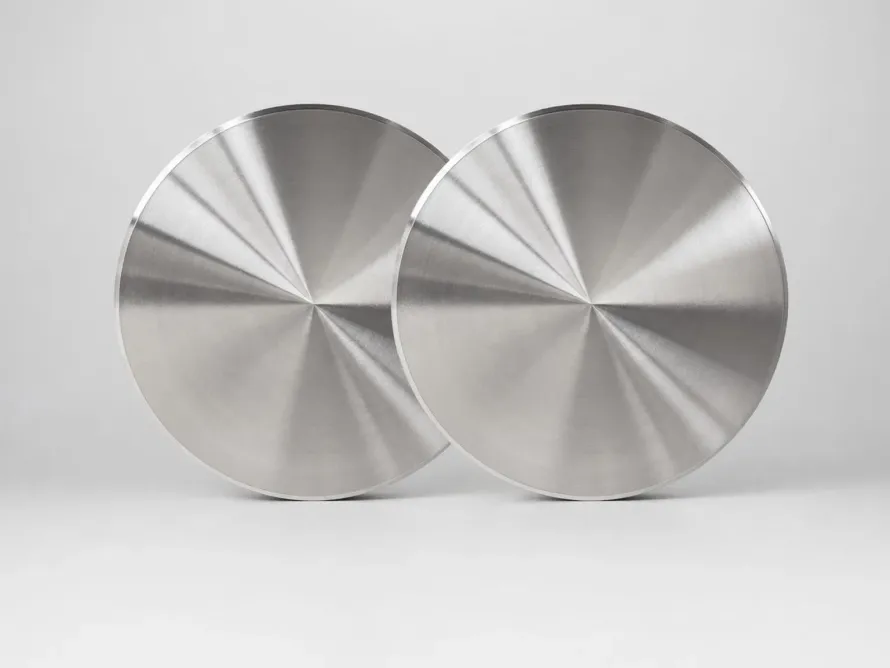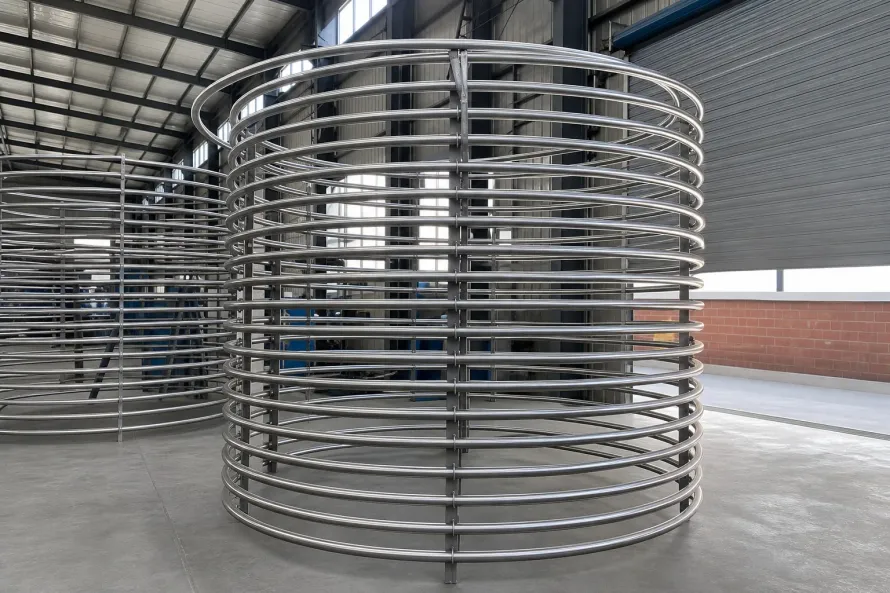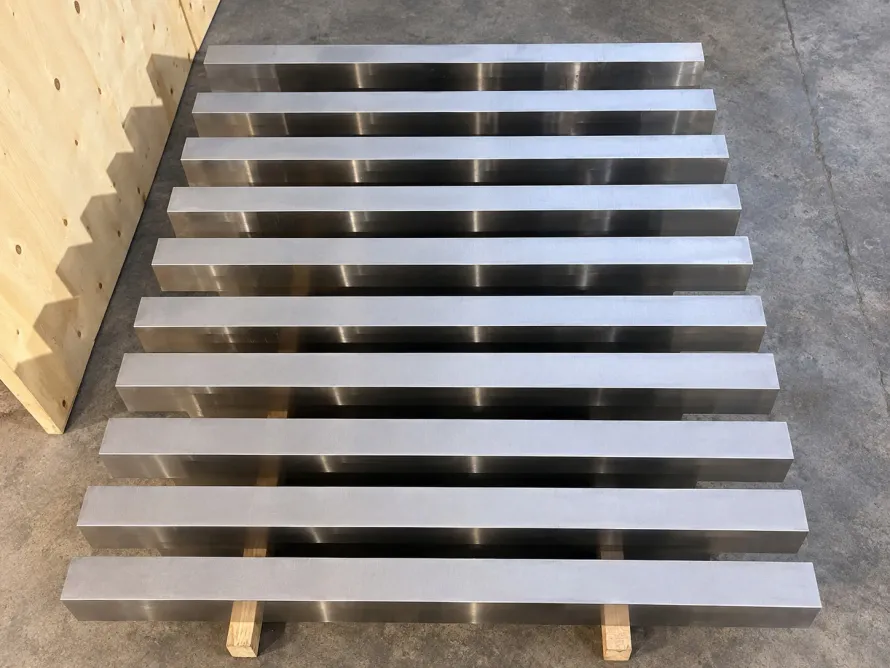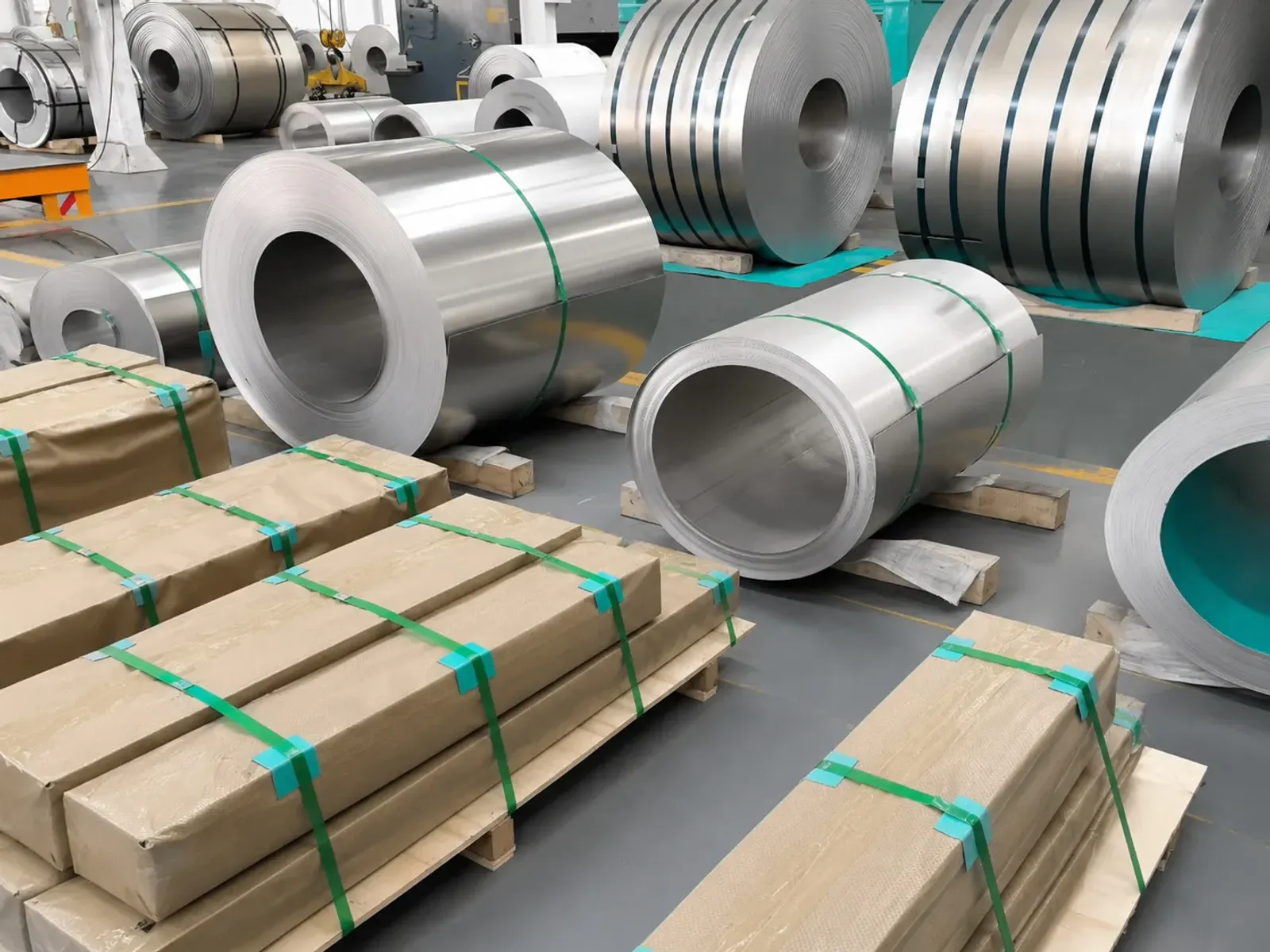
Titanium coil and sheet forms; the image does not identify a CP grade or specification.
Commercially pure titanium Grades 1, 2, 3 and 4 are not a ladder from “less pure” to “more pure.” They are separate chemistry-and-property envelopes. Across the family, tighter or higher limits for oxygen and iron help set the balance between strength and formability. A buyer should therefore select the grade from the required product form, fabrication route and mechanical envelope—not from the grade number alone.
This distinction matters at quotation stage. “CP titanium” does not tell a mill which grade, product specification, condition or property set must be supplied. It also does not justify replacing a Grade 2 requirement with Grade 4 merely because the latter is stronger.
The number describes a property envelope, not a purity score
Alleima’s current Grade 1 seamless-tube page describes Grade 1 as unalloyed CP titanium with low oxygen content, relatively low strength and high ductility. Its nominal maxima list 0.12% oxygen and 0.20% iron. The current Grade 2 page lists higher nominal maxima—0.25% oxygen and 0.30% iron—and describes a moderate-strength tube grade.
TIMET’s historical titanium-alloy guide explains the family logic directly: small oxygen and iron additions influence the mechanical properties of CP titanium, and progressively higher oxygen content corresponds to higher strength levels. This is the useful way to read Grades 1 through 4. The numbers identify controlled grade envelopes; they are not percentages of titanium and they do not rank cleanliness for every application.
Grade 3 sits inside that progression, but it is still its own specified grade—not an informal midpoint made by averaging Grades 2 and 4. TIMET’s historical guide maps TIMETAL 65A to ASTM Grade 3 and reports typical values of 585 MPa UTS, 450 MPa proof stress, 25% elongation and a 2.5T bend radius for 2 mm sheet. Those values explain the progression; they are not current acceptance criteria.
Strength rises, but the numbers must stay on the same basis
The available producer data show the direction without creating a false like-for-like comparison.
| Grade and cited product | Chemistry/property signal | What the value can support |
|---|---|---|
| Grade 1, current Alleima seamless-tube page | O max 0.12%; Fe max 0.20%; lower strength and high ductility | Grade 1 is the more formable end of the cited CP range |
| Grade 2, current Alleima seamless-tube page | O max 0.25%; Fe max 0.30%; ASTM B338 minima: 345 MPa UTS, 275 MPa yield, 20% elongation | A current tube-specification reference point for Grade 2 |
| Grade 3-equivalent TIMETAL 65A, historical producer guide | Typical 585 MPa UTS, 450 MPa proof stress, 25% elongation, 2.5T bend radius for 2 mm sheet | Historical context for the intermediate CP grade; not current acceptance values |
| Grade 4-equivalent TIMETAL 75A, historical producer sheet | O max 0.40%; Fe max 0.50%; typical 680 MPa UTS, 560 MPa yield, 23% elongation, 3.0T bend radius | Historical producer context for the high-strength end of the four CP grades |
The Grade 2 row reports current ASTM B338 tube minima from one producer page. The Grade 3 and Grade 4 rows report historical typical producer data. They cannot be divided into a universal strength ratio, and the bend results cannot be copied into a different form, thickness or condition. The comparison establishes direction; the purchase specification supplies the controlling numbers.
A stronger CP grade is not automatically the better choice
More strength may support load, pressure or section decisions, but it can also change cold-forming margin and springback. A tube bend, deep-drawn sheet part or tightly formed component may value ductility differently from a straight machined bar. Welding, machining and corrosion decisions still depend on the actual grade, surface condition, geometry, service environment and qualified fabrication route.
That is why substitution must be evaluated as a route change rather than as a single property upgrade. If Grade 4 is offered against a Grade 2 drawing, compare the same product standard and form first. Then check the required strength, elongation, bend or forming route, weld procedure, dimensional capability and application acceptance. A lower-priced or more available grade is useful only if the finished route still satisfies the order.
What a usable CP titanium RFQ should contain
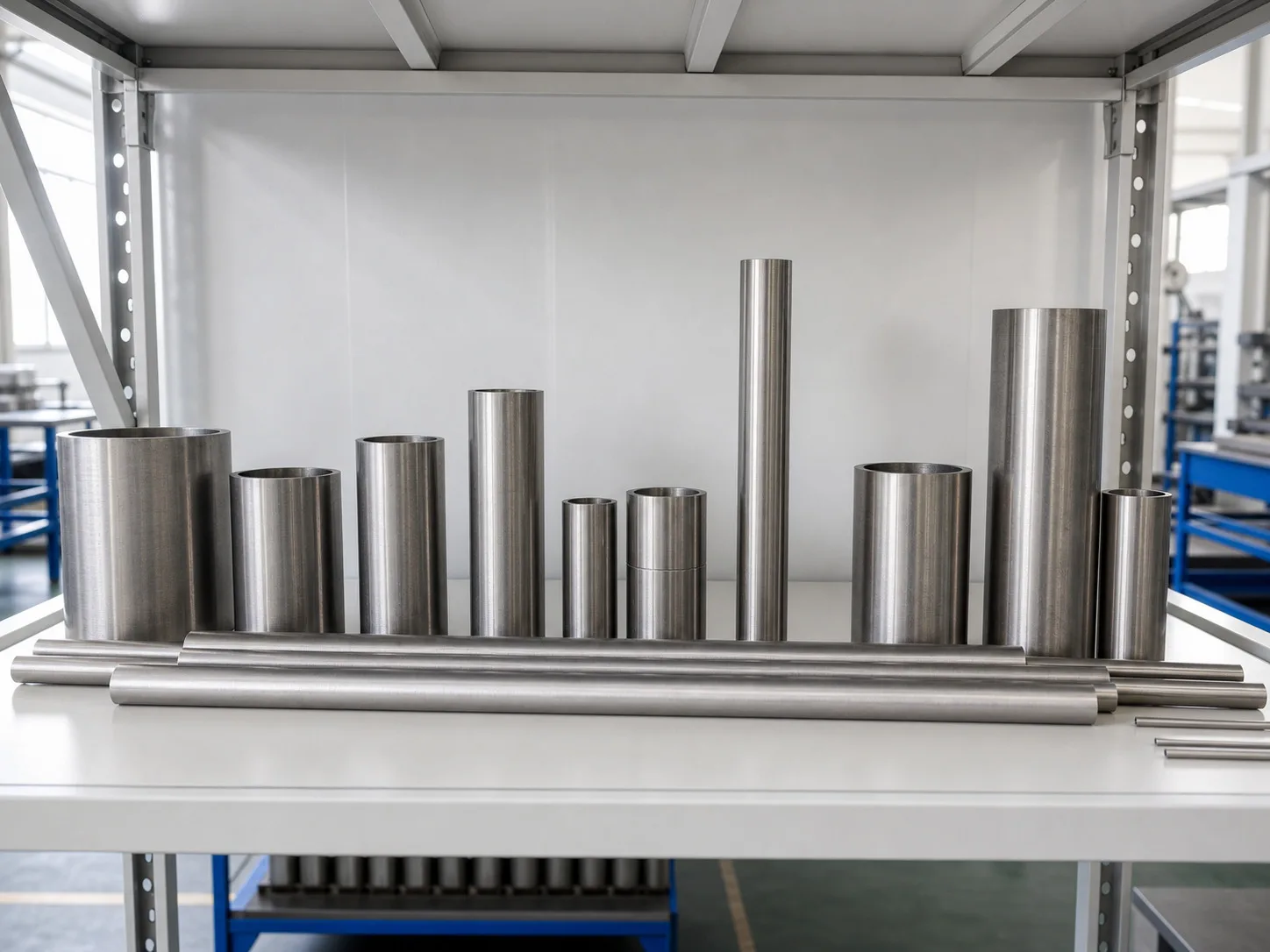
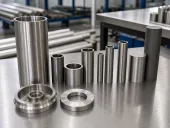
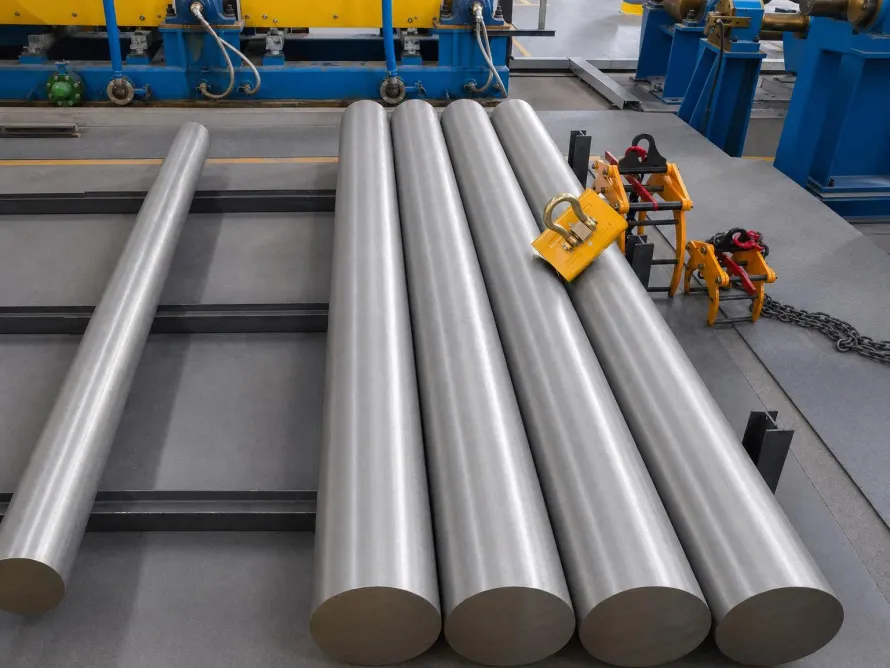
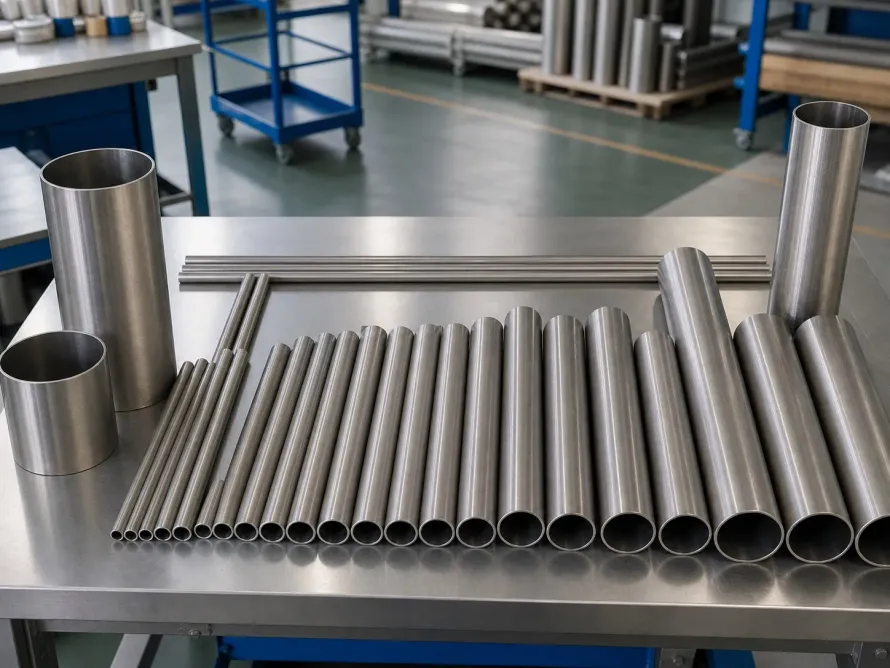
Tube and bar product forms; no exact grade, dimension or certification is shown.
Start with the exact grade and product specification. Add the form—sheet, plate, bar or tube—the supply condition, dimensions and tolerances. State the chemistry and mechanical-property requirements that control acceptance, including test direction or sampling where relevant. Finish with surface condition, inspection, certification and change-notification requirements.
For a proposed alternative, ask the supplier to place both options on one basis: same product standard, form, thickness, condition and test method. That comparison reveals whether the change is actually a stronger version of the same route, or a different forming and qualification problem.
The practical answer is simple: choose CP titanium Grades 1-4 by the property and processing envelope the part needs. Do not buy a grade number as shorthand for purity, and do not accept “CP titanium” as a complete material definition.
Sources
- Alleima: Ti Grade 1 tube and pipe, seamless — datasheet updated May 9, 2025; accessed October 14, 2026.
- Alleima: Ti Grade 2 tube and pipe, seamless — datasheet updated May 9, 2025; accessed October 14, 2026.
- TIMET: Titanium Alloys — historical technical brochure, ©1997; accessed October 14, 2026.
- TIMET: TIMETAL 75A commercially pure titanium — historical Grade 4-equivalent producer sheet, ©2000; accessed October 14, 2026.