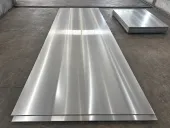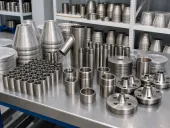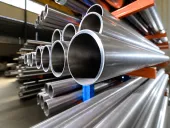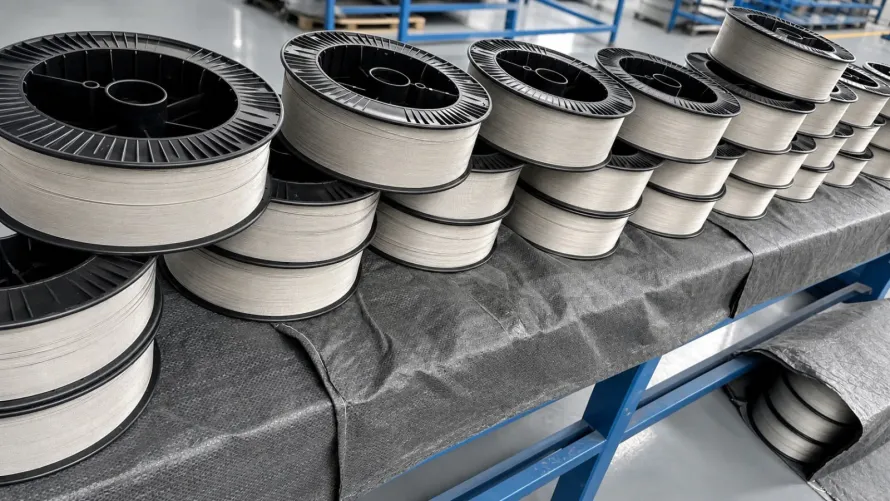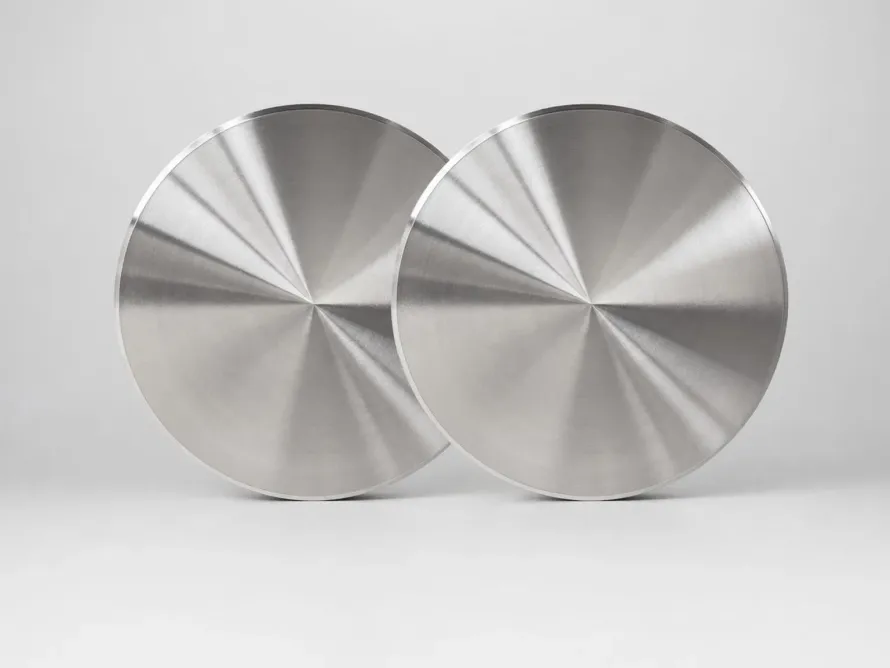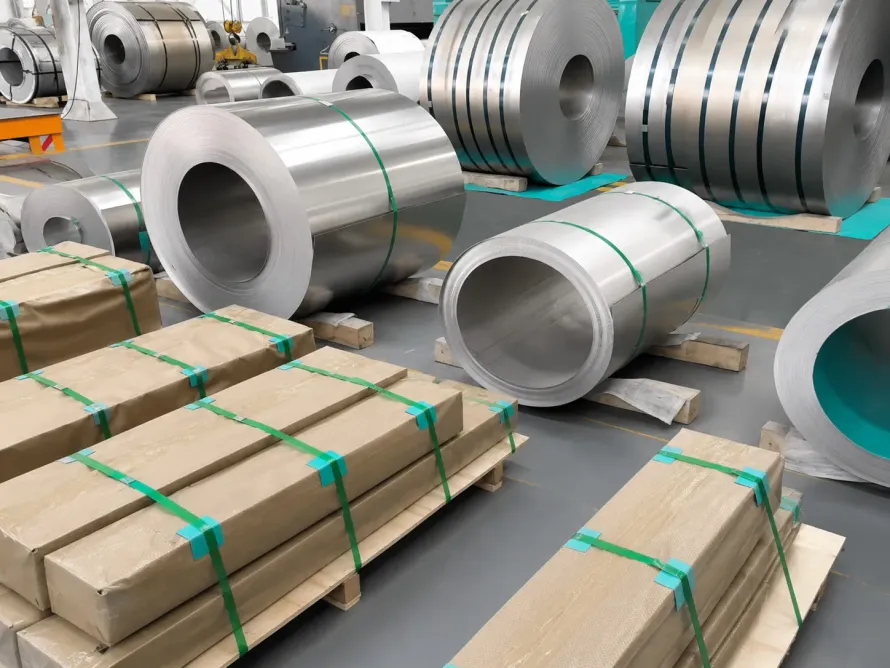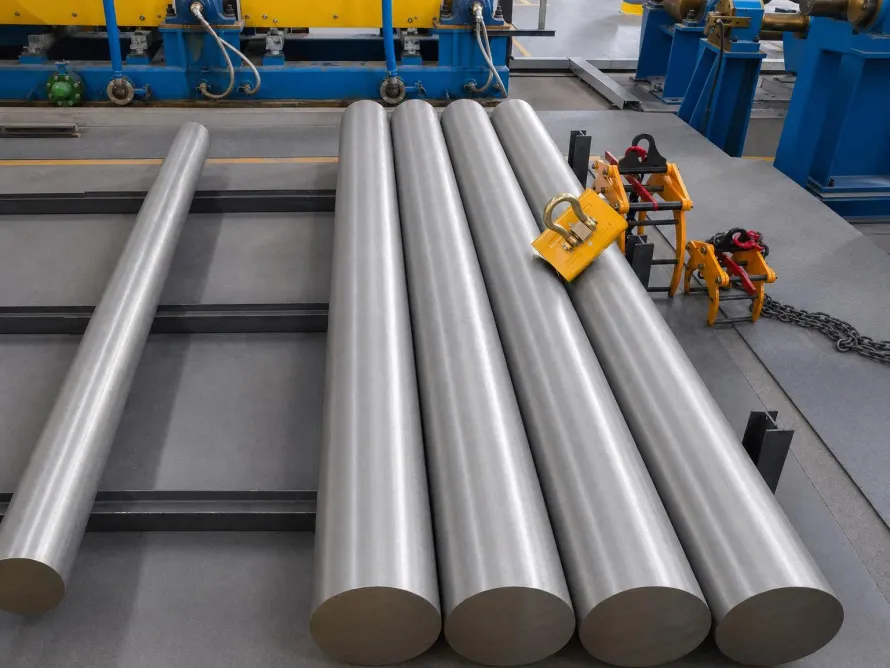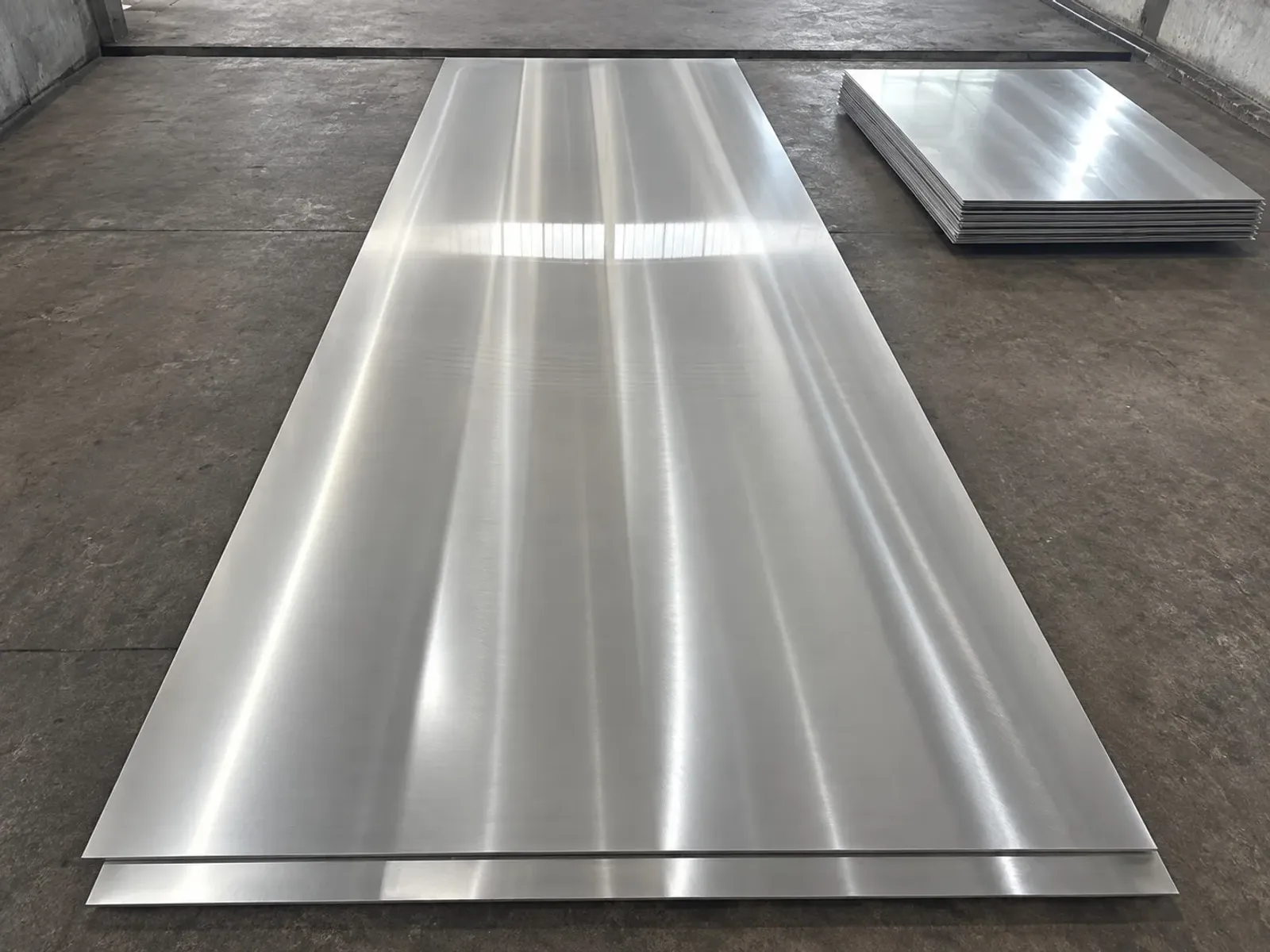
A visible surface finish can be described, but material identity and acceptance still come from the order and inspection records.
ASTM B600-22 gives producers, fabricators and users a guide for cleaning and descaling titanium and titanium-alloy surfaces. It is useful for choosing a process family, but it does not by itself define the finished appearance, roughness, residue limit, removal depth or acceptance evidence for a purchase order. Buyers should cite the applicable edition only when it is relevant, then separately state the delivered surface condition, the next manufacturing step, prohibited contamination, inspection method and records required for acceptance.
Read B600 as process guidance, not a universal acceptance clause
ASTM’s current catalog lists B600-22 as active and says the guide covers removal of ordinary shop soils, oxides, heat-treatment scale and foreign surface contaminants from wrought, cast and fabricated titanium products. The public scope also says the procedures are not mandatory. That distinction matters: citing B600 can establish a common cleaning reference, but it does not convert every procedure in the guide into a contractual requirement. ASTM B600-22
The scope identifies several reasons for cleaning. Foreign substances may need to be removed before chemical milling, joining, plating or fabrication, and where they could interfere with corrosion resistance, stability or quality. It also notes that acid etching may be required when an oxygen-contaminated layer or alpha case is present. These statements establish the guide’s purpose and the existence of different surface problems; the public page does not establish the exact chemistry, concentration, exposure time, material-removal allowance or acceptance threshold for a specific order.
| Purchasing question | What the public B600 scope supports | What the order still needs |
|---|---|---|
| Why is the surface being cleaned? | Removal of shop soils, oxides, heat-treatment scale or foreign contaminants | The actual downstream operation and the contamination or surface condition that matters to it |
| Is one cleaning route always required? | No. B600 is presented as a guide and describes different categories of cleaning or descaling | The approved process route, prohibited media or chemicals, and any process qualification required by the buyer |
| Does “cleaned to B600” define the delivered finish? | Not from the public scope | Finish designation, appearance or roughness criteria, permitted discoloration, residue criteria and inspection method |
| Does the catalog page provide an acceptance test? | No complete acceptance or sampling clauses are visible on the public page | The test method, location, frequency, acceptance limit, records and disposition of nonconforming product |
Let the next operation define the cleanliness objective
“Clean” is not a single measurable condition. A surface prepared for joining has a different risk focus from a mill product that will be machined, chemically milled or heated again. Before specifying a route, identify the next operation and the failure mode the cleaning requirement is meant to control. That may be removable shop soil, embedded blasting media, heat tint and scale, or an oxygen-enriched surface layer. Do not use those examples as proof that every delivered product has each condition.
An older TIMET design and fabrication manual makes the industrial logic explicit: titanium parts should be clean before heating because the surface is sensitive to contamination, and handling after cleaning should be minimized. Its surface-treatment section also varies the scale-removal approach with the severity of prior heat exposure. This is supporting process context, not a current ASTM clause and not an acceptance specification. TIMET Design and Fabrication of Titanium Alloys
For a buyer, the practical sequence is therefore: define the next operation, identify the surface condition that could interfere with it, let the responsible process owner approve the preparation route, and then translate the needed result into inspectable order language. That avoids prescribing an acid or abrasive route without accounting for dimensions, product geometry, later processing or the supplier’s qualified controls.
Separate the product condition from the cleaning process
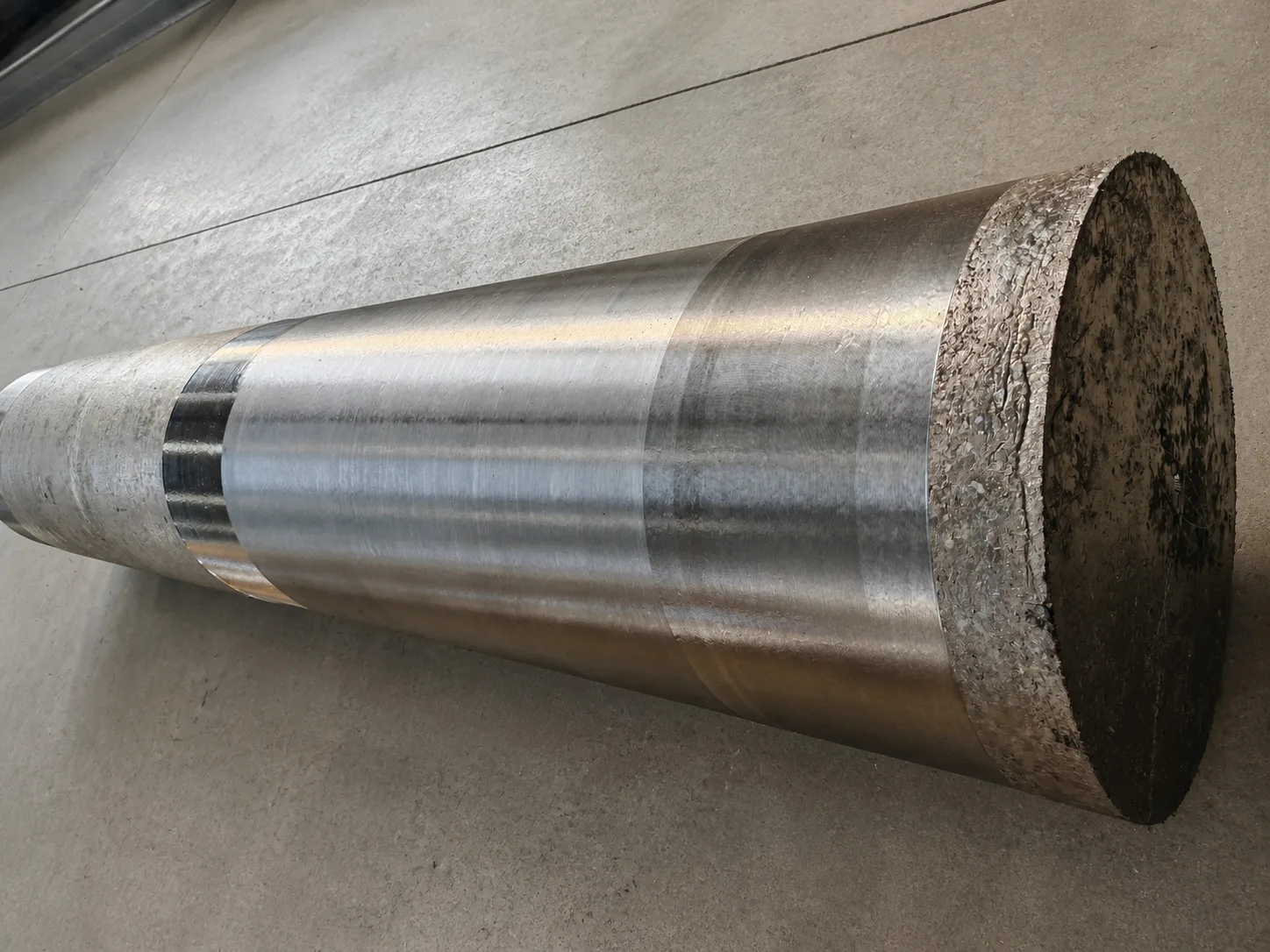
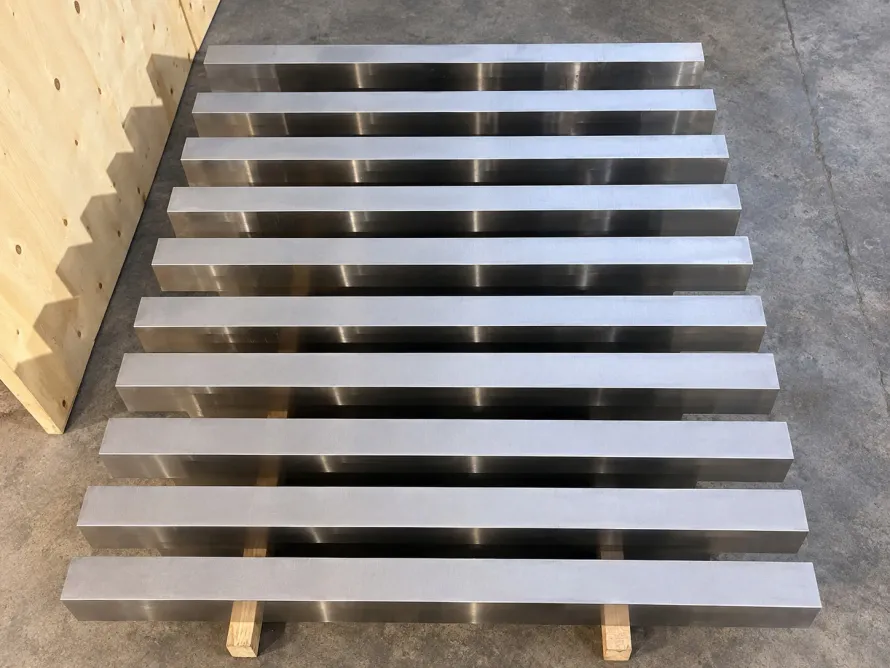
Different visible surface conditions on one billet illustrate why product condition and cleaning route must be specified separately.
A material specification and a cleaning guide answer different questions. For example, the public ASTM B348/B348M-25 abstract says annealed titanium bars and billets may be furnished descaled, sandblasted, ground or rough turned. Those are product-surface conditions offered within that specification’s scope. B600, by contrast, is a guide to cleaning and descaling methods. A purchase order may need both a product specification and a cleaning reference, but one should not be used as a substitute for the other. ASTM B348/B348M-25
The same separation applies to drawings and customer specifications. A drawing may control dimensions after surface preparation; a customer specification may restrict abrasive media or require a particular cleanliness check; the purchase order may require traceable records. Those requirements remain contractual even when B600 is also cited. Conversely, citing B600 does not prove that an unspecified cosmetic finish, roughness value or documentation package has been met.
Build an order around a verifiable result
A useful order structure has five parts:
- Product baseline: product form, material specification, grade, condition, dimensions and the governing editions.
- Purpose: the next manufacturing operation and the surface condition the preparation is intended to address.
- Process boundaries: an approved cleaning or descaling route, plus any prohibited media, chemicals or cross-contamination risks. State who approves substitutions.
- Acceptance: the finished-surface characteristic, inspection method, sampling or inspection frequency, acceptance limit and how dimensions are controlled after material removal.
- Evidence: lot or batch linkage, process record, inspection result and any deviation approval required with the shipment.
An illustrative enquiry could read: “Supply the specified titanium product in the stated condition and dimensions. Prepare surfaces using the agreed B600-22-guided route for the identified next operation. Do not substitute cleaning or blasting media without written approval. Meet the separately stated surface and dimensional acceptance criteria, and provide the specified process and inspection records linked to the lot.”
This wording is a buyer-authored starting point, not ASTM text. Replace every open phrase with the project’s actual requirement and consult the licensed standard when exact procedures or mandatory clauses are contractual. If the buyer cannot name the intended result or how it will be checked, adding “ASTM B600” alone does not close the acceptance gap.
Sources
- ASTM B600-22 — Standard Guide for Descaling and Cleaning Titanium and Titanium Alloy Surfaces — official active-edition catalog and public scope; checked October 25, 2026.
- ASTM B348/B348M-25 — Standard Specification for Titanium and Titanium Alloy Bars and Billets — official public abstract used only for listed annealed surface conditions; checked October 25, 2026.
- TIMET — Design and Fabrication of Titanium Alloys — older industrial manual used as supporting process context, not as a current standard; checked October 25, 2026.