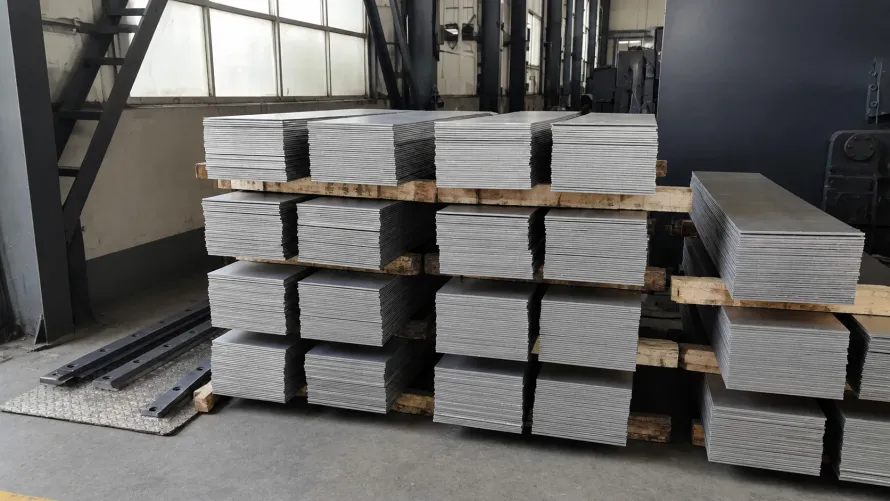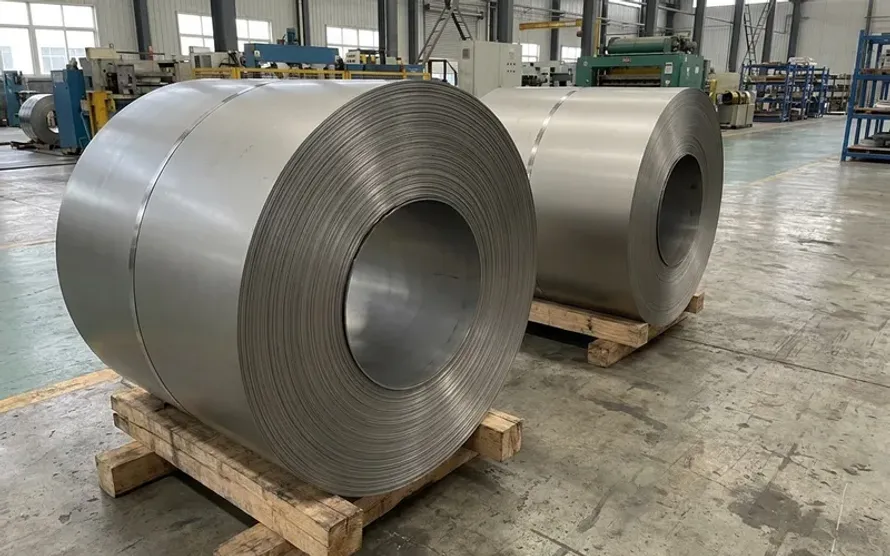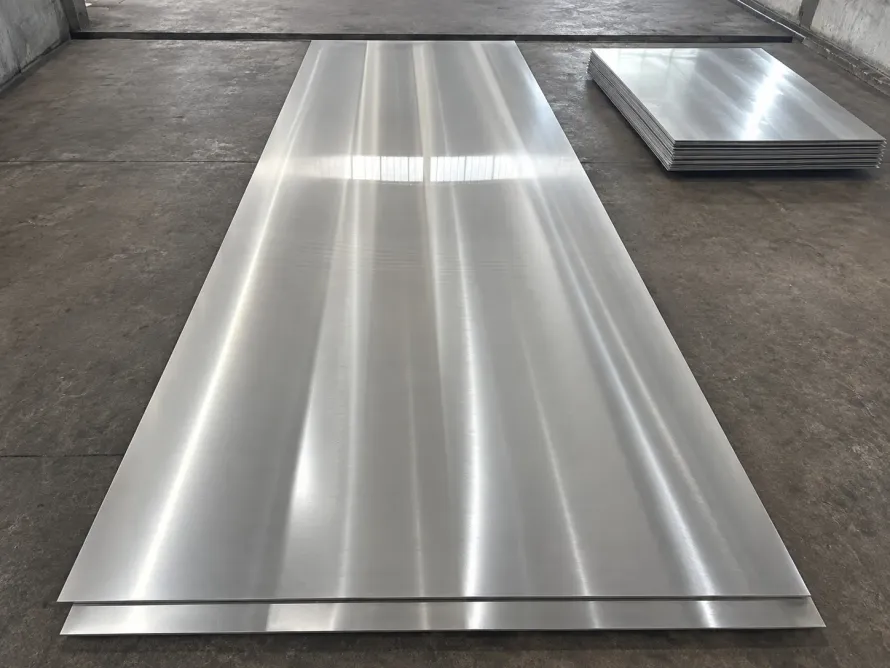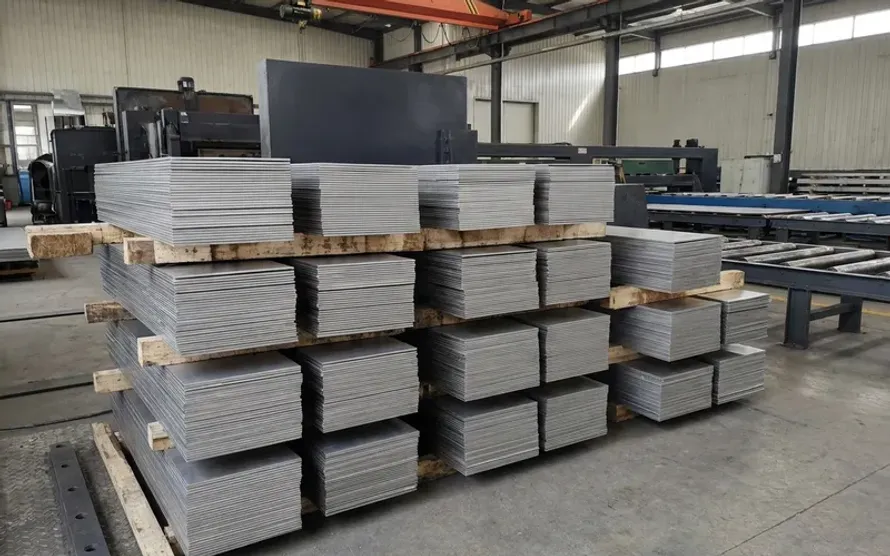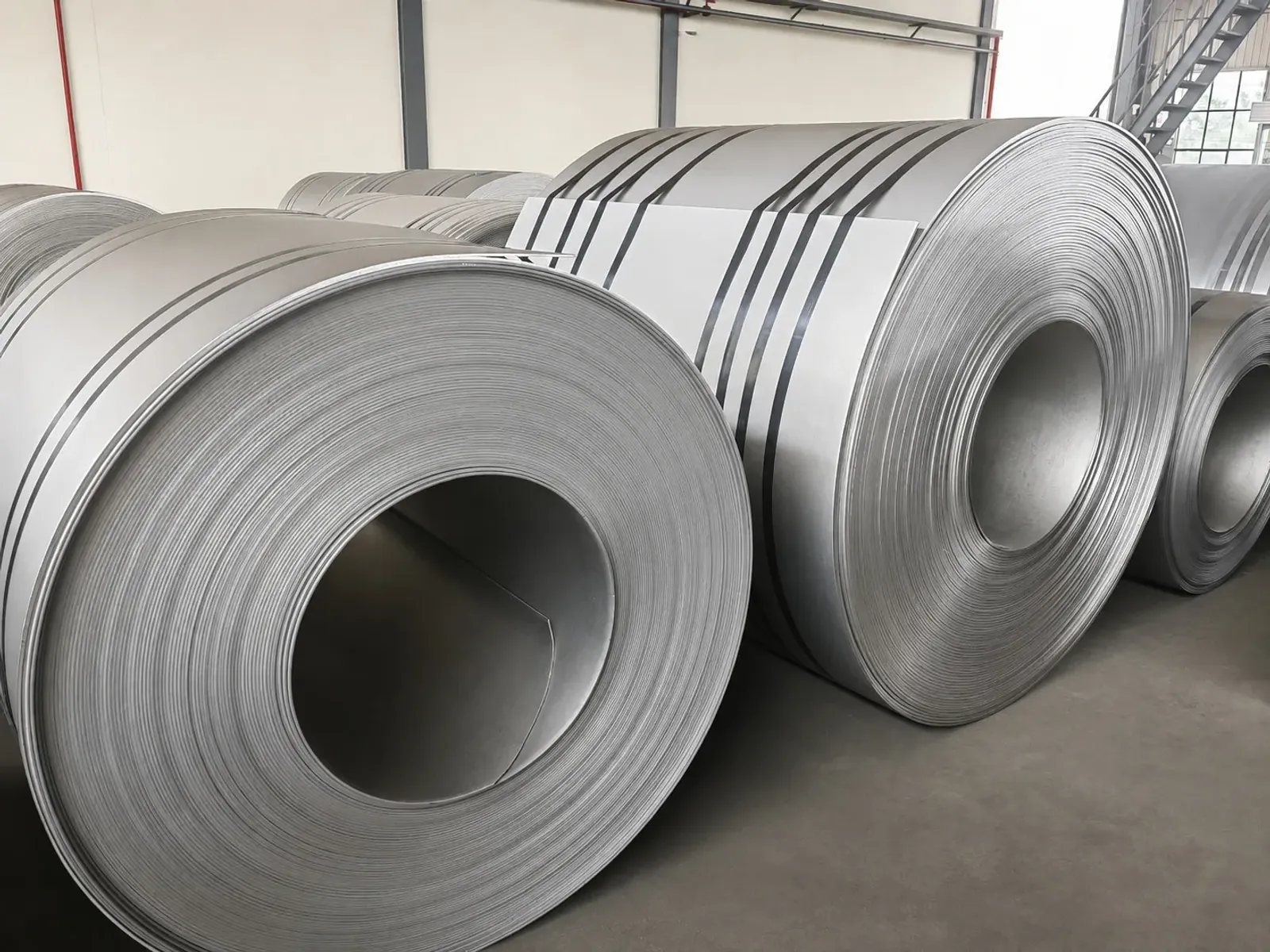
Strip and sheet are product forms in which the Grade 2 or Grade 2H callout must be stated and verified in the order documents.
Grade 2H is not a different titanium chemistry from Grade 2 in the current ASTM B265-25 and B348/B348M-25 public scopes. Both use UNS R50400. The H callout adds a higher guaranteed minimum ultimate tensile strength (UTS) of 58 ksi (400 MPa). A buyer therefore should treat Grade 2H as a strength-certification requirement inside the applicable product specification, not as a shorthand for a new alloy or as permission to ignore product form, edition, condition, dimensions or the rest of the order.
Grade 2H changes the guarantee, not the alloy identity
ASTM lists B265-25 as the active specification for annealed titanium and titanium-alloy strip, sheet and plate. Its public scope identifies Grade 2 and Grade 2H with the same UNS R50400. It defines Grade 2H as Grade 2 with a 58 ksi (400 MPa) minimum UTS. The same public note says H-grade material is identical to the corresponding numeric grade except for the higher guaranteed minimum UTS. ASTM B265-25
ASTM also lists B348/B348M-25 as active for annealed titanium and titanium-alloy bars and billets. Its public scope uses the same Grade 2/Grade 2H wording and the same UNS R50400 identity. ASTM B348/B348M-25
That means the “H” is not evidence of extra alloying, a different UNS number or a universal improvement in every design property. It is a specified minimum strength guarantee. The public pages do not authorize a buyer to infer fatigue allowables, forming limits, weld procedure qualification, corrosion performance or code acceptance from the H suffix alone.
Product form and standard edition still come first
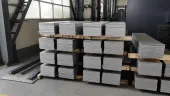
The H callout sits inside a product specification. B265-25 covers annealed strip, sheet and plate; B348/B348M-25 covers annealed bars and billets. A purchase order that says only “Grade 2H titanium” leaves the supplier without the full product route and dimensional baseline.
For a plate order, identify B265-25, Grade 2H, the required product form, condition, dimensions and the contract’s inspection and document requirements. For bar or billet, identify B348/B348M-25 instead. If a drawing, pressure-vessel code, customer specification or legacy contract cites another edition, that contractual edition remains a separate fact from ASTM’s current catalog status. Do not silently replace it with the newest page or assume the requirements are unchanged.
ASTM’s public notes say Grades 2H, 7H, 16H and 26H are intended primarily for pressure-vessel use. “Primarily” identifies the context that led to these higher-strength variants; it does not prove that every pressure-vessel design requires Grade 2H, nor that citing Grade 2H alone satisfies a vessel code, design calculation or customer approval.
The certification direction is not reversible
The public ASTM note says H-grade material may always be certified as meeting the requirements of its corresponding numeric grade. In this limited standard context, material documented as Grade 2H can also be certified to Grade 2.
The reverse does not follow from that wording. A Grade 2 certificate does not by itself prove the higher 58 ksi (400 MPa) minimum UTS guarantee required by the H designation. A buyer considering substitution should check the exact product specification and edition, the reported tensile result and test basis, the design or code requirement, and the approving authority. An actual test result above 400 MPa is also not automatically the same as certification to every Grade 2H requirement.
Put the H requirement into the order and the MTR review
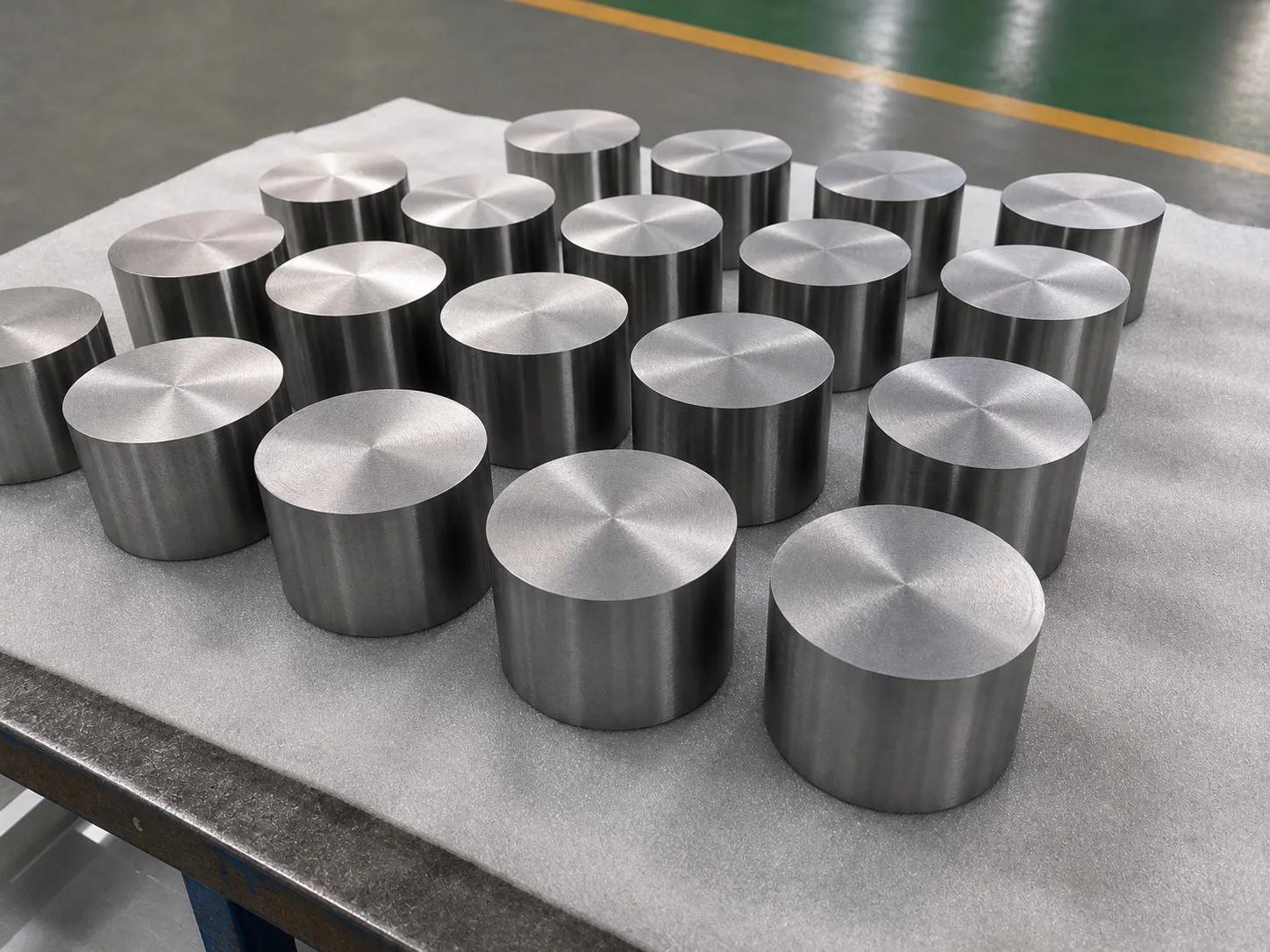
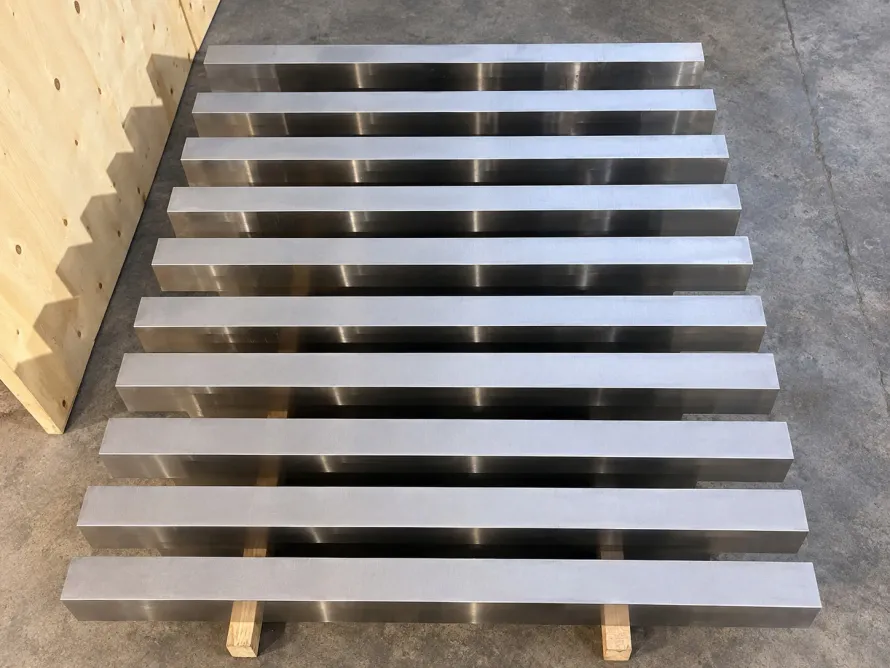
For billet procurement, the applicable specification, edition and Grade 2H callout belong in the order and heat- or lot-linked documents.
A compact Grade 2H purchase description should carry at least these separate elements:
- Product form and edition: B265-25 for strip, sheet or plate, or B348/B348M-25 for bar or billet, unless the contract controls another edition.
- Grade callout: write Grade 2H explicitly when the higher guaranteed minimum UTS is required; do not abbreviate it to Grade 2 in the RFQ and expect the supplier to infer H.
- Condition and dimensions: state the required condition, size, tolerances and any downstream fabrication constraints under the governing documents.
- Acceptance evidence: require a material test report linked to the supplied heat or lot that identifies the invoked specification/edition, product form, grade and reported tensile results required by the contract.
- Substitution control: state who may approve Grade 2, Grade 2H or another product-standard substitution, and require the approval before manufacture or shipment.
An illustrative line could read: “ASTM B265-25 Grade 2H titanium plate, annealed, dimensions and tolerances per drawing; provide a heat/lot-linked material test report identifying Grade 2H and the applicable tensile results. No substitution to Grade 2 or another edition without written approval.” Adapt it to the actual contract and licensed standard.
The key distinction is simple: Grade 2H does not change the Grade 2 alloy identity, but it does change what the supplier must guarantee and document. That difference belongs in the product callout, the acceptance review and any substitution decision.
Sources
- ASTM B265-25 — Standard Specification for Titanium and Titanium Alloy Strip, Sheet, and Plate — official active-edition catalog and public scope; checked October 27, 2026.
- ASTM B348/B348M-25 — Standard Specification for Titanium and Titanium Alloy Bars and Billets — official active-edition catalog and public scope; checked October 27, 2026.