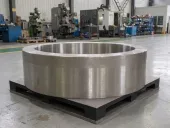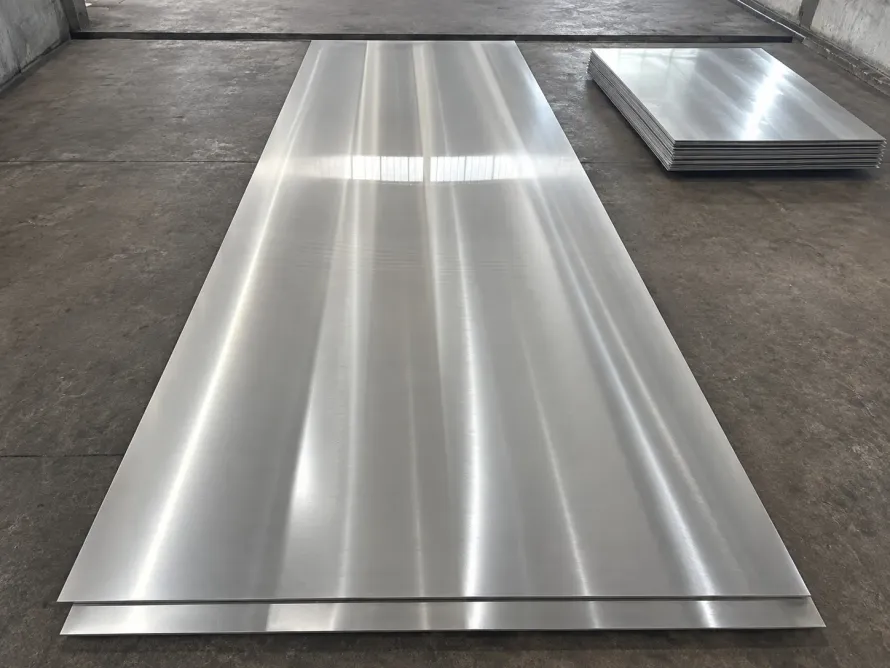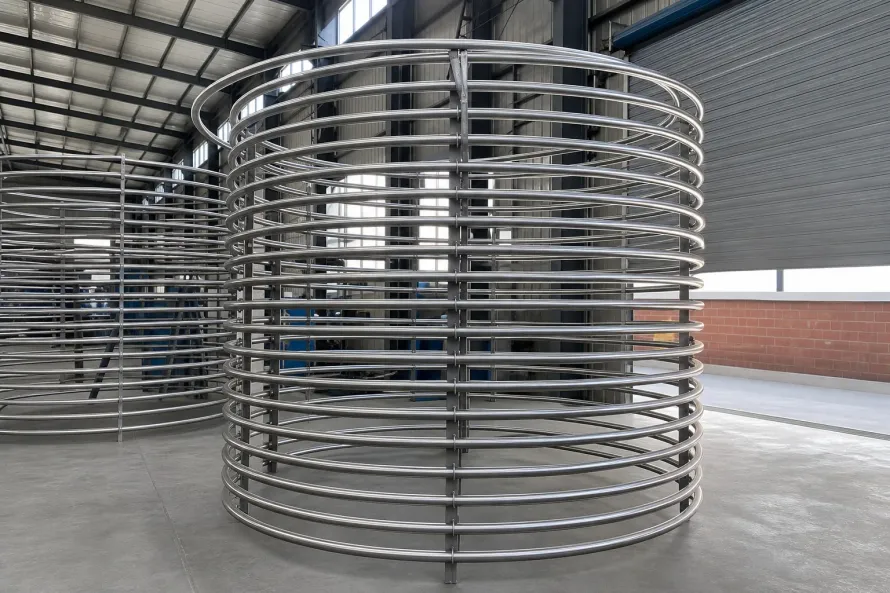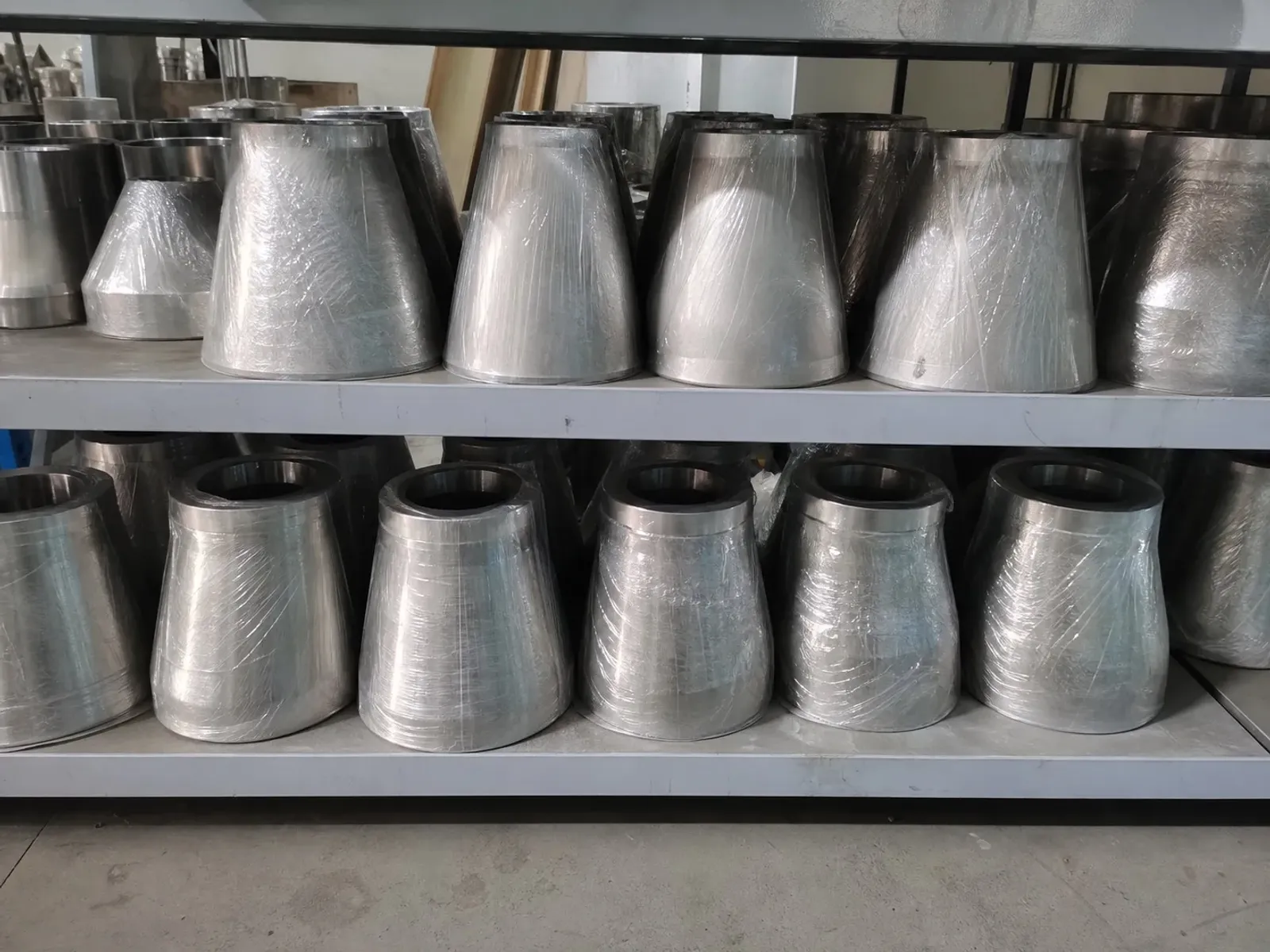
Reducer fittings illustrate the product family addressed by B363; appearance alone does not establish grade, route or compliance.
ASTM B363-23 is the active product specification for factory-made seamless and welded unalloyed-titanium and titanium-alloy welding fittings. Its public scope includes elbows, returns, caps, tees, reducers and lap-joint stub ends. It does not turn the fitting callout into a complete piping purchase specification: the buyer still has to identify the fitting geometry and grade, the mating pipe specification, the starting-product or fabrication route when it matters, dimensions, drawings and contract acceptance evidence.
B363 identifies the fitting product family
ASTM lists B363-23 as active, last updated November 7, 2023. Its title covers seamless and welded titanium welding fittings, and its public scope describes factory-made fittings intended for general corrosion-resistant and elevated-temperature service. Listed forms include 45-degree and 90-degree elbows, 180-degree returns, caps, tees, reducers, lap-joint stub ends and other types. ASTM B363-23
That scope answers an important product-form question: the ordered item is a fitting, not simply a short length of pipe. It does not, from the public catalog text alone, establish a project pressure rating, piping-code acceptance, exact dimensions, chemistry, mechanical values, tolerances, sampling plan or inspection package. Those details must come from the licensed applicable edition and the governing contract, drawing and code.
The starting-product route remains a separate decision
The B363 public abstract says fittings may start from billets, bars, plates, or seamless or welded pipe or tube. It also lists manufacturing operations such as forging, forming, pressing, piercing, extrusion, upsetting, rolling, bending and fusion welding, alone or in combination.
This matters because the word “fitting” does not reveal one universal route. A reducer formed from plate and joined by fusion welding does not have the same production history as a seamless fitting formed from billet or pipe. B363 can govern the finished fitting family while the purchase order separately controls route-sensitive details. If the route affects design approval, corrosion service, examination, documentation or customer qualification, state the allowed route instead of inferring it from the finished shape.
The public abstract does not provide the mandatory route-specific clauses or acceptance limits. Do not invent them from a catalog page or substitute a supplier blog for the licensed standard.
The mating pipe has its own product specification
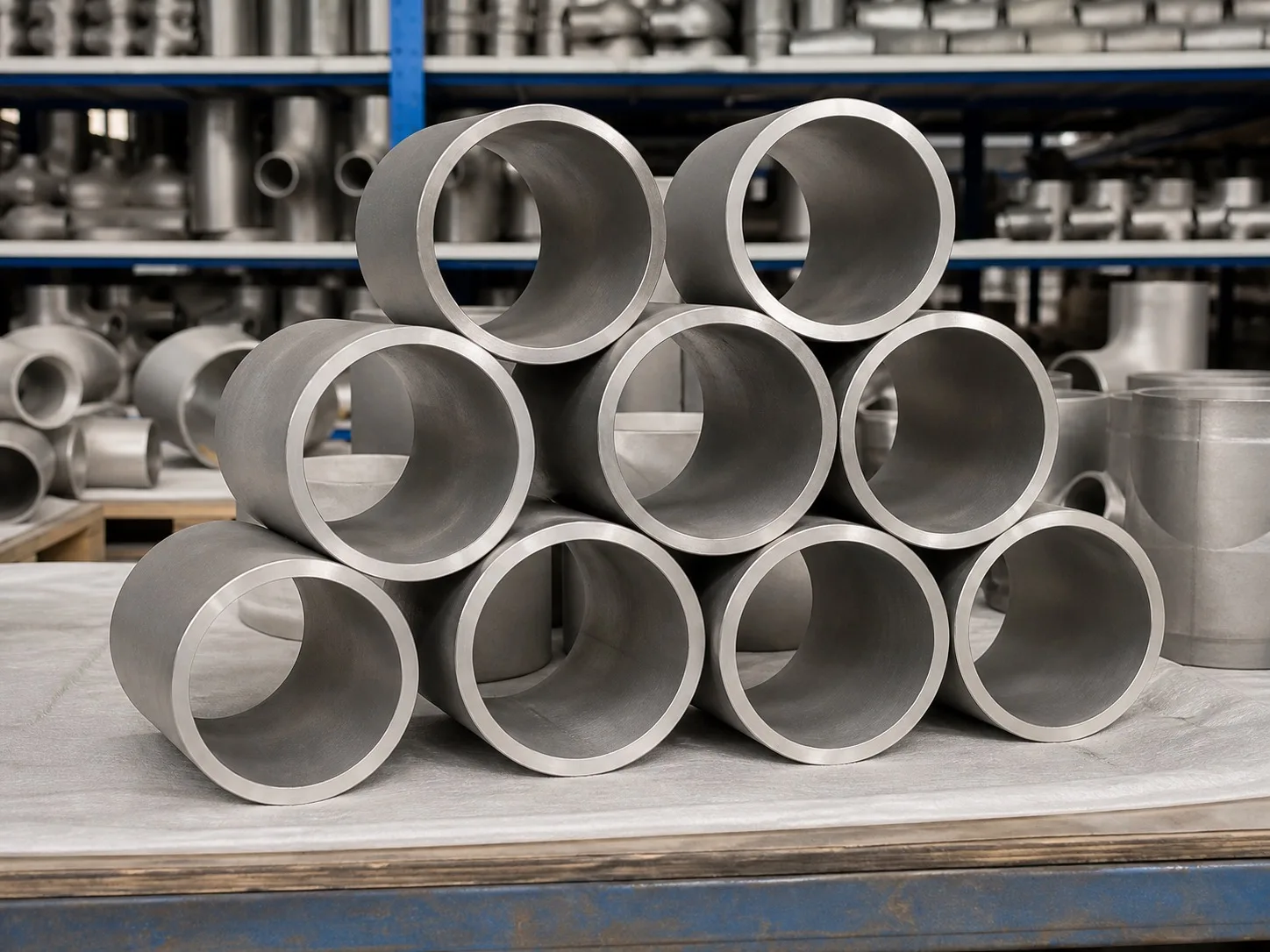
Similar-looking cylindrical products can fall under different specifications, so the fitting and mating pipe must be called out separately.
ASTM separately lists B861-24 as the active specification for seamless titanium and titanium-alloy pipe and B862-23 as active for welded titanium and titanium-alloy pipe. The B862 public abstract says welded pipe is made from annealed flat-rolled products by welding and may receive further hot or cold reduction. ASTM B861-24 ASTM B862-23
These separate titles and scopes are the key boundary. A B363 fitting designation does not select B861 or B862 for the connected pipe, and matching a titanium grade does not make the product specifications interchangeable. The pipe callout, fitting callout and any project piping-code or customer requirements should therefore remain separate lines in the procurement basis.
Write the RFQ in layers
A practical RFQ can separate five layers:
- Fitting identity: B363-23, fitting type, titanium grade, seamless or welded designation where required, size and end geometry.
- Mating components: the applicable pipe or tube specification and edition, grade, dimensions and joint details.
- Route controls: permitted starting product and fabrication route only where the design, service or customer specification makes them relevant.
- Contract acceptance: drawing, dimensional acceptance, required examination, material test report, heat or lot traceability and any supplementary requirements taken from the licensed standard or contract.
- Change control: who may approve a different edition, product route, grade, geometry or mating-product specification before manufacture or shipment.
An illustrative purchase description could begin: “ASTM B363-23 titanium reducer, specified grade and dimensions per drawing, for connection to pipe ordered separately to the stated pipe specification; provide heat/lot-linked material documentation and the contract-required inspection records; no change of product route or specification without written approval.” This is an editorial drafting pattern, not ASTM wording. Replace every placeholder with the governing engineering and contract requirements.
The useful boundary is simple: B363-23 tells the supply chain which titanium fitting product family is being ordered. It does not remove the need to specify the pipe it joins or the evidence by which the finished assembly will be accepted.
Sources
- ASTM B363-23 — official active-edition catalog and public scope; checked October 28, 2026.
- ASTM B861-24 — official active-edition catalog for seamless titanium pipe; checked October 28, 2026.
- ASTM B862-23 — official active-edition catalog and public abstract for welded titanium pipe; checked October 28, 2026.