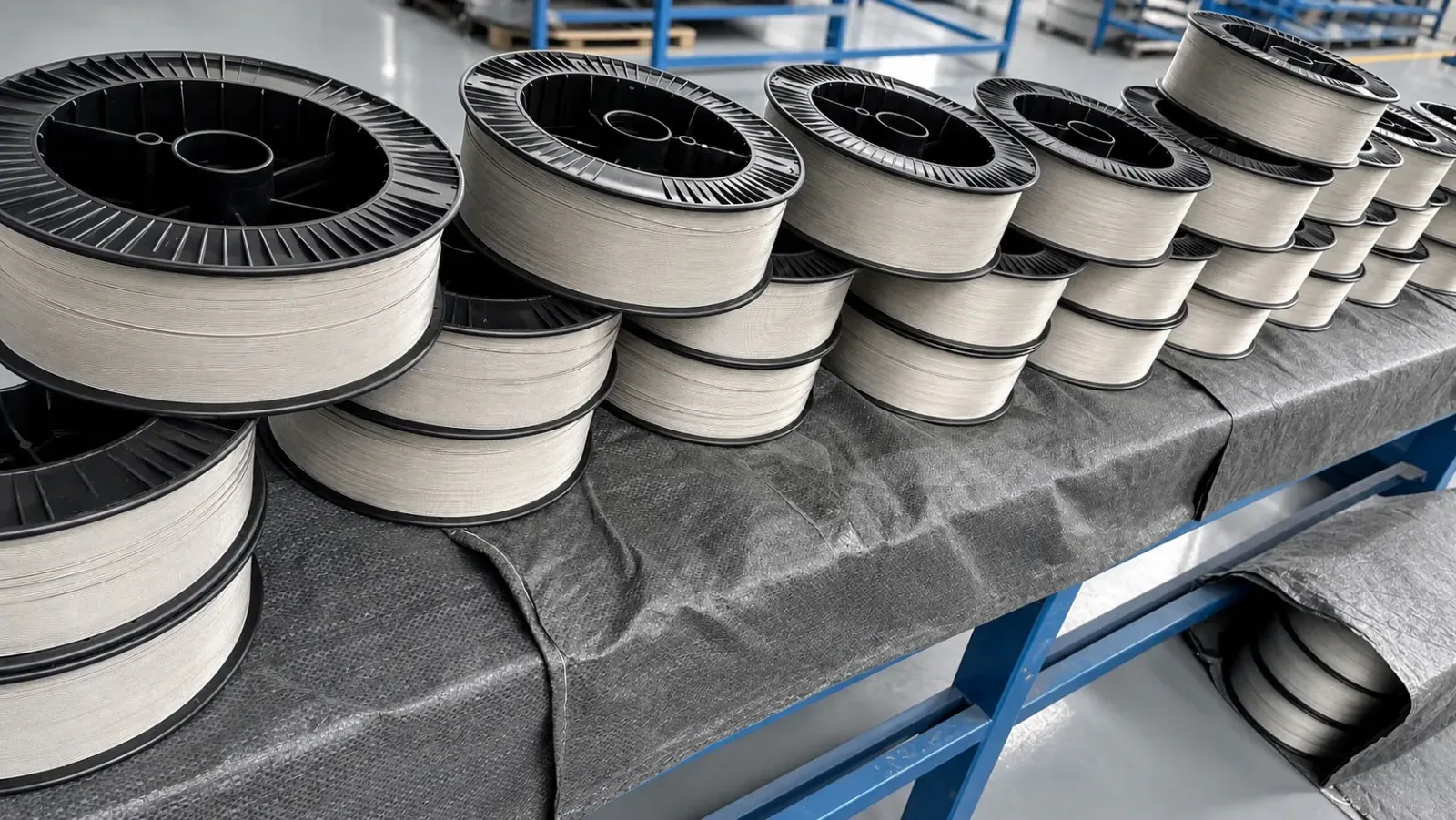
Wire on spools, shown as product-form context; appearance does not establish a material grade or welding classification.
For titanium wire procurement, start with what the wire must do. ASTM B863 specifies a titanium wire product; AWS A5.16/A5.16M classifies titanium welding electrodes and rods. A welding purchase therefore needs the consumable classification required by the approved welding procedure, while a wire-product purchase needs its specified material grade and product requirements. Both may appear in a contract, but conformity to one should not be inferred from the other.
Choose the specification by the intended use
The ASTM catalog currently identifies B863-26 as the active titanium and titanium-alloy wire specification. The AWS catalog lists A5.16/A5.16M:2023 for titanium and titanium-alloy welding electrodes and rods, with classification based on electrode chemistry. These are different ways of describing a purchase: one identifies a wire product and material grade; the other identifies a welding consumable classification. ASTM · AWS
| Purchase situation | Put this basis in the enquiry | Resolve before accepting a substitution |
|---|---|---|
| Wire purchased to a drawing or material specification | The required product standard, edition and material grade | Whether the offered grade, condition and dimensions satisfy that drawing |
| Wire or rods purchased as welding filler | The consumable standard, edition and classification required by the approved procedure | Whether the offered classification and delivery form meet that procedure |
| Contract requires both specifications | State both requirements and ask for evidence against each | Whether the supplier actually demonstrates both, rather than treating the names as synonyms |
The table is a purchasing recommendation. It does not select a filler for a particular joint or assert that every wire order requires both specifications.
Keep the material grade and filler classification separate
B863-26 lists Grade 2 as unalloyed titanium, UNS R50400, and Grade 5 as Ti-6Al-4V, UNS R56400. Those designations identify different materials. The AWS description, meanwhile, defines a chemistry-based classification system for welding consumables. A supplier’s “Grade 2 wire” description therefore leaves the required AWS classification unproven if the order is for welding filler. The reverse inference is equally unsafe: an AWS classification label alone is not evidence of every requirement in a B863 order.
For welding, take the filler designation from the approved procedure instead of deriving it from the base-metal grade number. If the supplier proposes another classification, route that proposal to the person responsible for the welding procedure before changing the purchase order. This is an engineering review recommendation, not a new acceptance clause attributed to either standard.
Make the delivery form part of the quotation
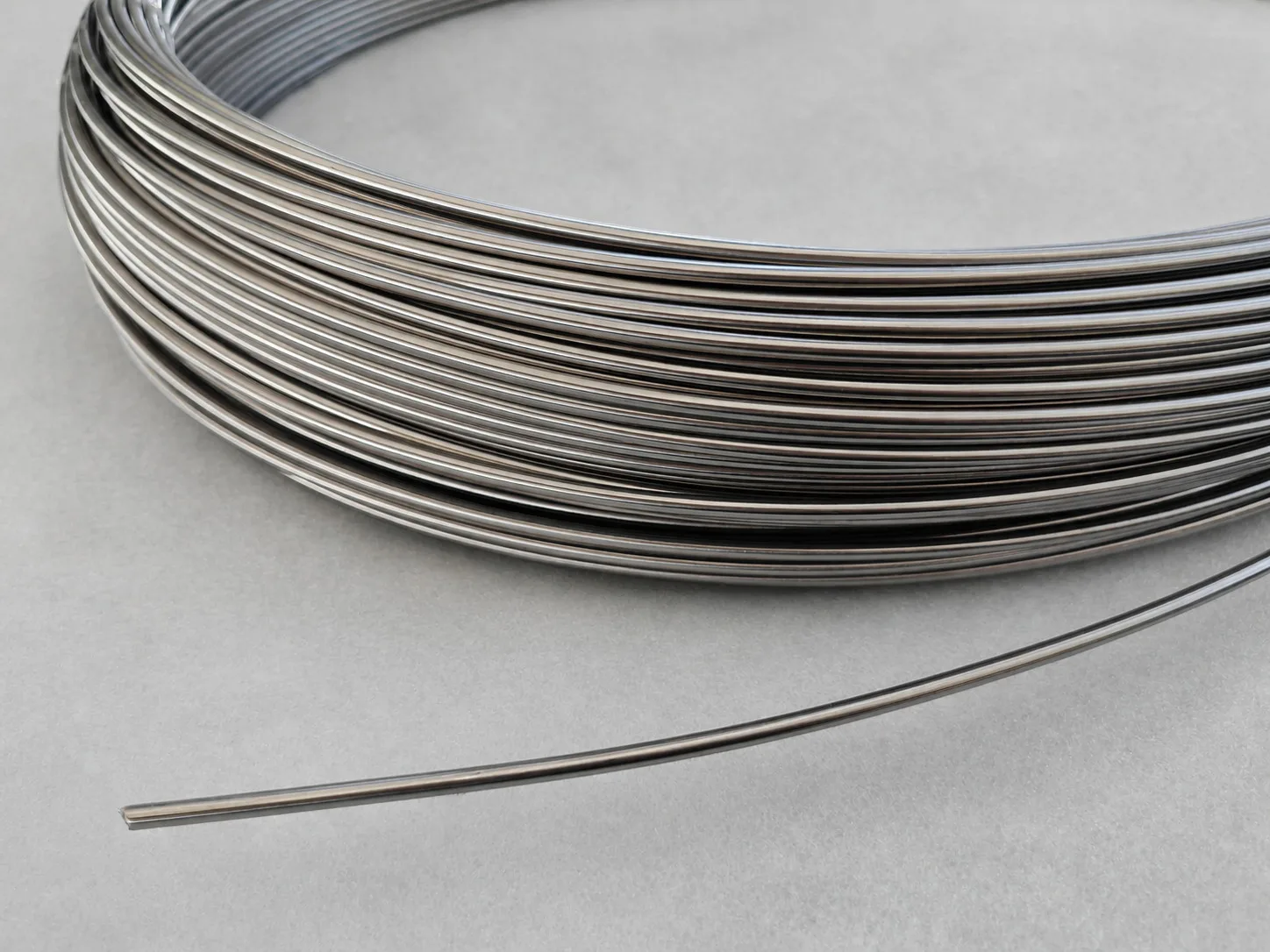
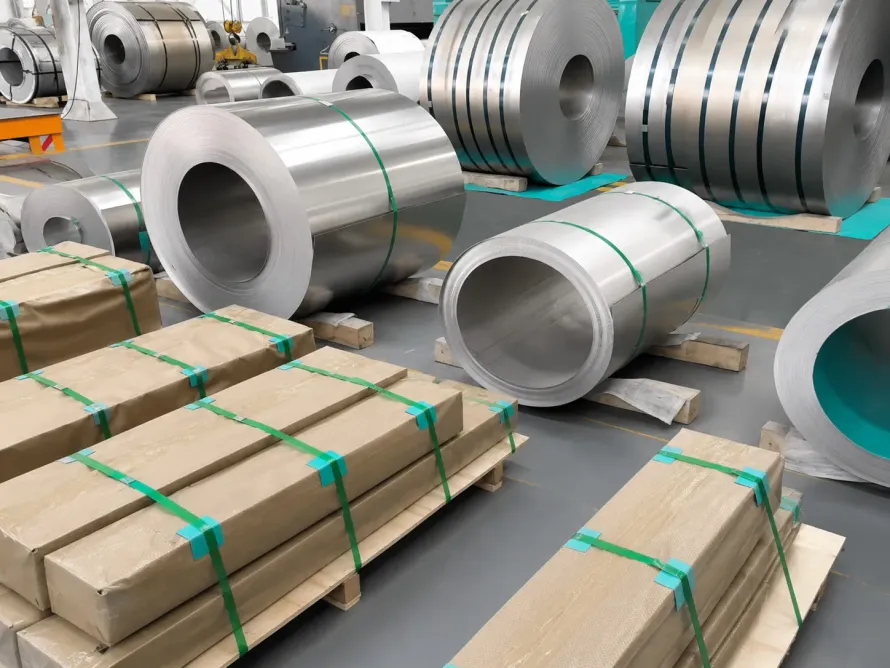
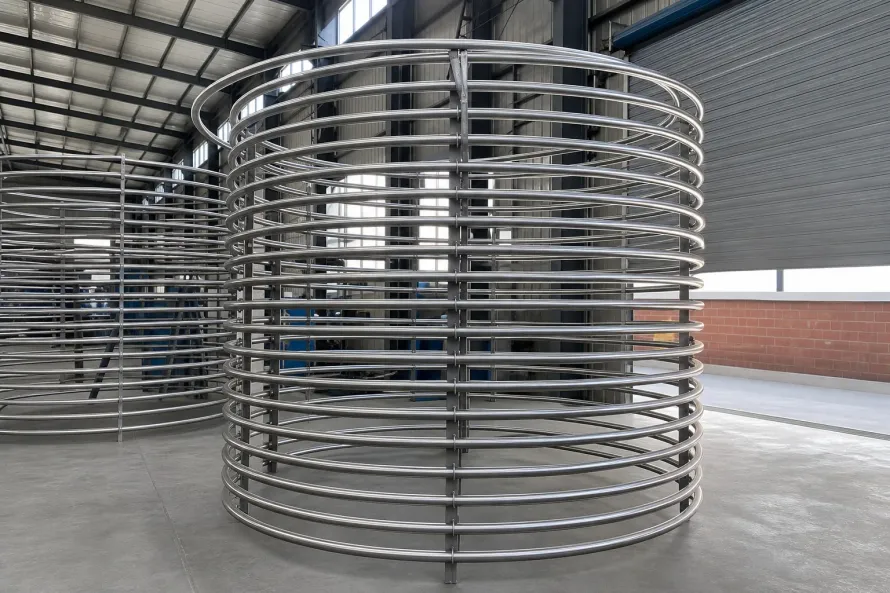
Coiled wire illustrates a different delivery form from spooled wire; dimensions and conformity must come from the order and documents.
Once the specification basis is clear, ask suppliers to quote the same physical delivery: diameter and tolerance, unit system, coils, spools or straight lengths, package quantity, and the condition or surface requirements relevant to the job. For spooled wire, include the receiving equipment’s spool requirements; for cut lengths, state the required length. Agree the lot identification and inspection documentation you need to link the delivered package to the order.
Treat these as explicit buyer requirements rather than assumed defaults. AWS identifies packaging and testing among its specification topics, but its catalog does not provide the complete acceptance clauses. Unit conventions also need attention: the visible B863 scope treats inch-pound values as standard and SI conversions as informational; AWS says its two unit systems must be used independently. Define the contractual unit basis instead of silently mixing limits from different systems.
Use an enquiry that exposes the open decisions
For a wire-product enquiry, a useful starting sentence is: “Titanium wire to the agreed edition of ASTM B863, material grade and UNS designation as specified on our drawing; quote diameter, tolerance, delivery form, condition, quantity and inspection documentation against that drawing, and identify all deviations.”
For a welding-consumable enquiry, use: “Titanium welding wire or rods to the agreed edition of AWS A5.16/A5.16M, classification as required by our approved welding procedure; confirm diameter, delivery form, packaging, lot identification and required conformity documentation, and identify all deviations.”
These are illustrative enquiry structures, not complete orders or quotations from the standards. Complete them with the project’s actual requirements. Before acceptance, resolve any proposed edition change and consult the corresponding licensed text for exact chemistry limits, tolerances, tests and other acceptance provisions. The public catalog pages support this scope comparison; they do not replace either standard.
Sources
- ASTM B863-26 — titanium and titanium alloy wire — official active-edition catalog, public scope and abstract; checked October 21, 2026.
- AWS A5.16/A5.16M:2023 — titanium welding electrodes and rods — official catalog description; checked October 21, 2026.