As reported by Indian business publications Business Standard and Financial Express on November 23, 2026, advanced metal manufacturer PTC Industries announced that its wholly owned subsidiary, Aerolloy Technologies Limited (operating an integrated melt-to-forging platform in the Uttar Pradesh Defence Industrial Corridor in Lucknow), has secured a major domestic defense contract to supply approximately 400 tonnes of titanium products—spanning ingots, bars, and rods—over a 12-month execution window, with financial value kept confidential due to strategic security considerations. Regional defense programs lock upstream melt.
Aligned with India’s Atmanirbhar Bharat defense indigenization drive, this 400-tonne multi-form commitment underscores a structural shift across global aerospace and defense procurement heading into 2027: prime contractors are bypassing spot-market brokers to reserve integrated sponge-to-ingot-to-bar conversion capacity directly. Keeping that public contract strictly within its reported scope, engineering buyers sourcing high-strength structural titanium rods, forging billets, and precision titanium bar stock globally face a universal technical reality—securing nominal tonnage means little unless the mill enforces virgin-sponge melt cleanliness, longitudinal chemistry uniformity, and immersion ultrasonic testing (UT) discipline. Melt pedigree governs part survival.
As an integrated titanium supply-chain platform working with certified partner facilities for aerospace machine shops, energy equipment OEMs, and specialty industrial buyers worldwide, we break down the three shop-floor release gates that separate structural-grade ingot and bar supply from commercial commodity stock. Upstream discipline prevents machining scrap.
Gate One: Grade 0/1 Virgin Sponge, 3× VAR Arc Traces, and Top-to-Bottom Segregation Control
Why can two large-diameter Grade 5 (Ti-6Al-4V) bar lots stamped to the same nominal chemistry behave completely differently on a 5-axis aerospace gantry mill—one cutting smoothly with consistent fatigue coupons while the other snaps carbide end mills on hard subsurface anomalies? Melt inputs dictate machinability. Qualifying structural bar and billet supply starts inside the primary melt shop across three non-negotiable controls:
- Locking 100% Grade 0 and Grade 1 Virgin Sponge to Block Revert-Scrap Oxygen Creep: Blending unverified ratios of machined revert scrap lowers raw-material cost but elevates baseline interstitial oxygen and introduces tungsten-carbide tool-chip inclusion hazards. Uncontrolled scrap ruins fatigue life. When melting structural Grade 5 (Ti-6Al-4V) aerospace and high-load titanium alloy heats, certified partner melt shops source tier-one chlorination/Kroll Grade 0 and Grade 1 virgin titanium sponge—holding commercial interstitials within O ≤ 0.20%, N ≤ 0.05%, and H ≤ 0.015% (and driving ultra-low-oxygen atomization bar stock down to O ≤ 0.05%).
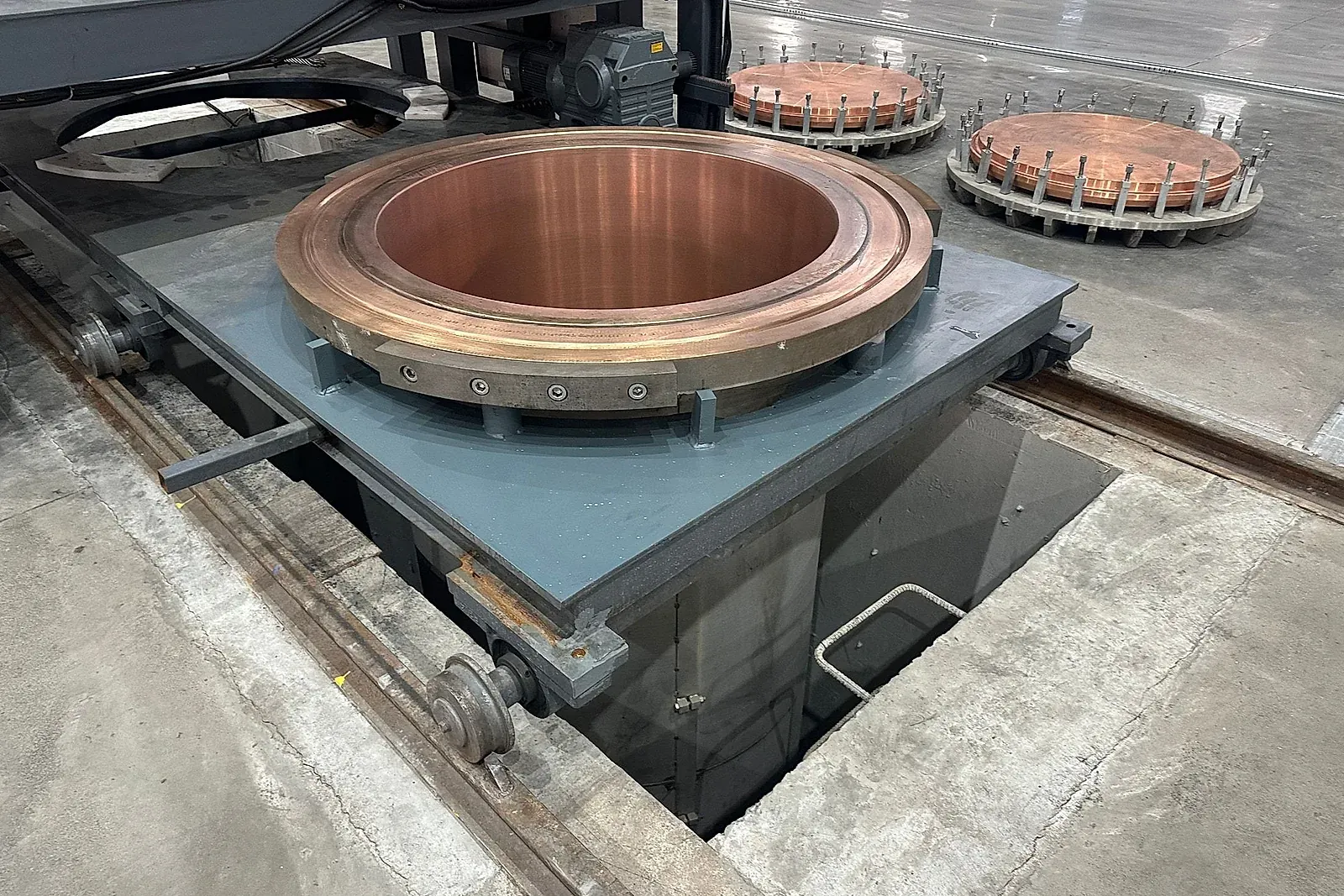
- Enforcing 3× VAR Remelting with Archived Furnace Vacuum and Arc Curves: Inside certified partner melt bays, an industrial VAR (Vacuum Arc Remelting) furnace casts 3-tonne to 15-tonne ingots over a 1-to-3-day electrode-to-stripping cycle; while 1× or 2× VAR satisfies chemical-plant vessels, fatigue-critical aerospace and defense orders mandate 3× VAR (triple Vacuum Arc Remelting) at an incremental melt premium of roughly USD 0.70–2.10/kg to dissolve low-density hard-alpha defects, backed by archived voltage, current, and vacuum curves available for buyer audit. Triple remelting clears hidden defects.
- Computerized Electrode Blending Holding Longitudinal Spread Within ≤ 0.35 wt% Al and ≤ 0.015 wt% O: Across heavy Ti-6Al-4V ingots, high-vacuum arc heat volatilizes aluminum (Al) while iron (Fe) and oxygen (O) segregate along solidification fronts; partner melt lines apply computerized electrode-blending models to cap top-to-bottom compositional spread within ≤ 0.35 wt% Al and ≤ 0.015 wt% O, then determine each heat’s exact beta transus temperature (typically 980°C–1,005°C) via metallographic quench testing and chemical calculation for MTC reporting. Tight chemistry stabilizes beta transus.
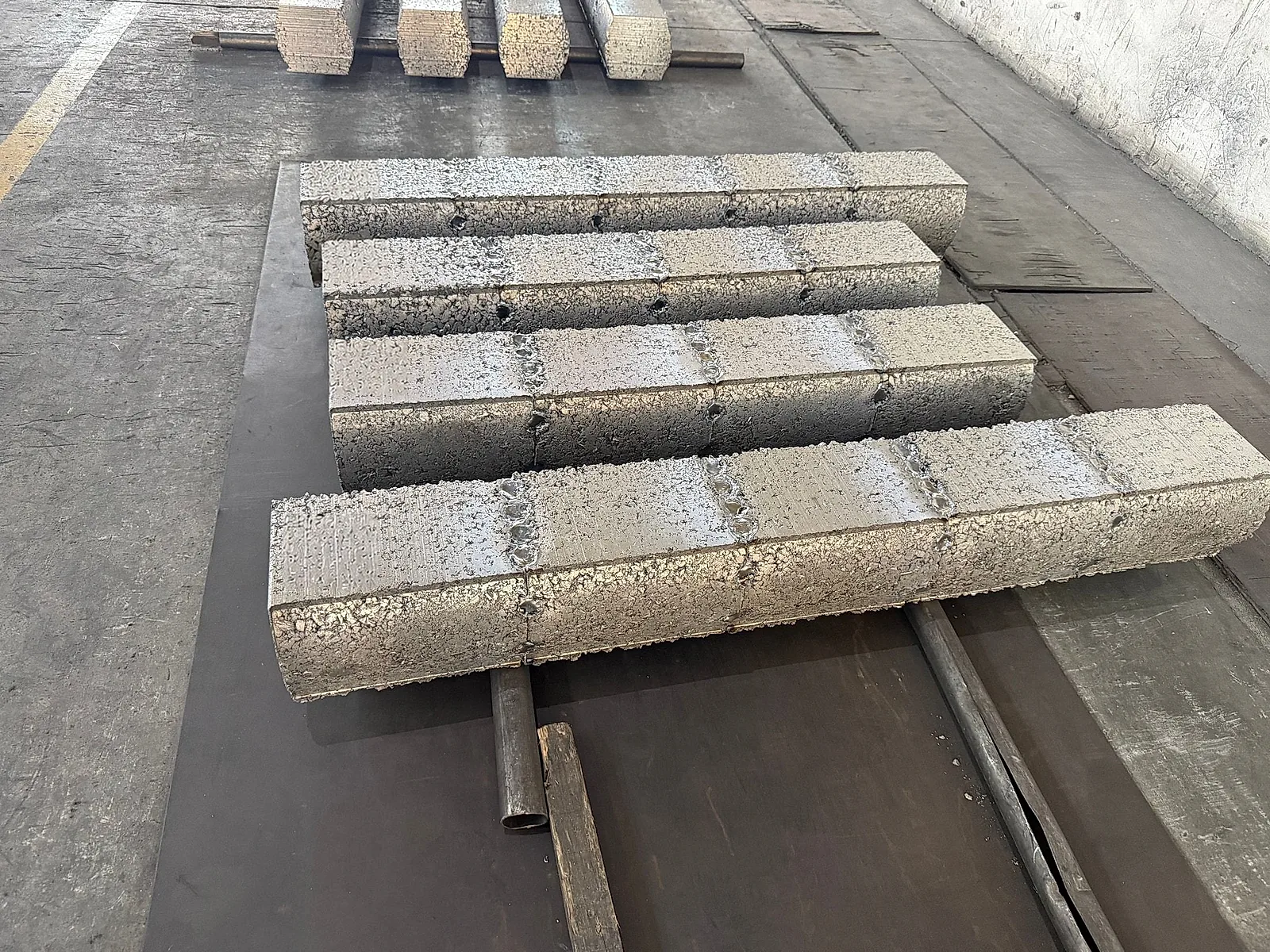 Figure 1: Compacted Grade 0 / Grade 1 virgin titanium sponge and master-alloy consumable electrodes plasma-welded in inert argon prior to Vacuum Arc Remelting (VAR) at a certified partner melt shop. Segmented computerized blending holds top-to-bottom ingot aluminum spread within ≤ 0.35 wt%.
Gate Two: 0.3%–0.8% Ingot Peeling, 2,500-Tonne Breakdown Forging, and AMS 2631 Immersion UT
Clean ingot chemistry alone cannot carry structural loads: coarse as-cast columnar grains must be thoroughly broken down under heavy hydraulic press tonnage to create a fine, isotropic microstructure. Under-forged cores fail ultrasonic scans. Engineering teams auditing large-diameter forged and rolled titanium round bars should verify three thermomechanical and non-destructive testing milestones between raw ingot and finished bar:
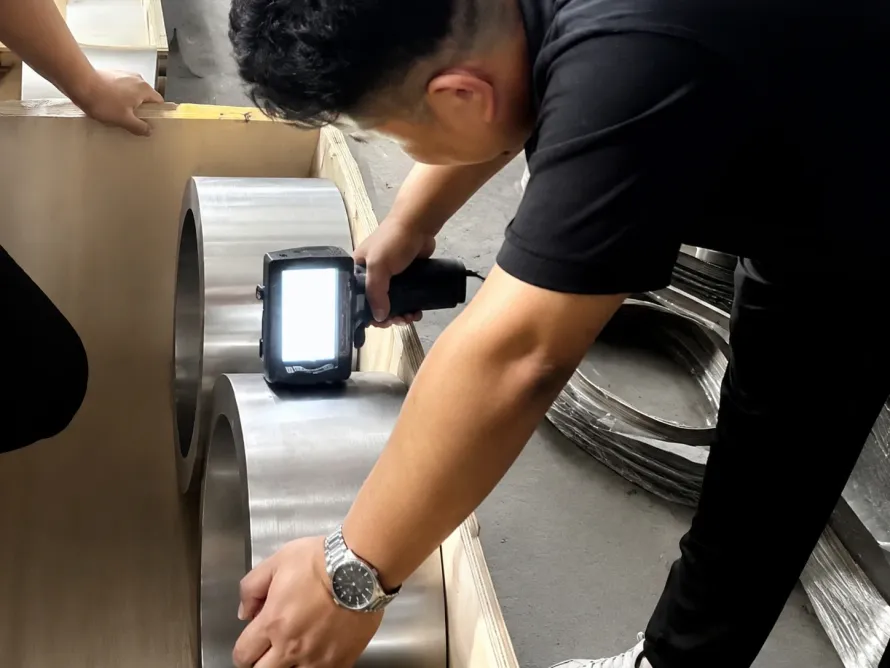
First, 0.3% to 0.8% rotary ingot scalping and mechanical end-crack milling precede ultrasonic inspection. Raw VAR ingots exit copper crucibles with a chill-zone splatter skin; partner conditioning lathes rotary-peel 0.3% to 0.8% of raw ingot weight before heating, and because breakdown forging stresses concentrate end-splitting at ingot top and bottom faces, billets undergo mechanical surface milling to remove end cracks before entering post-breakdown UT gates. Surface milling prevents false echoes.
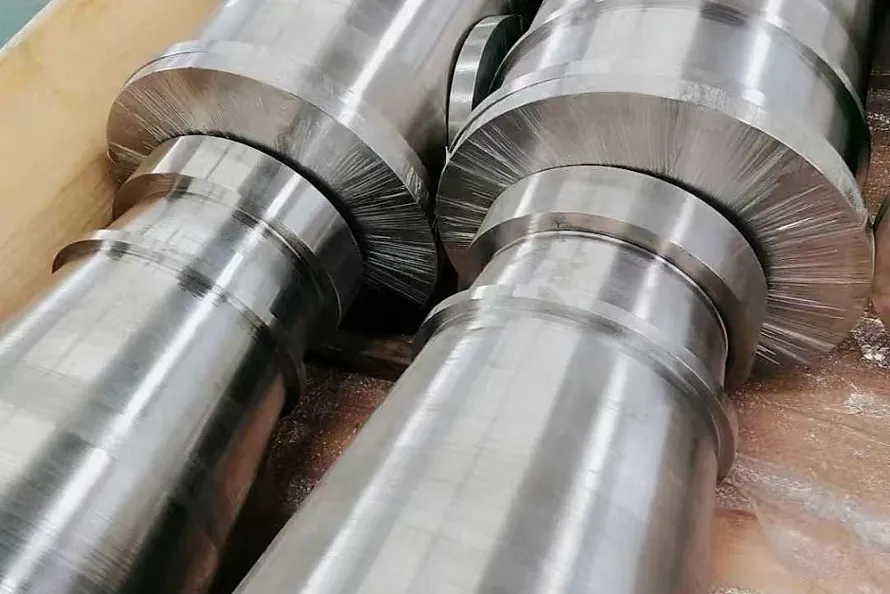
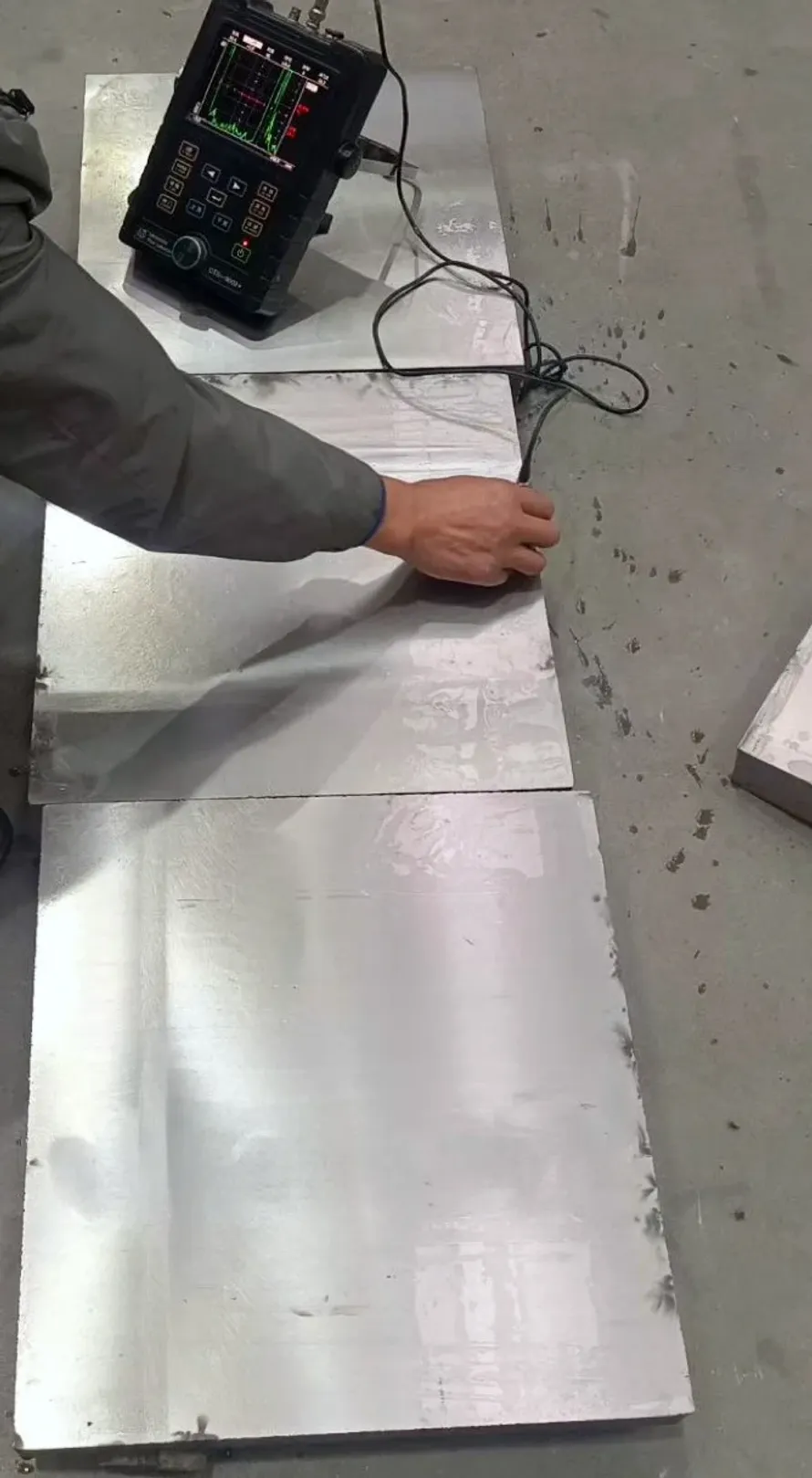
Second, pairing a 2,500-tonne high-speed forging press with a 10-tonne hammer refines grain size to ASTM E112 Grade 8–10. Light hammers deform only outer bar skins while leaving coarse Widmanstätten colonies at the centerline; certified partner forging bays integrate rotary hearth furnaces, a 2,500-tonne hydraulic open-die press, and a 10-tonne electro-hydraulic hammer—referencing each heat’s measured 980°C–1,005°C beta transus to execute beta breakdown followed by high-strain α+β upset-and-draw forging across heavy bars and ASTM B381 open-die and rolled-ring titanium forgings (retaining 5 mm to 25 mm rough-machining stock per side), locking uniform ASTM E112 grain size numbers 8 to 10. Deep press penetration refines core grains. Finished AMS 4928 / ASTM B348 bars then pass 100% immersion ultrasonic testing (Immersion UT) calibrated to AMS 2631 / ASTM B594 Class A1, Class A, or Class B flat-bottom hole (FBH) sensitivity with serialized scan logs.
| Order Tier & Wrought Product Form | Governing Material & UT Specs | Melt Pedigree & Segregation Caps | Breakdown Forging & Conditioning | Buyer MTC & Incoming QC Audit Gate |
|---|---|---|---|---|
| Aerospace & High-Load Structural Bar (Airframe frames, clevises, load pins) | Grade 5 (Ti-6Al-4V) AMS 4928 / AMS 2631 | Grade 0/1 virgin sponge + 3× VAR (USD 0.70–2.10/kg premium); ΔAl ≤ 0.35 wt%, ΔO ≤ 0.015 wt% | 2,500-tonne α+β upset/draw, ASTM E112 Grade 8–10; peeled or ground | Audit measured beta transus (980–1,005°C), vacuum curves & 100% Class A1 / A immersion UT |
| Defense & AM Powder Electrode Rod (EIGA/PREP atomization feedstock) | Grade 5 / Grade 23 ELI ASTM B348 / ASTM F136 | 3× VAR inclusion-free melt; ultra-low oxygen down to O ≤ 0.05%–0.13% | 0.3%–0.8% ingot scalping + bright lathe turning, bow ≤ 0.3–0.5 mm/m | Verify inert-gas fusion O/N/H assays & zero-indication Class A1 FBH UT logs |
| Heavy Industrial & Subsea Shaft Stock (Valve stems, subsea hubs, mixer shafts) | Grade 2 / Grade 5 ASTM B348 / ASTM B594 | Virgin sponge 2× VAR melt; O ≤ 0.20%, N ≤ 0.05%, H ≤ 0.015% | Post-milling Class A / Class B UT; 5–25 mm per-side forging stock | Match stamped bar-end heat numbers 100% to MTC (issued 2–5 days post-test) |
Four RFQ Clauses for Securing 2027 Structural Titanium Bar and Billet Schedules
As regional defense awards like PTC Industries’ (Aerolloy Technologies) 12-month, 400-tonne contract absorb dedicated VAR and heavy-press hours heading into 2027, commercial aerospace sub-tiers and industrial OEMs can protect delivery schedules and part quality with four explicit RFQ rules:
- Separate 2× VAR vs. 3× VAR Melt Counts and Virgin-Sponge Mandates on the RFQ: Specify 100% Grade 0/1 Virgin Sponge + 3× VAR explicitly on fatigue-loaded structural parts and atomization electrodes (budgeting the USD 0.70–2.10/kg triple-melt increment upfront) so quotes cannot silently substitute scrap-blended industrial heats. Explicit melt counts level bids.
- Define Post-Milling Immersion UT Class (AMS 2631 Class A1 / A / B) and Machining Stock Upfront: Post-delivery forging and heavy-bar disputes center overwhelmingly on envelope stock allowance and UT acceptance thresholds (standard bar lead times span 5 to 30 days; custom forgings run 7 to 30 days); state 5 mm to 25 mm per-side roughing stock and exact AMS 2631 / ASTM B594 FBH classes on the drawing. Clear allowances eliminate disputes.
- Require Measured Beta Transus and Top/Bottom Ingot Chemistry on Every MTC: Allow 2 to 5 days after specimen testing completes for full Material Test Certificate (MTC) compilation, checking metallographic beta transus (980°C–1,005°C), top-versus-bottom Al / O spread, and 100% heat/lot number traceability from 3–15 tonne VAR ingots to stamped bar ends. Complete traceability speeds quality release.
- Price Surface Condition Tiers Transparently and Enforce EPE-Sleeved ISPM 15 Crating: Unit bar pricing steps strictly by finish (centerless-ground polished bar > lathe-peeled turned bar > hot-worked black bar); protect peeled and ground bars shipped FOB China main port inside individual EPE foam sleeves, moisture-barrier bags, and steel-strapped ISPM 15 wooden crates. Sleeved crating prevents transit dings.
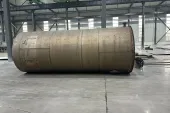
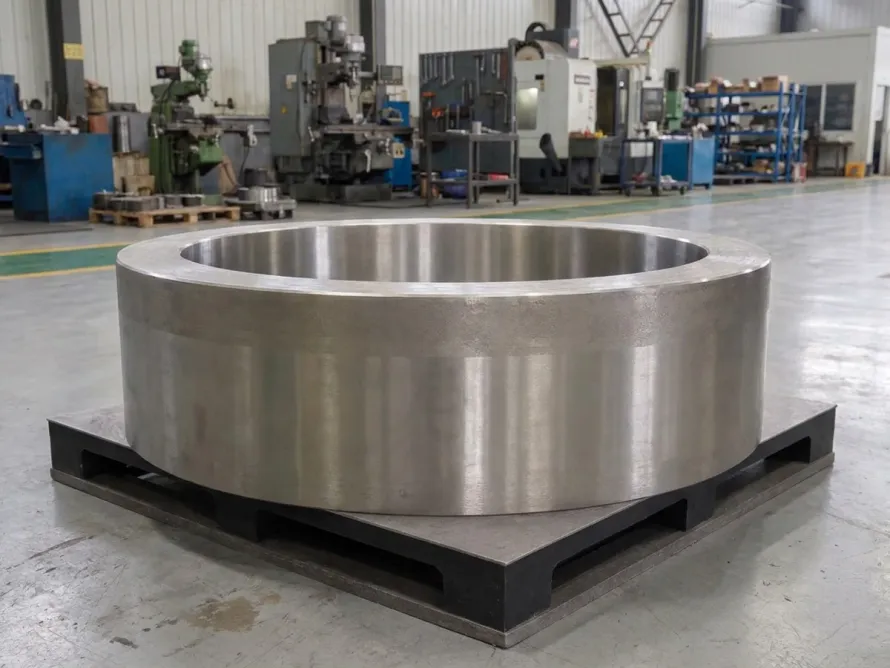
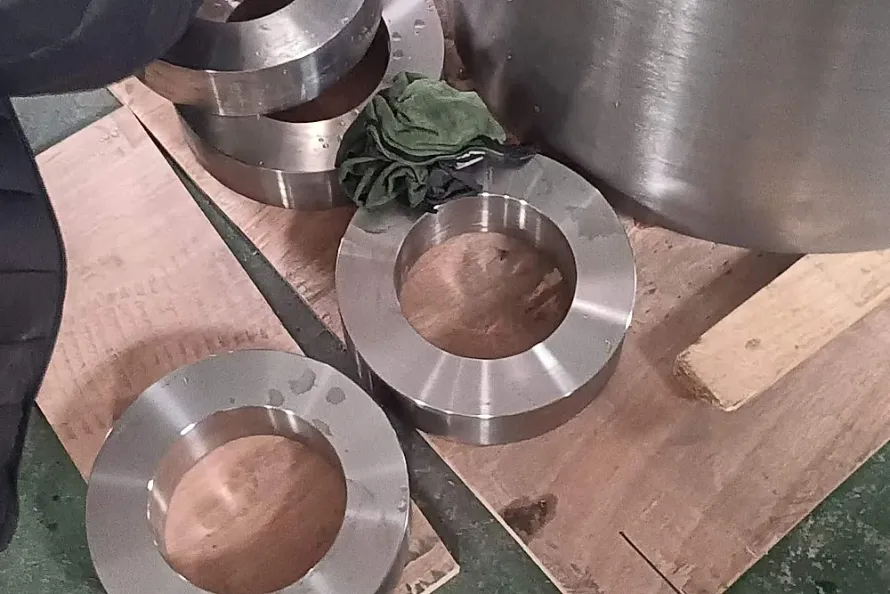
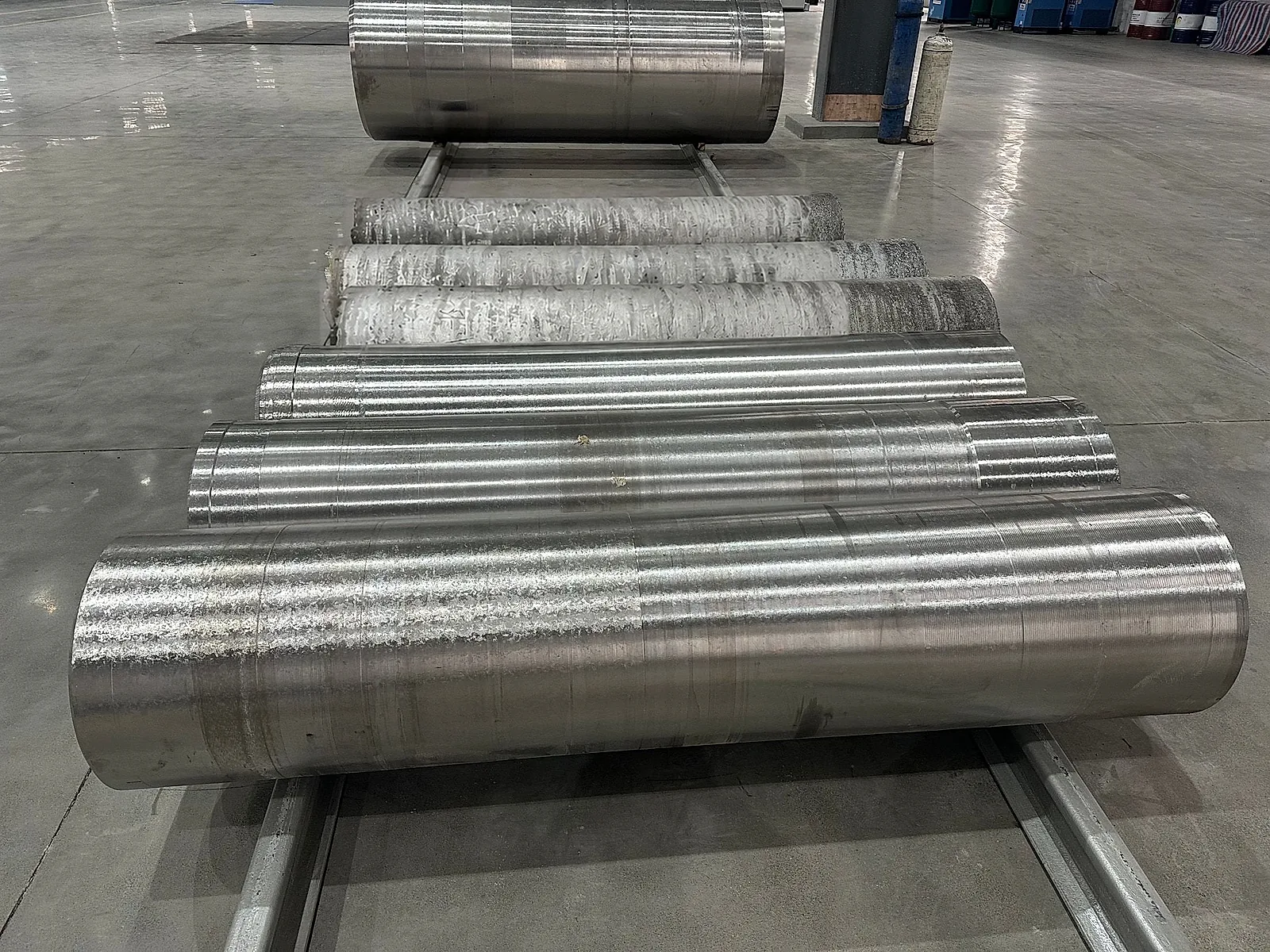 Figure 2: Raw unconditioned ingots (rear) staged behind rotary-peeled large-diameter VAR titanium ingots (foreground, with 0.3%–0.8% chill skin machined off) at a certified partner melt shop. Thorough surface scalping and end-crack milling ensure sound 2,500-tonne breakdown forging and clean immersion UT scans.
If your machining facility or sourcing team is qualifying AMS 4928 / ASTM B348 titanium bars, Grade 5 heavy forging billets, or 3× VAR feedstock for 2027 production programs, submit your drawings and ultrasonic class callouts through our online RFQ and complimentary bar & billet specification audit portal to review redacted MTC packages with measured beta transus and immersion UT logs. Upfront engineering review secures reliable supply.