Demand for thin metal foils is surging across advanced manufacturing sectors. Precision foils from 0.005 mm to 0.05 mm serve in PEM electrolyzer diffusion layers, printed circuit heat exchangers (PCHE), acoustic diaphragms, and chemical rupture discs.
Specialty buyers often question multi-metal production feasibility during prototype sourcing. Engineers ask whether industrial zirconium (ASTM B551 Zr702/Zr705) and high-purity nickel (ASTM B162 Ni200/Ni201) can share a 20-high Sendzimir cold mill with ultra-thin titanium foil.
Sharing a mill line is achievable. Success depends on strict contamination isolation and specialized cross-metal reduction protocols. Ignoring work-hardening rates or rolling oil purity leads to roll seizure, strip breaks, or severe intergranular contamination.
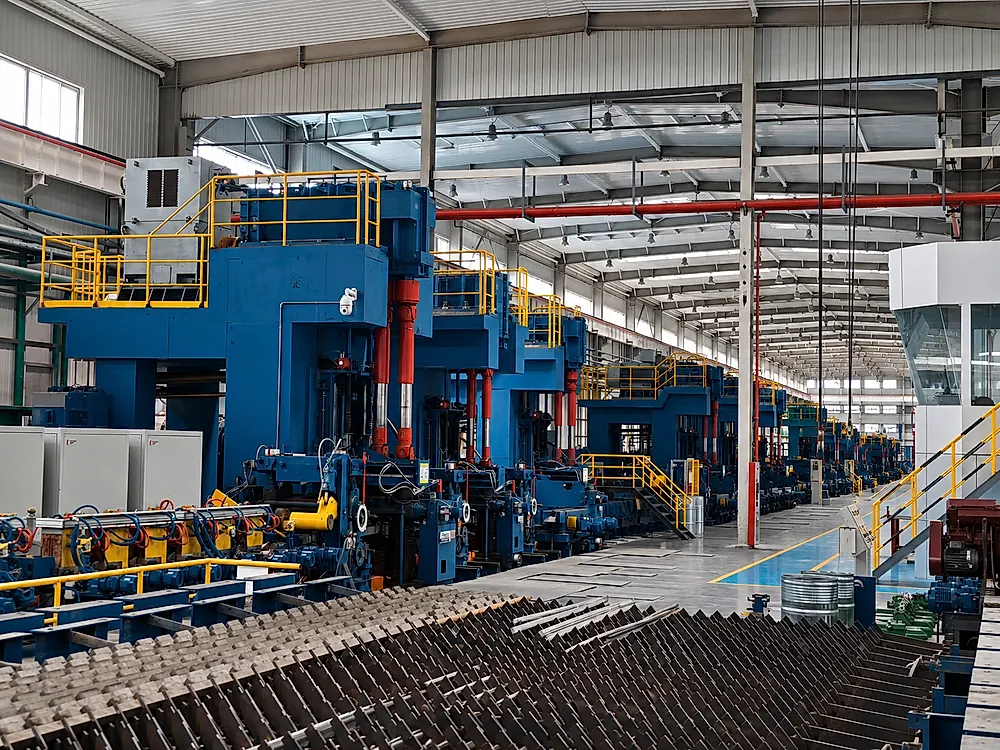 Figure 1: Certified partner facilities operate 750 mm 20-high Sendzimir reversing cold mills to produce precision titanium, zirconium, and nickel foils.
1. Metallurgical Deformation Contrasts: Titanium, Zirconium, and Nickel
Lattice structures differ significantly. Commercially pure titanium (Grade 1 and Grade 2) and zirconium (Zr702) share a hexagonal close-packed (HCP) lattice, where slip systems are limited at ambient temperature. Deformation relies on slip and mechanical twinning. However, zirconium has a larger atomic radius (approximately 0.160 nm vs 0.147 nm for titanium) and a lower c/a ratio, making it prone to localized shear heating during cold rolling. Excessive draft causes edge tearing.
Nickel exhibits rapid work-hardening. High-purity nickel (Ni200/Ni201) possesses a face-centered cubic (FCC) lattice with abundant slip planes. Although initial yield strength is low, cold deformation rapidly drives tensile strength from 380 MPa to over 800 MPa. Without intermediate annealing, nickel foil cracks quickly under high-tension rolling.
Production evidence confirms practical rolling boundaries. Operating 750 mm 20-high Sendzimir reversing cold mills with tungsten carbide work rolls (15 mm to 25 mm diameter), certified partner facilities cold-roll commercially pure titanium down to 0.005 mm (5 micrometers). The same precision line produces zirconium materials (Zr702/Zr705) down to 0.01 mm and nickel foil (Ni200/Ni201) to 0.01 mm at widths up to 640 mm. Thickness tolerance holds within +/- 0.001 mm.
2. Four Technical Boundaries for Multi-Metal 20-High Rolling
Discipline on the shop floor is mandatory. Switching alloys requires strict controls across rolling lubricants, roll tooling, vacuum annealing, and tension leveling.
Lubrication separation must be absolute. Cold rolling ultra-thin foil demands high-lubricity, low-viscosity synthetic rolling oils to dissipate intense deformation heat. Nickel is vulnerable to sulfur and chlorine, which cause intergranular embrittlement during subsequent heat treatment. Titanium and zirconium exposed to degraded chlorinated oil risk stress-corrosion micro-cracks in high-temperature vacuum furnaces. Centrifugal dehydration and diatomaceous earth filtration must purge suspended particulate down to 0.5 micrometers before changing metals.
Tooling management requires dedicated rolls. Titanium and zirconium exhibit strong chemical affinity for steel rolls once surface oxide films shear, creating pick-up defects. Rolling titanium and zirconium requires ultrafine tungsten carbide rolls polished to Ra <= 0.05 micrometers. Rolling ductile nickel leaves soft metallic debris on roll faces. Technicians must install freshly ground rolls when transitioning between nickel and optical-grade titanium strip.
Vacuum heat treatment prevents embrittlement. Thin foils under 0.05 mm have massive surface-to-volume ratios, making them susceptible to atmospheric gas absorption. Intermediate and final recrystallization annealing for titanium and zirconium foil takes place in horizontal vacuum furnaces operating below 1×10⁻³ Pa. Treated surfaces retain a bright silver metallic finish without blue temper tint or brittle alpha-case. Nickel strip anneals in dry hydrogen atmospheres (99.999% purity) or high vacuum without acidic residue.
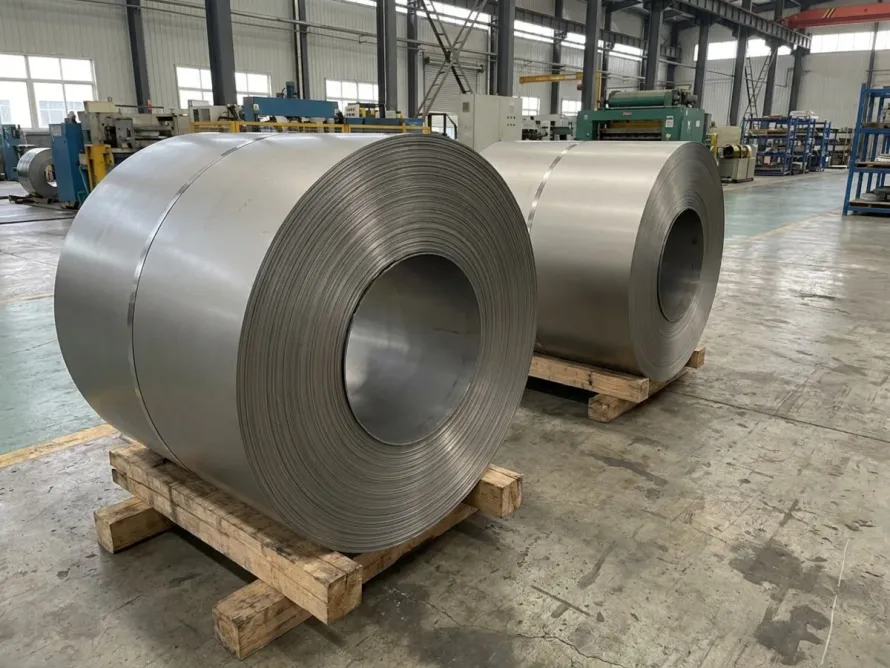
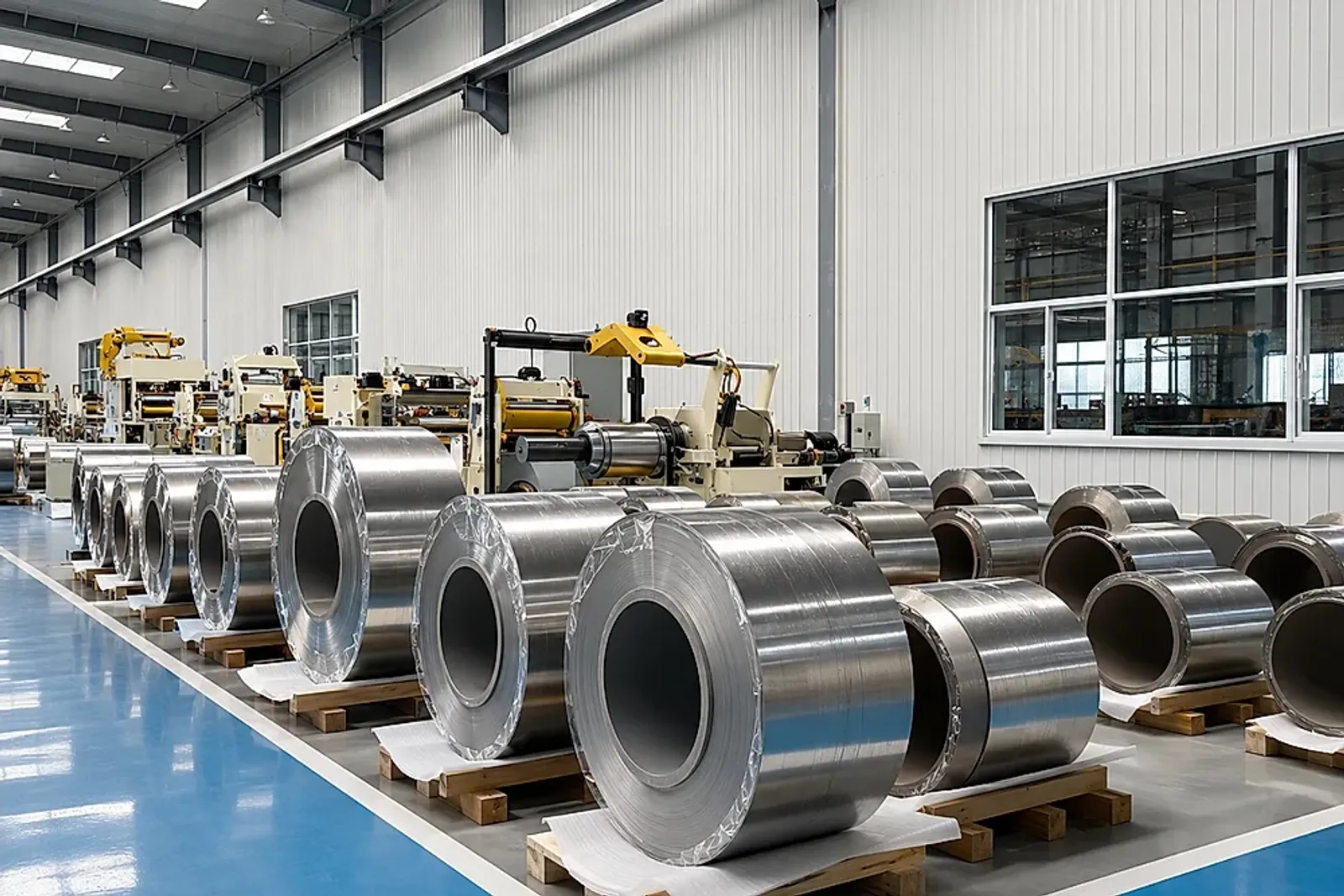
Residual stress must be eliminated. Multiple heavy cold-reduction passes generate longitudinal residual stress, producing center buckle or wavy edges. Certified partner facilities pass rolled strip through a 22-roll precision tension leveler combined with continuous tension annealing, holding flatness within <= 2 I-units. Laser-cut diaphragm blanks lay flat without curling.
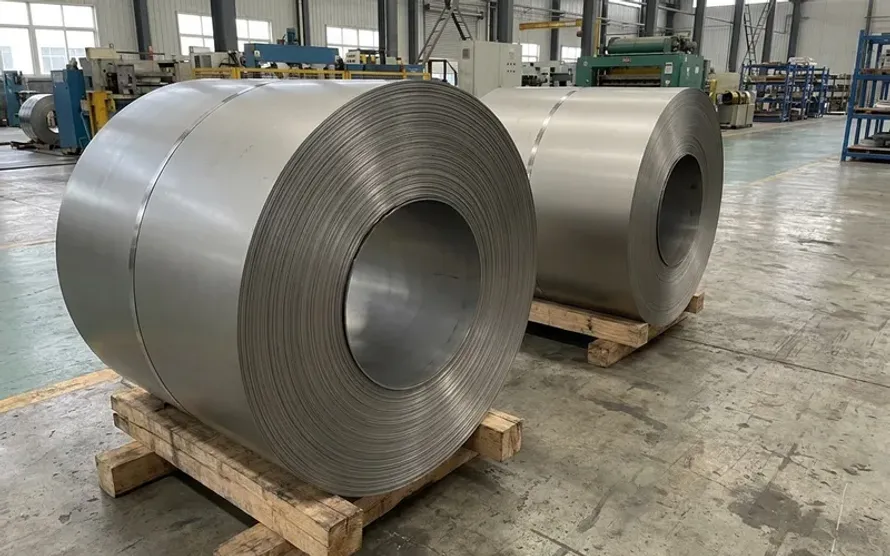
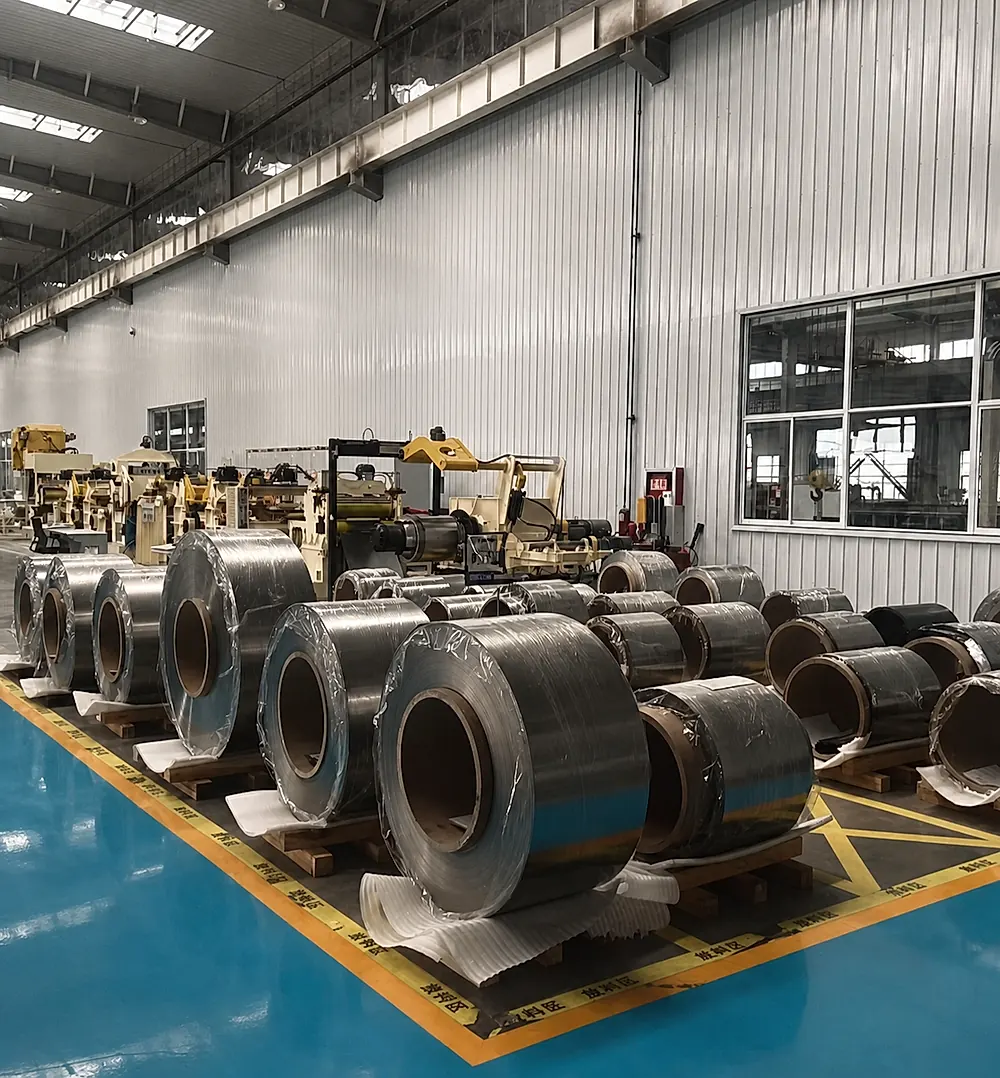 Figure 2: Bright-annealed and tension-leveled specialty metal foil coils exhibit mirror surface finishes and zero edge curl.
3. Cold Rolling Process Windows: Titanium, Zirconium, and High-Purity Nickel
Specifications vary across alloy families. The table below compares key metallurgical parameters, thickness capabilities, and inspection checkpoints for titanium, zirconium, and nickel foils:
| Material & Specification | Lattice & Work-Hardening Exponent (n) | Minimum Cold-Rolled Thickness & Tolerance | Annealing Atmosphere & Thermal Window | Typical High-Value Applications | Critical Receiving Inspection Checks |
|---|---|---|---|---|---|
| Pure Titanium Foil (Gr.1 / Gr.2) ASTM B265, AMS 4902 | HCP lattice n ≈ 0.12–0.15 | Thickness: 0.005 mm Tolerance: ±0.001 mm | High vacuum (<1×10⁻³ Pa) Temperature: 550–650°C | PEM electrolyzer bipolar plates, acoustic diaphragms | Grain size ASTM 9–11, elongation A50 ≥ 35%, flatness ≤ 2 I-units |
| Zirconium Foil (Zr702 / Zr705) ASTM B551 | HCP lattice n ≈ 0.10–0.13 | Thickness: 0.010 mm Tolerance: ±0.001 mm | High vacuum (<1×10⁻³ Pa) Temperature: 600–700°C | Acetic acid micro-channel exchangers, rupture discs | Oxygen ≤ 0.16%, zero micro-shearing cracks, 90° bend without cracking |
| Nickel Foil (Ni200 / Ni201) ASTM B162 | FCC lattice n ≈ 0.35–0.40 | Thickness: 0.010 mm Tolerance: ±0.0015 mm | Ultra-dry H2 or high vacuum Temperature: 650–750°C | Alkaline battery current collectors, rupture discs | Surface Ra ≤ 0.15 μm, zero sulfur embrittlement, uniform hardness |
Proper planning ensures reliable yields. While all three metals run on 20-high cold mills, differing reduction schedules and annealing profiles demand established changeover standard operating procedures.
4. Procurement Checklist for Rupture Discs and Micro-Channel Plates
Inspection requires careful preparation. Engineers sourcing thin foils for corrosive or pressure-critical duties should verify several key points during RFQ submission:
First, avoid using handheld mechanical micrometers for final acceptance. On foils between 0.005 mm and 0.02 mm, anvil pressure creates localized plastic depression, skewing readings. Buyers should request non-contact X-ray gauging or laser interferometry scans across the entire coil length. Second, inspect slit edges under magnification. Improper knife clearance during rotary slitting causes tensile micro-burrs along foil edges, acting as initiation sites for fatigue failure. Specify precision carbide rotary slitting, maintaining burr height below 5% of nominal strip thickness. Third, verify packaging rigidity and core selection. Thin foils cannot withstand radial crushing loads. Winding onto cardboard tubes leads to creasing as ambient humidity changes. Demand precision-machined seamless aluminum or heavy-wall steel cores, sealed inside vacuum-evacuated foil bags with desiccant. When piping designs require matching corrosive fluid resistance, buyers can also evaluate specialty nickel tubes.
Engineering teams designing micro-channel heat exchangers or pressure-relief diaphragms can calculate theoretical coil weight with our engineering weight calculators, or request a complimentary pre-RFQ drawing and specification audit.
Related Products & Services
- Precision Titanium Foils & Sendzimir Strip
- Zirconium Materials (Plate, Bar, Tube, Foil)
- Industrial Corrosion-Resistant Nickel Tubing
- Certified Partner Facility Rolling Capabilities
- Complimentary Pre-RFQ Specification Review
Sources
- ASTM B265 / B551 / B162 Standard Specifications for Titanium, Zirconium, and Nickel Strip, Sheet, and Plate.
- Sendzimir Cold-Rolling Mill Technical Guidelines for Ultra-Thin Refractory and Reactive Metals.
- Certified partner facility precision 20-high foil rolling, bright-annealing, and tension-leveling production records.