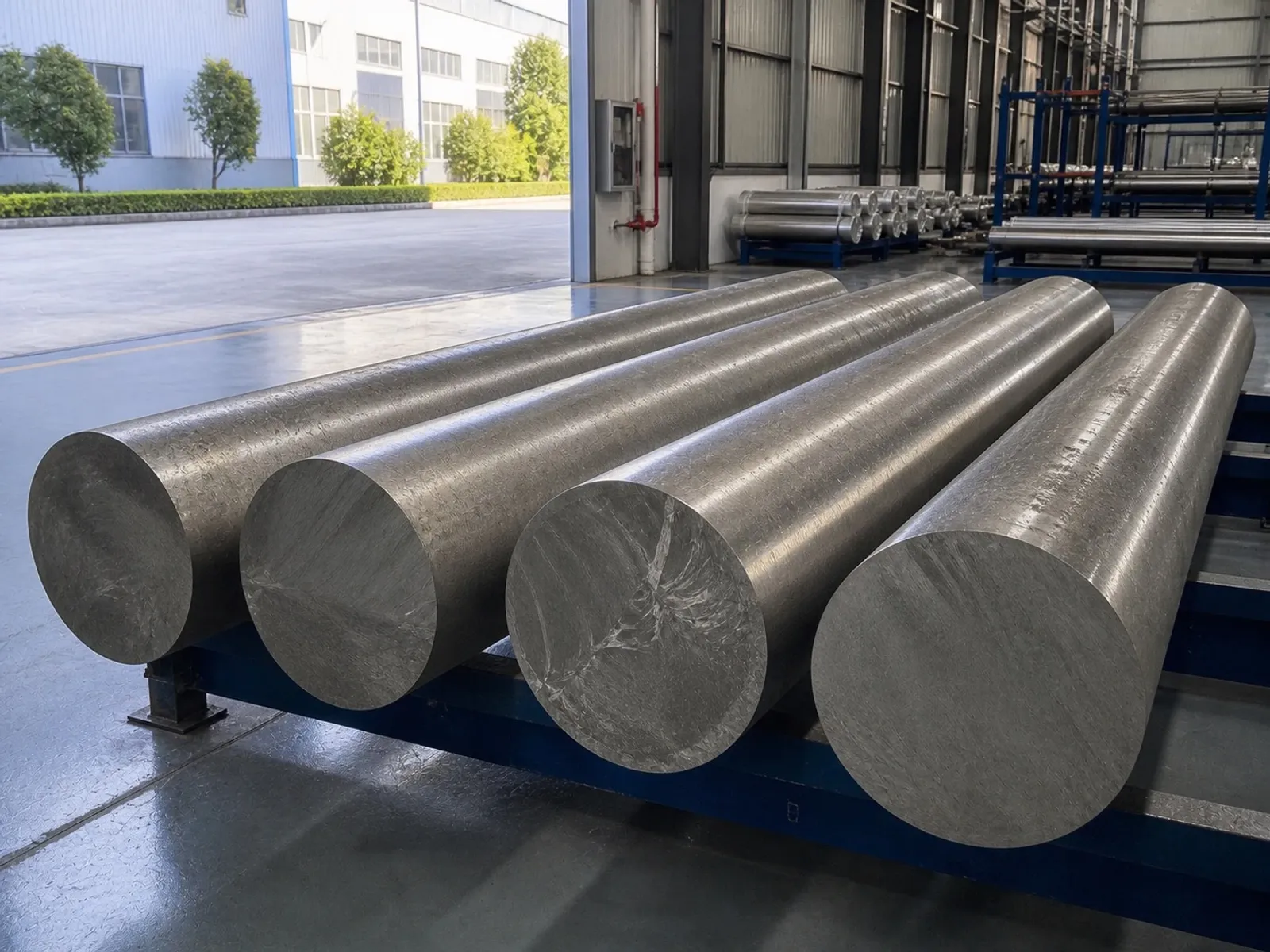
On November 17, 2026, Cambridge, Massachusetts-based advanced materials startup General Flash emerged from stealth and announced USD 128 million in equity capital across its Seed and Series A rounds. Upstream refining attracts major capital. Led by CEO Ric Fulop—co-founder of Desktop Metal and A123 Systems—and backed by investors including Lux Capital, Construct Capital, Overmatch Ventures, and GreatPoint Ventures, the venture aims to localize domestic U.S. refining of critical metals.
According to the company’s public rollout schedule, General Flash utilizes proprietary Solid-State Flash Electrolysis (SSFE) to convert solid metal oxide powders directly into semiconductor-grade metals without halides, molten salts, or slag, targeting titanium, zirconium, tungsten, tantalum, hafnium, and niobium. Commercial scaling is now underway. The USD 128 million financing bridges expansion from an operating pilot line near MIT yielding roughly 20 metric tons per year to a commercial plant targeting 1,000 metric tons per year by summer 2027.
For industrial procurement directors sourcing structural titanium and corrosion-resistant specialty metals, novel electrochemical refining milestones signal long-term feedstock diversification, yet oxide-reduction pilot scaling does not translate into immediate mill-certified bar, plate, or seamless tube availability. Capacity boundaries matter. As an integrated titanium supply-chain platform working with certified partner facilities worldwide, we analyze where SSFE fits alongside established Kroll-VAR metallurgy and outline practical verification rules for 2026–2027 titanium and zirconium orders.
1,000 Tonnes of SSFE Refining vs. Multi-Tonne Kroll-VAR Ingots: Two Parallel Supply Tracks
Whenever capital markets back a direct oxide-to-metal process designed to bypass the Kroll cycle, equipment buyers immediately ask whether conventional titanium bar, heat-exchanger tubing, and zirconium plate pricing will shift. Short-term mill economics remain unchanged. Evaluating real procurement impact requires separating multi-metal refining tonnage from downstream ingot-to-mill conversion qualification.
First, examine nameplate volume and timing: General Flash’s 1,000-metric-ton annual commercial target is scheduled for summer 2027, and its metal-agnostic cells divide that capacity across tungsten, tantalum, hafnium, rare earths, titanium, and zirconium. High-value niches come first. By comparison, a single widebody commercial airframe consumes roughly 90 to 110 metric tons of buy-to-fly titanium input, while a single purified terephthalic acid (PTA) or acetic-acid chemical reactor campaign requires dozens of metric tons of chemical-grade zirconium materials (Zr702/Zr705) and titanium pressure hardware.
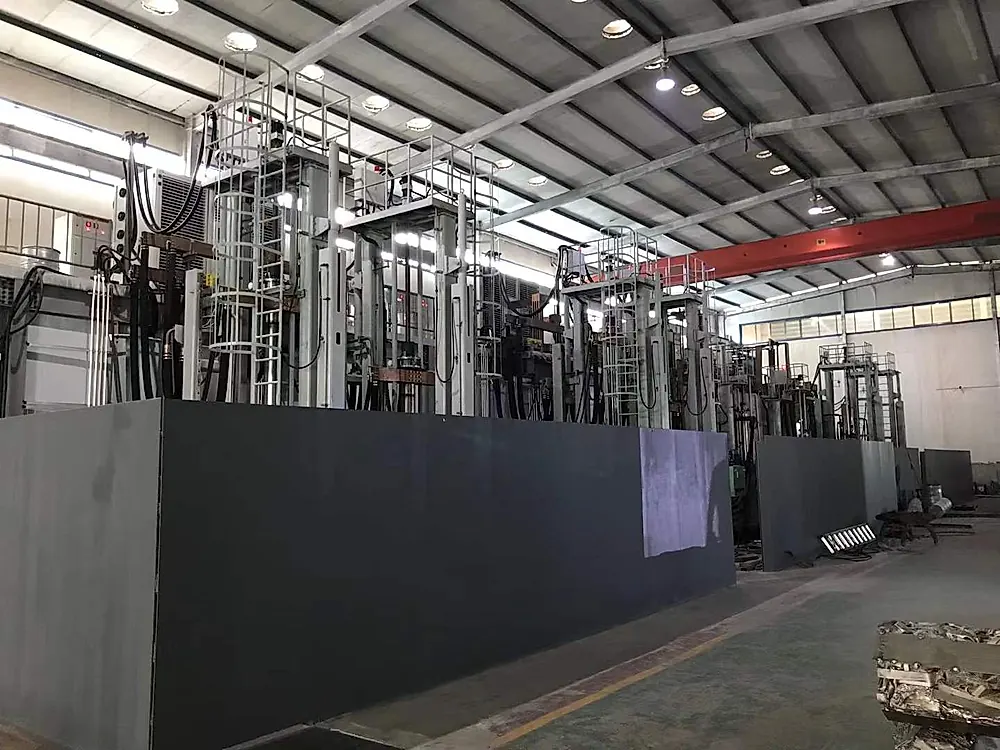 Figure 1: Multi-furnace Vacuum Arc Remelting (VAR) bay converting compacted sponge electrodes into homogeneous, multi-tonne ingots—the indispensable metallurgical bridge to heavy structural bars, plates, and seamless tubing.
Second, consider form-factor qualification: electrochemical oxide reduction yields high-purity metal powder or solid sponge-like product, whereas pressure-vessel plates (ASTM B265 / ASTM B551), structural bars (ASTM B348 / ASTM B550), and condenser tubes (ASTM B338) require consolidated VAR ingots, heavy open-die breakdown forging, rotary piercing, and 100% non-destructive examination. Mill qualification cannot be skipped.
| Evaluation Dimension | General Flash Solid-State Flash Electrolysis (SSFE) | Conventional Kroll Sponge + 2x/3x VAR Mill Route | Practical Takeaway for 2026–2027 Industrial Buyers |
|---|---|---|---|
| Primary Feedstock & Mechanism | Direct electrochemical deoxidation of solid metal oxides; halide- and slag-free | Ore chlorination to tetrachloride, magnesium reduction, vacuum distillation | Novel routes target ultra-pure specialty niches; bulk orders rely on Kroll sponge |
| Facility Scale & Timeline | ~20 metric tons/year pilot; 1,000 metric tons/year plant due summer 2027 | Thousands to tens of thousands of metric tons/year per cluster with active stock | 2026–2027 project schedules require booking qualified VAR mill capacity now |
| Metal Portfolio Scope | Metal-agnostic across 10+ elements (Ti, Zr, W, Ta, Hf, Nb, rare earths) | Dedicated titanium grades (CP Ti, Ti-6Al-4V) plus Zr702/Zr705 zirconium lines | Multi-metal orders require strict anti-mixing protocols and heat-lot isolation |
| Primary Downstream Forms | Semiconductor sputtering targets, defense specialty powders, high-purity precursors | Heavy forged bars, plates, seamless tubes, and 0.01 mm precision cold-rolled foil | Pressure and structural parts depend on rotary forging and NDE line depth |
| Release Gate Bottleneck | Deep residual oxygen removal uniformity across scaled commercial electrolysis cells | Grade 0/1 virgin sponge ratio, VAR segregation control, 100% UT/eddy-current NDE | Demand verifiable O/N/H assays and full MTC traceability regardless of melt origin |
Navigating Real 2026–2027 Pricing Signals: Sponge Lag and the 10%–20% Quote Gap
While headline funding rounds spotlight post-2027 refining innovation, day-to-day RFQ evaluations for industrial buyers revolve around sponge price transmission and wide quote spreads among competing suppliers. Price gaps reveal hidden shortcuts. Operational pricing and melt audits across certified partner facilities highlight three concrete rules governing commercial titanium quotes:
- Upstream Sponge Price Swings Carry a 1-to-3-Week Lag: Fluctuations in raw titanium sponge and master-alloy pricing transmit to semi-finished billet, bar, plate, and tube quotes with a 1 to 3 week processing lag. Quote windows stay brief. Because upstream raw-material costs shift continuously, firm mill quotations typically hold a validity window of 1 to 7 calendar days.
- Revert Scrap Ratios Explain the 10% to 20% Supplier Spread: When sourcing Grade 2 commercially pure titanium or Ti-6Al-4V bars and tubes to identical ASTM B348 or ASTM B338 callouts, buyers routinely encounter 10% to 20% price differences. Low bids cut metallurgical corners. Certified partner melt shops blend Grade 0 and Grade 1 virgin titanium sponge to hold commercial interstitials strictly within O ≤ 0.20%, N ≤ 0.05%, and H ≤ 0.015%; abnormally cheap quotes frequently blend high ratios of unsegregated revert scrap—pushing oxygen toward brittle limits—or substitute skip-lot sampling for 100% ultrasonic and eddy-current testing.
- Unquoted Sawing and Export Crating Distort Landed Comparisons: International buyers comparing bare USD/kg mill numbers frequently overlook precision cold-saw kerf and ocean crating costs. Hidden extras skew budgets. Precision band-saw cutting to custom blank lengths adds roughly USD 0.55 to USD 0.70/kg, which should be itemized upfront under FOB China main port or delivered terms.
Co-Sourcing Titanium and Zirconium: Anti-Mixing Controls and MTC Audit Rules
General Flash’s inclusion of both titanium and zirconium underscores growing cross-sector demand from semiconductor wet-etch hardware, chemical reactors, and nuclear heat-transfer systems where engineers procure Group IVB reactive metals together. Bundled reactive-metal sourcing is rising.
On the manufacturing floor, titanium and zirconium share vacuum melting, inert-gas shielding, and precision cold-rolling infrastructure. Within our partner manufacturing network, 20-high Sendzimir cold-rolling mills produce both ultra-thin titanium strip and nuclear/chemical zirconium foil (Zr702 and Zr705 down to 0.01 mm thickness), alongside precision centerless-ground Zr702 rods and industrial and aerospace titanium rods.
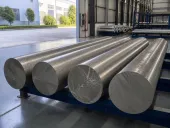
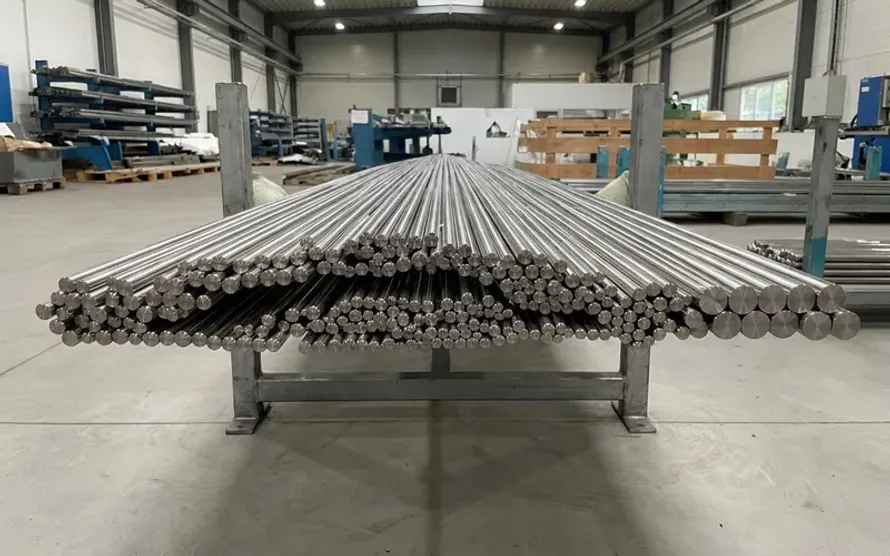
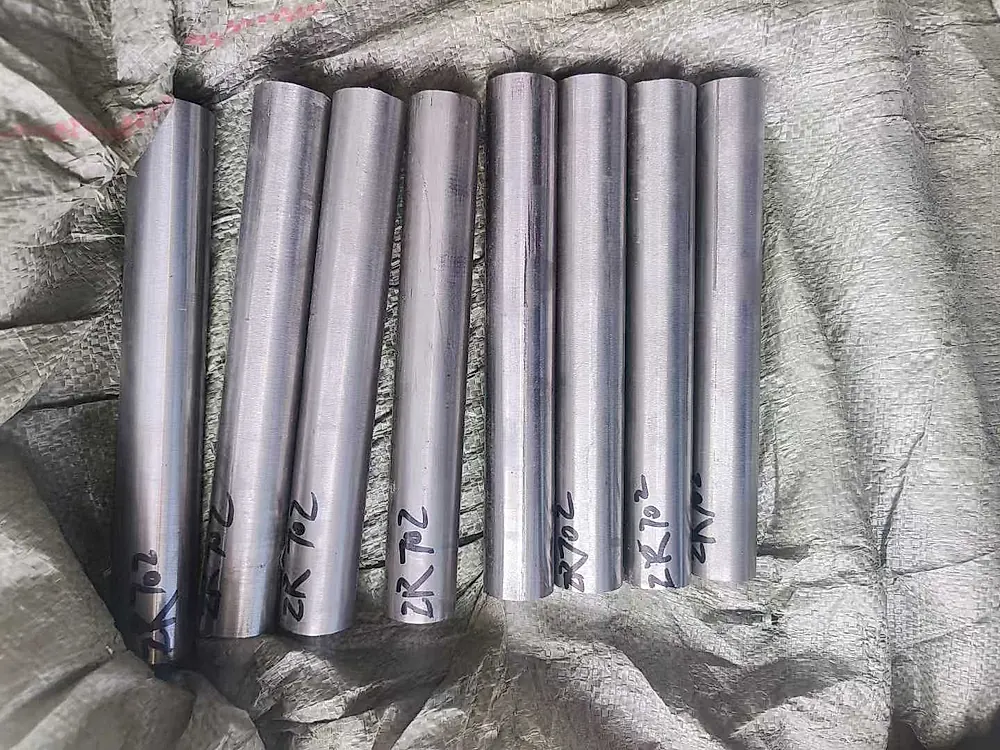 Figure 2: Centerless-ground chemical-grade Zirconium 702 bars individually marked by alloy grade before packing. Because machined zirconium and titanium share an identical silver-gray metallic luster, physical lot segregation and handheld XRF checks are mandatory.
Because polished zirconium (density ~6.51 g/cm³) and titanium (density ~4.51 g/cm³) appear virtually indistinguishable to the naked eye, an accidental alloy mix-up in hot hydrochloric or sulfuric acid service triggers rapid perforation. Incoming verification must be uncompromising. Buyers consolidating titanium and zirconium on a single purchase order should enforce three quality gates:
- Audit Unbroken Heat and Lot Number Traceability: Every Material Test Certificate (MTC) must link primary VAR ingot heat numbers to bar-end stamps, travel tags, and commercial packing lists without transcription gaps. Traceability prevents lot substitution.
- Verify Interstitial Gas and Hafnium Chemistry Columns: Partner quality audits show that independent chemical re-testing on cut pieces is the check commercial buyers skip most often; verify O/N/H limits on titanium lots and confirm hafnium (Hf ≤ 4.5%) plus iron-plus-chromium limits on Zr702 per ASTM B550 and ASTM B551. Chemistry columns require scrutiny.
- Require Pre-Shipment PMI Screening and Scale Photo Logs: Specify 100% handheld X-ray fluorescence positive material identification (PMI), micrometer dimensional mapping, and pre-crating weight photos before export dispatch under FOB China main port terms. Independent checks eliminate mix-ups.
As emerging refining technologies mature toward late-decade commercialization, engineering and procurement teams needing qualified, traceable titanium and zirconium mill products for 2026–2027 production schedules can submit specifications through our online RFQ and multi-metal specification audit portal for rapid stock checks and certified partner mill scheduling. Transparent data backs every quote.