In chlor-alkali evaporation, multi-effect seawater desalination, purified terephthalic acid (PTA) oxidation units, and hydrometallurgical high-pressure acid leach circuits, a pinhole leak across a titanium heat-exchanger tubesheet forces an immediate unscheduled plant shutdown. Unplanned downtime costs millions. Yet procurement teams routinely issue titanium vessel RFQs using recycled 316L austenitic stainless-steel fabrication templates—discovering cracked oxygen-embrittled tube-end welds, delaminated clad tubesheets, or multi-week schedule slips during pre-shipment witness testing.
Fabricating reactive titanium pressure hardware follows fundamentally different metallurgical rules than stainless steel. Hot titanium tolerates zero air. While heat-tinted stainless welds recover corrosion resistance after pickling and passivation, exposing solidifying titanium above 300°C to trace atmospheric air diffuses oxygen and nitrogen directly into the alpha lattice, turning ductile fillet welds into glass-brittle fracture initiation zones under thermal cycling.
As an integrated titanium supply-chain platform working with certified partner facilities for chemical and energy EPC buyers worldwide, we break down shop-floor rules governing build-to-print titanium heat exchangers across tube-to-tubesheet joints, argon purge color acceptance, non-destructive examination, and 30 to 45 day critical-path scheduling. Clear specifications prevent rework.
Defining Build-to-Print Engineering Boundaries and Long-Tube Material Baselines
Successful international procurement of custom reactive-metal vessels begins with an explicit boundary between process licensor engineering and shop-floor mechanical fabrication. Clear responsibility prevents disputes. Across our partner network, custom titanium chemical equipment and shell-and-tube heat exchangers are manufactured strictly build-to-print from buyer-approved mechanical drawings (designed to ASME BPVC Section VIII or equivalent project codes): the buyer or EPC firm freezes thermal rating and wall-thickness calculations, while certified partner shops execute cutting, shell rolling, bundle assembly, purge welding, and code inspection under strict bilateral NDA protection, installation guidance, and a 1 to 3 year workmanship warranty.
Raw-material selection across the tube bundle and tubesheet sets the mechanical reliability ceiling before welding even starts:
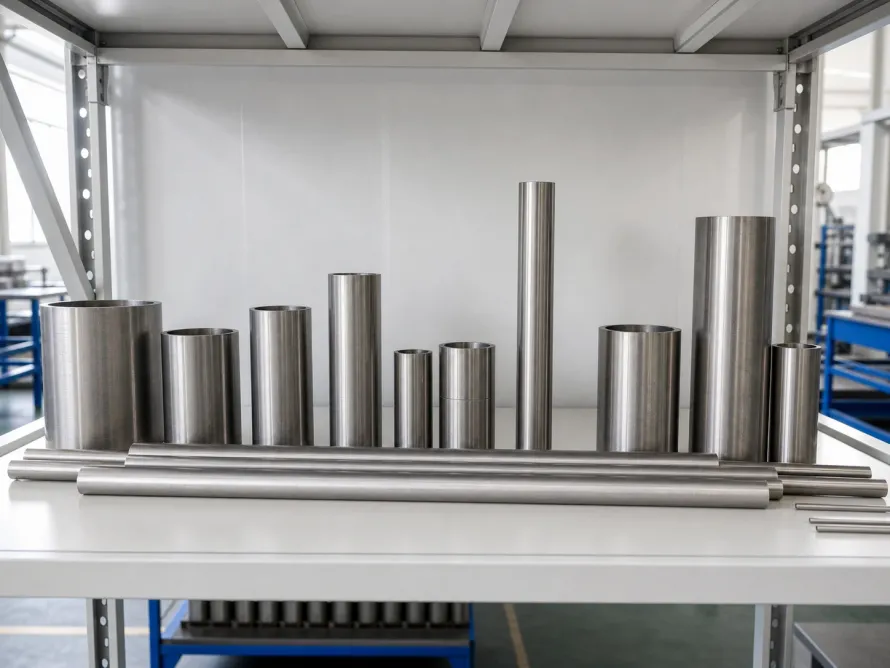
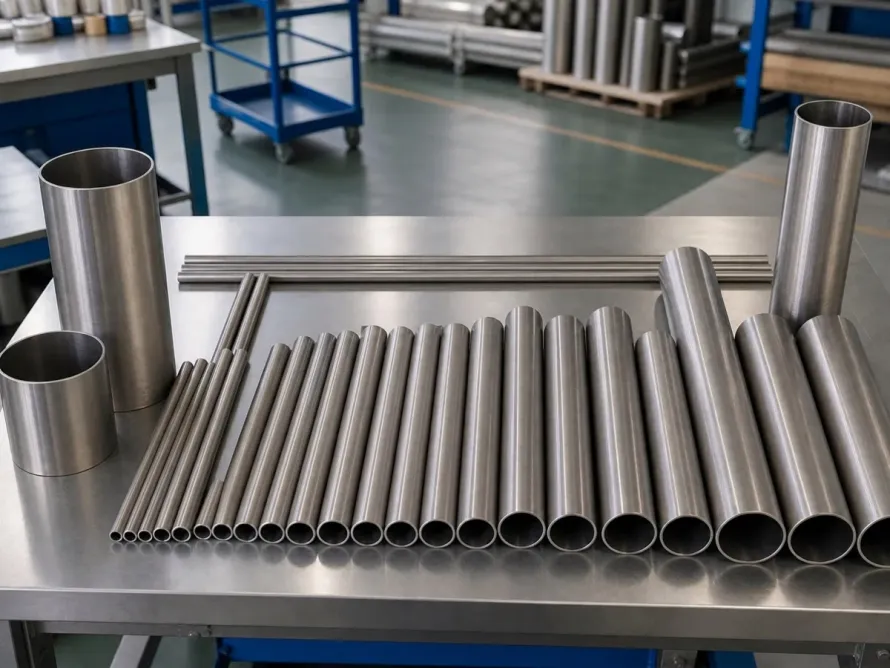
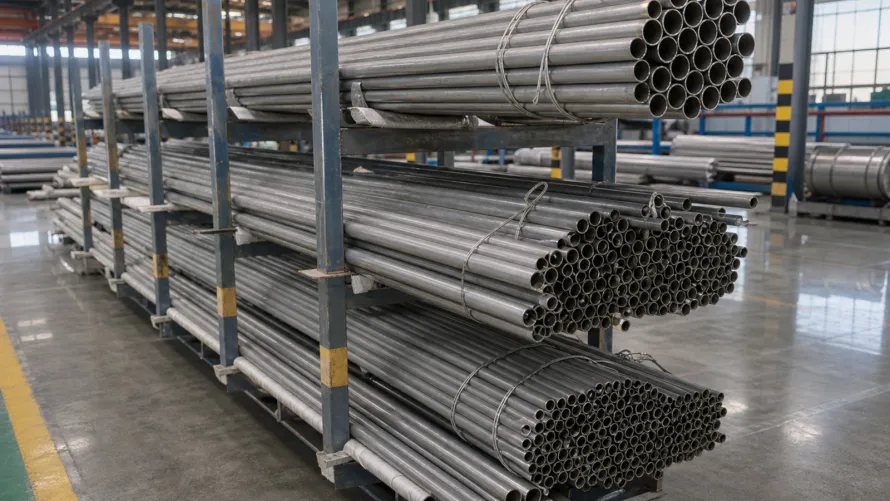
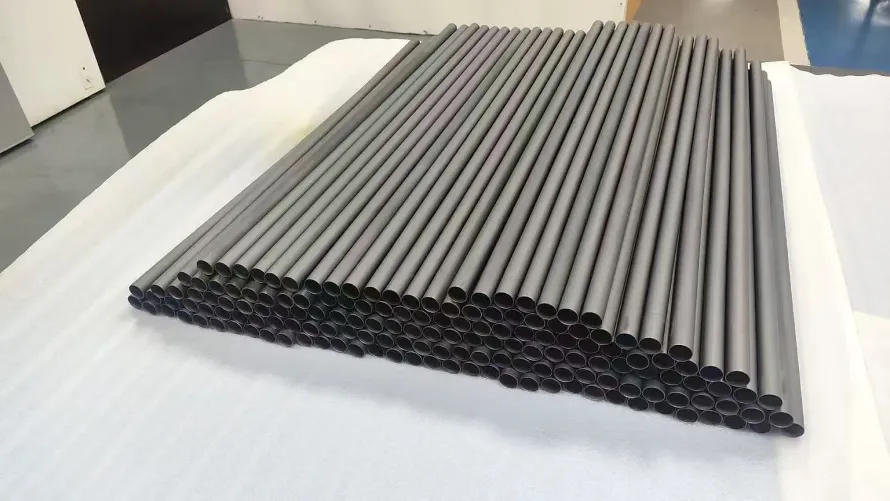
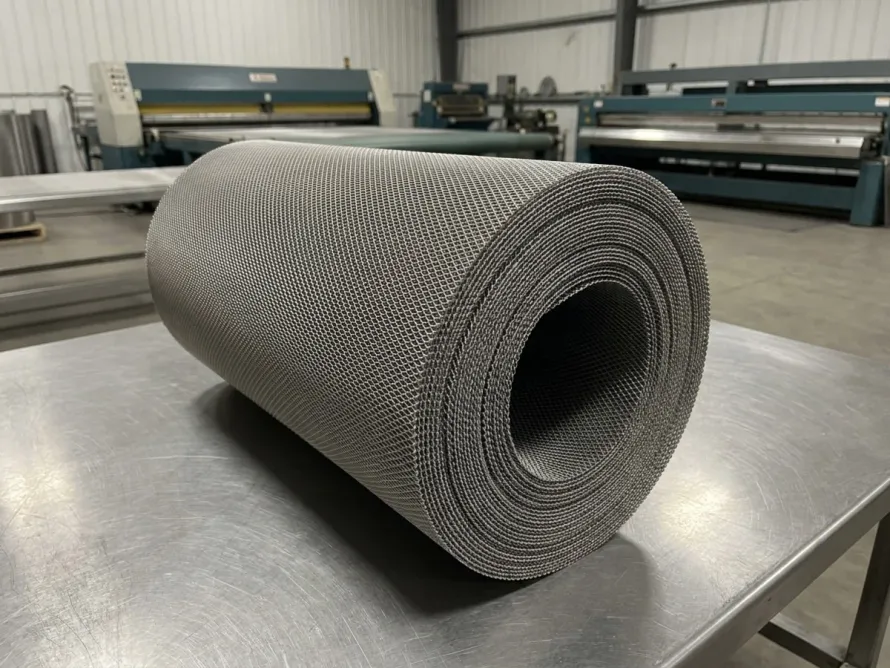
- Continuous Long-Length Seamless and Welded ASTM B338 Tubing: Partner seamless tube mills operate LG30 through LG120 multi-stand cold-pilger lines paired with an 18-meter vacuum bright-annealing furnace, supplying ASTM B338 titanium heat-exchanger tubes from 6 mm to 219 mm OD and 0.5 mm to 18 mm wall thickness in continuous straight lengths up to 18 meters (and U-tubes up to 24 meters developed length). Continuous tubes eliminate mid-span splices. Every finished tube undergoes 100% dual-channel in-line eddy-current (ET) plus ultrasonic (UT) testing and 100% individual hydrostatic testing held for ≥ 10 seconds at up to 20 MPa prior to bundle insertion.
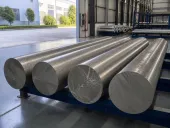
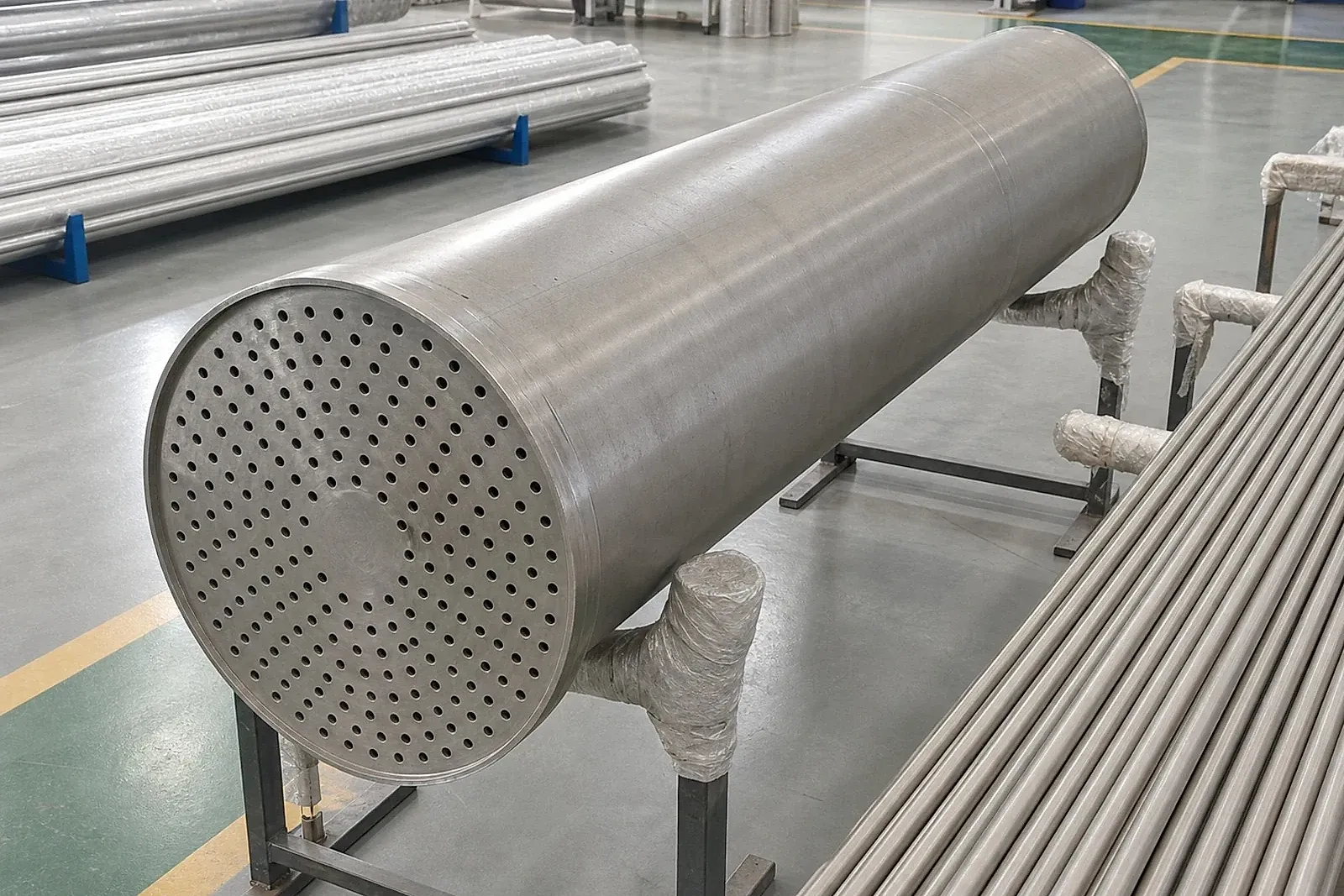
- Explosion-Clad Titanium-Steel Tubesheet Ductility and Bond Scanning: High-pressure condensers and reactors frequently pair a thick carbon-steel backing plate with an explosion-bonded titanium flyer plate (referencing ASTM B898) to balance structural stiffness against material cost. Flyer ductility prevents shear cracking. Partner cladding specifications prioritize high-ductility Grade 1 or crevice-resistant Grade 11 (low-interstitial Ti-0.15Pd) flyer plates with capped yield strength and elongation ≥ 30% so detonation shockwaves cannot trigger adiabatic shear micro-cracks, backed by 100% full-plate ultrasonic (UT) bond scanning before CNC tube-hole drilling.
Tube-to-Tubesheet Joint Discipline: Roller Expansion Plus Triple-Shielded TIG Welding
More than 80% of fabrication defects in shell-and-tube heat exchangers originate at the tube-to-tubesheet joint. Welding alone leaves dead crevices. Fusing a tube-end fillet weld without expanding the tube body leaves a 0.05 mm to 0.20 mm annular gap between the tube OD and the drilled tubesheet hole—creating a stagnant concentration cell that triggers hot chloride crevice attack on Grade 2 commercially pure titanium above 80°C while concentrating shell-side cross-flow vibration directly onto the weld root.
Consequently, certified partner fabrication shops execute a mandatory combined hydraulic or mechanical roller expansion plus argon-shielded TIG seal/strength welding sequence: controlled roller or hydro-expansion seats the tube tightly against the bore wall to eliminate crevices and carry axial/vibrational loads, while tungsten inert gas (TIG) fusion provides hermetic sealing. Surface cleanliness governs weld porosity. Before tube insertion, tube ends and tubesheet grooves undergo acetone degreasing and ratio-controlled nitric-hydrofluoric acid pickling (maintaining a nitric-to-hydrofluoric acid ratio ≥ 7:1 to cap hydrogen pickup below 10 ppm), handled exclusively with lint-free white gloves to prevent fingerprint hydrocarbon porosity.
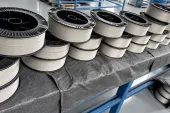
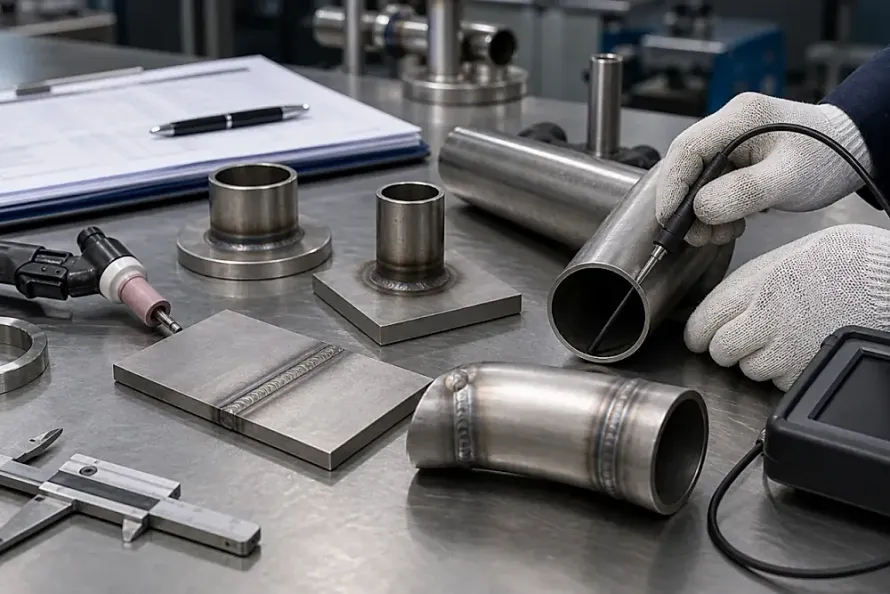
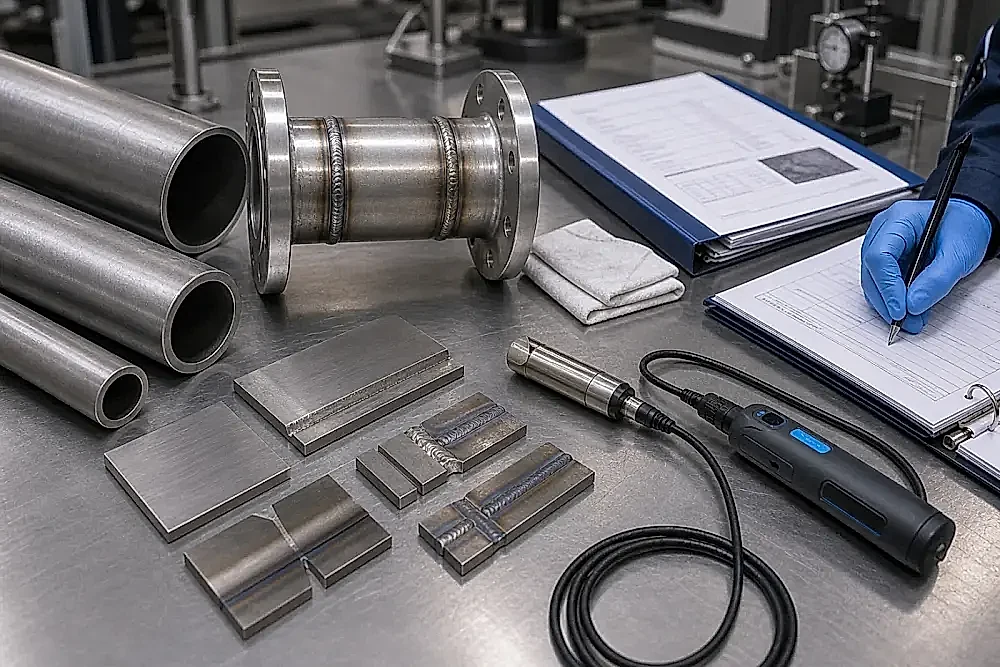 Figure 1: High-purity argon-shielded titanium weld qualification coupons, flanged spool assemblies, and inspection logs at a certified partner QA bench. Third-party inspectors verify bright silver to light-straw bead coloration alongside traceable NDT reports.
During welding, titanium equipment fabrication enforces an uncompromising visual color veto:
- Primary Torch + Contoured Trailing Shield + Internal Back-Purge: Beyond the primary TIG cup, welders fit porous copper trailing shields contoured to shell curvature or flat tubesheet faces while maintaining positive-pressure high-purity argon back-purge tents or chambers behind every root pass until metal temperatures drop below 300°C. Triple shielding blocks air ingress.
- Zero-Tolerance Weld Color Acceptance Criteria: Partner quality rules accept only bright silver or light straw weld beads and heat-affected zones; dark yellow, blue, purple, or powdery gray-white discoloration signals high-temperature oxygen embrittlement and triggers immediate rejection. Cosmetic grinding is strictly prohibited. Contaminated titanium welds must never be wire-brushed or acid-pickled to hide blue tint—crews must mechanically mill or route out the embrittled metal down to clean base alloy before re-welding under full argon purge.
| Fabrication & QA Gate | Certified Partner Shop Standard | Common Low-Bid Subcontractor Shortcut | Resulting Field Failure Mode | Mandatory Buyer ITP / Document Check |
|---|---|---|---|---|
| Incoming Tube Verification | Full-length ASTM B338 tubes; 100% ET + UT + ≥ 10 s hydro test (up to 20 MPa) | Skip-lot hydrostatic sampling or butt-splicing short offcuts inside shell | Early-life pinhole cross-contamination or mid-span weld fatigue | Audit tube MTC heat numbers, dual NDE logs, and seamless/welded length |
| Explosion-Clad Tubesheet | Grade 1 or Grade 11 flyer (elongation ≥ 30%) + 100% full-plate UT bond scan | Hard, low-ductility CP titanium flyer with corner-only UT spot checks | Flyer delamination blisters during drilling or TIG tube-end heating | Require 100% UT C-scan bond map and flyer tensile elongation certificate |
| Tube-to-Tubesheet Joint | Acetone degrease + HNO₃:HF ≥ 7:1 pickle + roller/hydro expansion + TIG weld | Bare-hand tube loading with residual mill oil; single-pass seal weld only | Dense root hydrogen porosity, hot brine crevice attack, vibration cracking | Review qualified WPS/PQR, expansion percentage logs, and mock-up macro-etch |
| Argon Purge & Weld Color | Torch + trailing shield + back-purge; only silver or light straw passes | Omitting trailing shields and buffing blue/purple oxide off with flap discs | Oxygen-enriched brittle weld skin cracking after thermal startup cycles | Set a mandatory pre-pickling / pre-grinding as-welded photo Hold Point |
| Vessel NDT & Pressure Test | 100% liquid penetrant (PT) + 100% radiographic (RT) on pressure seams + dual hydro | Visual-only tube-end checks or quietly dropping shell RT coverage to 10% – 20% | Undetected tungsten inclusions, lack of fusion, or pressurized acid leaks | Cross-check 100% RT film map, welder stamps, PT reports, and hydro charts |
Why Lead Times Sit at 30 to 45 Days: Welder Bottlenecks and Erosion-Corrosion Prevention
Project schedulers planning plant turnarounds frequently ask whether a custom titanium shell-and-tube heat exchanger can be rushed through fabrication in two weeks. Certified welders set the pace. Production tracking across partner equipment bays places realistic lead times for medium-scale titanium heat exchangers at 30 to 45 days from drawing freeze to dispatch, governed by two physical realities that adding general shop labor cannot compress:
First, qualified titanium welder throughput and post-weld purge dwell times: molten titanium requires deliberate torch travel speeds followed by stationary post-flow argon cooling pauses after every segment. Purge cycles resist rushing. A specialized titanium vessel bay typically staffs 3 to 5 dedicated code-qualified titanium welders; completing thousands of gas-shielded tube-end joints alongside back-purged shell seams, 100% dye-penetrant testing (PT), 100% X-ray radiography (RT), and sequential shell/tube hydrostatic holds establishes a hard quality floor.
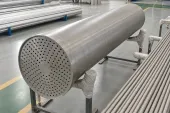
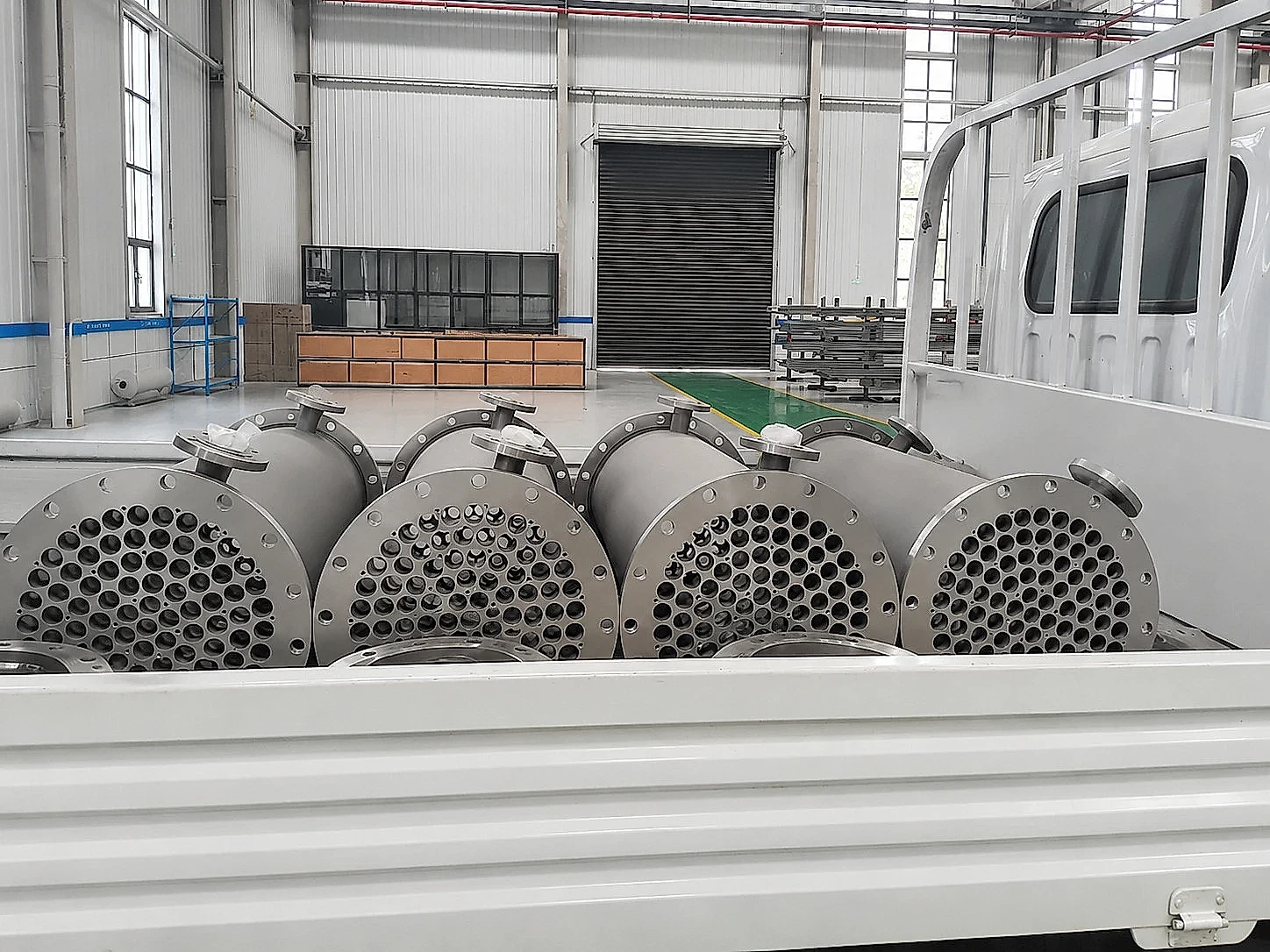 Figure 2: Four build-to-print titanium shell-and-tube heat exchangers staged for dispatch after tube-to-tubesheet expansion, TIG seal welding, 100% PT/RT inspection, and dual hydrostatic testing. Nozzle flanges ship sealed alongside complete MTC and NDT dossiers.
Second, guarding against the #1 field failure—high-velocity erosion-corrosion: multi-year warranty and after-sales records from partner vessel shops reveal that when properly welded titanium heat exchangers leak in service, the root cause is almost never uniform chemical corrosion, but localized high-velocity erosion-corrosion near shell inlets or tube-sheet entries. Excessive velocity strips passive oxide. Titanium owes its corrosion immunity to a self-healing nanometer-scale titanium dioxide film; when unbaffled high-velocity slurries, entrained salt crystals, or flashing two-phase jets shear away that film faster than repassivation occurs, wall thinning perforates tubes within months unless buyer drawings incorporate inlet impingement plates or sacrificial tube-end ferrules.
Pre-RFQ Specification Checklist for Chemical Titanium Heat Exchangers
To pass third-party witness inspection on the first attempt and eliminate post-delivery disputes, EPC engineers and equipment buyers should lock five explicit provisions into every titanium heat-exchanger RFQ package:
- Freeze Complete Fabrication Drawings Under NDA: Supply fully dimensioned general arrangement, tubesheet layout, nozzle load, and impingement-baffle drawings under bilateral NDA, specifying delivery terms such as FOB China main port. Complete drawings prevent mid-build holds.
- Match Alloy Grade to Crevice Temperature and Brine Chemistry: Specify Grade 2 up to 80°C in neutral chlorides; evaluate upgrading tubes and clad faces to Grade 12 (Ti-0.3Mo-0.8Ni) or palladium-stabilized Grade 7 / Grade 11 when gasket or tubesheet crevices exceed 85°C to 100°C. Proper grade selection stops crevice attack.
- Mandate an As-Welded Color Inspection Hold Point: Require high-resolution photo logs or third-party inspector sign-off on raw, unbrushed weld bead color across shell seams and tube-to-tubesheet joints before any pickling or cosmetic finishing. Raw bead photos prove shielding quality.
- Specify 100% PT + 100% RT and Low-Chloride Hydrostatic Water: Enforce 100% radiographic testing (RT) on butt pressure seams, 100% dye-penetrant testing (PT) across all tube-end welds, and clean hydrostatic test water followed by thorough warm-air drying. Full NDT eliminates hidden flaws.
- Audit the Complete Component MTC Traceability Dossier: Require a Material Test Certificate (MTC) with full heat/lot number traceability for every pressure-retaining component—shell plates (ASTM B265), heat-exchanger tubes (ASTM B338), forged or explosion-clad tubesheets, and filler wire (AWS A5.16)—confirming interstitial limits within O ≤ 0.20%, N ≤ 0.05%, and H ≤ 0.015%, with independent third-party witness testing arranged on request. Complete traceability secures code release.
If your engineering team is preparing build-to-print specifications for chlor-alkali, desalination, petrochemical, or hydrometallurgical titanium heat exchangers and reactors, upload your mechanical drawings and operating parameters through our online RFQ and complimentary build-to-print specification review portal to align seamless tube lengths, explosion-clad tubesheet grades, and 30 to 45 day milestone schedules before order placement. Upfront engineering review protects turnaround dates.