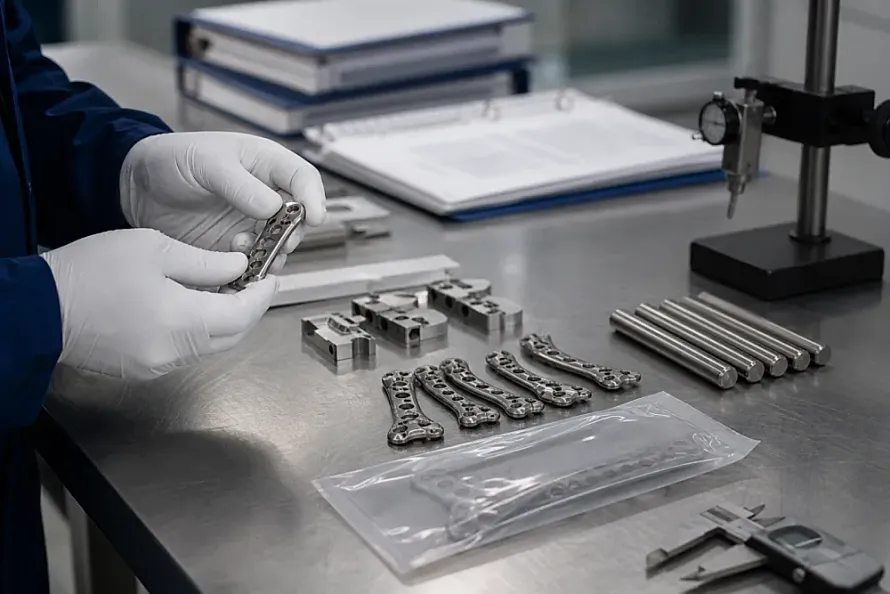
As reported by medical-device industry publication MedTech Dive on November 20, 2026, orthopedic leader Zimmer Biomet Chief Executive Officer Ivan Tornos confirmed that the company has officially filed a 510(k) premarket notification with the U.S. Food and Drug Administration (FDA) for a fully autonomous version of its Monogram total knee arthroplasty (TKA) surgical robot, targeting commercial clearance in 2027 ahead of earlier schedule projections. Autonomous orthopedics entered FDA review.
The filing marks a major commercialization step following Zimmer Biomet’s 2025 acquisition of Monogram Technologies for approximately USD 177 million in upfront cash (representing USD 4.04 per share in equity value plus milestone contingent value rights): unlike Zimmer Biomet’s existing imageless semi-autonomous ROSA system, the Monogram platform uses preoperative CT 3D imaging to guide foot-pedal-activated, hands-free autonomous bone resection, posting 0 safety events in clinical trials while accelerating landmark registration and reducing operating-room instrument tray counts. Robotic precision trims tray volume.
Keeping that public regulatory milestone strictly within its reported scope, the push toward 2027 autonomous knee-replacement workflows sends a clear engineering signal to precision medical CNC contract manufacturers supplying orthopedic OEMs: as bone-cut tolerances and quick-disconnect robotic arrays tighten, incoming ASTM F136 / ISO 5832-3 implant bar stock and instrument blanks face zero margin for guide-bushing runout, inclusion defects, or post-milling springback. As an integrated titanium supply-chain platform working with certified partner facilities for medical and precision machining buyers worldwide, we outline the three mill-side release controls that protect high-yield medical machining. Mill precision drives spindle yield.
Lights-Out Swiss CNC Machining: h6 / h7 Centerless-Ground Bars and ≤ 0.3 mm/m Straightness
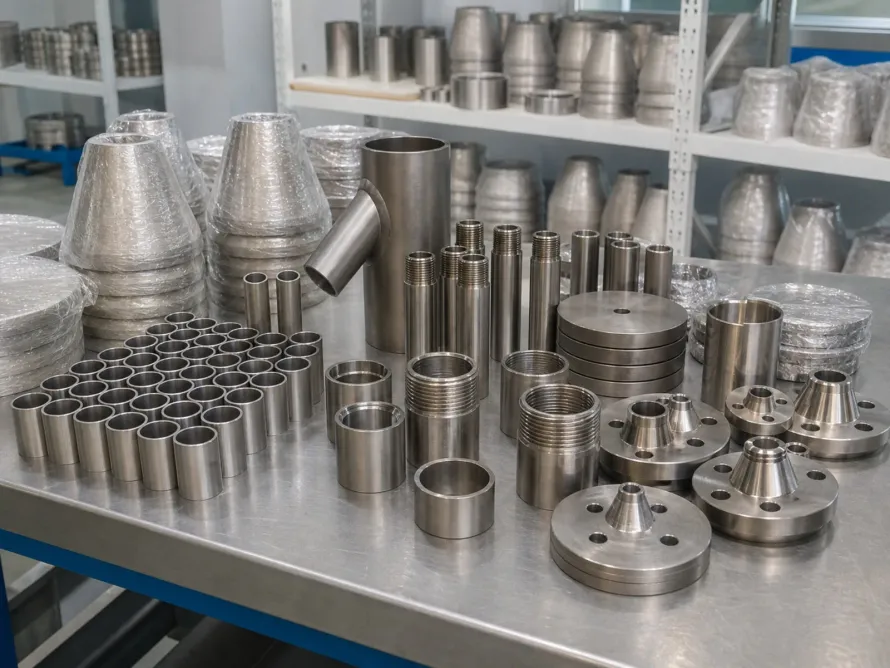
Producing cancellous locking screws, modular tibial stems, and precision robotic adapter pins across 24 hours of unattended Swiss-type CNC bar-feeder operation leaves no tolerance for hot-rolled bar ovality. Bar whip ruins guide bushings. Feeding standard peeled industrial rod into a high-speed carbide guide bushing triggers vibration, thread-flank chatter, and mid-shift feeder jams:
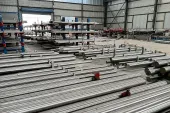
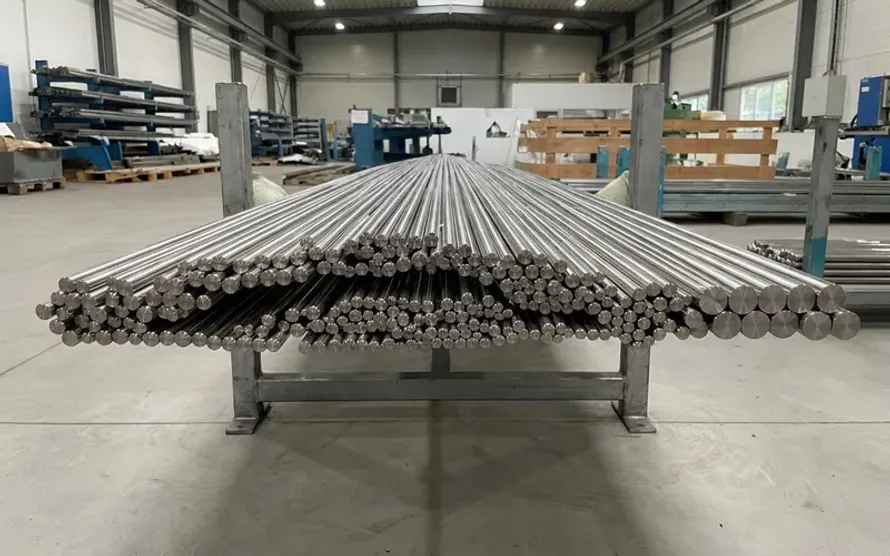
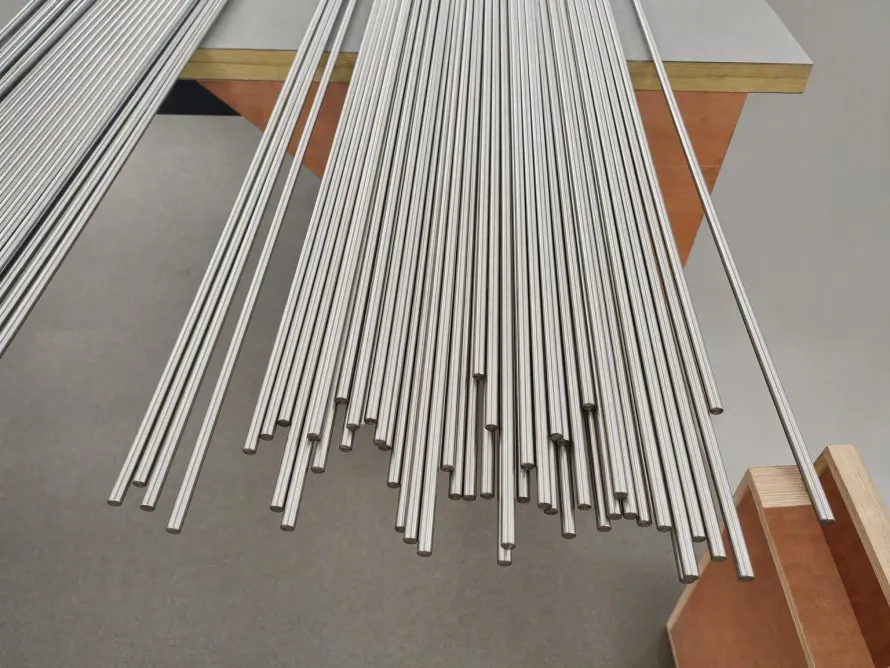
- Multi-Pass Centerless Grinding Locks h6 / h7 Diameter Bands and ≤ 0.3 mm/m Straightness: For medical Swiss-lathe cells ordering Grade 23 (Ti-6Al-4V ELI) extra-low-interstitial implant titanium and ASTM F67 commercially pure titanium, certified partner finishing lines apply multi-pass centerless grinding followed by ultrasonic deionized-water degreasing to hold h6 or h7 diameter tolerances (± 0.005 mm to ± 0.015 mm) and full-length straightness within ≤ 0.3 mm/m. Tight straightness stops spindle vibration.
- Full-Length Laser Sorting and Pre-Machined 30° / 45° End Chamfers Across 3–65 mm Stock: To prevent collet hang-ups during automatic bar reloads, partner lines supply centerless-ground precision titanium round bars from 3 mm to 65 mm diameter with pre-machined 30° or 45° chamfered ends, 100% full-length laser diameter sorting, and in-line eddy-current surface flaw verification (standard bar deliveries span 5 to 30 days by tonnage, with unit pricing stepped strictly by surface finish: centerless-ground polished bar > lathe-turned peeled bar > black-surface hot-worked bar). Chamfered ends ensure smooth feeding.
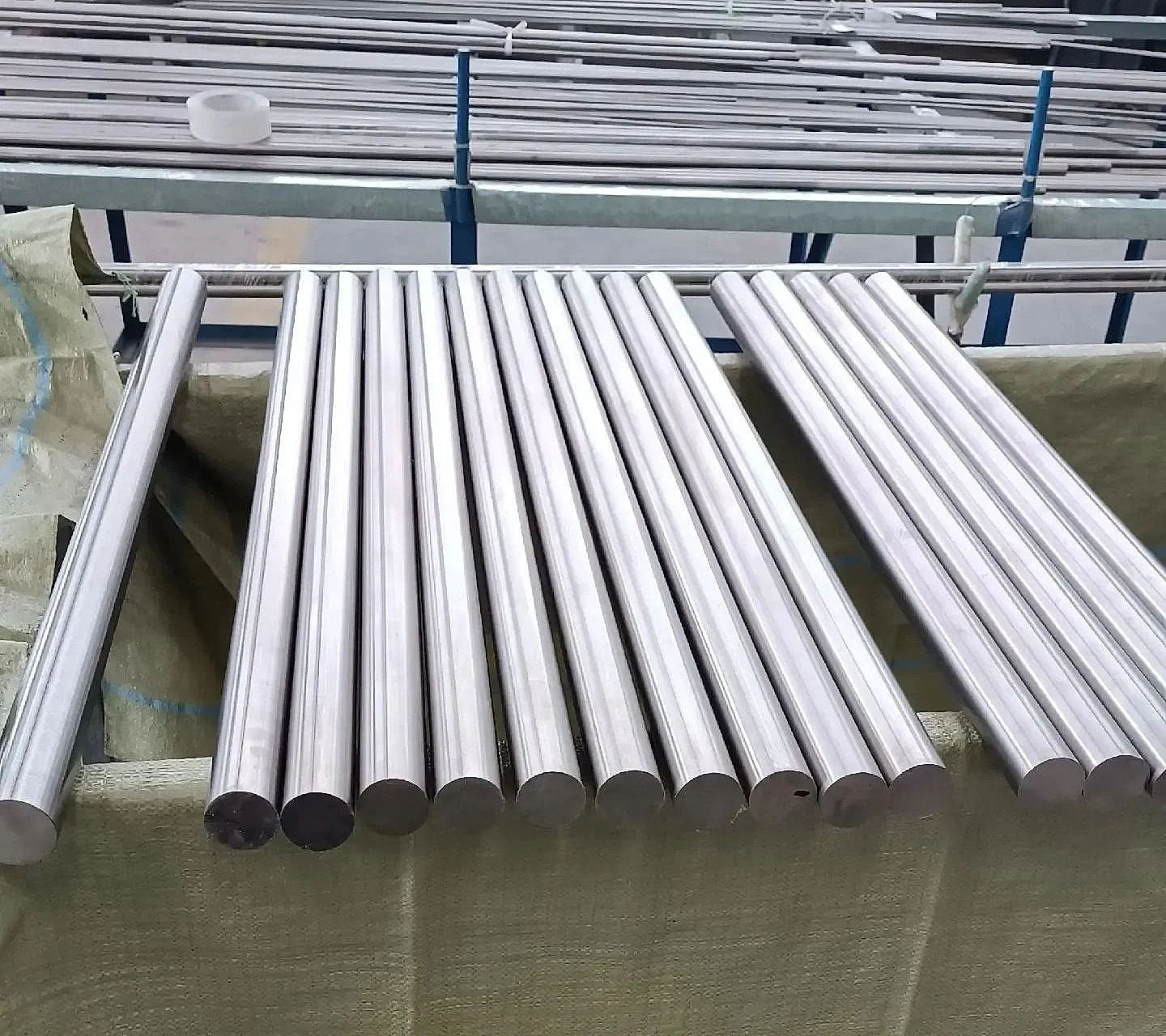 Figure 1: Multi-pass centerless-ground and ultrasonically cleaned titanium round bars staged at a certified partner finishing bay. Holding h6/h7 tolerances (± 0.005–0.015 mm) and ≤ 0.3 mm/m straightness prevents guide-bushing seizure on unattended Swiss-type CNC lathes.
Preventing > 70% Hogout Warpage on Robotic Guides and Auditing 3× VAR Beta Transus Pedigree
Autonomous surgical platforms reduce operating-room instrument trays by consolidating bulky mechanical jigs into lightweight, stiff titanium optical-tracker frames and cutting guides, while implanted tibial baseplates and trauma plates endure tens of millions of cyclic gait loads. Residual stress warps tracker frames. When qualifying 2027 medical titanium mill supply, quality directors must enforce two metallurgical gates beyond basic chemistry:
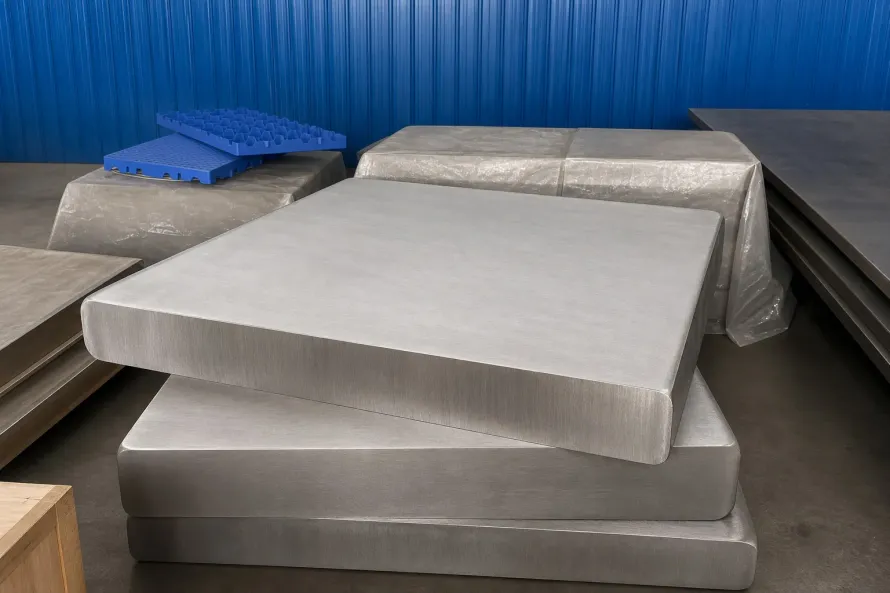
First, components exceeding 70% CNC material removal require AMS 2801 vacuum stress-relief annealing. Five-axis milled robotic registration arrays and contoured orthopedic trauma plates routinely hog out > 70% of the starting bar or plate volume. Unrelieved stock springs out of flat. If cold-straightening stresses remain locked inside the billet, unclamping the finished frame shifts fiducial marker bores by dozens of micrometers—spoiling CT navigation alignment; certified partner lines therefore treat high-hogout medical implant and surgical instrument titanium stock via dedicated vacuum stress-relief annealing and low-stress straightening per AMS 2801.
Second, Grade 23 ELI implants demand O ≤ 0.13% virgin-sponge melts, 3× VAR cleanliness, and documented beta transus temperatures. Unlike commercial industrial heats capped at O ≤ 0.20%, N ≤ 0.05%, and H ≤ 0.015%, surgical implants under ASTM F136 / ISO 5832-3 cap finished oxygen at O ≤ 0.13% to maximize fracture toughness, with critical implant bar and spherical-powder electrode stock utilizing triple Vacuum Arc Remelting (3× VAR, carrying a melt premium of roughly USD 0.70–2.10/kg over single/double melts) to eliminate high- and low-density inclusions. Furthermore, every Grade 5 and Grade 23 ELI ingot heat has its exact beta transus temperature (typically 980°C to 1,005°C) measured via metallographic quench testing prior to breakdown and recorded directly on the MTC, confirming fine α+β equiaxed billet processing below the transus boundary. Documented transus proves grain control.
| Medical & Robotic Application | Target Alloy & Governing Standard | Melt Purity & Microstructure Gate | Dimensional & Stress-Control Spec | Incoming MTC & IQC Audit Focus |
|---|---|---|---|---|
| Implant Bone Screws, Pins & Stems | Grade 23 (Ti-6Al-4V ELI) ASTM F136 / ISO 5832-3 | Virgin sponge melt, O ≤ 0.13%; critical lots 3× VAR (USD 0.70–2.10/kg premium) | Centerless-ground h6 / h7 (± 0.005–0.015 mm), bow ≤ 0.3 mm/m | Verify measured beta transus (980–1,005°C), α+β microstructure & immersion UT |
| Craniofacial Plates & Dental Stock | Grade 1 – Grade 4 CP Ti ASTM F67 / ISO 5832-2 | Tight interstitials H ≤ 0.0125%–0.015%, fine-grain annealed | 3–65 mm Swiss bars with 30° / 45° end chamfers & laser sorting | Check bend elongation, eddy-current surface logs & ultrasonic degreasing |
| Robotic CT Tracker Arrays & Guides | Grade 5 (Ti-6Al-4V) or Grade 23 ELI ASTM B348 / AMS 2801 | O ≤ 0.20% (instrument) or ≤ 0.13% (ELI), full lot traceability | AMS 2801 vacuum stress-relief anneal for > 70% hogout frames | Confirm post-autoclave dimensional stability & 100% heat/lot marking |
| Porous Tibial Tray AM Powder Bars | Grade 23 ELI electrode bar ASTM F3001 / ASTM F136 | 3× VAR inclusion-free melt (ultra-low oxygen down to O ≤ 0.05%) | Rotary-peeled billet/bar (0.3%–0.8% skin scalped), defect-free skin | Audit MTC (2–5 days post-test) zero-inclusion UT & O/N/H assays |
Four Procurement Controls for 2027 Orthopedic Implant and Surgical Robotics Supply
As Zimmer Biomet and competing orthopedic primes advance autonomous robotic knee platforms toward 2027 clinical rollouts, tier-one CNC machine shops can prevent lot rejections and spindle downtime through four explicit purchasing rules:
- Specify the Full Swiss-CNC Triad—h6/h7 Tolerance, ≤ 0.3 mm/m Straightness, and 30°/45° Chamfers: Replace vague “polished bar” PO descriptions with exact h6 or h7 diameter bands (± 0.005–0.015 mm), ≤ 0.3 mm/m straightness, 30° or 45° chamfered ends across 3–65 mm bars, and 100% laser diameter sorting plus eddy-current testing. Explicit tolerances keep feeders running.
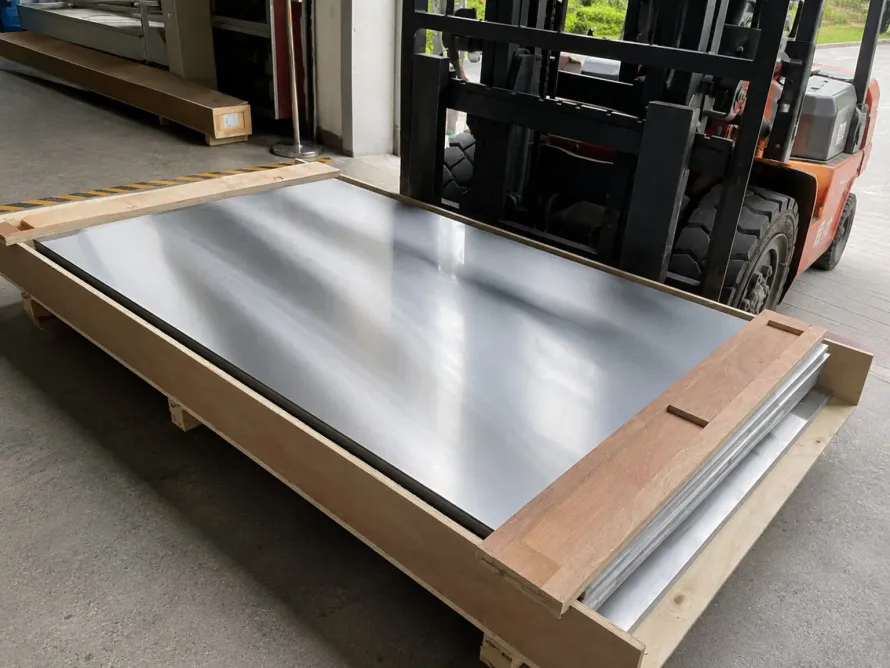
- Mandate Pre-Shipment AMS 2801 Stress Relief on > 70% Material-Removal Blanks: Flag heavily pocketed robotic cutting blocks, tracker frames, and contoured trauma plates during RFQ review so bar and plate stock undergoes AMS 2801 vacuum stress-relief annealing and low-stress straightening prior to sawing. Stress-relieved blanks hold flatness.
- Audit Measured Beta Transus Values and O ≤ 0.13% Virgin-Sponge Traceability on the MTC: Budget 2 to 5 days post-testing for complete Material Test Certificate (MTC) compilation, verifying measured O ≤ 0.13% chemistry, 980°C to 1,005°C metallographic beta transus data, and 100% heat/lot number traceability from primary VAR ingot to final bar-end markings. Full melt records streamline FDA audits.
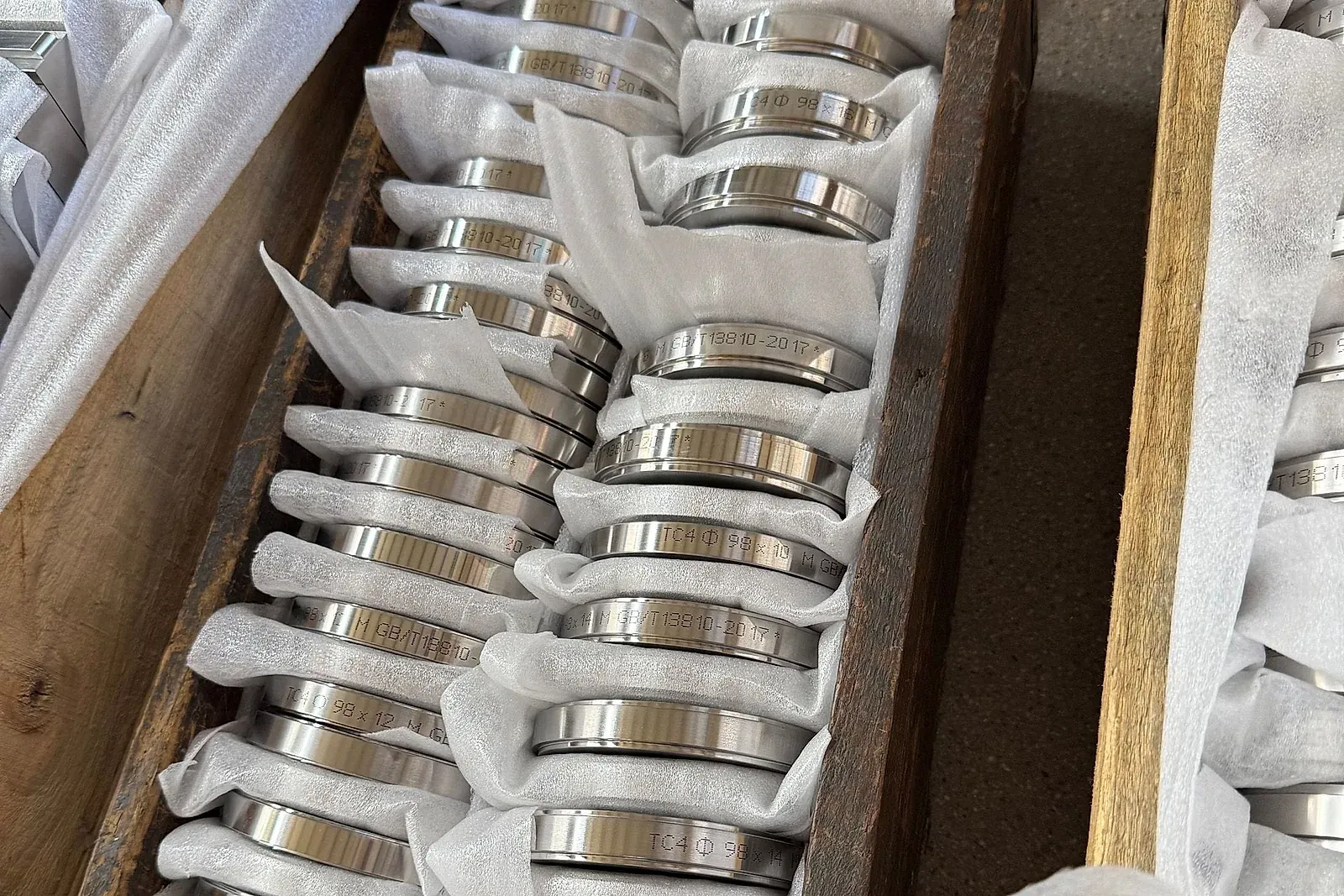
- Enforce Individual EPE Sleeve Packaging to Prevent Transit Scuffing on Ground Bars: Microscopic surface nicks from metal-on-metal contact score Swiss guide bushings immediately; require individual white EPE foam sleeves, desiccant-sealed barrier bags, and steel-strapped ISPM 15 plywood crates shipped FOB China main port with pre-shipment scale photos. Protected surfaces preserve h6 finish.
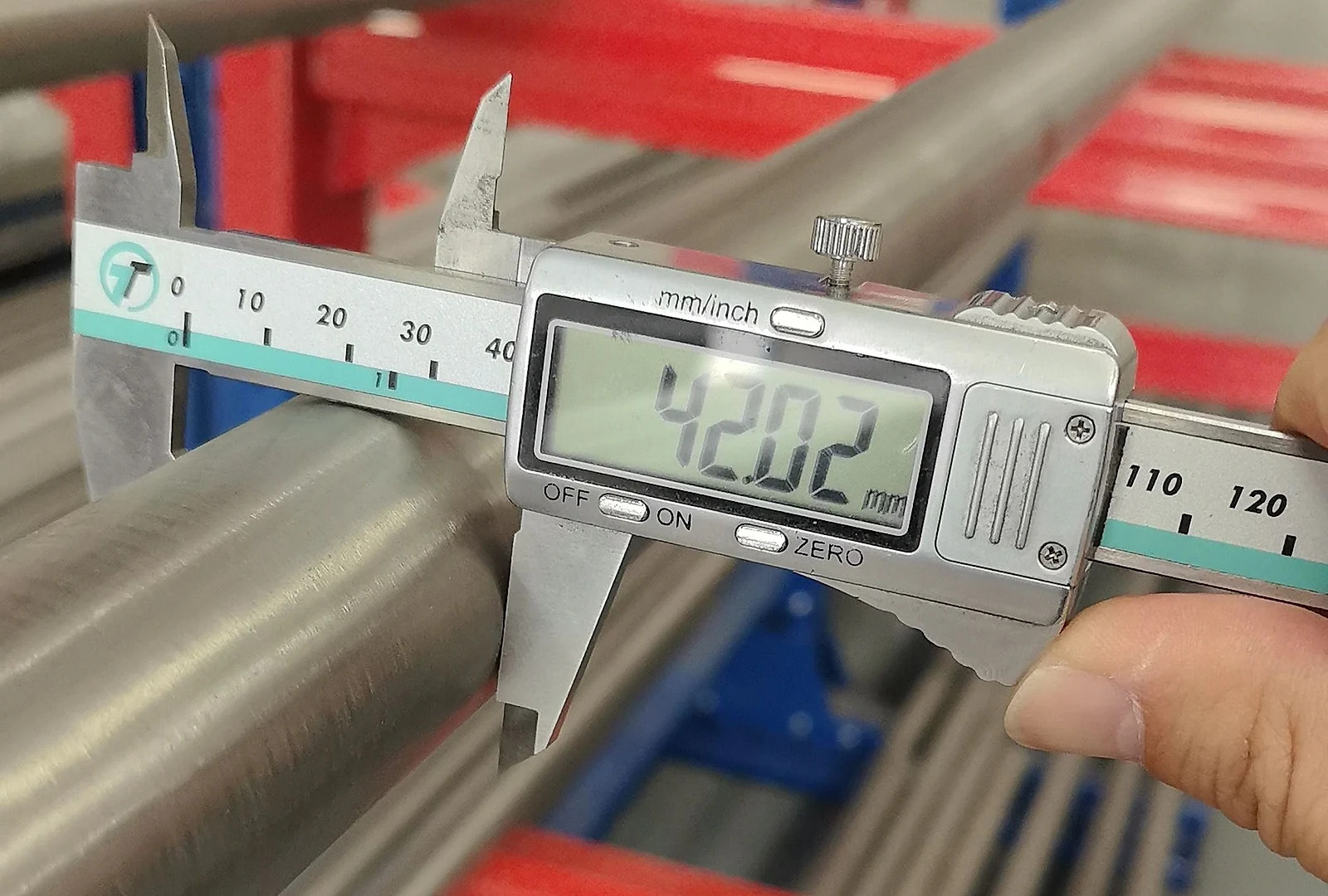 Figure 2: Pre-packing outer-diameter verification on centerless-ground titanium round bar stock at a certified partner facility prior to individual EPE foam sleeving and ISPM 15 crating. Medical bar lots undergo full-length laser diameter sorting and eddy-current inspection.
If your medical machining cell or orthopedic sourcing team is qualifying ASTM F136 Grade 23 ELI or ASTM F67 Swiss-grade bars and stress-relieved instrument stock for 2027 production schedules, upload your part drawings and tolerance callouts via our online RFQ and complimentary medical bar specification audit portal to review redacted sample MTCs with documented beta transus records. Verified bar stock protects clinical timelines.