Heat Treatment & Delivery Condition
Two pieces of Grade 5 with identical chemistry can differ by 15–20% in strength, and considerably more in fracture toughness, purely because of how they were heat treated. Delivery condition is not a footnote on the order — it is part of the material specification, and a purchase order that omits it is incomplete.
This page explains the conditions you will be asked to choose between.
The Conditions
| Condition | What it does | Typically specified for |
|---|---|---|
| Mill annealed | Standard supply condition. Balanced strength and ductility, good formability | General fabrication, chemical process equipment, most stock material |
| Solution treated & aged (STA) | Solution treat then age to precipitate strengthening phase. Highest strength in alpha-beta alloys | Ti-6Al-4V structural and aerospace parts where strength governs |
| Beta annealed | Anneal above the beta transus. Higher fracture toughness and better crack growth resistance, lower ductility | Damage-tolerant aerospace applications |
| Stress relieved | Sub-critical hold to relax residual stress without changing microstructure | After machining, welding or forming, to prevent distortion in service |
| Recrystallisation annealed | Coarser recrystallised structure | Where toughness and creep behaviour matter more than tensile strength |
Commercially pure grades (1, 2, 3, 4) are supplied annealed and are not heat-treatable for strength; changing their properties is a matter of cold work and annealing, not solution treatment.
What Delivery Condition Changes
- Mechanical properties. The values on your certificate are the values of that condition. A Ti-6Al-4V minimum tensile figure quoted without a condition means nothing.
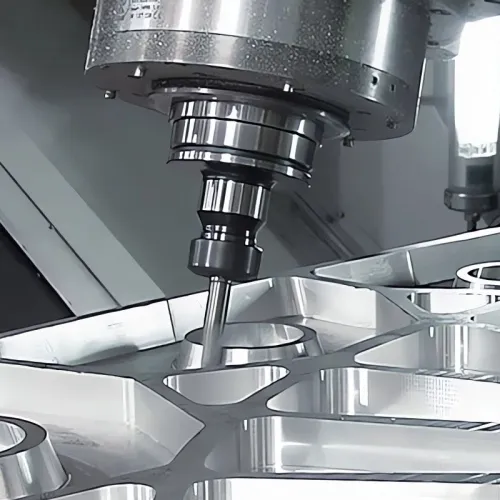
- Machinability. STA material is harder and more abrasive to cut than annealed. If you machine to finished part, the condition affects your cycle time and tool cost, not just the datasheet.
- Formability. Bending and forming are done in the annealed condition. Trying to form STA material is a good way to crack it.
- Weldability and post-weld behaviour. Welding disturbs the condition locally; whether post-weld heat treatment is required depends on the alloy, the design code and the service duty.
If the part is machined heavily or welded, the sequence matters: heat treatment before or after machining changes both distortion and final properties. Tell us the route and we will flag the conflict if there is one.
Atmosphere and Surface
Titanium absorbs oxygen and nitrogen at temperature. Two consequences follow:
- Air or non-protective atmosphere treatment produces alpha case — a brittle oxygen-enriched surface layer — which must then be removed by pickling and verified by metallographic section. Budget for the removal and the material it takes with it.
- Vacuum or inert atmosphere treatment avoids it, which is why it is specified for finish-machined parts and thin sections where removing a surface layer is not acceptable.
Choosing the furnace type is therefore not purely a cost question — it decides whether the part needs a downstream chemical operation.
Process Control and Records
For anything above general industrial duty, the following are agreed before the order runs rather than requested afterwards:
- Furnace temperature uniformity for the working zone, with a valid survey and instrument calibration records
- Load configuration — where the parts sit, thermocouple placement, and how the load affects heating rate
- Quench delay for solution treatment, which directly affects whether the properties are achieved
- Property verification on representative material, not on a different section size
Aerospace work adds pyrometry scheme requirements on top of this. Applicable approvals are confirmed per order against the facility that actually runs the furnace — certificate number, scope, address and validity date — because such approvals are issued to a named site and do not transfer.
What to Specify
Grade, product form and section size; the delivery condition or the target mechanical properties; the applicable material standard; whether the surface may be pickled afterwards or must be treated in vacuum; and where heat treatment sits in your machining and welding sequence.
If you know the properties you need but not the condition that delivers them, describe the duty and we will propose the route.