Type something to search...

10 usc 4863 titanium

Market and Supply Chain
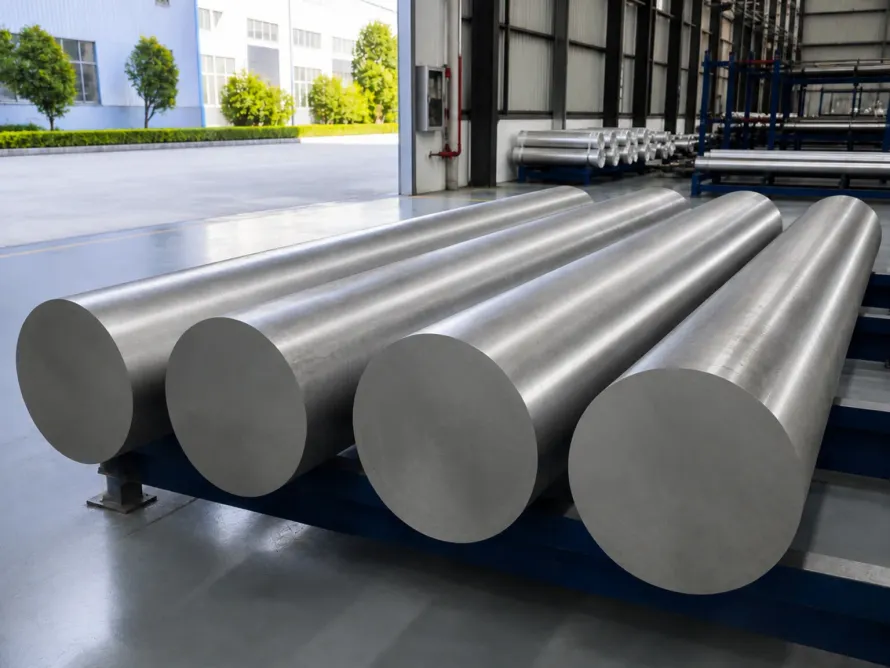
Large titanium billets in a mill-products warehouse illustrate why origin evidence must remain attached to a defined heat, form and production route.
By Jason/ On 22 Jul, 2026

New U.S. Defense Order Raises Titanium Traceability Without Creating a New Titanium Ban

The U.S. executive order issued on July 20, 2026 tightens waivers for certain defense materials and directs the government to build a much deeper view of critical supply chains. For titanium buyers and suppliers, the most important point is also the easiest to miss: the order does not place titanium inside one new blanket prohibition. Titanium and titanium alloys already sit within the U.S. defense specialty metals regime. The order's waiver restrictions, by contrast, point to the separate list of covered materials in 10 U.S.C. 4872. Its broader supply-chain mapping provisions may still pull titanium heats, product forms, processors and finished components into a more demanding origin record. The practical change is therefore less about a new titanium ban than about proving which rule applies at each tier. One headline, three compliance layers The July 20 executive order sets January 1, 2027 as the point when waivers under 10 U.S.C. 4872 are to stop except through specified routes. A continuing waiver would require an accepted mitigation plan identifying the non-compliant source, documenting exhaustive efforts to obtain compliant material, explaining how the material will be removed from the supply chain and setting a strict timeline. Failure to qualify a domestic source does not by itself establish non-availability unless the contractor can show active, adequately funded and ongoing qualification work. That is a material change for the substances within 4872. It should not be read as a direct rewrite of the titanium rule. The statutory covered-material list, current through July 19, 2026, names samarium-cobalt magnets, neodymium-iron-boron magnets, tungsten metal powder, tungsten heavy alloy and relevant components, tantalum metals and alloys, and molybdenum. It does not name titanium. Titanium appears in a different compliance bucket. Current DFARS specialty-metals restrictions implement 10 U.S.C. 4863 for specified aircraft, missile and space systems, ships, tank and automotive items, weapon systems and ammunition. They also address specialty metal delivered as an end item, including raw stock such as bar, billet, slab, wire, plate and sheet, plus castings and forgings. The associated clause expressly defines titanium and titanium alloys as specialty metals and sets out its own qualifying-country, commercial-item, non-availability and other exceptions.Compliance layer Immediate subject Titanium meaning10 U.S.C. 4872 waiver restriction Listed sensitive materials from covered nations Titanium is not on the current covered-material list; do not relabel the order as a universal titanium ban.10 U.S.C. 4863 and DFARS specialty-metals rules Titanium and other specialty metals in defined defense acquisitions Existing melting or production and flow-down requirements remain a contract-level question, with defined exceptions.New critical-supply-chain mapping Acquisitions selected as supporting or relating to national security Titanium may be captured as a raw material, mill product, component or processing input even when 4872 is not its governing prohibition.This separation matters because a correct material statement can still be attached to the wrong legal conclusion. “Titanium is a critical material” does not identify the applicable contract clause. “Made in” does not establish where a specialty metal was melted or produced. And a country shown on a packing list may identify the shipping point rather than the origin event the contract asks the supplier to prove. The wider change is an origin-data architecture Section 3 of the order reaches beyond the waiver provision. Within 180 days, the department is directed to develop policy and guidance for mapping critical supply chains across prime contractors and subcontractors at any tier for acquisitions it determines support or relate to national security. Within 90 days after that work, implementing regulations are to follow. The proposed rules are to require a complete indentured bill of materials tracing components, parts, equipment, software and materials back to raw-material origin. They also contemplate written supplier-vetting procedures, risk mitigation, corrective-action records and closeout reporting. That language is broader than the list in 4872, but it is not yet a finished contract clause for every titanium order. Scope, format, data protection, flow-down and implementation details will depend on the regulations and the contracts that adopt them. For titanium supply chains, the likely burden is not simply one more certificate. A billet may become bar, a bar may be cut across orders, a forging may move through heat treatment and machining, and a finished assembly may combine titanium with fasteners, coatings or other controlled materials. A usable origin record has to preserve identity through those transformations instead of stopping at the first mill certificate.A five-layer titanium origin file Suppliers can prepare for the new direction without pretending that draft regulations already exist. The useful control is a five-layer origin file tied to the specific purchase order. 1. Applicability record Record the prime contract or program, the flowed-down clause, the covered end item and the supplier tier. Identify whether the question is a 4872 covered material, a 4863 specialty metal, an emerging supply-chain-mapping requirement, or more than one of these. This first decision prevents the rest of the file from proving the wrong thing. 2. Material identity record Connect alloy grade, specification, product form, heat or melt identity, dimensions and ordered quantity. For powder routes, keep the feedstock lot and applicable production definition. For wrought products, distinguish billet, bar, plate, sheet, wire, tube, casting and forging rather than treating “titanium” as one interchangeable form. 3. Origin and production-event record Identify the facility and country associated with the origin event required by the applicable clause: melting, production, atomization, sputtering or final consolidation of non-melt-derived powder, as relevant. Keep this separate from the seller's address, port of export and final machining location. Those locations may all be legitimate, but they answer different questions. 4. Conversion and custody record Map each transformation and custody handoff: remelting, forging, rolling, drawing, heat treatment, cutting, machining, welding, surface treatment, inspection and assembly. Record lot splits and merges. The objective is not to create an ornamental process chart; it is to show why the finished serial number or shipment lot still points back to the claimed material and origin evidence. 5. Exception, qualification and change record If compliance depends on an exception, non-availability determination, qualifying-country route or other authorized basis, retain the clause, decision authority, scope and expiration or review point. Where an alternate source must be qualified, show funded actions, technical milestones, responsible owners and change-control approval. A commercial promise to “switch sources” is not the same as an executable qualification plan. What the order does not prove The order does not prove that every non-U.S. titanium product becomes prohibited on January 1, 2027. It does not make all qualifying countries, exceptions or contract clauses interchangeable. It does not convert a material test report into complete origin evidence, and it does not establish that every supplier must immediately disclose its entire proprietary supply chain in a self-selected format. It does signal that origin and supplier-risk data are moving closer to the bill of materials and farther upstream. A titanium supplier that can show chemistry and mechanical properties but cannot connect the delivered lot to its production event, conversion chain and contractual basis may face an evidence gap even when the metal itself is technically correct.The buying question changes from country to chain The defensible buyer question is no longer “Is this titanium domestic?” in isolation. It is: which rule governs this item, which production event establishes compliance, how did identity survive each conversion step, and what approved basis supports any exception or alternate source? That framework is more precise than a country-of-origin slogan and more useful than collecting certificates without a supply-chain map. The July 20 order's direct waiver restriction is not a new titanium rule. Its deeper operational effect may be to make clause-aware, tier-aware and lot-aware origin evidence a normal part of defense titanium supply.

Ready to Start Your Project?

Get factory-direct pricing on titanium products. No minimum order.

Get a Free Quote
Quick Inquiry