Type something to search...

Capacity to release file

Market and Supply Chain
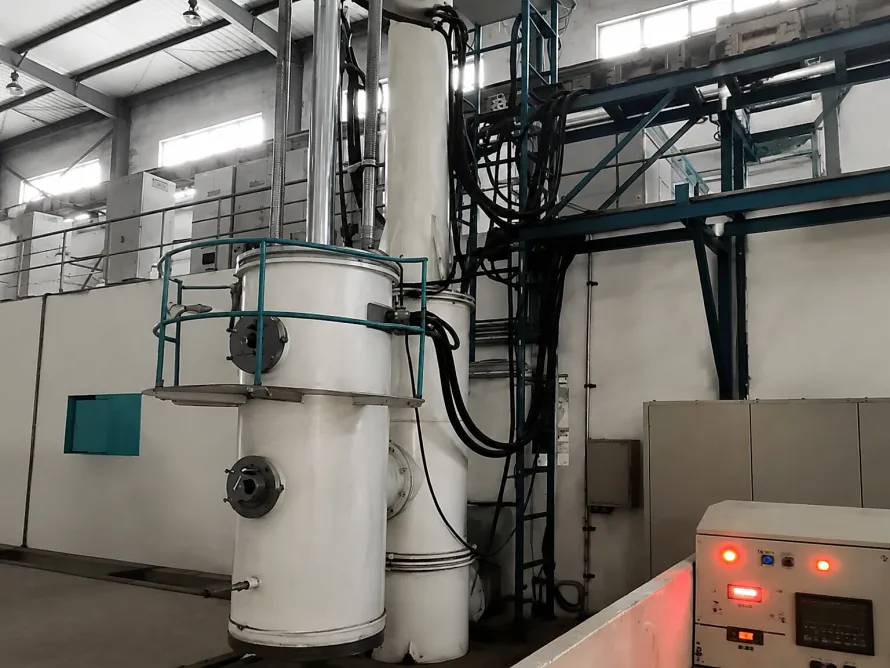
Vacuum and furnace equipment inside a titanium processing workshop, illustrating why powder capacity has to be connected to process control, safety review and release evidence
By Jason/ On 23 Jun, 2026

Amaero's Third Atomizer Shows Why Titanium Powder Buyers Need a Capacity-to-Release File

Amaero's June 22, 2026 update is not only a capacity announcement. The company said it has commissioned a third EIGA atomizer, with one atomizer dedicated to refractory alloys and two dedicated to titanium alloys, and now has annual capacity of about 200 tons for refractory alloy powders and about 480 tons for titanium alloy powders. It also said titanium powder production is expected to restart in July after a process, systems and facility safety review.For titanium buyers, the useful question is not whether more domestic powder capacity is good news. It is. The harder question is how a capacity figure becomes buyer-ready supply: which atomizer will produce the powder, what restart condition applies, which inventory covers the gap, what lot evidence will travel with shipments, and how the powder route connects to additive manufacturing or PM-HIP parts. That distinction matters because titanium powder is not interchangeable stock in the same way a simple commodity line item might be. Powder morphology, chemistry, oxygen pickup, particle-size distribution, flowability, storage, passivation, handling, reuse policy and customer approval can all determine whether a lot is acceptable. A supplier can have installed capacity before a buyer has released powder. Capacity Is Not Yet Buyer-Ready Supply Amaero's update has three layers that buyers should keep separate. The first layer is installed capacity. The third atomizer expands the company's U.S. powder platform and supports demand from defense, space, aerospace, nuclear, medical and industrial markets. The company also said its three-year A$72 million capital investment plan was completed on schedule and on budget, with an argon recycling plant planned for 1Q CY2027 and a fourth EIGA atomizer planned for June 2027. The second layer is restart status. In a May 27 facility update, Amaero said recent incidents had led to a dust hazard and engineering review, that titanium powder production would be paused for about four to six weeks, and that PM-HIP manufacturing and refractory powder production were not expected to be affected. The June 22 update then moved the expected titanium restart to July while remediation planning continued. The third layer is commercial release. In April, Amaero reported a titanium alloy powder purchasing agreement with an A$7.8 million minimum commitment and a separate United Performance Metals distribution agreement supported by an initial 4,000 kg purchase order and contracted minimum inventory. Those commercial details show why buyers should not read capacity as abstract tonnage. They should ask how volume is allocated, qualified, stocked and released. The mechanism is simple: titanium powder capacity becomes useful only after the atomizer, facility condition, lot identity, test package, customer approval and logistics record line up. What Buyers Should Verify First The most important buyer question after a powder-capacity announcement is not "how many tons per year?" It is "which tons can my program accept?" For a PBF-LB powder buyer, the evidence file should identify the powder grade, particle-size range, atomizer route, chemistry, oxygen and moisture controls, morphology, flow data, apparent and tap density where required, sieving history, container identity, storage condition and certificate wording. If the buyer has already qualified a supplier lot or process window, the file should show whether the new lot is inside that approved boundary. For a PM-HIP or powder-metallurgy component buyer, the powder file is only the first step. The buyer also needs the pressing or canister route, sintering or HIP route, thermal history, machining allowance, dimensional inspection, mechanical proof, NDT where applicable and release authority. Installed powder capacity can reduce bottlenecks, but it does not by itself release a bracket, fastener, sleeve, actuator, gear or near-net-shape preform. For distributors and export buyers, allocation matters. A powder producer may have inventory on hand, customer inventory, restart timing, committed contracts and new capacity at the same time. The buyer needs to know whether quoted material is from pre-pause inventory, restart production, an existing qualified route or a future atomizer schedule.The Capacity-to-Release File A practical response is a capacity-to-release file. It converts a supplier's capacity announcement into the evidence a titanium buyer can use in RFQ review, supplier approval, quality planning and shipment release.Evidence layer Buyer question Records to requestCapacity owner Which atomizer, facility and product family support the quoted powder? Atomizer route, facility scope, product family, qualified grade list and capacity allocation note.Restart condition Is production running under the same or revised control state? Restart date, safety or engineering review status, remediation affecting product control and open-action boundary.Lot identity Which powder lot will be supplied? Heat or lot number, container identity, production date, sieving and blending record, storage and inventory status.Powder condition Does the powder still match the buyer's process window? Chemistry, oxygen, moisture, particle-size distribution, morphology, flowability and density results.Route approval Is this lot inside an approved customer or machine route? Customer approval status, PBF-LB or PM-HIP route map, deviation history and change-control record.Release packet What proves this shipment can be accepted? Certificate of analysis, certificate of conformance, shipment condition, packaging record, traceability and QA sign-off.Allocation bridge How does capacity become delivery? Contracted volume, inventory source, order priority, delivery window, fallback lot and requalification trigger.This file is not a demand for confidential factory details. Buyers do not need the full internal safety review or proprietary process recipe. They need the product-facing boundary: what changed, what did not change, which lots are inside the accepted state, and who signs the release. Why Safety And Yield Belong In The Same Conversation Powder safety and powder quality are often discussed in separate rooms, but buyers feel both in the release file. Metal AM safety guidance has long noted that fine metal powders can create reactivity, combustibility, toxicity and dust-cloud hazards. Titanium powder handling is especially sensitive because fine particles create large surface area and can become hazardous under the wrong conditions. That does not mean every safety review is a product nonconformance. It means the review can change the evidence a buyer should request. Exhaust systems, housekeeping, sensors, hot-work controls, inert gas handling, powder transfer, passivation and container practices can all affect how confidently a powder lot is separated, stored and released. The yield side is just as important. A nameplate capacity figure does not tell a buyer how much powder will fall inside the required particle-size range, grade, oxygen limit or customer-approved condition. A buyer comparing titanium powder offers should ask for release capacity, not only installed capacity.The Lesson For Titanium Product Buyers The same logic applies beyond powder. Titanium bars, tubes, plates, forgings and machined components often depend on constrained process steps: melt route, conversion, heat treatment, machining, NDT, surface condition, cleaning, packaging and certificate wording. Capacity in one step can help, but it does not release the whole product. That is why capacity news should trigger better procurement questions rather than simple optimism or suspicion. A new atomizer, furnace, press, machining cell or distributor agreement can improve lead times only when the buyer can trace the product from capacity owner to release packet. For titanium powder buyers, Amaero's June update is a timely reminder. The market needs more resilient powder supply, but resilient supply is not only tons per year. It is tons per year that can be assigned to a known route, tested to a known condition, approved for a known use, packed under a known record and released by a known authority. The strongest buyer response is therefore straightforward: welcome the added capacity, then ask for the capacity-to-release file.

Ready to Start Your Project?

Get factory-direct pricing on titanium products. No minimum order.

Get a Free Quote
Quick Inquiry