Type something to search...

Custom alloy

Manufacturing and Technology
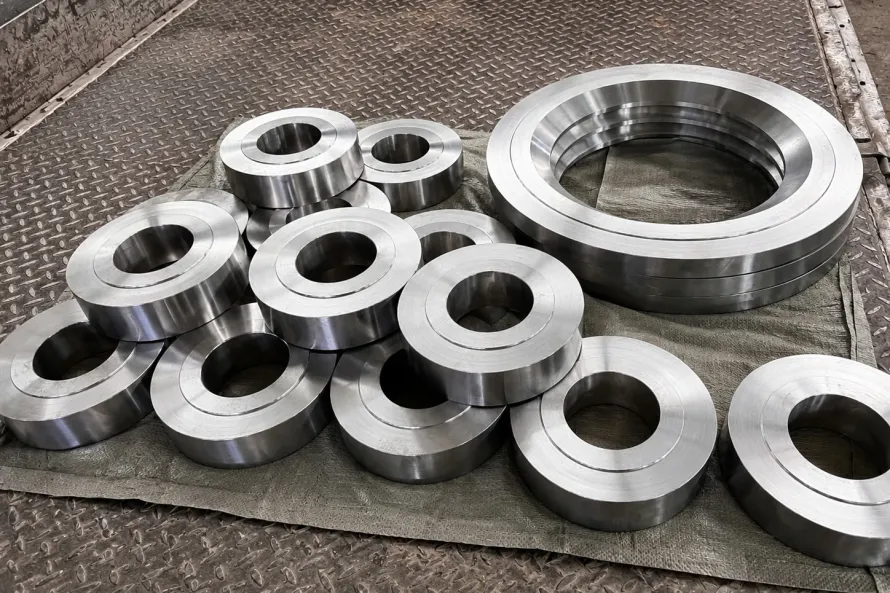
Machined ring blanks staged for inspection, showing why titanium forging supply must connect geometry, process route, and release records after a supplier change.
By Jason/ On 19 Jun, 2026

FSG's Custom Alloy Deal Turns Titanium Forging Supply Into a Route-Boundary Question

Forged Solutions Group's June 18, 2026 acquisition of Custom Alloy is more than another consolidation item in aerospace and defense manufacturing. The useful signal for titanium buyers is narrower and more practical: when a forging platform adds a qualified supplier with its own conversion, machining, heat-treatment and testing chain, the buyer's real question is not whether the supplier is larger. It is where the qualified route begins and ends for the exact titanium product being purchased.The announcement describes Custom Alloy as a vertically integrated manufacturer of specialized forgings, fittings and pipe for defense and industrial end users. It also says the company can manufacture in over 170 alloys, with open and closed die forging supported by in-house conversion, machining, heat treatment and testing. Custom Alloy is also described as a Level 1 qualified U.S. Navy manufacturer for nuclear forgings and fittings. That is a serious process chain. But it is not the same thing as a blanket approval for every titanium bar, ring, pipe, fitting or machined component that a buyer may want to source. What the deal actually changes The deal adds a U.S. forging and fitting specialist to a group that already presents itself as a high-specification forging supplier for aerospace, defense and space markets. FSG says its broader platform includes rolled rings, closed die, extrusion and open die forging capabilities across titanium, nickel, steel and aluminum alloys for global OEM and Tier 1 customers. Its own site describes shafts, rings, discs, asymmetric forgings and extruded cylinders in a range of titanium and other advanced alloys. For procurement teams, that combination matters because forged titanium products rarely fail at the level of the brochure category. They fail, or get delayed, at the boundary between a named capability and a releasable order. A ring forging is not simply "a forging." It carries an alloy grade, melt source, stock condition, forging practice, heat-treatment rule, machining allowance, inspection plan, acceptance standard, certificate wording and packaging requirement. Change one boundary and the buyer may need a fresh approval step. An acquisition can make the route stronger if it brings more controlled process steps under one organization. It can also make the evidence file more complex if legacy approvals, site scopes, customer lists, quality systems and engineering authority do not align neatly. The article-worthy point is not that FSG now has more scale. The point is that scale only helps a titanium buyer when the path from material input to shipped geometry can be proven. Why alloy breadth is not product approval "Over 170 alloys" is useful information, but alloy breadth is not the same as titanium-product release. A company may be able to forge many alloys while only certain grades, product forms, dimensions, heat-treatment cycles or customer programs are qualified for a specific application. The same caution applies to phrases such as aerospace, defense, nuclear, Navy, OEM or Tier 1. They point to demanding markets; they do not automatically define the approved route for a buyer's order. That distinction is especially important for titanium because product form changes the risk profile. A forged ring, a pipe fitting, an extruded cylinder, a machined disc and a near-net blank can share a titanium alloy family but still require different proof. Heat input, deformation history, machining depth, surface condition, ultrasonic inspection access and final geometry all affect what the buyer can rely on.This is where acquisition news becomes a practical buyer signal. If the new platform can combine forging, machining, heat treatment and testing, it may reduce outside handoffs. But a buyer still needs to know which facility owns each operation, which specifications govern the route, which tests are performed in house, which are subcontracted, and whether the final certificate names the route clearly enough for receiving inspection. The route-boundary file buyers should request The reusable framework is a route-boundary file. It is not a longer version of a material certificate. It is a compact map showing how a supplier's platform capability becomes a releasable titanium product for one order, one drawing, one specification set and one shipment.Boundary to verify Evidence to request Why it mattersAlloy and starting stock Melt source, stock condition, material certificate and any customer material restrictions Prevents broad alloy capability from being mistaken for the approved titanium grade and input conditionForging method and site Open die, closed die, rolled ring or extrusion route; facility name; route revision Shows whether the stated platform capability matches the actual product formHeat treatment and conversion Furnace or conversion step, controlling specification, batch record and hold-point evidence Connects metallurgical history to final mechanical and inspection resultsMachining and geometry Drawing revision, machining allowance, key dimensions, surface condition and nonconformance rule Separates a rough forging from a finished or semi-finished releasable componentTesting and inspection NDT method, mechanical tests, dimensional checks and who performed each test Confirms that the release evidence belongs to the same route and lotChange control after acquisition Legacy approval status, site-scope changes, customer notification requirements and certificate wording Keeps ownership change from being confused with automatic approval transferThe table is deliberately operational. Buyers do not need acquisition commentary in a purchase file. They need a route map that lets quality, engineering and receiving teams see whether the supplier's new or expanded platform actually touches their titanium part.Where titanium suppliers can add value For titanium product suppliers, the opportunity is not to repeat that the market wants stronger domestic or allied supply chains. Serious buyers already know the headline. The value is to make the boundary visible before the order becomes urgent. A supplier quoting titanium rings, pipes, fittings, discs or machined blanks can separate itself by showing how the route is controlled: whether the material is forged, rolled, extruded or machined from stock; which operations are internal; which external processors are used; which inspection records travel with the batch; and what changes would trigger buyer approval. This is especially useful when the buyer is comparing a legacy source with a newly acquired, newly integrated or newly qualified source. It also helps avoid a common sourcing mistake. Buyers sometimes ask whether a supplier "can do titanium." The better question is whether the supplier can release the specific titanium product form under the buyer's governing specification, inspection level and delivery condition. A yes to the first question is a capability statement. A yes to the second is a supply-chain decision. The FSG-Custom Alloy deal is therefore a useful market signal, but not because it proves a simple capacity story. It shows why titanium forging procurement is moving toward route evidence. Supplier scale, alloy range and special-market language all matter. They become commercially useful only when they connect to the exact route that turns metal input into a released product.

Ready to Start Your Project?

Get factory-direct pricing on titanium products. No minimum order.

Get a Free Quote
Quick Inquiry