Type something to search...

Supplier audit evidence

Aerospace and Defense
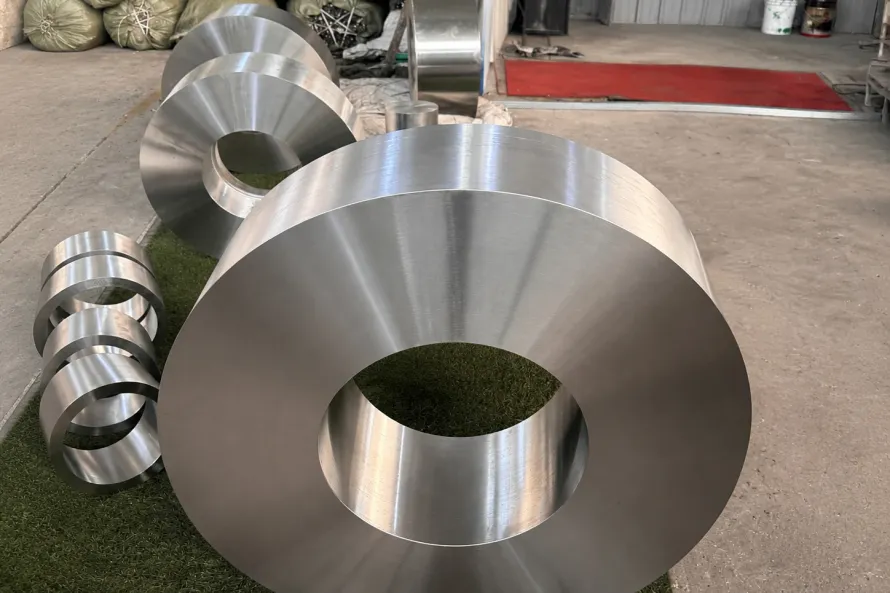
Large machined titanium ring blanks on a workshop floor, a visual reminder that accreditation still has to connect to a defined product form, route, and release record.
By Jason/ On 15 Jun, 2026

Nadcap Turns Titanium AM Into a Part-Release Question

Nadcap accreditation is easy to read as a supplier badge. For titanium additive manufacturing buyers, the more useful reading is narrower and more practical: it can shorten part of the supplier-audit path, but it does not replace the release file for a specific titanium part. On May 29, 2026, Norsk Titanium said its Plattsburgh, New York operations had earned Nadcap accreditation for additive manufacturing. The company linked the accreditation to structural titanium parts built with its Rapid Plasma Deposition, or RPD, process. A few days later, Norsk Titanium announced a June 2, 2026 Cooperation & Research Agreement with Airbus focused on industrializing and qualifying Plasma DED RPD technology for high-criticality structural titanium parts.The timing matters because it joins two different layers of qualification. Nadcap is a shared aerospace and defense audit framework for critical processes. Airbus-related work is an application, material, process, and production-standardization path. Titanium buyers should not collapse those layers into one yes-or-no approval. Accreditation Is Not the Same as Release The Performance Review Institute describes Nadcap as an industry-managed program for aviation, defense, and space critical-process accreditation. The program was created to reduce repeated OEM audits and bring a more standardized industry review to processes that affect quality, safety, and product integrity. That is valuable. A process audit can pre-screen parts of the supplier's operating system: procedures, records, repeatability, traceability, nonconformance handling, and the discipline around the audited process. In additive manufacturing, those controls matter because the finished titanium part is shaped by feedstock, machine state, parameters, build path, thermal history, post-processing, machining, and inspection. But a buyer still has to ask a second question: does the audited process match the part, drawing, alloy, route, inspection plan, and customer specification for the order in front of us? That second question is where the release file lives. The Airbus Signal Raises the Bar Norsk Titanium's Airbus announcement is useful because it is not framed only as a capacity story. The company said the Lower Frame Fitting for the Airbus A350 is in series production at Plattsburgh and first flew on an A350 in 2026. It also said the new CRA will focus on technical qualification of titanium wire, industrial process validation, and standardization in line with Airbus specifications. For buyers, the keyword is standardization. A one-part success can prove that a specific route worked under a defined approval boundary. Standardization asks whether a process can travel across more applications without losing control of material identity, process evidence, inspection logic, and change management. That is why Nadcap should be treated as a route-confidence signal, not as a blanket release. It can reduce audit duplication, but it should make the buyer more precise about what remains order-specific. The Accreditation-to-Part Release File A practical titanium AM purchase should separate the facility credential from the part evidence. The release file should answer these questions before the buyer treats an additively manufactured titanium part as production-ready.Evidence layer What the buyer should verify Why it mattersAccreditation scope Facility, process family, audit scope, expiration, and any customer-specific limits Nadcap may cover a process, but the order still needs a matching scopeMaterial entry Titanium wire or feedstock identity, chemistry, heat or lot record, and incoming acceptance The process cannot repair weak material identityFrozen route Machine, parameters, build orientation, thermal route, post-processing, and machining allowance Near-net shape value depends on repeatable route controlPart identity Drawing revision, serial or lot link, traveler, split history, and customer specification A good process record must remain attached to the physical partInspection release Dimensional evidence, NDT or NDI where required, surface condition, and acceptance criteria Structural titanium parts fail the buyer test if inspection logic is genericChange control Parameter changes, equipment changes, feedstock changes, repair rules, and deviation approval Accreditation does not remove the need to control changes after approvalThis framework is useful beyond one company. Any buyer evaluating RPD, DED, LPBF, WAAM, PM-HIP, or hybrid titanium routes faces the same boundary: a process credential may lower supplier-audit friction, but release still depends on the exact product form and route. Why Product Form Still Controls the Risk Titanium procurement often starts with broad words: bar, plate, forging, wire, powder, preform, machined part. In high-criticality work, those words are not interchangeable. The risk sits in the route from material form to released geometry. For RPD or other wire-fed routes, wire qualification matters. For machined titanium parts, machining allowance and final geometry matter. For forgings and rolled products, mill route and heat treatment matter. For powder routes, powder properties, reuse rules, and build evidence matter. An accreditation claim helps only when the buyer can map it to the product family being ordered. The Airbus CRA makes this point visible. The public announcement connects titanium wire, industrial process validation, and standardization. Those are not marketing details; they are the bridge between process maturity and aircraft-program use.What Buyers Should Ask Next The best buyer response to a Nadcap AM announcement is not skepticism for its own sake. It is disciplined narrowing. First, ask which facility and process scope is accredited, and whether the ordered titanium form sits inside that scope. Second, ask which customer or program specification controls the release boundary. Third, ask whether the supplier can show a frozen route from feedstock through build, post-processing, machining, inspection, and final certificate. Fourth, ask how changes are handled after first approval. Those questions protect both sides. Buyers avoid assuming that a credential covers an unreviewed part. Suppliers avoid having a strong audit signal diluted into unrealistic claims about universal readiness. The Practical Read Nadcap accreditation can be a meaningful step for titanium additive manufacturing because it reduces repeated audit work and signals a process-control system that aerospace and defense buyers recognize. The Airbus collaboration adds a stronger industrialization context because it points toward process validation and standardization for high-criticality structural titanium parts. The buyer lesson is not that accredited titanium AM is automatically ready for every structural application. The lesson is that the evidence file has moved up a level. Buyers should now expect a clearer bridge from facility accreditation to material entry, frozen process route, part identity, inspection release, and change control. In titanium procurement, the badge opens the door. The part-release file still decides whether the order can walk through it.

Ready to Start Your Project?

Get factory-direct pricing on titanium products. No minimum order.

Get a Free Quote
Quick Inquiry