Type something to search...

Titanium component release file

Manufacturing and Technology
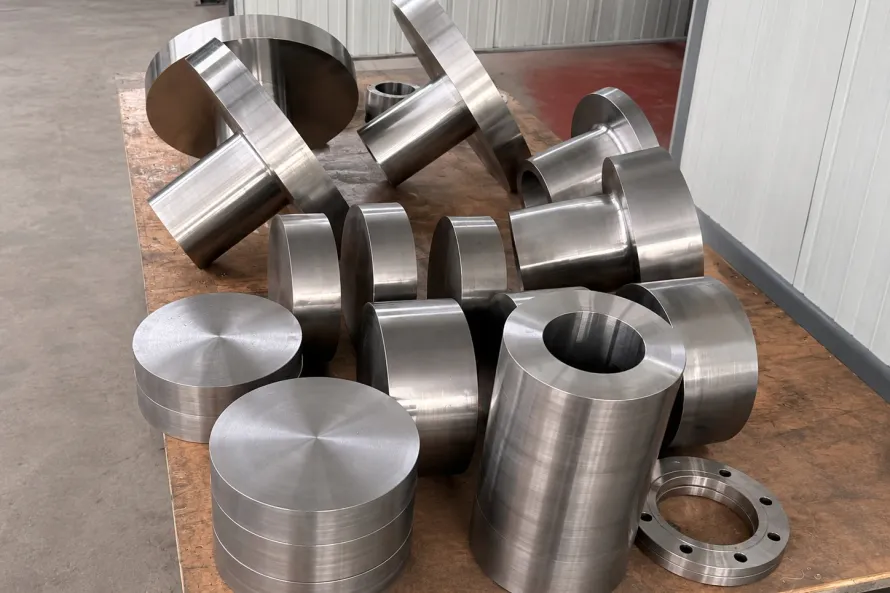
Machined titanium-like component blanks staged by geometry, showing why press capacity still needs part-family release evidence.
By Jason/ On 17 Jun, 2026

IperionX's Six-Axis Press Shows Why Titanium Buyers Need a Press-to-Release File

IperionX's new powder-metallurgy press is not just a capacity headline. For titanium buyers, it marks a more specific shift: near-net-shape component supply is moving toward a route where powder identity, press control, furnace behavior, geometry and release evidence all have to travel together.On May 21, 2026, IperionX announced that it had commissioned a 300-ton, six-axis SACMI powder metallurgy press at its Titanium Manufacturing Campus in South Boston, Virginia. The company said the press triples its existing powder-metallurgy capacity and expands the range of high-value titanium components that can be manufactured in the United States. Heat Treat Today reported the development on June 1, placing it in the context of titanium processing, sintering and powder metal production. IperionX identifies fasteners, gears, brackets, actuators and other complex components as target product families. That matters because these are not generic mill forms. They are component geometries that need repeatable route control before buyers can treat them as releasable parts. Capacity Moves Into The Component Boundary In a traditional titanium purchase, a buyer may start with bar, plate, tube, forging or machined stock and then ask for heat identity, chemistry, mechanical test results, dimensional records, inspection scope and certificate wording. The manufacturing route is still important, but the product form is visible and familiar. Powder metallurgy changes where the buyer has to look. In IperionX's announced route, titanium powder made through the company's HAMR process is pressed into near-net-shape preforms and then sintered and forged through its HSPT process. The buyer therefore needs to understand more than the delivered component. The evidence begins at powder and feedstock identity, passes through press tooling and compaction behavior, and continues into furnace route, shrinkage control, dimensional recovery, machining allowance, inspection and final release. This is the real mechanism behind the news. A six-axis press can support more complex shapes and repeatable forming, but it also makes the press step part of the release boundary. If a component's density, geometry, surface condition or downstream machining allowance depends on the compaction route, then the press setup is not a factory footnote. It is buyer evidence.Why PM Titanium Raises A Different Evidence Burden The source says the SACMI press provides higher compaction force, multi-axis movement, improved repeatability and enhanced geometry control compared with conventional uniaxial pressing systems. Those capabilities are commercially useful, especially if titanium components can move from heavy machining toward near-net-shape production. But the buyer's evidence burden becomes more specific. First, the powder lot has to be stable enough for the component family. Oxygen, contamination, particle condition, feedstock route and lot definition matter before pressing begins. Second, the press and tooling have to be linked to the drawing, not only to a machine name. Tool wear, compaction direction, green part handling and inspection after pressing can change what enters the furnace. Third, the furnace and forging route must be treated as part of the same release path. IperionX says the press is designed to integrate with additional HSPT furnace capacity expected to arrive in June, supporting customer qualification, low-rate initial production and scale-up. That phrasing is important. It points to a qualification path, not a finished proof that every product family has already been approved. For a buyer, the practical question is not whether the new press can make parts. It is whether the supplier can connect each part family to a route that stays controlled from powder through release. The Press-to-Release Evidence File A press-to-release file is the simplest way to keep that route visible. It should be requested when a titanium supplier proposes powder-metallurgy fasteners, brackets, gears, actuators, sleeves, near-net-shape preforms or other component geometries as alternatives to machined, forged or wrought routes.Evidence layer Buyer question Records to requestPowder and feedstock identity What material entered the press route? Feedstock source, powder lot, chemistry, interstitial controls, contamination controls and retained sample ruleTooling and press setup What links the press operation to the drawing? Tool ID, cavity layout, compaction direction, press program, setup approval and tool-maintenance recordGreen compact control What proves the pressed preform is stable before furnace processing? Green density, weight, visual inspection, handling rule, crack or chip review and rejection criteriaSintering or HSPT route What converts the compact into a qualified titanium component route? Furnace batch, temperature cycle, atmosphere or vacuum record, HSPT route, deformation step and deviation logDimensional bridge How does the route reach final geometry? Shrinkage model, machining allowance, post-process dimensions, drawing revision and metrology reportMechanical and functional proof What proves the route fits the application? Tensile, hardness, fatigue, torque, wear, corrosion, pressure or fit evidence as relevant to the part familyLot release package What travels with the shipment? Certificate wording, inspection report, lot split record, packaging identity and nonconformance statusChange-control trigger What forces requalification or buyer review? Powder source change, press setup change, tooling change, furnace change, geometry change and process-parameter boundaryThis file does not require a supplier to disclose every proprietary parameter at the quotation stage. It does require the supplier to show where the controlled route begins, where it ends, and which changes would affect buyer approval.What Buyers Should Not Overread IperionX states that the press is capable of up to 24 pressing cycles per minute, equivalent to approximately 11 million single-cavity parts per year under operating assumptions, before downstream sintering. That is an important capacity signal. It is not the same as 11 million released aerospace, defense or industrial components. The distinction is not semantic. Pressing is only one step in the route. Downstream sintering, forging, heat treatment if applicable, machining, surface finishing, inspection, packaging and customer approval can all become the limiting step. A high forming rate may reduce one bottleneck while another remains in furnace capacity, NDT access, dimensional inspection, fatigue testing or customer sign-off. The same caution applies to product examples. Fasteners, gears, brackets and actuators do not share one release rule. A simple spacer, a threaded fastener, a rotating gear and a safety-critical bracket may require different test plans, inspection routes and acceptance criteria. If the buyer receives only a general capacity claim, the product-family boundary is still missing. Supplier Takeaway For titanium suppliers, the opportunity is real. Powder metallurgy can reduce waste, shorten some route steps and make certain geometries more economical than subtractive machining from oversize stock. It can also make a supplier more useful to buyers who need repeated small components, complex preforms or lower-machining-loss titanium parts. The commercial discipline is to package that opportunity as evidence, not as a slogan. A supplier should be able to explain which product families fit the route, which ones still need conventional bar, plate, forging or machined stock, and which records will support customer review. The strongest message is not "we have a press." It is "this part family has a controlled route from powder to release." Buyer Takeaway IperionX's six-axis press matters because it moves titanium powder metallurgy closer to component-scale production. But for procurement and quality teams, the useful lesson is narrower and more practical: forming capacity does not close the release file. A press-to-release file gives buyers a disciplined way to evaluate PM titanium components without dismissing the technology or over-trusting a capacity claim. It connects powder identity, tooling, compaction, furnace route, dimensional recovery, mechanical proof, lot release and change control. Without that chain, a press commissioning remains a manufacturing milestone. With it, buyers can decide whether a near-net-shape titanium route is ready for the aerospace, defense or industrial product, application and approval boundary in front of them.

Ready to Start Your Project?

Get factory-direct pricing on titanium products. No minimum order.

Get a Free Quote
Quick Inquiry