Type something to search...

Titanium implant

Medical and Dental
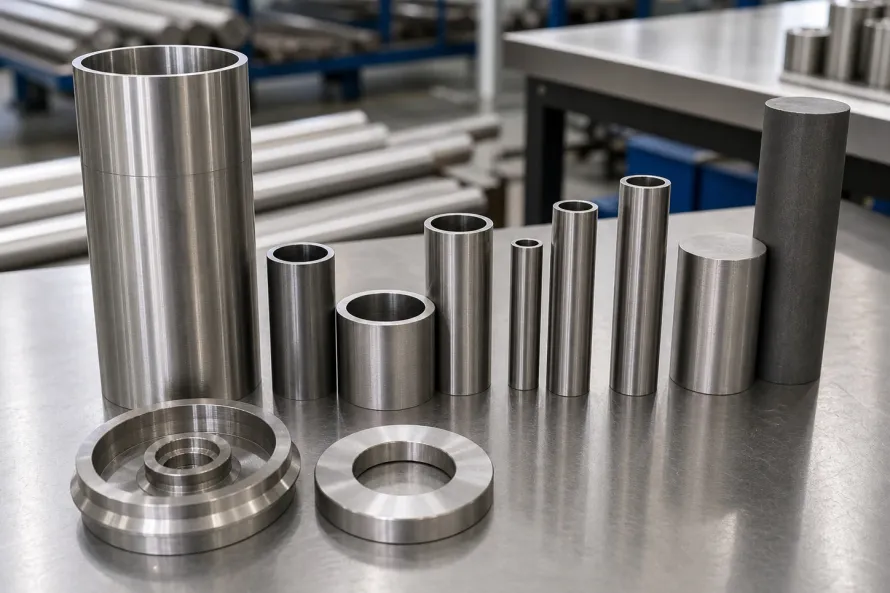
Machined titanium tubes, rings and sample blanks on an inspection bench show why coating clearance has to stay connected to substrate identity, geometry and release evidence.
By Jason/ On 14 Jun, 2026

Onkos' Titanium Implant Clearance Makes Coating Evidence Part of the Release File

On June 8, 2026, Onkos Surgical announced that the U.S. Food and Drug Administration had cleared application of its NanoCept Antibacterial Technology to titanium implants within the ELEOS Limb Salvage System. For titanium product suppliers and orthopedic component buyers, the important signal is not simply that another implant system received a regulatory update. It is that a functional surface can become part of the part boundary. Once a titanium implant carries an antibacterial surface, the release file can no longer stop at alloy grade, machining print and dimensional inspection. The substrate, surface preparation, coating route, handling condition, packaging path, labeling boundary and change-control record have to stay connected. That is the practical buyer issue behind the current news. The News Is About a Boundary, Not a Slogan Onkos said the new clearance enables NanoCept application to titanium implants across a wider portion of its ELEOS system. The company describes NanoCept-coated implants as intended to support oncology and revision patients, where procedural complexity can raise concern about bacterial contamination on implant surfaces before implantation. The wording matters. Onkos' NanoCept page states that the coating, where applied, is intended to reduce bacterial contamination on coated device surfaces prior to implantation, and that it is not intended to treat existing infections or prevent future infections in patients. The public FDA record for the earlier ELEOS Limb Salvage System with NanoCept Technology, K252920, also frames the device as a limb and joint salvage device with coating for bacteria reduction, not as a broad clinical infection claim. That distinction is useful for titanium buyers because it separates a surface function from an unsupported medical promise. A supplier can provide titanium alloy, a machined blank, a finished geometry or a treated component, but the buyer still has to ask whether the exact material route and surface state sit inside the cleared and documented use boundary. Why the Substrate Still Carries the Risk Titanium is not a passive background material once coating enters the specification. Surface roughness, oxide condition, cleaning residues, passivation history, machining marks and packaging contact can all affect whether a treated part remains within the intended release condition. Even if a titanium mill, forger or machine shop does not apply the final coating, its work can become part of the coating evidence chain. The FDA summary for K252920 is useful as a public example of how narrow these boundaries can be. It identifies the coating as MDPB, a covalently bound quaternary ammonium compound, and describes supporting evidence categories such as fretting and corrosion engineering analysis, coating integrity rationale and biocompatibility risk assessment. The point for buyers is not to copy that file. The point is to understand the shape of the file: surface claims need engineering, handling and risk evidence that match the device, material and geometry.For export suppliers of titanium bars, plates, forged blanks and machined components, this changes the way medical opportunities should be discussed. A quote that says "medical titanium" is too thin. A serious buyer will need the alloy and lot record, but also the machining and surface condition that would not conflict with downstream coating, cleaning, sterilization, packaging or labeling controls. A Coating-to-Substrate Release File The reusable framework is a coating-to-substrate release file. It does not replace regulatory review, and it does not turn a material supplier into the device manufacturer. It gives procurement and quality teams a way to ask better questions before a coated titanium component is treated as interchangeable.Release layer Evidence the buyer should connect Why it mattersSubstrate identity Titanium grade, melt or heat number, MTR or MTC, supplier route and lot split record The cleared surface condition has to sit on the same material family that the device file expects.Geometry and finish Drawing revision, machining route, surface roughness, cleaning state and burr control Coating behavior can change when geometry, finish or contamination changes.Coating process Approved coating route, process owner, handling rationale and coating integrity evidence The buyer needs proof that the coating is not a decorative add-on but a controlled release step.Mechanical and corrosion interface Fretting, corrosion, fit, fatigue or interface rationale when applicable A coating can affect the contact surface, even when the base alloy is familiar.Packaging and labeling boundary Sterilization path, packaging contact, IFU wording and claim limitation The release claim must match what the label and documented use actually allow.Change control Supplier change, machine change, surface-prep change, rework and exception handling A qualified route can drift when a small upstream change alters the surface state.This file is especially important when titanium component work moves across multiple suppliers. One shop may cut or turn the blank. Another may finish critical surfaces. A separate validated source may apply the coating. A device company may handle packaging, labeling and final release. If those handoffs are not documented, the buyer may have the right material but the wrong release story. What Buyers Should Not Infer The Onkos announcement does not mean every titanium implant should carry an antibacterial coating. It does not prove that the coating prevents infections in patients. It does not make any generic titanium product suitable for limb salvage applications. It also does not remove the need to check whether the exact device, substrate, geometry and surface route are inside the relevant clearance, quality-system record and labeling boundary. This restraint is commercially useful. It keeps titanium suppliers from overselling a medical-device headline, and it helps buyers avoid rejecting useful suppliers for the wrong reason. The practical question is not whether a factory can machine titanium. It is whether the supplier can protect the surface state and documentation chain that the downstream device file depends on.For titanium exporters, the near-term opportunity is therefore not a generic "antibacterial titanium" pitch. It is better evidence around clean machining, surface protection, traceable lots, packaging control and change notification for medical or high-reliability parts. Those capabilities are relevant even when the supplier is not responsible for the final regulated claim. The Buyer Takeaway The current clearance turns a narrow regulatory event into a broader procurement lesson: surface function pulls the release file upstream. A titanium component that may later receive a functional coating has to arrive with material identity, geometry, finish, cleanliness, packaging and change-control evidence that will survive the next step. For buyers, that means coating questions should start before coating. For suppliers, it means the valuable file is not only the mill certificate. It is the connected story from titanium substrate to released surface.

Ready to Start Your Project?

Get factory-direct pricing on titanium products. No minimum order.

Get a Free Quote
Quick Inquiry