Type something to search...

Titanium macrozones

Aerospace and Defense
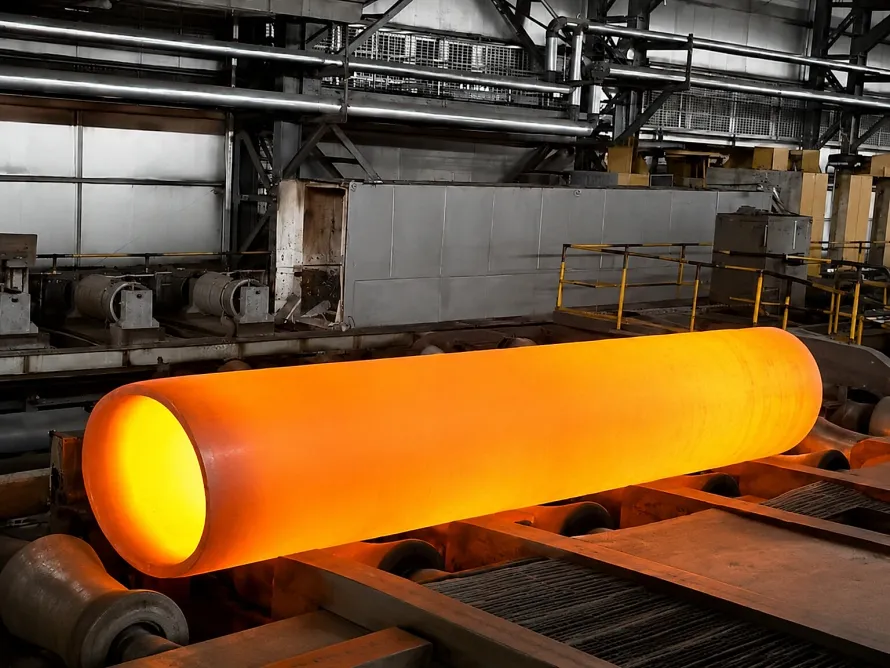
A hot-worked titanium billet illustrates how thermomechanical history begins before a finished rotor forging exists.
By Jason/ On 19 Jul, 2026

EASA’s Cold Dwell Fatigue Proposal Changes the Buying Logic for Titanium Rotor Forgings

A titanium forging can match the drawing, alloy designation and room-temperature test values and still carry a risk that those purchase-order fields do not describe. That is the procurement implication of a proposed European aviation certification memorandum on cold dwell fatigue (CDF) in titanium rotor critical parts. The proposal does not create a general restriction on titanium products. It applies to turbine-engine critical parts for new type certification and major changes that affect CDF susceptibility. Yet its logic reaches upstream: material suitability depends on the interaction among duty cycle, part location, residual stress, microstructure and manufacturing history—not on chemistry alone.The EASA proposal CM-PROP-003, issued June 10, 2026, remains open for consultation until July 31. It supplements the safe-life process under CS-E 515 and says that, at the current level of understanding, no titanium alloy should be exempt from a CDF assessment. The certification question is a combined-condition question Cold dwell fatigue is a reduction in fatigue life associated with a hold at high stress at relatively low temperature. EASA proposes a default screening threshold that combines stress, temperature and time: a region becomes an area of interest when combined applied and residual stress exceeds 50% of typical 0.2% proof strength, temperature is below 200°C, and the condition lasts at least two seconds. Those numbers are not a material purchasing specification. They show why a certificate value cannot answer the certification question by itself. The same heat of titanium may encounter different stressed volumes, residual-stress states and dwell histories in different component locations. The proposal also identifies microtextured regions (MTRs, often called macrozones), colonies and microporosity as relevant features. Crack origins can be subsurface and need not occur at the nominal highest-stress location. Coupon results therefore remain useful, but EASA says specimen testing generally needs augmentation because component scale introduces volume, loading and processing effects. “Same alloy” is not the same manufacturing state The strongest sourcing signal sits in the proposal’s manufacturing discussion. EASA lists melt method, feedstock input, billet or forging supplier, billet diameter, forging method and heat treatment as examples of variables that can affect CDF susceptibility. It also notes that microstructural characteristics can vary radially and circumferentially because thermomechanical history changes by location.This turns supplier substitution into a configuration question. Moving a rotor forging to another source is not demonstrated by matching Ti-6Al-4V chemistry and tensile properties alone. The buyer and design authority need to know whether the alternate route preserves the material state on which the life assessment depends. The FAA’s active AC 33.15-1A, issued in September 2025, already provides manufacturing guidance for premium-quality titanium alloy high-energy rotating engine parts. EASA’s proposal connects that manufacturing discipline more explicitly to a CDF assessment and, for non-default compliance approaches, to continuing monitoring of material structure in the manufacturing plan. A five-coordinate map for rotor-forging procurement For affected programs, a useful sourcing record should join five coordinates instead of treating the material certificate as the whole file. 1. Component location and stressed volume Identify the region of the forging represented by each test or characterization result. Record radial, axial and circumferential extraction positions, especially where the component assessment depends on local MTR or colony behavior. 2. Flight-cycle exposure Link the applicable stress, temperature and dwell-time envelope to the component region. This belongs to the design authority, but suppliers need controlled requirements that reflect it. 3. Manufacturing-route identity Lock the approved melt route, feedstock boundary, billet size, conversion path, forging sequence and heat-treatment condition. Define which changes require notification, technical review or revalidation. 4. Material-state evidence Specify how microtexture or colony characteristics, microporosity and residual stress are characterized or controlled. Avoid implying that ordinary chemistry, tensile and ultrasonic records automatically prove CDF suitability. 5. Validation and monitoring boundary State which conclusions come from coupons, representative components, spin rigs or fleet experience, and show why the data apply to the supplied route. Where an OEM-specific threshold or assessment method is used, keep ongoing manufacturing monitoring aligned with the approved engineering plan.The practical buyer test is change equivalence The FAA industry report DOT/FAA/TC-23/40 describes CDF as a mechanism capable of leading to uncontained rotating-component failure and reviews processing, microstructure, inspection and mitigation. The earlier BEA investigation of the 2017 Air France A380 engine failure identified limited knowledge of CDF in Ti-6-4, the absence of certification instructions addressing macrozones and CDF, and the lack of nondestructive means to detect unusual macrozones among contributing factors. The current proposal is important because it converts that history into a structured compliance discussion. For procurement teams, the decisive question is no longer merely whether an alternate forging meets the same alloy specification. It is whether the proposed change is equivalent across the five coordinates that support the approved life assessment. That is a narrower claim than saying every titanium product needs aerospace rotor controls. It is also a more useful one. When the application is a titanium engine critical part, manufacturing history is part of the product definition—and a supplier change is safe only when the evidence moves with it.

Ready to Start Your Project?

Get factory-direct pricing on titanium products. No minimum order.

Get a Free Quote
Quick Inquiry