Type something to search...

Titanium powder qualification

Manufacturing and Technology
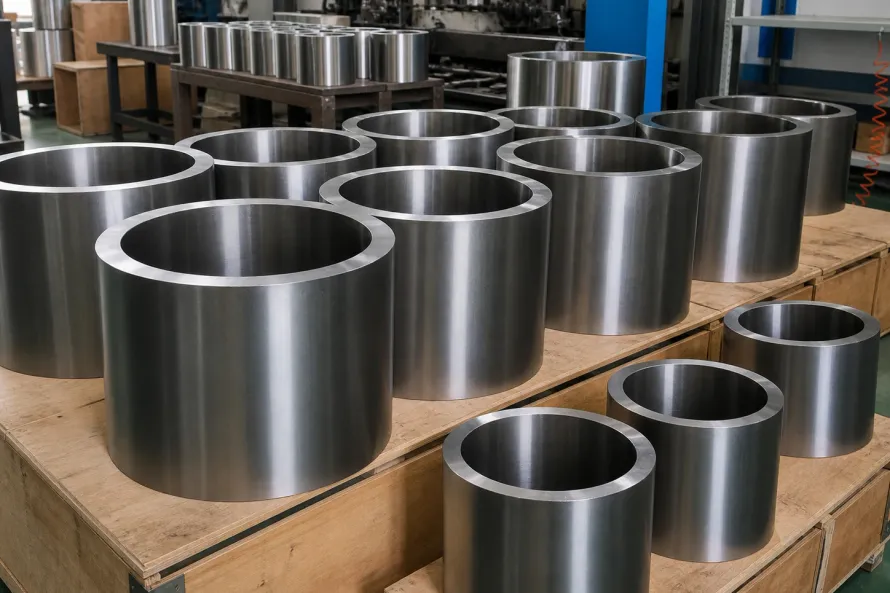
Clean batch of titanium cylindrical parts staged on pallets, showing why powder-route evidence must transfer from development quantities to release-ready production lots.
By Jason/ On 11 Jun, 2026

Continuum's CFR Shows Why Titanium Powder Buyers Need a Pilot-Batch Transfer File

Continuum Powders' current launch of Custom Foundry Runtime is not only a service announcement for specialty alloy developers. For titanium powder buyers, it points to a practical procurement problem: a promising pilot batch is not yet the same thing as a repeatable production supply.Continuum announced the CFR service in Houston on June 3, 2026, describing flexible access to its plasma-gas atomization platform for specialty alloy development, small-batch production and high-value material processing. Metal AM reported the development on June 10, noting that the program can process specialty metal runs as low as 40-50 kg while supporting R&D, qualification programs and later commercial scale-up. That is useful because titanium powder qualification often starts small. A buyer may approve a development lot, print coupons, adjust parameters, review chemistry and run fatigue or density checks before production demand exists. The hard question comes later: what evidence proves that the next powder batch is still equivalent when the order grows, the atomization campaign changes or the powder moves from test builds into released parts? Why Small-Batch Access Changes The Buyer Question Small-batch atomization helps advanced manufacturers move faster. Aerospace, medical, energy and defense programs often need proprietary chemistries, sensitive feedstocks or narrow development quantities that do not fit traditional large-volume production economics. CFR speaks directly to that gap. But titanium buyers should not read small-batch access as automatic production readiness. A 40-50 kg powder run may be enough for parameter development, coupon builds, sample components or early customer evaluation. It may not be enough to prove long-term lot stability, multi-machine behavior, powder reuse limits, packaging consistency or production release. The buyer question therefore shifts from "Can this powder be made?" to "Can the evidence from this batch survive the transfer into the next batch?" The Titanium Mechanism Behind The News Titanium powder is unforgiving because small chemistry and handling differences can change downstream performance. Oxygen, hydrogen, nitrogen, particle-size distribution, morphology, satellite particles, flowability, apparent density, reuse history and contamination control all matter before the first part is printed. Continuum's Ti64 product page describes Ti6Al4V, UNS R56400, as available in Grade 5 and Grade 23 and suited to additive manufacturing routes including LPBF, EBM and binder jetting. It also lists powder checks tied to ASTM B213, ASTM B964 and ASTM B212. Those details are useful reminders: titanium powder buying is not just a material name. It is a chain of measurable powder behavior.When the powder is made in a development-scale campaign, the buyer needs to know what is fixed and what may change. Was the feedstock route the same? Was the atomization equipment the same? Was the inert-gas environment controlled in the same way? Were samples pulled from the full powder lot or only from a convenient container? Were fine and coarse fractions handled consistently? Did the certificate describe the pilot batch only, or the process that can be repeated? Without those answers, a clean pilot result can become a false sense of security. The Pilot-Batch Transfer File A useful response is a pilot-batch transfer file. It is not a replacement for a certificate of analysis. It is the bridge between a successful development lot and a production lot that a buyer can release into real parts.Evidence layer Buyer question Titanium powder records to requestFeedstock identity What entered the atomization run? Virgin or reclaimed feedstock route, melt identity, chemistry target, interstitial limits and contamination controlsAtomization route What process made the powder? Atomizer, campaign boundary, gas environment, melt history, process controls and deviation logPowder lot definition What exactly is the approved lot? Lot size, container count, sampling plan, retained sample, PSD split and sieve historyPowder properties Does the powder behave the same way? Chemistry, oxygen and hydrogen, particle-size distribution, morphology, flow, apparent density and tap density where applicableBuild evidence What did the pilot powder actually prove? Machine, process route, coupon plan, density, tensile or fatigue data, heat treatment and inspection recordsScale-up bridge What changes when volume grows? Batch-size change, equipment change, site change, feedstock change, PSD cut change and required requalification triggerRelease rule When can the buyer use the next batch? Acceptance criteria, certificate wording, nonconformance rule, powder reuse policy and customer approval boundaryThis file matters most when a program moves from samples to recurring supply. The first batch may prove that a material concept is possible. The transfer file proves whether the next batch can be trusted. What Buyers Should Ask Before Scaling For aerospace buyers, the first question is whether the pilot powder is connected to a frozen material-process combination. If the future production route changes atomizer, PSD cut, feedstock class or post-processing path, the buyer should treat it as a change-control event, not a routine reorder. For medical titanium buyers, the transfer file should protect biocompatibility and cleanliness assumptions. Grade 23 language is not enough if oxygen limits, handling, sampling, cleaning, packaging or retained-sample rules change between pilot and production lots.For industrial or energy buyers, the practical issue is often repeatability. A one-time development powder can support a trial, but production purchasing needs stable acceptance criteria, documented nonconformance handling and a clear rule for when a new batch requires fresh printing, testing or customer review. Distributors should also pay attention. If they sell titanium powder or powder-derived products, they need to preserve the link between the supplier certificate, the actual powder lot, any repacking or splitting and the customer's approved use case. What Not To Overread CFR is not proof that every small titanium powder run is qualified for aerospace, medical or pressure-service use. Continuum's announcement also states that its first 2026 CFR project involved a precious metal-based alloy, not titanium. The titanium relevance comes from the service model and from Continuum's existing production-scale titanium powder position, not from a disclosed titanium CFR qualification case. That distinction matters. The news is not "small-batch powder is automatically production-ready." The more useful lesson is that the market is building more flexible paths between alloy development and production. Titanium buyers should make sure the evidence path is as flexible as the manufacturing path. Buyer Takeaway Small-batch atomization can accelerate titanium powder development, but it also creates a new evidence gap. Buyers may see excellent data from one pilot lot, then assume the next batch is interchangeable. In titanium, that assumption can be expensive. The practical safeguard is a pilot-batch transfer file. It should connect feedstock identity, atomization route, powder lot definition, powder properties, build evidence, scale-up bridge and release rule before the buyer treats a development batch as a production supply. For titanium powder, the story does not end when a batch can be made. It ends when the next batch can be proven.

Ready to Start Your Project?

Get factory-direct pricing on titanium products. No minimum order.

Get a Free Quote
Quick Inquiry