Type something to search...

Titanium sponge supply

Aerospace and Defense
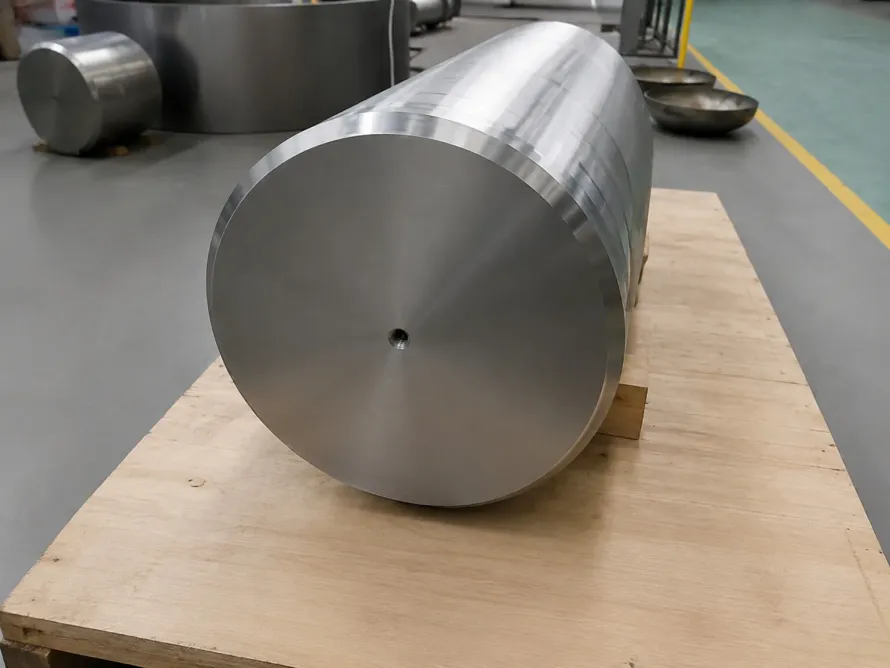
A representative large titanium billet illustrates upstream metal availability; it is not identified as material from any Farnborough exhibitor or aircraft program.
By Jason/ On 24 Jul, 2026

Farnborough’s Titanium Supplier Push Needs a Three-Horizon Supply Test

Nearly two dozen Chinese titanium suppliers used the Farnborough Airshow to seek aerospace customers, according to a Reuters report published on July 23, 2026. The companies named in the report included HST Titanium, Jinda Titanium and Baoji YongshengTai, with exhibits ranging from titanium sponge and ingots to ceramic brake plates. That is a meaningful market-access signal. It is not yet evidence that all of the displayed capacity can relieve an aircraft program’s near-term material constraint.For buyers, the useful question is not whether more titanium exists somewhere in the market. It is when a defined grade, form, facility and process route can enter an approved supply chain and begin producing accepted lots. That answer normally falls into three different horizons: immediate relief, transitional relief and structural relief. The News Shows Capacity Seeking A Route To Market The Reuters report said suppliers were betting that tight global supplies would create opportunities despite U.S. tariffs. At least three unnamed suppliers said their titanium was being used on Airbus aircraft; Reuters also reported that Airbus did not respond to a request for comment. Those statements should retain their limits. “Used on Airbus aircraft” does not identify the supplier, facility, alloy, product form, specification, process, part number, program or approval scope. It should not be converted into a blanket claim that every product from a company is approved for every Airbus application. The upstream scale is nevertheless real. The U.S. Geological Survey’s 2026 titanium summary estimates that China produced 260,000 tonnes of titanium sponge in 2025 out of a world total of 370,000 tonnes. It also says the United States produced no titanium sponge in 2025, imported an estimated 44,000 tonnes and had 100% net import reliance for apparent sponge consumption. These figures explain why new commercial approaches attract attention. They do not show which tonnes can become a specific aerospace billet, bar, plate, forging or machined component on a buyer’s required schedule. Aerospace Supply Is Approved By Scope, Not By Adjective “Aerospace grade” is not a complete purchasing state. Public Airbus documents illustrate why. Airbus Canada’s supplier quality requirements define an approved supplier facility by a specific address listed on an approved-supplier list. A public Airbus approved-supplier list also assigns product groups such as material distribution, material part manufacturing and detail-part manufacturing to named sites. These documents do not decide the status of the companies in the Reuters report, and this article makes no such inference. They show the operating principle: approval has boundaries. A legal entity, production site, product family, process and customer program can each change the usable scope. That is why new visible capacity should be evaluated by relief horizon rather than by headline tonnage. A Three-Horizon Titanium Supply-Relief MapRelief horizon What can move supply What still blocks use Evidence the buyer should requestImmediate Existing approved stock and open capacity on an already accepted route Wrong grade, size, condition, source, specification or allocation Heat and lot identity, approved-source status, exact form and condition, available quantity, inspection release and committed ship dateTransitional An extension of a known route, such as an additional size, product form, converter or controlled processing path Testing, customer review, first-article work, special-process capacity or limited approval scope Gap assessment, test plan, facility and process scope, qualification owner, milestone dates, interim controls and first releasable lotStructural A new supplier, facility, melt route or product family entering an aircraft supply chain Audit, material equivalency, route qualification, program approval, recurring conformance and change control Qualification plan, specification crosswalk, process route, substantiation data, customer approvals, capacity ramp and recurring lot-performance evidenceImmediate relief starts inside the current approval envelope The fastest supply is usually material that is already inside the buyer’s accepted population. For titanium bar, plate or sheet, or tube, that means the exact grade, dimension range, condition, source and documentation required by the purchase order. Inventory outside one of those boundaries may be commercially available without being immediately usable. Immediate relief also depends on allocation. A distributor can hold conforming stock while the available quantity is committed to another customer or program. Buyers therefore need a dated quantity and release status, not a general inventory statement. Transitional relief uses an existing bridge The middle horizon is often overlooked. It includes capacity that is not ready today but may not require a completely new supplier path. Examples could include extending a known source to another size range, adding an approved converter, qualifying a controlled outside process, or accepting an additional product condition. The actual route depends on the program and customer authority. The important point is that a defined bridge exists between the current approval and the requested supply.This horizon is governed by the approval delta: exactly what is different from the accepted route, who owns the decision, which tests close the gap and when the first releasable lot can ship. “Qualification underway” is not a schedule unless those milestones are visible. Structural relief creates a new approved route A supplier that begins with a trade-show conversation may become strategically important. But a new source, site, melt path or product family usually belongs in the structural horizon until the relevant qualification work is complete. The structural horizon should not be treated as failure or delay. It is the capacity-development pipeline. Buyers can make it useful by defining the target product forms, funding the right tests, reserving conversion and inspection capacity, and agreeing on approval milestones early. The mistake is counting structural capacity as immediate coverage. Sponge and ingot can widen upstream optionality, but they do not remove the need for remelting or conversion, product-form control, special processes, inspection and program release downstream. Tariffs And Qualification Are Separate Filters The Reuters article places tariffs and tight supply in the same commercial story, but buyers should model them separately. Tariffs, freight, payment terms and trade restrictions change landed economics and sourcing risk. Qualification scope changes whether the material can enter a defined product or program. A lower landed price does not accelerate an approval plan by itself. An approved route does not neutralize a tariff. A sourcing decision therefore needs two parallel calculations:Commercial viability: landed cost, duty exposure, logistics, currency and contract terms. Technical usability: approved facility, grade, form, process route, inspection package, customer authority and recurring release.The preferred source is not always the one with the lowest price or the largest upstream capacity. It is the source whose commercial and technical paths converge inside the buyer’s required horizon. Product Form Determines How Fast Capacity Can Help Sponge and ingot are not interchangeable with finished mill products. They are upstream inputs whose value depends on conversion access and approval. Billet and bar can shorten the route for forgings or machined components only when the heat source, size, condition and downstream process are acceptable. Plate and sheet can provide fast coverage for some structural or industrial requirements, but only within the specified thickness, flatness, surface, test and source boundaries. Tube adds its own dimensional, forming, weld or seamless-route and inspection requirements. Titanium forgings and machined components sit closer to the end use, yet their approvals can be more geometry- and route-specific. A new forging source may need product-family or part-level substantiation even when the starting titanium meets a familiar material specification.This is the product insight behind the three-horizon map: the closer available material is to the buyer’s exact approved state, the sooner it can relieve the constraint. Global tonnage is a weak schedule metric unless it is segmented by form and approval status. A Practical Buyer Worksheet Before assigning new capacity to a supply plan, procurement and quality teams can document six fields:Constraint: Which grade, form, dimension, condition or component is short? Current route: Which facilities, processes and specifications are already accepted? Relief horizon: Is the proposed source immediate, transitional or structural? Approval delta: What differs from the current route, and who can approve it? Commercial filter: What tariff, logistics, payment or contract conditions apply? Release milestone: What dated event proves usable supply—a reserved lot, completed test, first article, customer approval or recurring accepted shipment?This worksheet prevents two opposite errors. One is rejecting long-horizon capacity because it is not ready today. The other is counting a promising new source as coverage before the product route is usable. Buyer Takeaway Farnborough shows that substantial titanium capacity is actively seeking a larger aerospace market. That can strengthen the future supply base, especially where upstream concentration and import reliance make diversification valuable. The procurement conclusion is more precise than “more suppliers means more supply.” Buyers should separate stock already inside the approval envelope, capacity that can cross a defined qualification bridge, and new routes that require structural development. The three horizons belong in one sourcing strategy, but they should not be placed on one delivery date. Industry FAQ Does exhibiting titanium at Farnborough mean a supplier is approved for aerospace programs? No. Exhibition presence shows commercial intent and product capability claims. Program use depends on the relevant facility, material, product form, process, quality-system and customer approval scope. What is the fastest source of aerospace titanium shortage relief? Normally it is conforming stock or open capacity already inside the buyer’s approved route. The material must still match the exact grade, form, condition, documentation, allocation and release requirements. Can titanium sponge or ingot solve a shortage of bar, plate or forgings? It can support future supply, but it is not an automatic substitute for the required downstream form. Conversion capacity, approved processors, test and inspection scope, allocation and program release still determine when the material becomes usable. How should buyers interpret a claim that titanium is used on an aircraft? They should ask which supplier and facility, which alloy and product form, which specification and process route, which part or program, and what approval status the claim covers. A bounded use case should not be expanded into company-wide approval. Why separate tariffs from qualification? Tariffs affect landed economics and trade risk. Qualification determines technical and program usability. Both can block a sourcing route, but solving one does not automatically solve the other.

Ready to Start Your Project?

Get factory-direct pricing on titanium products. No minimum order.

Get a Free Quote
Quick Inquiry