Visible surface differences do not establish the condition below the surface.
No. Removing visible oxide scale from heat-exposed titanium does not by itself prove that the underlying alpha case has been removed. A titanium-alloys section in a chapter hosted by NASA NTRS describes two different features: oxide scale at the surface and a brittle, oxygen-enriched layer beneath it. ASTM B600-22 likewise treats cleaning and descaling as one task, then says acid etching may be required when an oxygen-contaminated layer or alpha case is present.
That distinction changes what a buyer should ask for. A clean appearance or a record marked only “descaled” can describe the surface operation without establishing the condition below the surface. The purchase or release file should identify the heat-exposure route, the operation actually performed and the acceptance evidence required by the governing drawing, specification or qualified process.
Why scale and alpha case are different evidence problems
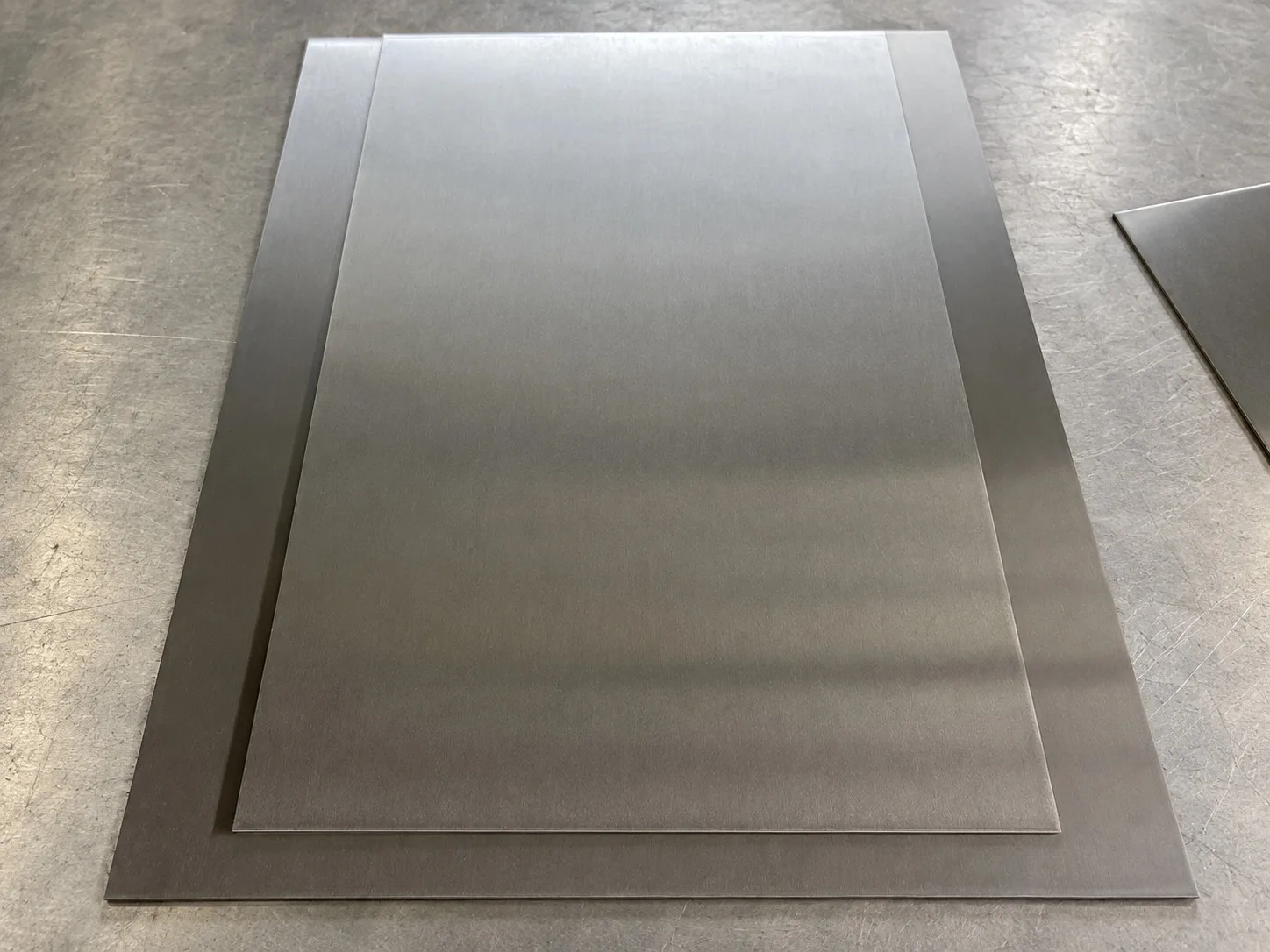
A uniform visible finish cannot establish the subsurface condition.
In the cited titanium-alloys section, the passage says that above about 600 °C, rapid oxygen ingress produces both an oxide scale and a brittle subsurface oxygen-enriched layer called alpha case. It places the alpha case underneath the scale. This is why an operation that makes a part look clean cannot, by appearance alone, establish the condition of the underlying metal.
The cited passage gives about 600 °C as a general boundary in its overview of titanium alloys. It is not a universal rejection temperature for every alloy, section thickness, atmosphere, time or order. Actual alpha-case control depends on the applicable material, process route and engineering requirement. The transferable point is the two-layer distinction, not a single temperature copied into every purchase specification.
ASTM B600-22 separates guidance from a universal mandate
The public scope of ASTM B600-22 covers ordinary shop soils, oxides, heat-treatment scale and foreign surface contaminants on wrought, cast and fabricated titanium products. It also states that its procedures are a guide, not automatically mandatory for every product.
The same public scope says acid etching may be required after cleaning when an oxygen-contaminated layer or alpha case is present. That wording supports a sequence of decisions rather than one interchangeable label:
| Record question | What it establishes | What it does not establish |
|---|---|---|
| Was the part cleaned or descaled? | Surface soil, oxide or scale removal was addressed. | That subsurface alpha case is absent. |
| Was alpha-case removal required? | The order or process recognized a subsurface oxygen-contamination risk. | The removal depth or method for every other product. |
| What requirement governed acceptance? | The drawing, specification or qualified process defines the applicable evidence. | That ASTM B600 alone supplies a universal acceptance limit. |
Because only ASTM’s public abstract and scope were available for this review, this article does not claim the complete paid procedure or prescribe an acid concentration, etch time or material allowance.
What a buyer can request without inventing a universal test limit
Start with the route that could create the condition. Ask whether the relevant surface saw elevated-temperature processing, what atmosphere was used, and whether later machining or finishing removed material from that surface. These facts help assess whether alpha-case control is relevant; they do not prove compliance by themselves.
Next, make the process name unambiguous. “Cleaned,” “descaled,” “pickled” and “alpha-case removed” should not be treated as synonyms unless the governing process says they are equivalent for that part. The supplier should identify which operation was performed and the lot, surface or geometry it covered.
Finally, connect the result to the invoked requirement. Request the process revision, the acceptance criterion and the recorded verification required by the drawing, material specification or approved process qualification. This is deliberately not a universal checklist of laboratory methods: the two public sources here do not establish one test, one removal depth or one numeric limit for every alloy and product form.
Where this explanation stops
The NASA NTRS-hosted chapter provides the metallurgical distinction; ASTM’s public B600-22 page provides the guide’s public scope. Neither source proves the condition of a particular order, furnace load or finished surface.
The useful decision is narrower: if alpha case matters, release evidence must go beyond “the scale was removed.” It must show which subsurface condition was controlled, under which requirement, and with which recorded result.
Sources
- NASA Technical Reports Server, Chapter 2: Aerospace Materials Characteristics, from Aerospace Materials and Applications, Section 2.3.1, pages 29–30; published 2018; accessed 24 September 2026.
- ASTM International, ASTM B600-22: Standard Guide for Descaling and Cleaning Titanium and Titanium Alloy Surfaces, public abstract and scope; updated 25 October 2022; accessed 24 September 2026.