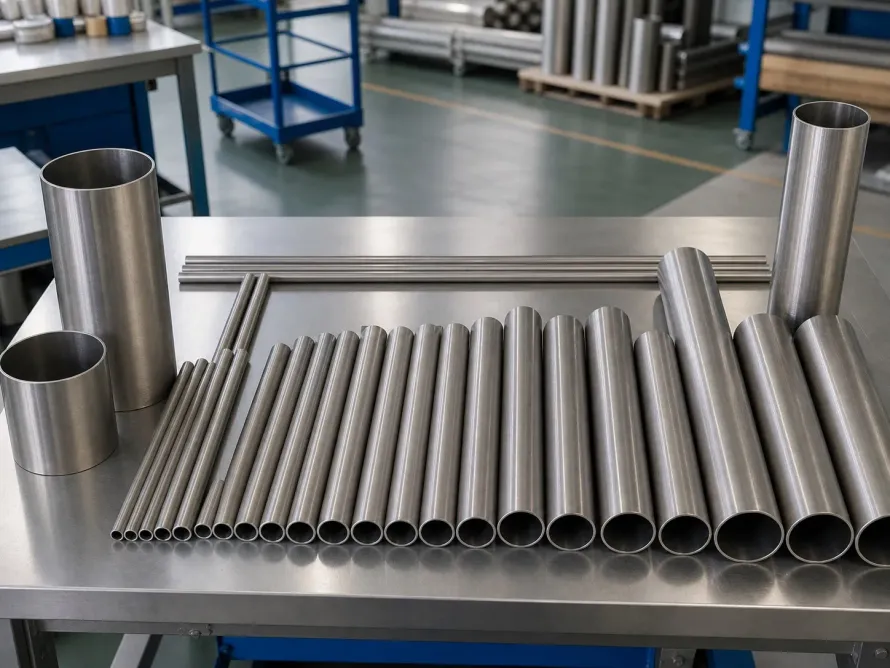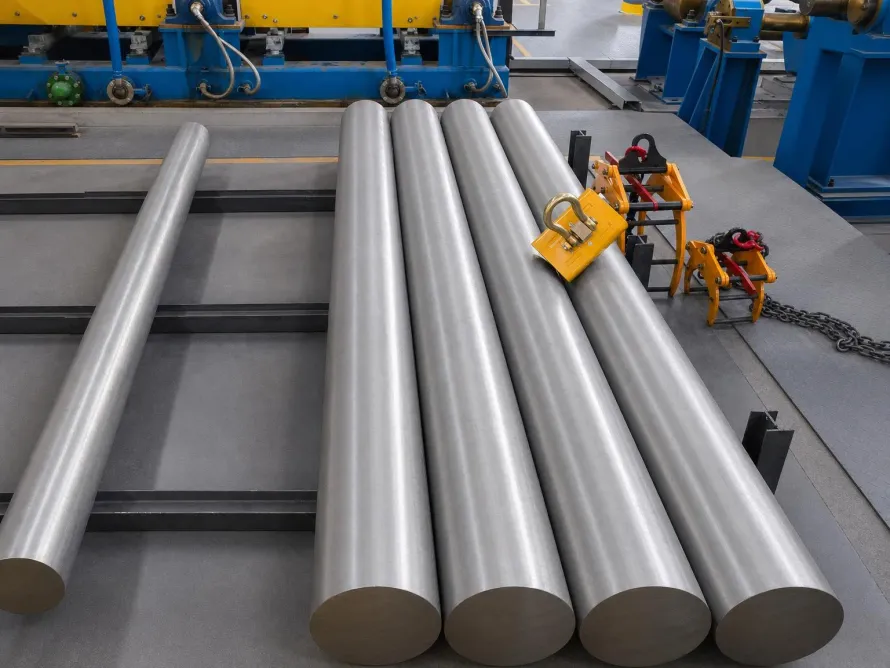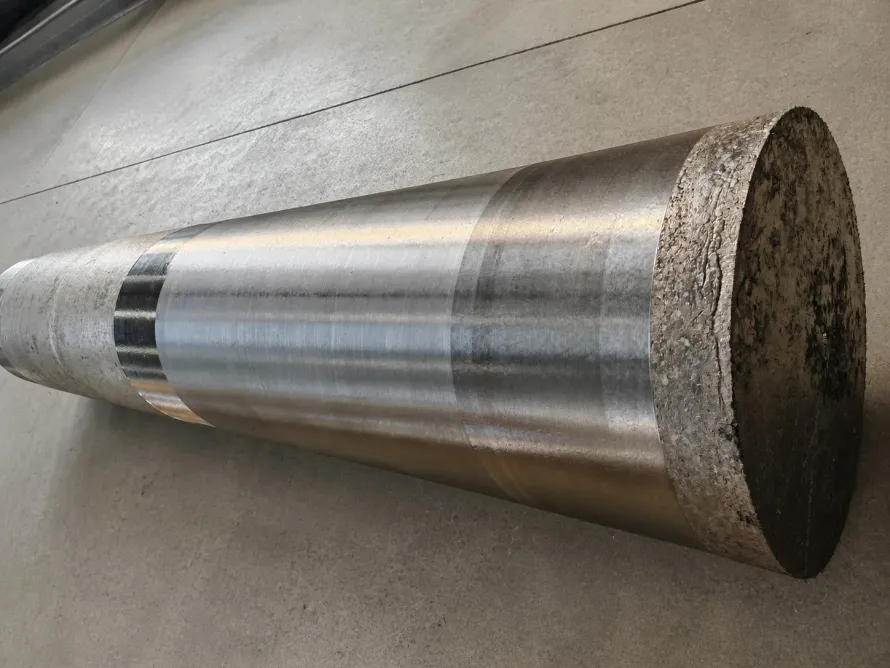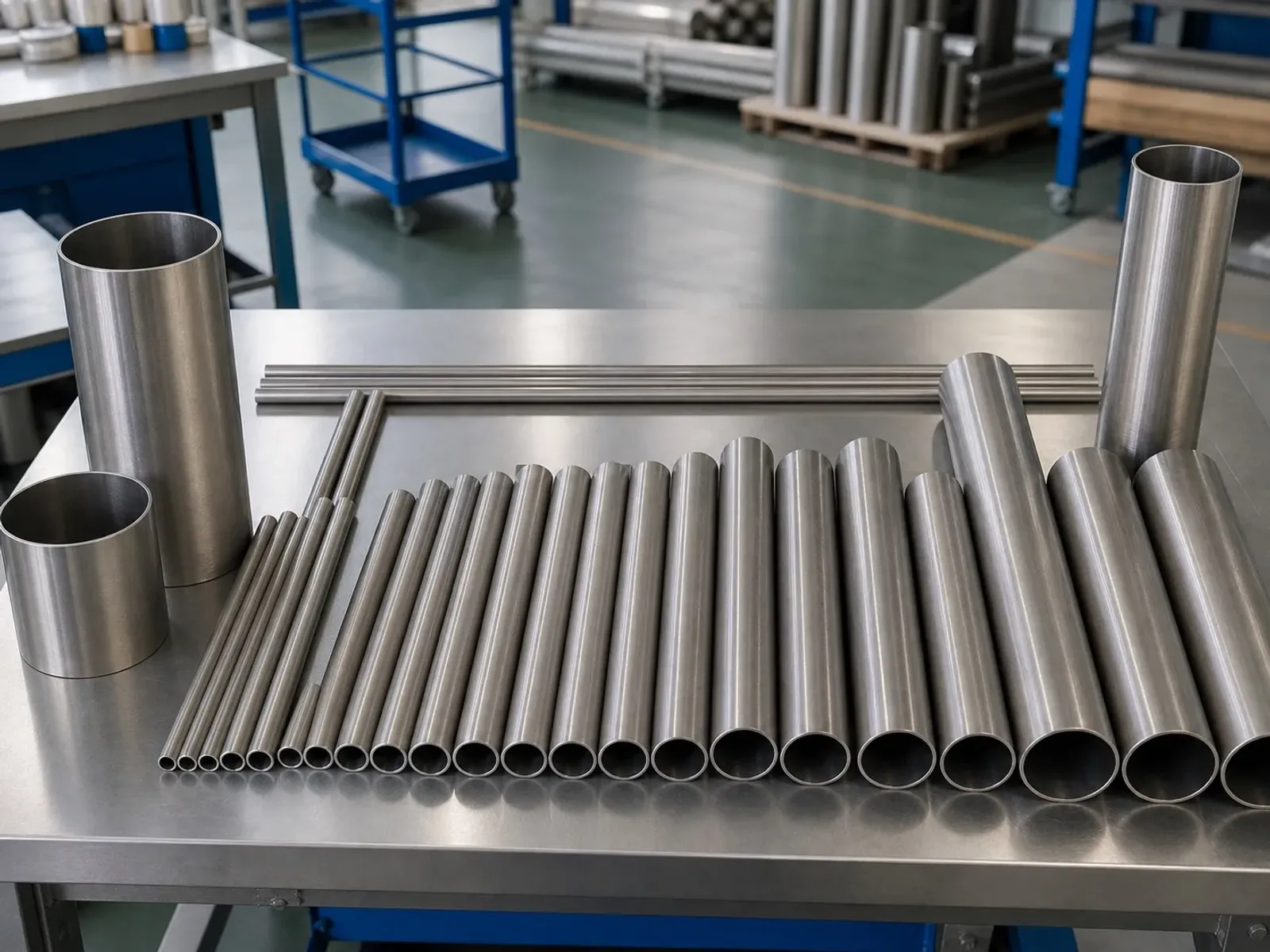
Tube appearance and diameter do not reveal whether a B338 product is seamless, welded, or welded-and-cold-worked.
No. An ASTM B338 callout does not mean that a titanium heat-exchanger tube is seamless. ASTM’s current public page for B338-17(2026) covers both seamless and welded tubing for surface condensers, evaporators and heat exchangers. The route must still be identified because the public abstract describes different manufacturing paths and different examination or pressure-test combinations.
This matters before quotations are compared. Two offers can show the same grade, outside diameter and wall thickness while referring to different routes—or even different product specifications. A useful RFQ therefore fixes the product use and governing edition first, then the route and the records that belong to it.
B338 contains two manufacturing routes
ASTM lists B338-17(2026) as the active edition, last updated on 13 July 2026. Its public scope covers 28 titanium grades, but grade coverage is not the distinguishing point here. The same scope admits both seamless and welded heat-exchanger tubing.
The public abstract describes seamless tube as starting from hollow billet and reaching the required product by cold reducing or cold drawing. It describes welded tube as starting from flat-rolled product joined by automatic arc welding. For the welded route, the abstract also says the tube is sufficiently cold worked to final size so subsequent heat treatment transforms the cast weld microstructure into a typical equiaxed microstructure.
That is why “ASTM B338 Grade 2, 25.4 × 0.7 mm” is incomplete when route matters to the equipment or approval file. The standard title does not silently choose seamless. The order or design basis has to do that work.
Route changes the public test summary
The public B338 abstract does not present one identical test list for every tube route. It states that tubing undergoes flattening, while welded tube also receives reverse flattening. It then distinguishes nondestructive and pressure-test combinations:
| Public B338 route label | Test information stated in ASTM’s public abstract |
|---|---|
| Welded tubing | Electromagnetic and ultrasonic examination; hydrostatic or pneumatic test |
| Welded/cold-worked tubing | Ultrasonic examination is specifically listed |
| Seamless tubing | Ultrasonic examination is listed; electromagnetic, hydrostatic or pneumatic alternatives are also stated |
This table is a reading aid for the public abstract, not a replacement for the licensed standard. It does not reconstruct acceptance thresholds, calibration, sampling, purchaser options or supplementary requirements that are not visible on the public page. For release, the supplier and buyer must use the edition named by the contract.
The practical consequence is precise: a certificate that says only “tested to ASTM B338” may be too compressed for a reviewer who must verify route-specific evidence. The inspection record should identify the delivered route and make the applicable examination and pressure-test evidence traceable to that lot.
B338 tube is not automatically B861 or B862 pipe
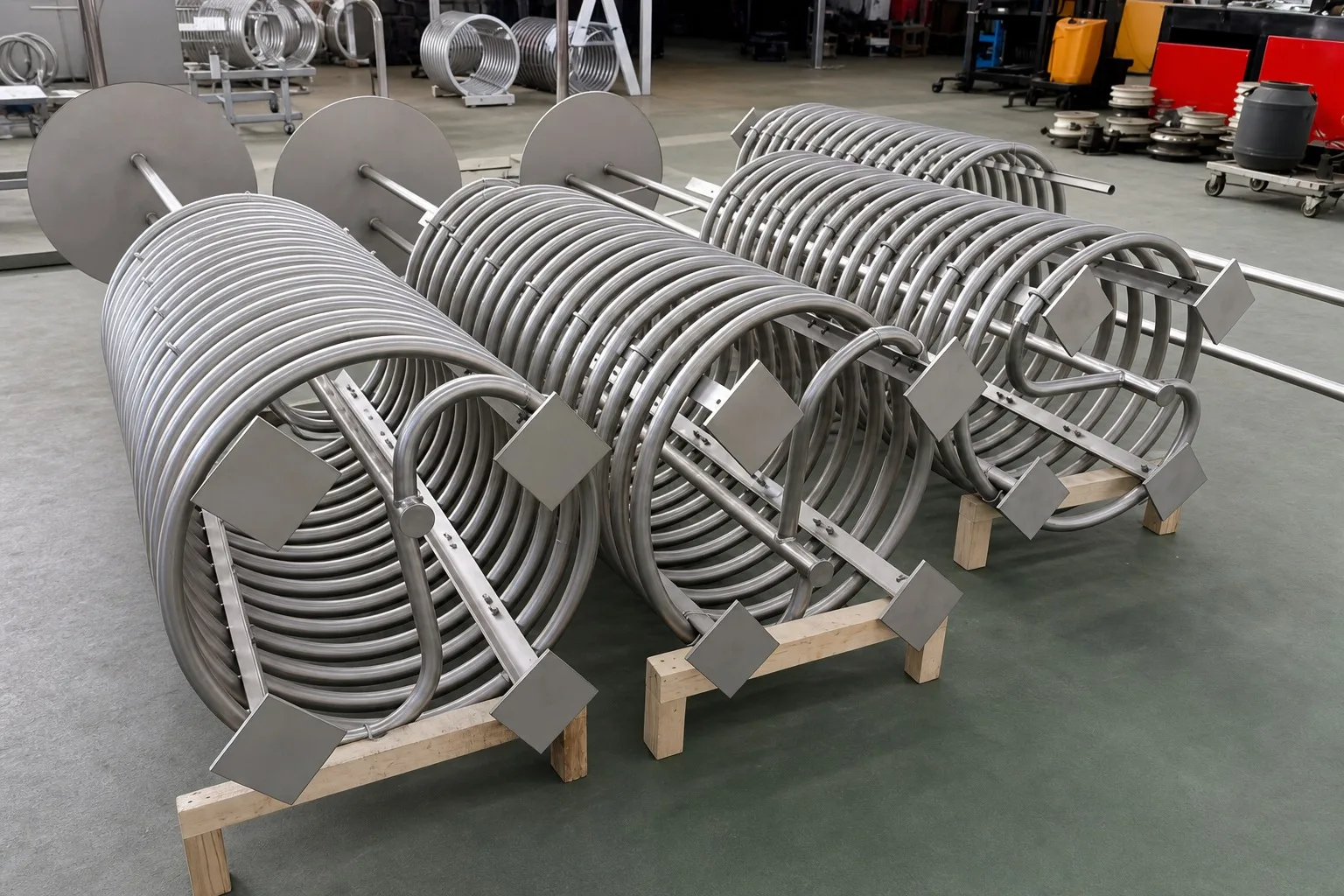
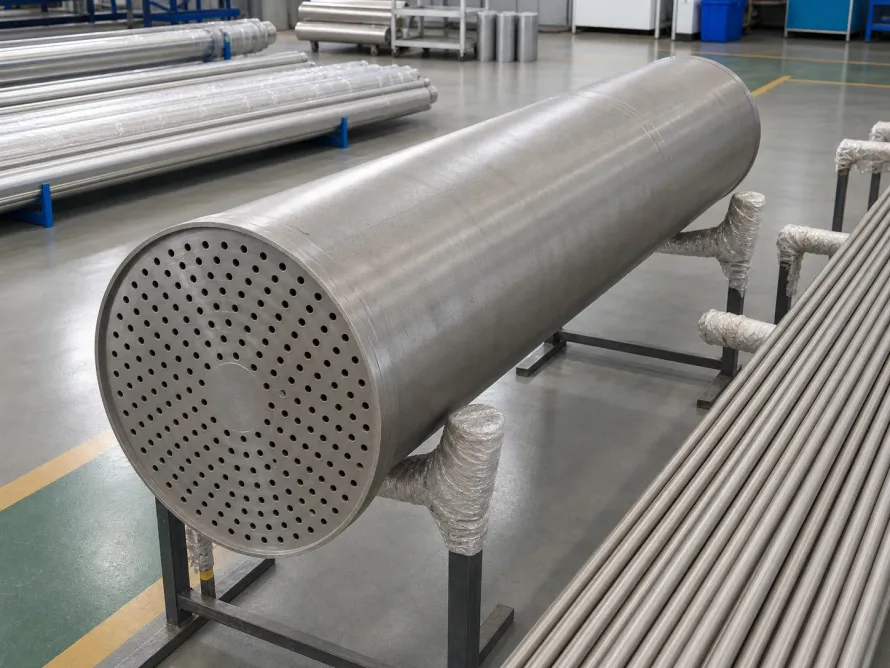
Heat-exchanger application context only; the image does not identify the applicable ASTM specification or tube manufacturing route.
ASTM’s public pages separate the product scopes. B338 addresses condenser, evaporator and heat-exchanger tubing. B861-24 addresses seamless titanium pipe for general corrosion-resisting and elevated-temperature service; its public abstract lists tension, flattening, bend and hydrostatic tests. B862-23 addresses welded pipe for those general service categories and describes manufacture from annealed flat-rolled product by welding.
B862 also warns in its public scope that pipe at 8 in. NPS and above is often custom made. It tells purchasers to consider which portions and optional supplementary requirements are needed for the operating condition. That note belongs to welded pipe, not to every B338 tube order.
The three specifications can overlap in alloy grades and nominal dimensions, but that does not make them interchangeable. Product use, tube-versus-pipe convention, manufacturing route, condition and test basis remain separate decisions.
A compact way to compare quotations
Start with the equipment function. If the item is tubing for a surface condenser, evaporator or heat exchanger, confirm whether B338 is the intended product specification and which edition governs. If it is pipe for general corrosion-resisting or elevated-temperature service, determine whether the seamless B861 or welded B862 scope is the correct basis.
Then compare offers on the same route. Ask the supplier to state seamless, welded or welded/cold-worked as applicable, rather than inferring route from price, lead time or a photo. Finally, map the inspection records to that route and edition. This is not a request for every possible test; it is a way to prevent a quotation from substituting a different product form or evidence package without an explicit engineering decision.
The direct answer is therefore simple: B338 allows more than one route, and the route changes what the public ASTM summary says should be tested. Put the route and governing edition in the RFQ before treating two titanium-tube offers as equivalent.
Sources
- ASTM International, ASTM B338-17(2026): Seamless and Welded Titanium and Titanium Alloy Tubes for Condensers and Heat Exchangers, public scope and abstract; accessed 28 September 2026.
- ASTM International, ASTM B861-24: Titanium and Titanium Alloy Seamless Pipe, public scope and abstract; accessed 28 September 2026.
- ASTM International, ASTM B862-23: Titanium and Titanium Alloy Welded Pipe, public scope and abstract; accessed 28 September 2026.