Type something to search...

Astm b338

Chemical and Energy
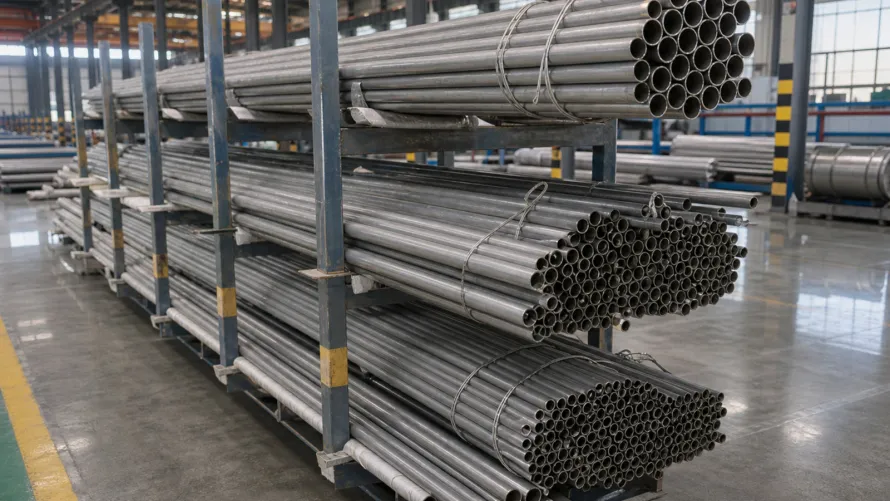
Bundled titanium tubes on factory racks, showing why buyers need service-environment and lot evidence before treating tube supply as interchangeable.
By Jason/ On 07 Jun, 2026

Alleima's Tube Mill 2026: Why Titanium Tube Buyers Need a Service-Envelope Evidence File

Alleima's latest tube-capacity news is not a titanium tube announcement. That distinction matters. The useful signal for titanium buyers is not that one more source of tube supply has appeared, but that demanding tube markets are being organized around service environment, documented process control, inspection proof, and long-term application risk.Alleima announced on 2026-06-03 that the Tube Mill 2026 facility in Sandviken, Sweden, had been inaugurated on 2026-06-02. The company described the project as an approximately SEK 330 million investment aimed at conventional nuclear power and small modular reactors, with the upgraded and reopened facility increasing steam generator tube production capacity by approximately 60% and becoming operational during 2026. That is a nuclear steam generator tube story, not a titanium stock story. Alleima's own steam generator tube page describes production in premium seamless stainless steel and high nickel alloy steam generator tubing, with an outer-diameter range of 10-25.4 mm for the listed portfolio. The point for titanium tube buyers is adjacent but important: when a tube enters a severe service environment, the purchase order cannot be governed by diameter, grade label, and delivery date alone. Tube Capacity Is Becoming Service-Specific The tube market often looks simple from a distance. Buyers ask for a grade, an outside diameter, a wall thickness, a length, a standard, and a delivery schedule. Suppliers answer with stock, production route, certificate, and price. That workflow can work for low-risk replenishment. It becomes weak when the tube is part of a condenser, heat exchanger, chemical-processing unit, energy system, pressure boundary, seawater service, chlorinated environment, or equipment package where corrosion, cleanliness, joining, inspection access, and tube-sheet fit all matter. High-spec tube investments show the direction of travel. Capacity is not just "more tubes." It is capacity inside a defined service envelope: alloy family, production route, inspection method, dimensional discipline, customer approval, documentation rhythm, and change-control boundary. Titanium tube buyers should borrow that logic even when they are not buying nuclear tubing. For titanium, the trap is interchangeability. A titanium tube can be commercially described in a few words, yet technically depend on many hidden choices: seamless or welded route, grade, wall tolerance, surface condition, straightness, residual contamination, end preparation, cleaning, packaging, and the chemistry and temperature of the fluid it will see. Why ASTM B338 Is a Starting Point, Not the Whole File ASTM B338 is commonly referenced for seamless and welded titanium and titanium-alloy tubes for condensers and heat exchangers. The standard scope is valuable because it frames titanium tube purchasing around more than a generic "pipe" description. It points buyers toward tube form, grade basis, mechanical properties, and testing expectations.But a standard reference does not replace an application review. A buyer still has to connect the tube to the actual service envelope. What is the medium? What temperature and pressure range will the tube see? Is the problem seawater service, chloride chemistry, acid service, erosion, crevice corrosion, fouling, cleaning chemistry, galvanic pairing, or tube expansion into a tube sheet? Is the tube being supplied as straight length, U-bent tube, cut-to-length tube, assembled bundle input, or spare replacement stock? Those questions are not academic. They decide which evidence belongs in the file. A mill test report can confirm material identity, chemistry, mechanical properties, and heat traceability. It does not automatically prove that the tube is clean enough for a specific process, that the surface condition matches the exchanger requirement, that tube-end handling is controlled, or that a route change will be visible before shipment. A Service-Envelope Evidence File The practical answer is a compact service-envelope evidence file. It should not be a decorative binder. It should be a buyer-readable chain that connects the tube being delivered to the environment where the tube will work.Evidence layer What the buyer should verifyMaterial and standard basis Titanium grade, product form, specification callout such as ASTM B338 when applicable, heat number, chemical and mechanical records, and any customer-specific supplement.Tube route and dimensions Seamless or welded route, OD, wall thickness, length, straightness, ovality, end condition, U-bend status when relevant, and revision-controlled dimensional inspection.Service envelope Fluid chemistry, concentration, temperature, pressure, flow condition, cleaning chemistry, fouling risk, galvanic contact, and corrosion mechanism being designed against.Inspection and test proof Hydrostatic, pneumatic, eddy-current, ultrasonic, visual, dimensional, cleanliness, or other inspection evidence tied to the order and route, not only to a generic capability statement.Surface and cleanliness control Surface finish, pickling or polishing state, residual contamination control, handling marks, internal cleanliness, and packaging that protects the tube before installation.Equipment interface Tube-sheet fit, expansion or welding boundary, end preparation, bend radius, bundle assembly needs, spare-part match, and responsibility split between tube supplier and fabricator.Release and change control Certificate wording, lot labels, nonconformance closure, subcontracted process disclosure, route changes, inspection-method changes, and notification triggers before repeat supply.This framework is especially useful for export buyers. A distributor, EPC buyer, heat-exchanger fabricator, or maintenance team may not control every step of production. The evidence file gives them a way to ask for the right proof without pretending that every project needs the same document set. What Titanium Suppliers Can Own Titanium suppliers should not overclaim service performance that belongs to the equipment designer or end user. The stronger position is to own the evidence that a supplier can genuinely control. For titanium tube supply, that means heat traceability, grade identity, route clarity, dimensional inspection, surface condition, packaging, and certificate consistency. For titanium plates, sheets, forgings, machined parts, and pressure-equipment components that sit near the same project, it means keeping related material records aligned so the buyer does not receive a tube file, a plate file, and a machined-part file that cannot be reconciled.The supplier can also make the RFQ sharper. Instead of asking only for size and grade, a serious titanium tube RFQ should identify application, medium, temperature range, pressure range, standard, inspection expectation, end condition, packaging need, and certificate language. If the buyer cannot disclose the exact formula or process, the buyer can still define the corrosion or cleanliness concern in usable engineering language. That is where supplier expertise becomes visible. A low-value response says, "We have titanium tube." A better response asks which service envelope the tube must survive and which evidence the buyer needs before releasing the shipment. What Buyers Should Not Overread Alleima's Tube Mill 2026 announcement does not prove new titanium tube capacity. It does not mean nuclear steam generator tubing and titanium heat-exchanger tubing share the same alloy, standard, approval route, or inspection file. It also does not mean every tube project needs nuclear-level documentation. The lesson is narrower and more useful. In demanding markets, tube supply is being judged less as a generic commodity and more as a controlled route into a specific service environment. Titanium buyers in chemical processing, energy, desalination, marine equipment, industrial heat exchange, and maintenance replacement should treat that as a procurement discipline. The practical test is simple: can a quality reviewer connect the delivered titanium tube lot to its grade, standard, route, inspection proof, surface condition, service chemistry, equipment interface, packaging, and change-control boundary without rebuilding the story after the shipment arrives? If the answer is yes, the buyer has a service-envelope evidence file. If the answer is no, the buyer may have titanium tubes, but not yet a dependable release basis for the equipment that will use them.

Chemical and Energy
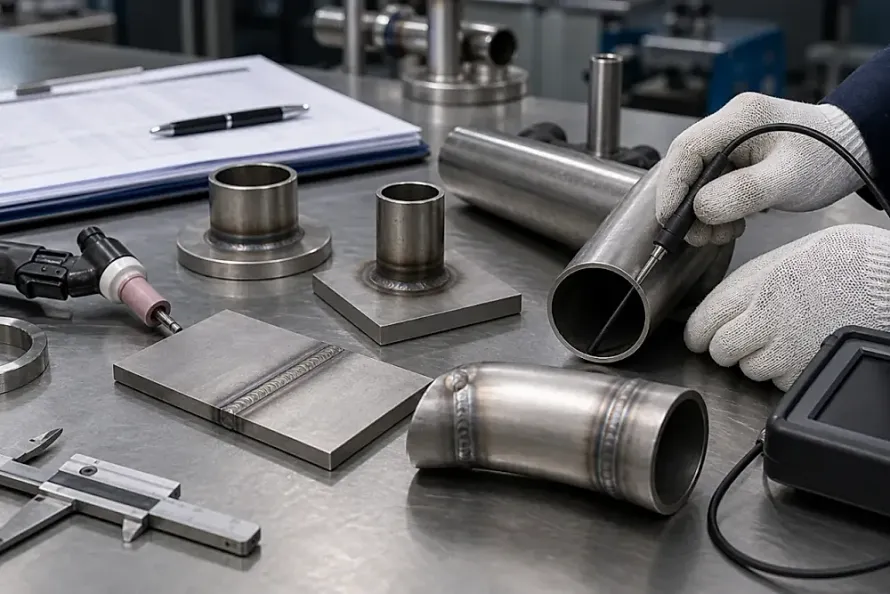
A clean chemical-process fabrication bench with titanium tube sections, plate coupons, weld samples and inspection tools, showing how welded titanium equipment needs documented fabrication evidence
By Jason/ On 07 May, 2026

Avantium's Titanium Weld Repairs Show Why Chemical Plants Need a Fabrication Evidence Chain

Avantium's update on titanium weld repairs at its FDCA Flagship Plant is a useful reminder for chemical process buyers: titanium's value does not end at corrosion resistance. In real plant equipment, titanium must also pass through fabrication, welding, inspection, repair documentation and commissioning checks before it becomes a reliable production asset.On April 30, Avantium said repair work on titanium weld issues at its FDCA Flagship Plant had been successfully completed. The company said final testing and safety checks were underway before commissioning could resume, and that it would provide a further update once those checks were completed (Avantium). Trade coverage described the repair completion as an important step toward bringing the plant closer to start-up after construction-related titanium weld issues delayed commissioning (ChemAnalyst). The public information does not identify the exact weld defect, the titanium grade, the affected equipment or the inspection method. That limitation matters. A serious article should not turn a short company update into a diagnosis. The stronger industry lesson is about buyer evidence: when titanium is used in chemical processing, the material certificate is only one part of the risk file. Why Titanium Welding Changes The Buyer Question Titanium is attractive in chemical service because it can resist aggressive corrosion environments that would quickly challenge many common alloys. That is why titanium tubes, plates, welded assemblies and heat-exchanger components appear in chemical, polymer, desalination, chlor-alkali and other process applications. ASTM's product category for seamless and welded titanium and titanium alloy tubes covers condensers and heat exchangers, showing how closely titanium tube supply is tied to process-equipment duty (ASTM B338) — see also our dedicated B338 spec page. But titanium's corrosion performance is not a free pass through fabrication. TWI's guidance on titanium and titanium alloy weldability emphasizes that titanium welds must be protected from atmospheric contamination, with shielding and cleanliness playing a central role in weld quality (TWI). For buyers, that turns a purchase order into more than a grade-and-size discussion. A titanium tube or plate — typically Gr.2 for general chemical service or Gr.7 (Ti-Pd) for hot reducing acids — can meet the requested chemistry and still create commissioning risk if the weld procedure, shielding practice, cleaning route or inspection record is weak. Conversely, a supplier that can document fabrication controls makes the material easier to trust in a process line where downtime, leakage, rework or delayed start-up can be expensive. The Evidence Chain Chemical Buyers Should Request The practical framework is simple:Evidence gate What buyers should verify Why it mattersService duty Process media, temperature, pressure, cleaning chemistry and corrosion assumptions Titanium grade selection depends on the actual operating environmentMaterial form and grade Tube, plate, sheet, fitting, spool, vessel part, grade and heat identity The form determines weld access, inspection method and mechanical riskWeld procedure and shielding Qualified procedure, filler route, shielding gas coverage and purge control Titanium weld quality is sensitive to contamination and heat-affected conditionsCleanliness control Surface preparation, handling, tool segregation and post-weld cleaning Contamination can undermine corrosion or weld performanceNDT and pressure testing Visual inspection, dye penetrant, radiography, ultrasonic checks, leak testing or hydrostatic testing when applicable Inspection evidence turns fabrication claims into auditable recordsRepair dossier and handoff Nonconformance record, repair method, retest results and commissioning acceptance Repairs must close the loop before equipment enters productionThis framework is not only for large chemical developers. It applies to export buyers sourcing titanium tube bundles, heat-exchanger tubes, welded pipe spools, reaction-vessel internals, pump components or machined corrosion-service parts. The more severe the service, the less useful it is to ask only whether the material is titanium. What The Avantium Case Does And Does Not Prove The Avantium update does not prove that titanium is unreliable in chemical plants. It also does not prove that a particular supplier, welder or material route failed. The source language is narrower: a construction-related titanium weld issue was repaired, and final testing and safety checks were needed before commissioning could resume. That is still enough to matter. Commissioning is where paperwork, fabrication and operating reality meet. A weld that requires repair may already have passed through procurement, workshop production and installation planning. When an issue is discovered late, the commercial problem is no longer only the cost of the weld. It can become schedule risk, retesting workload, safety review, documentation revision and trust in the handoff package. For titanium suppliers, the opportunity is to reduce that late-stage uncertainty. A supplier of titanium plate, tube or fabricated assemblies should be able to explain how material traceability flows into weld maps, procedure qualifications, inspection reports, repair controls and final acceptance records. That evidence will not make every project simple, but it gives the buyer a clearer way to separate a capable fabrication partner from a material-only seller. What Export Suppliers Should Prepare Export titanium suppliers serving chemical process equipment buyers should build documentation around fabrication risk, not only around inventory. A useful shipment package may include mill test certificates, heat and lot traceability, dimensional records, surface-condition notes, weld procedure references, inspection reports, repair history if any, pressure or leak-test evidence, and clear marking that links parts back to records — all aligned to the relevant ASTM specs (e.g. B338 for tube, B265 for plate, B348 for bar). For welded products, the documentation should also make responsibilities clear. Who controls purge shielding? Who verifies cleanliness before welding? Which NDT method is used, and at what acceptance level? Who signs off a repaired weld before commissioning? These questions may sound procedural, but they are exactly the questions that protect titanium's material value in a chemical plant. The defensible conclusion is that titanium process equipment is becoming an evidence business. Corrosion resistance may win the material selection, but fabrication evidence wins the commissioning argument. Buyers that ask for that evidence early will have fewer surprises later. Suppliers that can provide it will look more useful than suppliers that only sell titanium by grade, diameter and thickness. Related Products & ServicesTitanium Tubes — seamless and welded, certified to ASTM B338 Titanium Sheets & Plates — Gr.2/Gr.7 chemical-service forms to ASTM B265 Titanium Pipes — large-diameter pipe spools for process duty Titanium Fabrication — qualified weld procedures + NDT Titanium CNC Machining — corrosion-service machined components Titanium Standards & Specifications — full B265/B338/B348 documentation

Ready to Start Your Project?

Get factory-direct pricing on titanium products. No minimum order.

Get a Free Quote
Quick Inquiry