Type something to search...

Reduced testing

Manufacturing and Technology
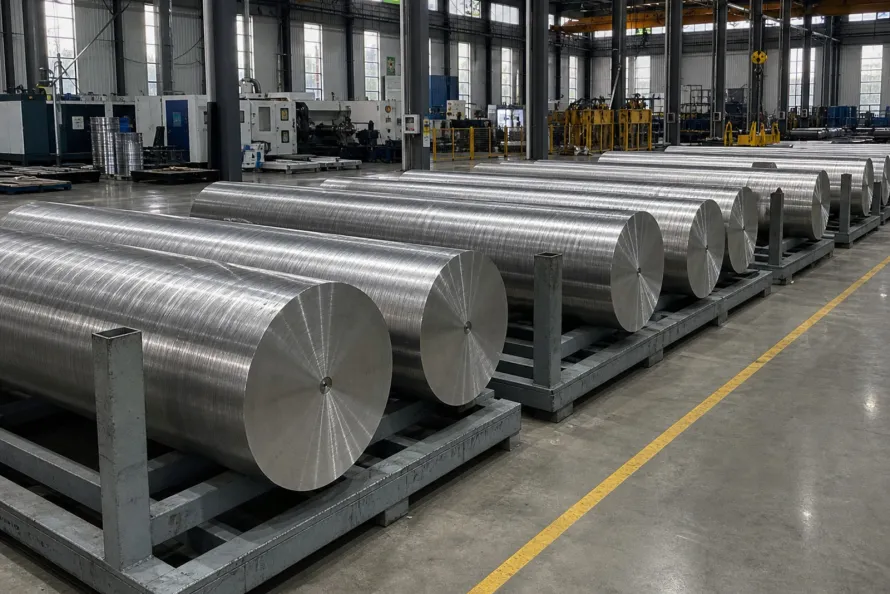
Titanium bar stock in a factory setting, representing the material baseline that buyers must connect to process data, inspection records and release evidence.
By Jason/ On 10 Jun, 2026

AIM-4AM Shows Why Titanium AM Buyers Need a Data-to-Allowables Evidence File

Dyndrite's June 4, 2026 announcement that its team was selected for the America Makes and NCDMM Artificial Intelligence for Material Allowables in Additive Manufacturing project is not a titanium product approval. That boundary matters. The current AIM-4AM demonstrator is 17-4PH stainless steel in the H1025 condition, produced by Laser Powder Bed Fusion, or LPBF. For titanium buyers, the value of the news is more indirect and more useful. AIM-4AM points to the kind of evidence file that any high-performance AM material route will need before procurement teams can trust claims about faster qualification, lower testing burden, or production-ready process control.TCT Magazine reported on June 8, 2026 that AIM-4AM is a $2 million initiative to develop an AI-driven framework for identifying and quantifying risk inside the material-allowables approach for LPBF. Dyndrite will lead the team, Mimo Technik will execute controlled LPBF builds and testing coordination, and RTX will act as the technology transition partner for aerospace and defense relevance. That combination is the story. The industry is not only asking whether AM can make a metal part. It is asking whether the data behind the process can support an allowable, survive customer review, and define what physical testing can safely be reduced without hiding risk. Why A Steel Project Matters To Titanium Buyers The first buyer discipline is to avoid overreach. AIM-4AM does not validate titanium powder, titanium wire, Ti-6Al-4V, titanium near-net-shape preforms, or any delivered titanium component. It does not mean a titanium AM part can skip qualification. It does not turn a machine-learning model into a material certificate. But titanium buyers should still pay attention because the qualification problem is shared. Aerospace, defense, medical, space and energy buyers do not accept AM parts simply because the alloy name is familiar. They ask whether the route is stable enough to produce repeatable material properties, whether the process data is trustworthy, whether inspection can catch meaningful variation, and whether the release record matches the actual application boundary. That is where AIM-4AM becomes relevant. The Manufacturing USA opportunity page says the project aims to develop an AI-driven framework that identifies and quantifies risk in material allowables for 17-4PH H1025 stainless steel made by LPBF. The America Makes RFP describes a program intended to link reduced physical testing to quantified risk categories, support pedigreed AM materials data, and validate AI-driven predictions through acceptance-ready testing protocols. For titanium AM, the lesson is not "AI will qualify the material." The lesson is that buyers should make every reduced-testing claim show its evidence chain. The Evidence Burden Moves Upstream Traditional buyer review often starts late: a material test report, a dimensional report, a certificate, a first article package, or a supplier quality document. AM pushes the evidence burden upstream because many sources of variation are created before final inspection. Powder or wire feedstock, machine configuration, scan strategy, build orientation, atmosphere control, thermal history, post-processing, surface condition and inspection method can all affect the final release decision. That does not make AM unmanageable. It means the buyer file has to connect more layers. A supplier claiming faster qualification through AI-assisted allowables should be able to show what the model is trained on, what variance it is trying to reduce, which process signals are controlled, what physical tests remain, and where the proposed allowable is not valid. Without that chain, "reduced testing" is only a cost-saving phrase. The AIM-4AM announcement is useful because it names the missing middle. Dyndrite said the team will develop machine-learning-driven methods to assess qualification risk, generate preliminary qualification datasets, validate predictions against experimental tensile and fatigue data, support statistically informed reduced-testing protocols, and align production-oriented approaches with material allowables development and qualification requirements. Those are not marketing decorations. They are the categories titanium buyers should ask suppliers to document. The Data-To-Allowables Evidence File For titanium products, a practical response is a data-to-allowables evidence file. It is not a substitute for customer approval, drawing control, material specifications, inspection plans, or application-specific testing. It is the bridge that keeps digital qualification claims auditable.Evidence layer Buyer question Records to requestMaterial boundary What alloy, feedstock form and condition are actually covered? Ti-6Al-4V, CP titanium or other grade identity; powder, wire, billet or preform source; chemistry; lot handling and reuse rulesProcess window What process state is allowed? LPBF, DED, WAAM, HIP, machining or post-processing route; parameter set; machine configuration; atmosphere and thermal controlsData pedigree What data feeds the model or qualification argument? Build logs, sensor data, traveler records, calibration files, inspection data, lab test records and excluded data notesPhysical validation What testing still proves the route? Tensile, fatigue, chemistry, density, surface, microstructure, NDT, CT, dimensional and application-specific testsStatistical confidence How is reduced testing linked to risk? Sampling plan, confidence basis, risk categories, model validation, repeatability evidence and failure-mode reviewApplication boundary Where can the allowable or evidence be used? Part family, load case, service environment, customer program, geometry limits and excluded applicationsRelease and change control What forces re-approval? Feedstock change, machine change, parameter change, site change, post-process change, inspection-method change or drawing revisionThis structure keeps the buyer from making two common errors. The first is treating a model result as if it were a finished material approval. The second is treating a successful coupon program as if it automatically covers every production geometry. Titanium buyers need the opposite habit. They should ask which facts are general, which are machine- or site-specific, which are part-family-specific, and which require customer approval before shipment. What AI Does Not Remove AI can help identify high-value tests, model process-structure-property relationships, and focus engineering attention on the variables that matter. It cannot remove the need for traceable input material, controlled process parameters, qualified inspection, physical validation, and a release record that says exactly what the shipment proves. The America Makes RFP reinforces that point. It set out a maximum period of performance of 21 months, including 18 months of technical effort and 3 months for report finalization, and emphasized traceability, data management, reproducibility, calibration, specifications, certifications, material sources, post-processes, inspection, testing and quality control protocols. Those requirements are not signs of a shortcut. They are signs that the shortcut must be earned. That is especially important for titanium because AM is often compared against forged, rolled, bar-stock, tube-stock, plate-stock or machined routes. A proposed AM route may reduce buy-to-fly waste or improve geometry freedom, but the buyer still has to approve the route against the part's service duty. A titanium bracket, fastener, pressure part, implant blank, heat-exchanger component or aerospace preform does not become acceptable because its data package is modern. It becomes acceptable when the data package matches the risk. Lessons For Titanium Suppliers The strongest commercial lesson is not limited to AM specialists. Conventional titanium suppliers can use the same evidence logic.A titanium bar supplier can document heat identity, chemistry, ultrasonic inspection, straightness, surface condition and shipment release. A tube supplier can connect grade, OD and wall tolerance, production route, surface condition, pressure or leak evidence, cleanliness and packaging. A machined titanium component supplier can connect input stock, machining route, dimensional inspection, special processes, certificate wording and change control. The common thread is not AI. It is auditability. A buyer who sees a clean evidence path can separate real readiness from vague process claims. A supplier who keeps that path clean becomes easier to evaluate, easier to approve and easier to trust when the part family changes. That is the useful titanium reading of AIM-4AM. The project may begin with 17-4PH H1025 stainless steel, but the buyer question it raises is broader: when a supplier says data can reduce testing, can the supplier show exactly which risk has been measured, which tests remain, and where the evidence stops? For titanium products, that question is becoming part of the purchase decision.

Ready to Start Your Project?

Get factory-direct pricing on titanium products. No minimum order.

Get a Free Quote
Quick Inquiry